Posted in Whathaveyou on July 1st, 2024 by JJ Koczan
The part of the new Mountain of Misery single that really hits me is right around the midpoint, circa four and a half minutes in, where the steady roll that multi-instrumentalist/vocalist Kamil Ziółkowski (also Spaceslug, Palm Desert, and so on) has built up kind of starts to let itself come apart a bit. It’s the transition to a stretch of not-quite-minimal atmospherics, and of course “Valley of Light” has a crash-in waiting on the other side with due heft behind it, but that moment where Ziółkowski, as a full band might, is able to hone an organic band-in-room feel on his own, to me emphasizes a strength in both the production and writing processes. Might’ve just been one of those things that happened as the recording was underway, but it’s in there, it sounds natural, and the track is stronger for it.
Perhaps so much the better, then, that “Valley of Light” is featured on the preorders-up LP edition of Mountain of Misery‘s earlier-2024 sophomore full-length, The Land (review here). It seems to have been recorded after the album, which makes it the latest work from Ziółkowski‘s solo outfit, and all the more encouraging for the sense of progression accompanying its fluidity and dreamy/dreary melody.
Single and album stream at the bottom of the post. Info below comes from Bandcamp:
Here is The “Valley Of Lights”, the heaviest and the longest song of Mountain Of Misery. Hope you enjoy it.
This song is an addition and the last track to the vinyl version of THE LAND album. Pre-order for “The Land/Valley Of Light” (circa 46 minutes of music) is out now:https://mountainofmisery.bandcamp.com/merch
VINYL “THE LAND/VALLEY OF LIGHTS” PRE-ORDER in 2 colors (White & Transparent Pink) available at the merch site and at THE LAND site album. Everyone who purchases Vinyl THE LAND will receive a free code to download “Valley Of Light” song via e-mail.
released June 28, 2024
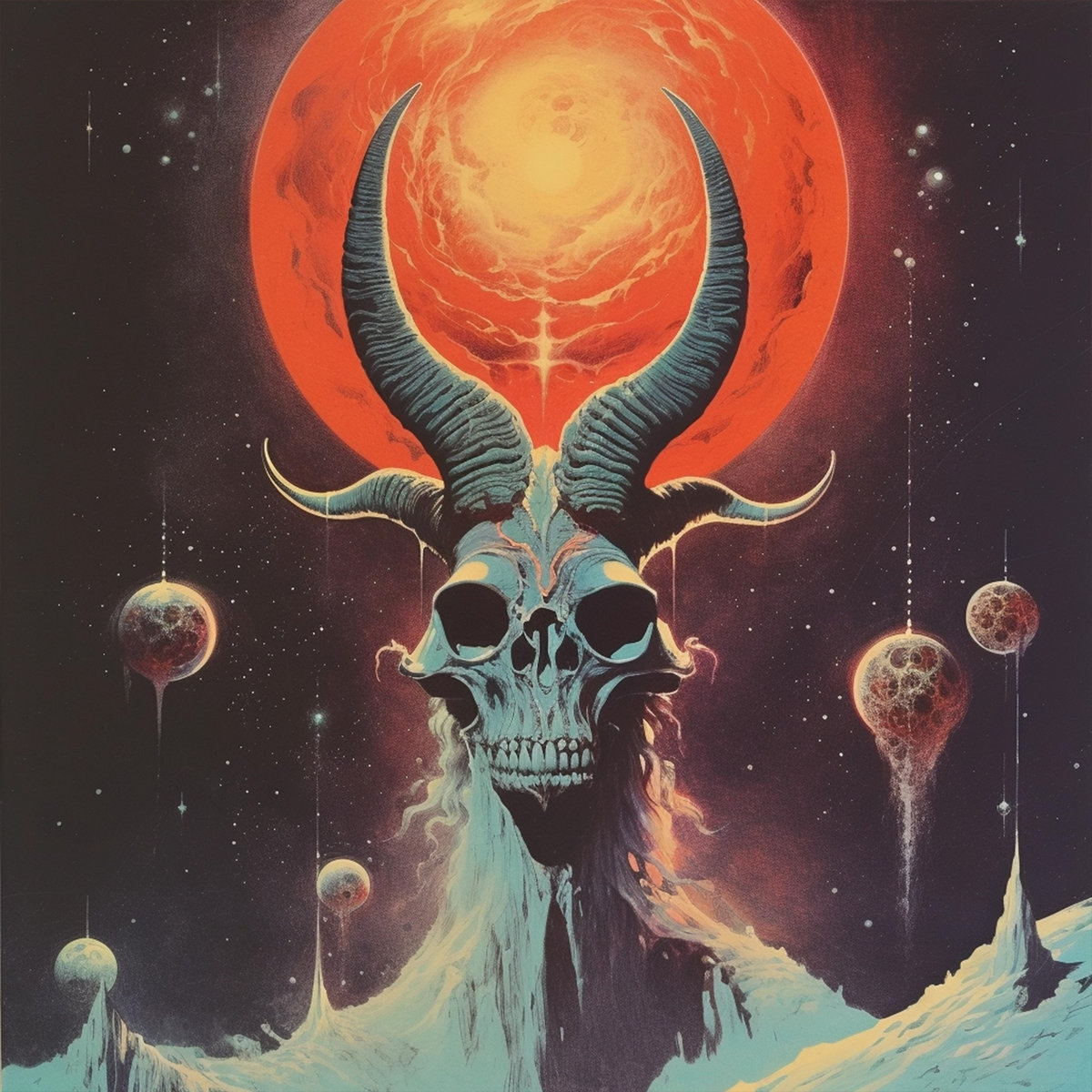
Recorded by Kamil Ziółkowski at Electric Witch Mountain Recordings (March/June 2024) Mixed & Mastered by Haldor Grunberg (Satanic Audio) Music & Lyrics by Mountain Of Misery Cover photo by Joshue Earle
Alright, back at it. Putting together yesterday over the weekend was more scattershot than I’d prefer, but one might say the same of parenting in general, so I’ll leave it at that. Still, as happens with Quarterly Reviews, we got there. That my wife gave me an extra 40 minutes to bang out the Wizzerd video premiere was appreciated. As always, she makes everything possible.
Compared to some QRs, there are a few ‘bigger’ releases here. You’ll note High on Fire leading off today. That trend will continue over this and next week with the likes of Pallbearer, Uncle Acid, Bongripper, Harvestman (Steve Von Till, ex-Neurosis), Inter Arma, Saturnalia Temple spread throughout. The Pelican two-songer and My Dying Bride back to back a week from today. That’ll be a fun one. As always, it’s about the time crunch for me for what goes in the Quarterly Review. Things I want to cover before it’s too late that I can fit here. Ain’t nobody holding their breath for my opinion on any of it, or on anything generally for that matter, but I’m not trying to slight well known bands by stuffing them into what when it started over a decade ago I thought would be a catchall for demos and EPs. Sometimes I like the challenge of a shorter word count, too.
And I remind myself here again nobody really cares. Fine, let’s go.
Quarterly Review #11-20:
—
High on Fire, Cometh the Storm
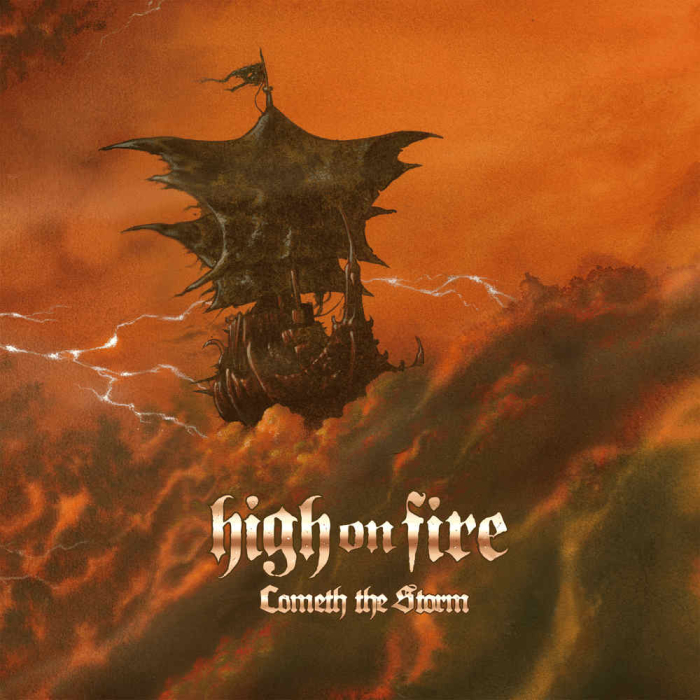
What seems at first to be business as usual for High on Fire‘s fourth album produced by Kurt Ballou, fifth for MNRK Heavy (formerly E1), and ninth overall, gradually reveals itself to be the band’s tonally heaviest work in at least the last 15 years. What’s actually new is drummer Coady Willis (Big Business, Melvins) making his first studio appearance alongside founding guitarist/vocalist Matt Pike (Sleep, Pike vs. the Automaton) and long-tenured bassist/backing vocalist Jeff Matz (also saz on the instrumental interlude-plus “Karanlik Yol”), and for sure Willis‘ thud in “Trismegistus,” galloping intensity in the thrashy and angular “The Beating” and declarative stomp beneath the big slowdown of 10-minute closer “Darker Fleece” is part of it, but from the way Pike and Matz bring “Cometh the Storm’ and “Sol’s Golden Curse” in the record’s middle to such cacophonous ends, the three-and-a-half-minute face-kick that is “Lightning Beard” and the suckerpunch that starts off with “Lambsbread,” to how even the more vocally melodic “Hunting Shadows” is carried on a wave of filthy, hard-landing distortion, their ferocity is reaffirmed in thicker grooves and unmitigated pummel. While in some ways this is what one would expect, it’s also everything for which one might hope from High on Fire a quarter-century on from their first demo. Triumph.
A release concurrent to a remastered edition of their 2016 debut, Lemanis (review here), only puts into emphasis how much Spaceslug have come into their own over eight productive years. Recorded by drummer/vocalist Kamil Ziółkowski (also Mountain of Misery), with guitarist/vocalist Bartosz Janik and bassist/vocalist Jan Rutka dug into familiar tonal textures throughout five tracks and a quick but inevitably full-length-flowing 32 minutes, Out of Water is both otherworldly and emotionally evocative in the rollout of “Arise the Sun” following the intertwined shouts of opener “Tears of Antimatter,” and in keeping with their progression, they nudge toward metallic aggression as a way to solidify their heavy psychedelic aspects. “Out of Water” is duly mournful to encapsulate such a tragic notion, and the nod of “Delusions” only grows more forcefully applied after the return from that song’s atmospheric break, and while they depart with “In Serenity” to what feels like the escapism of sunnier riffing, even that becomes more urgent toward the album’s finish. The reason it works is they’re bending genre to their songs, not the other way around, and as Spaceslug mature as a group, they’ve become one of Poland’s most essential heavy acts.
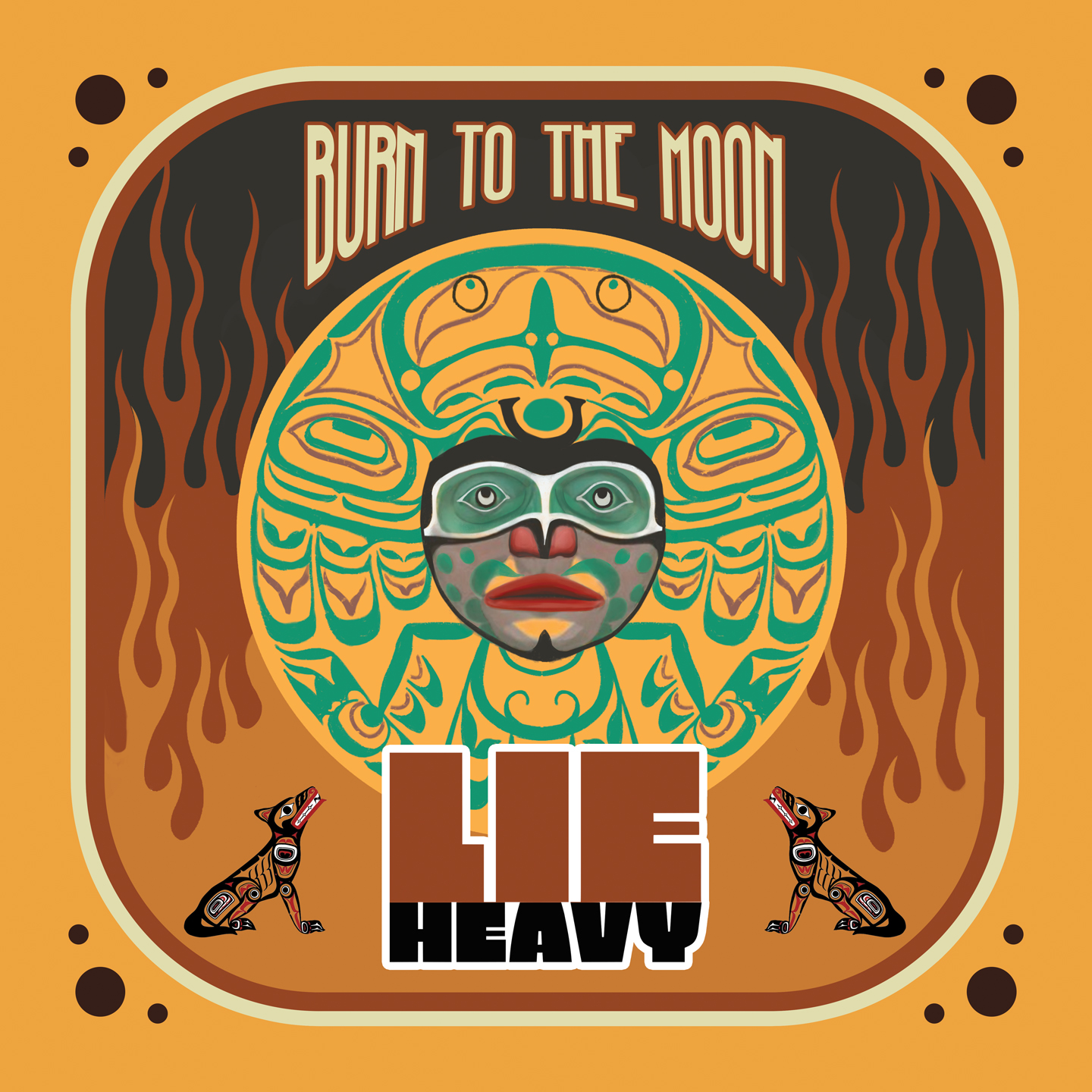
First issued on CD through JM Records in 2023, Lie Heavy‘s debut album, Burn to the Moon, sees broader release through Heavy Psych Sounds with revamped art to complement the Raleigh, North Carolina, four-piece’s tonal heft and classic reach in pieces like “In the Shadow” and “The Long March,” respectively. The band is fronted by Karl Agell (vocalist for C.O.C.‘s 1991 Blind album and now also in The Skull-offshoot Legions of Doom), and across the 12-song/51-minute run, and whether it’s the crunch of the ripper “When the Universe Cries” or the Clutch-style heavy funk of “Chunkadelic” pushing further from the start-stops of “In the Shadow” or the layered crescendo of “Unbeliever” a short time later, he and bassist/vocalist TR Gwynne, guitarist/vocalist Graham Fry and drummer/vocalist Jeff “JD” Dennis deliver sans-pretense riff-led fare. They’re not trying to fix what wasn’t broken in the ’90s, to be sure, but you can’t really call it a retread either as they swing through “Drag the World” and its capstone counterpart “End the World”; it all goes back to Black Sabbath anyway. The converted will get it no problem.
Dublin, Ireland, trio Burning Realm mark their first release with the four-song Face the Fire EP, taking the cosmic-tinged restlessness of Wild Rocket and setting it alongside more grounded riffing, hinting at thrash in the ping ride on “From Beyond” but careening in the modern mode either way. Lead cut “Homosapien” gives Hawkwindian vibes early — the trap, which is sounding like Slift, is largely avoided, though King Gizzard may still be relevant as an influence — but smoothly gives over to acoustics and vocal drone once its urgency has bene vaporized, and spacious as the vocal echo is, “Face the Fire” is classic stoner roll even into its speedier ending, the momentum of which is continued in closer “Warped One (Arise),” which is more charged on the whole in a way that feels linear and intended in relation to what’s put before it. A 16-minute self-released introduction to who Burning Realm are now, it holds promise for how they might develop stylistically and grow in terms of range. Whatever comes or doesn’t, it’s easy enough to dig as it is. If you were at a show and someone handed you the tape, you’d be stoked once you put it on in the car. Also it’s like 1995 in that scenario, apparently.
Offered through an international consortium of record labels that includes Crême Brûlée Records in the band’s native France, Echodelick in the US, Clostridium in Germany and Weird Beard in the UK, French heavy psych thrusters Kalac‘s inaugural full-length, Odyssée — also stylized all-caps — doesn’t leave much to wonder why so many imprints might want some for the distro. With a focus on rhythmic movement in the we-gotta-get-to-space-like-five-minutes-ago modus of current-day heavy neo-space-rock, the mostly instrumental procession hypnotizes even as it peppers its expanses with verses here or there. That might be most effectively wrought in the payoff noiseblaster wash of “II,” which I’m just going to assume opens side B, but the boogie quotient is strong from “Arguenon” to “Beautiful Night,” and while might ring familiar to others operating in the aesthetic galaxial quadrant, the energy of Kalac‘s delivery and the not-haphazard-but-not-always-in-the-same-spot-either placement of the vocals are enough to distinguish them and make the six-tracker as exciting to hear as it sounds like it probably was to record.
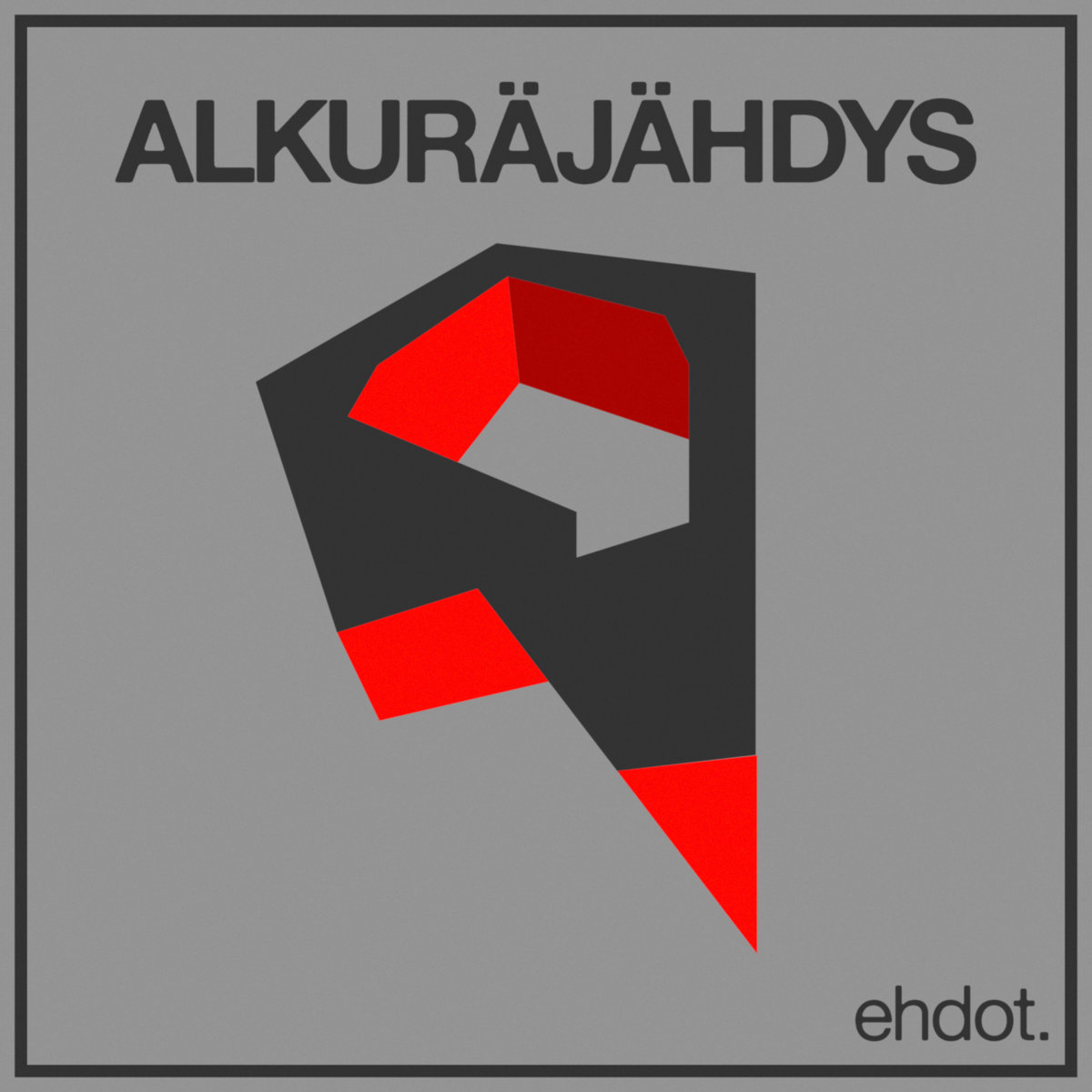
The live-tracked fourth outing from Helsinki psych improvisationalists Alkuräjähdys, the lowercase-stylized ehdot. blends mechanical and electronic sounds with more organic psychedelic jamming, the synth and bassier punchthrough in the midsection of opening piece “.matriisi” indeed evocative of the dot-matrix printer to which its title is in reference, while “központ,” which follows, meanders into a broader swath of guitar-based noise atop a languidly graceful roll of drums. That let’s-try-it-slower ideology is manifest in the first half of the duly two-sided “a-b” as well, as the 12-minute finale begins by lurching through the denser distortion of a central riff en route to a skronk-jazz transition to a tighter midtempo groove that I’ll compare to Endless Boogie and very much intend that as a compliment. I don’t think they’re out to change the world so much as get in a room, hit it and see where the whole thing ends up, but those are noble creative aims in concept and practice, and between the two guitars, effects, synth and whathaveyou, there’s plenty of weird to go around.
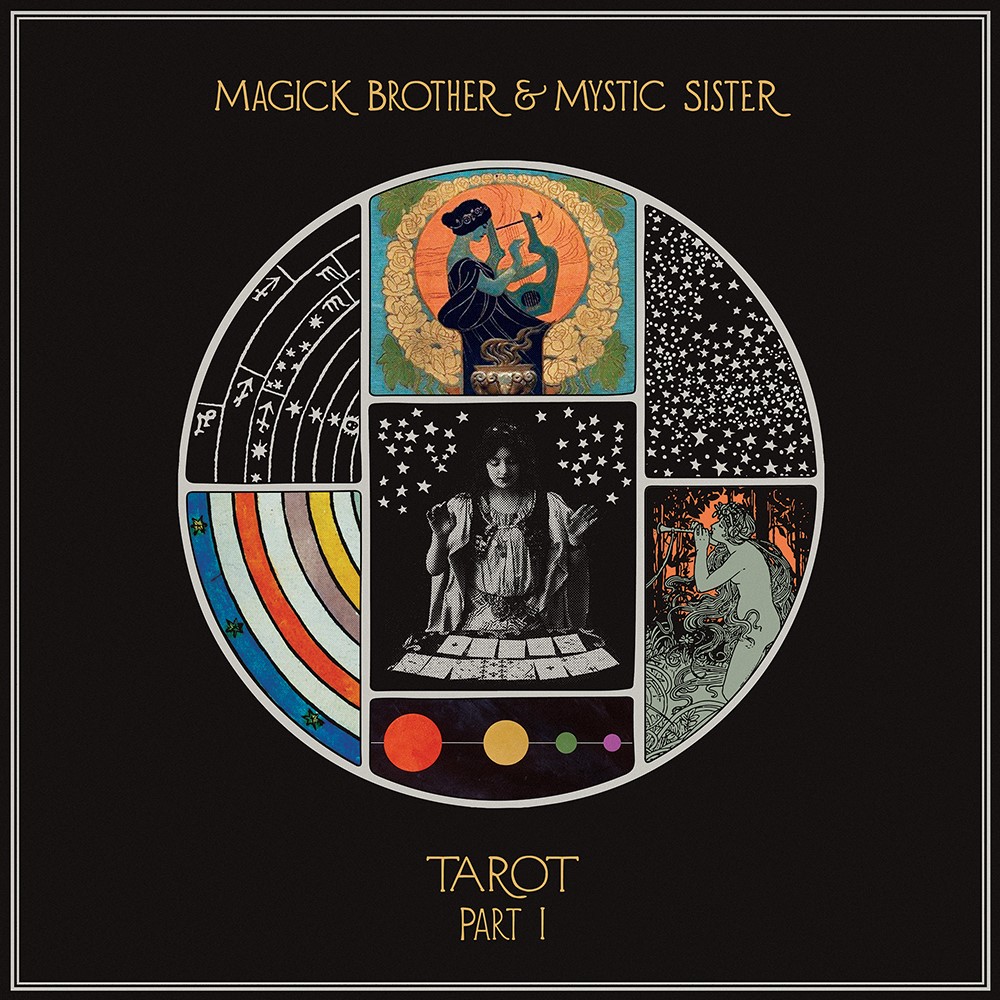
Already a significant undertaking as a 95-minute 2LP running 11 tracks themed — as the title(s) would hint — around tarot cards, the mostly serene sprawl of Magick Brother & Mystic Sister‘s Tarot Pt. 1 is still just the first of two companion albums to be issued as the follow-up to the Barcelona outfit’s 2020 self-titled debut (discussed here). Offered through respected Greek purveyor Sound Effect Records, Tarot Pt. 1 gives breadth beyond just the runtime in the sitar-laced psych-funk of “The Hierophant” (swap sitar for organ, synth and flute on “The Chariot”) and the classic-prog pastoralia of closer “The Wheel of Fortune,” and as with the plague-era debut, at the heart of the material is a soothing acid folk, and while the keys in the first half of “The Emperor” grow insistent and there’s some foreboding in the early Mellotron and key lines of “The Lovers,” Tarot Pt. 1 resonates comfort and care in its arrangements as well as ambition in its scope. Maybe another hour and a half on the way? Sign me up.
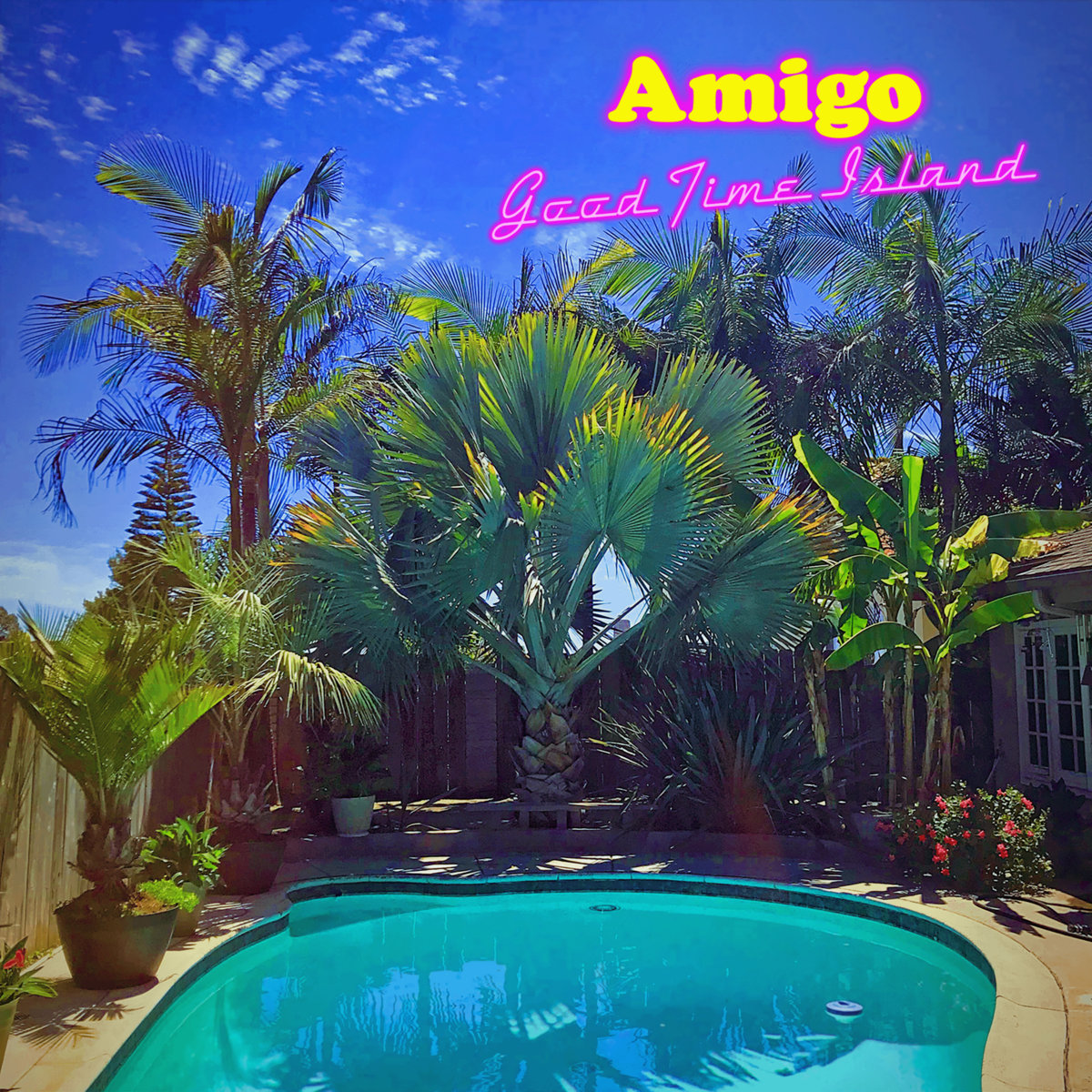
The eight-year distance from their 2016 debut long-player, Little Cliffs, seems to have smoothed out some (not all, which isn’t a complaint) of the rough edges in Amigo‘s sound, as the seemingly reinvigorated San Diego four-piece of lead guitarist/vocalist Jeff Podeszwik (King Chiefs), guitarist Anthony Mattos, bassist Sufi Karalen and drummer Anthony Alley offer five song across an accessible, straightforward 17 minutes united beneath the fair-enough title of Good Time Island. Without losing the weight of their tones, a Weezery pop sensibility comes through in “Dope Den” while “Frog Face” is even more specifically indebted to The Cars. Neither “Telescope Boy” nor “Banana Phone” lacks punch, but Amigo hold some in reserve for “Me and Soof,” which rounds out the proceedings, and they put it to solid use for an approach that’s ’90s-informed without that necessarily meaning stoner, grunge or alt, and envision a commercially relevant, songwriting-based heavy rock and roll for an alternate universe that, by all accounts here, sounds like a decent place to be.
Culminating in the Sabbathian shuffle of “Eye for an Eye,” Wild Fever is the hook-drenched third full-length from Montreal fuzzbringers The Hazytones, and while they’ve still got the ‘tones’ part down pat, it’s easy to argue the eight included tracks are the least ‘hazy’ they’ve been to-date. Following on from the direction of 2018’s II: Monarchs of Oblivion (review here), the Esben Willems-mixed/Kent Stump-mastered 40-minute long-player isn’t shy about leaning into the grittier side of what they do as the opening title-track rolls out a chorus that reminds of C.O.C. circa In the Arms of God while retaining some of the melody between the vocals of Mick Martel (also guitar and keys) and Gabriel Prieur (also drums and bass), and with the correspondingly thick bass of Caleb Sanders for accompaniment and lead guitarist John Choffel‘s solo rising out of the murk on “Disease,” honing in on the brashness suits them well. Not where one might have expected them to end up six years later, but no less enjoyable for that, either.
God damn that’s harsh. Mostly anonymous industrialists — you get F and N for names and that’s it — All Are to Return are all the more punishing in the horrific recesses and engulfing blasts of static that populate III than they were in 2022’s II (review here), and the fact that the eight-songer is only 32 minutes long is about as close as they come to any concept of mercy for the psyche of their audience. Beyond that, “Moratorium,” “Colony Collapse,” the eats-you-dead “Archive of the Sky” and even the droning “Legacy” cast a willfully wretched extremity, and what might be a humanizing presence of vocals elsewhere is screams channeled through so much distortion as to be barely recognizable as coming from a human throat here. If the question being posed is, “how much can you take?,” the answer for most of those brave enough to even give III a shot will be, “markedly less than this.” A cry from the depths realizing a brutal vision.
Legend has it that a long time ago, thousands of years ago, before even the founding of the Kingdom of New Jersey itself, there was a man who attempted a two-week, 100-album Quarterly Review. He truly believed and was known to say to his goodlady wife, “Sure, I can do 100 releases in 10 days. That should be fine,” but lo, the gods did smite him for his hubris.
His punishment? That very same Quarterly Review.
Like the best of mythology, the lesson here is don’t be a dumbass and do things like 100-record Quarterly Reviews. Clearly this is a lesson I haven’t learned. Welcome to the next two weeks. Sorry for the typos. Let’s roll.
Quarterly Review #1-10:
—
Nebula, Livewired in Europe
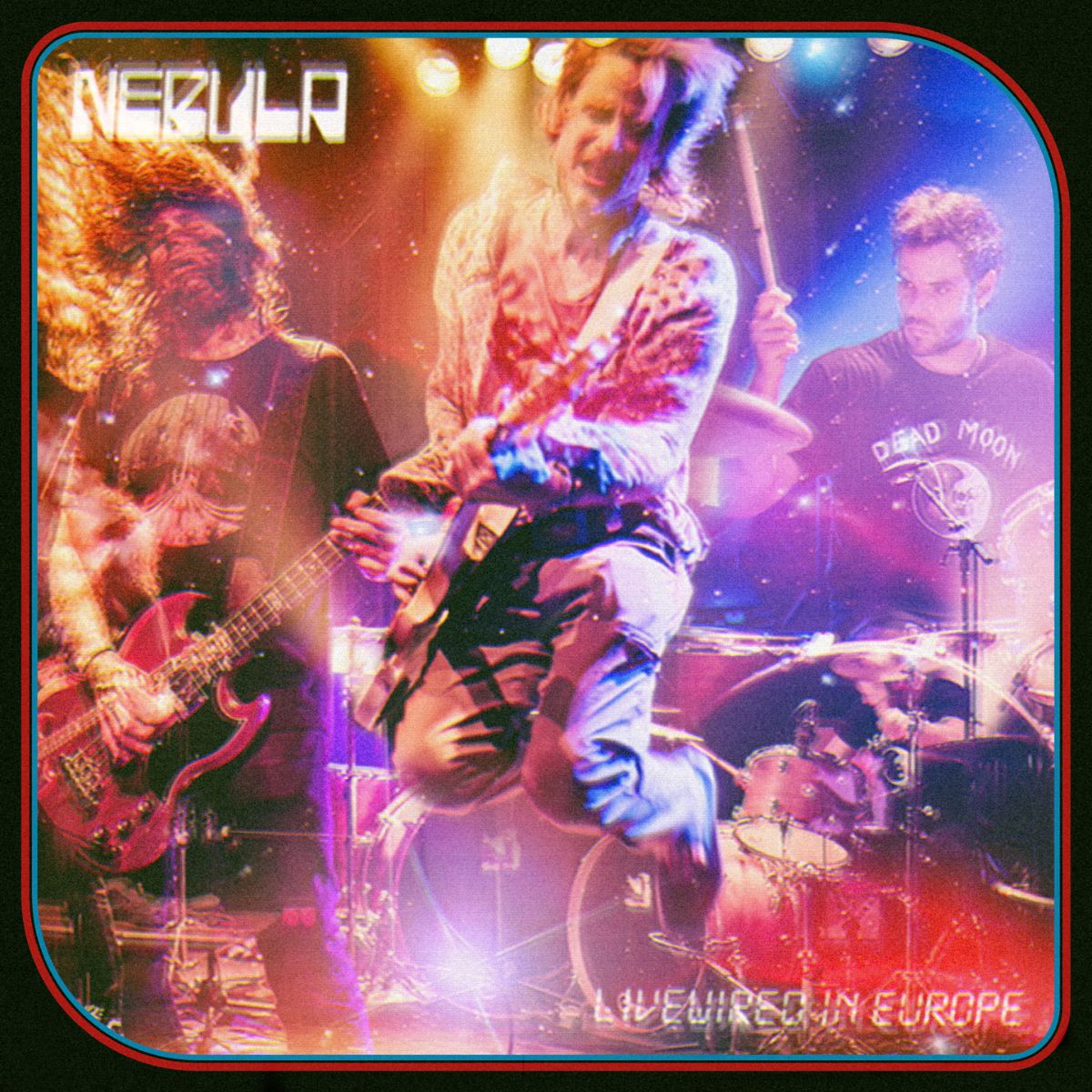
A busy 2023 continued on from a busy 2022 for SoCal heavy rockers Nebula as they supported their seventh album, Transmission From Mothership Earth (review here), and as filthy as was founding guitarist Eddie Glass‘ fuzz on that record, the nine-track (12 on the CD) Livewired in Europe pushes even further into the rawer stoner punk that’s always been at root in their sound. They hit Europe twice in 2023, in Spring and Fall, and in the lumbering sway of “Giant,” the drawl of “Messiah,” the Luciferian wink of that song and “Man’s Best Friend” earlier in the set, and the righteous urgency of what’s listed in the promo as “Down the Mother Fuckin’ Highway” or the shred-charged roll of “Warzone Speedwolf” in the bonus cuts, with bassist Ranch Sironi backing Glass on vocals and Mike Amster wailing away on drums — he’s the glue that never sounds stuck — they document the mania of post-rebirth Nebula as chaotic and forceful in kind, which is precisely what one would most hope for at the start of the gig. It’s not their first live outing, and hopefully it’s not the last either.
The self-recording/self-releasing Kamil Ziółkowski offers his second solo LP with The Land, following in short order from last Fall’s In Roundness (review here) and the two-songer issued a month after. At six songs and 35 minutes, The Land further distinguishes Mountain of Misery stylistically from Ziółkowski‘s main outfit, Spaceslug. Yes, the two bands share a penchant for textured tones and depth of mix (Haldor Grunberg at Satanic Audio mixed and mastered), and the slow-delivered melodic ‘gaze-style vocals are recognizable, but “The ’90s” puts Nirvana through this somewhat murky, hypnotic filter, and before its shimmering drone caps the album, on closer “Back Again,” the multi-instrumentalist/vocalist reminds a bit of Eddie Vedder. Seekers of nod will find plenty in “Awesome Burn” and the slightly harder-hitting “High Above the Mount” — desert rock in its second half, but on another planet’s desert — while the succession of “Path of Sound” and “Come on Down” feel specifically set to more post-rocking objectives; the plot and riffs likewise thickened. Most of all, it sounds like Mountain of Misery is digging in for a longer-term songwriting exploration, and quickly, and The Land only makes me more excited to find out where it’s headed.
The named-for-their-names trio Page Williams Turner is comprised of electronicist/mixer Michael Page (Sky Burial, many others), drummer/percussionist Robert Williams (of the harshly brilliant Nightstick) and saxophonist Nik Turner (formerly Hawkwind, et al), and the single piece broken into two sides on their Opposite Records self-titled debut is a duly experimentalist, mic-up-and-go extreme take on free psychedelic jazz, drone, industrial noisemaking, and time-what-is-time-signature manipulation. “Rorrim I” is drawn cinematically into an unstable wormhole circa its 14th minute, and teases serenity before the listener is eaten by a giant spider in some kind of unknowable ritual, and while “Rorrim II” feels less manic on average, its cycles, ebbs and flows remain wildly unpredictable. That’s the point, of course. If the combination of personnel and/or elements seems really, really weird on paper, you’re on the right track. This kind of thing will never be for everybody, but those who can get on its level will find it transportive. If that’s you, safe travels.
The spoken intro welcoming the listener to “the greatest and last show of your lives” at the head of the chugging “Mortician Magician” is a little over the top considering the straightforward vibe of much of what follows on the 10 tracks of 2023’s The Hex of Penn’s Woods from Pennsylvania-based heavy rockers Almost Honest, but whether it’s the banjo early or the cowbell later in “Haunted Hunter,” the post-Fu Manchu riffing and gang shouts of “Alien Spiders,” “Ballad of a Mayfly”‘s whistling, the organ in “Amish Hex” (video premiere here), the harmonies of “Colony of Fire,” a bit of sax on “Where the Quakers Dwell,” that quirk in the opener, the funk wrought throughout by Garrett Spangler‘s bass and Quinten Spangler‘s drumming, the metal-rooted intertwining of Shayne Reed and David Kopp‘s guitars or the structural solidity beneath all of it, the band give aural character to coincide with the regionalist themes based on their Pennsylvania Dutch, foothill-Appalachian surroundings, and they dare to make their third album’s 44 minutes fun in addition to thoughtful in its craft.
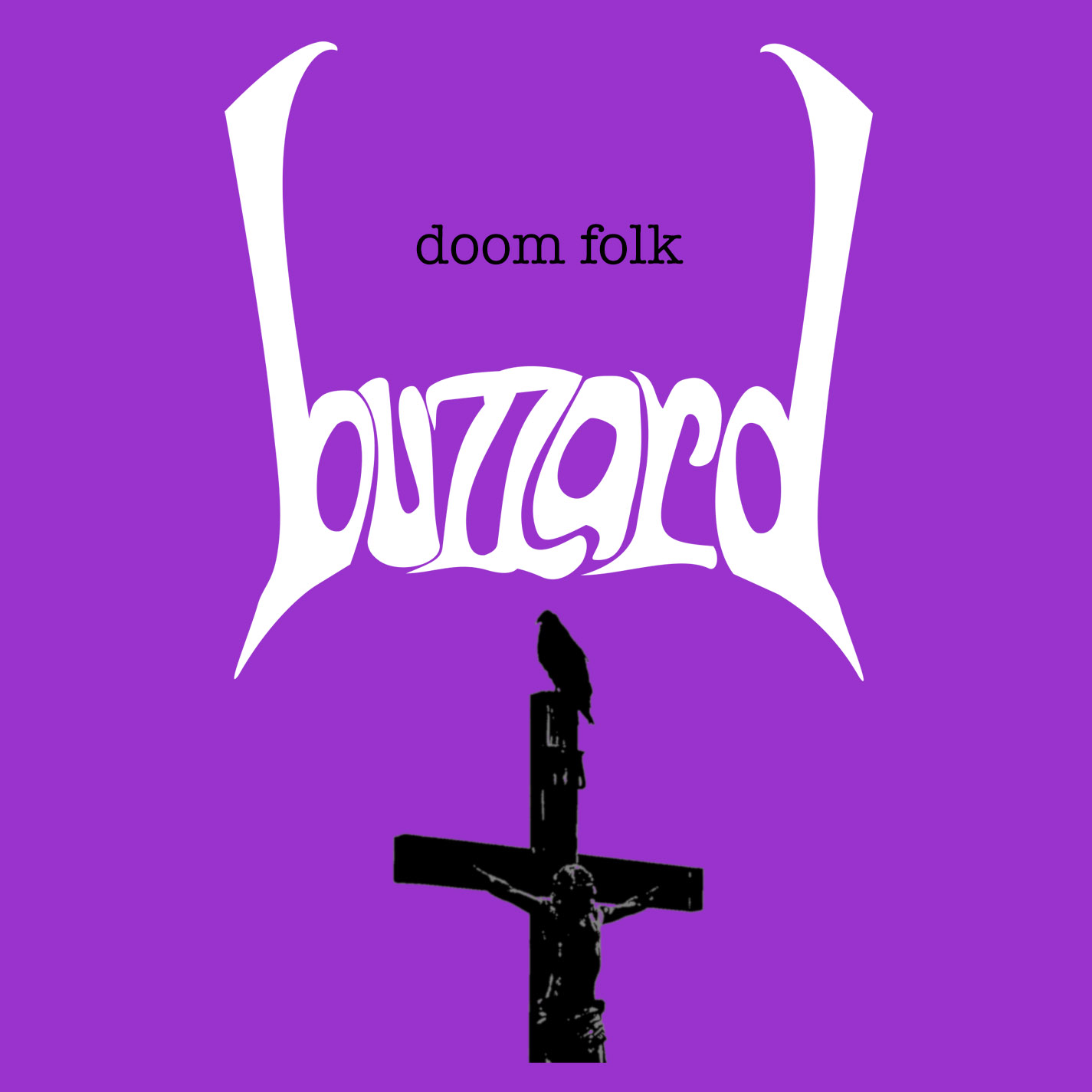
Based in Western Massachusetts, Buzzard is the solo-project of Christopher Thomas Elliott, and the title of his debut album, Doom Folk, describes his particular intention. As the 12-song/44-minute outing unfolds from the eponymous “Buzzard” at its outset (even that feels like a Sabbathian dogwhistle), the blend of acoustic and electric guitar forms the heart of the arrangements, but more than that, it’s doom and folk, stylistically, that are coming together. What makes it work is that Elliott avoids the trap of 2010s-ish neo-folk posturing as a songwriter, and while there’s a ready supply of apocalyptic mood in the lyrical storytelling and abundant amplified distortion put to dynamic use, the folk he’s speaking to is more traditional. Not lacking intricacy in their percussion, arrangements or melodies, you could nonetheless learn these songs and sing them. “Death Metal in America” alone makes it worth the price of admission, let alone the stellar “Lucifer Rise,” but the sweet foreboding and build of the subsequent “Harvester of Souls” gets even closer to Buzzard‘s intention in bringing together the two sides to manifest a kind of heavy that is immediately and impressively its own. Doom Folk on.
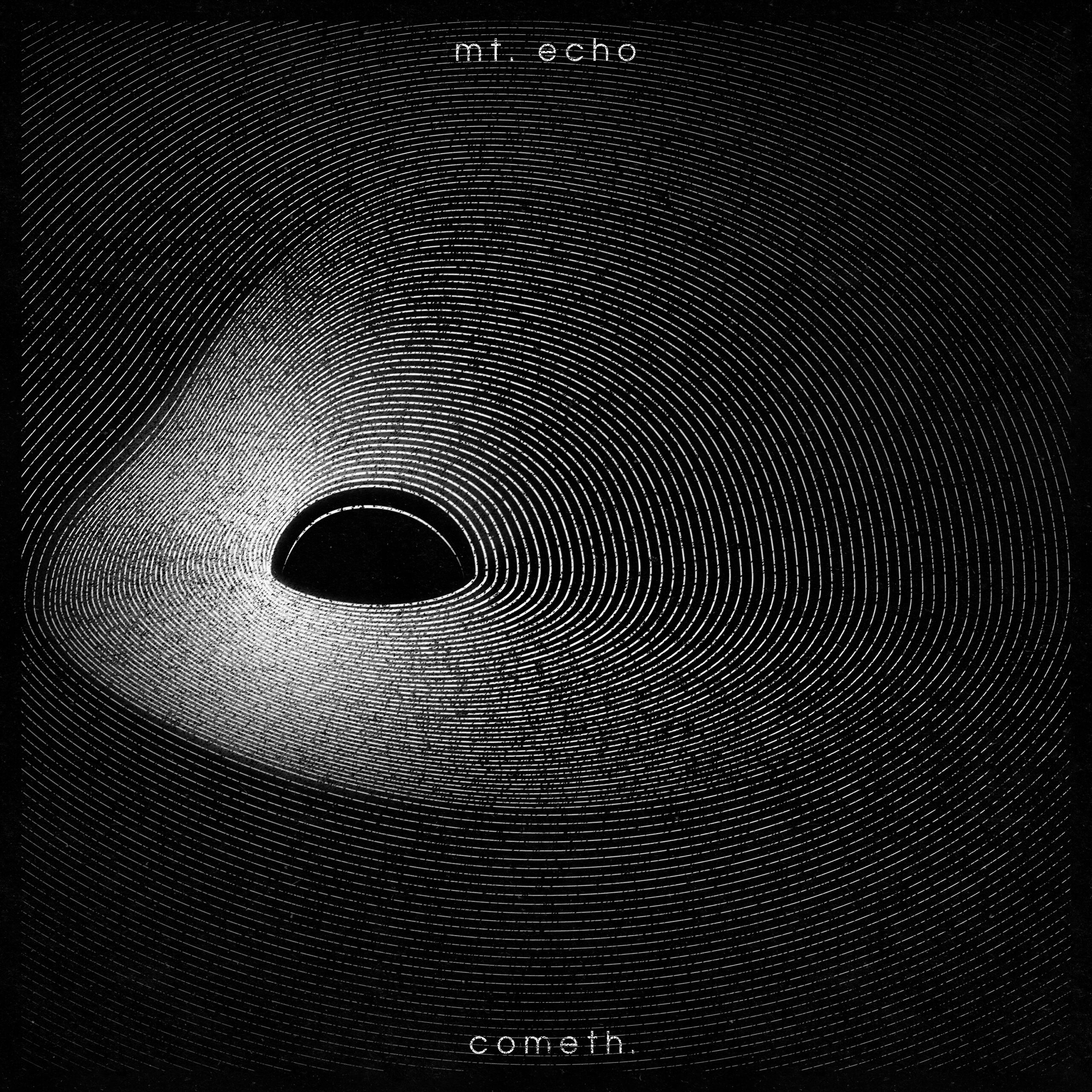
Mt. Echo begin their third full-length primed for resonance with the expansive, patiently wrought “Veil of Unhunger,” leading with their longest track (immediate points) as a way of bringing the listener into the record’s mostly instrumental course with a shimmer of post-rock and later-emerging density of tone. The Nijmegen trio’s follow-up to 2022’s Electric Empire (review here) plays out across a breadth that extends beyond the 44-minute runtime and does more in its pieces than flow smoothly between its loud/quiet tradeoffs. “Round and Round Goes the Crown” brings a guest appearance from Oh Hazar guitarist/vocalist Stefan Kollee that pushes the band into a kind of darker, thoroughly Dutch heavy prog, but even that shift is made smoother by the spoken part on “Brutiful Your Heart” just before, and not necessarily out of line with how “Set at Rest” answers the opener, or the rumble, nod and wash that cap with “If I May.” The overarching sense of growth is palpable, but the songs express more atmospherically than just the band pushing themselves.
They’re probably to raw and dug into Satanic cultistry to agree, but with Per “Hellbutcher” Gustavsson (Nifelheim) on vocals, guitarists Beelzeebubth (Mystifier, etc.) and Nikolas “Sprits” Moutafis (Mirror, etc.), bassist Taneli Jarva (Impaled Nazarene, etc.) and drummer Tasos Danazoglou (Mirror, ex-Electric Wizard, etc.) in the lineup for second LP God Damned You to Hell, it’s probably safe to call Friends of Hell a supergroup. Such considerations ultimately have little to do with how the rolling proto-NWOBHM triumphs of “Bringer of Evil” and “Arcane Macabre” play out, but it explains the current of extremity in their purposes that comes through at the start with the title-track and the severity that surrounds in the layering of “Ave Satanatas” as they journey into the underworld to finish with the eight-minute “All the Colors of the Dark.” You’re either going to buy the backpatch or shrug and not get it, and that seems like it’s probably fine with them.
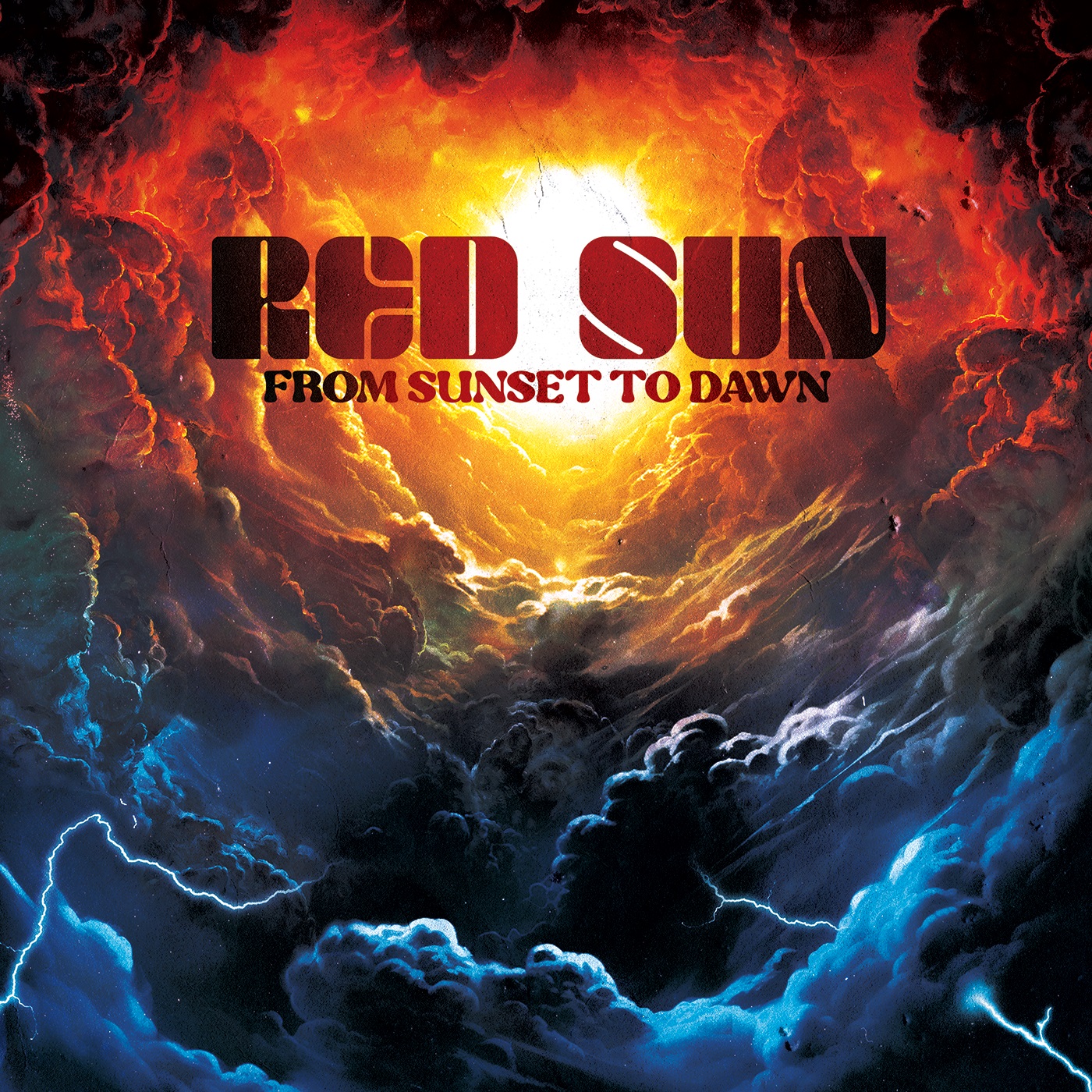
Not to be confused with France’s Red Sun Atacama, Italian prog-heavy psych instrumentalists Red Sun mark their 10th anniversary with the release of their third album, From Sunset to Dawn, and run a thread of doom through the keyboardy “The Sunset Turns Purple” and “The Shape of Night” on side A to manifest ‘sunset’ while side B unfolds with airier guitar in “The Coldness of the New Moon” and “Towards the End of Darkness” en route to the raga-leaning “The New Sun,” but as much as there is to be said for the power of suggestion and narrative titling, it’s the music itself that realizes the progression described in the name of the album. With a clear influence from My Sleeping Karma in “The Coldness of the New Moon” and the blend of organic hand-percussion and digitized melody in “The New Sun,” Red Sun immerse the listener in the procession from the intro “Where Once Was Light” (mirrored by “Intempesto” at the start of side B) onward, with each song serving as a chapter in the linear concept and story.
Cinematic enough in sheer sound and the corresponding intensity of mood to warrant the visual collaboration with Kai Lietzke that accompanies the audio release, the collaboration between Hamburg electronic experimentalist Peter Wolff (Downfall of Gaia) and vocalist Jens Borgaard (Knifefight!, solo) moves between minimalist soundscaping and more consuming, weighted purposes. Moments like the beginning of “Transmit” might leave one waiting for when the Katatonia song is going to kick in, but Wolff & Borgaard engage on their own level as each of the nine pieces follows its own poetic course, able to be caustic like the culmination of “Observe” or to bring the penultimate “Extol” to silence gradually before “Reaper” bursts to life with clearly intentional contrast. I heard this or that streaming service is making a Blade Runner 2099 tv series. Sounds like a terrible idea, but it might just be watchable if Wolff & Borgaard get to do the score with a similar evocations of software and soul.
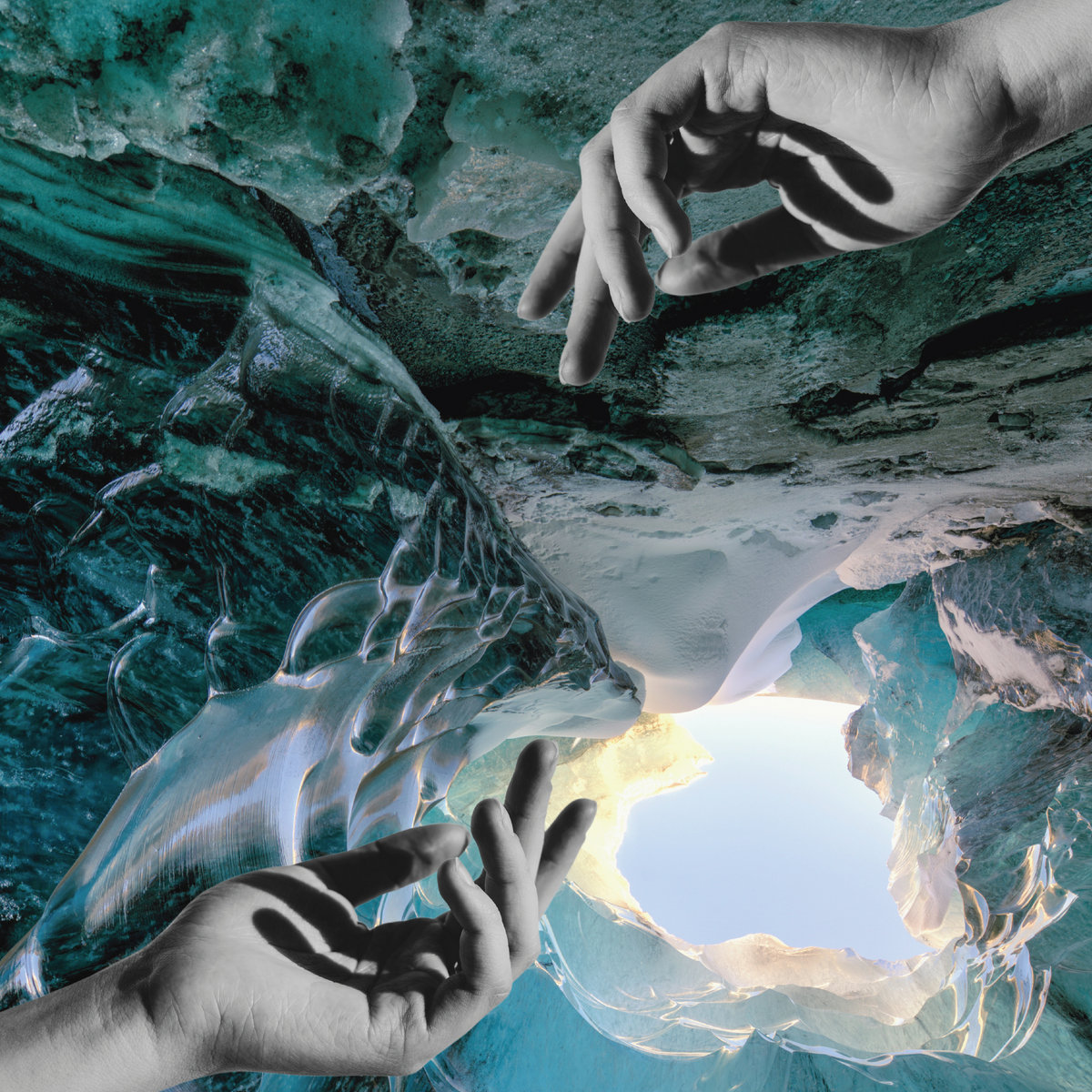
The Portland, Oregon, two-piece of guitarist/bassist/vocalist Benjamin Caragol (ex-Burials) and drummer Ben Stoller (currently also Simple Forms, Dark Numbers, ex-Vanishing Kids) do much to ingratiate themselves both to the crowded underground of which their hometown is an epicenter, and to the broader sphere of heavy-progressivism in modern doom and sludge. Across the five tracks of their self-released for now debut full-length, Glacial Erratic, the pair offer a panacea of heavy sounds, angular in the urgency of “Toeing the Line,” which opens, or the later thud of “Selective Memory” (the latter of which also appeared on their 2020 self-titled EP), which seem more kin to Baroness or Elder crashes and twists of “A Distant Light” or the interplay of ambience, roll, and sharpness of execution that’s been held in reserve for the nine-minute “Wounds at the Stem” as they leave off. Melody, particularly in Caragol‘s vocals, is crucial in tying the material together, and part of what gives Semuta such apparent potential, but they seem already to have figured out a lot about who they want to be musically. All of which is to say don’t be surprised when this one shows up on the list of 2024’s best debut albums come December.
Posted in Reviews on February 26th, 2024 by JJ Koczan
Admittedly, there’s some ambition in my mind calling this the ‘Spring 2024 Quarterly Review.’ I’m done with winter and March starts on Friday, so yeah, it’s kind of a reach as regards the traditional seasonal patterns of Northern New Jersey where I live, but hell, these things actually get decided here by pissing off a rodent. Maybe it doesn’t need to be so rigidly defined after all.
After doing QRs for I guess about nine years now, I finally made myself a template for the back-end layout. It’s not a huge leap, but will mean about five more minutes I can dedicate to listening, and when you’re trying to touch on 50 records in the span of a work week and attempt some semblance of representing what they’re about, five minutes can help. Still, it’s a new thing, and if you see ‘ARTIST’ listed where a band’s name should be or LINK where ‘So and So on Facebook’ goes, a friendly comment letting me know would be helpful.
Thanks in advance and I hope you find something in all of this to come that speaks to you. I’ll try to come up for air at some point.
Quarterly Review #1-10:
—
Slift, Ilion
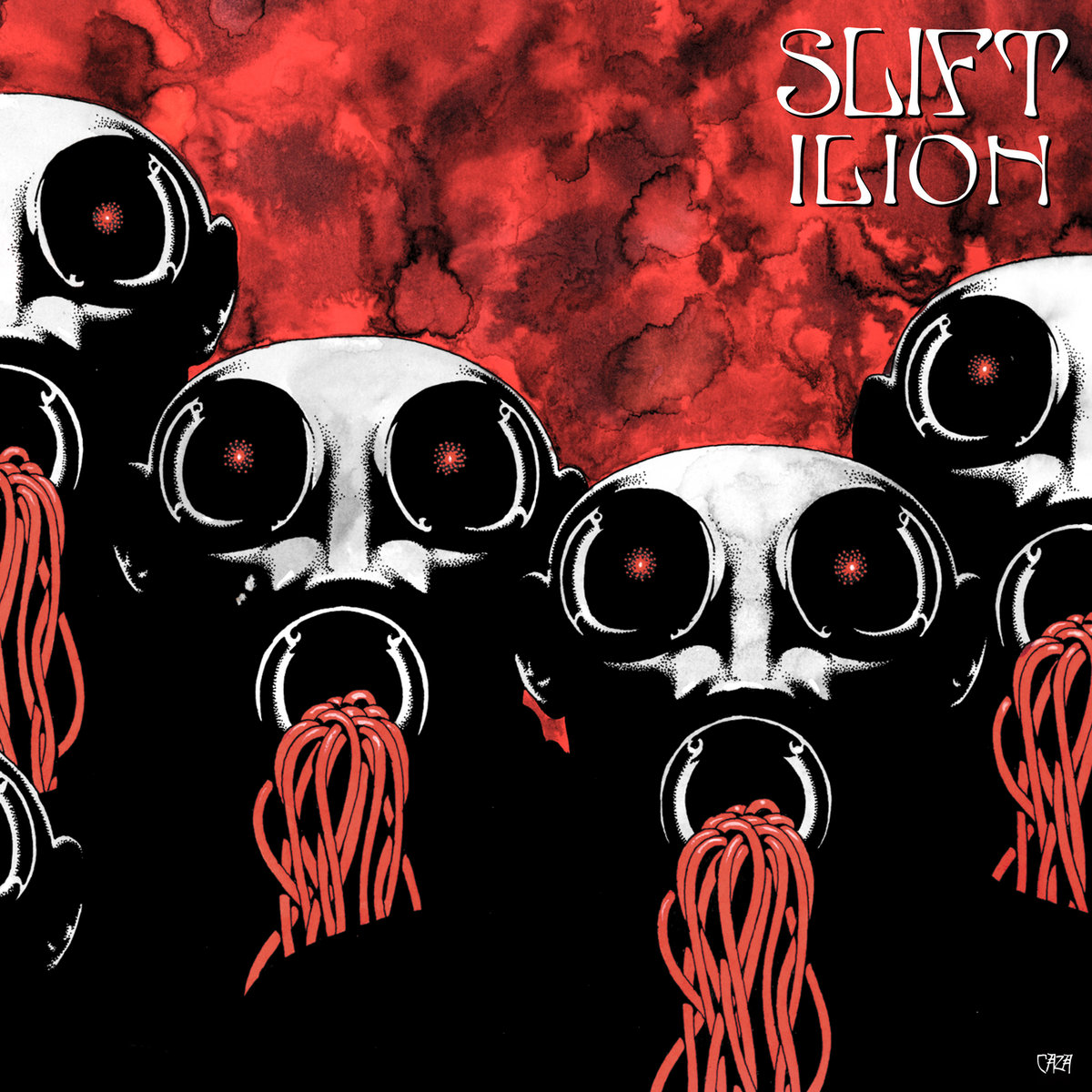
One of the few non-billionaire groups of people who might be able to say they had a good year in 2020, Toulouse, France, spaceblasters Slift signed to Sub Pop on the strength of that wretched year’s Ummon (review here) and the spectacle-laced live shows with which they present their material. Their ideology is cosmic, their delivery markedly epic, and Ilion pushes the blinding light and the rhythmic force directly at you, creating a sweeping momentum contrasted by ambient stretches like that tucked at the end of 12-minute hypnotic planetmaker “The Words That Have Never Been Heard,” the drone finale “Enter the Loop” or any number of spots between along the record’s repetition-churning, willfully-overblown 79-minute course of builds and surging payoffs. A cynic might tell you it’s not anything Hawkwind didn’t do in 1974 offered with modern effects and beefier tones, but, uh, is that really something to complain about? The hype around Ilion hasn’t been as fervent as was for Ummon — it’s a different moment — but Slift have set themselves on a progressive course and in the years to come, this may indeed become their most influential work. For that alone it’s among 2024’s most essential heavy albums, never mind the actual journey of listening. Bands like this don’t happen every day.
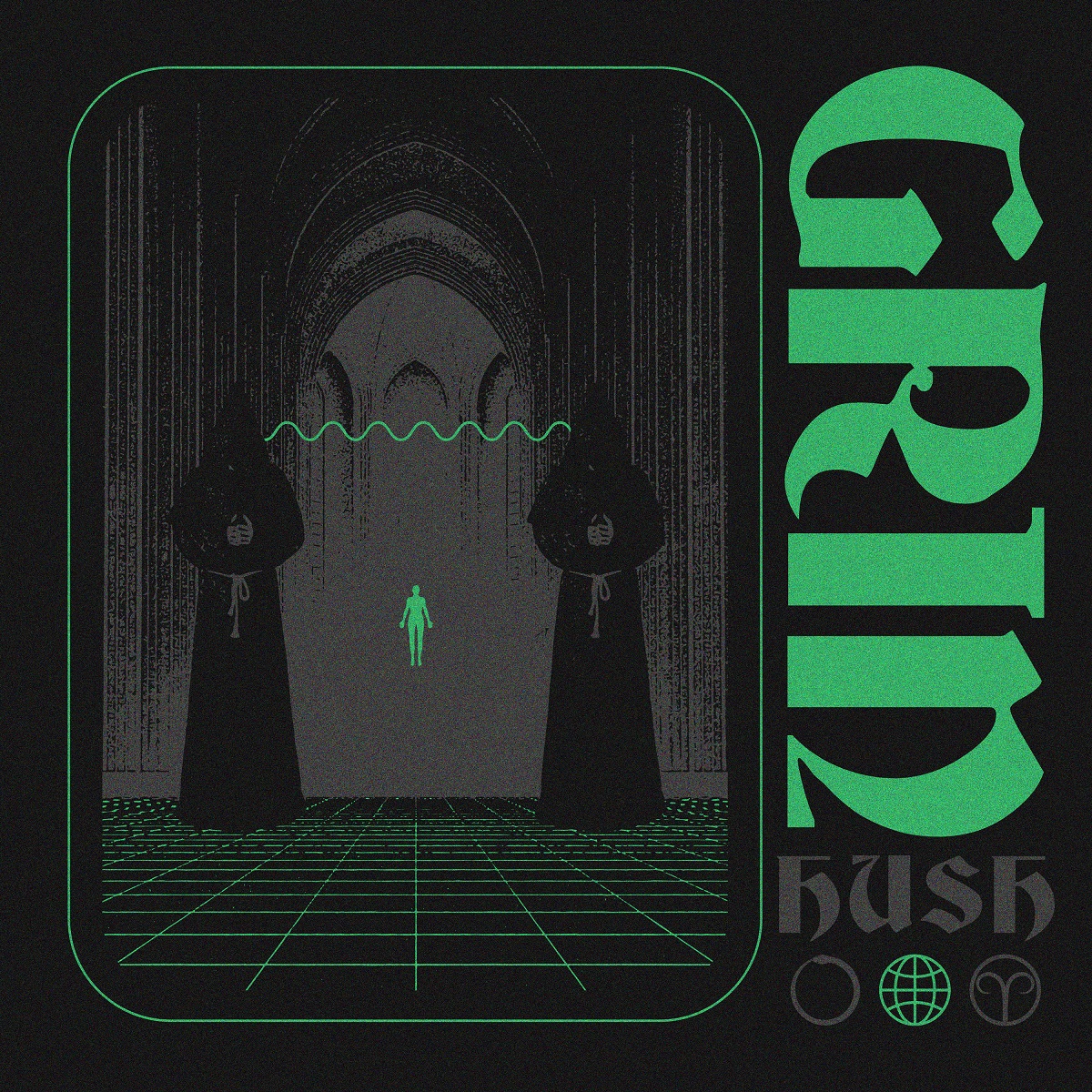
The only thing keeping Grin from being punk rock is the fact that they don’t play punk. Otherwise, the self-recording, self-releasing (on The Lasting Dose Records) Berlin metal-sludge slingers tick no shortage of boxes as regards ethic, commitment to an uncompromised vision of their sound, and on Hush, their fourth long-player which features tracks from 2023’s Black Nothingness (review here), they sharpen their attack to a point that reminds of dug-in Swedish death metal on “Pyramid” with a winding lead line threaded across, find post-metallic ambience in “Neon Skies,” steamroll with the groove of the penultimate “The Tempest of Time,” and manage to make even the crushing “Midnight Blue Sorrow” — which arrives after the powerful opening statement of “Hush” “Calice” and “Gatekeeper” — have a sense of creative reach. With Sabine Oberg on bass and Jan Oberg handling drums, guitar, vocals, noise and production, they’ve become flexible enough in their craft to harness raw charge or atmospheric sprawl at will, and through 16 songs and 40 minutes (“Portal” is the longest track at 3:45), their intensity is multifaceted, multi-angular, and downright ripping. Aggression suits this project, but that’s never all that’s happening in Grin, and they’re stronger for that.
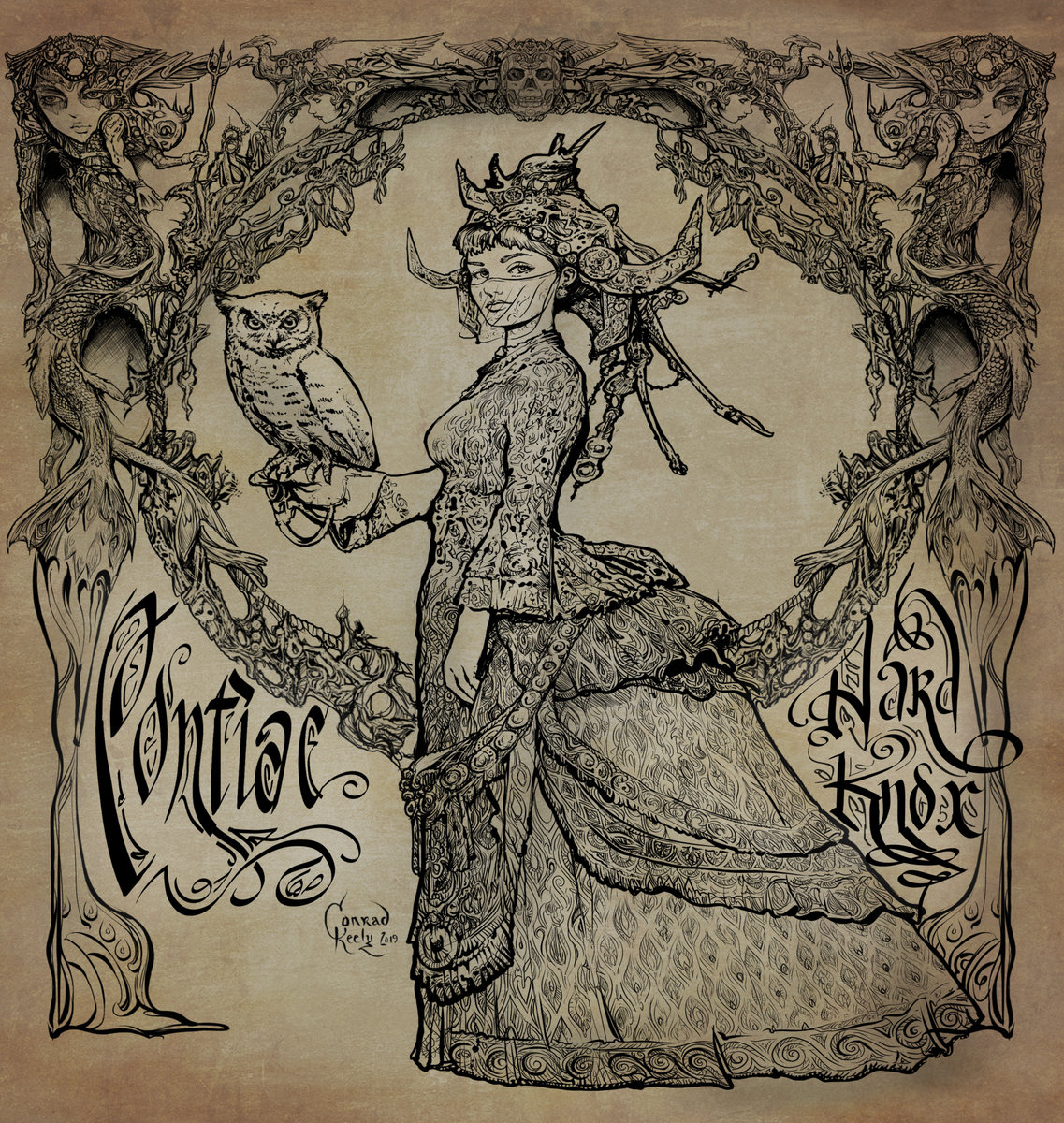
A debut solo-band outing from guitarist, bassist, vocalist and songwriter Dave Cotton, also of Seven Nines and Tens, Pontiac‘s Hard Knox lands on strictly limited tape through Coup Sur Coup Records and is only 16 minutes long, but that’s time enough for its six songs to find connections in harmony to Beach Boys and The Beatles while sometimes dropping to a singular, semi-spoken verse in opener/longest track (immediate points, even though four minutes isn’t that long) “Glory Ragged,” which moves in one direction, stops, reorients, and shifts between genres with pastoralism and purpose. Cotton handles six-string and 12-string, but isn’t alone in Pontiac, as his Seven Nines and Tens bandmate Drew Thomas Christie handles drums, Adam Vee adds guitar, drums, a Coke bottle and a Brita filter, and CJ Wallis contributes piano to the drifty textures of “Road High” before “Exotic Tattoos of the Millennias” answers the pre-christofascism country influence shown on “Counterculture Millionaire” with an oldies swing ramble-rolling to a catchy finish. For fun I’ll dare a wild guess that Cotton‘s dad played that stuff when he was a kid, as it feels learned through osmosis, but I have no confirmation of that. It is its own kind of interpretation of progressive music, and as the beginning of a new exploration, Cotton opens doors to a swath of styles that cross genres in ways few are able to do and remain so coherent. Quick listen, and it dares you to keep up with its changes and patterns, but among its principal accomplishments is to make itself organic in scope, with Cotton cast as the weirdo mastermind in the center. They’ll reportedly play live, so heads up.
Already fluid as they open with the rocker “Into the Space,” exclamatory Chilean five-piece The Polvos! delve into more psychedelic reaches in “Fire Dance” and the jammy and (appropriately) floaty midsection of “Going Down,” the centerpiece of their 35-minute sophomore LP, Floating. That song bursts to life a short time later and isn’t quite as immediate as the charge of “Into the Space,” but serves as a landmark just the same as “Acid Waterfall” and “The Anubis Death” hold their tension in the drums and let the guitars go adventuring as they will. There’s maybe some aspect of Earthless influence happening, but The Polvos! meld that make-it-bigger mentality with traditional verse/chorus structures and are more grounded for it even as the spaces created in the songs give listeners an opportunity for immersion. It may not be a revolution in terms of style, but there is a conversation happening here with modern heavy psych from Europe as well that adds intrigue, and the band never go so far into their own ether so as to actually disappear. Even after the shreddy finish of “The Anubis Death,” it kind of feels like they might come back out for an encore, and you know, that’d be just fine.
The Cosmic Gospel, Cosmic Songs for Reptiles in Love
With a current of buzz-fuzz drawn across its eight component tracks that allow seemingly disparate moves like the Blondie disco keys in “Hot Car Song” to emerge from the acoustic “Core Memory Unlocked” before giving over to the weirdo Casio-beat bounce of “Psychrolutes Marcidus Man,” a kind of ’60s character reimagined as heavy bedroom indie, The Cosmic Gospel‘s Cosmic Songs for Reptiles in Love isn’t without its resentments, but the almost-entirely-solo-project of Mercata, Italy-based multi-instrumentalist Gabriel Medina is more defined by its sweetness of melody and gentle delivery on the whole. An experiment like the penultimate “Wrath and Gods” carries some “Revolution 9” feel, but Medina does well earlier to set a broad context amid the hook of opener “It’s Forever Midnight” and the subsequent, lightly dub beat and keyboard focus on “The Richest Guy on the Planet is My Best Friend,” such that when closer “I Sew Your Eyes So You Don’t See How I Eat Your Heart” pairs the malevolent intent of its title with light fuzzy soloing atop an easy flowing, summery flow, the album has come to make its own kind of sense and define its path. This is exactly what one would most hope for it, and as reptiles are cold-blooded, they should be used to shifts in temperature like those presented throughout. Most humans won’t get it, but you’ve never been ‘most humans,’ have you?
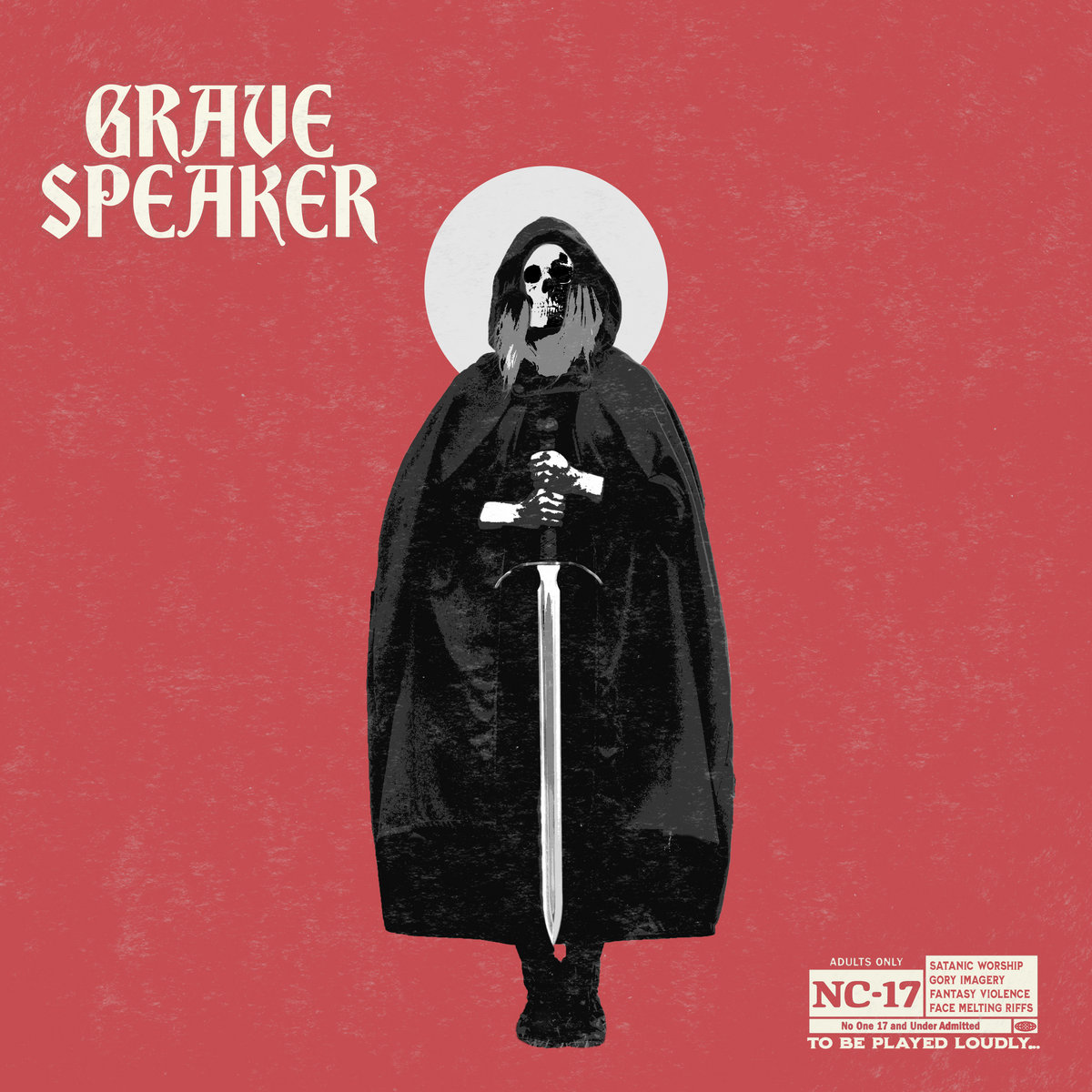
Massachusetts garage doomers Grave Speaker‘s self-titled debut was issued digitally by the band this past Fall and was snagged by Electric Valley Records for a vinyl release. The Mellotron melancholia that pervades the midsection of the eponymous “Grave Speaker” justifies the wax, but the cult-leaning-in-sound-if-not-theme outfit that marks a new beginning for ex-High n’ Heavy guitarist John Steele unfurl a righteously dirty fuzz over the march of “Blood of Old” at the outset and then immediately up themselves in the riffy stoner delve of “Earth and Mud.” The blown-out vocals on the latter, as well as the far-off-mic rawness of “The Bard’s Theme” that surrounds its Hendrixian solo, remind of a time when Ice Dragon roamed New England’s troubled woods, and if Grave Speaker will look to take on a similar trajectory of scope, they do more than drop hints of psychedelia here, in “Grave Speaker” and elsewhere, but they’re no more beholden to that than the Sabbathism of capper “Make Me Crawl” or the cavernous echo of “Earthbound.” It’s an initial collection, so one expects they’ll range some either way with time, but the way the production becomes part of the character of the songs speaks to a strong idea of aesthetic coming through, and the songwriting holds up to that.
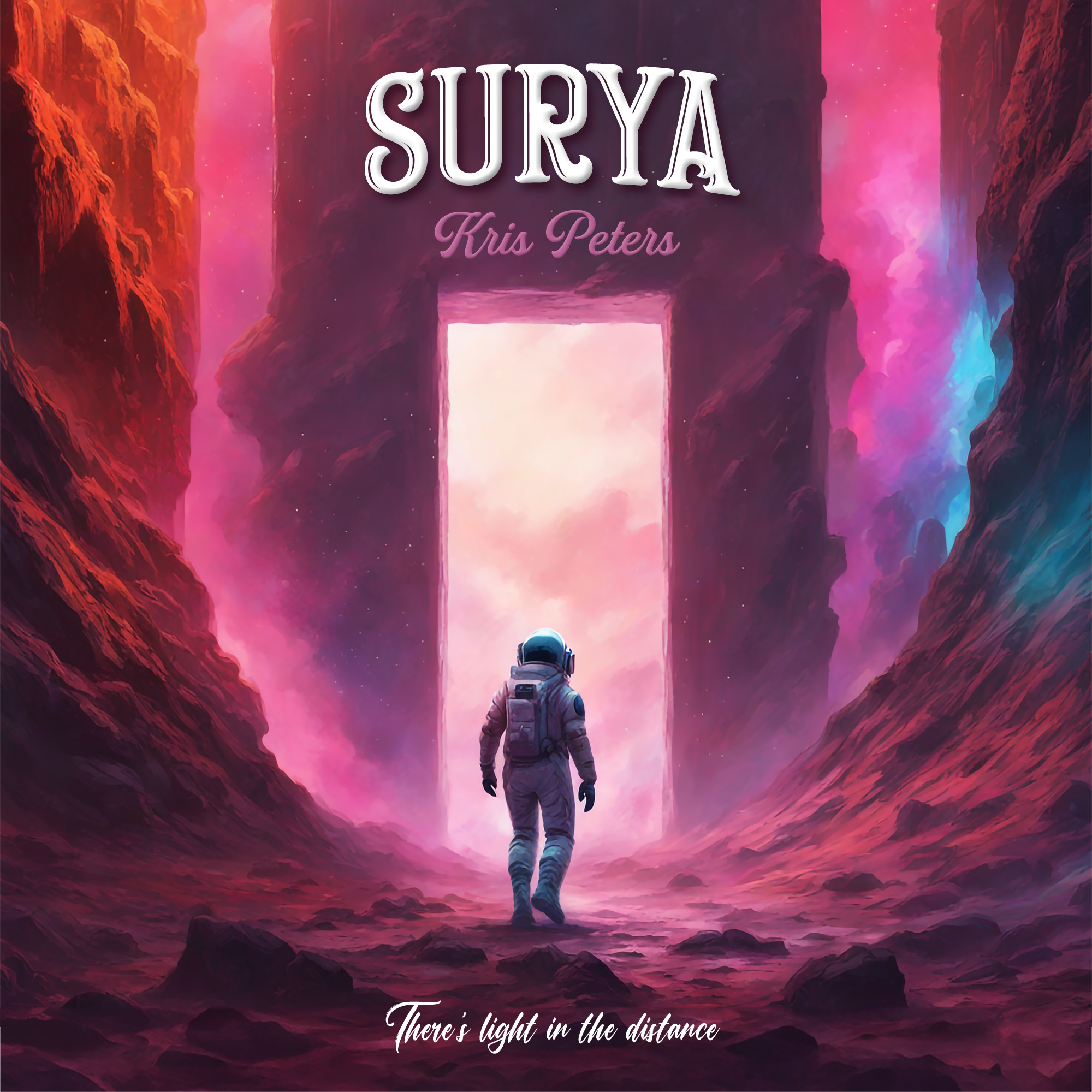
While at the same time proffering his most expansive vision yet of a progressive psychedelia weighted in tone, emotionally expressive and able to move its focus fluidly between its layers of keyboard, synth and guitar such that the mix feels all the more dynamic and the material all the more alive (there’s an entire sub-plot here about the growth in self-production; a discussion for another time), Surya Kris Peters‘ 10-song/46-minute There’s Light in the Distance also brings the former Samsara Blues Experiment guitarist/vocalist closer to uniting his current projects than he’s yet been, the distant light here blurring the line where Surya Kris Peters ends and the emergently-rocking Fuzz Sagrado begins. This process has been going on for the last few years following the end of his former outfit and a relocation from Germany to Brazil, but in its spacious second half as well as the push of its first, a song like “Mode Azul” feels like there’s nothing stopping it from being played on stage beyond personnel. Coinciding with that are arrangement details like the piano at the start of “Life is Just a Dream” or the synth that gives so much movement under the echoing lead in “Let’s Wait Out the Storm,” as Peters seems to find new avenues even as he works his way home to his own vision of what heavy rock can be.
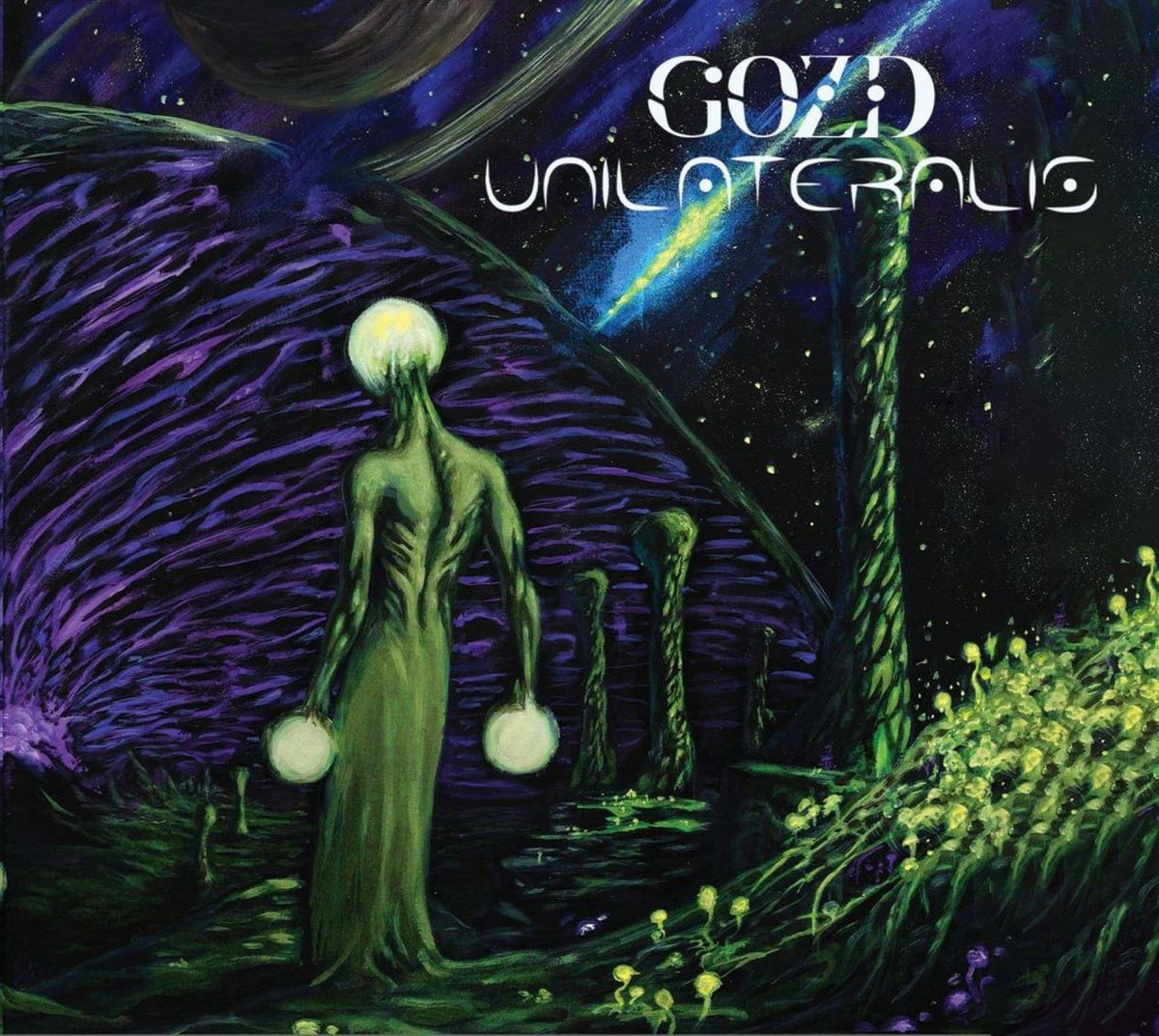
Unilateralis is the four-song follow-up EP to Polish heavydelvers Gozd‘s late-2023 debut album, This is Not the End, and its 20-plus minutes find a place for themselves in a doom that feels both traditional and forward thinking across eight-minute opener and longest track (immediate points, even for an EP) “Somewhere in Between” before the charge of “Rotten Humanity” answers with brasher thrust and aggressive-undercurrent stoner rock with an airy post-metallic break in the middle and rolling ending. From there, “Thanatophobia” picks up the energy from its ambient intro and explodes into its for-the-converted nod, setting up a linear build after its initial verses and seeing it through with due diligence in noise, and closer “Tentative Minds” purposefully hypnotizes with its vague-speech in the intro and casual bassline and drum swing before the riff kicks in for the finale. The largesse of its loudest moments bolster the overarching atmosphere no less than the softest standalone guitar parts, and Gozd seem wholly comfortable in the spaces between microgenres. A niche among niches, but that’s also how individuality happens, and it’s happening here.
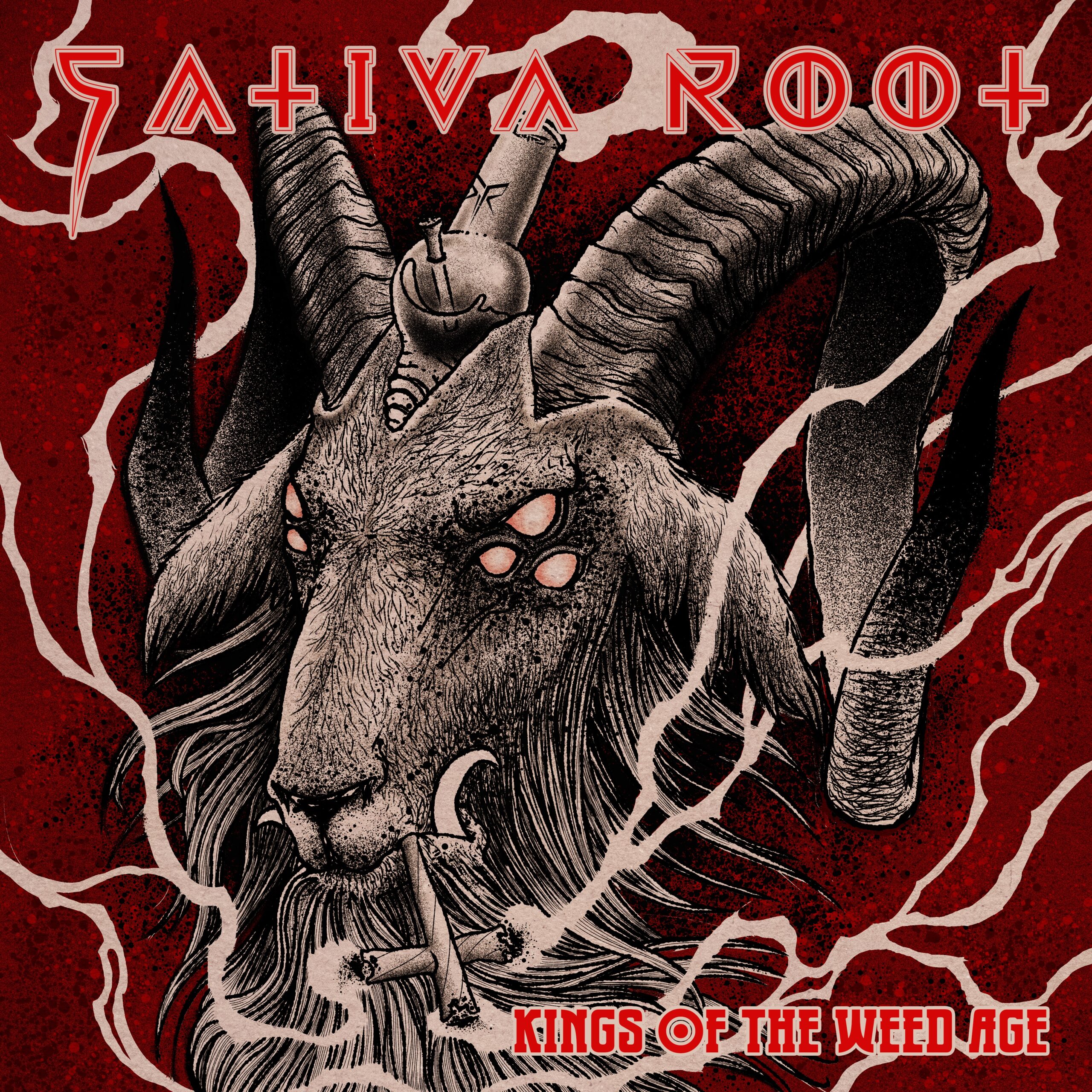
You wouldn’t accuse Austria’s Sativa Root of thematic subtlety on their third album, Kings of the Weed Age, which broadcasts a stoner worship in offerings like “Megalobong” and “Weedotaur” and probably whatever “F.A.T.” stands for, but that’s not what they’re going for anyway. With its titular intro starting off, spoken voices vague in the ambience, “Weedotaur”‘s 11 minutes lumber with all due bong-metallian slog, and the crush becomes central to the proceedings if not necessarily unipolar in terms of the band’s approach. That is to say, amid the onslaught of volume and tonal density in “Green Smegma” and the spin-your-head soloing in “Assassins Weed” (think Assassins Creed), the instrumentalist course undertaken may be willfully monolithic, but they’re not playing the same song five times on six tracks and calling it new. “F.A.T.” begins on a quiet stretch of guitar that recalls some of YOB‘s epics, complementing both the intro and “Weedotaur,” before bringing its full weight down on the listener again as if to underscore the message of its stoned instrumental catharsis on its way out the door. They sound like they could do this all day. It can be overwhelming at times, but that’s not really a complaint.
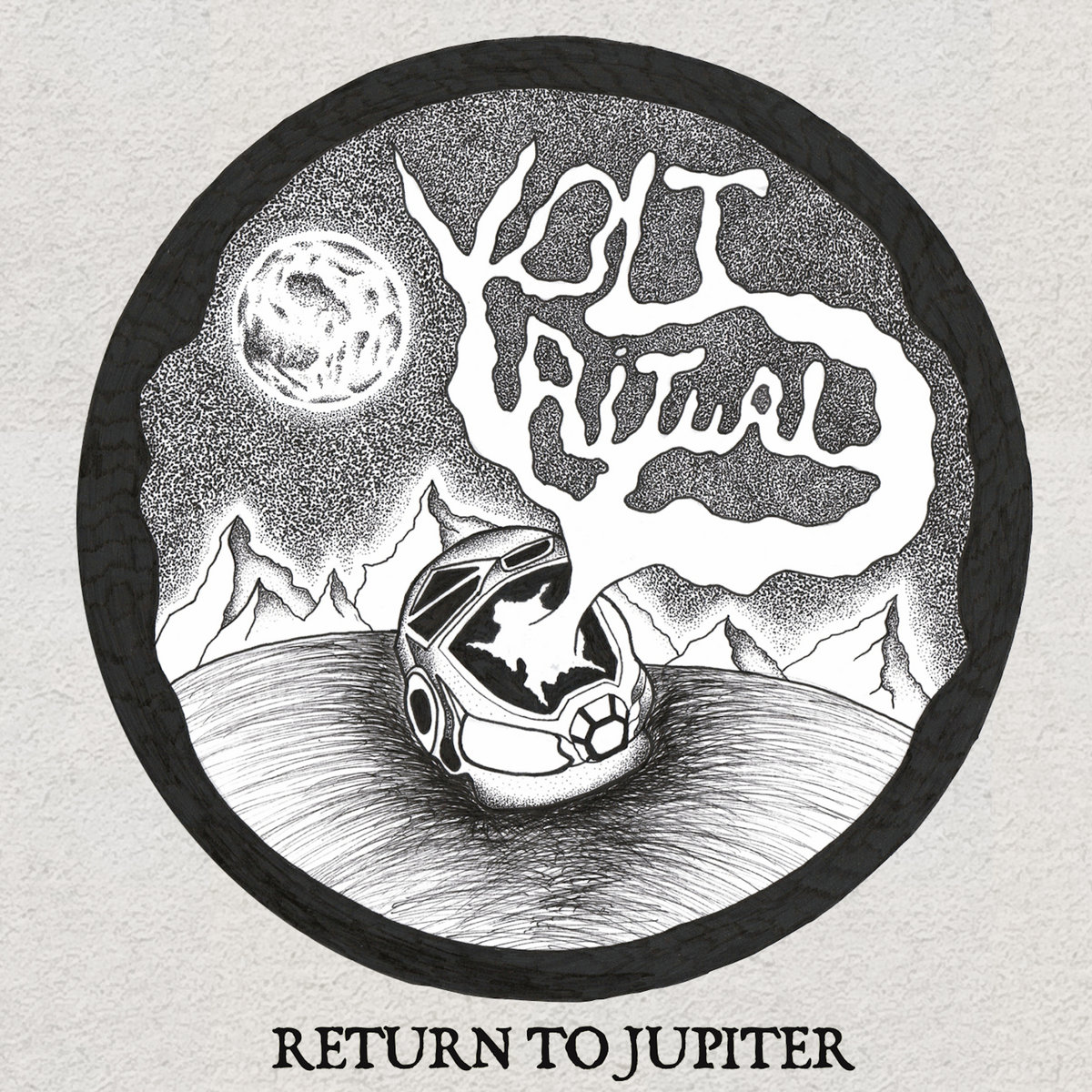
Comprised of guitarist/vocalist Mateusz, bassist Michał and drummer Tomek, Polish riffcrafters Volt Ritual are appealingly light on pretense as they offer Return to Jupiter‘s four tracks, and though as a Star Trek fan I can’t get behind their lyrical impugning of Starfleet as they imagine what Earth colonialism would look like to a somehow-populated Jupiter, they’re not short on reasons to be cynical, if in fact that’s what’s happening in the song. “Ghostpolis” follows the sample-laced instrumental opener “Heavy Metal is Good for You” and rolls loose but accessible even in its later shouts before the more uptempo “Gwiazdolot” swaps English lyrics for Polish (casting off another cultural colonialization, arguably) and providing a break ahead of the closing title-track, which is longer at 7:37 and a clear focal point for more than just bearing the name of the EP, summarizing as it does the course of the cuts before it and even bringing a last scream as if to say “Ghostpolis” wasn’t a fluke. Their 2022 debut album began with “Approaching Jupiter,” and this Return feels organically built off that while trying some new ideas in its effects and general structure. One hopes the plot continues in some way next time along this course.
Posted in Reviews on November 30th, 2023 by JJ Koczan
Generally I think of Thursday as the penultimate day of a given Quarterly Review. This one I was thinking of adding more days to get more stuff in ahead of year-end coverage coming up in December. I don’t know what that would do to my weekend — actually, yes I do — but sometimes it’s worth it. I’m yet undecided. Will let you know tomorrow, or perhaps not. Dork of mystery, I am.
Today is PACKED with cool sounds. If you haven’t found something yet that’s really hit you, it might be your day.
Quarterly Review #31-40:
—
Tortuga, Iterations
From traditionalist proto-doom and keyboard-inflected prog to psychedelic jamming and the Mountain-style start-stop riff on “Lilith,” Poznań, Poland’s Tortuga follow 2020’s Deities (discussed here) with seven tracks and 45 minutes that come across as simple and barebones in the distortion of the guitar and the light reverb on the vocals, but the doom rock doesn’t carry from “Lilith” into “Laspes,” which has more of a ’60s psych crux, a mellow but not unjoyful meander in its first half turning to a massive lumber in the second, all the more elephantine with a solo overtop. They continue throughout to cross the lines between niches — “Quaus” has some dungeon growls, “Epitaph” slogs emotive like Pallbearer, etc. — and offer finely detailed performances in a sound malleable to suit the purposes of their songs. Polish heavy doesn’t screw around. Well, at least not any more than it wants to. Tortuga‘s creative reach becomes part of the character of the album.
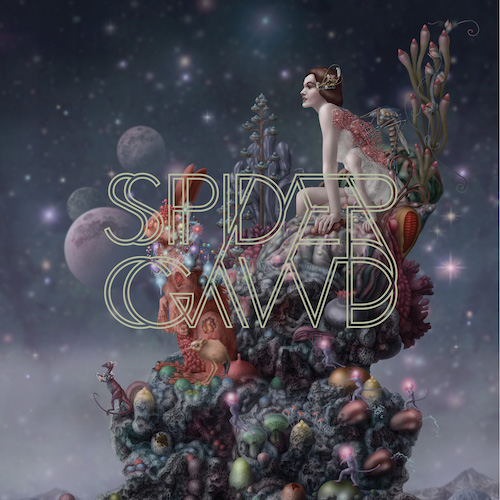
I’m sorry, I gotta ask: What’s the point of anything when Spidergawd can put out a record like VII and it’s business as usual? Like, the world doesn’t stop for a collective “holy shit” moment. Even in the heavy underground, never mind general population. These are the kinds of songs that could save lives if properly employed to do so, and for the Norwegian outfit, it’s just what they do. The careening hooks of “Sands of Time” and “The Tower” at the start, the melodies across the span. The energy. I guess this is dad rock? Shit man, I’m a dad. I’m not this cool. Spidergawd have seven records out and I feel like Metallica should’ve been opening for them at stadiums this past summer, but they remain criminally underrated and perhaps use that as flexibility around their pop-heavy foundation to explore new ideas. The last three songs on VII — “Afterburner,” “Your Heritage” and “…And Nothing But the Truth” — are among the strongest and broadest Spidergawd have ever done, and “Dinosaur” and the classic-metal ripper “Bored to Death” give them due preface. One of the best active heavy rock bands, living up to and surpassing their own high standards.
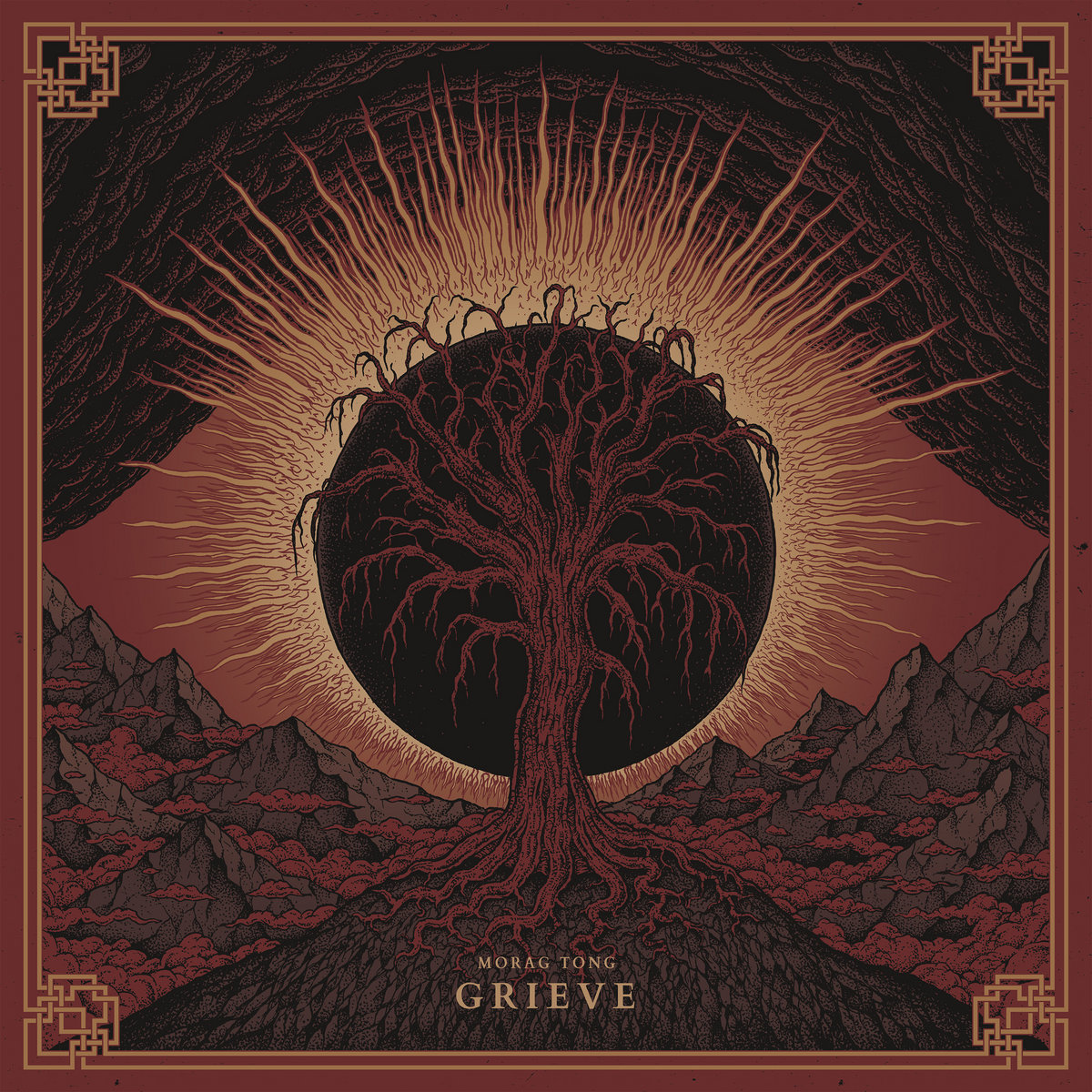
Rumbling low end and spacious guitar, slow flowing drums and contemplative vocals, and some charred sludge for good measure, mark out the procession of “At First Light” on Morag Tong‘s third album and first for Majestic Mountain Records, the four-song Grieve. Moving from that initial encapsulation through the raw-throat sludge thud of most of “Passages,” they crash out and give over to quiet guitar at about four minutes in and set up the transition to the low-end groove-cool of “A Stem’s Embrace,” a sleepy fluidity hitting its full voluminous crux after three minutes in, crushing from there en route to its noisy finish at just over nine minutes long. That would be the epic finisher of most records, but Morag Tong‘s grievances extend to the 20-minute “No Sun, No Moon,” which at 20 minutes is a full-length’s progression on its own. At very least the entirety of side B, but more than the actual runtime is the theoretical amount of space covered as the four-piece shift from ambient drone through huge plod and resolve the skyless closer with a crushing delve into post-sludge atmospherics. That’s as fitting an end as one could ask for an offering that so brazenly refuses to follow impulses other than its own.
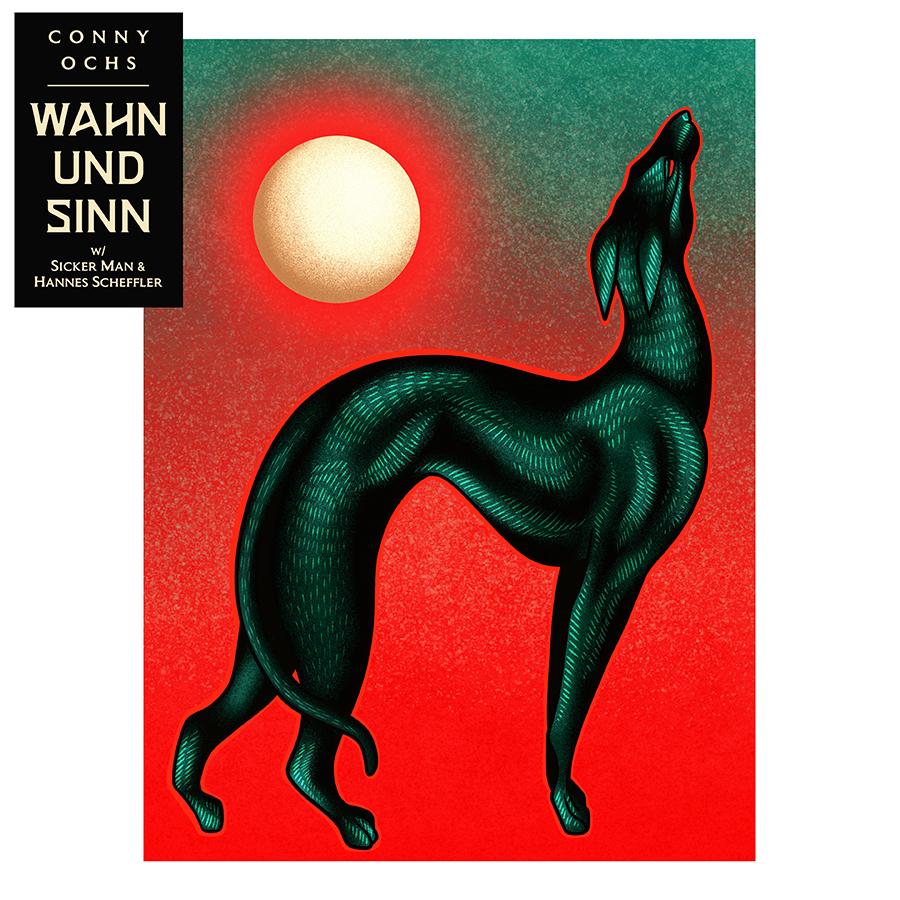
The nine-song Wahn Und Sinn carries the distinction of being the first full-length from German singer-songwriter Conny Ochs — also known for his work in Ananda Mida and his collaboration with Wino — to be sung in his own language. As a non-German speaker, I won’t pretend that doesn’t change the listening experience, but that’s the idea. Words and melodies in different languages take on corresponding differences in character, and so in addition to appreciating the strings, pianos, acoustic and electric guitars, and, in the case of “Welle,” a bit of static noise in a relatively brief electronic soundscape, hearing Ochs‘ delivery no less emotive for switching languages on the cinematic “Grimassen,” or the lounge drama of “Ding” earlier on, it’s a new side from a veteran figure whose “experimentalism” — and no, I’m not talking about singing in your own language as experimental, I’m talking about Trialogos there — is backburnered in favor of more traditional, still rampantly melancholy pop arrangements. It sounds like someone who’s decided they can do whatever the hell they feel like their songs should making that a reality. Only an asshole would hold not speaking the language against that.
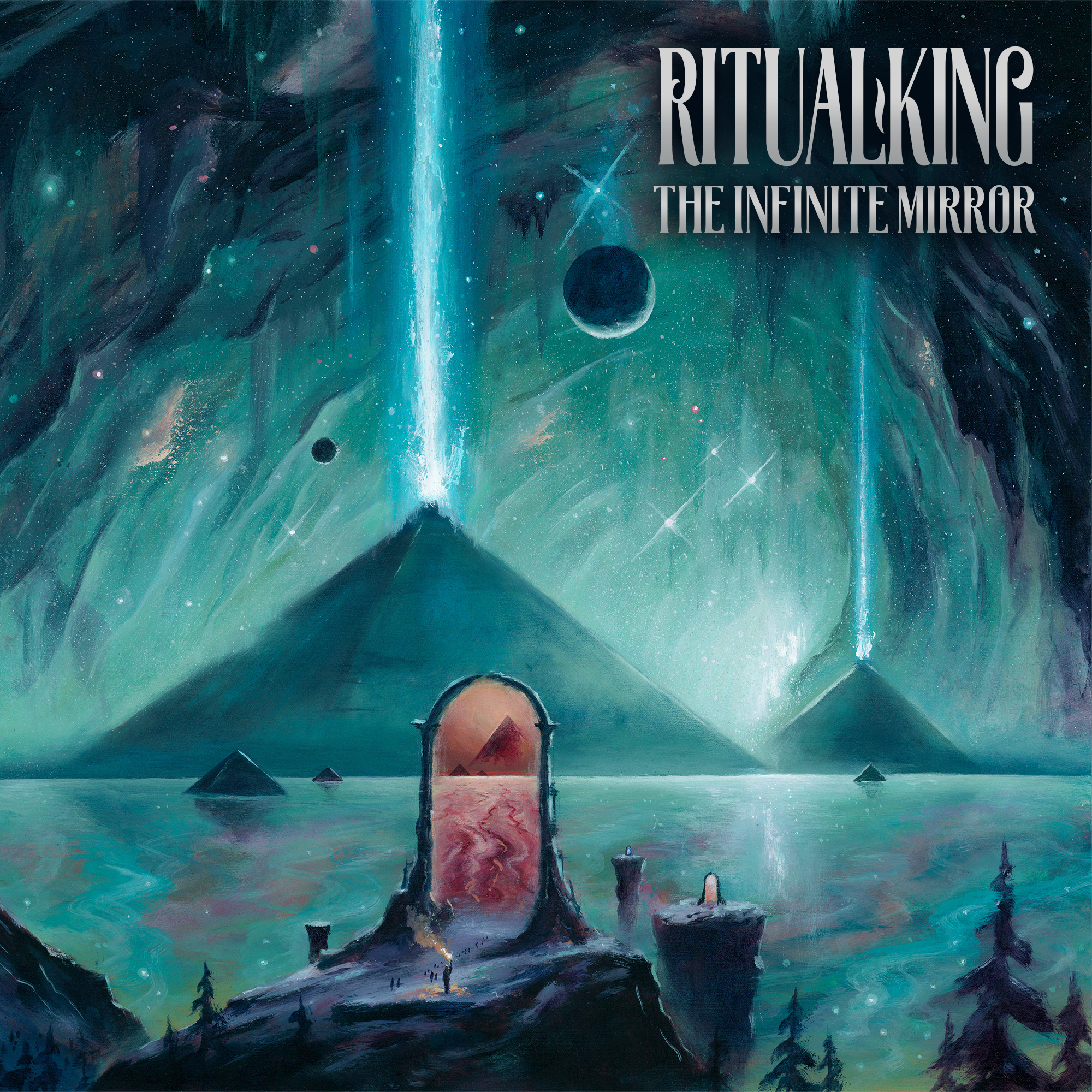
I’m going to write this review as though I’m speaking directly to Ritual King because, well, I am. Hey guys. Congrats on the record. I can hear a ton going on with it. Some of Elder‘s bright atmospherics and rhythmic twists, some more familiar stoner riffage repurposed to suit a song like “Worlds Divide” after “Flow State” calls Truckfighters to mind, the songs progressive and melodic. The way you keep that nod in reserve for “Landmass?” That’s what I’m talking about. Here’s some advice you didn’t ask for: Keep going. I’m sure you have big plans for next year, and that’s great, and one thing leads to the next. You’re gonna have people for the next however long telling you what you need to do. Do what feels right to you, and keep in mind the decisions that led you to where you are, because you’re right there, headed to the heart of this thing you’re discovering. Two records deep there’s still a lot of potential in your sound, but I think you know a track like “Tethered” is a victory on its own, and that as big as “The Infinite Mirror” gets at the end, the real chance it takes is in the earlier vocal melody. You’re a better band than people know. Just keep going. Thanks.
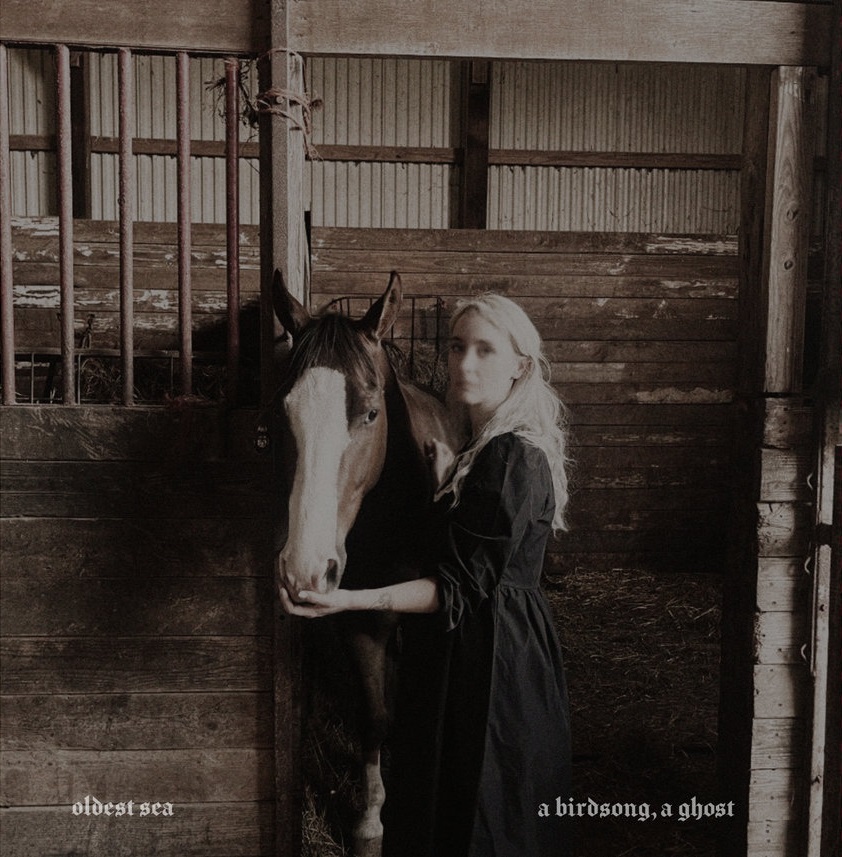
Inhabiting the sort of alternately engulfing and minimal spaces generally occupied by the likes of Bell Witch, New Jersey’s Oldest Sea make their full-length debut with A Birdsong, A Ghost and realize a bleakness of mood that is affecting even in its tempo, seeming to slow the world around it to its own crawl. The duo of Samantha Marandola and Andrew Marandola, who brought forth their Strange and Eternal EP (review here) in 2022, find emotive resonance in a death-doom build through the later reaches of “Untracing,” but the subsequent three-minute-piece-for-chorus-and-distorted-drone “Astronomical Twilight” and the similarly barely-there-until-it-very-much-is closer “Metamorphose” mark out either end of the extremes while “The Machines That Made Us Old” echoes Godflesh in its later riffing as Samantha‘s voice works through screams en route to a daringly hopeful drone. Volatile but controlled, it is a debut of note for its patience and vulnerability as well as its deep-impact crash and consuming tone.
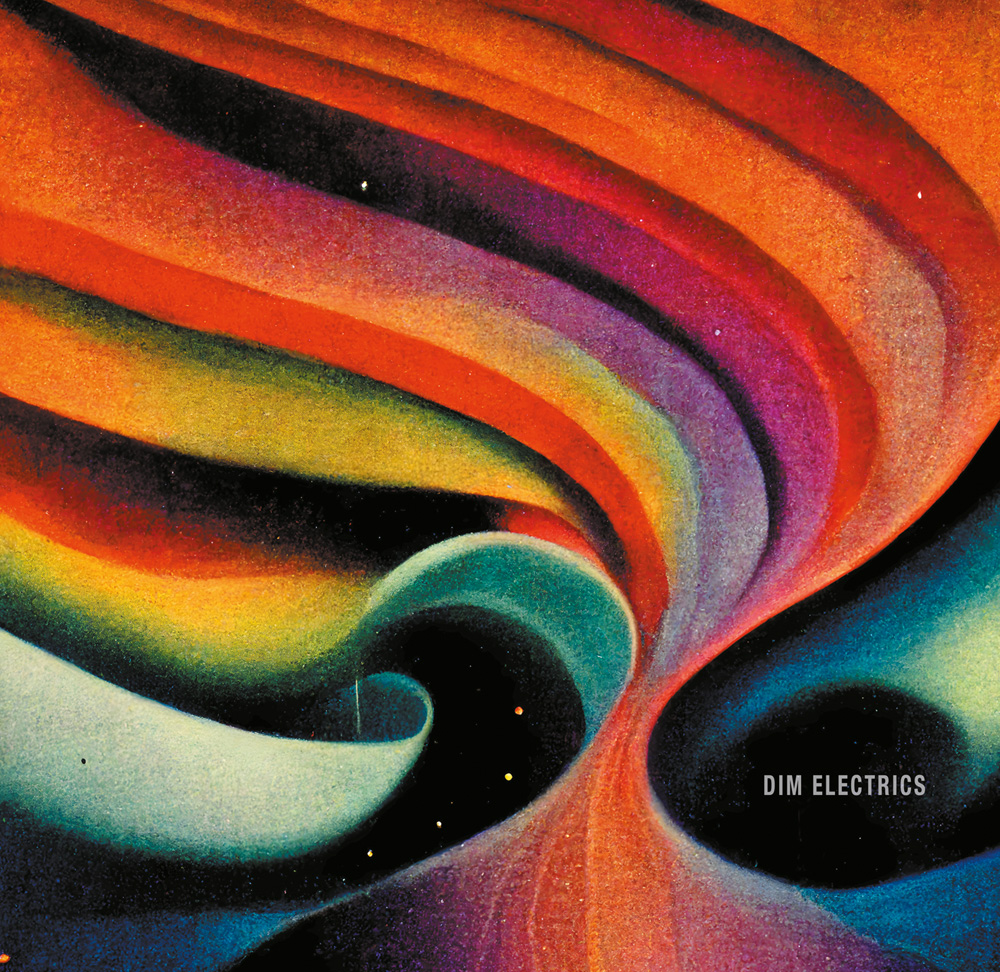
Each track on Dim Electrics‘ self-titled five-songer LP becomes a place to rest for a while. No individual piece is lacking activity, but each cut has room for the listener to get inside and either follow the interweaving aural patterns or zone out as they will. Founded by Mahk Rumbae, the Vienna-based project is meditative in the sense of basking in repetition, but flashes like the organ in the middle of “Saint” or the shimmy that takes hold in 18-minute closer “Dream Reaction” assure it doesn’t reside in one place for too much actual realtime, of which it’s easy to lose track when so much krautgazey flow is at hand. Beginning with ambience, “Ways of Seeing” leads the listener deeper into the aural chasm it seems to have opened, and the swirling echoes around take on a life of their own in the ecosystem of some vision of space rock that’s also happening under the ground — past and future merging as in the mellotron techno of “Memory Cage” — which any fool can tell you is where the good mushrooms grow. Dug-in, immersive, engaging if you let it be; Dim Electrics feels somewhat insular in its mind-expansion, but there’s plenty to go around if you can put yourself in the direction it’s headed.
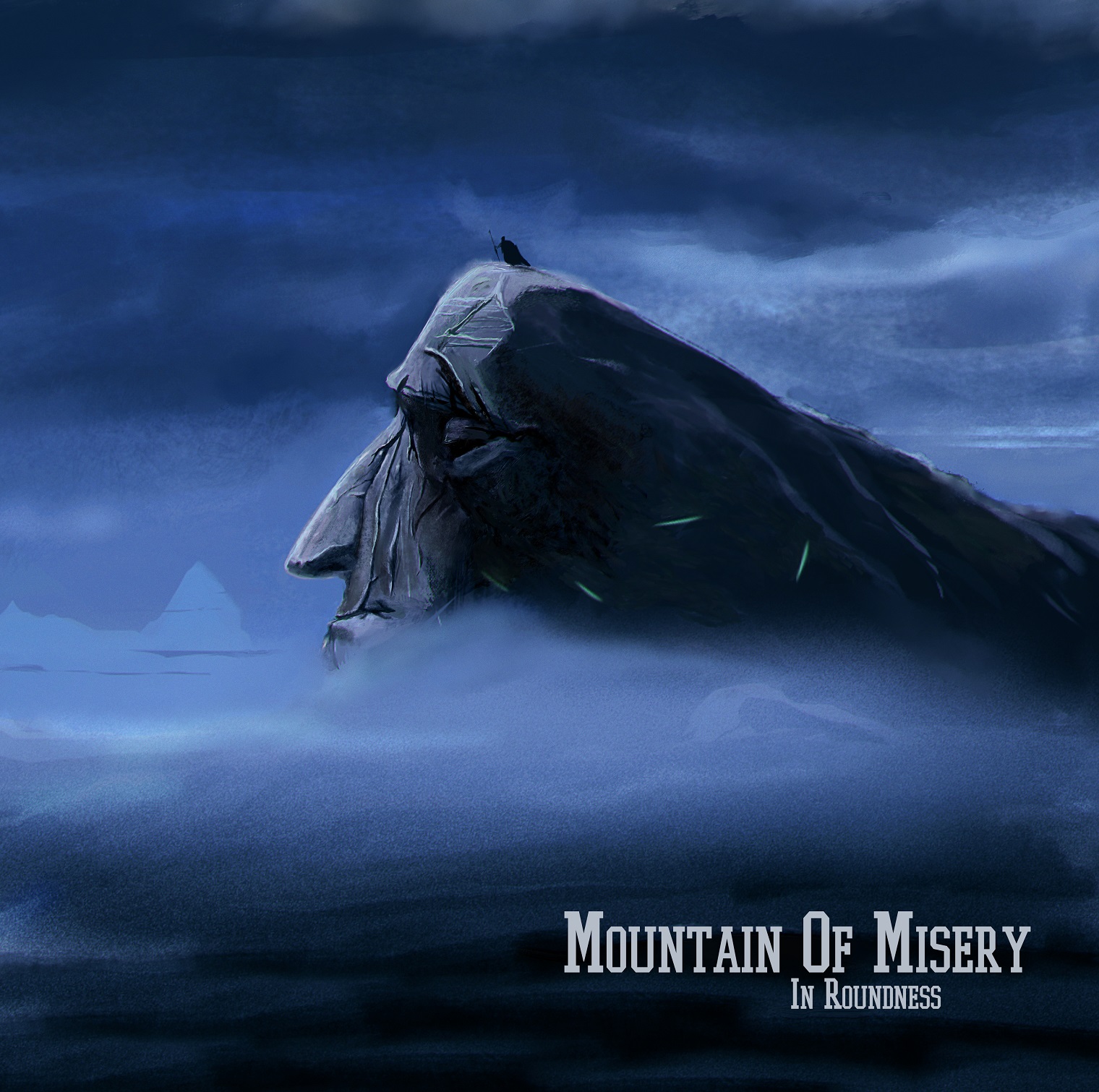
A newcomer project from Kamil Ziółkowski, also known for his contributions as part of Polish heavy forerunners Spaceslug, the tone-forward approach of Mountain of Misery might be said to be informed by Ziółkowski‘s other project in opener “Not Away” or the penultimate “Climb by the Sundown,” with their languid vocals and slow-rolling tsunami fuzz in the spirit of heavy psych purveyors Colour Haze and even more to the point Sungrazer, but the howling guitar in the crescendo of closer “The Misery” and the all-out assault of “Hang So Low” distinguish the band all around. “The Rain is My Love” sways in the album’s middle, but it’s in “Circle in Roundness” that the 36-minute LP has its most subdued stretch, letting the spaces filled with fuzz elsewhere remain open as the verse builds atop the for-now-drumless expanse. Whatever familiar aspects persist, Mountain of Misery is its own band, and In Roundness is the exciting beginning of a new creative evolution.
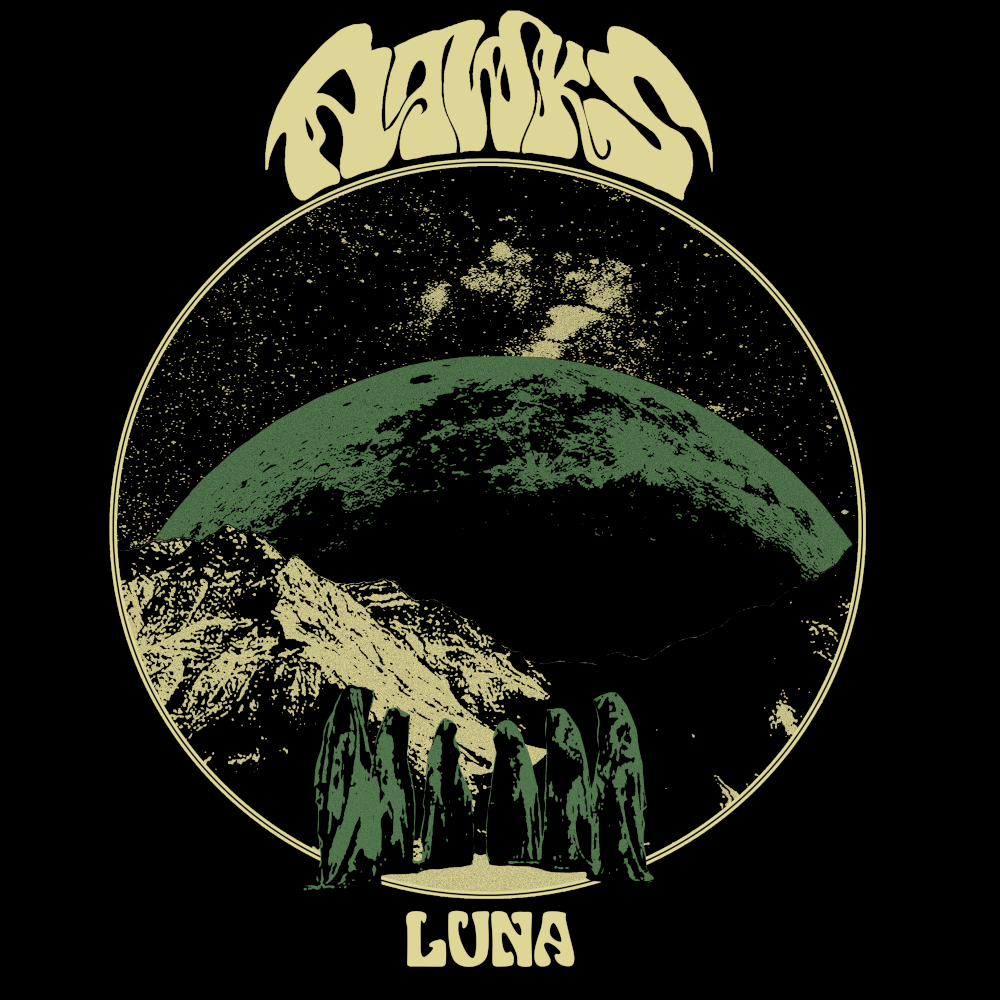
The featured new single, “The Figure,” finds Barrie, Ontario’s Aawks somewhere between Canadian tonal lords Sons of Otis and the dense heavy psych riffing and melodic vocals of an act like Snail, and if you think I’m about to complain about that, you’ve very clearly never been to this site before. So hi, and welcome. The four-song Luna EP is Aawks‘ second short release of 2023 behind a split with Aiwass (review here), and the trio take on Flock of Seagulls and Pink Floyd for covers of the new wave radio hit “I Ran” and the psychedelic ur-classic “Julia Dream” before a live track, “All is Fine,” rounds out. As someone who’s never seen the band live, the additional crunch falls organic, and brings into relief the diversity Aawks show in and between these four songs, each of which inhabits a place in the emerging whole of the band’s persona. I don’t know if we’ll get there, but sign me up for the Canadian heavy revolution if this is the form it’s going to take.
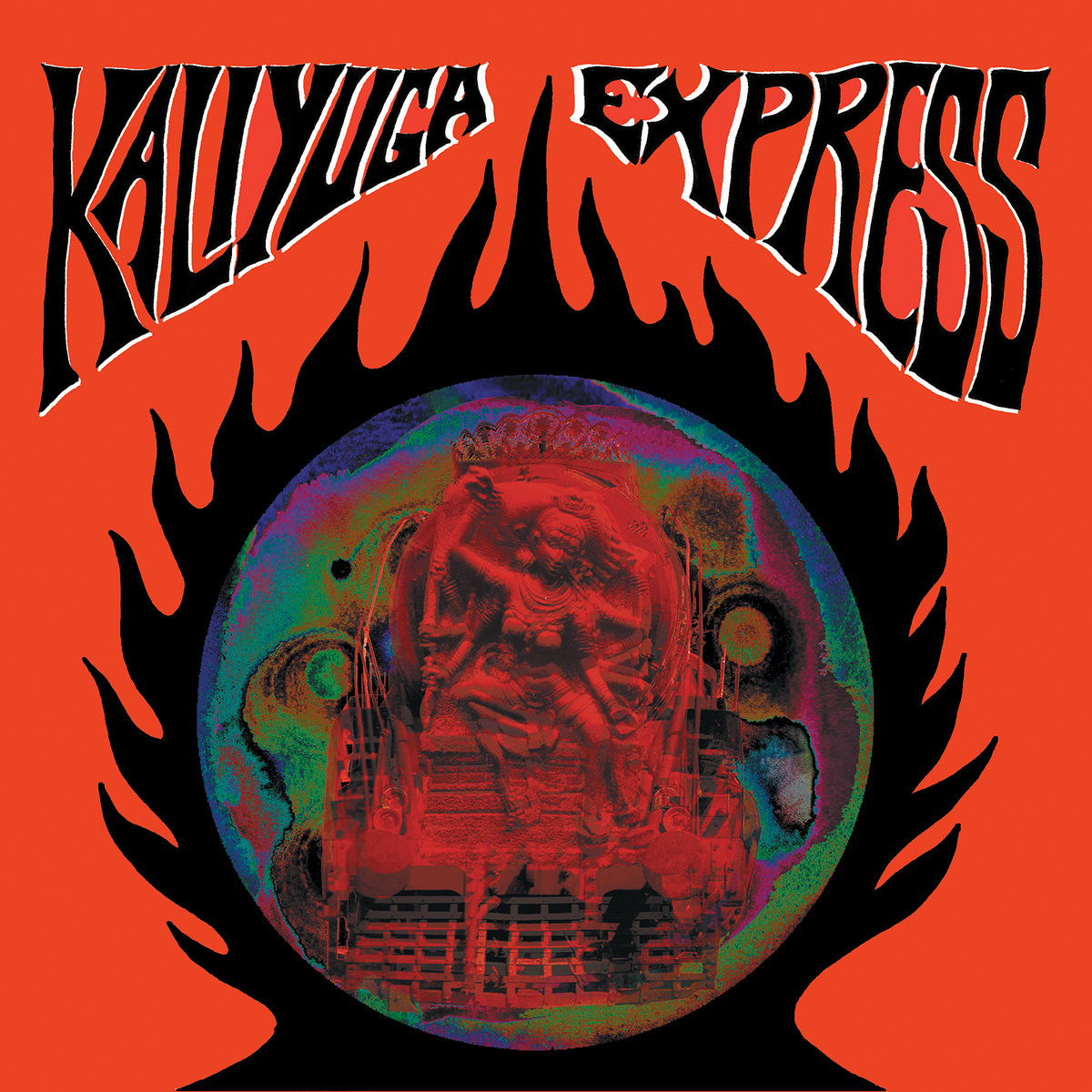
The collaborative oeuvre of UK doomsperimental guitarist Mike Vest (Bong, Blown Out, Ozo, 11Paranoias, etc.) grows richer as he joins forces with Finnish trio Nolla to produce Kaliyuga Express‘ Warriors & Masters, which results in three tracks across two sides of far-out cosmic fuzz, shades of classic kraut and space rocks are wrought with jammy intention; the goal seeming to be the going more than the being gone as Vest and company burn through “Nightmare Dimensions” and the shoegazing “Behind the Veil” — the presence of vocals throughout is a distinguishing feature — hums in high and low frequencies in a repetitive inhale of stellar gases on side A while the 18:58 side B showdown “Endless Black Space” misdirects with a minute of cosmic background noise before unfurling itself across an exoplanet’s vision of cool and returning, wait for it, back to the drone from whence it came. Did you know stars are recycled all the time? Did you know that if you drop acid and peel your face off there’s another face underneath? Your third eye is googly. You can hear voices in the drones. Let me know what they tell you.
Coming at you live and direct from the Wegmans pharmacy counter where I’m waiting to pick up some pinkeye drops for my kid, who stayed home from half-day pre-k on Monday because the Quarterly Review isn’t complicated enough on its own. It was my diagnosis that called off the bus, later confirmed over telehealth, so at least I wasn’t wrong and shot my own day. I know this shit doesn’t matter to anyone — it’ll barely matter to me in half an hour — but, well, I don’t think I’ve ever written while waiting for a prescription before and I’m just stoned enough to think it might be fun to do so now.
Of course, by the time I’m writing the reviews below — tomorrow morning, as it happens — this scrip will have long since been ready and retrieved. But a moment to live through, just the same.
We hit halfway today. Hope your week’s been good so far. Mine’s kind of a mixed bag apart from the music, which has been pretty cool.
Quarterly Review #21-30:
Yakuza, Sutra
Since it would be impossible anyway to encapsulate the scope of Yakuza‘s Sutra — the Chicago-based progressive psych-metal outfit led by vocalist/saxophonist Bruce Lamont, with Matt McClelland on guitar/backing vocals, Jerome Marshall on bass and James Staffel on drums/percussion — from the transcendental churn of “2is1” to the deadpan tension build in and noise rock payoff in “Embers,” the sax-scorch bass-punch metallurgical crunch of “Into Forever” and the deceptively bright finish of “Never the Less,” and so on, let’s do a Q&A. They still might grind at any moment? Yup, see “Burn Before Reading.” They still on a wavelength of their own? Oh most definitely; see “Echoes From the Sky,” “Capricorn Rising,” etc. Still underrated? Yup. It’s been 11 years since they released Beyul (review here). Still ahead of their time? Yes. Like anti-genre pioneers John Zorn or Peter Brötzmann turned heavy and metal, or like Virus or Voivod with their specific kind of if-you-know-you-know, cult-following-worthy individualist creativity, Yakuza weave through the consuming 53-minute procession of Sutra with a sensibility that isn’t otherworldly because it’s psychedelic or drenched in effects (though it might also be those things at any given moment), but because they sound like they come from another planet. A welcome return from an outfit genuinely driven toward the unique and a meld of styles beyond metal and/or jazz. And they’ve got a fitting home on Svart. I know it’s been over a decade, but I hope these dudes get old in this band.
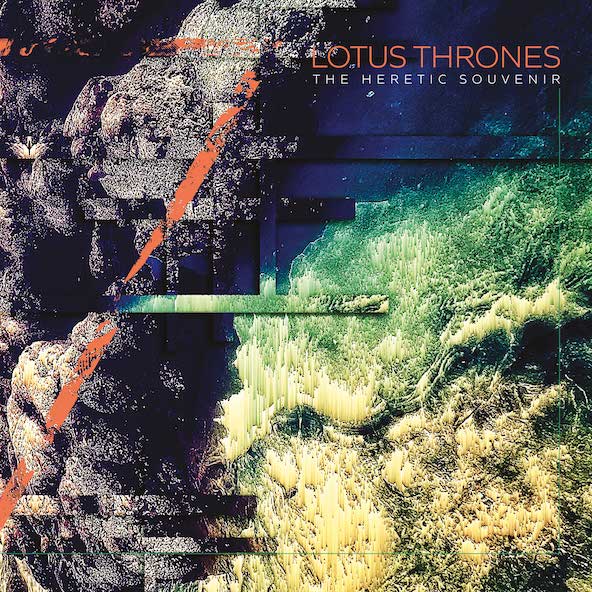
The second offering from Philadelphia multi-instrumentalist Heath Rave (Altars of the Moon, former drums in Wolvhammer, etc.) under the banner of Lotus Thrones, the seven-song/38-minute The Heretic Souvenir (on Disorder and Seeing Red) draws its individual pieces across an aural divide by means of a stark atmosphere, the post-plague-and-the-plague-is-capitalism skulking groove of “B0T0XDR0NE$” emblematic both of perspective and of willingness to throw a saxophone overtop if the mood’s right (by Yakuza‘s Bruce Lamont, no less), which it is. At the outset, “Gore Orphanage” is more of an onslaught, and “Alpha Centauri” has room for both a mathy chug and goth-rocking shove, the latter enhanced by Rave‘s low-register vocals. Following the Genghis Tron-esque glitch-grind of 1:16 centerpiece “Glassed,” the three-and-a-half-minute “Roses” ups the goth factor significantly, delving into twisted Type O Negative-style pulls and punk-rooted forward thrust in a highlight reportedly about Rave‘s kid, which is nice (not sarcastic), before making the jump into “Autumn of the Heretic Souvenir,” which melds Americana and low-key dub at the start of its 11-minute run before shifting into concrete sludge chug and encompassing trades between atmospheric melody and outright crush until a shift eight minutes in brings stand(mostly)alone keys backed by channel-swapping electronic noise as a setup for the final surge’s particularly declarative riff. That makes the alt-jazz instrumental “Nautilus” something of an afterthought, but not out of place in terms of its noir ambience that’s also somehow indebted to Nine Inch Nails. There’s a cough near the end. See if you can hear it.
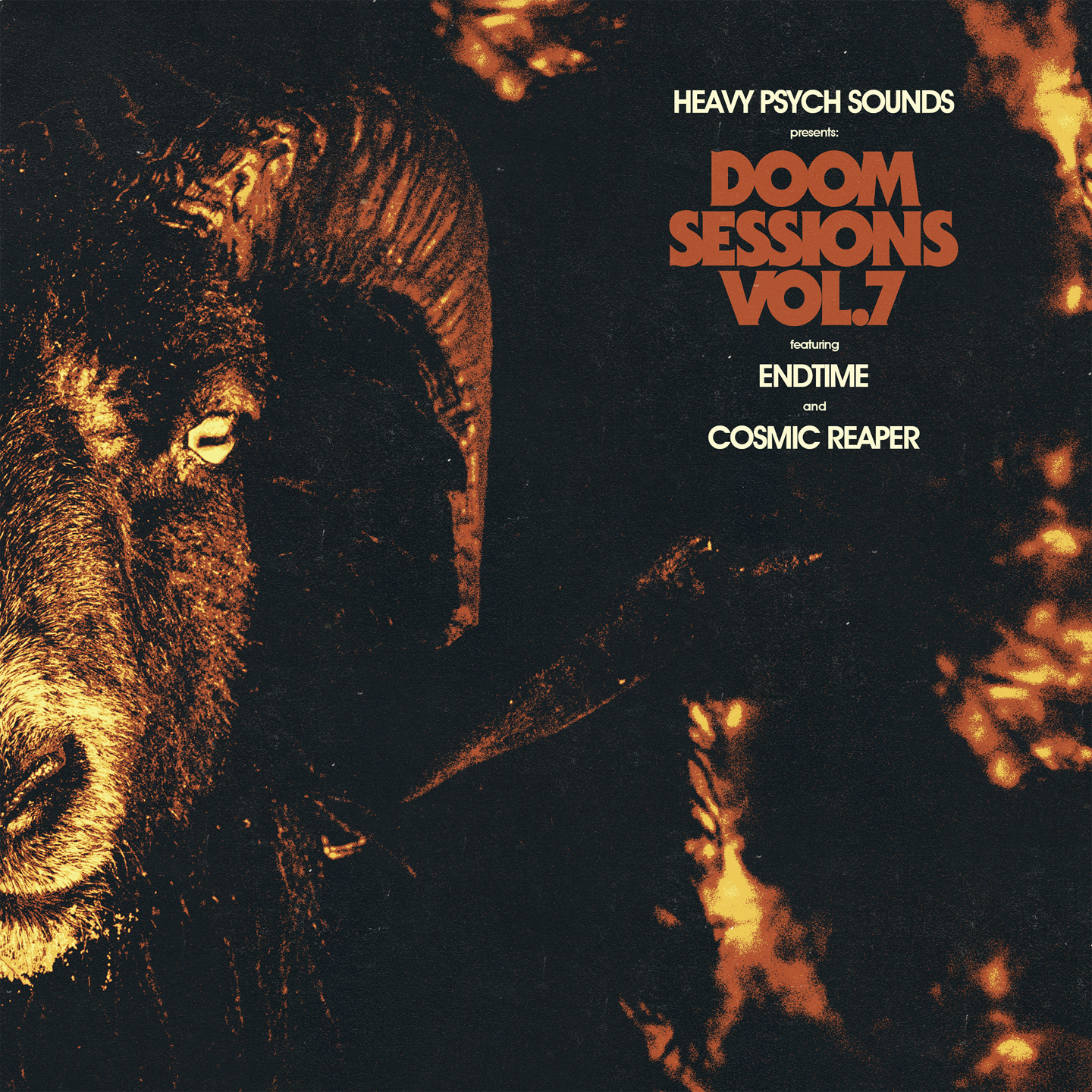
Realized at the formidable behest of Heavy Psych Sounds, the seventh installment of the Doom Sessions series (Vol. 8 is already out) brings together Sweden’s strongly cinematic sludge-doomers Endtime with fire-crackling North Carolinian woods-doomers Cosmic Reaper. With two songs from the former and three from the latter, the balance winds up with more of an EP feel from Cosmic Reaper and like a single with an intro from Endtime, who dedicate the first couple of minutes of “Tunnel of Life” to a keyboard intro that’s very likely a soundtrack reference I just don’t know because I’m horror-ignorant before getting down to riff-rumble-roll business on the righteously slow-raging seven minutes of “Beyond the Black Void.” Cosmic Reaper, meanwhile, have three cuts, with harmonized guitars entering “Sundowner” en route to a languid and melodic nod verse, a solo later answering the VHS atmosphere of Endtime before “Dead and Loving It” and “King of Kings” cult-doom their way into oblivion, the latter picking up a bit of momentum as it pushes near the eight-minute mark. It’s a little uneven, considering, but Doom Sessions Vol. 7 provides a showcase for two of Heavy Psych Sounds‘ up-and-coming acts, and that’s pretty clearly the point. If it leads to listeners checking out their albums after hearing it, mission accomplished.
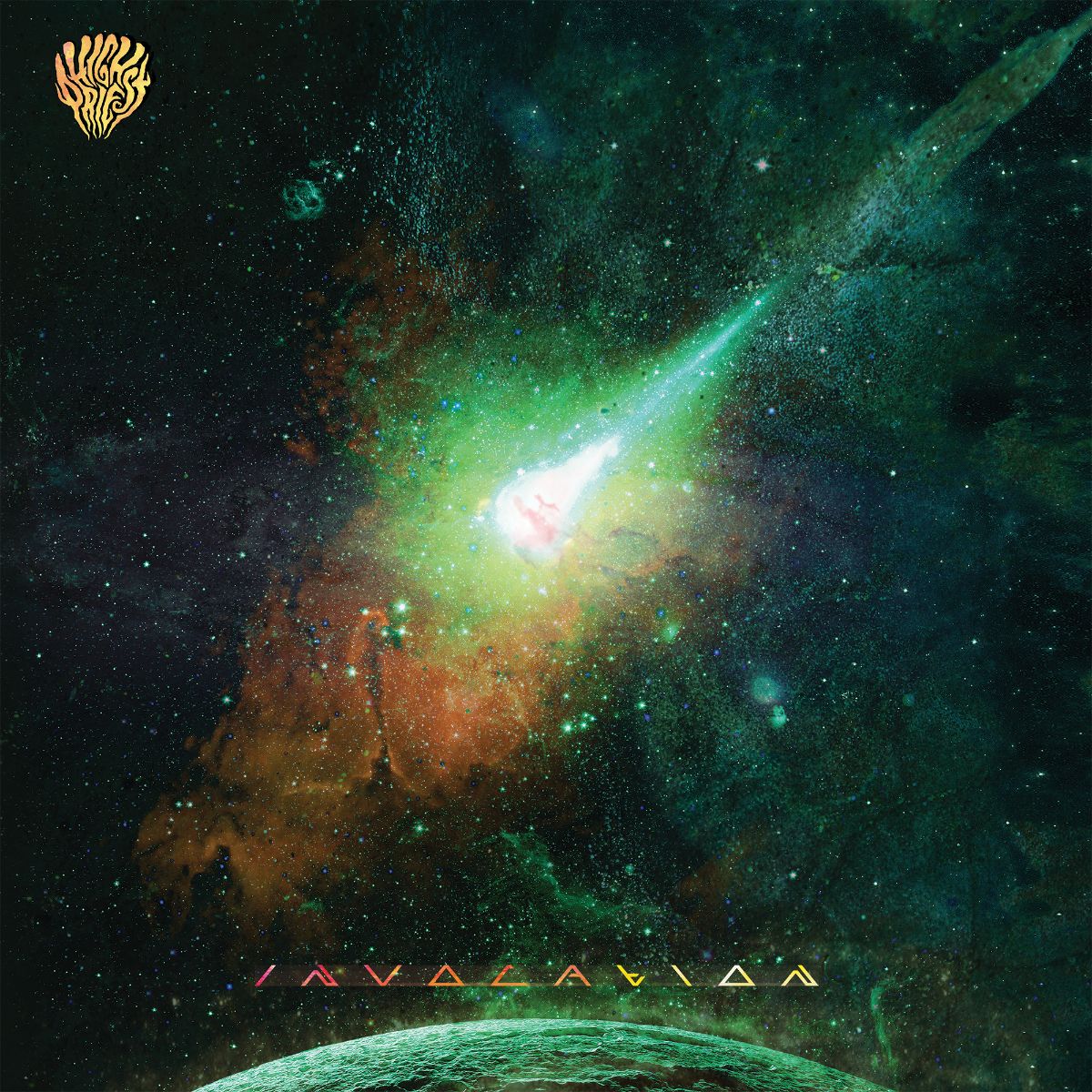
Don’t skip this because of High Priest‘s generic-stoner-rock name. The Chicago four-piece of bassist/vocalist Justin Valentino, guitarists Pete Grossmann and John Regan and drummer Dan Polak make an awaited full-length debut with Invocation on Magnetic Eye Records, and if the label’s endorsement isn’t enough, I’ll tell you the eight-song/44-minute long-player is rife with thoughtful construction, melody and heft. Through the opening title-track and into the lumber, sweep and boogie of “Divinity,” they incorporate metal with the two guitars and some of the vocal patterning, but aren’t beholden to that anymore than to heavy rock, and far from unipolar, “Ceremony” gives a professional fullness of sound that “Cosmic Key” ups immediately to round out side A before “Down in the Park” hints toward heavygaze without actually tipping over, “Universe” finds the swing buried under that monolithic fuzz, “Conjure” offers a bluesier but still huge-sounding take and 7:40 closer “Heaven” layers a chorus of self-harmonizing Valentinos to underscore the point of how much the vocals add to the band. Which is a lot. What’s lost in pointing that out is just how densely weighted their backdrop is, and the nuance High Priest bring to their arrangements throughout, but whether you want to dig into that or just learn the words and sing along, you can’t lose.
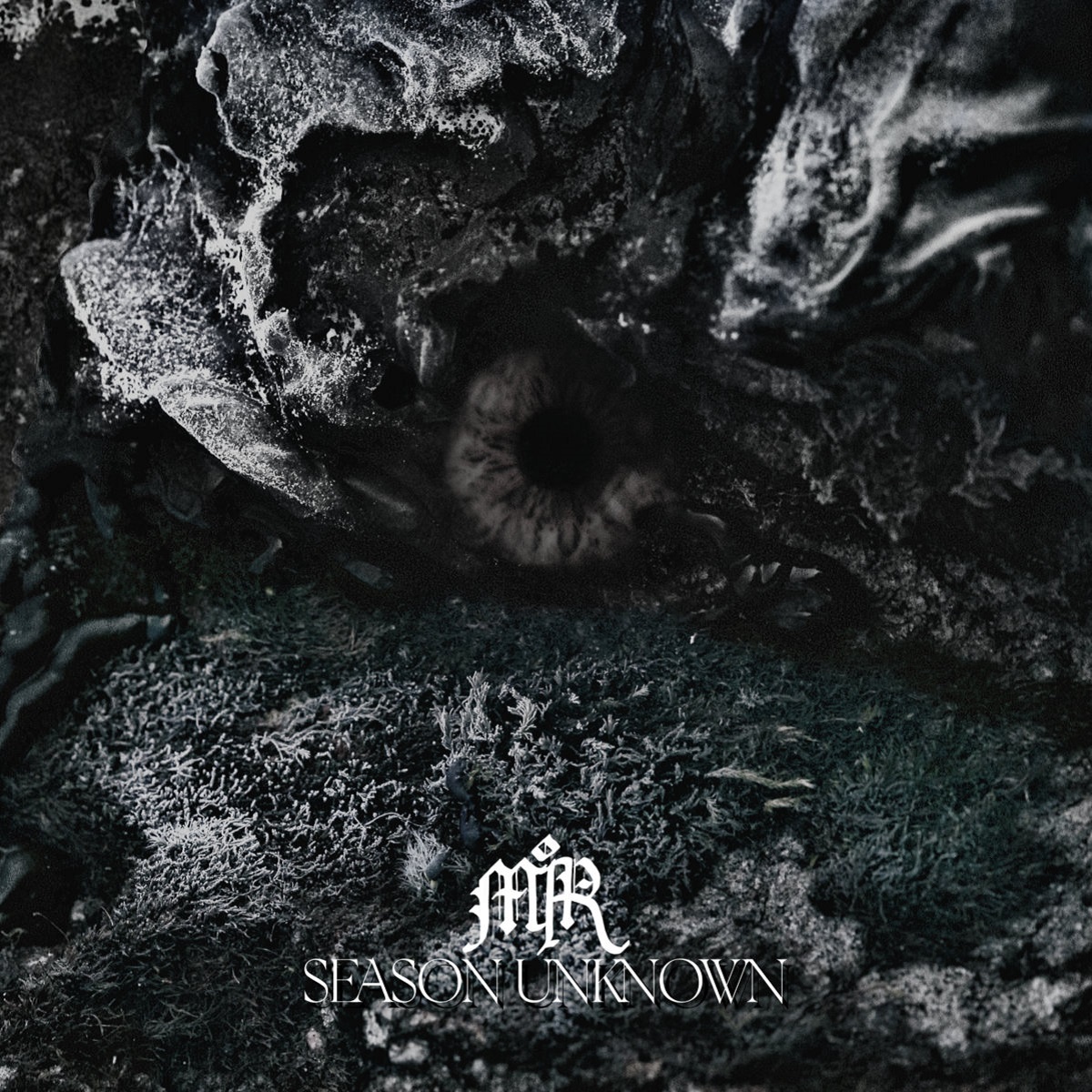
Its catharsis laced in every stretch of the skin-peeling tremolo and echoing screams of “Altar of Liar,” Season Unknown arrives as the first release from Poland’s MiR, a directly-blackened spinoff of heavy psych rockers Spaceslug, whose guitarist/vocalist Bartosz Janik and bassist/vocalist Jan Rutka feature along with guitarist Michał Zieleniewski (71tonman) and drummer Krzystof Kamisiński (Burning Hands). The relationship to Janik and Rutka‘s other (main?) band is sonically tenuous, though Spaceslug‘s Kamil Ziółkowski also guests on vocals, making it all the more appropriate that MiR stands as a different project. Ripping and progressive in kind, cuts like “Lost in Vision” and the blastbeaten severity of “Ashen” are an in-genre rampage, and while “Sum of All Mourn” is singularly engrossing in its groove, the penultimate “Yesterday Rotten” comes through as willfully stripped to its essential components until its drifting finish, which is fair enough ahead of the more expansive closer “Illusive Loss of Inner Frame,” which incorporates trades between all-out gnash and atmospheric contemplations. I won’t profess to be an expert on black metal, but as a sidestep, Season Unknown is both respectfully bold and clearly schooled in what it wants to be.
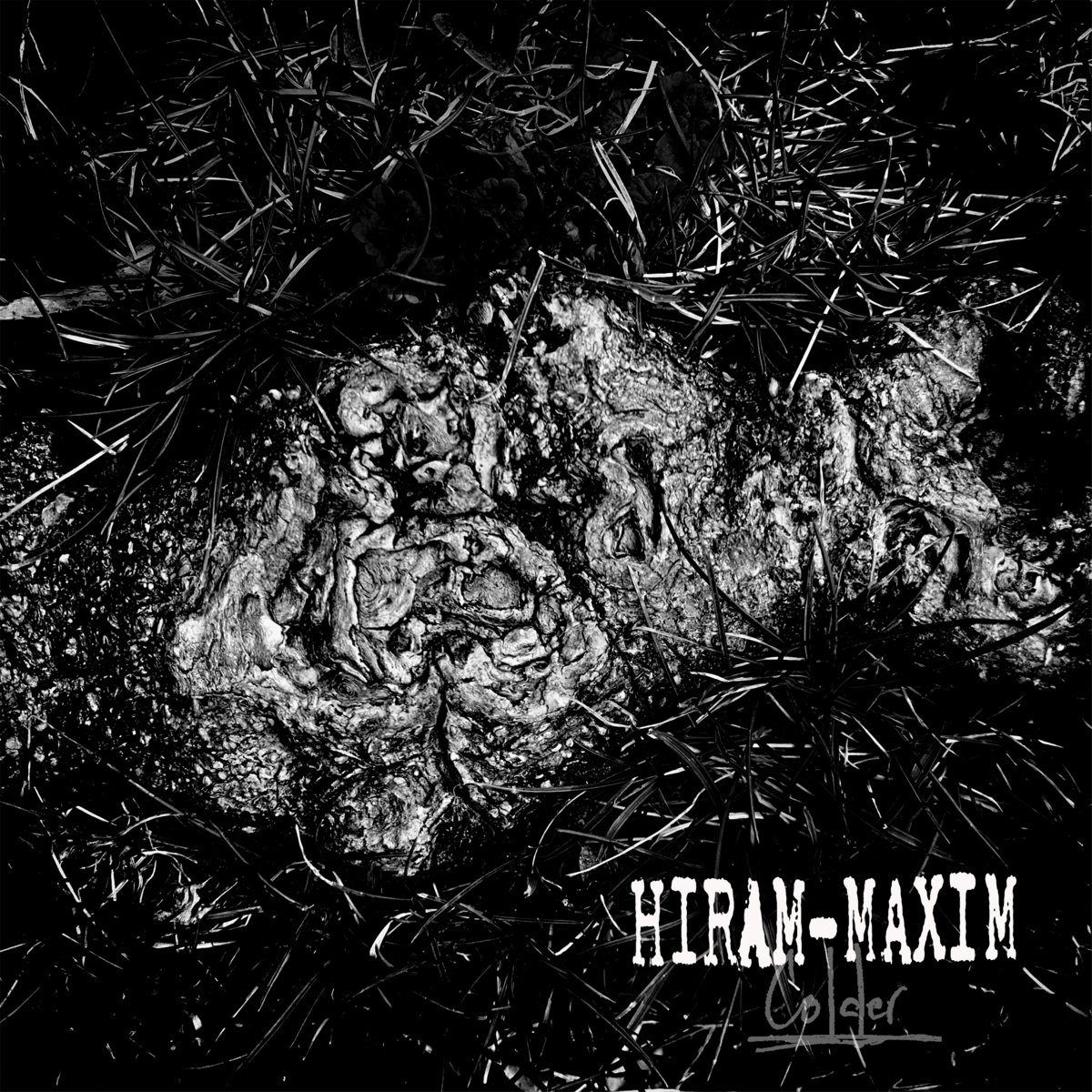
Recorded by esteemed producer Martin Bisi (Swans, Sonic Youth, Unsane, etc.) in 2021-’22, Colder is Hiram-Maxim‘s third full-length, with hints of Angels of Light amid the sneering heaviness of “Bathed in Blood” after opener/longest track (immediate points) “Alpha” lays out the bleak atmosphere in which what follows will reside. “Undone” gets pretty close to laying on the floor, while “It Feels Good” very pointedly doesn’t for its three minutes of dug-in cafe woe, from out of which “Hive Mind” emerges with keys and drums forward in a moody verse before the post-punk urgency takes more complete hold en route to a finish of manipulated noise. As one would have to expect, “Shock Cock” is a rocker at heart, and the lead-in from the drone/experimental spoken word of “Time Lost Time” holds as a backdrop so that its Stooges-style comedown heavy is duly weirded out. Is that a theremin? Possibly. They cap by building a wall of malevolence and contempt with “Sick to Death” in under three minutes, resolving in a furious assault of kitchen-sink volume, that, yes, recedes, but is resonant enough to leave scratches on your arm. Don’t let anyone tell you this isn’t extreme music just because some dude isn’t singing about killing some lady or quoting a medical dictionary. Colder could just as easily have been called ‘Volcanic.’
Seeming always to be ready with a friendly, easy nod, Lafayette/Indianapolis, Indiana’s The Heavy Co. return with “Brain Dead” as a follow-up single to late-2022’s “God Damn, Jimmy.” The current four-piece incarnation of the band — guitarist/vocalist Ian Daniel, guitarist Jeff Kaleth, bassist Eric Bruce and drummer TR McCully — seem to be refocused from some of the group’s late-’10s departures, elements of outlaw country set aside in favor of a rolling riff with shades of familiar boogie in the start-stops beneath its solo section, a catchy but largely unassuming chorus, and a theme that, indeed, is about getting high. In one form or another, The Heavy Co. have been at it for most of the last 15 years, and in a little over four minutes they demonstrate where they want their emphasis to be — a loose, jammy feel held over from the riffout that probably birthed the song in the first place coinciding with the structure of the verses and chorus and a lack of pretense that is no less a defining aspect than the aforementioned riff. They know what they’re doing, so let ’em roll on. I don’t know if the singles are ahead of an album release or not, but whatever shows up whenever it does, The Heavy Co. are reliable in my mind and this is right in their current wheelhouse.
The intervening year since L.A.’s The Cimmerian made their debut with Thrice Majestic (review here) seems to have made the trio even more pummeling, as their Sword & Sorcery Vol. I two-songer finds them incorporating death and extreme metal for a feel like a combined-era Entombed on leadoff “Suffer No Guilt” which is a credit to bassist Nicolas Rocha‘s vocal burl as well as the intensity of riff from David Gein (ex-The Scimitar) and corresponding thrash gallop in David Morales‘ drumming. The subsequent “Inanna Rising” is slower, with a more open nod in its rhythm, but no less threatening, with fluid rolls of double-kick pushing the verse forward amid the growls and an effective scream, a sample of something (everything?) burning, and a kick in pace before the solo about halfway into the track’s 7:53. If The Cimmerian are growing more metal, and it seems they are, then the aggression suits them as the finish of “Inanna Rising” attests, and the thickness of sludge carried over in their tonality assures that the force of their impact is more than superficial.
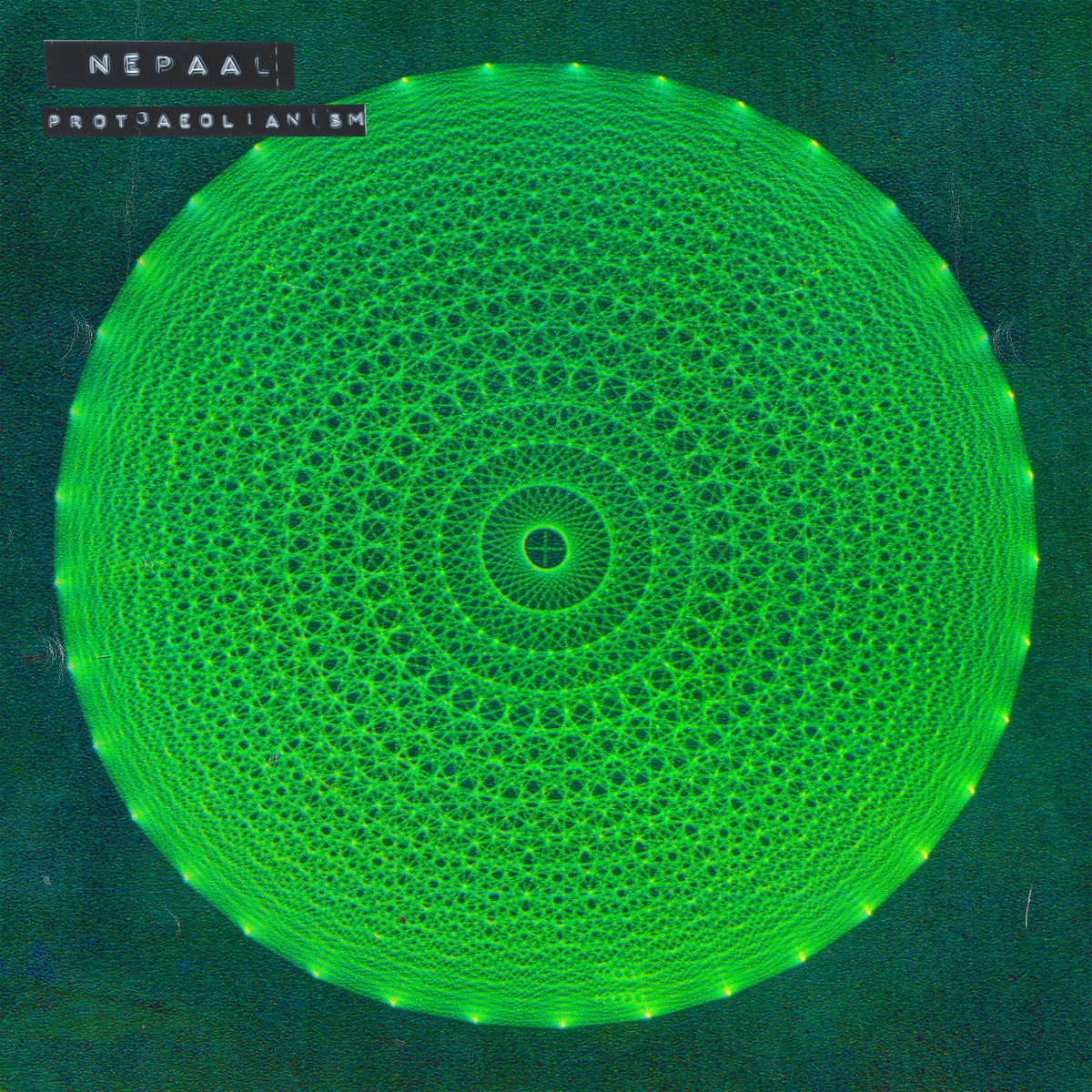
Released as an offering from the amorphous Hungarian collective Psychedelic Source Records, the three-song Protoaeolianism arrives under the moniker of Nepaal — also stylized as :nepaal, with the colon — finding mainstay Bence Ambrus on guitar with Krisztina Benus on keys, Dávid Strausz on bass, Krisztián Megyeri on drums and Marci Bíró on effects/synth for captured-in-the-moment improvisations of increasing reach as space and psych and krautrocks comingle with hypnotic pulsations on “Innoxial Talent Parade” (9:54), the centerpiece “Brahman Sleeps 432 Billion Years” (19:14) and “Ineffable Minor States” (13:44), each of which has its arc of departure, journey and arrival, forming a multi-stage narrative voyage that’s as lush as the liquefied tones and sundry whatever-that-was noises. “Ineffable Minor States” is so serene in its just-guitar start that the first time I heard it I thought the song had cut off, but no. They’re just taking their time, and why shouldn’t they? And why shouldn’t we all take some time to pause, engage mindfully with our surroundings, experience or senses one at a time, the things we see, hear, touch, taste, smell? Maybe Protoaeolianism — instrumental for the duration — is a call to that. Maybe it’s just some jams from jammers and I shouldn’t read anything else into it. Here then, as in all things, you choose your own adventure. I’m glad to be the one to tell you this is an adventure worth taking.
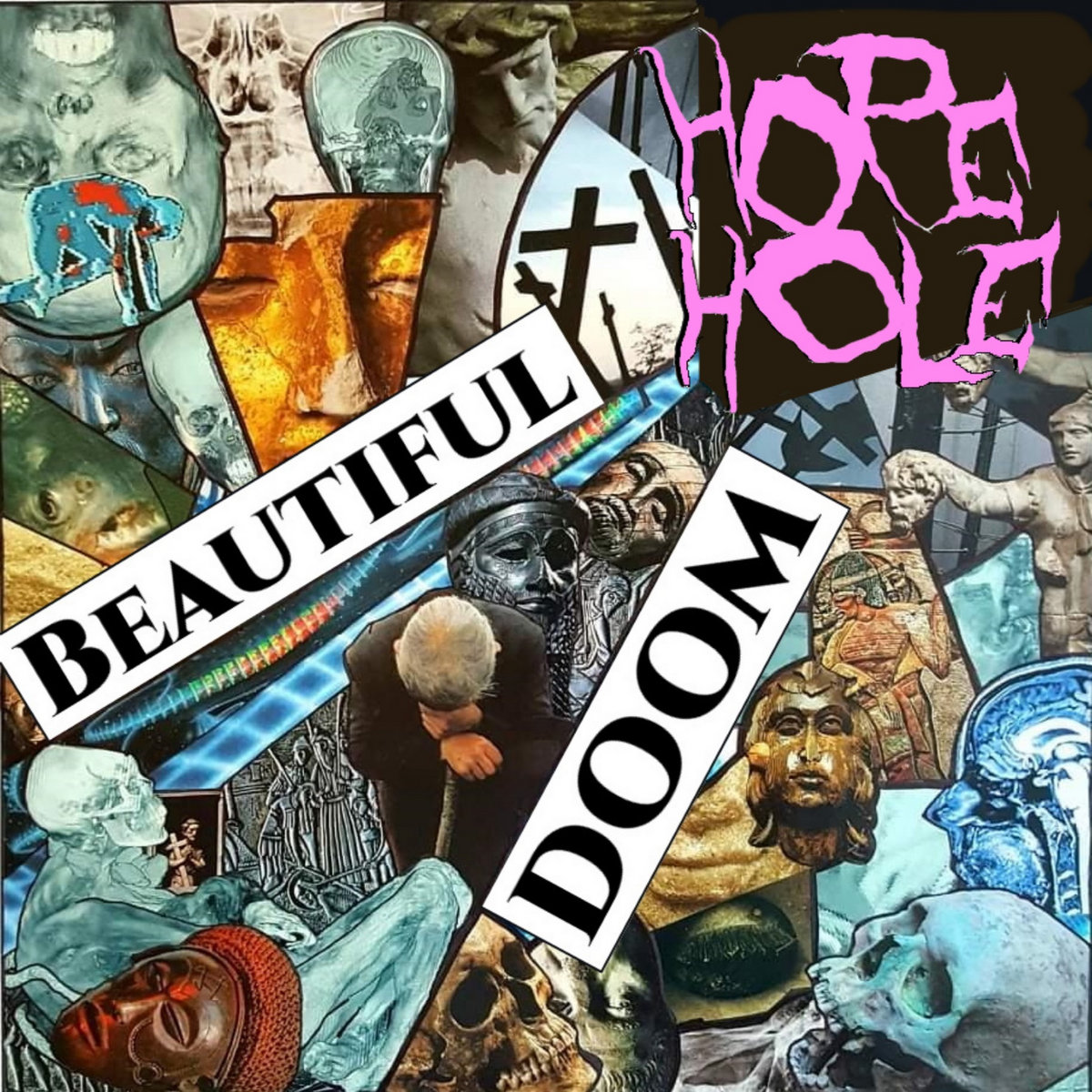
There is much to dig into on the second full-length from Toledo, Ohio, duo Hope Hole — the returning parties of Matt Snyder and Mike Mulholland — who offer eight originals and a centerpiece cover of The Cure‘s “Sinking” that’s not even close to being the saddest thing on the record, titled Beautiful Doom presumably in honor of the music itself. Leadoff “Spirits on the Radio” makes me nostalgic for a keyboard-laced goth glory day that never happened while also tapping some of mid-period Anathema‘s abiding downer soul, seeming to speak to itself as much as the audience with repetitions of “You reap what you sew.” Some Godflesh surfaces in “600 Years,” and they’re resolute in the melancholy of “Common Sense” until the chugging starts, like a dirtier, underproduced Crippled Black Phoenix. Rolling with deceptive momentum, the title-track could be acoustic until it starts with the solo and electronic beats later before shifting into the piano, beats, drift guitar, and so on of “Sinking.” “Chopping Me” could be an entire band’s sound but it’s barely a quarter of what Hope Hole have to say in terms of aesthetic two records deep. “Mutant Dynamo” duly punks its arthouse sludge and shreds a self-aware over-the-top solo in the vein of Brendan Small, while “Pyrokinetic” revives earlier goth swing with a gruff biker exterior (I’d watch that movie) and a moment of spinning weirdo triumph at the end, almost happy to be burned, where the seven-minute finale “Cities of Gold” returns to beats over its gradual guitar start, emerging with chanting vocals to become its own declaration of progressive intent. Beautiful Doom ends with a steady march rather than the expected blowout, having built its gorgeous decay out of the same rotten Midwestern ground as the debut — 2021’s Death Can Change (review here) — but moved unquestionably forward from it.
Posted in Whathaveyou on March 27th, 2023 by JJ Koczan
There are two songs streaming now from Season Unknown, the debut album of Polish progressive black metallers MiR, who feature in their ranks Spaceslug guitarist/vocalist Bartosz Janik and bassist/vocalist Jan Rutka as well as guitarist Michał Zieleniewski of 71tonman and drummer Krzystof Kamisiński of Burning Hands. The first is raging, squibbly-inflected opener “Altar of Liar,” which duly scorches the earth so that it can be repainted in the greys and blacks one finds similarly manifested on the album’s cover, and the penultimate “Yesterday Rotten,” which departs in its second half toward more subdued and melodic fare, with Rutka and Kamil Ziółkowski (also Spaceslug) contributing vocals, and between the two, something of an atmospheric impression representing the record as a whole comes through.
It’s not the full story — MiR‘s Season Unknown runs eight songs and 43 minutes and puts that time to expansive use — but in severity and sprawl, a picture emerges. The best advice I can give is do go in with an open mind and don’t go in expecting Spaceslug. If you caught wind of 2021’s Memorial (review here), you know that outing had its moments of char as well, so MiR aren’t completely out of context, but it’s a purposeful step away from heavy psych, even if some cosmic aspects speak to the reach of a band like Oranssi Pazuzu in their furious churn en route to the sum-of-all that is seven-minute Season Unknown closer “Illusive Loss of Inner Frame.”
The project has been in the works for about half a decade, apparently, which explains the cohesion in the material throughout Season Unknown, but this is still a first release, and part of the impression it makes is for sure in the potential for MiR to reach deeper into the abyss they’re conjuring here, finding a place for themselves in post-black metal that’s neither lost the intensity of the root genre nor forsaken ambience in service to that.
A bit of info follows, culled from Bandcamp and social media, blah blah, and there’s the info for the release party on April 1, which is like this weekend or something, but consider the audio and just-posted video — directed and shot by Janik — the real point here, especially if you’re feeling like something that’s a little (okay a lot) out of the norm around these parts. Any and all opinions welcome either way in the comments:
Second single from upcoming full length just landed.
This time we brought Kamil and Jan from Spaceslug for special featuring and collaboration on vocal parts to complete this track and its dark essence.
Enjoy eternity.
-CD/Vinyl/Merch coming soon-
MiR – Season Unknown LP Release date: 31.03.2023 Album recorded at Perlazza Studio 4.04-15.04.2022 Mixed and mastered by Perła from Perlazza Studio and MiR
Tracklisting: 1. Altar of Liar 2. In the Stones 3. Lost in Vision 4. Sum of all Mourn 5. Moonlight Fever 6. Ashen 7. Yesterday Rotten 8. Illusive Loss of Inner Frame
Posted in Bootleg Theater on February 24th, 2023 by JJ Koczan
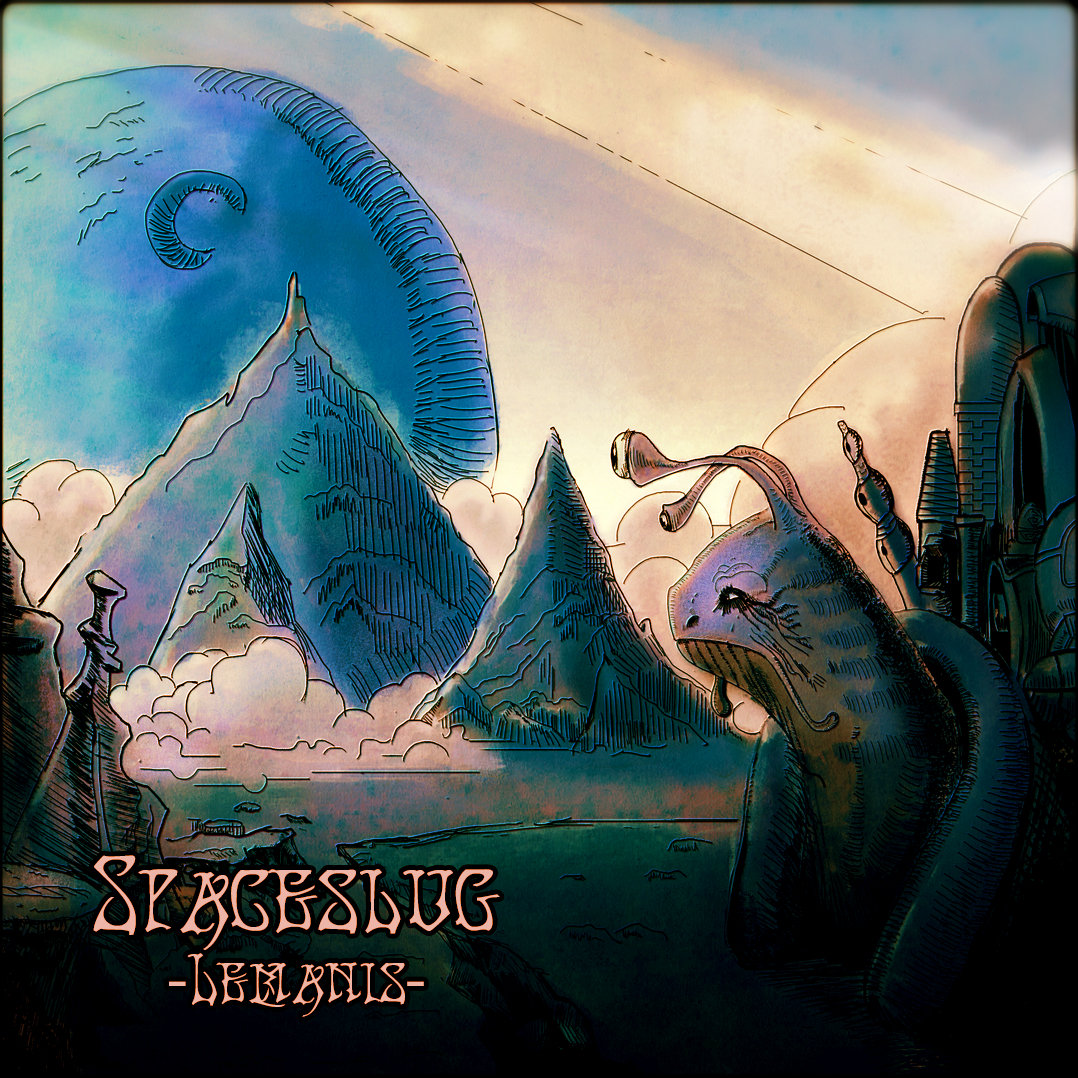
Recorded over the course of two days in Oct. 2015 and released in Feb. 2016, the seven-song/43-minute debut album from Wrocław, Poland, heavy psych rockers Spaceslug, dubbed Lemanis (review here), is an album that still feels new in my mind. The trio of guitarist/vocalist Bartosz Janik, bassist/vocalist Jan Rutka and drummer/vocalist Kamil Ziółkowski offered it through Oak Island/Kozmik Artifactz on vinyl, BSFD Records on CD and Southcave Records on tape, and it almost immediately put them at the forefront of their country’s heavy underground for the richness of its tone, the languid nature of its groove and the flowing, laid back delivery of its vocal melodies that corresponded.
With headphone-ready depth in their mix — handled by the band with Jacek Maciołek, who also helmed the recording — and no wrong answer to either way of hearing them, Spaceslug‘s songs could either be experienced with glossed-over eyes or mined for details like the dual layers of feedback ringing out circa 4:30 into “Grand Orbiter” (with its sample of American president JFK at the start talking about going to the moon), 0r the particularly Sleepy riff that pays off the aptly-titled eight-minute side A capper “Supermassive,” slowing with classic stoner rock righteousness into a churn like the black holes at the center of the galaxies slowly sucking the cosmos into oblivion. By no means is that the only in-genre dogwhistle on Lemanis, either, but the fact that Spaceslug were conscious of what tropes they wanted to celebrate in their work — and which ones they didn’t — was a part of what made the songs feel so aesthetically complete.
Take the manner in which opener “Proton Lander” — one of the longer cuts at 7:45, with just “Supermassive” and the album-closing instrumental title-track (9:17) surpassing — comes apart at the finish. By the time the three-piece get there, they’ve built the song up from nothing, an initial hum fading gently in over some ambient noise, bass and guitar seeming to yawn themselves awake before the drums — who’ve already been up for a while and seem to have had their first cup of coffee — join in the procession. By the one-minute mark, they’re already rolling, but the abiding vibe is warm, cozy and easy to engage, and that remains true as they as volume and meter, shift into through verses, grow bigger in sound and seem to find multiple next-levels of density to their rich, lush fuzz. But after the six-minute mark, “Proton Lander” takes kind of a meandering turn, and rather than fading out the comedown, they jam through it and present the full ending of the song. They’re letting the listener in the room with them until there’s nothing but some noodling guitar left and the track ends organically, fluidly, decisively small after having been so grand and consuming only a few minutes before.
This is emblematic of what Lemanis accomplished across its whole span in terms of bringing to life a genuine sense of mellow-heavy. Spaceslug were by no means static in tempo either within or between their tracks, but even as “Hypermountain” picks up from that ending of “Proton Lander” and invigorates with a more directly forward movement, or as “Grand Orbiter” pushes through its open, half-time drum hook and surrounding effects swirl on vocals and guitar alike, the band remains steady in their presence. The vocals — the arrangements of which would flesh out and broaden in scope over the next several years with more aggressive takes sneaking in gradually and naturally — are never too far forward in the mix as to dominate the tones surrounding, and their placement is key and perfectly suited to the wall-o’-fuzz largesse being conveyed.
As the mostly-instrumental “Galectelion” (just a spoken part in the midsection) follows “Supermassive” as the centerpiece of the record and the start of side B — again carrying echoes of Sleep‘s riff worship but set to the band’s own earthier psychedelic intention, moving at a decent clip but consistent with the flow of its surrounding cuts — the affect is hypnotic in highlighting their jammier side, expanding on that impression at the end of “Proton Lander,” fleshing out the vibe on the whole in a way that makes the more lumbering bass and guitar effects barrage in the hooky “Grand Orbiter” stand out that much more. The 1:36 penultimate interlude “Quintessence” works in not entirely dissimilar fashion, picking up from the cold-cut feedback of “Grand Orbiter” with guitar floating in space before “Lemanis” announces its arrival with a distinct and welcome initial thud.
About that thud. While a large part of the impression Lemanis made and still makes seven years later comes from the mellow-heavy mood, the tones of the guitar and bass, and the laid back delivery of the vocals, even Ziółkowski‘s kick drum is worth mentioning in so clearly serving their purpose. It has a kind of muffled tone, the edges of the hammer’s impact rounded off and smooth in the recording, and where there’s a risk that the drums on the whole could detract from the liquidity of the material, they instead become the calming pulse at the core of it, definitely there but somehow gentle in how they punctuate the songs; one more aspect of craft that makes Spaceslug‘s debut such a standout even as they cap with the further trance induction of “Lemanis” itself, summarizing the abiding roll that has carried them and their audience through a deceptively cohesive breadth of turns and volume dynamics.
Spaceslug quickly affirmed the strengths of Lemanis with 2017’s sophomore LP, Time Travel Dilemma (review here), and set themselves on a course of progression across EPs and LPs that continues today — 2021’s Memorial (review here) was their fifth full-length and crowning achievement to-date; they’ll play Desertfest London this Spring and Høstsabbat in October, perhaps by then supporting or heralding a new release — and while they’ve added new elements to their style, they’ve never quite let go of the soothing nod of Lemanis. At the time, I couldn’t get away from a Sungrazer comparison, and I can still hear what in the songs put me in that place — worth noting that Spaceslug brought in former Sungrazer bassist for a guest spot on Time Travel Dilemma, so there’s some acknowledgement of the influence there — but listening to Lemanis seven years after the fact, it’s plain to hear even more just how much this record is the beginning of the band searching out their identity as a group, finding the niche they’d occupy and from which they’d grow and flourish as, fortunately, they have in the years since.
This is a pretty special record, and maybe that’s part of why it still feels new, because even looking back at it in hindsight, it’s so easy to lose oneself in the potential for expansion in its songs. As far as I’m concerned, that they’ve brought and are still bringing that potential to realization only makes it more of a landmark.
If you’ve been paying attention the last few weeks — and if you haven’t, it’s okay — I’ve been doing kind of an unofficial miniseries in these posts of Polish bands, with Sunnata last week, Elvis Deluxe the week before, Dopelord before that, and Tortuga starting off. Over a decade ago, I did a similar look at a few Polish acts in a category of posts called ‘On the Radar’ that I don’t really do anymore, and this has been a follow-up to that at least for me if not anyone else, and it’s been interesting to hear the various paths that these groups have taken, those who’ve come and gone, etc. Whether you’ve followed along or not, I hope you’ve enjoyed hearing Lemanis again, and I thank you as always for reading.
—
The Pecan opened his door at 4:30AM, and while I love him dearly, my heart sank thinking of the morning’s productivity evaporating in the face of demands for yogurt and more Sesame Street. I put him back to bed before he even started down the stairs, and he was willing to go, with was something of a surprise. It’s 5:57 now and that’s already later than he’s slept all week.
I’ve been having trouble sleeping as well. Wednesday was probably as bad as it’s gotten; I woke up at 1AM and never really fell back out, got up and decided to get to work at about 2:30. Yesterday was 3:30-ish, which felt like a gift as I also wasn’t really up overnight rolling over or needing to go to the bathroom like the old man I am. Today was 3AM. Generally speaking, my days don’t really need to be longer than they already are when the alarm goes off at 4. I’ve been pretty wrecked by the time the kid goes to bed around 7:30PM, and even last night was nodding off watching Star Trek: Picard bring back Worf in violent fashion. Ups and downs.
Ups and downs to everything, I guess. Yesterday started out awesome as I had a total blast writing that Enslaved review — so, so much fun; I don’t usually get much of a response when I write about that band, but I always enjoy doing so and that makes it worth it — and went swimming and that felt good in my body and the kid and I had a decent morning without really butting heads on random bullshit as we so often do. But then the driver and aide on his morning bus let me know he’s been yelling and generally being a jerk on the ride to school, which is kind of part of broader ongoing behavioral concerns — transitions, always a challenge, probably always will be to some yet-unsettled extent — and it just flattened the whole day.
By the time The Patient Mrs. got back from getting her haircut, which of course looks lovely, I was in a hole compared to where I’d started out. It sucked, in short. And the day never really found that groove again. He came home from school and was difficult, and I got mad, and The Patient Mrs. tried to be a go-between, and it’s just a shitty dynamic that doesn’t really make anyone feel good and I don’t know what to do about any of it. I ate a gummy and got stoned and at least that helped calm me down, but golly, it would be nice to get through a day without feeling like an absolute garbage parent. Hasn’t happened yet, but I’ll keep you in the loop if I ever get there.
He starts kindergarten in the Fall, which will be a sea change as the first time he’ll be out of the house on more of a full-time basis. The beginning of a new era of school, basically. I’ve been considering trying to find part-time work outside the house (or in it, remotely) when he goes. Not that I can’t busy myself with domestic concerns or more writing — there’s never enough time for either — but I can’t help but wonder if after nearly six years of being completely out of the labor force, some part of me isn’t missing feeling like I’m contributing to something beyond poisoning my family by being a miserable piece of shit.
I’ve never enjoyed jobs, but money’s been tighter than tight, and even if it’s just money for music and/or weed that I don’t have to take out of the familial coffers, that’s not nothing. I don’t know, but I’m thinking about it. I won’t pretend to have any clue what I need or want. I open my mouth and hear my father’s voice, which crushes me. I look in the mirror and see his stiff lumbering. I have felt a bit haunted, perhaps, by vague and unresolved trauma from that relationship, and I am in terror of paying forward the shitty emotional abuse to which I was treated as a child to my own kid. Already it is glaringly obvious to me that I am the problem. I would not mind dying in my sleep and thereby removing that problem.
6:22 and he’s up and down the stairs on the quick, crying that it’s starting to get light. I tell him it’s part of the coming Spring, that the sun is coming up earlier. I’m fucking trying. Every day, I’m fucking trying. Moments of okay amid continual failure are godsends. I need to buy yogurt today.
Next week is full streams of REZN, Sandrider and Stoned Jesus — three of the best records I’ve heard so far in 2023.
Thanks for reading and I hope you have a great and safe weekend. Have fun, watch your head, hydrate, all that stuff. Monday is a Desert Storm video premiere and it’s a banger so keep an eye out.