Posted in Whathaveyou on July 24th, 2024 by JJ Koczan
I know I’ve said this before, but I continue to believe there’s something extra rad about a four-way split. Two, generally pretty cool, but often leads to a sense of one band competing with the other or at least a tendency on the part of the listener to compare them, which is just the same thing from the other side. Three, well fine as long as you don’t have any intention toward vinyl. But a four-way 2LP split breaks up in a satisfying way, as everybody gets to showcase their aural wares on their own side, and there’s usually enough breadth of personality between the four bands that the listener is more inclined to take everything as it comes. As Worst Bassist Records showed with three first installment of the four-way split series International Space Station (review here) in 2022, ‘take it as it comes’ is precisely the best way to go in hearing it.
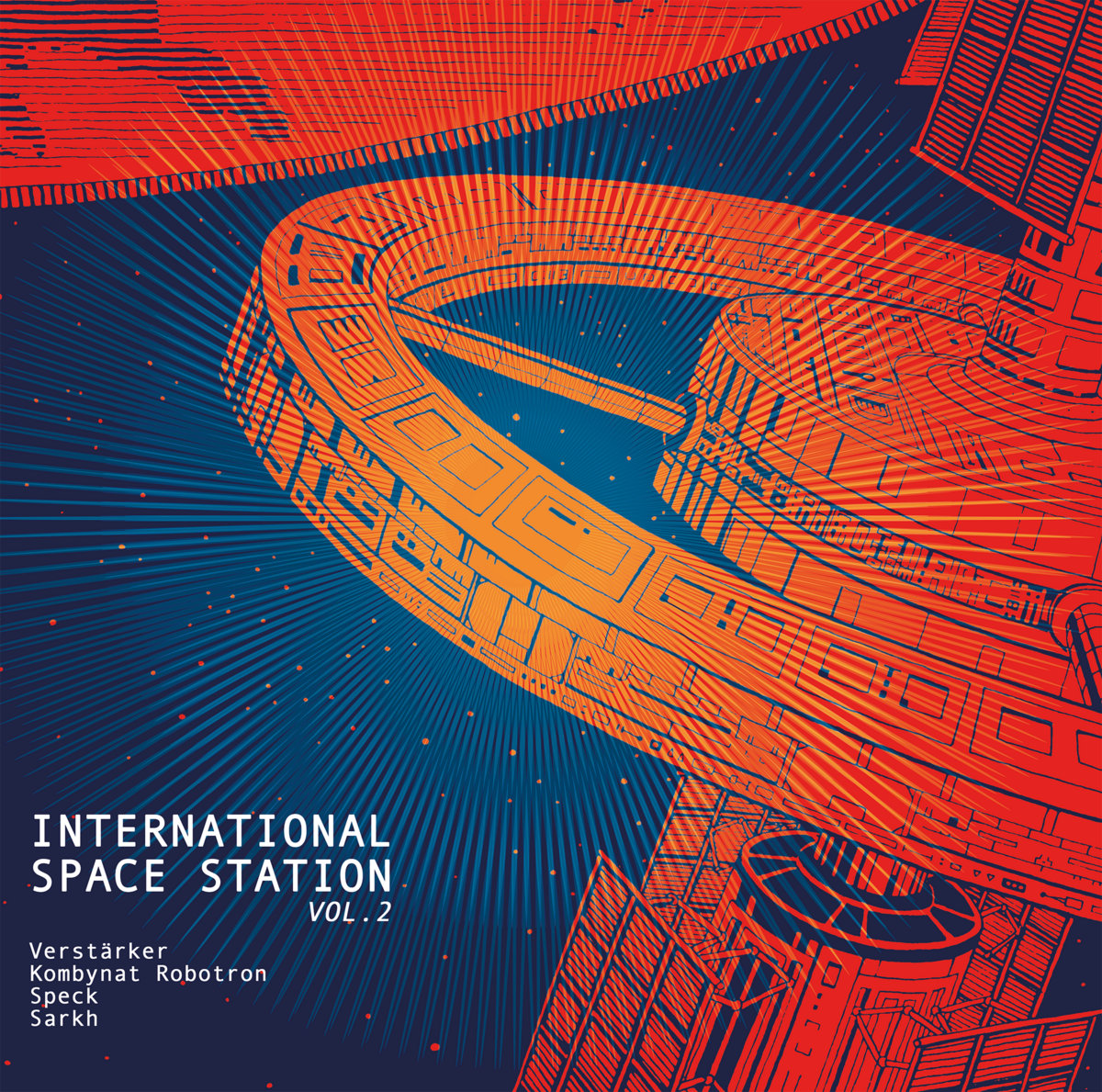
Jointly released through Weird Beard Records in the UK and Echodelick Records in the US, and I believe available to preorder from all of them, International Space Station Vol. 2 once again brings together an intercontinental assemblage in Verstärker (from the US, despite the maybe-misleading umlaut), Kombynat Robotron and Sarkh (from Germany), and Speck (from Austria), and everybody but Kombynat Robotron already has a song streaming. And Kombynat Robotron aren’t being jerks or holdouts or whathaveyou, but they’ve only got one song on their side. Fair enough up keep it under wraps for now.
If you do want to hear that — and we both know you do — come back Aug. 19, as I’ll be streaming the album in full that day with what I’m sure will be a duly slobbering review full of obscure Star Trek references and cosmic buzzwords picked up from the PBS S0ace Time science videos my daughter watches with ironically religious fervor. So it’ll be awesome, in other words.
For now, art, info and copious linkage follow. Engage:
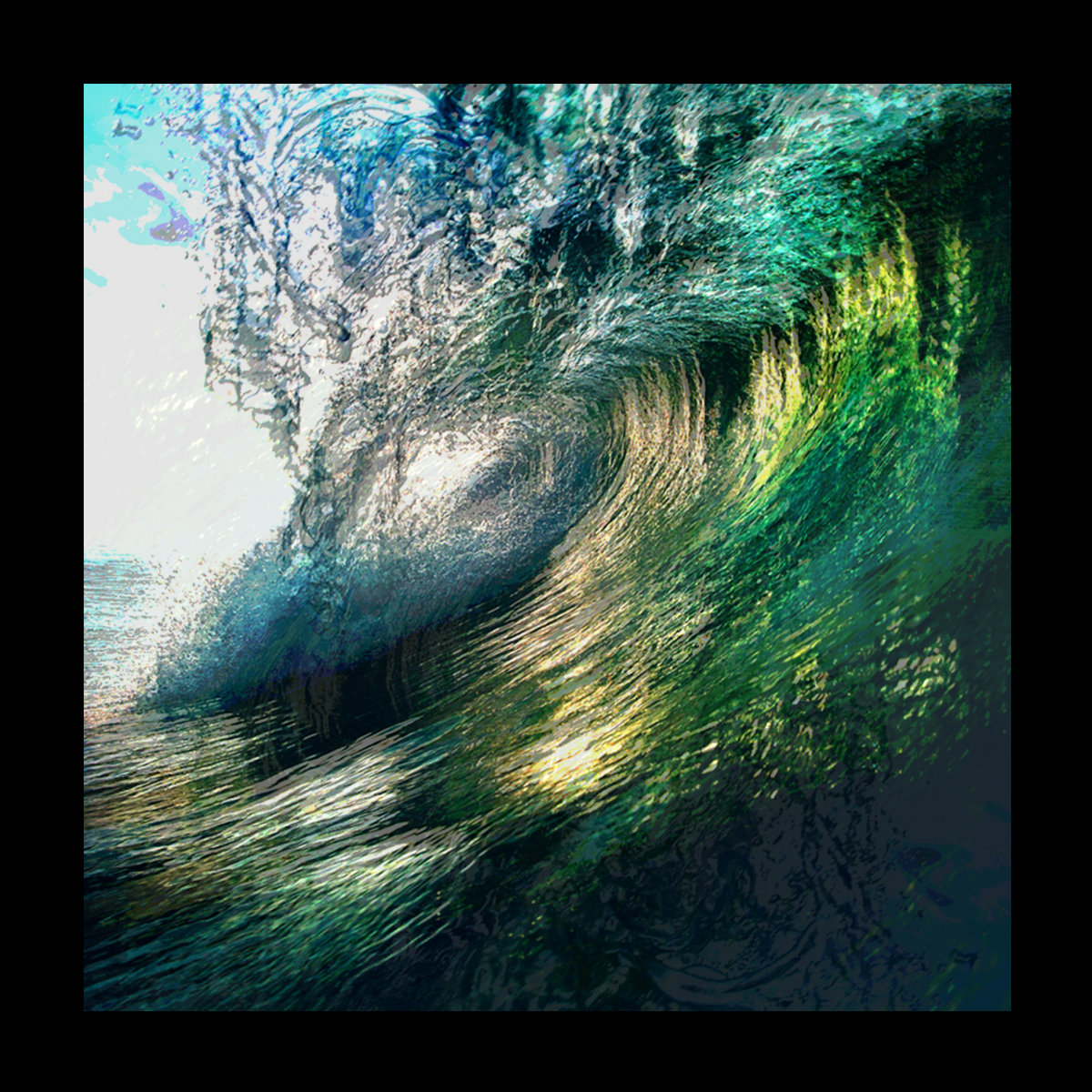
The long awaited vol. 2 of the Intrernational Space Station arrives!
2-LP in a fat gatefold cover, colored wax, limited to 500 LP 1: orange wax LP 2: blue wax CD in digisleeve lim. 100
Four international bands (Verstärker, Kombynat Robotron, Speck, Sarkh) contributing 1 LP side each, instrumental, about how to watch the ISS crossing their skies from time to time… or being overwhelmed by the rough beauty of the ocean…
Long and psychedelic tracks pulsating through space and try to follow the way of the space station around our globe and even beyond, to contribute you the opportunity to travel through your inner cosmosis while listening, only interrupted by the needle lifting, which could just be some stops at random interstellar stations, to release and gain passengers.
2-LP in a fat gatefold cover, colored wax, limited to 500 LP 1: orange wax LP 2: blue wax
Out via Worst Bassist (DE+World), Echodelick (USA) and Weird Beird (UK) August 20th 2024 Comes with Download Code
CD out via Worst Bassist on Aug. 20th.
Verstärker
Verstärker from Kentucky, USA, play monotonic motorik sound, surrounded by soundscapes and beautiful noise.
Groove, shifts, scapes, beauty, intensity, it’s all there.
Kombynat Robotron
Germany’s high flying neo-krautrockers continue on side B with their floating and dynamic longtrack.
Speck
Side C kicks off with Austria’s instrumental psychedelic mantra jammers Speck, who created a journey through mind and space until…
Sarkh
… the ISS takes another turn over Germany and brings you a force of nature to end all this, with side D.
You’ll be torn apart and re-built again through the heavy and yet delightful instrumentals.
By the time today is through — come hell or high water! — we will be at the halfway point of this two-week Quarterly Review. It hasn’t been difficult so far, though there are ups and downs always and I don’t think I’m giving away secrets when I tell you that in listening to 50 records some are going to be better than others.
Truth is that even outside the 100 LPs, EPs, etc., I have slated, there’s still a ton more. Even in something so massive, there’s an element of picking and choosing what goes in. Curation is the nice word for it, though it’s not quite that creatif in my head. Either way, I hope you’ve found something that connects this week. If not yet, then today. If not today, then maybe next week. As I’m prone to say on Fridays, we’re back at it on Monday.
Quarterly Review #41-50:
—
Pallbearer, Mind Burns Alive
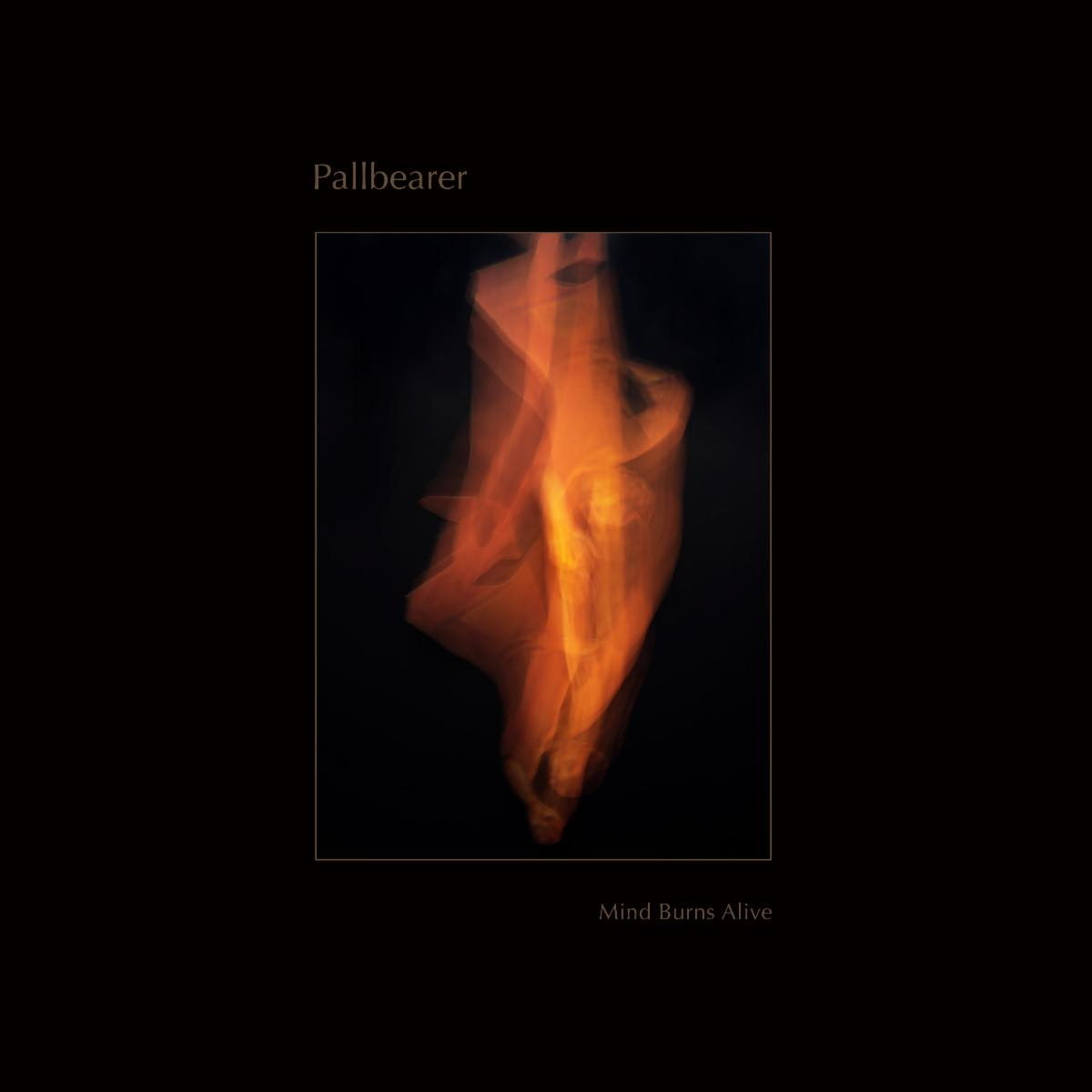
While I won’t take away from the rawer energy and longing put into their earlier work, maturity suits Pallbearer. The Little Rock, Arkansas, four-piece of vocalist/guitarist Brett Campbell, guitarist/backing vocalist Devin Holt, bassist/synthesist/backing vocalist Joseph D. Rowland and drummer Mark Lierly have passed their 15th anniversary between 2020’s Forgotten Days (review here) and the self-recorded six tracks of Mind Burns Alive, and they sound poised harnessing new breadth and melodic clarity. They’ve talked about the album being stripped down, and maybe that’s true to some degree in the engrossing-anyhow opener “When the Light Fades,” but there’s still room for sax on the 10-minute “Endless Place,” and the quieter stretches of the penultimate “Daybreak” highlight harmonized vocals before the bass-weighted riff sweeps in after the three-minute mark. Campbell has never sounded stronger or more confident as a singer, and he’s able to carry the likewise subdued intro to “Signals” with apparent sincerity and style alike. The title-track flashes brighter hopes in its later guitar solo leads, but they hold both their most wistful drift and their most crushing plod for closer “With Disease,” because five records and countless tours (with more to come) later, Pallbearer very clearly know what the fuck they’re doing. I hope having their own studio leads to further exploration from here.
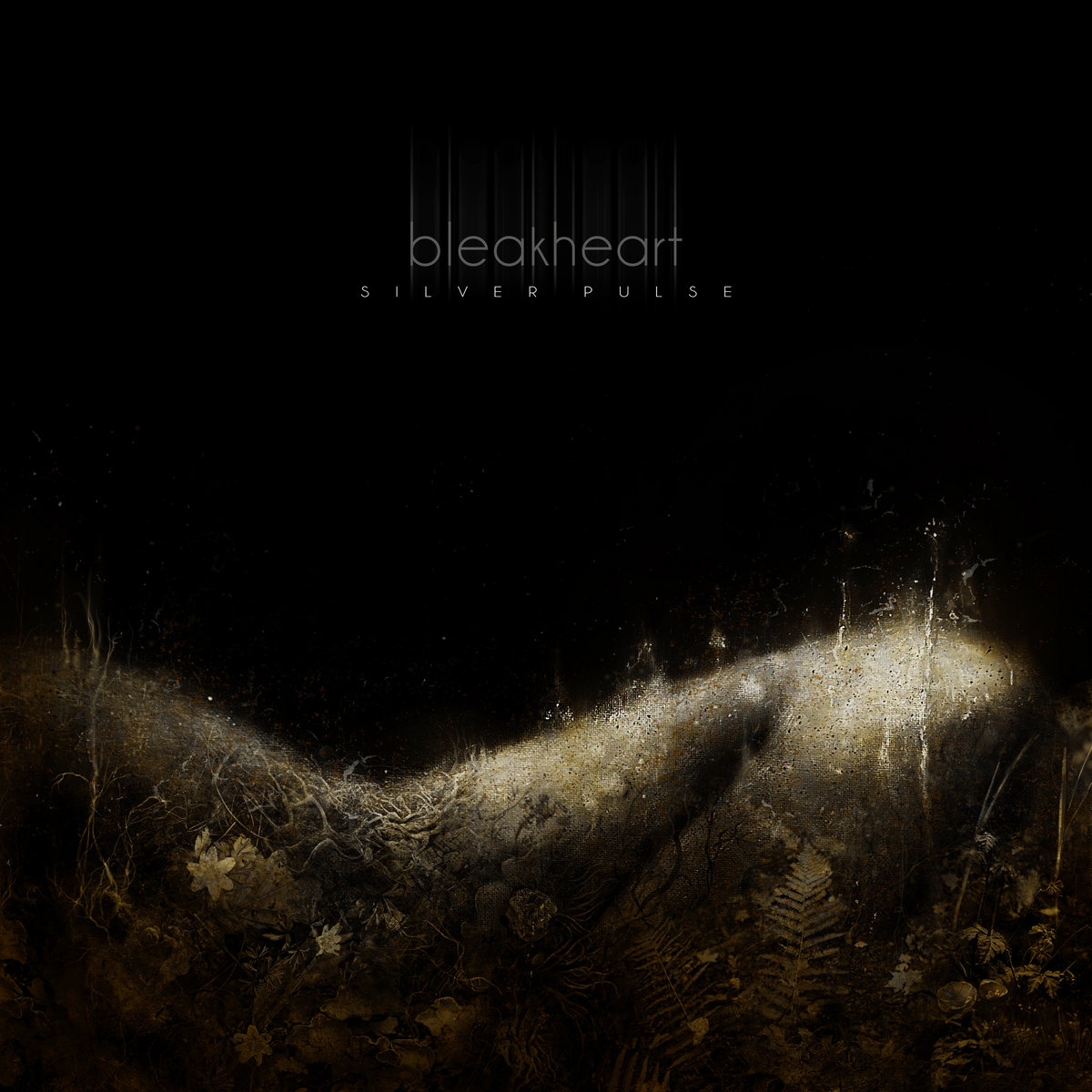
With its six pieces arranged so that side A works from its longest track to its shortest and side B mirrors by going shortest to longest, Denver‘s BleakHeart seem to prioritize immersion on their second full-length, Silver Pulse, as “All Hearts Desire” unfolds fluidly across nearly eight minutes, swelling to an initial lumbering roll that evaporates as they move into the more spacious verse and build back up around the vocals of Kiki GaNun (also synth) and Kelly Schilling (also bass, keys and more synth). Emotional resonance plays at least as much of a role throughout as the tonal weight intermittently wrought by JP Damron and Mark Chronister‘s guitars, and with Joshua Quinones on drums giving structure and movement to the meditations of “Where I’m Disease” before leaving the subsequent “Let Go” to its progression through piano, drone and a sit-in from a string quartet that leads directly into “Weeping Willow,” the spaces feel big and open but never let the listener get any more lost in them than is intended. This is the first LP from the five-piece incarnation of BleakHeart, which came together in 2022, and the balance of lushness and intensity as “Weeping Willow” hits its culmination and recedes into the subdued outset of “Falling Softly” and the doomed payoff that follows bodes well, but don’t take that as undercutting what’s already being accomplished here.
Austria’s Pryne — also stylized all-caps: PRYNE — threaten to derail their first album before it’s even really started with the angular midsection breakdown of “Can-‘Ka No Rey,” but that the opener holds its course and even brings that mosher riff back at the end is indicative of the boldness with which they bring together the progressive ends of metal and heavy rock throughout the 10-song/46-minute offering, soaring in the solo ahead of the slowdown in “Ramification,” giving the audience 49 seconds to catch its breath after that initial salvo with “Hollow Sea” before “Abordan” resumes the varied onslaught with due punch, shove and twist, building tension in the verse and releasing in the melodic chorus in a way that feels informed by turn-of-the-century metal but seeming to nod at Type O Negative in the first half bridge of “Cymboshia” and refusing flat-out to do any one thing for too long. Plotted and complex even as “The Terrible End of the Yogi” slams out its crescendo before the Baronessy verse of “Plaguebearer” moves toward a stately gang shout and squibbly guitar tremolo, they roll out “Enola” as a more straight-ahead realignment before the drone interlude “Shapeless Forms” bursts into the double-kick-underscored thrash of closer “Elder Things,” riding its massive groove to an expectedly driving end. You never quite know what’s coming next within the songs, but the overarching sense of movement becomes a uniting factor that serves the material well regardless of the aggression level in any given stretch.
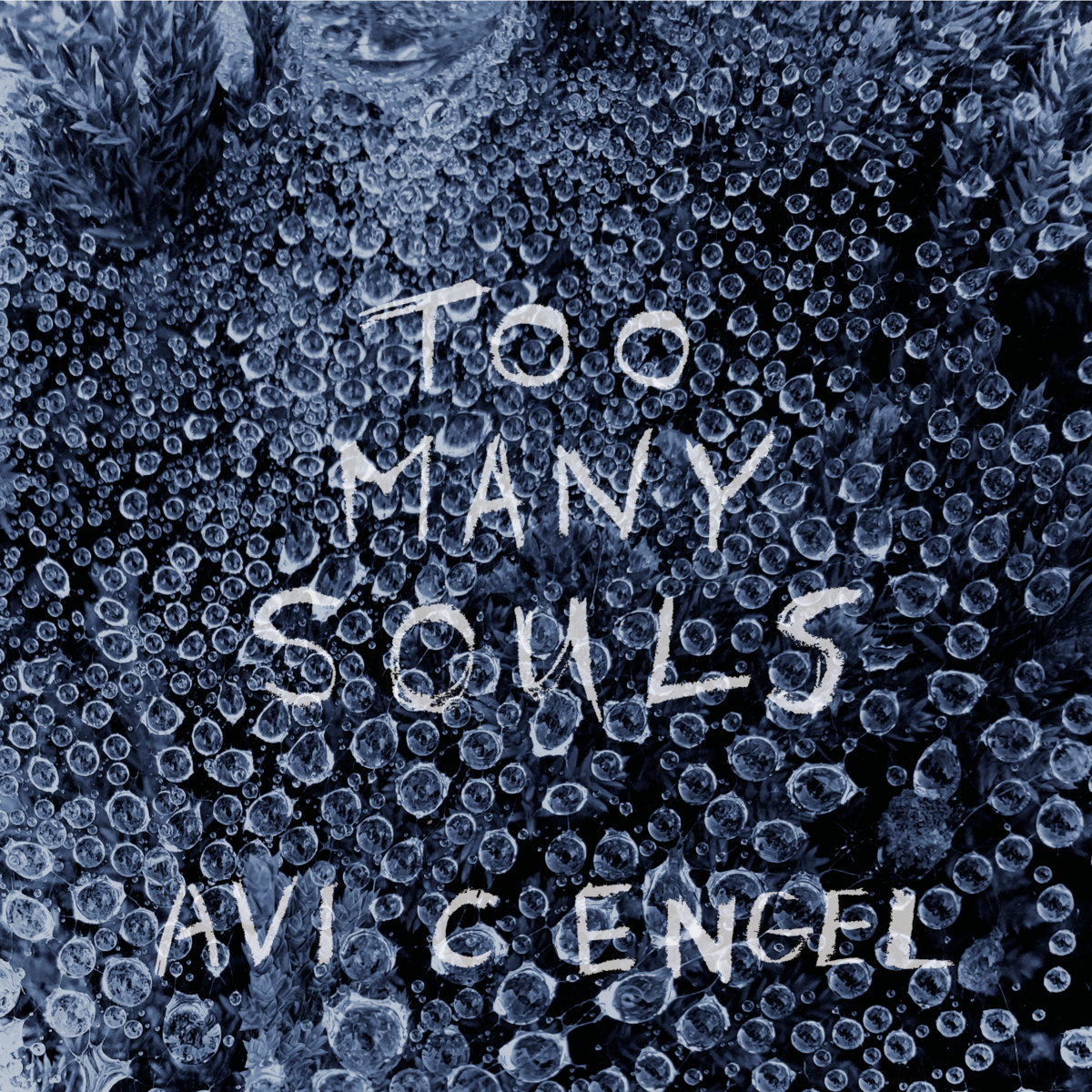
Backed by looped percussive ticks and pops and the cello-esque melody of the gudok, Toronto experimental singer-songwriter Avi C. Engel is poised as they ask in the lyrics of “Breadcrumb Dance,” “How many gods used to run this place/Threw up their hands, went into real estate” near the center of the seven-song Too Many Souls LP. Never let it be said there wasn’t room for humor in melancholy. Engel isn’t new to exploring folkish intimacy in various contexts, and Too Many Souls feels all the more personal even in “Wooly Mammoth” or second cut “Ladybird, What’s Wrong?” which gets underway on its casual semi-ramble with the line, “One by one I watch them piss into the sun,” for the grounded perspective at root. An ongoing thread of introspection and Engel‘s voice at the center draw the songs together as these stories are told in metaphor — birds return in the album’s second half with “The Oven Bird’s Song” but there’s enough heart poured in that it doesn’t need to be leaned into as a theme — and before it moves into its dreamstate drone still with the acoustic guitar beneath, “Without Any Eyes” brings through its own kind of apex in Engel‘s layered delivery. Topped with a part-backmasked take on the traditional “Wayfaring Stranger” that’s unfortunately left as an instrumental, Too Many Souls finds Engel continuing their journey of craft with its own songs as companions for each other and the artist behind them.
The 13-minute single “Ultrawest” follows behind Aktopasa‘s late-2022 Argonauta Records debut, Journey to the Pink Planet (review here), and was reportedly composed to feature in a documentary of the same name about the reshaping of post-industrial towns in Colorado. It is duly spacious in its slow, linear, instrumentalist progression. The Venice, Italy, three-piece of guitarist Lorenzo Barutta, bassist Silvio Tozzato and drummer Marco Sebastiano Alessi are fluid as they maintain the spirit of the jam that likely birthed the song’s floating atmospherics, but there’s a plan at work as well as they bring the piece to fruition, with Alessi subtly growing more urgent around 10 minutes in to mark the shift into an ending that never quite bursts out and isn’t trying to, but feels like resolution just the same. A quick, hypnotic showcase of the heavy psychedelic promise the debut held, “Ultrawest” makes it easy to look forward to whatever might come next for them.
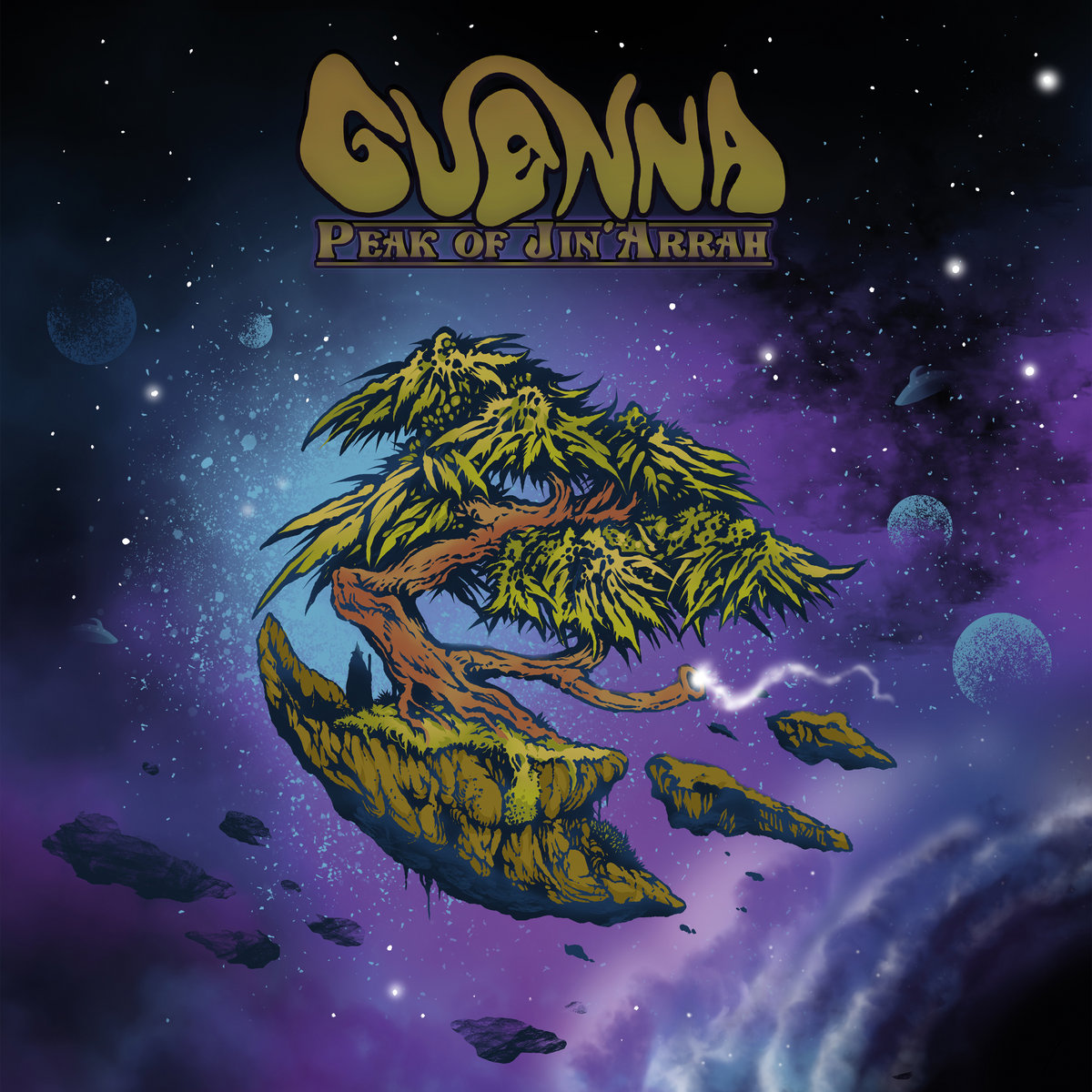
Right onto the list of 2024’s best debuts goes Guenna‘s Peak of Jin’Arrah, specifically for the nuance and range the young Swedish foursome bring to their center in heavy progressive fuzz riffing. One might look at a title like “Bongsai” or “Weedwacker” (video premiered here) and imagine played-to-genre stoner fare, but Guenna‘s take is more ambitious, as emphasized in the flute brought to “Bongsai” at the outset and the proclivity toward three-part harmonies that’s unveiled more in the nine-minute “Dimension X,” which follows. The folk influence toward which that flute hints comes forward on the mostly-acoustic closer “Guenna’s Lullaby,” which takes hold after the skronk-accompanied, full-bore push that caps “Wizery,” but by that point the context for such shifts has been smoothly laid out as being part of an encompassing and thoughtful songwriting process that in less capable hands would leave “Ordric Major” disjointed and likely overly aggressive. Even as they make room for the guest lead vocals of Elin Pålsson on “Dark Descent,” Guenna walk these balances smoothly and confidently, and if you don’t believe there’s a generational shift happening right now — at this very moment — in Scandinavia, Peak of Jin’Arrah stands ready to convince you otherwise. There’s a lot of work between here and there, but Guenna hold the potential to be a significant voice in that next-gen emergence.
The interplay of stoner-metal tonal density and languid vocal melody in “I Thought I Would Not” sets an atmospheric mood for Slow Green Thing on their fourth LP, Wetterwarte / Waltherstrasse, which the Dresden-based four-piece seem to have recorded in two sessions between 2020 and 2022. That span of time might account for some of the scope between the songs as “Thousand Deaths” holds out a hand into the void staring back at it and the subsequent “Whispering Voices” answers the proggy wash and fuzzed soloing of “Tombstones in My Eyes” with roll and meditative float alike, but I honestly don’t know what was recorded when and there’s no real lack of cohesion within the aural mists being conjured or the heft residing within it, so take that as you will. It’s perhaps less of a challenge to put temporal considerations aside since Slow Green Thing seem so at home in the flow that plays out across Wetterwarte / Waltherstrasse‘s six songs and 44 minutes, remaining in control despite veering into more aggressive passages and basing so much of what they do on entrancing and otherworldly vibe. And while the general superficialities of thickened tones and soundscaping, ‘gaze-type singing and nod will be familiar, the use made of them by Slow Green Thing offers a richer and deeper experience revealed and affirmed on repeat listens.
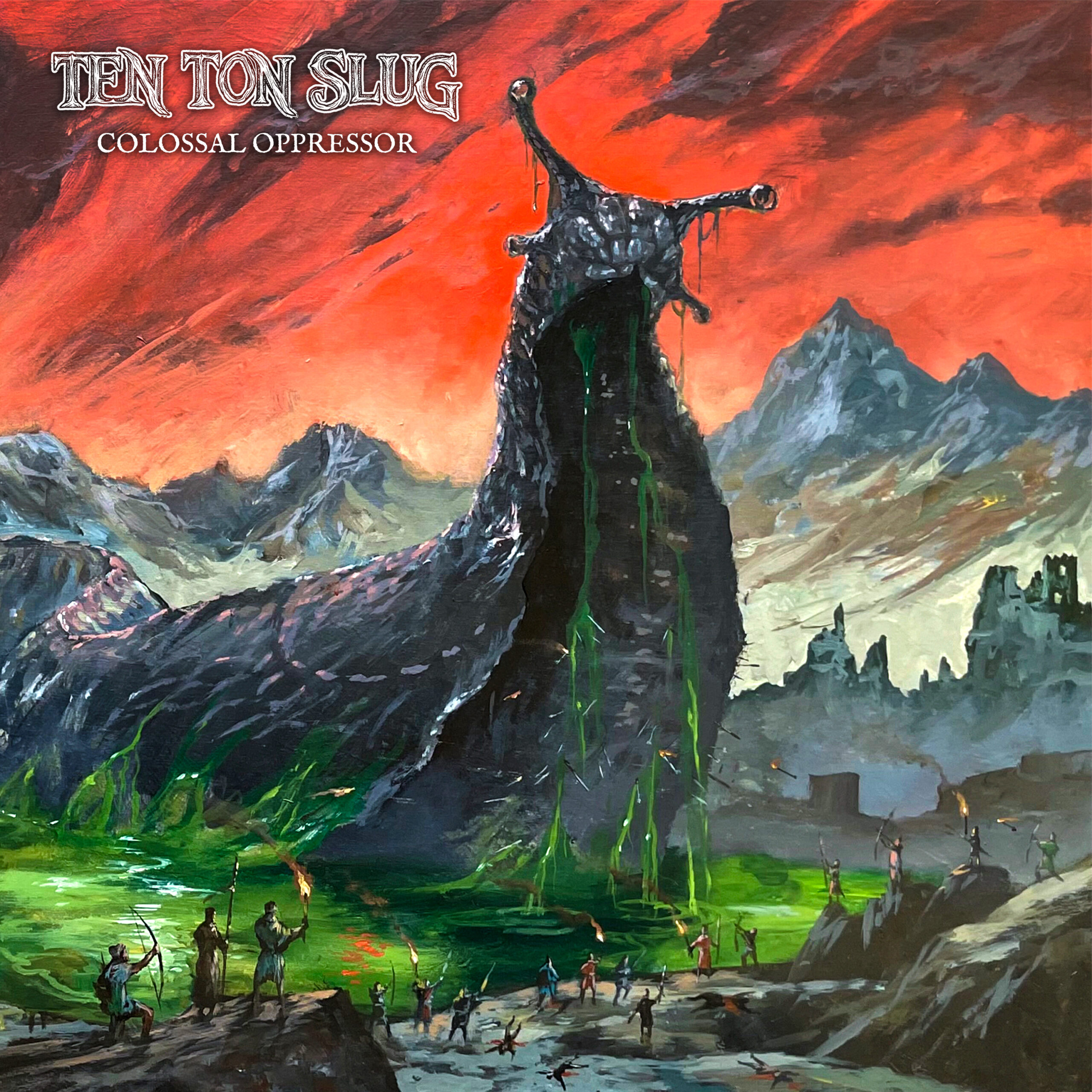
Don’t expect a lot of trickery in Ten Ton Slug‘s awaited first full-length record, Colossal Oppressor, which delivers its metallic sludge pummel with due transparency of purpose. That is to say, the Galway, Ireland, trio aren’t fucking around. Enough so that Bolt Thrower‘s Karl Willetts shows up on a couple of songs. Varied but largely growled or screamed vocals answer the furious chug and thud of “Balor,” and while “Ghosts of the Ooze” later on answers back to the brief acoustic parts bookending opener “The Ooze” ahead of “Mallacht an tSloda” arriving like a sledgehammer only to unfold its darkened thrash and nine-plus-minute closer “Mogore the Unkind” making good on its initial threat with the mosh-ready riffing in its second half, there’s no pretense in those or any of the other turns Colossal Oppressor makes, and there doesn’t need to be when the songs are so refreshingly crushing. These guys have been around for over a decade already, so it’s not a surprise necessarily to find them so committed to this punishing mission, but the cathartic bloodletting resonates regardless. Not for everyone, very much for some on the more extreme end of heavy.
Don’t let the outward Beatles-bouncing pop-psych friendly-acid traditionalism of “Goodbye Suzy” lull you into thinking San Francisco psych rockers Magic Fig‘s self-titled debut is solely concerned with vintage aesthetics. While accessible even in the organ-and-synth prog flourish of “PS1” — the keyboards alone seeming to span generations — and the more foreboding current of low end under the shuffle and soft vocals of “Obliteration,” the six-song/28-minute LP is no less effective in the rising cosmic expanse that builds into “Labyrinth” than the circa-’67 orange-sun lysergic folk-rock that rolls out from there — that darker edge comes back around, briefly, in a stop around the two-minute mark; it’s hard to know which side is imagining the other, but “Labyrinth” is no less fun for that — and “Distant Dream,” which follows, is duly transcendent and fluid. Given additional character via the Mellotron and birdsong-inclusive meditation that ends it and the album as a whole, “Departure” nonetheless feels intentional in its subtly synthy acoustic-and-voice folkish strum, and its intricacy highlights a reach one hopes Magic Fig will continue to nurture.
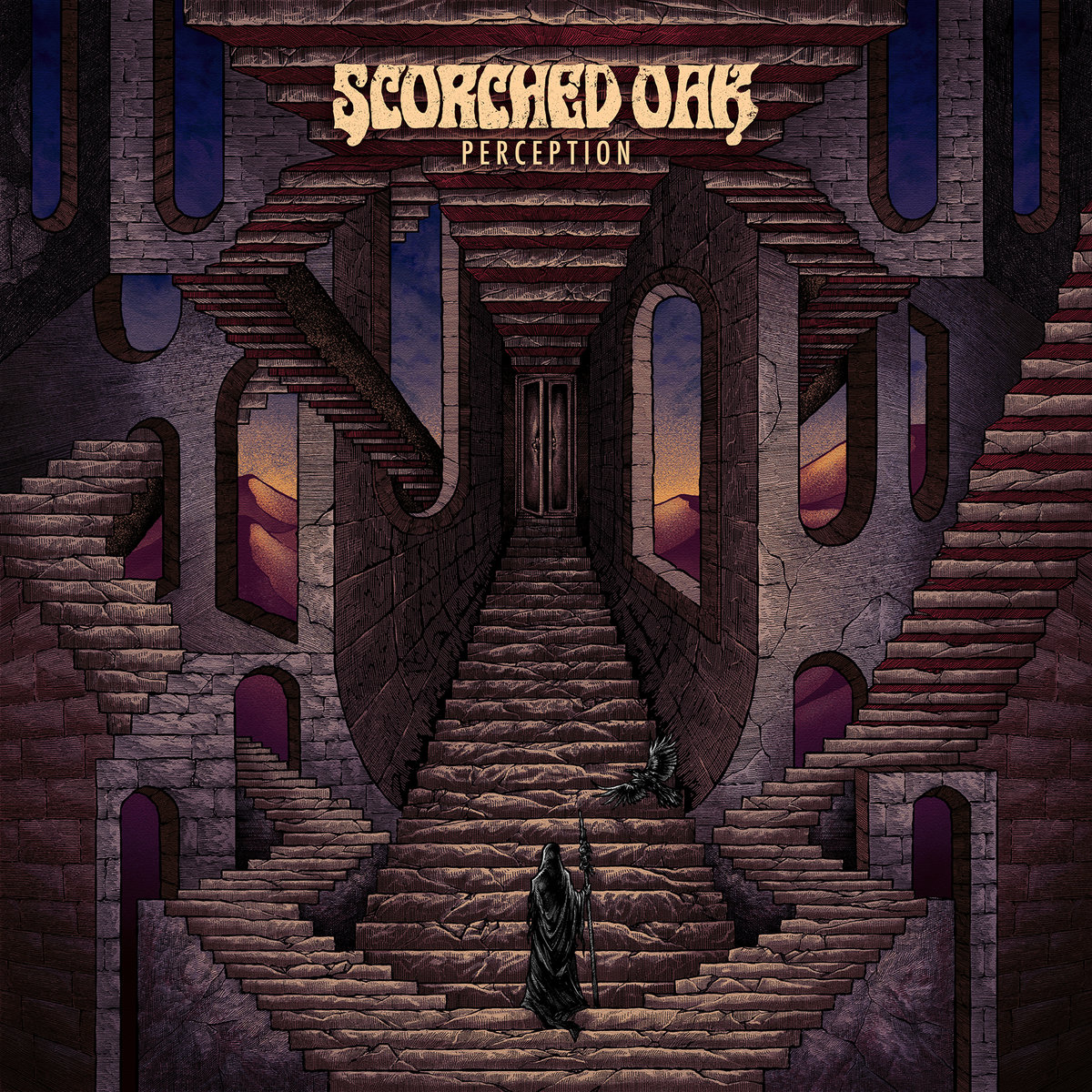
If you followed along with Dortmund, Germany’s Scorched Oak on their 2020 debut, Withering Earth (review here), as that album dug into classic heavy rock as a means of longer-form explorations, some of what they present in the 39 minutes of Perception might make more sense. There was plenty of dynamic then too in terms of shifts in rhythm and atmosphere, and certainly second-LP pieces like “Mirrors” and “Relief” come at least in part from a similar foundation — I’d say the same of the crescendo verse of “Oracle” near the finish — but the reportedly-recorded-live newer offering finds the band making a striking delve into harder and more metallic impacts on the whole. An interplay of gruff — gurgling, almost — and soulful melodic vocals is laid out as opener/longest track (immediate points) “Delusion” resolves the brooding toms of its verse with post-metal surges. Perhaps it’s obvious enough that it doesn’t need to be said, but Scorched Oak aren’t residing in a single feel or progression throughout, and the intensity and urgency of “Reflection” land with a directness that the closing “Oracle” complements in its outward spread. The element of surprise makes Perception feel somewhat like a second debut, but that they pull off such an impression is in itself a noteworthy achievement, never mind how much less predictable it makes them or the significant magnitude of these songs.
Posted in Reviews on February 26th, 2024 by JJ Koczan
Admittedly, there’s some ambition in my mind calling this the ‘Spring 2024 Quarterly Review.’ I’m done with winter and March starts on Friday, so yeah, it’s kind of a reach as regards the traditional seasonal patterns of Northern New Jersey where I live, but hell, these things actually get decided here by pissing off a rodent. Maybe it doesn’t need to be so rigidly defined after all.
After doing QRs for I guess about nine years now, I finally made myself a template for the back-end layout. It’s not a huge leap, but will mean about five more minutes I can dedicate to listening, and when you’re trying to touch on 50 records in the span of a work week and attempt some semblance of representing what they’re about, five minutes can help. Still, it’s a new thing, and if you see ‘ARTIST’ listed where a band’s name should be or LINK where ‘So and So on Facebook’ goes, a friendly comment letting me know would be helpful.
Thanks in advance and I hope you find something in all of this to come that speaks to you. I’ll try to come up for air at some point.
Quarterly Review #1-10:
—
Slift, Ilion
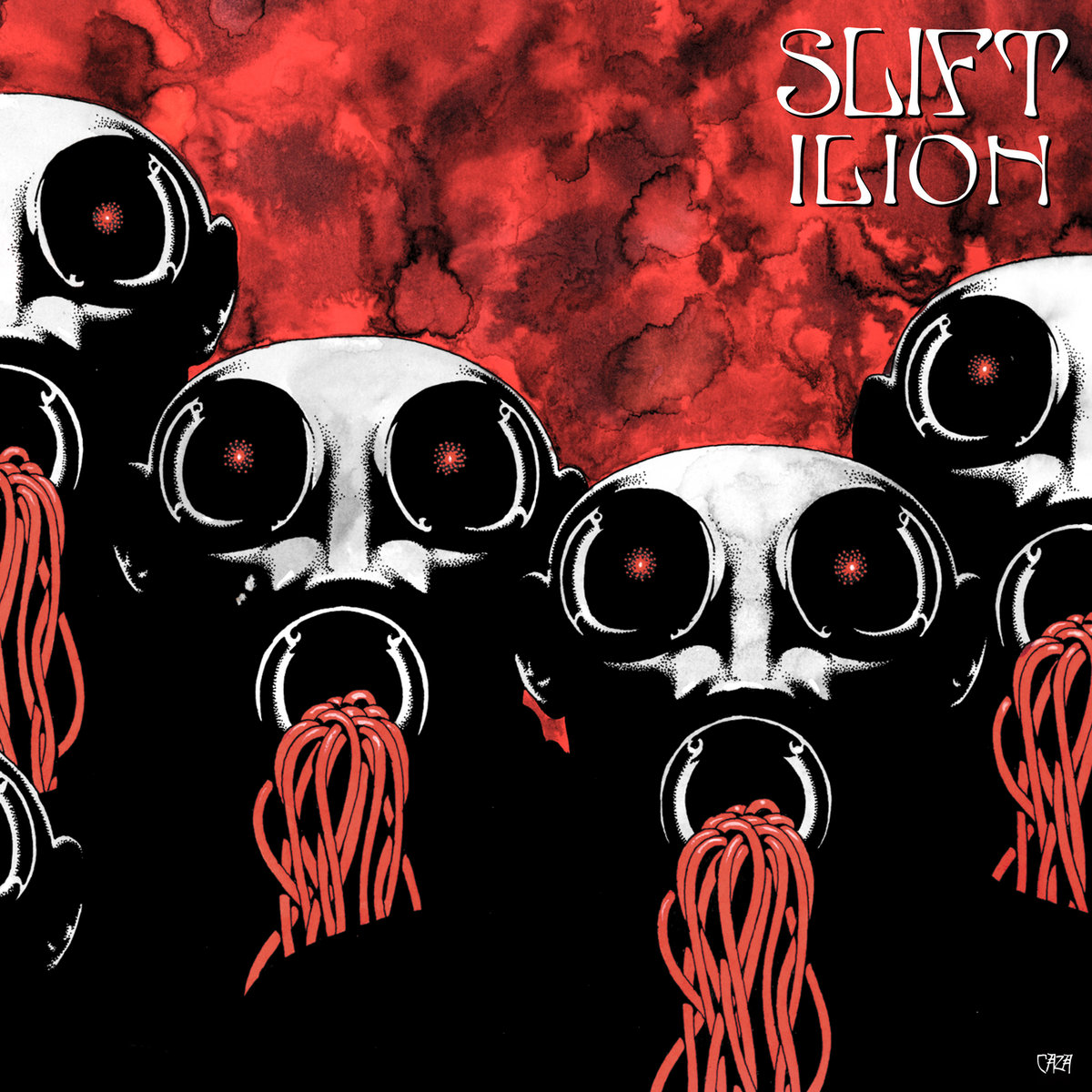
One of the few non-billionaire groups of people who might be able to say they had a good year in 2020, Toulouse, France, spaceblasters Slift signed to Sub Pop on the strength of that wretched year’s Ummon (review here) and the spectacle-laced live shows with which they present their material. Their ideology is cosmic, their delivery markedly epic, and Ilion pushes the blinding light and the rhythmic force directly at you, creating a sweeping momentum contrasted by ambient stretches like that tucked at the end of 12-minute hypnotic planetmaker “The Words That Have Never Been Heard,” the drone finale “Enter the Loop” or any number of spots between along the record’s repetition-churning, willfully-overblown 79-minute course of builds and surging payoffs. A cynic might tell you it’s not anything Hawkwind didn’t do in 1974 offered with modern effects and beefier tones, but, uh, is that really something to complain about? The hype around Ilion hasn’t been as fervent as was for Ummon — it’s a different moment — but Slift have set themselves on a progressive course and in the years to come, this may indeed become their most influential work. For that alone it’s among 2024’s most essential heavy albums, never mind the actual journey of listening. Bands like this don’t happen every day.
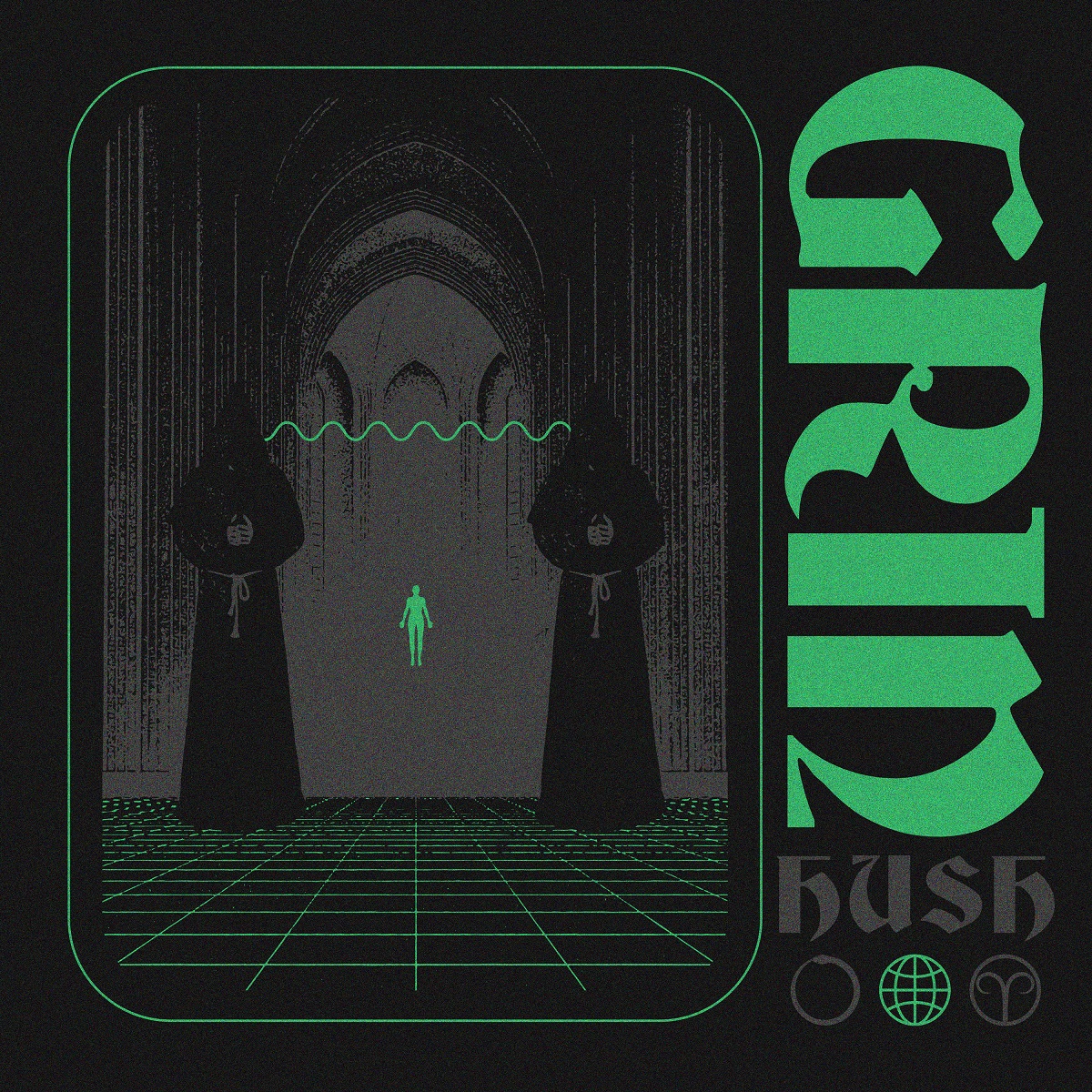
The only thing keeping Grin from being punk rock is the fact that they don’t play punk. Otherwise, the self-recording, self-releasing (on The Lasting Dose Records) Berlin metal-sludge slingers tick no shortage of boxes as regards ethic, commitment to an uncompromised vision of their sound, and on Hush, their fourth long-player which features tracks from 2023’s Black Nothingness (review here), they sharpen their attack to a point that reminds of dug-in Swedish death metal on “Pyramid” with a winding lead line threaded across, find post-metallic ambience in “Neon Skies,” steamroll with the groove of the penultimate “The Tempest of Time,” and manage to make even the crushing “Midnight Blue Sorrow” — which arrives after the powerful opening statement of “Hush” “Calice” and “Gatekeeper” — have a sense of creative reach. With Sabine Oberg on bass and Jan Oberg handling drums, guitar, vocals, noise and production, they’ve become flexible enough in their craft to harness raw charge or atmospheric sprawl at will, and through 16 songs and 40 minutes (“Portal” is the longest track at 3:45), their intensity is multifaceted, multi-angular, and downright ripping. Aggression suits this project, but that’s never all that’s happening in Grin, and they’re stronger for that.
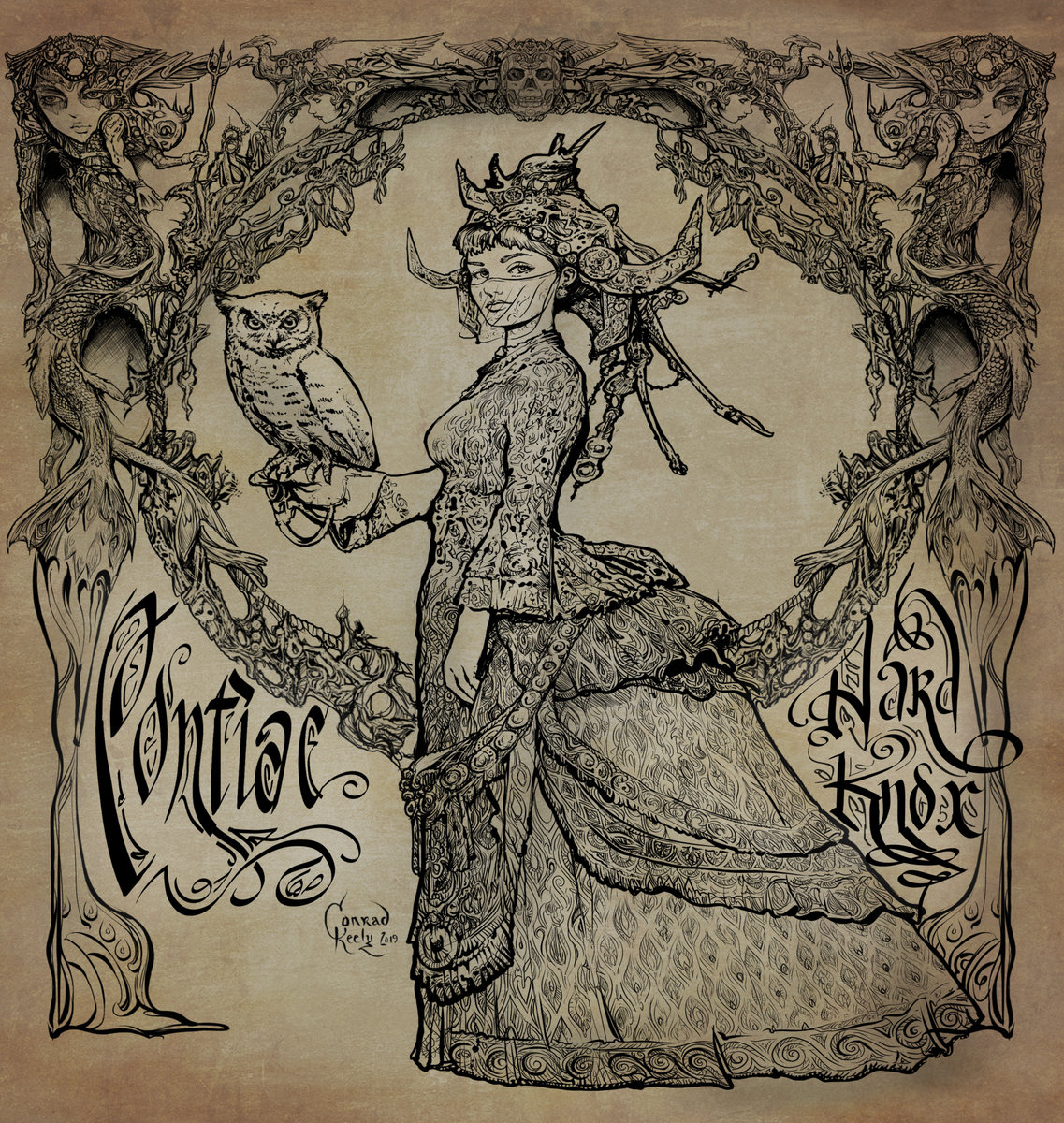
A debut solo-band outing from guitarist, bassist, vocalist and songwriter Dave Cotton, also of Seven Nines and Tens, Pontiac‘s Hard Knox lands on strictly limited tape through Coup Sur Coup Records and is only 16 minutes long, but that’s time enough for its six songs to find connections in harmony to Beach Boys and The Beatles while sometimes dropping to a singular, semi-spoken verse in opener/longest track (immediate points, even though four minutes isn’t that long) “Glory Ragged,” which moves in one direction, stops, reorients, and shifts between genres with pastoralism and purpose. Cotton handles six-string and 12-string, but isn’t alone in Pontiac, as his Seven Nines and Tens bandmate Drew Thomas Christie handles drums, Adam Vee adds guitar, drums, a Coke bottle and a Brita filter, and CJ Wallis contributes piano to the drifty textures of “Road High” before “Exotic Tattoos of the Millennias” answers the pre-christofascism country influence shown on “Counterculture Millionaire” with an oldies swing ramble-rolling to a catchy finish. For fun I’ll dare a wild guess that Cotton‘s dad played that stuff when he was a kid, as it feels learned through osmosis, but I have no confirmation of that. It is its own kind of interpretation of progressive music, and as the beginning of a new exploration, Cotton opens doors to a swath of styles that cross genres in ways few are able to do and remain so coherent. Quick listen, and it dares you to keep up with its changes and patterns, but among its principal accomplishments is to make itself organic in scope, with Cotton cast as the weirdo mastermind in the center. They’ll reportedly play live, so heads up.
Already fluid as they open with the rocker “Into the Space,” exclamatory Chilean five-piece The Polvos! delve into more psychedelic reaches in “Fire Dance” and the jammy and (appropriately) floaty midsection of “Going Down,” the centerpiece of their 35-minute sophomore LP, Floating. That song bursts to life a short time later and isn’t quite as immediate as the charge of “Into the Space,” but serves as a landmark just the same as “Acid Waterfall” and “The Anubis Death” hold their tension in the drums and let the guitars go adventuring as they will. There’s maybe some aspect of Earthless influence happening, but The Polvos! meld that make-it-bigger mentality with traditional verse/chorus structures and are more grounded for it even as the spaces created in the songs give listeners an opportunity for immersion. It may not be a revolution in terms of style, but there is a conversation happening here with modern heavy psych from Europe as well that adds intrigue, and the band never go so far into their own ether so as to actually disappear. Even after the shreddy finish of “The Anubis Death,” it kind of feels like they might come back out for an encore, and you know, that’d be just fine.
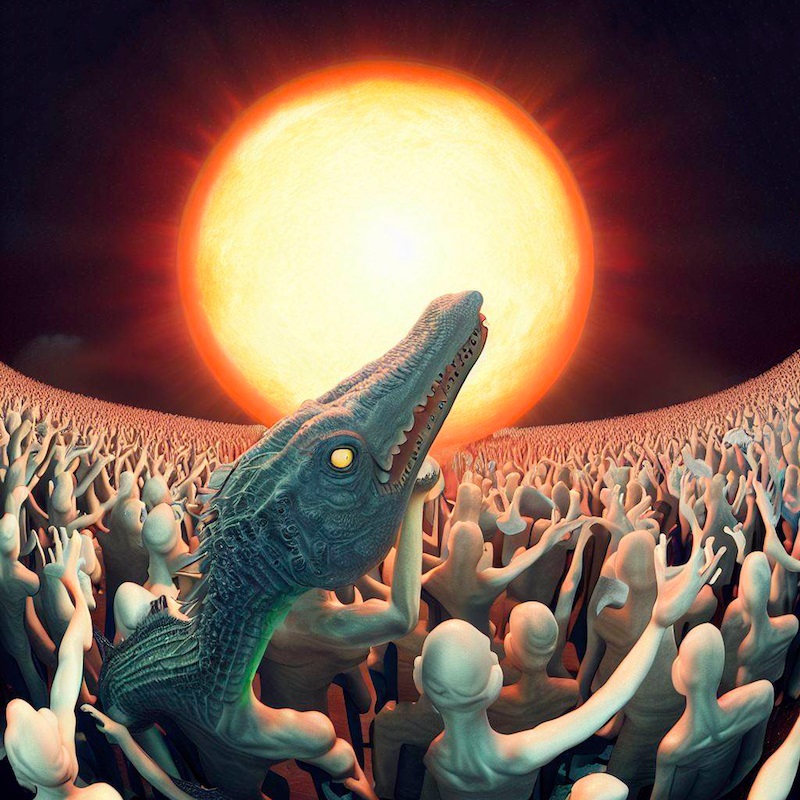
The Cosmic Gospel, Cosmic Songs for Reptiles in Love
With a current of buzz-fuzz drawn across its eight component tracks that allow seemingly disparate moves like the Blondie disco keys in “Hot Car Song” to emerge from the acoustic “Core Memory Unlocked” before giving over to the weirdo Casio-beat bounce of “Psychrolutes Marcidus Man,” a kind of ’60s character reimagined as heavy bedroom indie, The Cosmic Gospel‘s Cosmic Songs for Reptiles in Love isn’t without its resentments, but the almost-entirely-solo-project of Mercata, Italy-based multi-instrumentalist Gabriel Medina is more defined by its sweetness of melody and gentle delivery on the whole. An experiment like the penultimate “Wrath and Gods” carries some “Revolution 9” feel, but Medina does well earlier to set a broad context amid the hook of opener “It’s Forever Midnight” and the subsequent, lightly dub beat and keyboard focus on “The Richest Guy on the Planet is My Best Friend,” such that when closer “I Sew Your Eyes So You Don’t See How I Eat Your Heart” pairs the malevolent intent of its title with light fuzzy soloing atop an easy flowing, summery flow, the album has come to make its own kind of sense and define its path. This is exactly what one would most hope for it, and as reptiles are cold-blooded, they should be used to shifts in temperature like those presented throughout. Most humans won’t get it, but you’ve never been ‘most humans,’ have you?
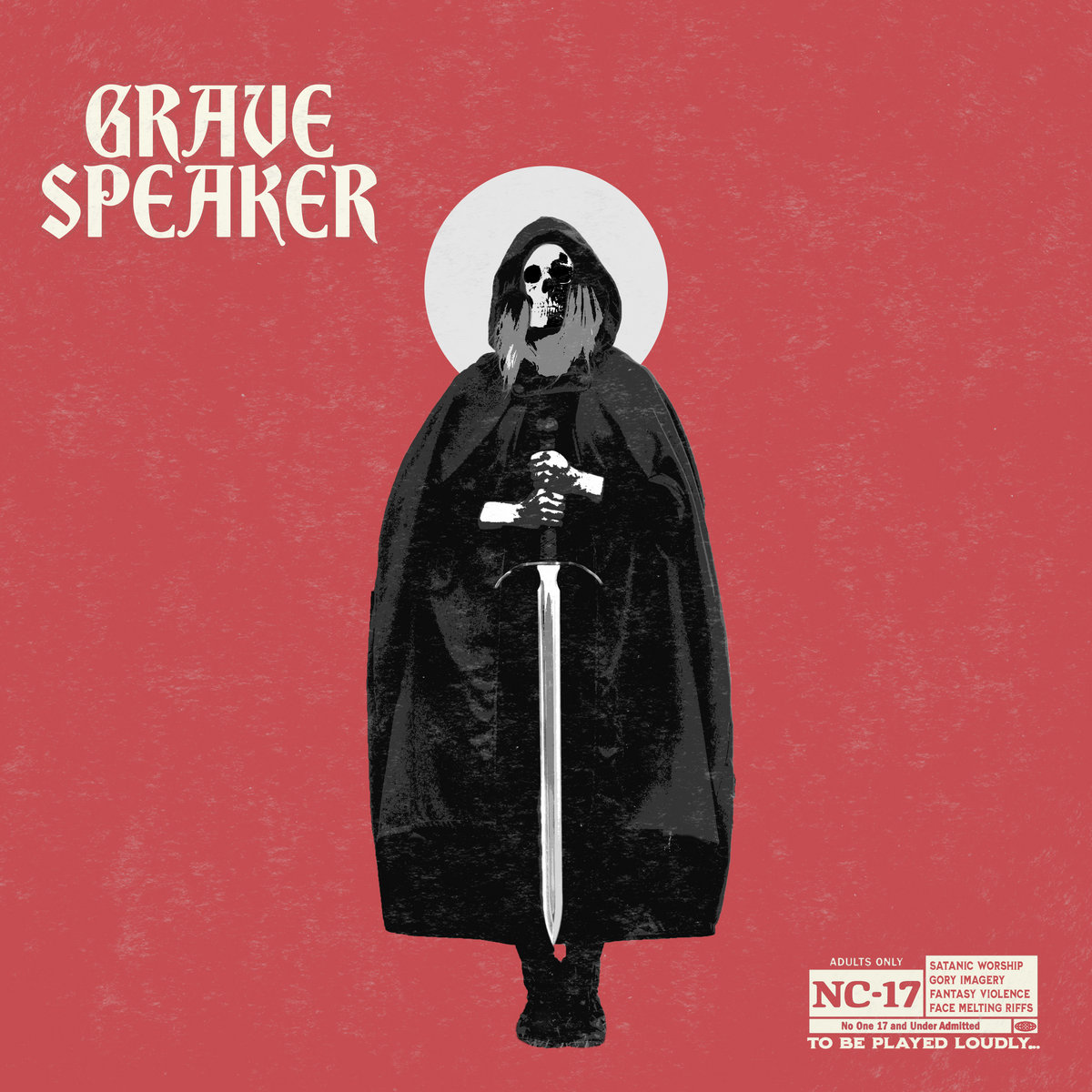
Massachusetts garage doomers Grave Speaker‘s self-titled debut was issued digitally by the band this past Fall and was snagged by Electric Valley Records for a vinyl release. The Mellotron melancholia that pervades the midsection of the eponymous “Grave Speaker” justifies the wax, but the cult-leaning-in-sound-if-not-theme outfit that marks a new beginning for ex-High n’ Heavy guitarist John Steele unfurl a righteously dirty fuzz over the march of “Blood of Old” at the outset and then immediately up themselves in the riffy stoner delve of “Earth and Mud.” The blown-out vocals on the latter, as well as the far-off-mic rawness of “The Bard’s Theme” that surrounds its Hendrixian solo, remind of a time when Ice Dragon roamed New England’s troubled woods, and if Grave Speaker will look to take on a similar trajectory of scope, they do more than drop hints of psychedelia here, in “Grave Speaker” and elsewhere, but they’re no more beholden to that than the Sabbathism of capper “Make Me Crawl” or the cavernous echo of “Earthbound.” It’s an initial collection, so one expects they’ll range some either way with time, but the way the production becomes part of the character of the songs speaks to a strong idea of aesthetic coming through, and the songwriting holds up to that.
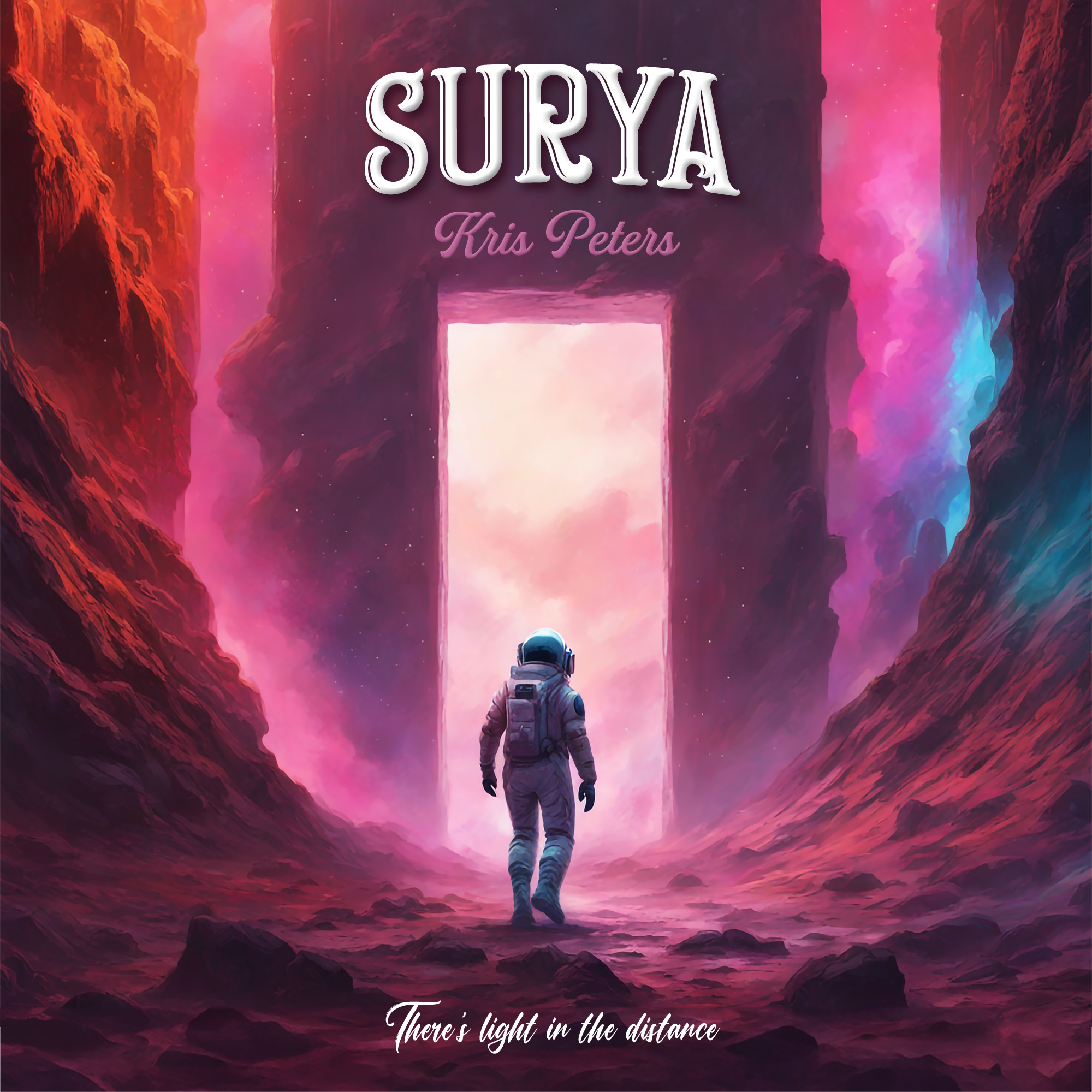
While at the same time proffering his most expansive vision yet of a progressive psychedelia weighted in tone, emotionally expressive and able to move its focus fluidly between its layers of keyboard, synth and guitar such that the mix feels all the more dynamic and the material all the more alive (there’s an entire sub-plot here about the growth in self-production; a discussion for another time), Surya Kris Peters‘ 10-song/46-minute There’s Light in the Distance also brings the former Samsara Blues Experiment guitarist/vocalist closer to uniting his current projects than he’s yet been, the distant light here blurring the line where Surya Kris Peters ends and the emergently-rocking Fuzz Sagrado begins. This process has been going on for the last few years following the end of his former outfit and a relocation from Germany to Brazil, but in its spacious second half as well as the push of its first, a song like “Mode Azul” feels like there’s nothing stopping it from being played on stage beyond personnel. Coinciding with that are arrangement details like the piano at the start of “Life is Just a Dream” or the synth that gives so much movement under the echoing lead in “Let’s Wait Out the Storm,” as Peters seems to find new avenues even as he works his way home to his own vision of what heavy rock can be.
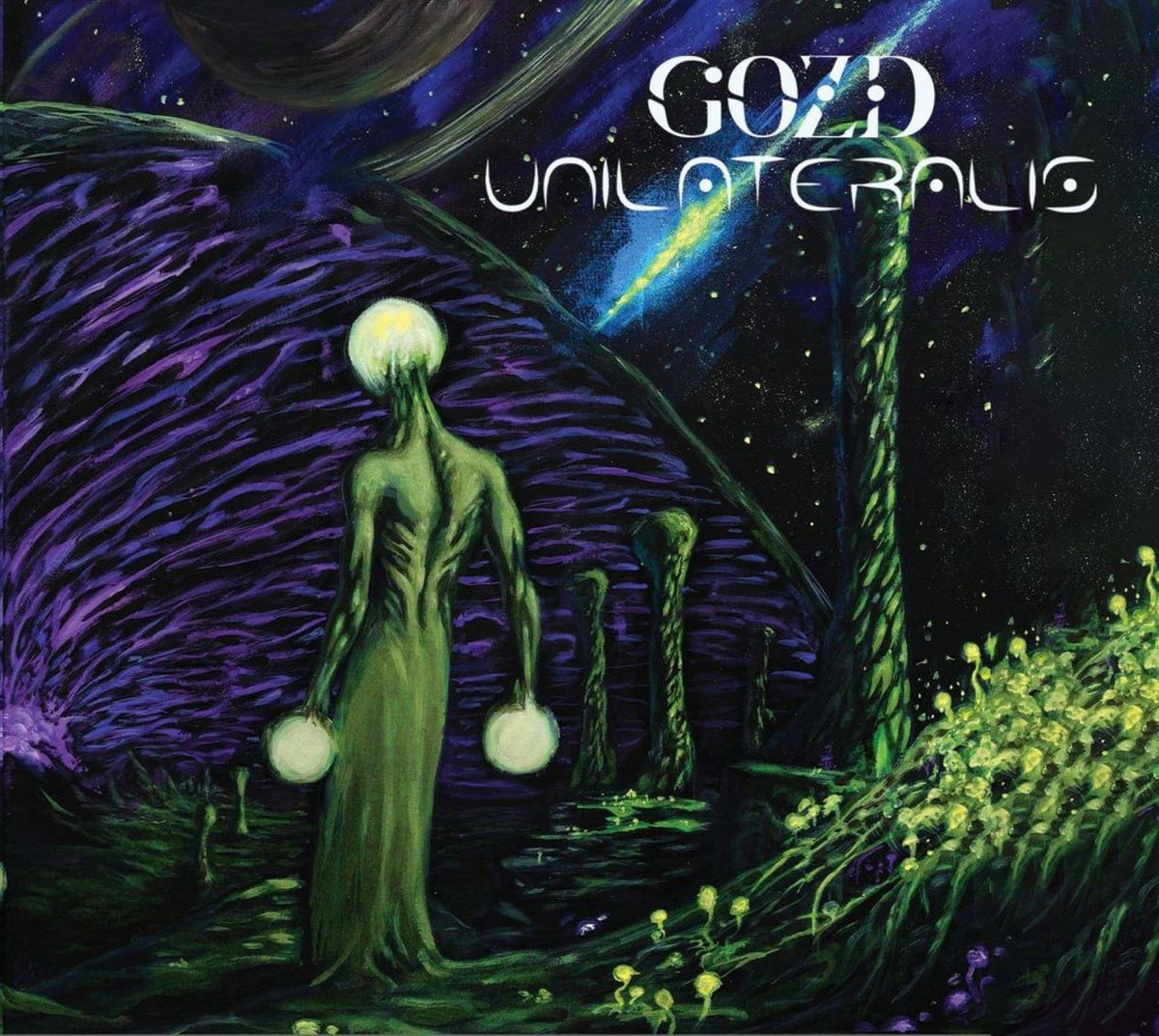
Unilateralis is the four-song follow-up EP to Polish heavydelvers Gozd‘s late-2023 debut album, This is Not the End, and its 20-plus minutes find a place for themselves in a doom that feels both traditional and forward thinking across eight-minute opener and longest track (immediate points, even for an EP) “Somewhere in Between” before the charge of “Rotten Humanity” answers with brasher thrust and aggressive-undercurrent stoner rock with an airy post-metallic break in the middle and rolling ending. From there, “Thanatophobia” picks up the energy from its ambient intro and explodes into its for-the-converted nod, setting up a linear build after its initial verses and seeing it through with due diligence in noise, and closer “Tentative Minds” purposefully hypnotizes with its vague-speech in the intro and casual bassline and drum swing before the riff kicks in for the finale. The largesse of its loudest moments bolster the overarching atmosphere no less than the softest standalone guitar parts, and Gozd seem wholly comfortable in the spaces between microgenres. A niche among niches, but that’s also how individuality happens, and it’s happening here.
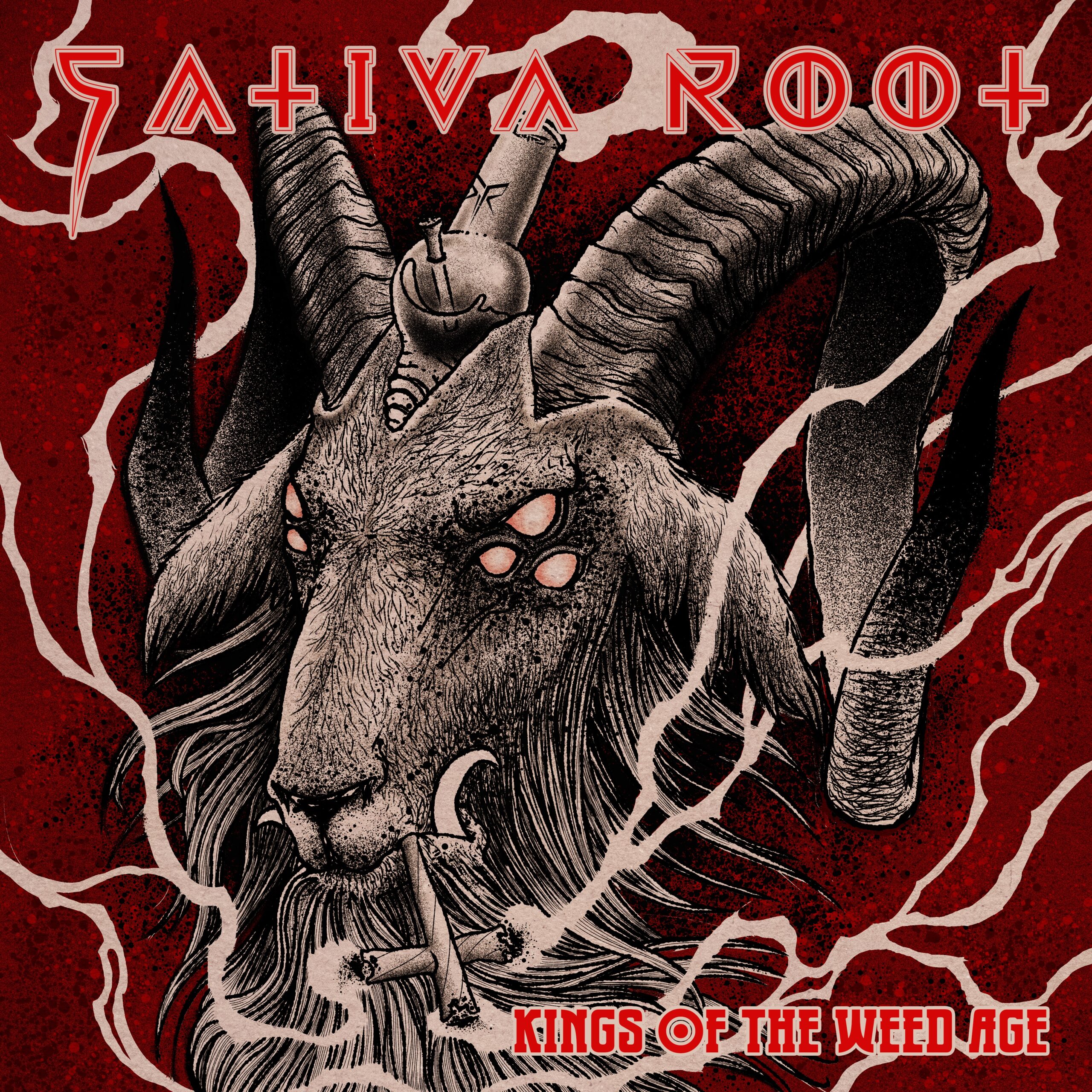
You wouldn’t accuse Austria’s Sativa Root of thematic subtlety on their third album, Kings of the Weed Age, which broadcasts a stoner worship in offerings like “Megalobong” and “Weedotaur” and probably whatever “F.A.T.” stands for, but that’s not what they’re going for anyway. With its titular intro starting off, spoken voices vague in the ambience, “Weedotaur”‘s 11 minutes lumber with all due bong-metallian slog, and the crush becomes central to the proceedings if not necessarily unipolar in terms of the band’s approach. That is to say, amid the onslaught of volume and tonal density in “Green Smegma” and the spin-your-head soloing in “Assassins Weed” (think Assassins Creed), the instrumentalist course undertaken may be willfully monolithic, but they’re not playing the same song five times on six tracks and calling it new. “F.A.T.” begins on a quiet stretch of guitar that recalls some of YOB‘s epics, complementing both the intro and “Weedotaur,” before bringing its full weight down on the listener again as if to underscore the message of its stoned instrumental catharsis on its way out the door. They sound like they could do this all day. It can be overwhelming at times, but that’s not really a complaint.
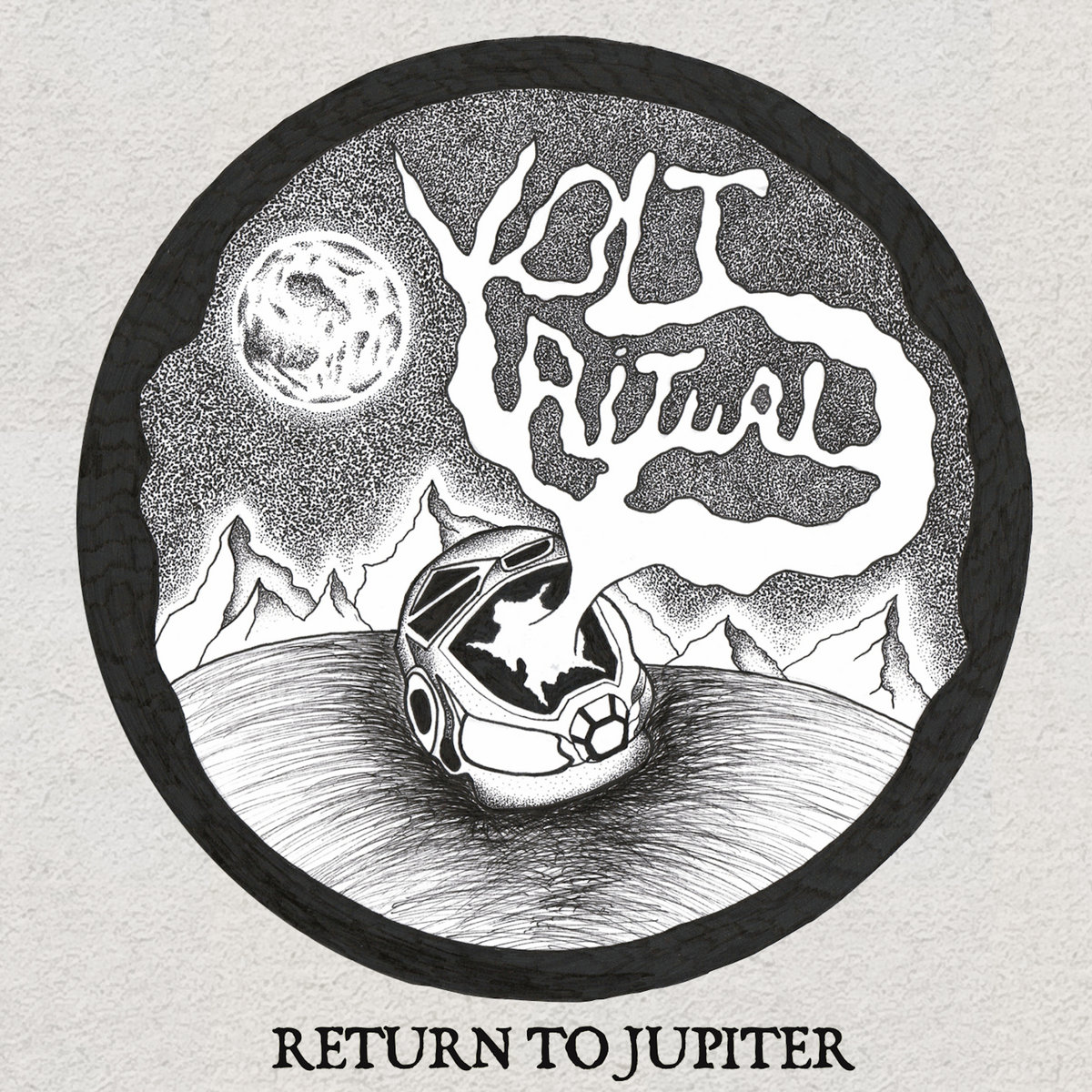
Comprised of guitarist/vocalist Mateusz, bassist Michał and drummer Tomek, Polish riffcrafters Volt Ritual are appealingly light on pretense as they offer Return to Jupiter‘s four tracks, and though as a Star Trek fan I can’t get behind their lyrical impugning of Starfleet as they imagine what Earth colonialism would look like to a somehow-populated Jupiter, they’re not short on reasons to be cynical, if in fact that’s what’s happening in the song. “Ghostpolis” follows the sample-laced instrumental opener “Heavy Metal is Good for You” and rolls loose but accessible even in its later shouts before the more uptempo “Gwiazdolot” swaps English lyrics for Polish (casting off another cultural colonialization, arguably) and providing a break ahead of the closing title-track, which is longer at 7:37 and a clear focal point for more than just bearing the name of the EP, summarizing as it does the course of the cuts before it and even bringing a last scream as if to say “Ghostpolis” wasn’t a fluke. Their 2022 debut album began with “Approaching Jupiter,” and this Return feels organically built off that while trying some new ideas in its effects and general structure. One hopes the plot continues in some way next time along this course.
Posted in Reviews on November 30th, 2023 by JJ Koczan
Generally I think of Thursday as the penultimate day of a given Quarterly Review. This one I was thinking of adding more days to get more stuff in ahead of year-end coverage coming up in December. I don’t know what that would do to my weekend — actually, yes I do — but sometimes it’s worth it. I’m yet undecided. Will let you know tomorrow, or perhaps not. Dork of mystery, I am.
Today is PACKED with cool sounds. If you haven’t found something yet that’s really hit you, it might be your day.
Quarterly Review #31-40:
—
Tortuga, Iterations
From traditionalist proto-doom and keyboard-inflected prog to psychedelic jamming and the Mountain-style start-stop riff on “Lilith,” Poznań, Poland’s Tortuga follow 2020’s Deities (discussed here) with seven tracks and 45 minutes that come across as simple and barebones in the distortion of the guitar and the light reverb on the vocals, but the doom rock doesn’t carry from “Lilith” into “Laspes,” which has more of a ’60s psych crux, a mellow but not unjoyful meander in its first half turning to a massive lumber in the second, all the more elephantine with a solo overtop. They continue throughout to cross the lines between niches — “Quaus” has some dungeon growls, “Epitaph” slogs emotive like Pallbearer, etc. — and offer finely detailed performances in a sound malleable to suit the purposes of their songs. Polish heavy doesn’t screw around. Well, at least not any more than it wants to. Tortuga‘s creative reach becomes part of the character of the album.
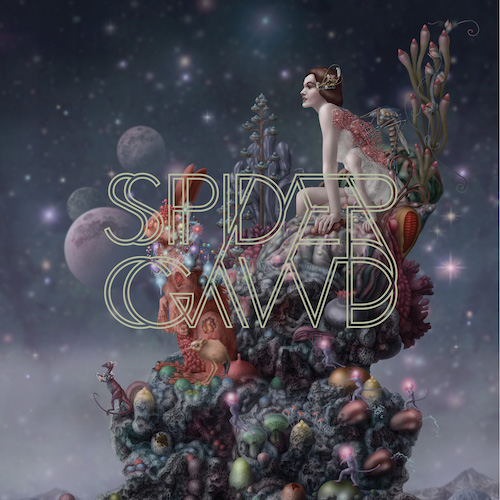
I’m sorry, I gotta ask: What’s the point of anything when Spidergawd can put out a record like VII and it’s business as usual? Like, the world doesn’t stop for a collective “holy shit” moment. Even in the heavy underground, never mind general population. These are the kinds of songs that could save lives if properly employed to do so, and for the Norwegian outfit, it’s just what they do. The careening hooks of “Sands of Time” and “The Tower” at the start, the melodies across the span. The energy. I guess this is dad rock? Shit man, I’m a dad. I’m not this cool. Spidergawd have seven records out and I feel like Metallica should’ve been opening for them at stadiums this past summer, but they remain criminally underrated and perhaps use that as flexibility around their pop-heavy foundation to explore new ideas. The last three songs on VII — “Afterburner,” “Your Heritage” and “…And Nothing But the Truth” — are among the strongest and broadest Spidergawd have ever done, and “Dinosaur” and the classic-metal ripper “Bored to Death” give them due preface. One of the best active heavy rock bands, living up to and surpassing their own high standards.
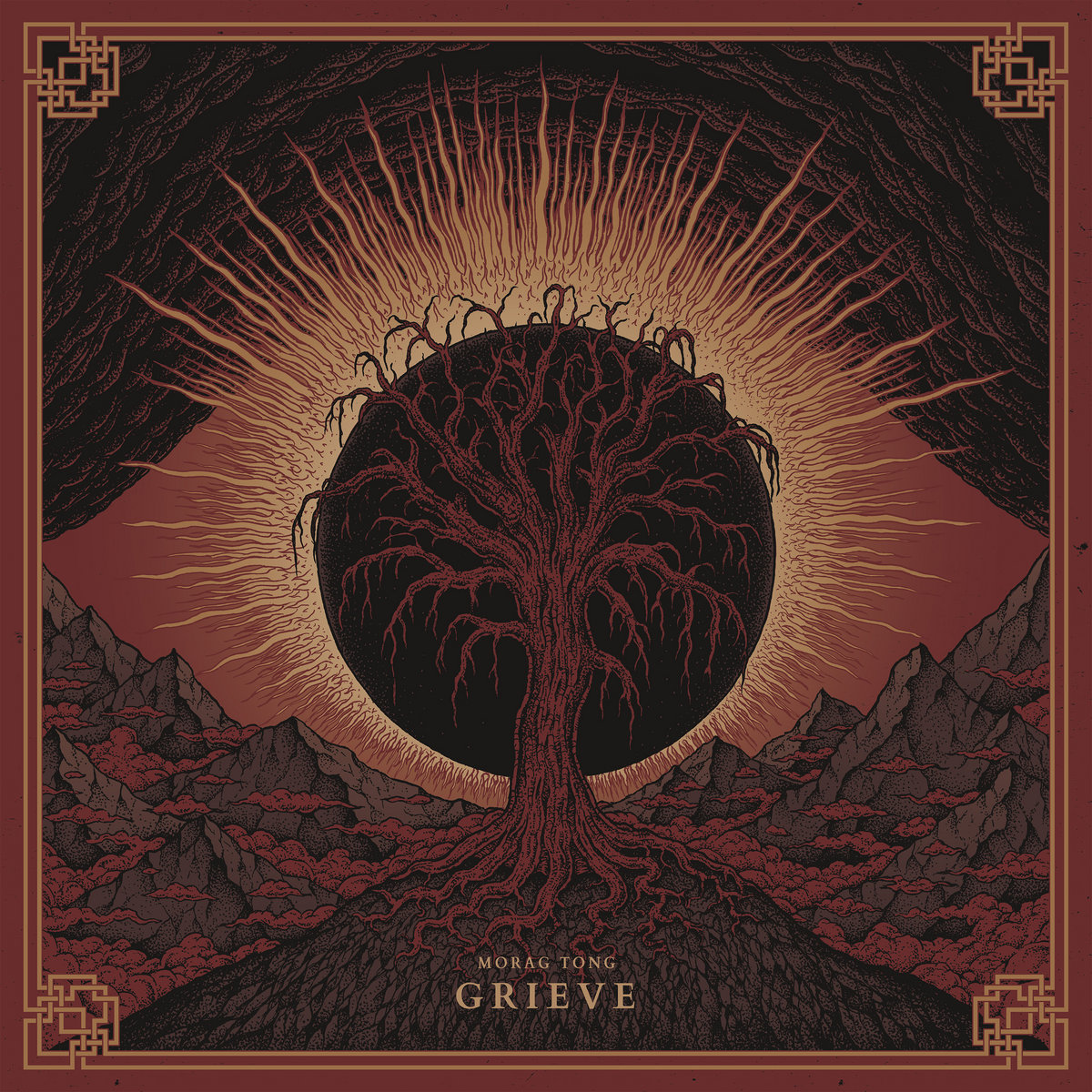
Rumbling low end and spacious guitar, slow flowing drums and contemplative vocals, and some charred sludge for good measure, mark out the procession of “At First Light” on Morag Tong‘s third album and first for Majestic Mountain Records, the four-song Grieve. Moving from that initial encapsulation through the raw-throat sludge thud of most of “Passages,” they crash out and give over to quiet guitar at about four minutes in and set up the transition to the low-end groove-cool of “A Stem’s Embrace,” a sleepy fluidity hitting its full voluminous crux after three minutes in, crushing from there en route to its noisy finish at just over nine minutes long. That would be the epic finisher of most records, but Morag Tong‘s grievances extend to the 20-minute “No Sun, No Moon,” which at 20 minutes is a full-length’s progression on its own. At very least the entirety of side B, but more than the actual runtime is the theoretical amount of space covered as the four-piece shift from ambient drone through huge plod and resolve the skyless closer with a crushing delve into post-sludge atmospherics. That’s as fitting an end as one could ask for an offering that so brazenly refuses to follow impulses other than its own.
The nine-song Wahn Und Sinn carries the distinction of being the first full-length from German singer-songwriter Conny Ochs — also known for his work in Ananda Mida and his collaboration with Wino — to be sung in his own language. As a non-German speaker, I won’t pretend that doesn’t change the listening experience, but that’s the idea. Words and melodies in different languages take on corresponding differences in character, and so in addition to appreciating the strings, pianos, acoustic and electric guitars, and, in the case of “Welle,” a bit of static noise in a relatively brief electronic soundscape, hearing Ochs‘ delivery no less emotive for switching languages on the cinematic “Grimassen,” or the lounge drama of “Ding” earlier on, it’s a new side from a veteran figure whose “experimentalism” — and no, I’m not talking about singing in your own language as experimental, I’m talking about Trialogos there — is backburnered in favor of more traditional, still rampantly melancholy pop arrangements. It sounds like someone who’s decided they can do whatever the hell they feel like their songs should making that a reality. Only an asshole would hold not speaking the language against that.
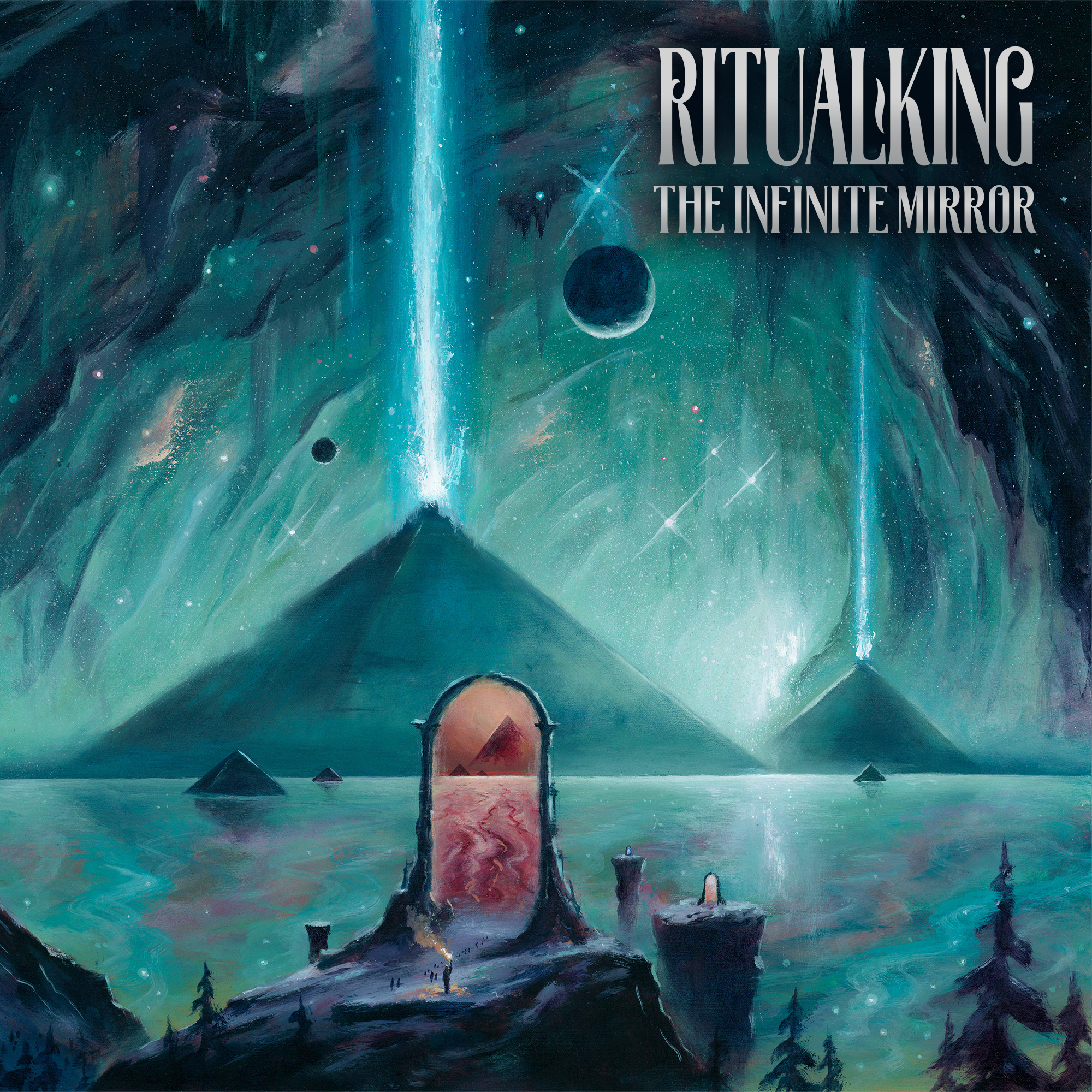
I’m going to write this review as though I’m speaking directly to Ritual King because, well, I am. Hey guys. Congrats on the record. I can hear a ton going on with it. Some of Elder‘s bright atmospherics and rhythmic twists, some more familiar stoner riffage repurposed to suit a song like “Worlds Divide” after “Flow State” calls Truckfighters to mind, the songs progressive and melodic. The way you keep that nod in reserve for “Landmass?” That’s what I’m talking about. Here’s some advice you didn’t ask for: Keep going. I’m sure you have big plans for next year, and that’s great, and one thing leads to the next. You’re gonna have people for the next however long telling you what you need to do. Do what feels right to you, and keep in mind the decisions that led you to where you are, because you’re right there, headed to the heart of this thing you’re discovering. Two records deep there’s still a lot of potential in your sound, but I think you know a track like “Tethered” is a victory on its own, and that as big as “The Infinite Mirror” gets at the end, the real chance it takes is in the earlier vocal melody. You’re a better band than people know. Just keep going. Thanks.
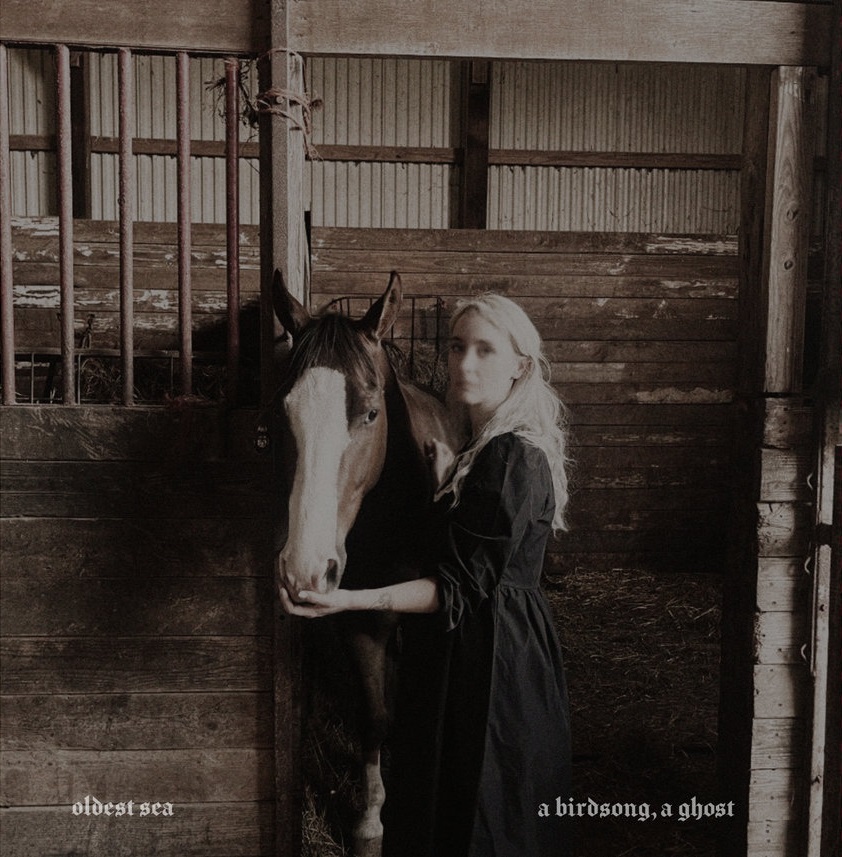
Inhabiting the sort of alternately engulfing and minimal spaces generally occupied by the likes of Bell Witch, New Jersey’s Oldest Sea make their full-length debut with A Birdsong, A Ghost and realize a bleakness of mood that is affecting even in its tempo, seeming to slow the world around it to its own crawl. The duo of Samantha Marandola and Andrew Marandola, who brought forth their Strange and Eternal EP (review here) in 2022, find emotive resonance in a death-doom build through the later reaches of “Untracing,” but the subsequent three-minute-piece-for-chorus-and-distorted-drone “Astronomical Twilight” and the similarly barely-there-until-it-very-much-is closer “Metamorphose” mark out either end of the extremes while “The Machines That Made Us Old” echoes Godflesh in its later riffing as Samantha‘s voice works through screams en route to a daringly hopeful drone. Volatile but controlled, it is a debut of note for its patience and vulnerability as well as its deep-impact crash and consuming tone.
Each track on Dim Electrics‘ self-titled five-songer LP becomes a place to rest for a while. No individual piece is lacking activity, but each cut has room for the listener to get inside and either follow the interweaving aural patterns or zone out as they will. Founded by Mahk Rumbae, the Vienna-based project is meditative in the sense of basking in repetition, but flashes like the organ in the middle of “Saint” or the shimmy that takes hold in 18-minute closer “Dream Reaction” assure it doesn’t reside in one place for too much actual realtime, of which it’s easy to lose track when so much krautgazey flow is at hand. Beginning with ambience, “Ways of Seeing” leads the listener deeper into the aural chasm it seems to have opened, and the swirling echoes around take on a life of their own in the ecosystem of some vision of space rock that’s also happening under the ground — past and future merging as in the mellotron techno of “Memory Cage” — which any fool can tell you is where the good mushrooms grow. Dug-in, immersive, engaging if you let it be; Dim Electrics feels somewhat insular in its mind-expansion, but there’s plenty to go around if you can put yourself in the direction it’s headed.
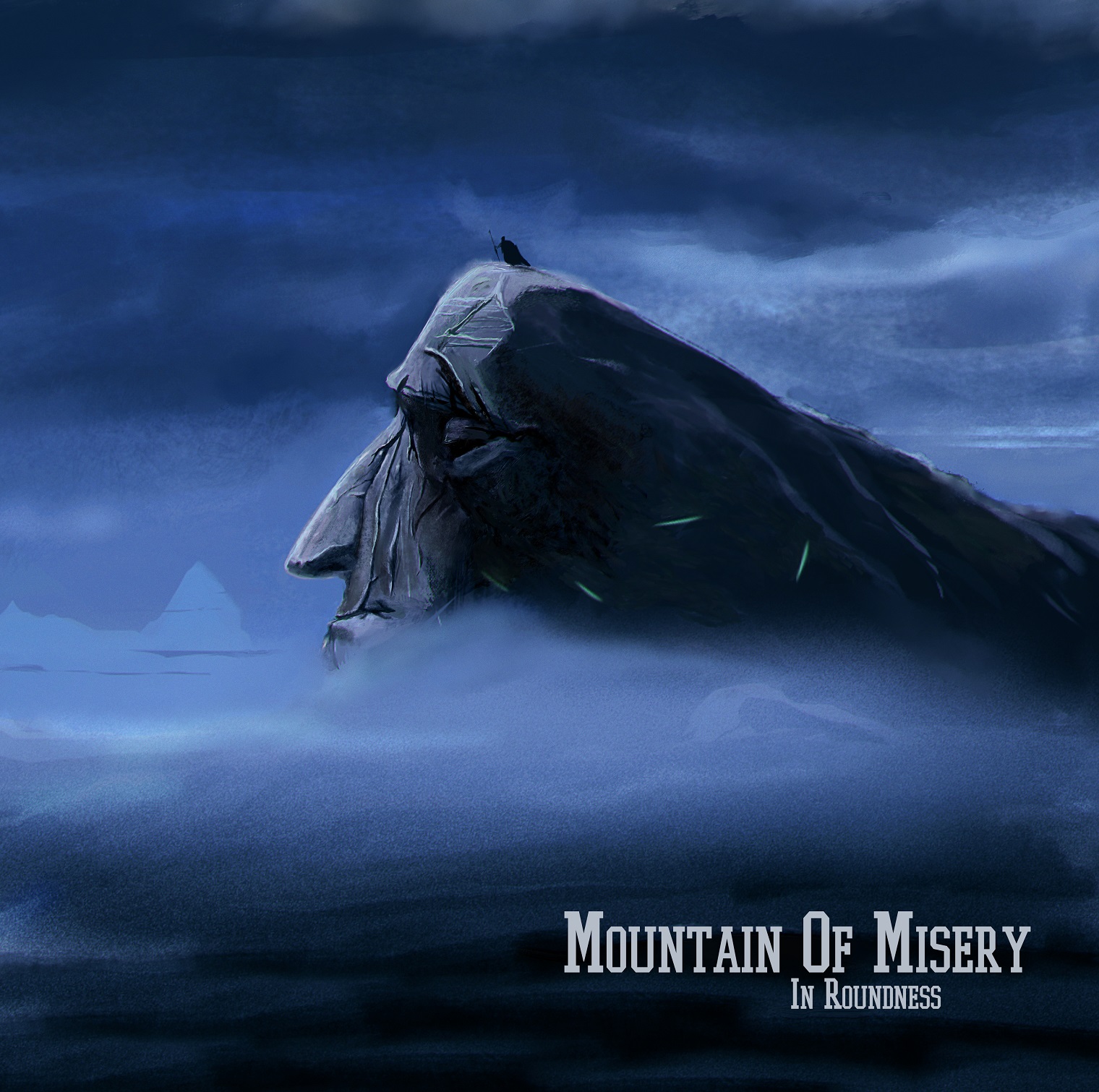
A newcomer project from Kamil Ziółkowski, also known for his contributions as part of Polish heavy forerunners Spaceslug, the tone-forward approach of Mountain of Misery might be said to be informed by Ziółkowski‘s other project in opener “Not Away” or the penultimate “Climb by the Sundown,” with their languid vocals and slow-rolling tsunami fuzz in the spirit of heavy psych purveyors Colour Haze and even more to the point Sungrazer, but the howling guitar in the crescendo of closer “The Misery” and the all-out assault of “Hang So Low” distinguish the band all around. “The Rain is My Love” sways in the album’s middle, but it’s in “Circle in Roundness” that the 36-minute LP has its most subdued stretch, letting the spaces filled with fuzz elsewhere remain open as the verse builds atop the for-now-drumless expanse. Whatever familiar aspects persist, Mountain of Misery is its own band, and In Roundness is the exciting beginning of a new creative evolution.
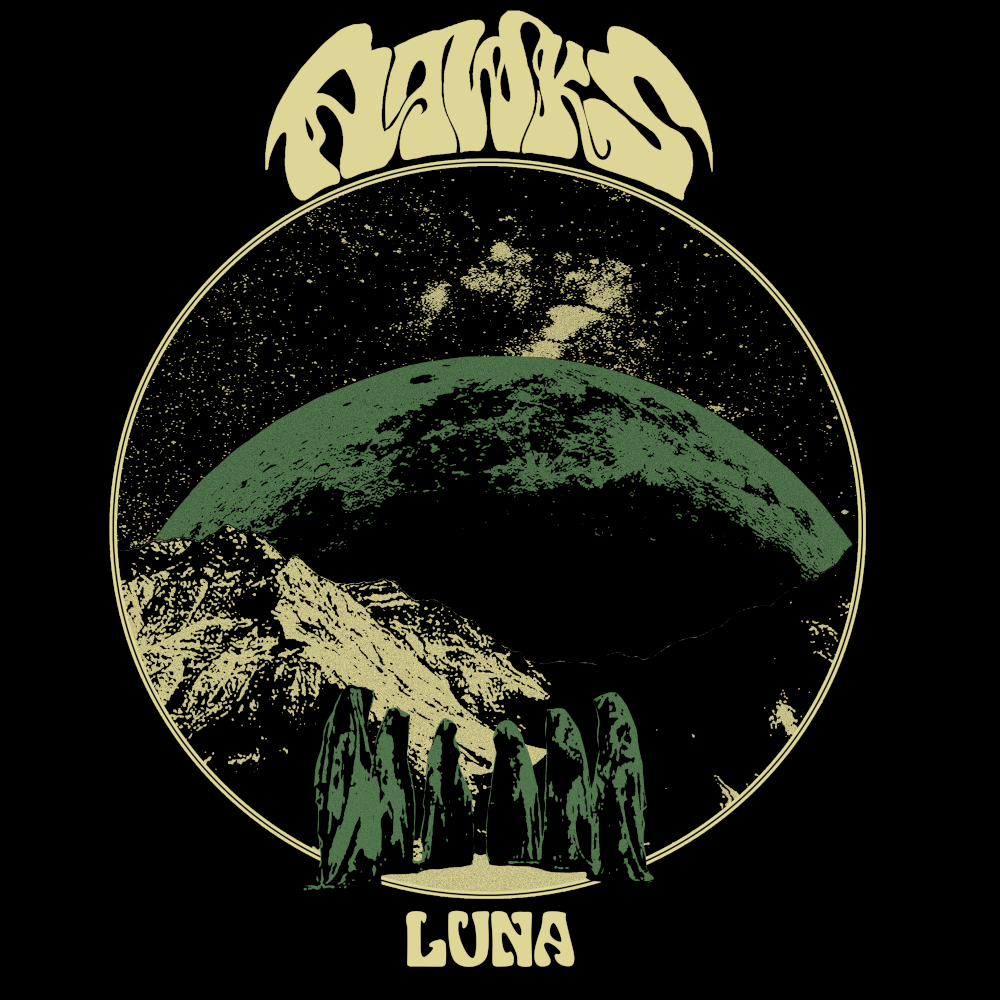
The featured new single, “The Figure,” finds Barrie, Ontario’s Aawks somewhere between Canadian tonal lords Sons of Otis and the dense heavy psych riffing and melodic vocals of an act like Snail, and if you think I’m about to complain about that, you’ve very clearly never been to this site before. So hi, and welcome. The four-song Luna EP is Aawks‘ second short release of 2023 behind a split with Aiwass (review here), and the trio take on Flock of Seagulls and Pink Floyd for covers of the new wave radio hit “I Ran” and the psychedelic ur-classic “Julia Dream” before a live track, “All is Fine,” rounds out. As someone who’s never seen the band live, the additional crunch falls organic, and brings into relief the diversity Aawks show in and between these four songs, each of which inhabits a place in the emerging whole of the band’s persona. I don’t know if we’ll get there, but sign me up for the Canadian heavy revolution if this is the form it’s going to take.
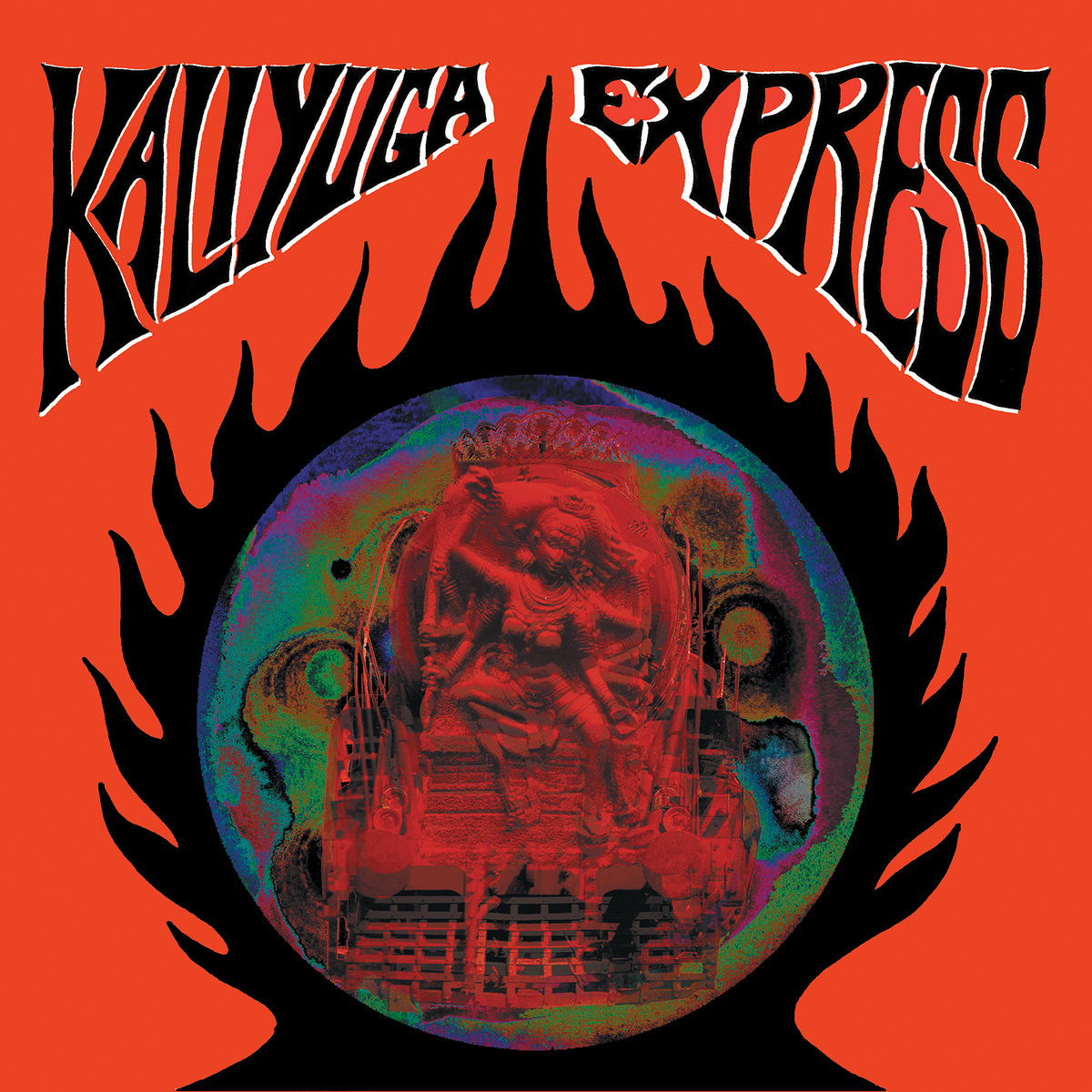
The collaborative oeuvre of UK doomsperimental guitarist Mike Vest (Bong, Blown Out, Ozo, 11Paranoias, etc.) grows richer as he joins forces with Finnish trio Nolla to produce Kaliyuga Express‘ Warriors & Masters, which results in three tracks across two sides of far-out cosmic fuzz, shades of classic kraut and space rocks are wrought with jammy intention; the goal seeming to be the going more than the being gone as Vest and company burn through “Nightmare Dimensions” and the shoegazing “Behind the Veil” — the presence of vocals throughout is a distinguishing feature — hums in high and low frequencies in a repetitive inhale of stellar gases on side A while the 18:58 side B showdown “Endless Black Space” misdirects with a minute of cosmic background noise before unfurling itself across an exoplanet’s vision of cool and returning, wait for it, back to the drone from whence it came. Did you know stars are recycled all the time? Did you know that if you drop acid and peel your face off there’s another face underneath? Your third eye is googly. You can hear voices in the drones. Let me know what they tell you.
Posted in Reviews on October 6th, 2023 by JJ Koczan
Last day, this one. And probably a good thing so that I can go back to doing just about anything else beyond (incredibly) basic motor function and feeling like I need to start the next day’s QR writeups. I’m already thinking of maybe a week in December and a week or two in January, just to try to keep up with stuff, but I’m of two minds about it.
Does the Quarterly Review actually help anyone find music? It helps me, I know, because it’s 50 records that I’m basically forcing myself to dig into, and that exposes me to more and more and more all the time, and gives me an outlet for stuff I wouldn’t otherwise have mental or temporal space to cover, so I know I get something out of it. Do you?
Honest answers are welcome in the comments. If it’s a no, that helps me as well.
Quarterly Review #41-50:
—
AAWKS & Aiwass, The Eastern Scrolls
Late on their 2022 self-titled debut (review here), Canadian upstart heavy fuzzers AAWKS took a decisive plunge into greater tonal densities, and “1831,” which is their side-consuming 14:30 contribution to the The Eastern Scrolls split LP with Arizona mostly-solo-project Aiwass, feels built directly off that impulse. It is, in other words, very heavy. Cosmically spaced with harsher vocals early that remind of stonerkings Sons of Otis and only more blowout from there as they roll forth into slog, noise, a stop, ambient guitar and string melodies and drum thud behind vocals, subdued psych atmosphere and backmasked sampling near the finish. Aiwass, led by multi-instrumentalist/vocalist Blake Carrera and now on the cusp of releasing a second full-length, The Falling (review here), give the 13:00 “The Unholy Books” a stately, post-metallic presence, as much about the existential affirmations and the melody applied to the lyrics as it moves into the drumless midsection as either the earlier Grayceon-esque pulled notes of guitar (thinking specifically “War’s End” from 2011’s All We Destroy, but there the melody is cello) into it or the engrossing heft that emerges late in the piece, though it does bookend with a guitar comedown. Reportedly based around the life of theosophy co-founder and cult figure Madame Helena Blavatsky, it can either be embraced on that level or taken on simply as a showcase of two up and coming bands, each with their own complementary sound. However you want to go, it’s easily among the best splits I’ve heard in 2023.
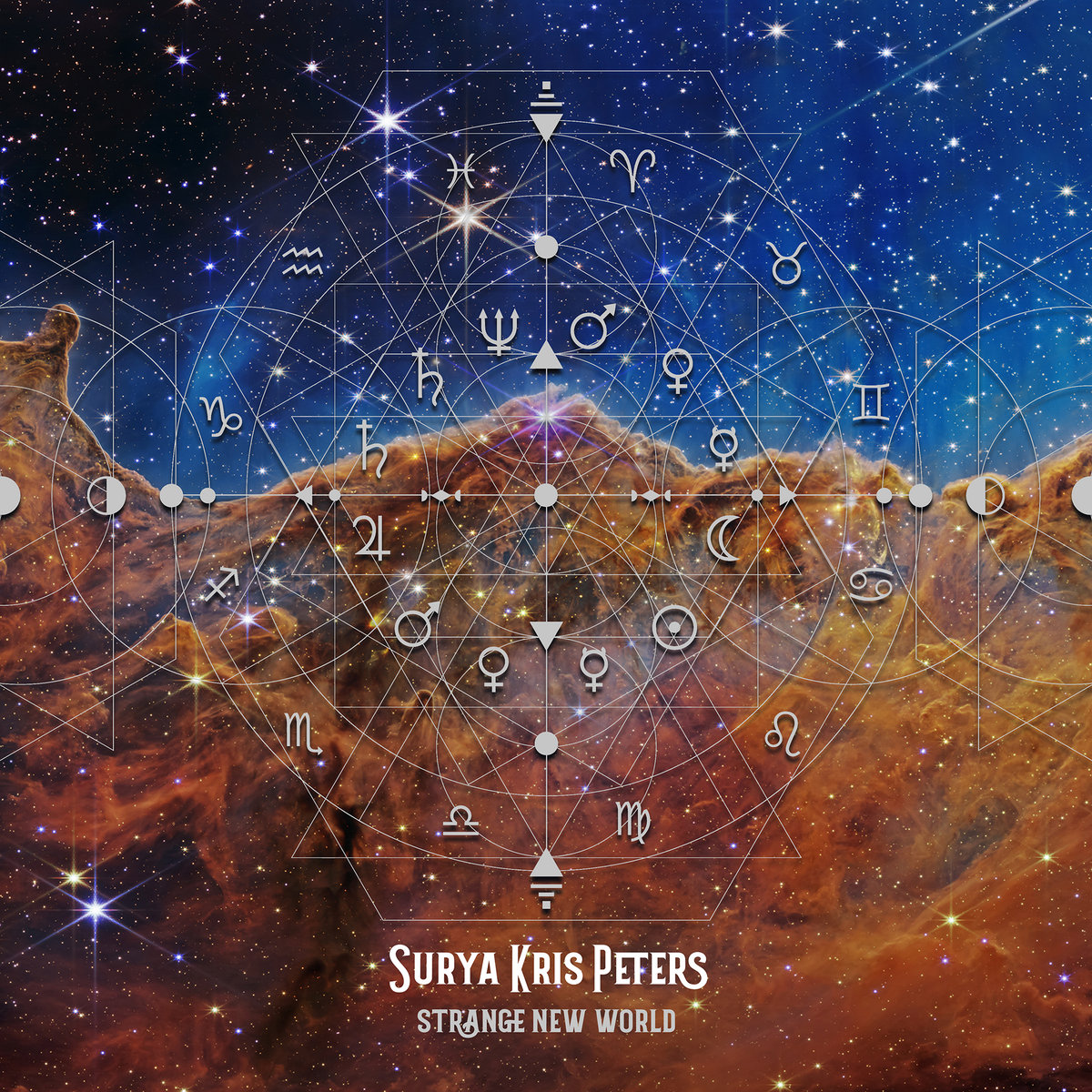
The lines between projects are blurring for Surya Kris Peters, otherwise known as Chris Peters, currently based in Brazil where he has the solo-project Fuzz Sagrado following on from his time in the now-defunct German trio Samsara Blues Experiment. Strange New World is part of a busy 2023/busy last few years for Peters, who in 2023 alone has issued a live album from his former band (review here) and a second self-recorded studio LP from Fuzz Sagrado, titled Luz e Sombra (review here). And in Fuzz Sagrado, Peters has returned to the guitar as a central instrument after a few years of putting his focus on keys and synths with Surya Kris Peters as the appointed outlet for it. Well, the Fuzz Sagrado had some keys and the 11-song/52-minute Strange New World wants nothing for guitar either as Peters reveals a headbanger youth in the let-loose guitar of “False Prophet,” offers soothing and textured vibes of a synthesized beat in “Sleep Meditation in Times of War” (Europe still pretty clearly in mind) and the acoustic/electric blend that’s expanded upon in “Nada Brahma Nada.” Active runs of synth, bouncing from note to note with an almost zither-esque feel in “A Beautiful Exile (Pt. 1)” and the later “A Beautiful Exile (Part 2)” set a theme that parts of other pieces follow, but in the drones of “Past Interference” and the ’80s New Wave prog of the bonus track “Slightly Too Late,” Peters reminds that the heart of the project is in exploration, and so it is still very much its own thing.
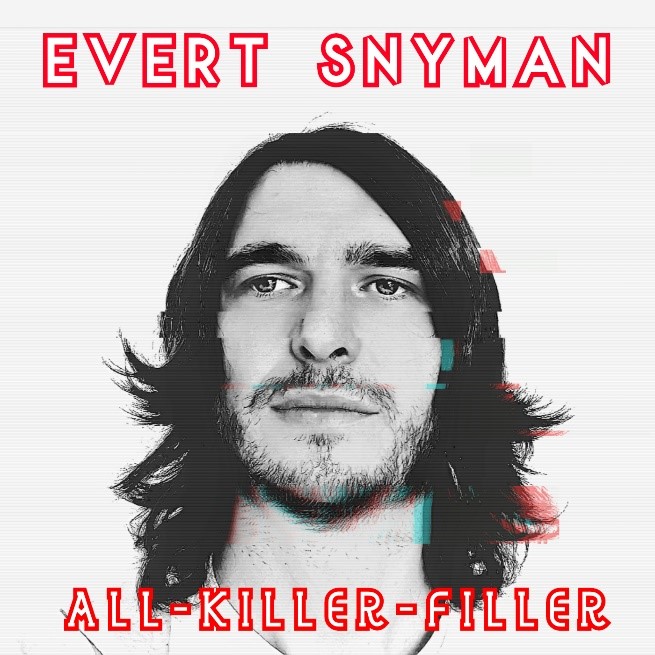
A covers record can be a unique opportunity for an artist to convey something about themselves to fans, and while I consider Evert Snyman‘s 12-track/38-minute classic pop-rock excursion All Killer Filler to be worth it for his take on Smashing Pumpkins‘ “Zero” alone, there is no mistaking the show of persona in the choice to open with The Stooges‘ iconic “Search and Destroy” and back it cheekily with silly bounce of Paul McCartney‘s almost tragically catchy “Temporary Secretary.” That pairing alone is informative if you’re looking to learn something about the South African-based songwriter, multi-instrumentalist, vocalist and producer. See also “The Piña Colada Song.” The ’90s feature mightily, as they would, with tunes by Pixies, Blur, Frank Black, The Breeders and Mark Lanegan (also the aforementioned Smashing Pumpkins), but whether it’s the fuzz of The Breeders’ 1:45 “I Just Wanna Get Along,” the sincere acoustic take on The Beatles “I Will” — which might as well be a second McCartney solo cut, but whatever; you’ll note Frank Black and Pixies appearing separately as well — or the gospel edge brought to Tom Waits‘ “Jesus Gonna Be Here,” Snyman internalizes this material, almost builds it from the ground up, loyal in some ways and not in others, but resonant in its respect for the source material without trying to copy, say, Foo Fighters, note for note on “The Colour and the Shape.” If it’s filler en route to Snyman‘s next original collection, fine. Dude takes on Mark Lanegan without it sounding like a put on. Mark Lanegan himself could barely do that.
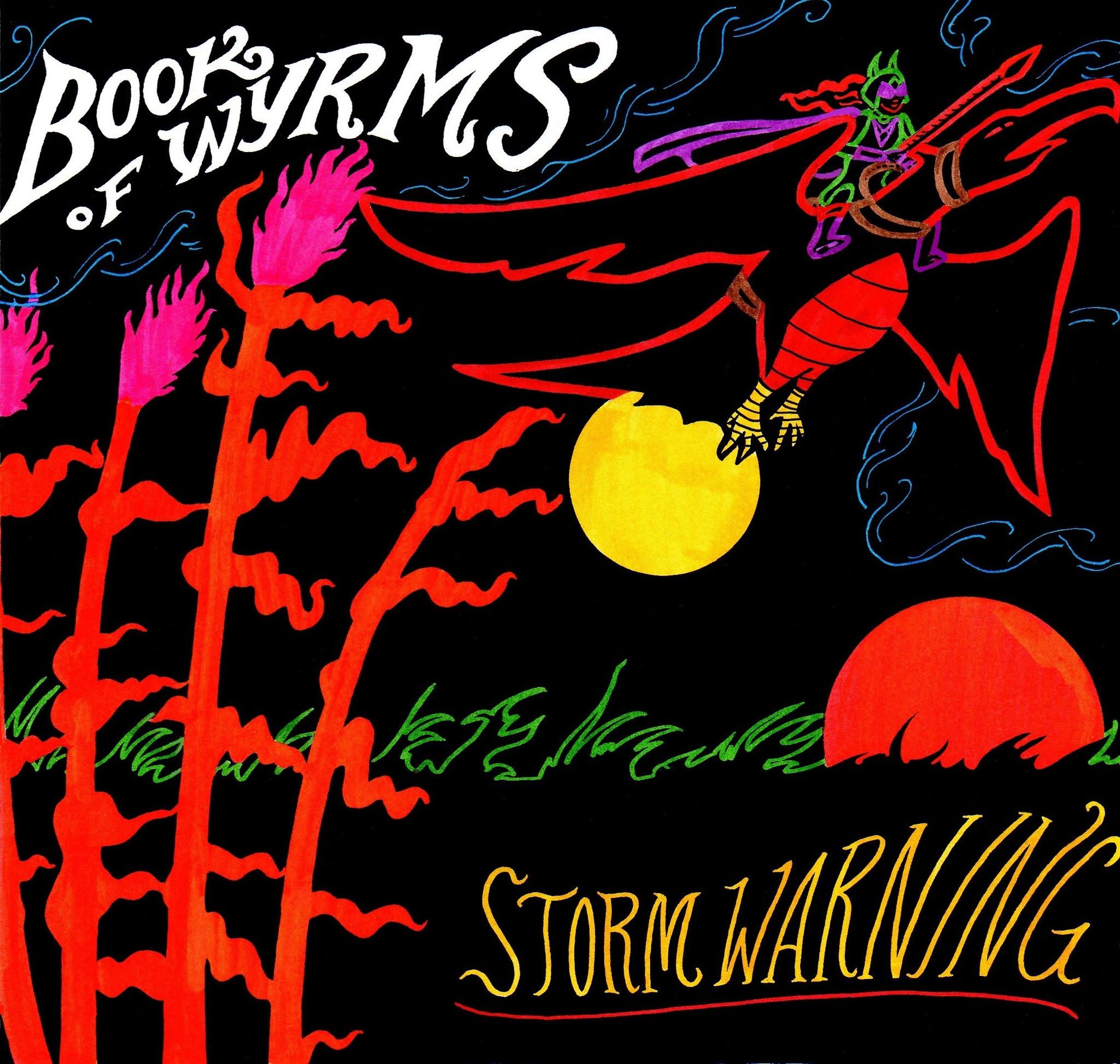
Virginian heavy doom rockers Book of Wyrms have proved readily in the past that they don’t need all that long to set up a vibe, and the standalone single “Storm Warning” reinforces that position with four-plus minutes of solid delivery of craft. Vocalist/synthesist Sarah Moore Lindsey, bassist Jay “Jake” Lindsey and drummer Kyle Lewis and guitarist Bobby Hufnell (also Druglord) — the latter two would seem to have switched instruments since last year’s single “Sodapop Glacier” (premiered here) — but whatever is actually being played by whoever, the song is a structurally concise but atmospheric groover, with a riff twisting around the hook and the keyboard lending dimension to the mix as it rests beneath the guitar and bass. They released their third album, Occult New Age (review here), in 2021, so they’re by no means late on a follow-up, and I don’t know either when this song was recorded — before, after or during that process — but it’s a sharp-sounding track from a band whose style has grown only more theirs with time. I have high expectations for Book of Wyrms‘ next record — I had high expectations for the last one, which were met — and especially taken together, “Storm Warning” and “Sodapop Glacier” show both the malleable nature of the band’s aesthetic, the range that has grown in their sound and the live performance that is at their collective core.
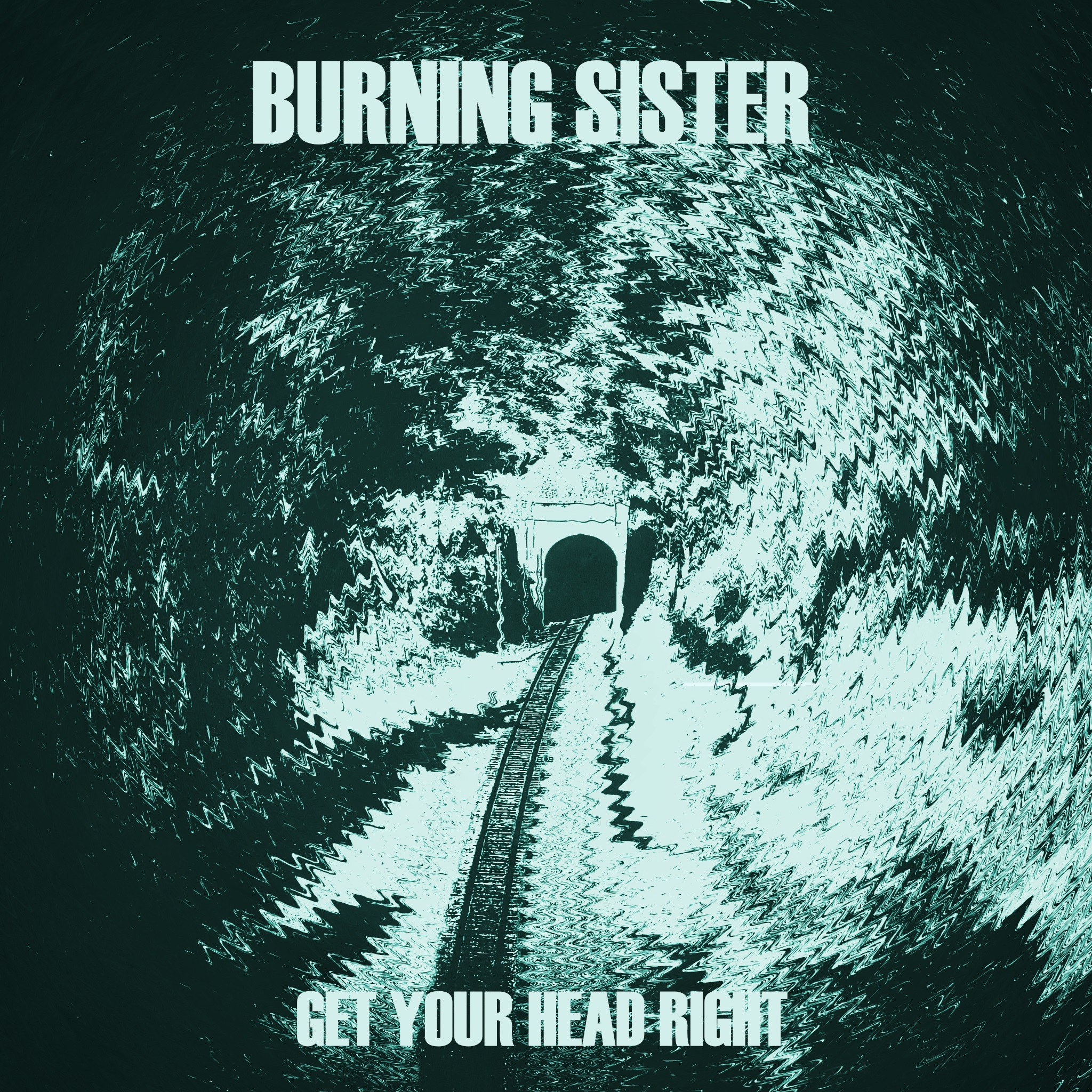
Following on from their declarative 2022 debut, Mile High Downer Rock (review here), Denver trio Burning Sister — bassist/vocalist Steve Miller (also synth), guitarist Nathan Rorabaugh and drummer Alison Salutz — bring four originals and the Mudhoney cover “When Tomorrow Comes” (premiered here) together as Get Your Head Right, a 29-minute EP, beginning with the hypnotic nod groove and biting leads of “Fadeout” (also released as a single) and the slower, heavy psych F-U-Z-Z of “Barbiturate Lizard,” the keyboard-inclusive languid roll of which, even after the pace picks up, tells me how right I was to dig that album. The centerpiece title-track is faster and a little more forward tonally, more grounded, but carries over the vocal echo and finds itself in noisier crashes and chugs before giving over to the 7:58 “Looking Through Me,” which continues the relatively terrestrial vibe over until the wall falls off the spaceship in the middle of the track and everyone gets sucked into the vacuum — don’t worry, the synthesizer mourns us after — just before the noted cover quietly takes hold to close out with spacious heavygaze cavern echo that swells all the way up to become a blowout in the vein of the original. It’s a story that’s been told before, of a band actively growing, coming into their sound, figuring out who they are from one initial release to the next. Burning Sister haven’t finished that process yet, but I like where this seems to be headed. Namely into psych-fuzz oblivion and cosmic dust. So yeah, right on.
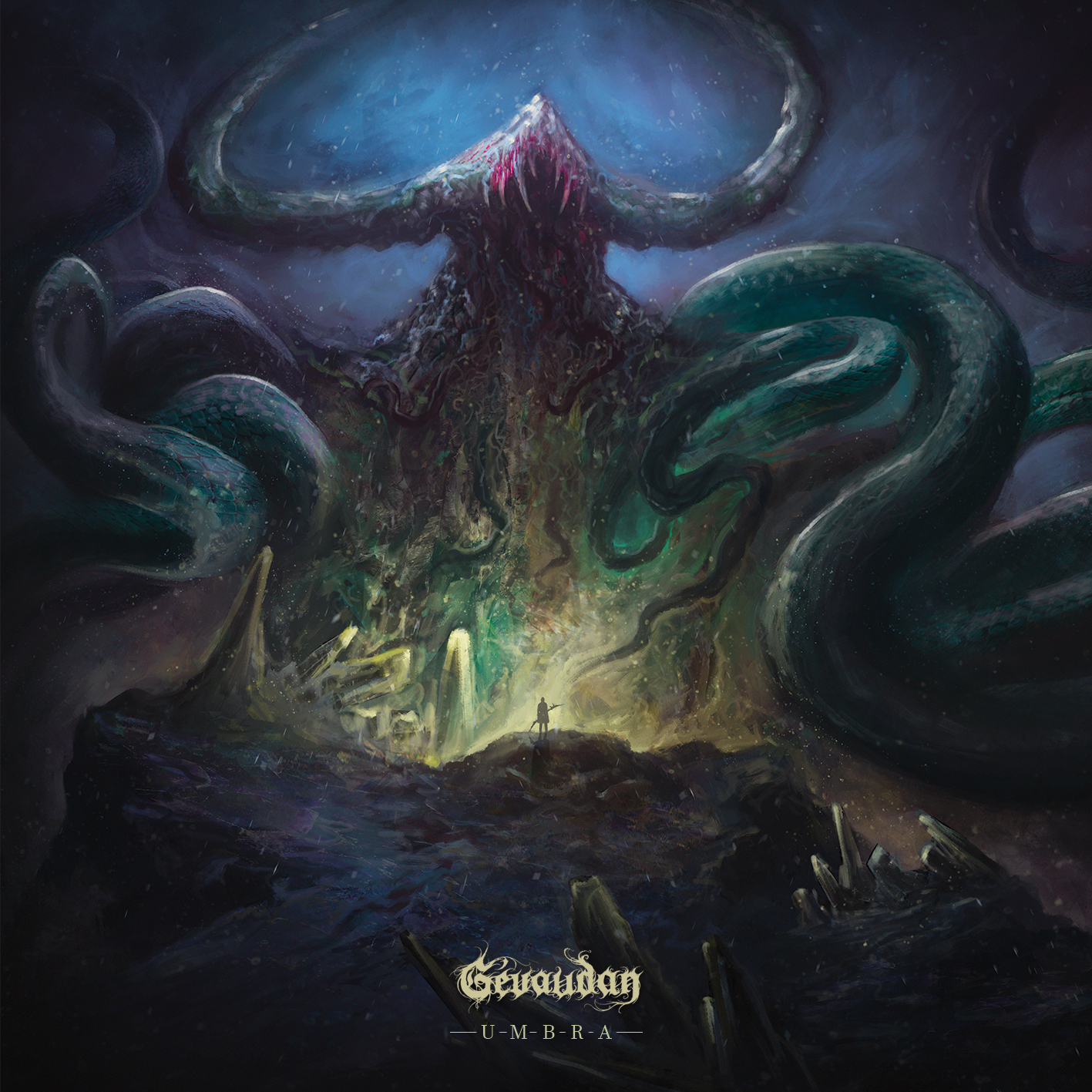
Informed by Pallbearer, Warning, or perhaps others in the sphere of emotive doom, UK troupe Gévaudan scale up from 2019’s Iter (review here) with the single-song, 43:11 Umbra, their second album. Impressive enough for its sheer ambition, the execution on the extended titular piece is both complex and organic, parts flowing naturally from one to the other around lumbering rhythms for the first 13 minutes or so before a crashout to a quick fade brings the next movement of quiet and droning psychedelia. They dwell for a time in a subtle-then-not-subtle build before exploding back to full-bore tone at 18:50 and carrying through a succession of epic, dramatic ebbs and flows, such that when the keyboard surges to the forefront of the mix in seeming battle with the pulled notes of guitar, the ensuing roll/march is a realization. They do break to quiet again, this time piano and voice, and doom mournfully into a fade that, at the end of a 43-minute song tells you the band could’ve probably kept going had they so desired. So much the better. Between this and Iter, Gévaudan have made a for-real-life statement about who they are as a band and their progressive ambitions. Do not make the mistake of thinking they’re done evolving.
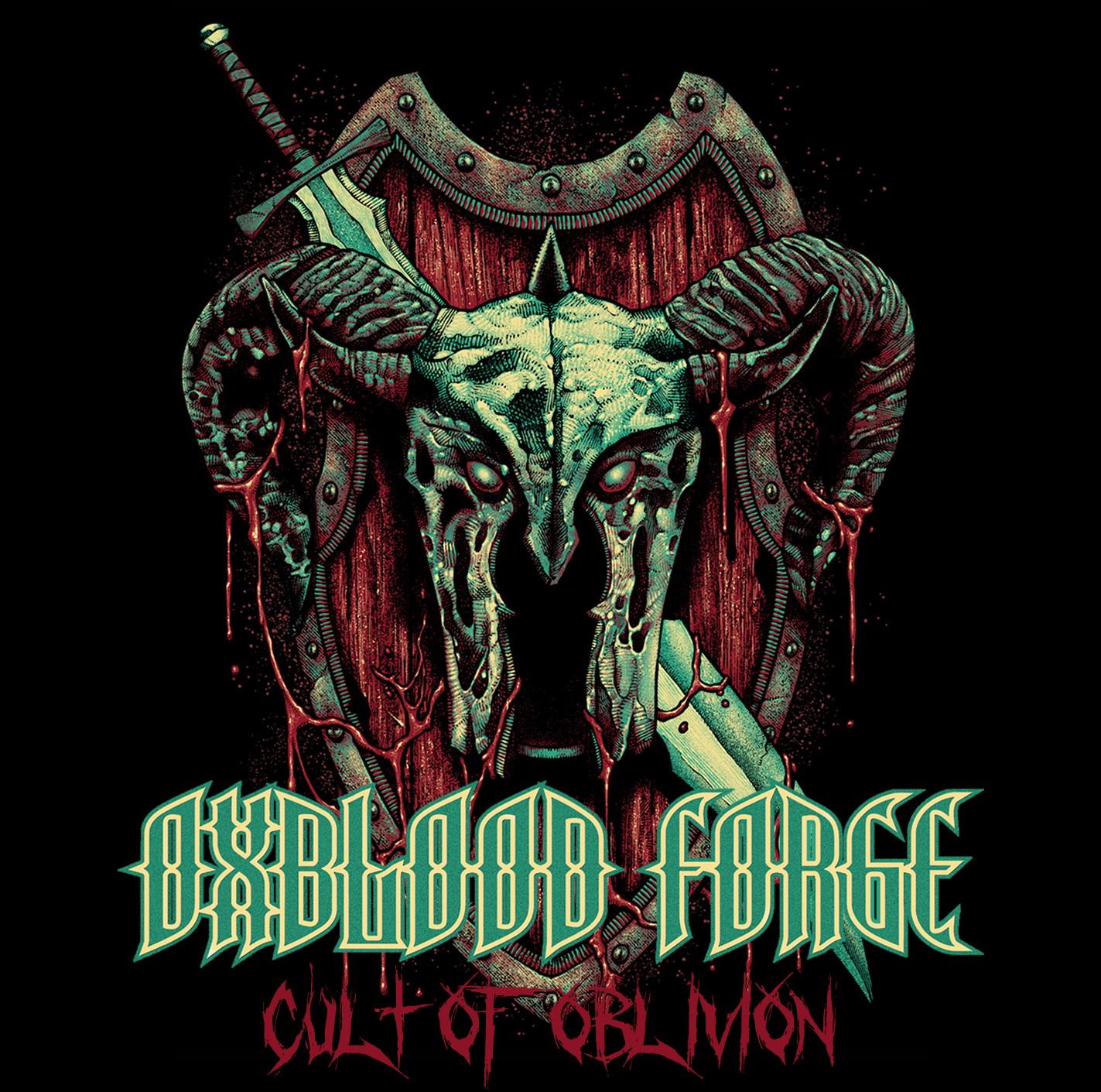
In some of the harsher vocals and thrashy riffing of Cult of Oblivion‘s opening title-track, Massachusetts’ Oxblood Forge remind a bit of some of the earliest Shadows Fall‘s definitively New Englander take on hardcore-informed metal. The Boston-based double-guitar five-piece speed up the telltale chug of “Children of the Grave” on “Upon the Altar” and find raw sludge scathe on “Cleanse With Fire” ahead of finishing off the four-song/18-minute EP with the rush into “Mask of Satan,” which echoes the thrash of “Cult of Oblivion” itself and finds vocalist Ken McKay pushing his voice higher in clean register than one can recall on prior releases, their most recent LP being 2021’s Decimator (review here). But that record was produced for a different kind of impact than Cult of Oblivion, and the aggression driving the new material is enhanced by the roughness of its presentation. These guys have been at it a while now, and clearly they’re not in it for trends, or to be some huge band touring for seven months at a clip. But their love of heavy metal is evident in everything they do, and it comes through here in every blow to the head they mete out.
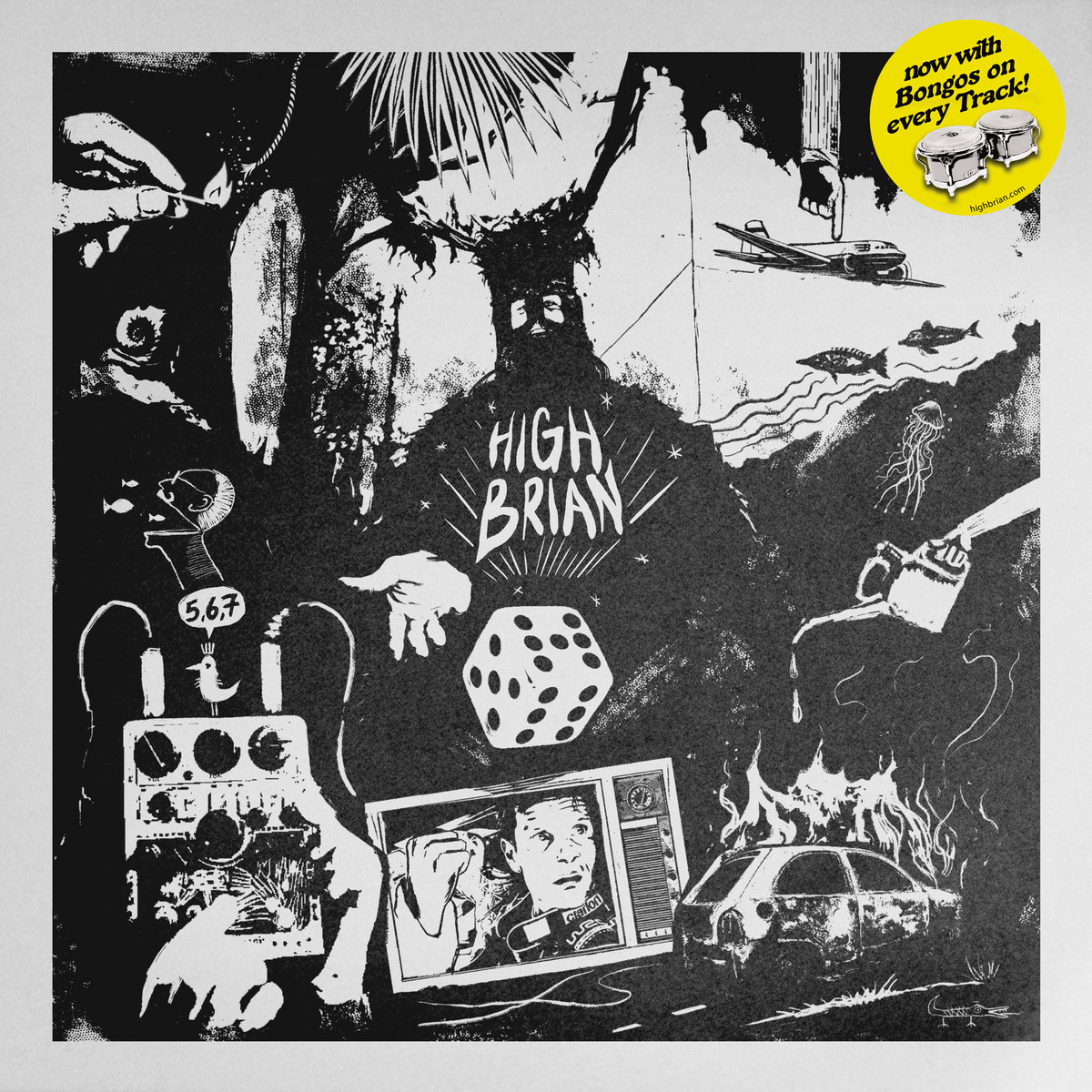
The titular rhythmic counting in Austrian heavy-prog quirk rockers High Brian‘s Five, Six, Seven (on StoneFree Records, of course) doesn’t take long to arrive, finding its way into second cut “Is it True” after the mild careening of “All There Is” opens their third full-length, and that’s maybe eight minutes into the 40-minute record, but it doesn’t get less gleefully weird from there as the band take off into the bassy meditation of “The End” before tossing out angular headspinner riffs in succession and rolling through what feels like a history of krautrock’s willful anti-normality written into the apocalypse it would seemingly have to be. “The End” is the longest track at 8:50, and it presumably closes side A, which means side B is when it’s time to party as the triplet chug of “The Omni” reinforces the energetic start of “All There Is” with madcap fervor and “Stone Came Up” can’t decide whether it’s raw-toned biker rock or spaced out lysergic idolatry, so it decides to become an open jam complete people talking “in the crowd.” This leaves the penultimate “Our First Car” to deliver one last shove into the art-rock volatility of closer “Oil Into the Fire,” where High Brian play one more round of can-you-follow-where-this-is-going before ending with a gentle cymbal wash like nothing ever happened. Note, to the best of my knowledge, there are not bongos on every track, as the cover art heralds. But perhaps spiritually. Spiritual bongos.
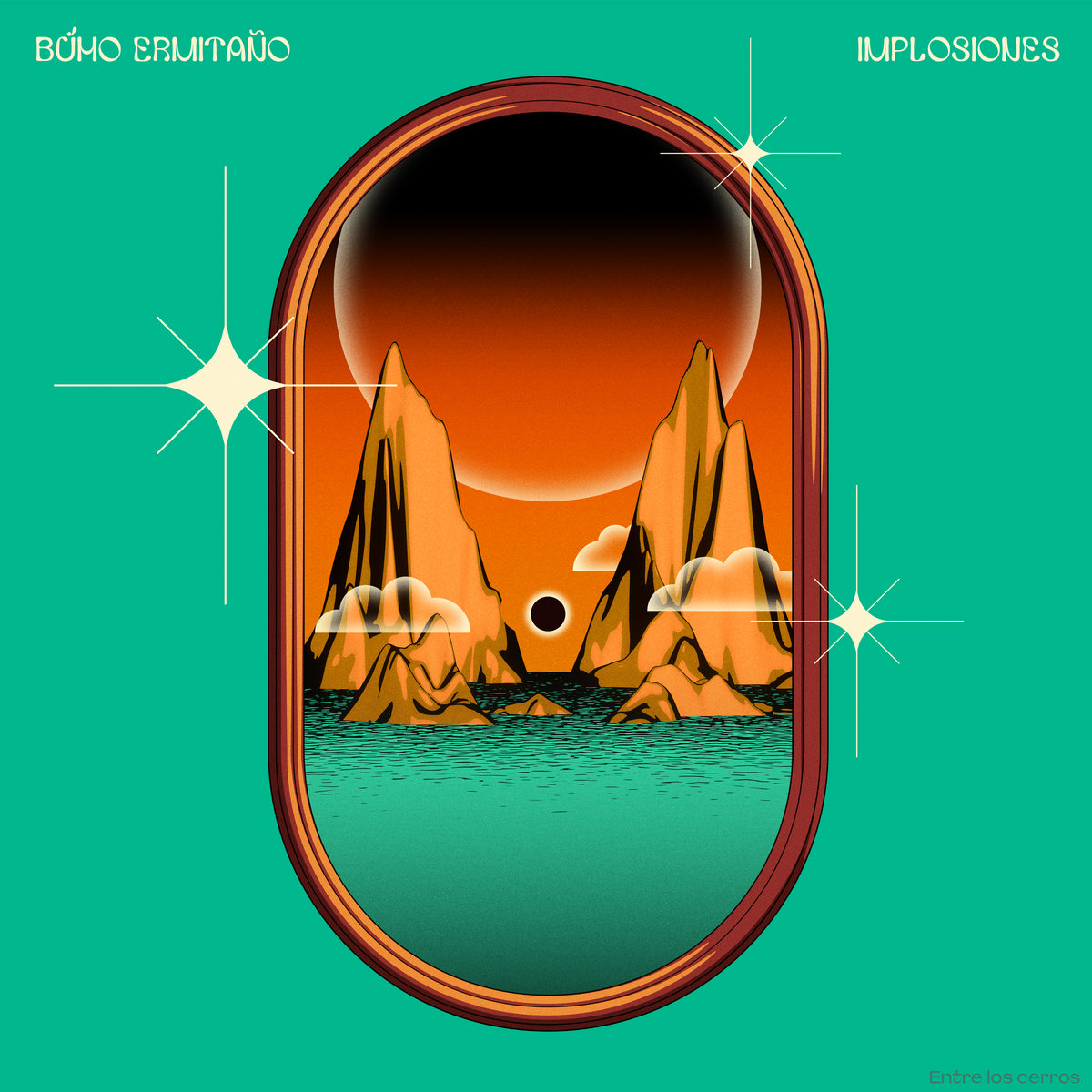
Shimmering, gorgeous and richly informed in melody and rhythm by South American folk, Búho Ermitaño‘s Implosiones revels in pastoralia in opener “Herbie” before “Expolosiones” takes off past its midpoint into heavy post-rock float and progressive urgency that in itself is more dynamic than many bands even still is only a small fraction of the encompassing range of sounds at work throughout these seven songs. ’60s psych twists into the guitar solo in the back half of “Explosiones” before space rock key/synth wash finishes — yes, it’s like that — and only then does the serene guitar and, birdsong and synth-drone of “Preludio” announce the arrival of centerpiece “Ingravita,” which begins acoustic and even as it climbs all the way up to its crescendo maintains its peaceful undercurrent so that when it returns at the end it seems to be home again at the finish. The subsequent “Buarabino” is more about physical movement in its rhythm, cumbia roots perhaps showing through, but leaves the ground for its second half of multidirectional resonances offered like ’70s prog that tells you it’s from another planet. But no, cosmic as they get in the keys of “Entre los Cerros,” Búho Ermitaño are of and for the Earth — you can hear it in every groove and sun-on-water guitar melody — and when the bowl chimes to start finale “Renacer,” the procession that ensues en route to the final drone is an affirmation both of the course they’ve taken in sound and whatever it is in your life that’s led you to hear it. Records like this never get hype. They should. They are loved nonetheless.
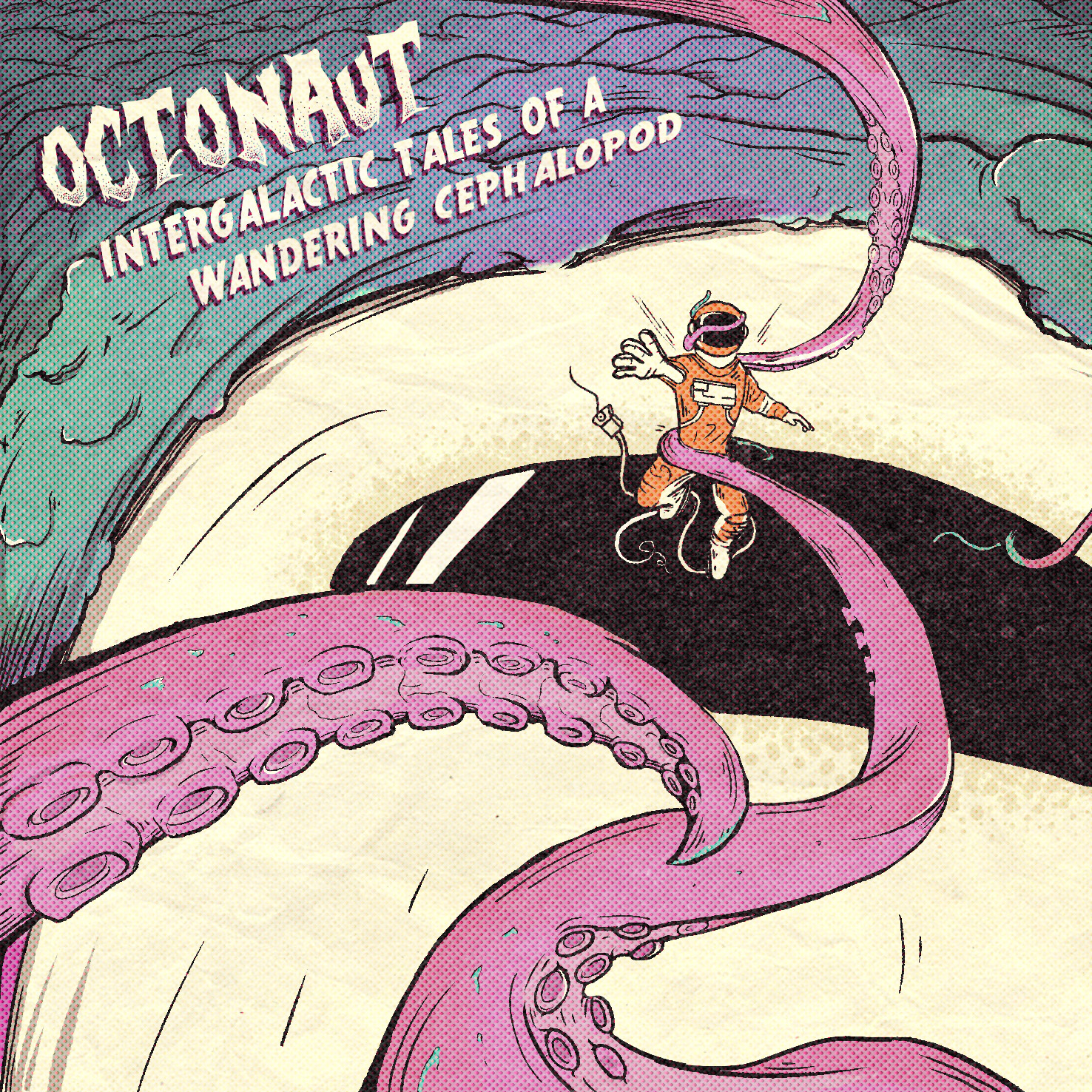
Octonaut, Intergalactic Tales of a Wandering Cephalopod
In concept or manifestation, one would not call Octonaut‘s 54-minute shenanigans-prone debut album Intergalactic Tales of a Wandering Cephalopod a minor undertaking. On any level one might want to approach it — taking on the two-minute feedbackscape of “…—…” (up on your morse code?) or the 11-minute tale-teller-complete-with-digression-about-black-holes “Octonaut” or any of their fun-with-fuzz-and-prog-metal-and-psychedelia points in between — it is a lot, and there is a lot going on, but it’s also wonderfully brazen. It’s completely over the top and knows it. It doesn’t want to behave. It doesn’t want to just be another stoner band. It’s throwing everything out in the open and seeing what works, and as Octonaut move forward, ideally, they’ll take the lessons of a song like the mellow linear builder “Hypnotic Jungle” or nine-minute capper “Rainbow Muffler Camel” (like they’re throwing darts at words) with its intermittent manic fits and the somehow inevitable finish of blown-out static noise. As much stoner as it is prog, it’s also not really either, but this is good news because there are few better places for an act so clearly bent on individualism as Octonaut are to begin than in between genres. One hopes they dwell there for the duration.
Posted in Whathaveyou on August 17th, 2023 by JJ Koczan
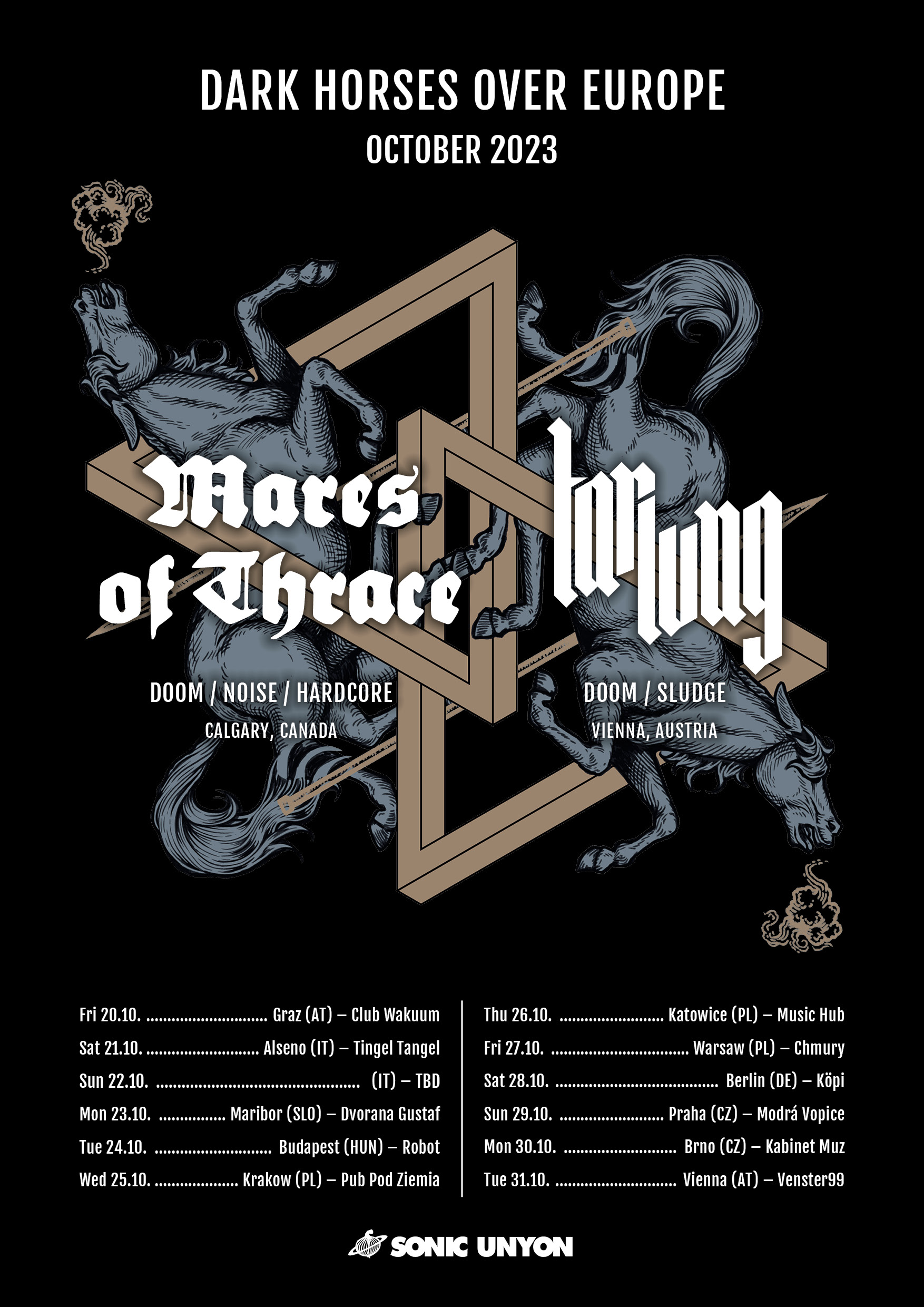
I didn’t really know Calgary’s Mares of Thrace before this tour announcement, and I’m sure you did because you’re way more on the ball than I am — always — but in case you didn’t hear their 2022 record, The Exile, it’s below with twisting, modern post-Baroness riffing and a nastiness that is both a surprise and a welcome turn from expectation. That kick drum in “In All Her Glory” and the riff it punctuates are both encouraging further dig-ins to the album, so hey, I learned something today. Lifelong process and all that. I say again: nasty. Fucking a.
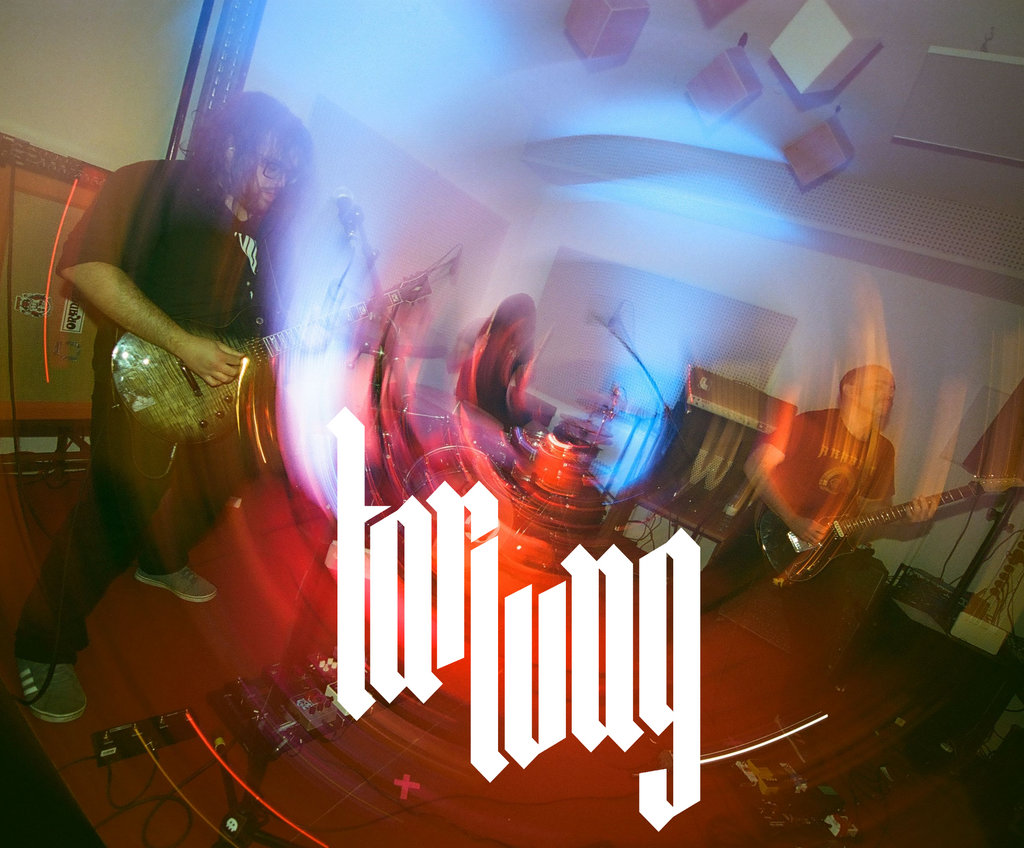
Vienna-based harsh-vocal nod rockers TarLung, who offered their latest album, Architect (review here), in 2021, are more of a known quantity in their big-toned groove and commanding, death-metal-style vocal. The fact that both bands share a penchant for blending elements from more extreme styles with heavy riffing makes for an enticing combination, leaving one to wonder where, on a given night, the line between metal and rock might exist if it does at all. I already said “fucking a,” so I’ll go with “right on” instead. Right on.
Shows start Oct. 20, as the PR wire tells it:
CANADIAN NOISE-DOOM DUO MARES OF THRACE AND AUSTRIAN SLUDGE-DOOM TRIO TARLUNG ANNOUNCE EUROPEAN 2023 TOUR BEGINNING OCTOBER 20TH
Mares of Thrace will be embarking on their first-ever European tour, joined by TarLung from Austria. Dates are listed below.
On the tour, the band comments:
“We’re delighted to be finally playing Europe; it’s been a major goal since this project’s inception. We’re also super stoked to be joined by TarLung, who are musical (and otherwise) like minds of the highest order.”
Mares of Thrace released their critically-acclaimed third record, The Exile, on Sonic Unyon Records in 2022, and have followed it up with North American tours with the likes of KEN mode, Vile Creature, and Tribunal.
TarLung are widely considered one of the mainstays of Austrian doom, and have shared stages with such genre luminaries as Eyehategod, Crowbar, and Conan; their 2021 record Architect was hailed.
Fri 20.10. Graz (AT) – Club Wakuum Sat 21.10. Alseno (IT) – Tingel Tangel Sun 22.10. (IT) – TBD Mon 23.10. Maribor (SLO) – Dvorana Gustaf Tue 24.10. Budapest (HUN) – Robot Wed 25.10. Krakow (PL) – Pub Pod Ziemia Thu 26.10. Katowice (PL) – Music Hub Fri 27.10. Warsaw (PL) – Chmury Sat 28.10. Berlin (DE) – Köpi Sun 29.10. Praha (CZ) – Modrá Vopice Mon 30.10. Brno (CZ) – Kabinet Muz Tue 31.10. Vienna (AT) – Venster99
Posted in Whathaveyou on August 4th, 2023 by JJ Koczan
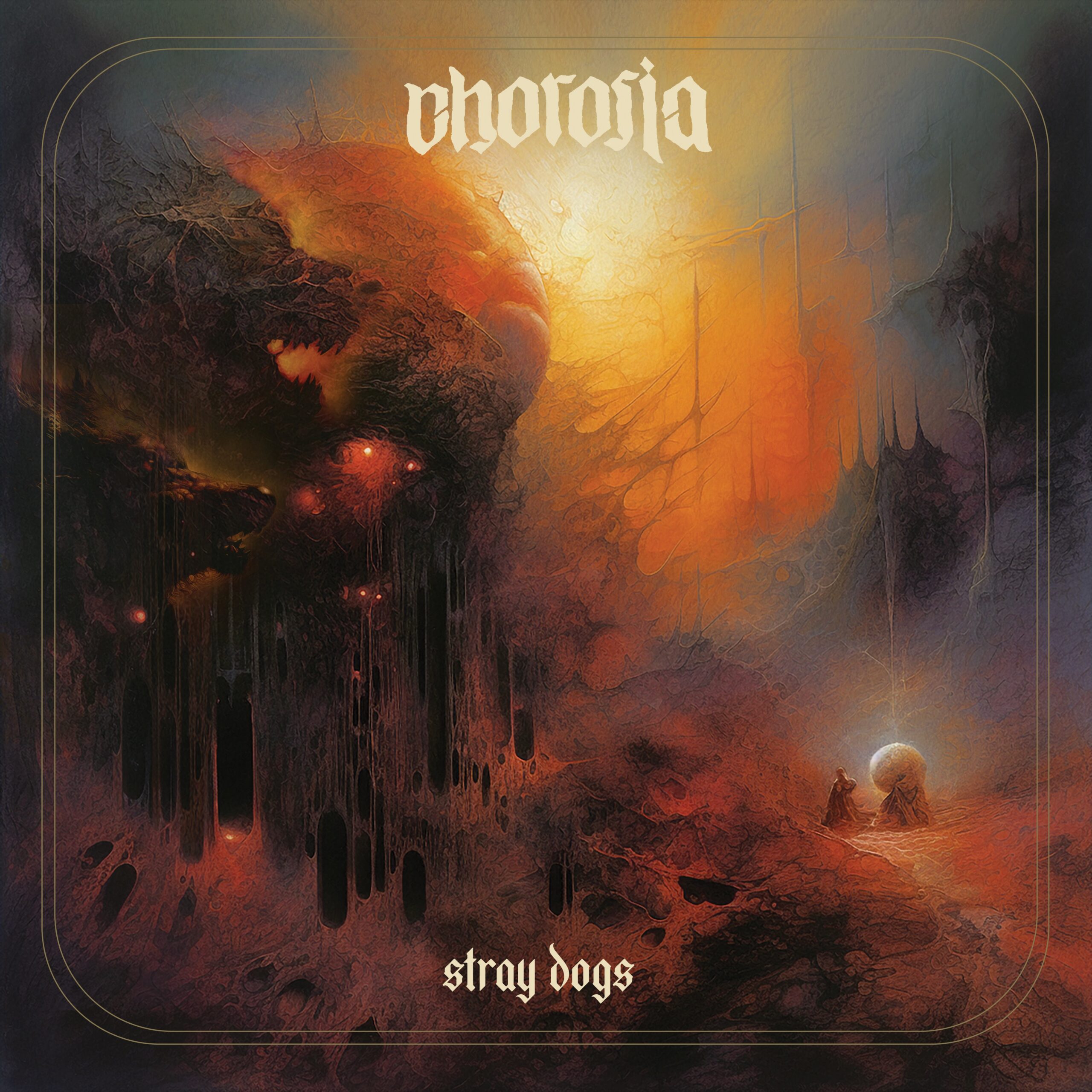
There’s an angular severity early in Chorosia‘s new single, “Hands, Switchblades, and Vile Vortices,” which heralds crunch to come on their new EP, Stray Dogs. Set to release on Sept. 15 through Grazil Records and Kvlt und Kaos Productions, the follow-up to the Vienna-based four-piece’s 2021 A Call to Love long-player is listed at 35 minutes — longer than some albums, if not Chorosia‘s — and the self-harm-themed track is the first audio from it, taking its basis in a heavy slogging sludge rock informed by death metal and able to establish that kind of declarative presence even before shifting into its speedier midsection. They use the chorus well amid various guitar solos, and if you don’t find the subject matter disturbing, the inability to place Chorosia easily within a given metallic microniche might do the trick. Either way, it’s nasty stuff.
The video came down the PR wire today with the following:
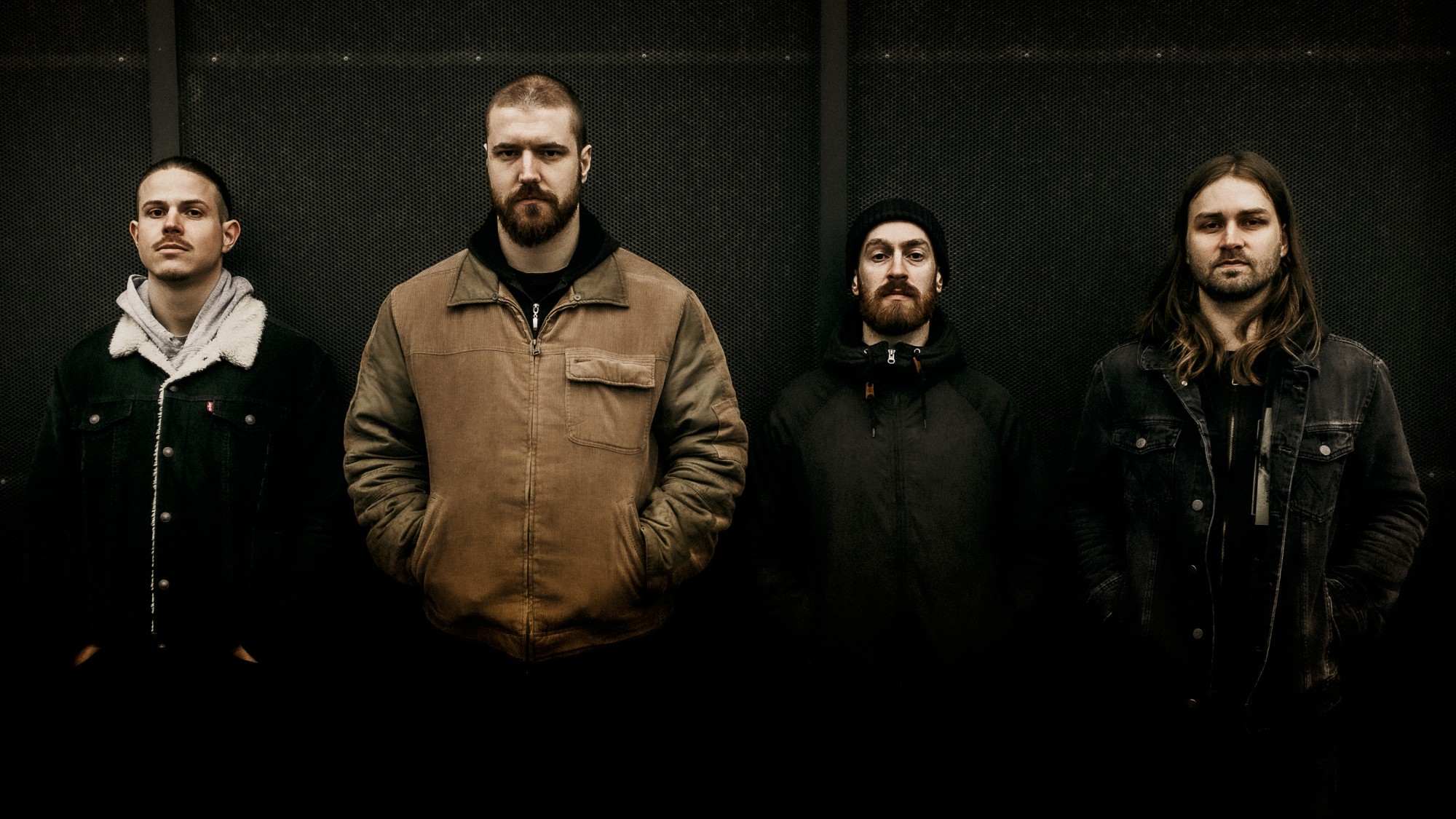
Chorosia is a prog/post-sludge metal band hailing from Vienna, Austria. The band was founded in 2017 by Anto Pranjić (guitars/vocals), Florian Zeus (guitars), Christian Umkehrer (bass), and Gregory Reinig (drums). Already the following year, in May 2018, Chorosia independently released their first album. The self-titled debut was welcomed with positive reviews by various underground music critics, some even naming it an honorable mention for the metal album of the year.
After doing a number of local dates to promote the album which included playing before or after various well-known names such as Crowbar, Dopelord, Yob, Neurosis, Black Tusk, and the Skull and a self-booked 8-day tour through southern Europe in 2019, Chorosia released their sophomore studio effort entitled “A Call To Love” via Grazil Records. “A Call To Love” marked the band’s departure from the traditional sludge sound into a more experimental ground. Combining elements of sludge, doom, grind, and even folk music, online critics often struggled to put a genre tag to the album. Instead, they praised it for its creativity, weirdness, and even strange beauty.
The band’s third studio endeavor, EP entitled “Stray Dogs”, deepens the experimental efforts. It’s a 35-minute prog/post-sludge odyssey that pushes the envelope of the genre. The band’s signature blend of compelling instrumentation and growling vocals consumes the listener by the raw power of its transformative intensity. Set to release on September 15th via Grazil Records and Kvlt und Kaos Productions, Chorosia’s “Stray Dogs” is set to be their most successful release yet. Save the date and brace for impact!
Hey there and welcome back to the Spring 2023 Quarterly Review. Today I’ve got another 10-record batch for your perusal, and if you’ve never been to this particular party before, it’s part of an ongoing series this site does every couple months (you might say quarterly), and this week picks up from yesterday as well as a couple weeks ago, when another 70 records of various types were covered. If there’s a lesson to be learned from all of it, it’s that we live in a golden age of heavy music, be it metal, rock, doom, sludge, psych, prog, noise or whathaveyou. Especially for whathaveyou.
So here we are, you and I, exploring the explorations in these many works and across a range of styles. As always, I hope you find something that feels like it’s speaking directly to you. For what it’s worth, I didn’t even make it through the first 10 of the 50 releases to be covered this week yesterday without ordering a CD from Bandcamp, so I’m here in a spirit of learning too. We’ll go together and dive back in.
Quarterly Review #11-20:
Smokey Mirror, Smokey Mirror
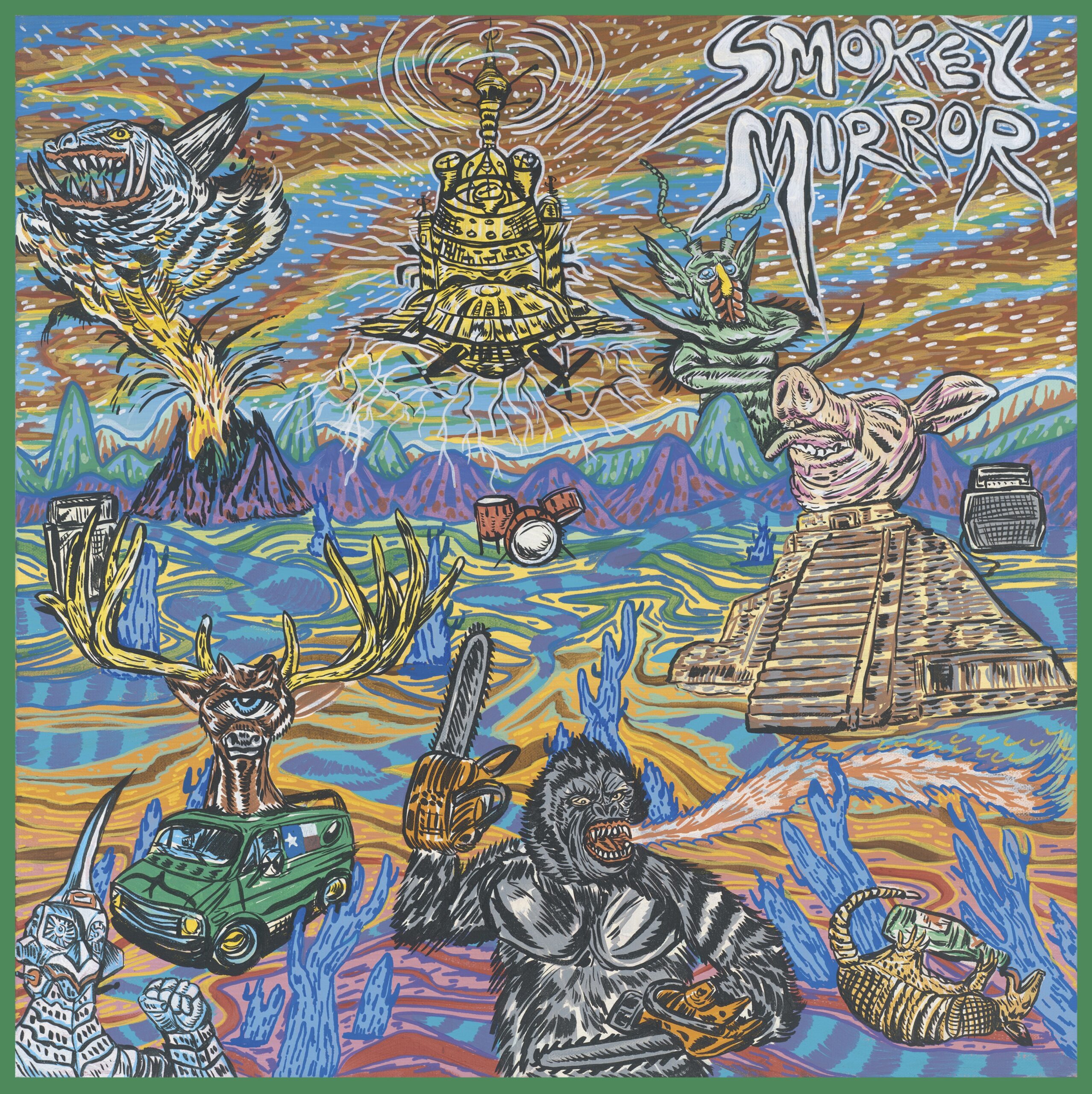
Those in the know will tell you that the vintage-sound thing is over, everybody’s a goth now, blah blah heavygaze. That sounds just fine with Dallas, Texas, boogie rockers Smokey Mirror, who on their self-titled Rise Above Records first LP make their shuffle a party in “Invisible Hand” and the class-conscious “Pathless Forest” even before they dig into the broader jam of the eight-minute “Magick Circle,” panning the solos in call and response, drum solo, softshoe groove, full on whatnot. Meanwhile, “Alpha-State Dissociative Trance” would be glitch if it had a keyboard on it, a kind of math rock from 1972, and its sub-three-minute stretch is followed by the acoustic guitar/harmonica folk blues of “Fried Vanilla Super Trapeze” and the heavy fuzz resurgence of “Sacrificial Altar,” which is long like “Magick Circle” but with more jazz in its winding jam and more of a departure into it (four minutes into the total 7:30 if you’re wondering), while the Radio Moscow-style smooth bop and rip of “A Thousand Days in the Desert” and shred-your-politics of “Who’s to Say” act as touch-ground preface for the acoustic noodle and final hard strums of “Recurring Nightmare,” as side B ends in mirror to side A. An absolute scorcher of a debut and all the more admirable for wearing its politics on its sleeve where much heavy rock hides safe behind its “I’m not political” whiteness, Smokey Mirror‘s Smokey Mirror reminds that, every now and again, those in the know don’t know shit. Barnburner heavy rock and roll forever.
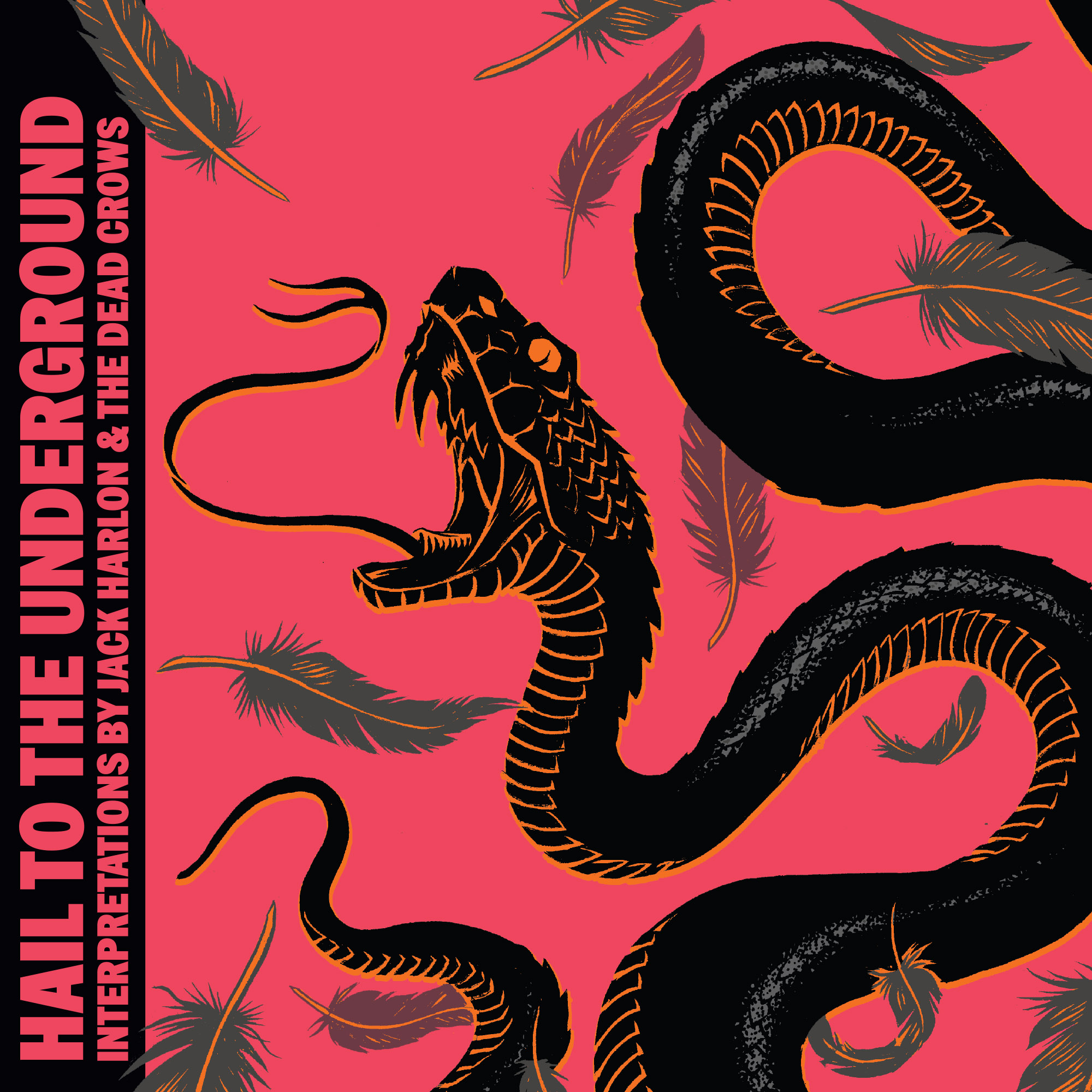
Jack Harlon & The Dead Crows, Hail to the Underground
The moral of the story is that the members of Melbourne’s Jack Harlon and the Dead Crows — may they someday be famous enough that I won’t feel compelled to point out that none of them is Jack; the lineup is comprised of vocalist/guitarist Tim Coutts-Smith, guitarist Jordan Richardson, bassist Liam Barry and drummer Josh McCombe — came up in the ’90s, or at least in the shadow thereof. Hail to the Underground collects eight covers in 35 minutes and is the Aussie rockers’ first outing for Blues Funeral, following two successful albums in 2018’s Hymns and 2021’s The Magnetic Ridge (review here), and while on paper it seems like maybe it’s the result of just-signed-gotta-get-something-out motivation, the takes on tunes by Aussie rockers God, the Melvins, Butthole Surfers, My Bloody Valentine and Joy Division (their “Day of Lords” is a nodding highlight) rest organically alongside the boogie blues of “Roll & Tumble” (originally by Hambone Willie Newbern), the electrified surge of Bauhaus‘ “Dark Entries” and the manic peaks of “Eye Shaking King” by Amon Düül II. It’s not the triumphant, moment-of-arrival third full-length one awaits — and it would be soon for it to be, but it’s how the timing worked with the signing — but Hail to the Underground adds complexity to the narrative of the band’s sound in communing with Texan acid noise, country blues from 1929 to emo and goth rock icons in a long-player’s span, and it’ll certainly keep the fire burning until the next record gets here.
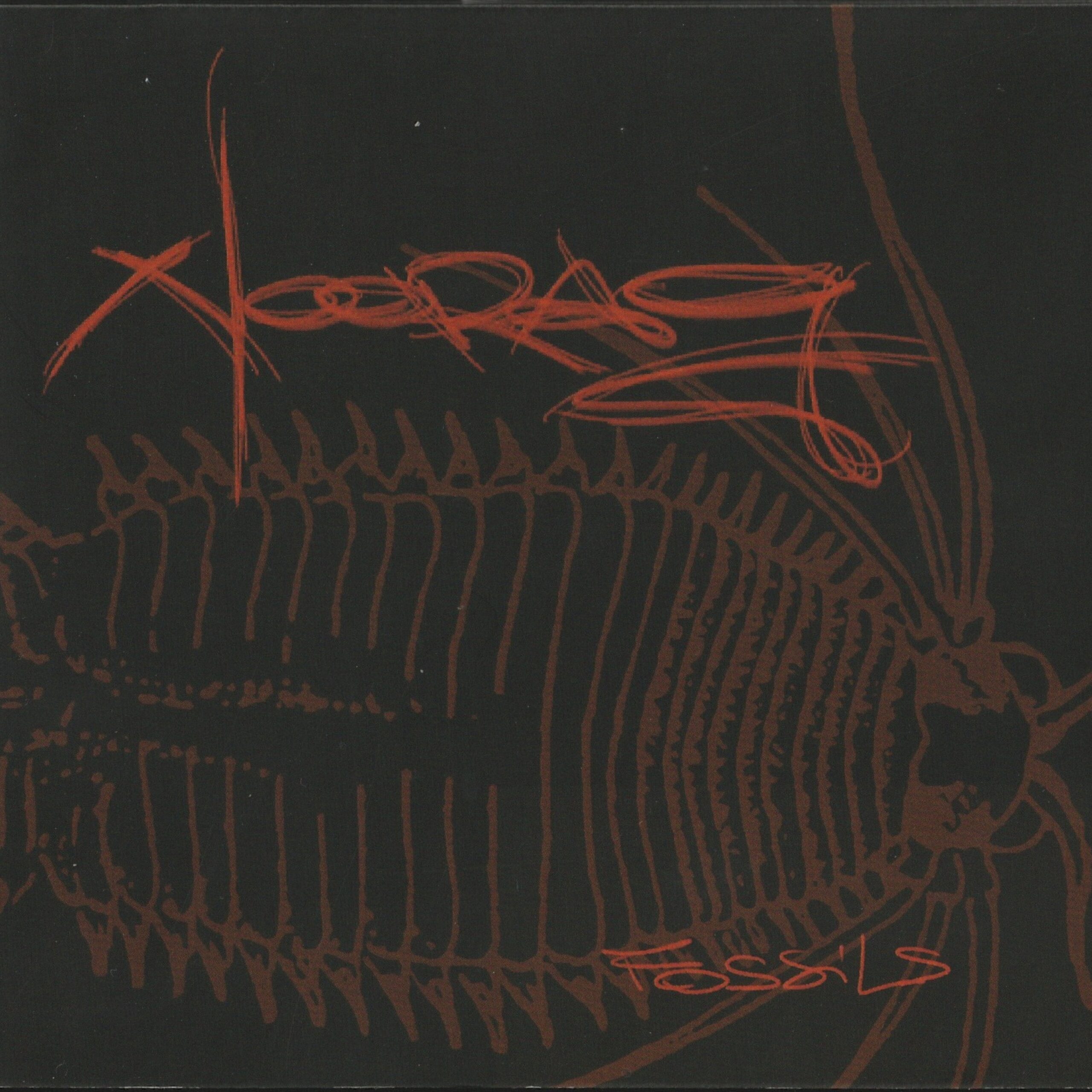
Minimalist in social media presence (though on YouTube and Bandcamp, streaming services, etc.), Sardinian one-man outfit Noorag — also stylized all-lowercase: noorag — operates at the behest of multi-instrumentalist/producer Federico “WalkingFred” Paretta, and with drums by Daneiele Marcia, the project’s debut EP, Fossils, collects seven short pieces across 15 minutes that’s punk in urgency, sans-vocal in the execution, sludged in tone, metallic in production, and adventurous in some of its time changes. Pieces like the ambient opener “Hhon” and “Amanita Shot,” which follows headed on the quick into the suitably stomping “Brachiopod” move easily between each other since the songs themselves are tied together through their instrumental approach and relatively straightforward arrangements. “Cochlea Stone” is a centerpiece under two minutes long with emphasis rightfully on the bass, while “Ritual Electric” teases the stonershuggah nuance in the groove of “Acid Apricot”‘s second half, and the added “Digital Cave” roughs up the recording while maybe or maybe not actually being the demo it claims to be. Are those drums programmed? We may never know, but at a quarter of an hour long, it’s not like Noorag are about to overstay their welcome. Fitting for the EP format as a way to highlight its admirable intricacy, Fossils feels almost ironically fresh and sounds like the beginning point of a broader progression. Here’s hoping.
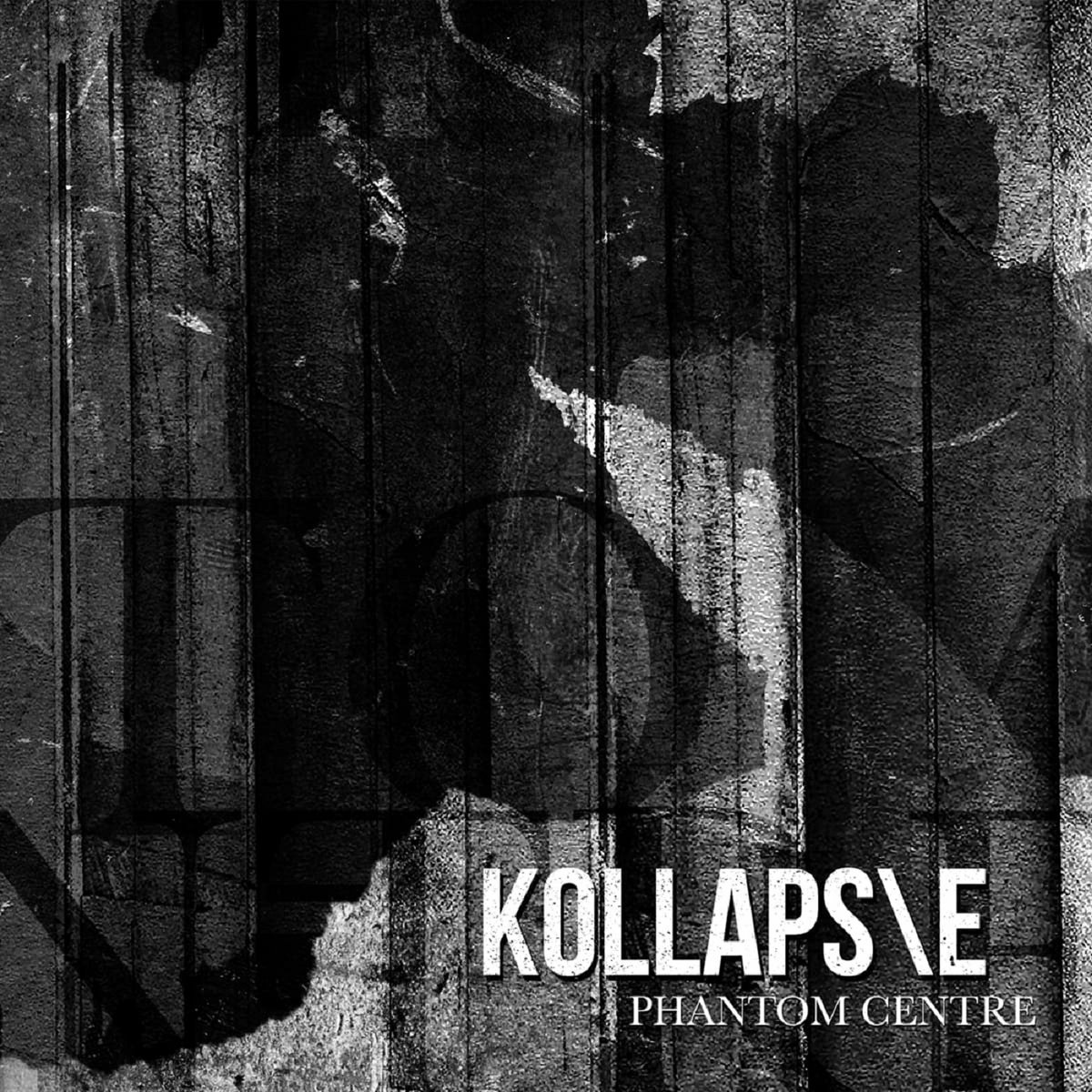
With the notable exceptions of six-minute opener “Era” and the 8:36 “Uhtceare” with the gradual build to its explosion into the “Stones From the Sky” moment that’s a requisite for seemingly all post-metal acts to utilize at least once (they turn it into a lead later, which is satisfying), Sweden’s KOLLAPS\E — oh your pesky backslash — pair their ambient stretches with stately, shout-topped declarations of riff that sound like early Isis with the clarity of production and intent of later Isis, which is a bigger difference than it reads. The layers of guttural vocals at the forefront of “Anaemia” add an edge of extremity offset by the post-rock float of the guitar, and “Bränt Barn Skyr Elden” (‘burnt child dreads the fire,’ presumably a Swedish aphorism) answers by building tension subtly in its first two minutes before going full-barrage atmosludge for the next as it, “Anaemia,” and the closing pair of “Radiant Static” and “Murrain” harness short-song momentum on either side of four minutes long — something the earlier “Beautiful Desolate” hinted at between “Era” and “Uhtceare” — to capture a distinct flow for side B and giving the ending of “Murrain” its due as a culmination for the entire release. Crushing or spacious or both when it wants to be, Phantom Centre is a strong, pandemic-born debut that looks forward while showing both that it’s schooled in its own genre and has begun to decide which rules it wants to break.
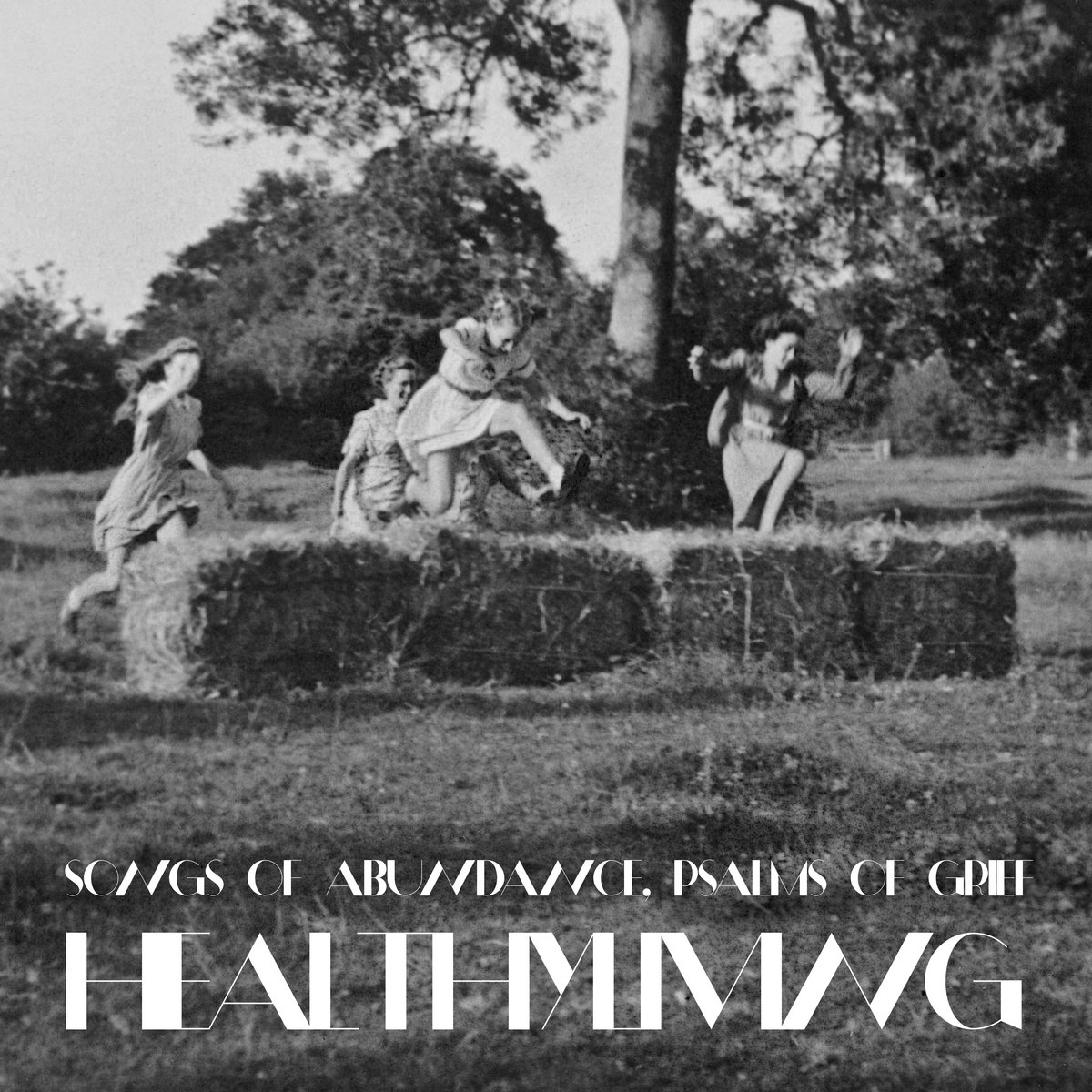
Healthyliving, Songs of Abundance, Psalms of Grief
A multinational conglomerate that would seem to be at least partially assembled in Edinburg, Scotland, Healthyliving — also all-lowercase: healthyliving — offer folkish melodicism atop heavy atmospheric rock for a kind of more-present-than-‘gaze-implies feel that is equal parts meditative, expansive and emotive on their debut full-length, Songs of Abundance, Psalms of Grief. With the vocals of Amaya López-Carromero (aka Maud the Moth) given a showcase they more than earn via performance, multi-instrumentalist Scott McLean (guitar, bass, synth) and drummer Stefan Pötzsch are able to conjure the scene-setting heft of “Until,” tap into grunge strum with a gentle feel on “Bloom” or meander into outright crush with ambient patience on “Galleries” (a highlight) or move through the intensity of “To the Gallows,” the unexpected surge in the bridge of “Back to Back” or the similarly structured but distinguished through the vocal layering and melancholic spirit of the penultimate “Ghost Limbs” with a long quiet stretch before closer “Obey” wraps like it’s raking leaves in rhythm early and soars on a strident groove that caps with impact and sprawl. They are not the only band operating in this sphere of folk-informed heavy post-rock by any means, but as their debut, this nine-song collection pays off the promise of their 2021 two-songer Until/Below (review here) and heralds things to come both beautiful and sad.
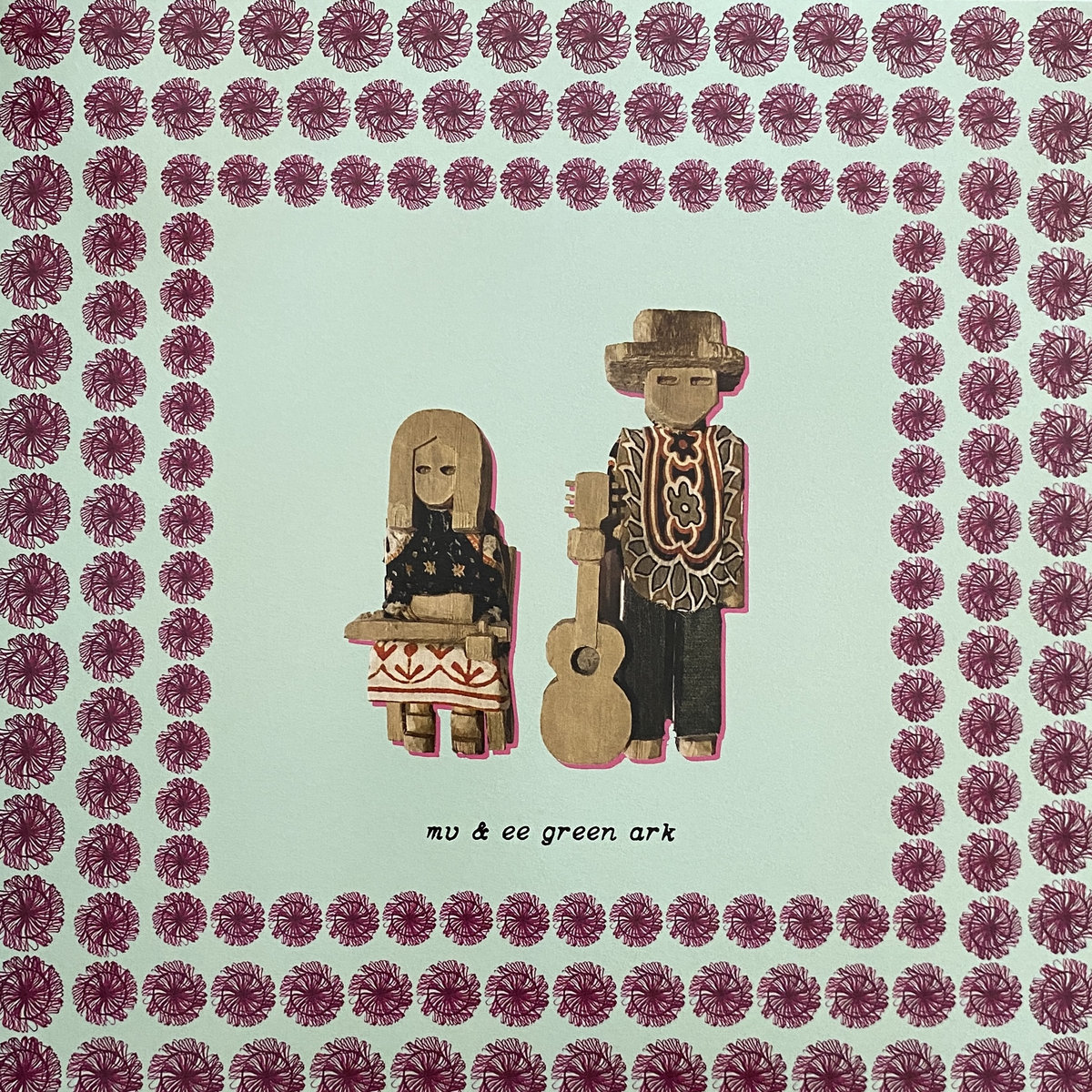
Even before Vermont freak-psych two-piece MV & EE — Matt Valentine and Erika Elder, both credited with a whole bunch of stuff including, respectively, ‘the real deal’ and ‘was’ — are nestled into the organic techno jam of 19-minute album opener “Free Range,” their Green Ark full-length has offered lush lysergic hypnosis via an extended introductory drone. Far more records claim to go anywhere than actually do, but the funky piano of “No Money” and percussion and wah dream-disco of “Dancin’,” with an extra-fun keyboard line late, set up the 20-minute “Livin’ it Up,” in a way that feels like surefooted experimentalism; Elder and Valentine exploring these aural spaces with the confidence of those who’ve been out wandering across more than two decades’ worth of prior occasions. That is to say, “Livin’ it Up” is comfortable as it engages with its own unknown self, built up around a bass line and noodly solo over a drum machine with hand percussion accompanying, willfully repetitive like the opener in a way that seems to dig in and then dig in again. The 10-minute “Love From Outer Space” and nine-minute mellow-psych-but-for-the-keyboard-beat-hitting-you-in-the-face-and-maybe-a-bit-of-play-around-that-near-the-end “Rebirth” underscore the message that the ‘out there’ is the starting point rather than the destination for MV & EE, but that those brave enough to go will be gladly taken along.
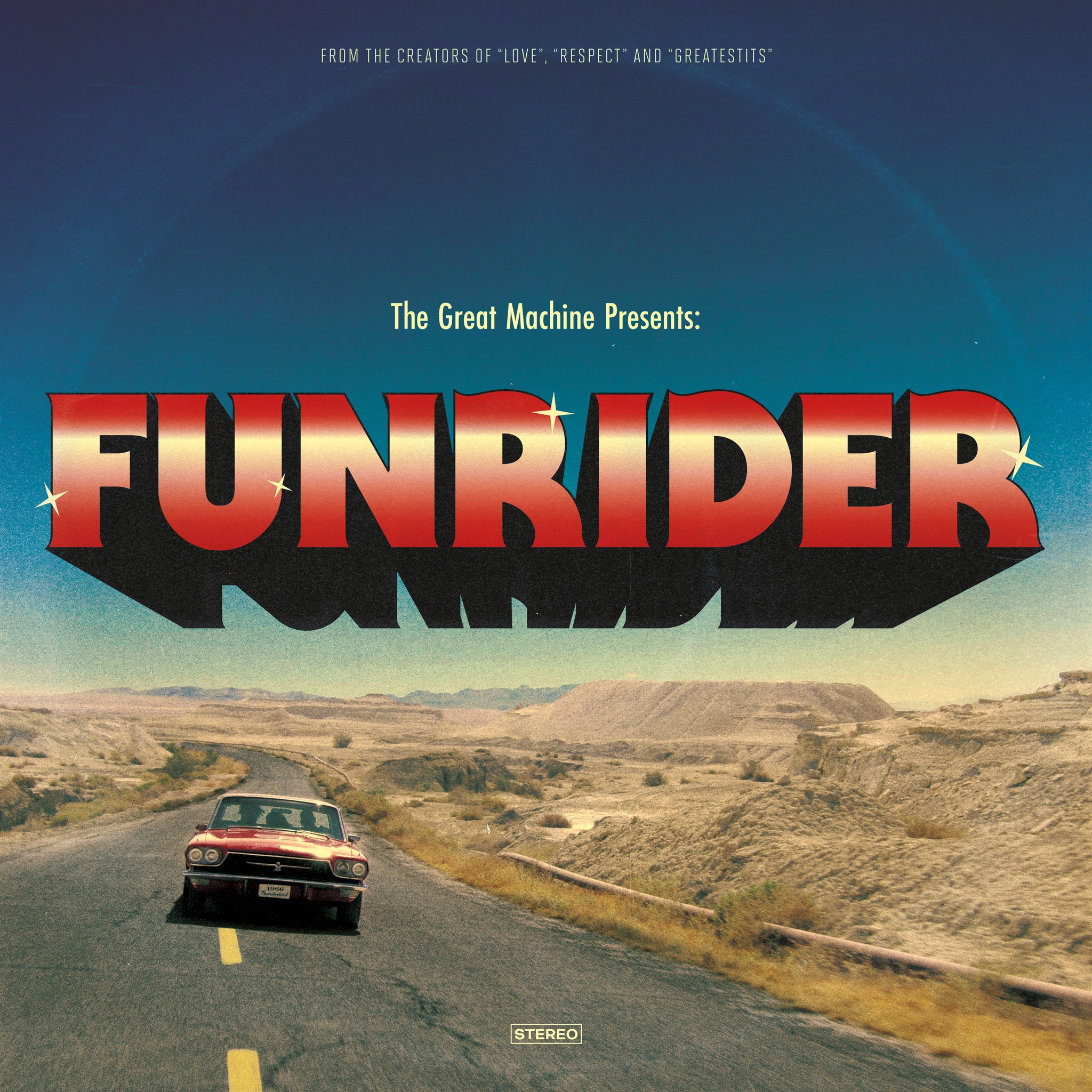
Israeli trio The Great Machine — brothers Aviran Haviv (bass/vocals) and Omer Haviv (guitar/vocals) as well as drummer/vocalist Michael Izaky — find a home on Noisolution for their fifth full-length in nine years, Funrider, trading vocal duties back and forth atop songs that pare down some of the jammier ideology of 2019’s less-than-ideally-titled Greatestits, still getting spacious in side-A ender “Pocketknife” and the penultimate “Some Things Are Bound to Fail,” which is also the longest inclusion at 6:05. But the core of Funrider is in the quirk and impact of rapid-fire cuts like “Zarathustra” and “Hell & Back” at the outset, the Havivs seeming to trade vocal duties throughout to add to the variety as the rumble before the garage-rock payoff of “Day of the Living Dead” gives over to the title-track or that fuzzier take moves into “Pocketknife.” Acoustic guitar starts “Fornication Under the Consent of the King” but it becomes sprinter Europunk bombast before its two minutes are done, and with the rolling “Notorious” and grungeminded “Mountain She” ripping behind, the most unifying factor throughout Funrider is its lack of predictability. That’s no minor achievement for a band on their fifth record making a shift in their approach after a decade together, but the desert rocking “The Die” that closes with a rager snuck in amid the chug is a fitting summary of the trio’s impressive creative reach.
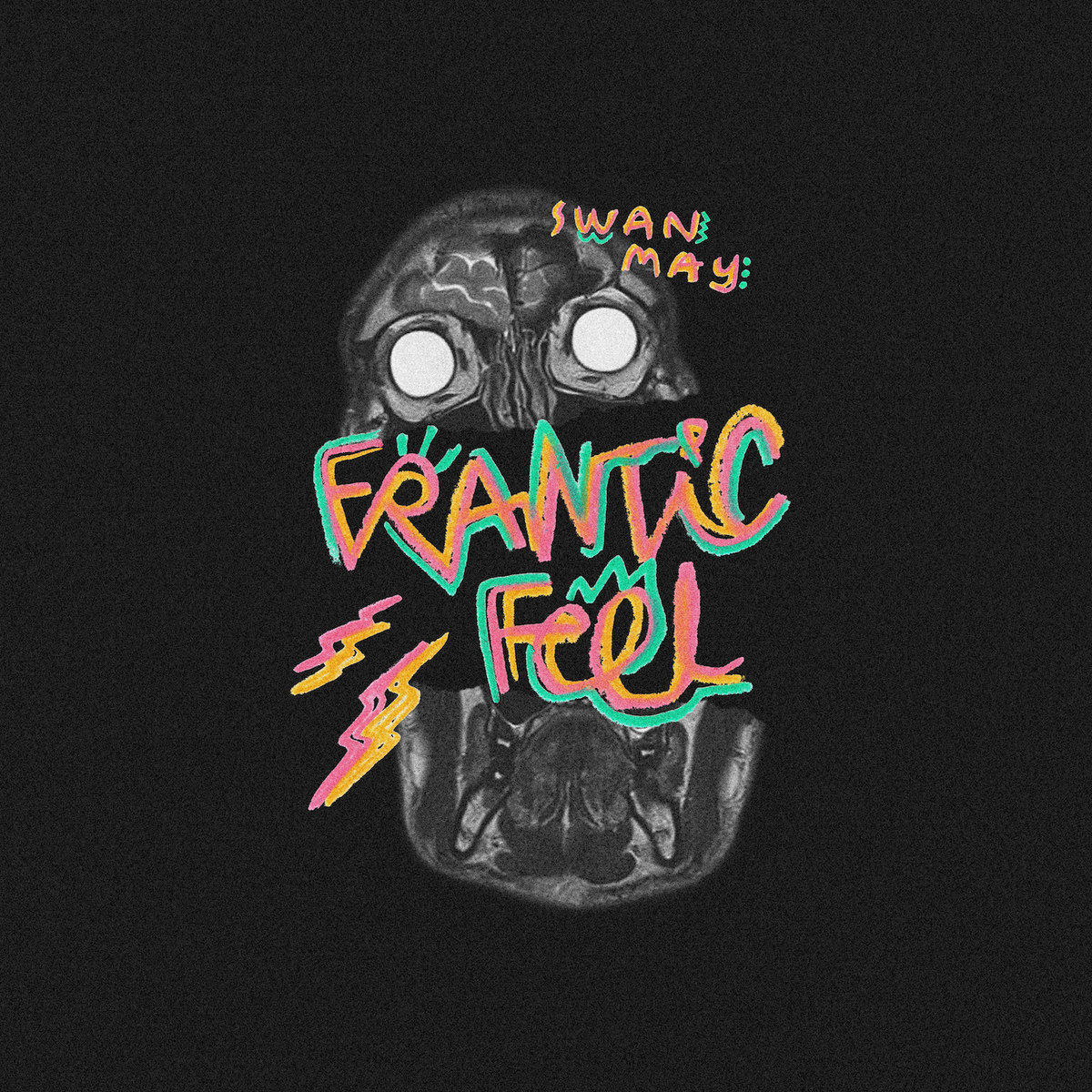
Following-up their 2017 debut, Stoner Circus, Austrian trio Swanmay offer seven songs and 35 minutes of new material with the self-issued Frantic Feel, finding their foundation in the bass work of Chris Kaderle and Niklas Lueger‘s drumming such that Patrick Àlvaro‘s ultra-fuzzed guitar has as strong a platform to dance all over as possible. Vocals in “The Art of Death” are suitably drunk-sounding (which doesn’t actually hurt it), but “Mashara” and “Cats and Snails” make a rousing opening salvo of marked tonal depth and keep-it-casual stoner saunter, soon also to be highlighted in centerpiece “Blooze.” On side B, “Stone Cold” feels decidedly more like it has its life together, and “Old Trails” tightens the reins from there in terms of structure, but while closer “Dead End” stays fuzzy and driving like the two songs before, the noise quotient is upped significantly by the time it’s done, and that brings back some of the looser swing of “Mashara” or “The Art of Death.” But when Swanmay want to be — and that’s not all the time, to their credit — they are massively heavy, and they put that to raucous use with a production that is accordingly loud and vibrant. Seems simple reading a paragraph, maybe, but the balance they strike in these songs is a difficult one, and even if it’s just for the guitar and bass tones, Frantic Feel demands an audience.
“Death will come swiftly to those who are weak,” goes the crooning verse lyric from Garden of Ash‘s “Death Valley” at the outset of the young Edmonton, Alberta, trio’s self-titled, self-released debut full-length. Bassist Kristina Hunszinger delivers the line with due severity, but the Witch Mountain-esque slow nod and everybody-dies lyrics of “A Cautionary Tale” show more of the tongue-in-cheek point of view of the lyrics. The plot thickens — or at very least hits harder — when the self-recorded outing’s metallic production style is considered. In the drums of Levon Vokins — who also provides backing vocals as heard on “Roses” and elsewhere — the (re-amped) guitar of Zach Houle and even in the mostly-sans-effects presentation of Hunszinger‘s vocals as well as their placement at the forefront of the mix, it’s heavy metal more than heavy rock, but as Vokins takes lead vocals in “World on Fire” with Hunszinger joining for the chorus, the riff is pure boogie and the earlier “Amnesia” fosters doomly swing, so what may in the longer term be a question of perspective is yet unanswered in terms of are they making the sounds they want to and pushing into trad metal genre tenets, or is it just a matter of getting their feet under them as a new band? I don’t know, but songs and performance are both there, so this first full-length does its job in giving Garden of Ash something from which to move forward while serving notice to those with ears to hear them. Either way, the bonus track “Into the Void” is especially notable for not being a Black Sabbath cover, and by the time they get there, that’s not at all the first surprise to be had.
Checking in at one second less and 15 minutes flat, “The Bends” is the first release from Milwaukee-based three-piece Tidal, and it’s almost immediately expansive. With shades of El Paraiso-style jazz psych, manipulated samples and hypnotic drone at its outset, the first two minutes build into a wash with mellow keys/guitar effects (whatever, it sounds more like sax and they’re all credited with ‘noise,’ so I’m doing my best here) and it’s not until Sam Wallman‘s guitar steps forward out of the ambience surrounding at nearly four minutes deep that Alvin Vega‘s drums make their presence known. Completed by Max Muenchow‘s bass, which righteously holds the core while Wallman airs out, the roll is languid and more patient than one would expect for a first-release jam, but there’s a pickup and Tidal do get raucous as “The Bends” moves into its midsection, scorching for a bit until they quiet down again, only to reemerge at 11:10 from the ether of their own making with a clearheaded procession to carry them through the crescendo and to the letting-go-now drift of echo that caps. I hear tell they’ve got like an hour and a half of this stuff recorded and they’re going to release them one by one. They picked an intriguing one to start with as the layers of drone and noise help fill out the otherwise empty space in the instrumental jam without being overwrought or sacrificing the spontaneous nature of the track. Encouraging start. Will be ready when the next jam hits.