Posted in Whathaveyou on July 24th, 2024 by JJ Koczan
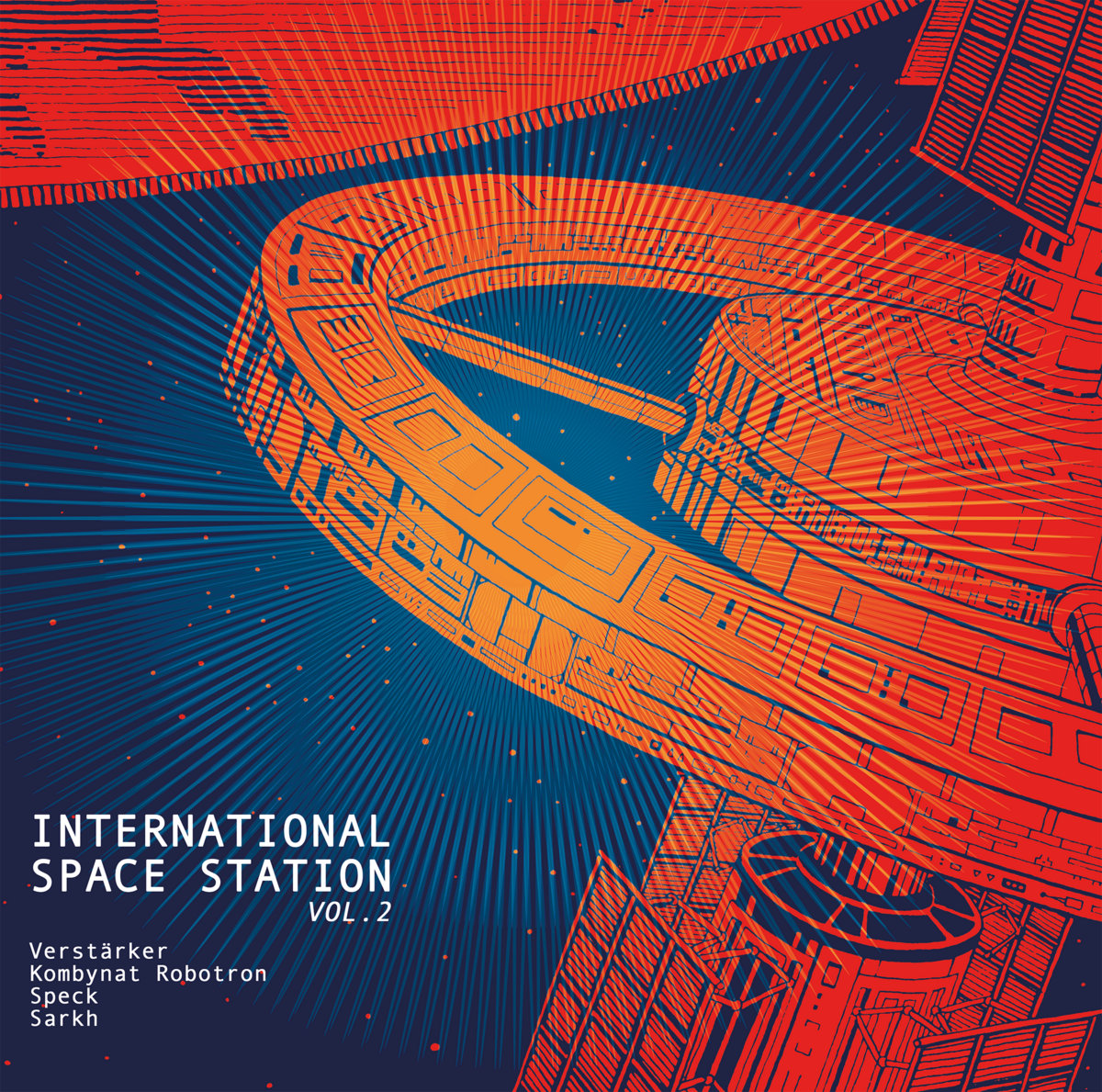
I know I’ve said this before, but I continue to believe there’s something extra rad about a four-way split. Two, generally pretty cool, but often leads to a sense of one band competing with the other or at least a tendency on the part of the listener to compare them, which is just the same thing from the other side. Three, well fine as long as you don’t have any intention toward vinyl. But a four-way 2LP split breaks up in a satisfying way, as everybody gets to showcase their aural wares on their own side, and there’s usually enough breadth of personality between the four bands that the listener is more inclined to take everything as it comes. As Worst Bassist Records showed with three first installment of the four-way split series International Space Station (review here) in 2022, ‘take it as it comes’ is precisely the best way to go in hearing it.
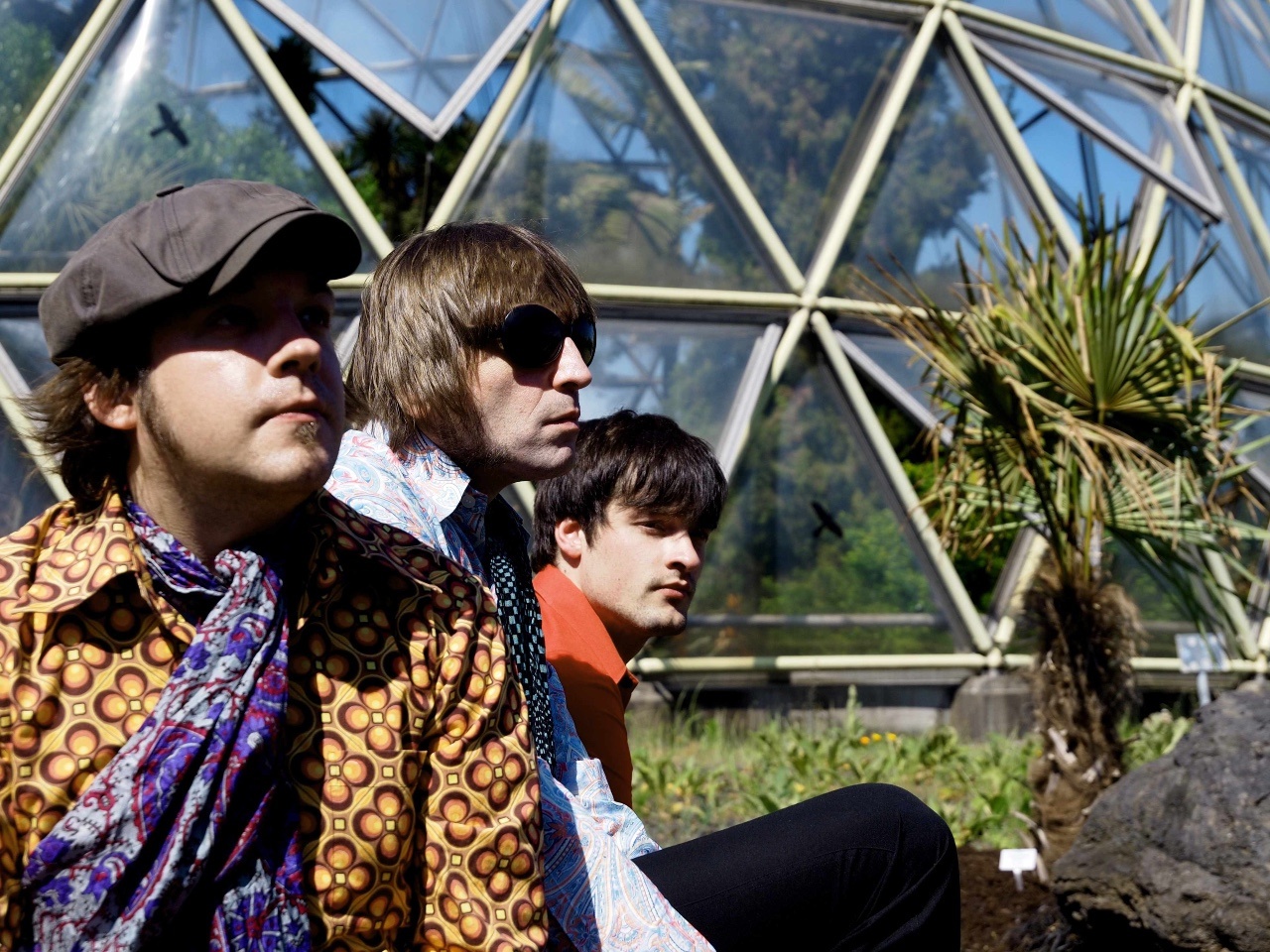
Jointly released through Weird Beard Records in the UK and Echodelick Records in the US, and I believe available to preorder from all of them, International Space Station Vol. 2 once again brings together an intercontinental assemblage in Verstärker (from the US, despite the maybe-misleading umlaut), Kombynat Robotron and Sarkh (from Germany), and Speck (from Austria), and everybody but Kombynat Robotron already has a song streaming. And Kombynat Robotron aren’t being jerks or holdouts or whathaveyou, but they’ve only got one song on their side. Fair enough up keep it under wraps for now.
If you do want to hear that — and we both know you do — come back Aug. 19, as I’ll be streaming the album in full that day with what I’m sure will be a duly slobbering review full of obscure Star Trek references and cosmic buzzwords picked up from the PBS S0ace Time science videos my daughter watches with ironically religious fervor. So it’ll be awesome, in other words.
For now, art, info and copious linkage follow. Engage:
The long awaited vol. 2 of the Intrernational Space Station arrives!
2-LP in a fat gatefold cover, colored wax, limited to 500 LP 1: orange wax LP 2: blue wax CD in digisleeve lim. 100
Four international bands (Verstärker, Kombynat Robotron, Speck, Sarkh) contributing 1 LP side each, instrumental, about how to watch the ISS crossing their skies from time to time… or being overwhelmed by the rough beauty of the ocean…
Long and psychedelic tracks pulsating through space and try to follow the way of the space station around our globe and even beyond, to contribute you the opportunity to travel through your inner cosmosis while listening, only interrupted by the needle lifting, which could just be some stops at random interstellar stations, to release and gain passengers.
2-LP in a fat gatefold cover, colored wax, limited to 500 LP 1: orange wax LP 2: blue wax
Out via Worst Bassist (DE+World), Echodelick (USA) and Weird Beird (UK) August 20th 2024 Comes with Download Code
CD out via Worst Bassist on Aug. 20th.
Verstärker
Verstärker from Kentucky, USA, play monotonic motorik sound, surrounded by soundscapes and beautiful noise.
Groove, shifts, scapes, beauty, intensity, it’s all there.
Kombynat Robotron
Germany’s high flying neo-krautrockers continue on side B with their floating and dynamic longtrack.
Speck
Side C kicks off with Austria’s instrumental psychedelic mantra jammers Speck, who created a journey through mind and space until…
Sarkh
… the ISS takes another turn over Germany and brings you a force of nature to end all this, with side D.
You’ll be torn apart and re-built again through the heavy and yet delightful instrumentals.
Posted in Whathaveyou on July 10th, 2024 by JJ Koczan
As they continue to celebrate the nearly-20-years-on reissue of 2005’s Death.March.Melodies! and look forward to a first US appearance at Planet Desert Rock Weekend in Las Vages this coming January, Berlin heavy rockers Samavayo have lined up Fall tour dates around previously announced slots at October’s Up in Smoke and Keep it Low festivals, in Switzerland and Germany, respectively. The three-piece’s most recent LP, 2022’s Pāyān (review here), remains a fitting backdrop for all of this outreach, but as they look to mark a quarter-century of the band in 2025, they’re likewise beginning the process of moving forward with new material headed toward the next work.
As they note below, they’re trying to get a week or so of West Coast shows around the Planet Desert Rock Weekend stop, and it goes without saying but I’ll say it anyway that if you can help in that regard, you should, both out of moral obligation and because the show will be cool. In the meantime, they’ll also next year issue two more tracks from the Pāyān sessions, and, well, that’s another thing to look forward to. Not sure if they’ll come together or one at a time, but either way, that’s good news and however many years from now, when Pāyān gets its own reissue, will surely enhance the picture that record paints of Samavayo in this era. Narrative, yo. No substitute for it.
Info from the PR wire:
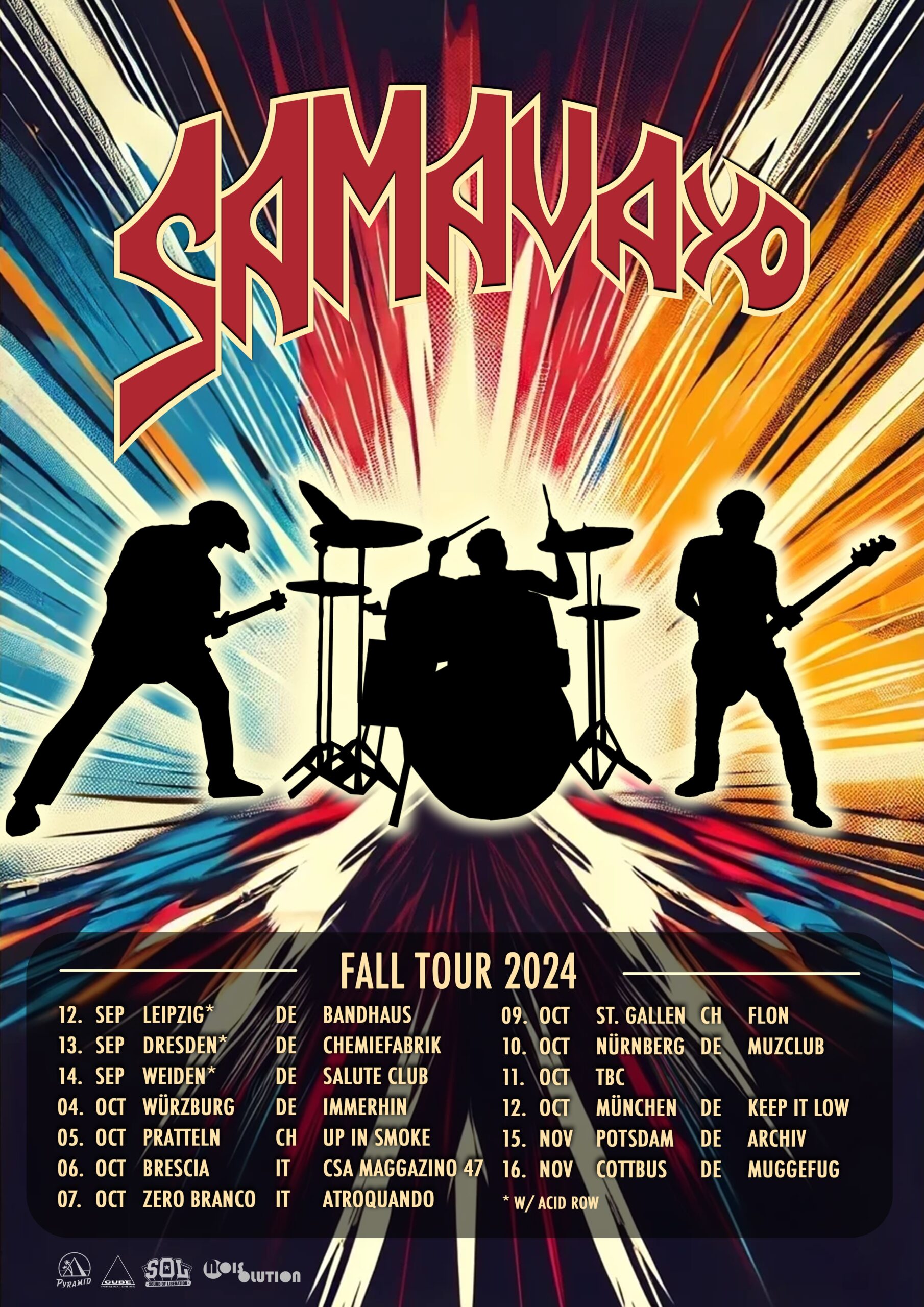
SAMAVAYO – Fall Tour 2024
Attached you will see our tour poster of our fall action this year promoting our latest reissue “Death.March.Melodies!” and reviving our last album “PAYAN”.
We will be playing these shows + a show close to Berlin this week.
The tour will be a mix of many cool bands to play with Humulus, Valley of The Sun, Acid Row, Dopelord but also many more on the festivals Keep it low and Up in Smoke!
13. July in Sallgast (Castle)
12. Sep Leipzig DE Bandhaus w/ Acid Row 13. Sep Dresden DE Chemiefabrik w/ Acid Row 14. Sep Weiden DE Salute Club w/ Acid Row
04. Oct Würzburg DE Immerhin 05. Oct Pratteln CH Up in Smoke 06. Oct Brescia IT CSA Maggazino 47 w/ Humulus & more 07. Oct Zero Branco IT Atroquando 09. Oct St. Gallen CH Flon w/ Carson 10. Oct Nürnberg DE MUZclub w/ Valley of the Sun 11. Oct tbc 12. Oct München DE Keep it Low
15. Nov Potsdam DE Archiv 16. Nov Cottbus DE Muggefug w/ Dopelord
USA 2025
Meanwhile we are working on our first USA Trip in January 2025. It looks like we are going to play a few more shows around our show at Planet Desert Rock in Las Vegas on Jan 30th at the West Coast. We are in touch with people from the scene trying to make a week or so happen!
Outlook 2025
2025 will be a year of celebrating our 25th Anniversary and doing some songwriting for the next album.
We won’t be touring that much in the first 3-4 months of 2025 besides our huge party “Samavayo & Friends VOL. 2” in Berlin (Gonna be great guests again!). We are looking forward to playing some cool festivals and then at the end of 2025 we will be trying to play some areas in Europe we haven’t been to before!
Also we have 2 unreleased songs from our PAYAN recording session (2022), We definitely want to release them at some point so there are some things to plan and coordinate. Most likely a thing for 2025 too.
Samavayo is: Stephan Voland (Drums, Vocals) Andreas Voland (Bass, Vocals) Behrang Alavi (Vocals, Guitar)
Posted in Whathaveyou on July 1st, 2024 by JJ Koczan
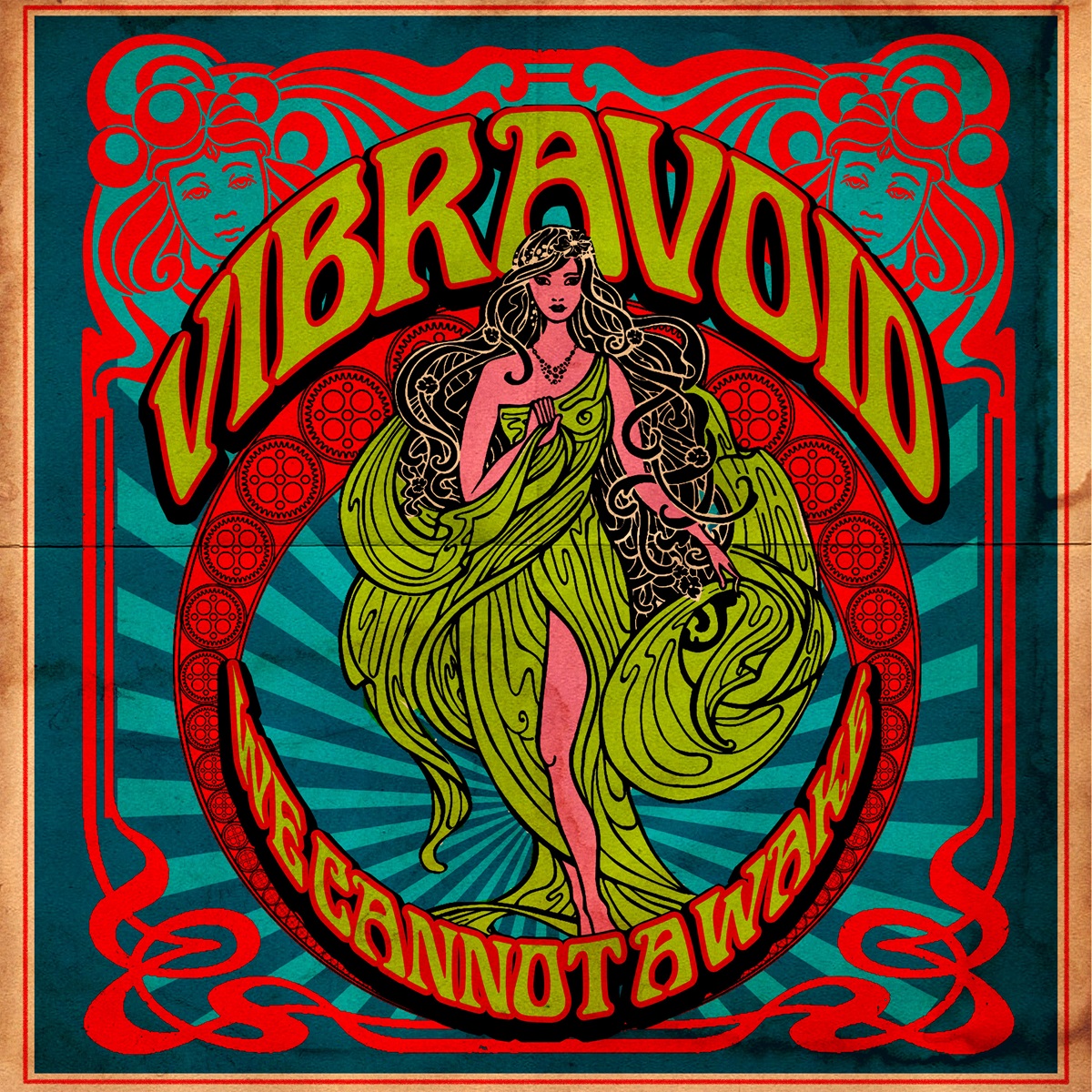
German psychedelic/garage rockers Vibravoid mark their 35th anniversary as they invariably would: with a new album. We Cannot Awake will be released on Aug. 23 through Tonzonen, and it’s the latest in a flurry-rush of 2020s outings from the Düsseldorf trio, whose 2023 full-length, Edge of Tomorrow, can be streamed at the bottom of this post. There’s no audio from the new one yet, but preorders are up now and if you think they’re about to radically depart from the lysergic vehemence they’ve proffered for the last three and a half decades, cosmic and steeped in late-’60s traditionalism, well, I haven’t heard it yet, but that doesn’t strike me as particularly likely.
The band, via the PR wire, offer some perspective on their 35 years below, and you’ll find the release announcement for We Cannot Awake, including the e’er crucial preorder link, thereafter. Turn on, dig in:
Neo-Kraut/ Psychedelic Rock Outfit VIBRAVOID Announces New Album We Cannot Awake.
35 YEARS OF MAXIMUM VOID VIBRATION – About 35 years of Vibravoid.
“We were incredibly lucky that we were able to do all this as teenagers. It was this “teen anti-attitude” that no longer exists today. Kraut rock, fuzz effects, light shows, ’67 psychedelic rock and therefore real hippie culture were completely out or dead – so we thought it was “cool”. Here in Düsseldorf, kraut rock and psychedelic records, including record players, were lying around in the bulky waste, nobody wanted them anymore. That was underground. Even vinyl records were only really “cool” when nobody wanted them anymore – today it’s lame mainstream.”
Those were all unique moments back then and we were somehow always in tune with the times and were able to help shape them. Back then, we wanted to be pioneers of a new “beat and psychedelic movement”, just as a naive teenager would imagine. We really lived it all, for us there was no world after 1970… I really didn’t think it would be such a crazy trip back then. It’s all really crazy!”
New album We Cannot Awake is the perfect soundtrack for THC legalization and Vibravoid is the essence of Düsseldorf genetics. They create musical fever dreamscapes that are stronger than LSD. We Cannot Awake is the In A Gadda Da Vida of Generation X. Vibravoid haven’t released a real longtrack for several records, but now the band is making up for this and adding a few more hits.
With Get To You, Vibravoid deliver the psychedelic earworm for every large-space disco. Grooving pop music with hymnic hooks meets the effects wall of the 1960s. The ideal music for any highway.
The band’s love of The Byrds is obvious from tracks like Nothing Is Wrong or A Comment On The Current Times – but the combination with Düsseldorf’s “Motorik Sound” is a completely new level on which psychedelic music can work. The End Of The Game still shows Vibravoid as the German masters of the fuzz effect. Ultra psychedelic guitar sounds and echo effects create a maelstrom that pulls the listener into the spell of the complex rhythm. Vibravoid are not stingy with creative ideas, but still shake themselves out of their sleeves after 35!
Side A closes with On Empty Streets and paints a dystopian picture, yet Vibravoid manage to crank up the pop factor so high that the riffs almost burn themselves into your consciousness… expanding it. All the sound effects are perfectly embedded, you hardly notice that this is actually highly experimental music in the sense of the Düsseldorf school.
We Cannot Awake completely fills side B with over 20 minutes. Musically, the listener is in for a very special experience. Vibravoid fuse their Düsseldorf sound with the year 2024 at the highest level. We Cannot Awake is a journey into the abysses of human existence and other depths of the outer cosmos. Driving beats and interstellar frequencies channel the primal fear of the unknown, because this music is dangerous. Sonic carpets of strychnine and psylocibin. Magical mushrooms. Time is running out. We cannot awaken!
Posted in Whathaveyou on June 14th, 2024 by JJ Koczan
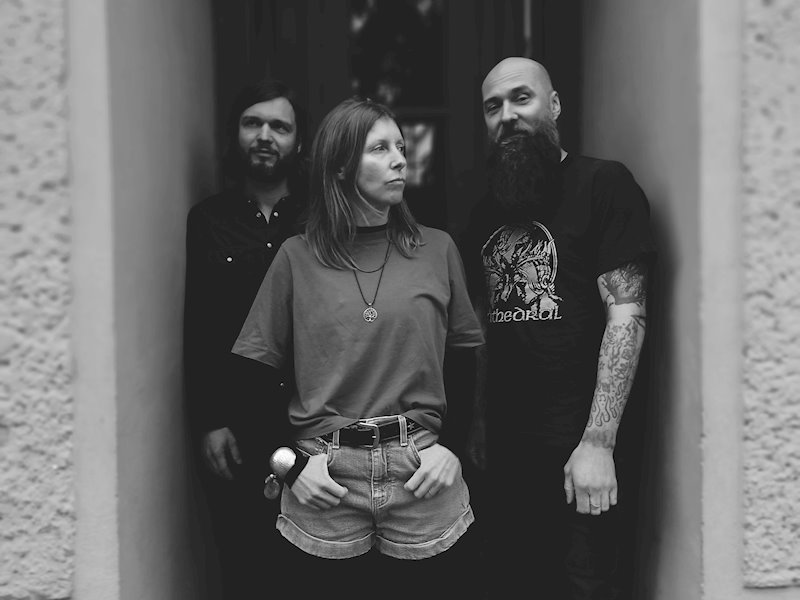
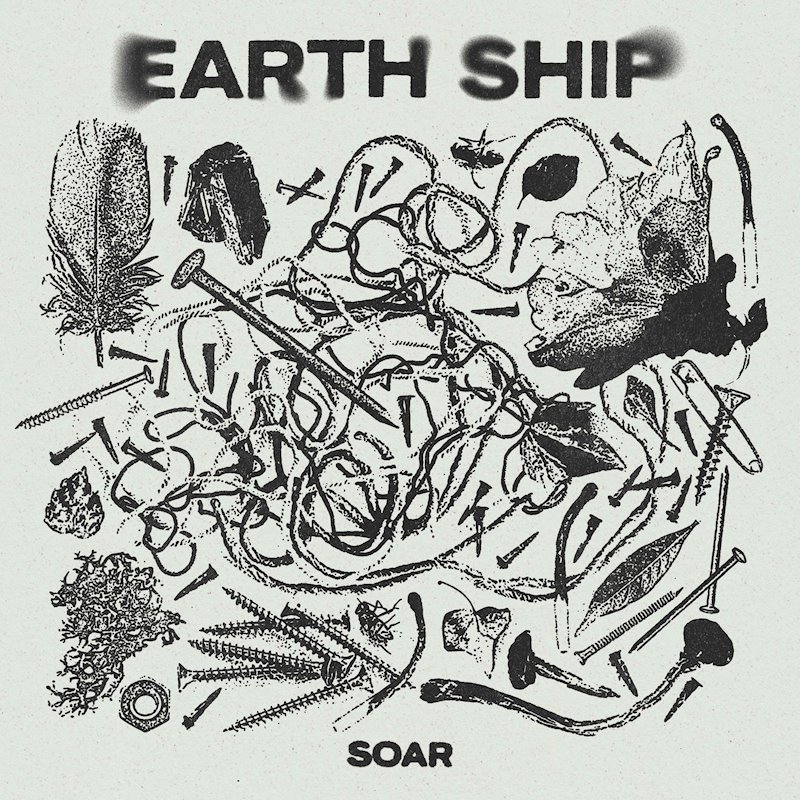
Berlin-based sludge rockers Earth Ship will release their first album since 2018, titled Soar, Aug. 9 through The Lasting Dose Records, which is the label run by the band’s guitarist/vocalist Jan Oberg, also producer at his own Hidden Planet Studio, and who also features in Grin and Slowshine alongside Earth Ship bassist Sabine Oberg. I got to see the pair and non-Oberg drummer André Klein — let’s assume he’s part of the family regardless of surname — last year at Freak Valley Festival in Germany (review here), and they played again this year doing a secret set that was jam-packed despite the deluge of rain happening at the time.
If it seems counterintuitive that I called he bands prolific when they haven’t done a record in six years, fair enough, but they haven’t been idle in that time. Jan has worked producing Daevar and others at Hidden Planet, started the label to release his and others’ work, and he and Sabine offered Slowshine‘s debut (which one hopes will get a follow-up at some point) and a couple killer outings from Grin, so while it’s not all localized to one outfit or the other, there’s still a lot being done. Just wanted to clarify.
No audio yet from Soar, but you know how that goes and presumably there will be before Aug. 9. In the meantime, the art and album info came down the PR wire thusly:
EARTH SHIP: Berlin Based Doom/Sludge/Metal Outfit Announces New Album “Soar”; The Band’s Sixth Full-Length to See Release August 9th on THE LASTING DOSE RECORDS
Soar will be available on CD, vinyl and digitally on August 9, 2024.
Comments the band: “A phantasmagorical exploration of fever dreams and twilight states, Soars is a psychotronic collection of swaggering rhythms and dazzling textures. EARTH SHIP uncover a world in which every extended riff is journey into trance Atlantis, where your mind is immersed in hazy lofi-lullabies and heavy retro sounds.”
After 6 years of silence, sludge/doom trio EARTH SHIP make an unexpected return with their sixth album Soar. A phantasmagorical exploration of fever dreams and twilight states, Soars is a psychotronic collection of swaggering rhythms and dazzling textures. Plowing their way through eight longform tracks, EARTH SHIP uncover a world in which every extended riff is a journey into trance Atlantis, where your mind is immersed in hazy lofi-lullabies and heavy retro sounds.
Born in 2010 from the mother lode of the German sludge metal scene, EARTH SHIP emerged as one of the most relentless and heavy-hitting live bands of the European mainland. Consisting of heavy power couple Jan and Sabine Oberg (who also play together in GRIN and Slowshine) and a rotating cast of drummers, EARTH SHIP have played with many renowned acts such as Voivod, Red Fang, Crowbar and Amenra.
On Soar the two are joined by Slowshine-drummer André Klein (The Smokin ’44’s) whose no frills playing forms the perfect backdrop for the duo’s gut-wrenching riffage. Wandering along the steady rhythm of the drums, your mind is warmly held by deep bass tones and slowly engulfed by hazy lullabies of earth-toned guitars and vocals. EARTH SHIP color their world in Jan Oberg’s characteristic lofi-sound, being recorded, as is tradition, by him in his own Hidden Planet Studio. These songs are a testament to his 18 year-long experience as one of Germany’s most prolific producers in sludge metal, having released many pristine sounding records with his own bands GRIN and Slowshine, but also via his label The Lasting Dose Records. Jan knows how to render a metal band’s sound with incredible attention to detail but without unnecessary polish and this album is no exception to his indelible ethos.
With Soar the characteristic EARTH SHIP-sound is lifted to new heights. From the shifting time-signatures of album opener Shallow to the lovely old-school vibes of Daze and Delights, Soars is a literal delight to listen to for fans of slow and heavy with a good sound system. A mighty recommendation for doom metal aficionados with an ear for detail and a delicate nose for quality riffs!
DISCOGRAPHY: 2011 Earth Ship – Exit Eden/Pelagic Records 2012 Earth Ship – Iron Chest/Pelagic Records 2013 Earth Ship – …As if she were a black bird EP/Raddatz Records 2014 Earth Ship – Withered/Pelagic Records 2016 Earth Ship – Hollowed/Napalm Records 2018 Earth Ship – Resonant Sun/Pelagic Records
LINE-UP 2024: Sabine Oberg – Bass André Klein – Drums Jan Oberg – Guitars, Vocals
Posted in Whathaveyou on June 4th, 2024 by JJ Koczan
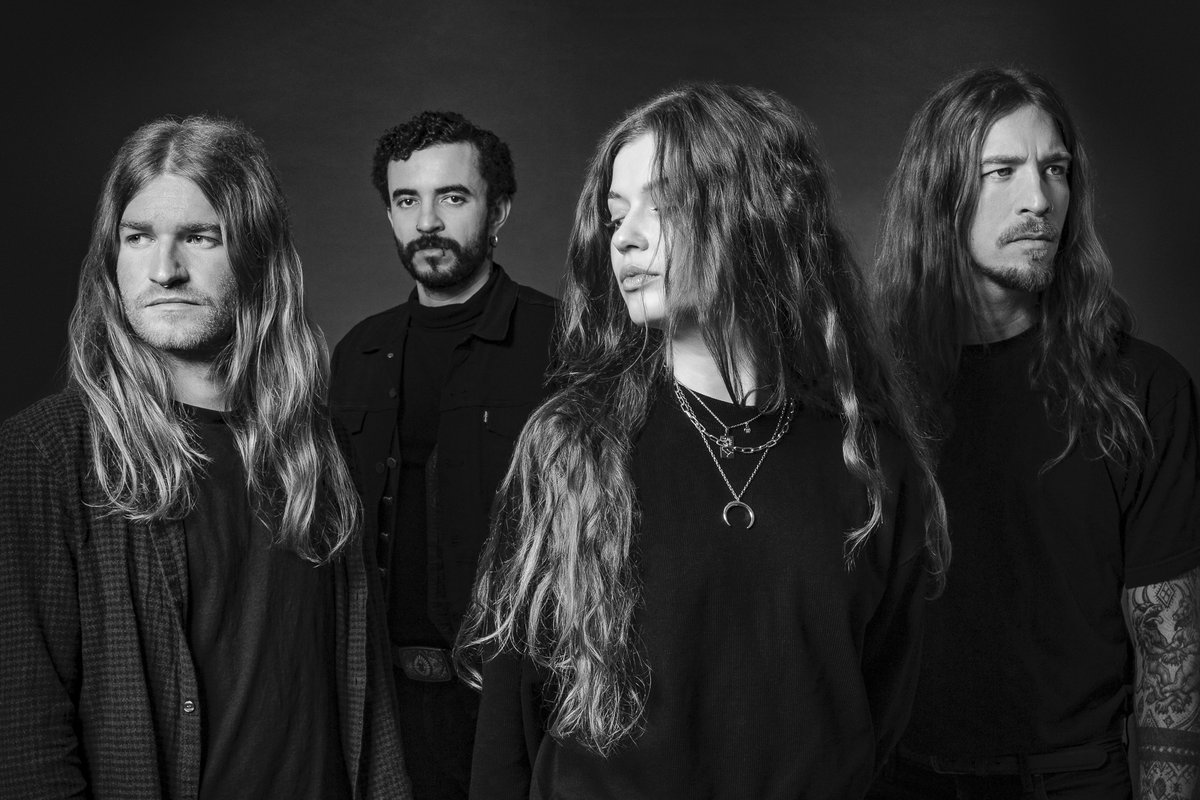
September, huh? That’s definitely far enough away to feel like the future, and I imagine more word on the issue will make its way down the PR wire between now and then, but Coltaine‘s new album, Forgotten Ways, will be released on Sept. 6 as the band’s first outing through Lay Bare Recordings, which I’m pretty sure is what they mean by “debut album” below. You might recall their Afterhour in Walhalla (discussed here) came out in 2020, and I’m pretty sure that wasn’t their first long-player either — Mutter Morgana came out in 2016, but that might’ve been under their original moniker, Witchfucker — though that and the rest of the odds and ends along the way have been taken down from their Bandcamp. At very least, call it a fresh start with the new label.
Their 2023 single “Gorit” (video premiere here) is still on there, Russian lyrics and all, and that’s enough to get the point across that you don’t quite know what’s coming from them before you’re through whatever it is you happen to be hearing at the time. Note also that Forgotten Ways was recorded by Jan Oberg, who in addition to playing in EarthShip and Grin, running his own studio and label, has tracked offerings for Daevar, Downfall of Gaia and plenty of others whose names begin with other letters.
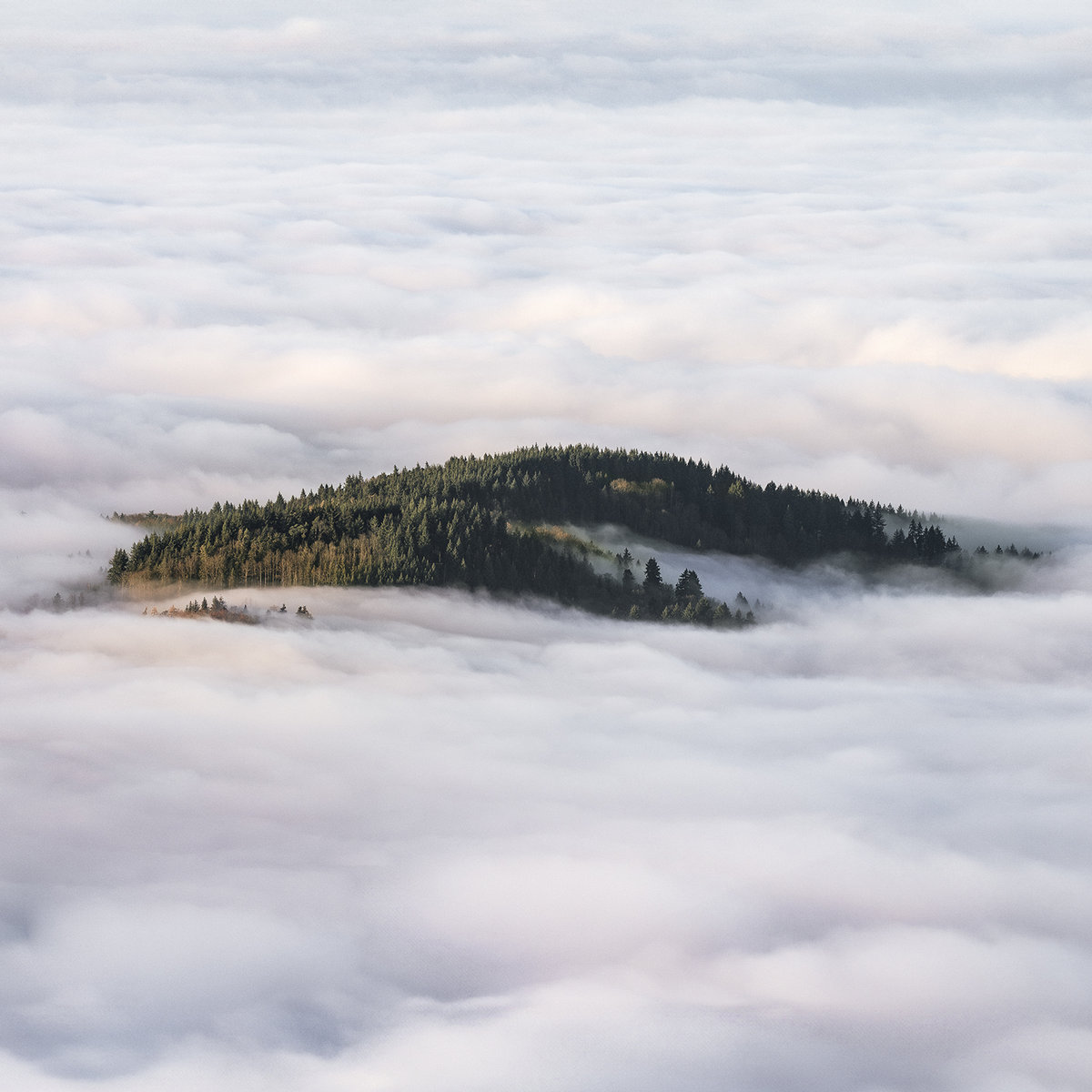
The announcement came through to Bandcamp followers, including what I’ll assume is the cover art:
Our debut album, ‘Forgotten Ways’ will be released on Friday, September 6th, 2024, via Lay Bare Recordings.
In a long-gone world where life has faded, “Forgotten Ways” leads through landscapes of desolation. It is a hopeful search for light and a new existence in a decaying reality that knows neither beginning nor end.
Credits: Produced by Coltaine Mixed and Masterd by Jan Oberg, Hidden Planet Studio
Album cover credits: Photo: Jonas Berg
Tourdates will be announced shortly.
— Coltaine is the keyword to an adventure in sound. Formed in 2022 in the mystic atmosphere of the Black Forest, Germany, Coltaine transport their intuitive creations into unusually exciting and diverse microcosms of dark, atmospheric psychedelia whose feeling is that of foggy, post metal-tinged acid rock with the sombre hues of blackgaze.
Coltaine: Julia Frasch – vocals Moritz Berg – guitar Benedikt Berg – bass Amin Bouzeghaia – drums
The years, it turns out, are not making me any less weird, as I sit with my eyes closed at the Frankfurt Airport and build an altar to the queen of the gorgons while typing. It was that kind of weekend, as the best of them are. The sedentary grooving to Ruff Majik’s last record included, this has been the least stressful part of this trip. I got picked up at the hotel at 7AM, slept in the sprinter van on the way from Siegen, got through security and all the rest of it in ace time, and arrived at gate B44 after a not unpleasant stroll to the ass end of the airport. Some sharp not-quite-bacon porcine smell coming from the coffee/breakfast counter over yonder, and it’s a little warm, but if these are my biggest complaints — and they’re not, but we’re keeping it light — I’m doing okay. That’s the bottom line.
I was back and forth on wrapping up the Freak Valley coverage like this or just leaving it with “thanks thanks thanks thanks” in the last post since basically that’s all I want to say in the end anyhow, but on some level I feel like a few words of explanation are owed.
I know I mentioned my mother’s knee replacement on Wednesday, and I told at least 80 percent of the people I spoke to at the AWO grounds in Netphen about going from the hospital to JFK Airport in New York after they rolled my mom in a wheelchair to the back-part of the hospital where they do the real knock-you-out-and-butcher-you parts of medicine — I’ve been back there; the tears welling in my eyes tell me I’m still not over it — and I am fiercely proud of her for doing something that I think in a couple weeks even she’ll say she should’ve done years ago, but the background emotional radiation of that was very much a factor in my Freak Valley 2024 experience. It’s part of what I’ll remember about the last few days, to say the very least.
But the way it happened was also somewhat disorienting, since the operation was scheduled for last week, but got bumped because she got sick, and because of the Memorial Day holiday in the US — which is bullshit, yes; if my country cared about its military, it would be an institution of science for the public good instead of an overfunded oppressive imperialist tool blah blah blah; rethink all policing — we didn’t know until Tuesday morning what time she’d be going in Wednesday. And if it was going to be the afternoon, that would mean I wouldn’t be able to do the trip. So here I am over the weekend before, back and forth with Jens Heide, who runs FVF, saying I don’t know if I’m gonna make it, saying give away my room, no wait don’t, stressed and harried and overwhelmed. Factor in the six-hour time different and the fest didn’t even know for sure I was coming until less than 24 hours before I was due to board the plane.
Even as Full Earth went on Thursday afternoon to kick off Freak Valley 2024 in righteously progressive style, part of me was still back there, or still on the plane not sleeping, or trying to figure out why the train smelled like pee (spoiler: it was pee), whatever it was. But while I didn’t end up getting it tattooed on my person, my mantra that it’ll all be okay when the music starts held true. I don’t know what it is. Something about being in front of a stage, the blast of volume, that kind of electric surge; I need it. I tend to get my doses in bulk these days, and there are ups and downs to that like everything, but I am so incredibly thankful to have this music in my life, to have found it or been found by it, and that it is such a part of who I am. It’s not escapism when it’s your fucking life. I am fortunate to be able to do what I want to do, how and when and why and, especially in cases like this, where I want to do it.
I don’t have the kind of brain that always automatically moves the muscles of my face to smile when I’m happy to see somebody, a friend or acquaintance or even my own family. But that doesn’t mean I’m not glad to see you. Or if I’m distracted, or in a hurry somewhere, it’s just how I am. All that stuff that when you’re young you think you’ll figure out when you’re older? Well, I’m 42 now, and remain flailing in so many regards. As a person, in my body, definitely as a parent, as a husband, as a writer. I’ve put everything I have for 15 years of my life into this project and I still get condescended to as the ‘stoner rock blogger’ as if genre wasn’t the root of innovation in art, but typos aside — and I’ll probably be finding them for years in the posts from this weekend; hazards of taking notes on my phone, sorry about that — I’m proud of the work I do here. On a certain level, I have to be.
Thank you for reading, is the point, and if we talked at the fest and I seemed out of it, I probably was. I can’t be anyone other than who I am at this point, and frankly, being myself requires performance enough. I’m sorry if that was the case, and yeah, I do feel like I disappoint people who meet me in person after knowing me from the site, social media, whatever, but I’m doing my best. At the heart of it all, I appreciate you being a part of this thing if you are.
I’m gonna take tomorrow (which might be today by the time this is posted) and get caught up on writing and some stuff that I’ve been holding back while here, maybe work on a Conan bio I need to bang out or those Lowrider/Elephant Tree liner notes that are so long overdue.
Rain’s back on early in the day. I forewent Doom Yoga and hotel breakfast in favor of sleeping an extra hour. Time will tell on that choice. My head is swimming in last-day logistics; how I’m getting back to the hotel tonight, how and when I’m getting to Frankfurt Airport tomorrow, on and on. So yes, wet and scatterbrained. One or the other would be enough on its own. Poncho may yet make an appearance.
A few people have asked how my mother is doing. First, thank you for reading. I feel like I’ve transposed the haphazardly way this trip ended up being undertaken onto a kind of overarching mania of the experience, but one way or the other, it’s still restorative. She’s recovering from having her knee replaced on Wednesday, is walking, had started physical therapy. These things are months in the healing, but she’s strong and inspiring.
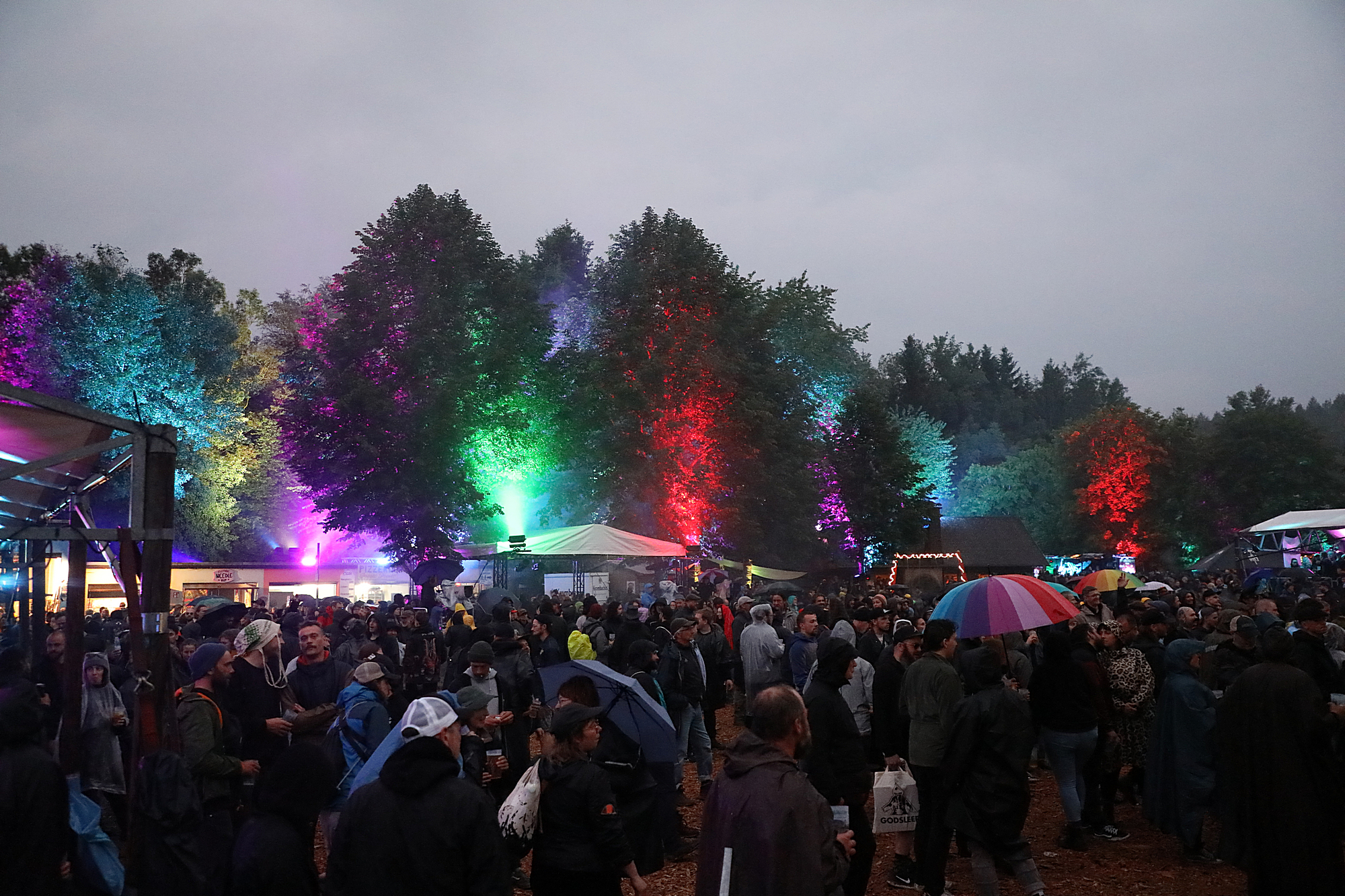
Though it shows little sign of it at the moment, the rain is supposed to stop this afternoon. We’ll see. I was sitting before the start of the show in the smoking tent; the wafting of joint smoke inexplicably cut with tobacco as is the method. Not my thing. I barely had the batteries in the camera when Volker took the stage and it was time to roll, so take that, last-day blues. Good thing my new Freak Valley hoodie is warm.
Sorry in advance for the typos.
—
Splinter
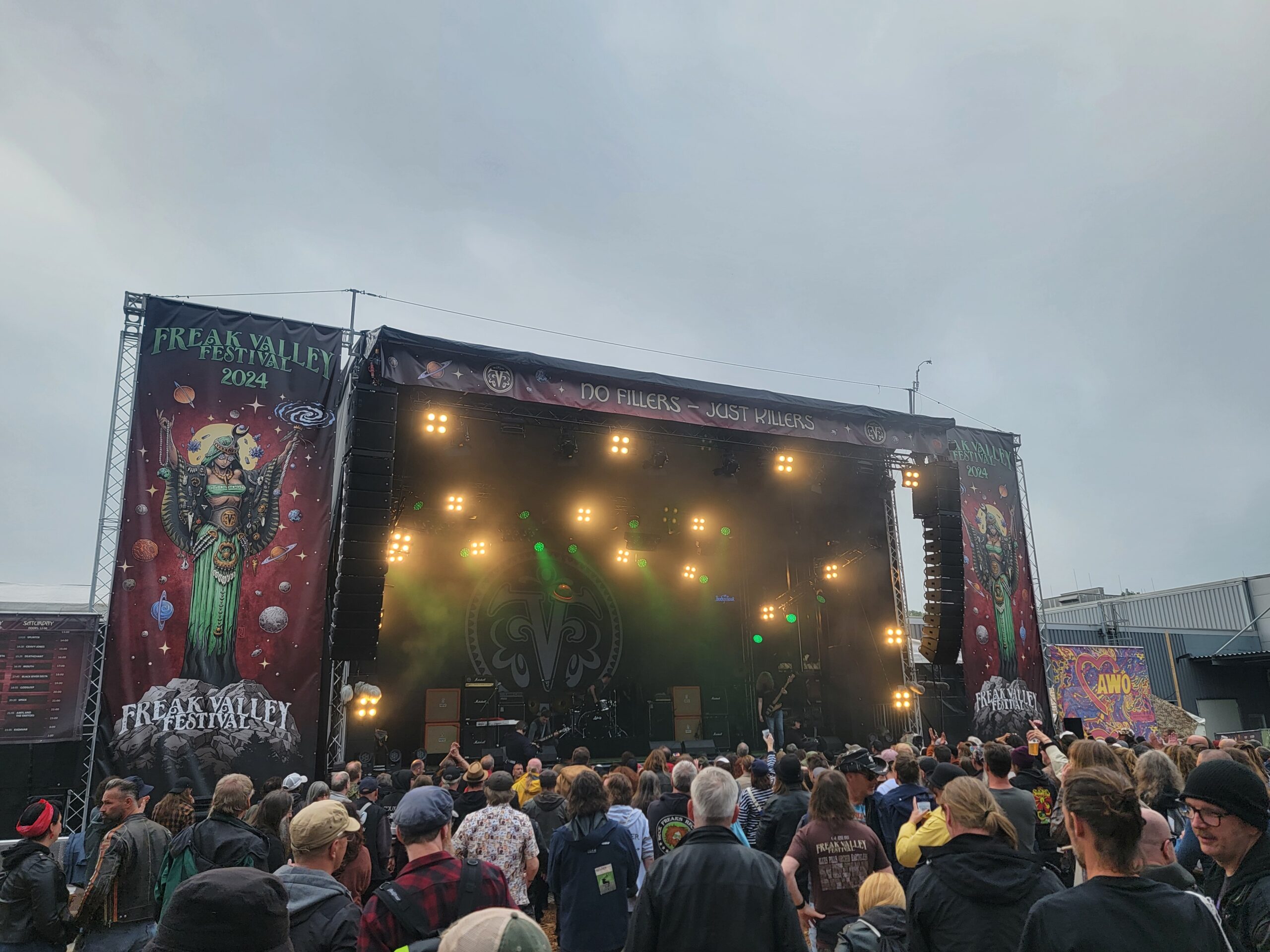
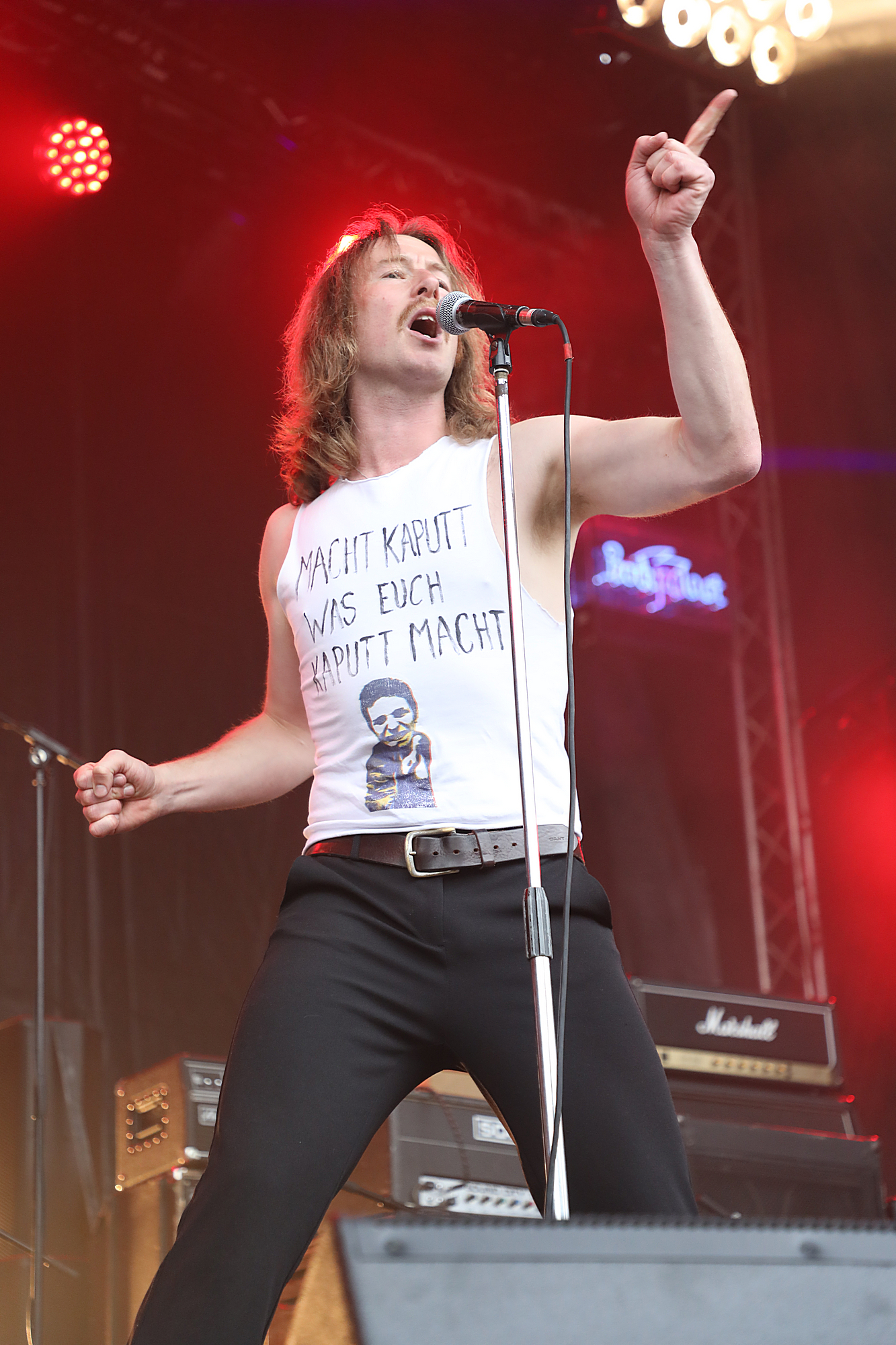
Thank you to Splinter for being the day’s reminder that everything’s okay when the music starts. The Netherlands based classic-heavy four-piece fronted by Douwe Truijens had the Hammond, the boogie, enough sleaze in some of their lyrics to feel like a #metoo waiting to happen (looking at you, “Soviet Schoolgirl,” et al), but there’s no denying the life in their performance. Rain pouring down on the early crowd, Truijens was nonetheless on fire strutting and dancing around the stage with moves drawn from an arena-ready playbook, plus shorty-shorts for the last song because when you’re doing a thing, you go for it. They were tight in addition to putting on a show, and “Every Circus Needs a Clown” from last year’s Role Models (review here) was a highlight in presentation and from-speaker force to go with the conceptual foundation of what they do. That is to say, they’re a band with a plan. And that’s not a negative at all. The songs are catchy and uptempo, fun if you can get on board with euphemism, and it’s over-the-top in just the way it’s supposed to be. Echoing the energetic start of yesterday, pushing it further, Splinter made a field on a cold, rainy afternoon feel like a sweaty nightclub, and for that, one can only be grateful.
Gravy Jones
Uh oh, I think I might dig this band. Another full-size Hammond on stage, cult-ish, classic-ish riffy vibe. I recall digging the Norwegian four-piece’s 2018 debut, Funeral Pyre (review here), for the quirk it brought to genre tropes, but the apparently-don’t-do-this-all-the-time outfit were more cohesive on stage, solid in groove, hinting or maybe more with that organ toward retroist dark-boogie, and on point in the interplay of the keys and guitar. The bluesy but not caricature vocals specifically reminded me of Buffalo, but if Gravy Jones only want you for your body, they’re almost certainly nefarious in that intent. At least some of what they played was taken from an impending follow-up to Funeral Pyre, as was announced from the stage, and wherever/whenever, I take that as good news in terms of such a thing existing at all. Because I just might end up a fan of this band. You know how that happens? Hear a thing. “Oh that’s cool.” Six years pass. You see them. “Oh shit that’s cool.” It was kind of like that watching them close out with “Mountains of Madness.” If you’ll excuse me, I’m gonna go see if they’ve got anything going at the merch.
Deathchant
My prevailing impression of L.A.’s Deathchant holds firm from seeing them last August at SonicBlast in Portugal (review here), and to save you the time following that link, I’ll just say it’s thar they kick ass. Two guitars that can lean into Thin Lizzy harmonies or thrash out at will, doomly in the title-track of Thrones, which they released last Fall, but gnarly and ripping at any speed, it’s like they play both the Heavy and the Metal sides of heavy metal, but they’re not doing some bullshit disaffected-white-dude aggro thing either. They get on stage, hit it, and groove with tonal presence regardless of a given part’s intensity, drawing from metal and rock on the way, charged and precise, but not so clear in sound as to lose their edge. Perhaps they’re subject to the perils of the band in-between, when it comes to style: too metal for some rockers, too rock for some metallers, but shit, I like bands who don’t fit (also bands who do; in no way does it have to be one or the other, remember), and they played a yet-untitled shouty new song and decided on the spot to call it “Freak Valley.” It ruled and I hope they keep the name. They should probably also have six or seven live records out by now, by rights. I’ll hope to see them again at Desertfest New York later this year.
Mouth
It didn’t take Mouth long to reroute the momentum from Deathchant’s raw Motõrheaded thrust to suit their proggier psychedelic purposes, and the sun came out for them, which can only be called appropriate. I did some liner notes recently for their Vortex Redux semi-reissue LP, and well, I’ll tell you truly, they’re not a band I ever really expected to see live. I mean, it’s a universe of infinite possibility, right? So a thing always could happen, but that doesn’t mean it will. And they were so much fun. Into the music, not trying to convince you that being on stage and playing their songs isn’t the most fun thing in the world. A positive vibe, energy front to back. There was one point where guitarist/vocalist Christian Koller went on his back on the stage while playing a solo and all I could think about was how much of John Dwyer’s dried-up spit from last night must be on there, but beyond that, not a worry in the world while watching them, and their affinities for ’60s psych, ’70s prog and multiple eras of heavy rock came through with poise and passion alike. The keyboard and snare jabs in “Into the Lines” and the slew of builds throughout were exciting and well crafted, and they put everything they had into the show. They weren’t a surprise for me, but it’s kind of a relief sometimes when you see a band you’ve followed for a while and they validate the reasons you liked them in the first place. Mouth did that and improved the weather. That’s a high point in any day.
Black River Delta
Swedish mellow heavy blues rock. Oldschool in ideology, modern in tone. It always takes me a second to stop listening for the stoner to show up when Freak Valley breaks out the bluesier stuff, but Black River Delta did well in the dinnertime slot. And immediately upon thinking of it as that, I realized I was starving. No goulash, but a vegan curry — no I’m not vegan, but probably should be, not the least because it would allow me to subsist exclusively on a variety of homeground nut butters — was the thing. Green beans, carrots, broccoli, onions and peppers of course, but most crucially there were four — yes, I counted, it was four — bites of cauliflower. Cauliflower! For upwards of six minutes while Black River Delta nestled into one comfortable flow after another, I found paradise. By the time another 15 minutes had passed, they’d be finished with their sharply composed and executed fare, delivered smoothly and suited to the style bringing together contemporary and classic as so many here have, but in their own way. And soon after that, the rain would start again, but since it was between bands and Black River Delta were so classy anyhow, I won’t hold it against them. It poured for a minute there, though.
Godsleep
And stopped doing so about 35 seconds after I ran away from the photo pit to get away from the deluge coming down from the roof overhang in front of the stage while Greece’s Godsleep were getting going. I was curious what series of circumstances brought a Rutgers football t-shirt into vocalist Amie Makris’ life — I got a MFA from Rutgers Newark, and my wife did her Ph.D. in New Brunswick; you don’t see a lot of Newjerseynalia in other countries [edit: I asked her later at the merch area and she said she got it from her sister] — but the shirt didn’t last much longer than the rain, and Godsleep’s material had so much push and sweep that the thought was in and out of my head like some kind of asshole who just flies in for the festival and then is gone. They slowed down a bit for the delightfully ’90s-reminiscent “Saturday,” which was a highlight of last Spring’s all-over-the-place-and-only-more-rad-for-it Lies to Survive (review here), but as that record will demonstrate, there’s no lack of variety in what they do regardless of tempo. Not being exclusively sad, slow and miserable, there are aspects of Godsleep’s aesthetic I can relate to more than others, but almost any in-genre boundary pushing is good news as far as I’m concerned, “Permanent Vacation” sort of bridges worlds between explosion-happens-now and more methodical whathaveyou. I found that their harsher moments were complement rather than contrast to the odd bit of desert riffing and sundry other lessons in kicking ass on display. Split LP with Ruff Majik post-haste, please. Both with some screaming, while I’m making requests. Dizzying but undizzied, intermittently furious, deceptively intricate, and rad. They finished by bringing it all back around to the riffs and were better than the veggie curry. Yup. That’s the review.
Speck
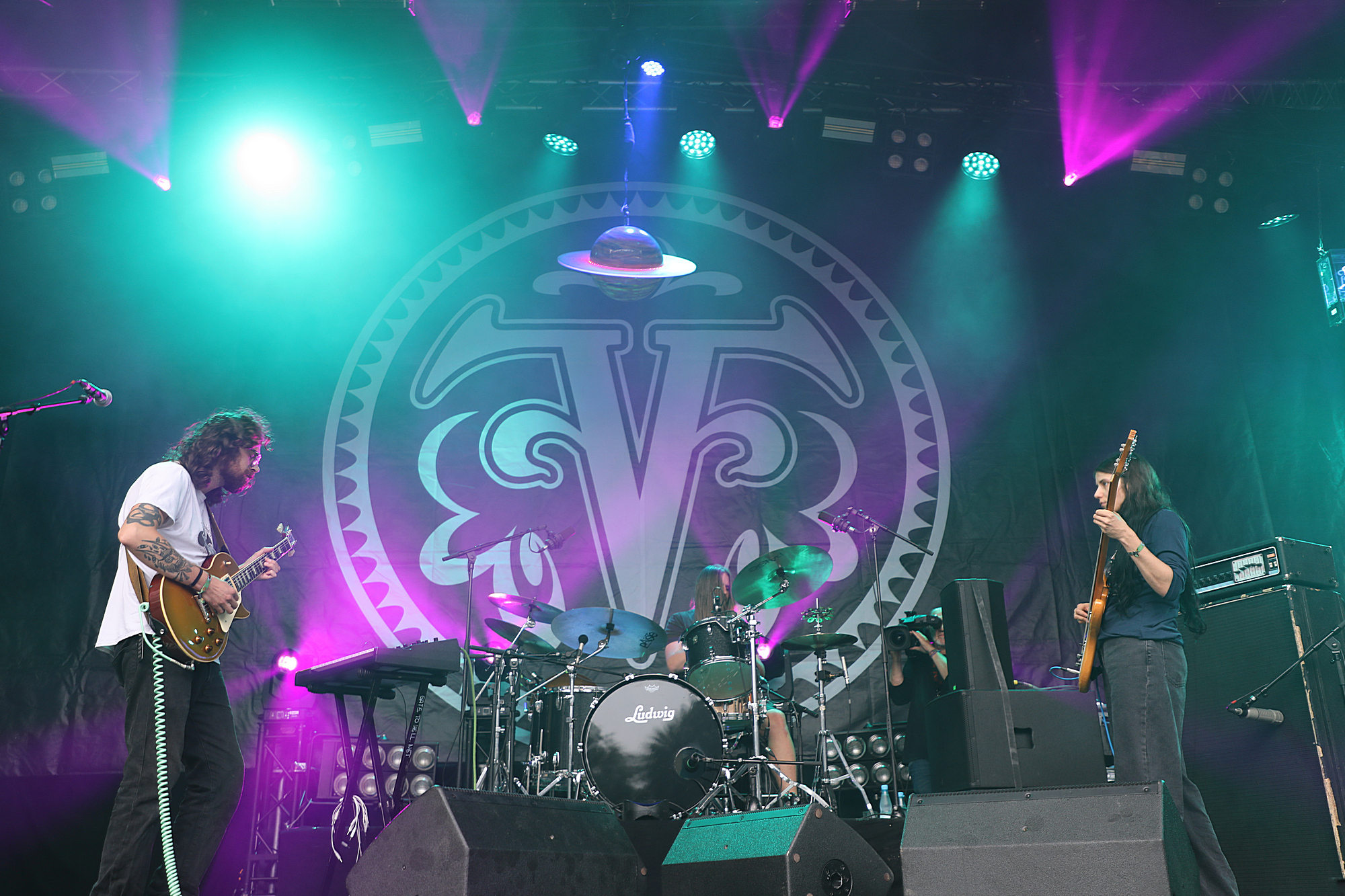
Mellow molten instrumentalism from Vienna trio Speck, whose expanses soothed with considerably more cosmic warmth than is offered by, say, actual space. It was my first time seeing the band, whose second album, Eine Gute Reise, came out last Fall, and it took them a while to get going, sure enough, but more, it took me a couple minutes to warm up to it, but all of a sudden I looked up and they were killing it. They’d continue to do so even as a torrential, bucket-style downpour took hold, adding another layer of soak to the already saturated everything and causing a scramble for shelter for some and a very pointed not-scramble from others, which I can respect. Rockpalast has a small tent set up outside the production truck backstage with a tv showing the livestream feed, right next to Lulu’s Garden, and I took advantage of that to wait out the deluge. It didn’t last — it couldn’t or it’d be Freak Lake Festival — but it was harder even than the rain before, and if you were caught in it, you know that’s saying something. I eventually made my way further back to sit someplace drier, but listened as Speck brought their set-long build to its payoff, and I couldn’t help but wonder if the livestream mics picked up the sound of the rain pounding down. If so, all the more reason they should make it into a live record. People mud-moshing like a hippie version of whatever Woodstock that was.
Amyl and the Sniffers
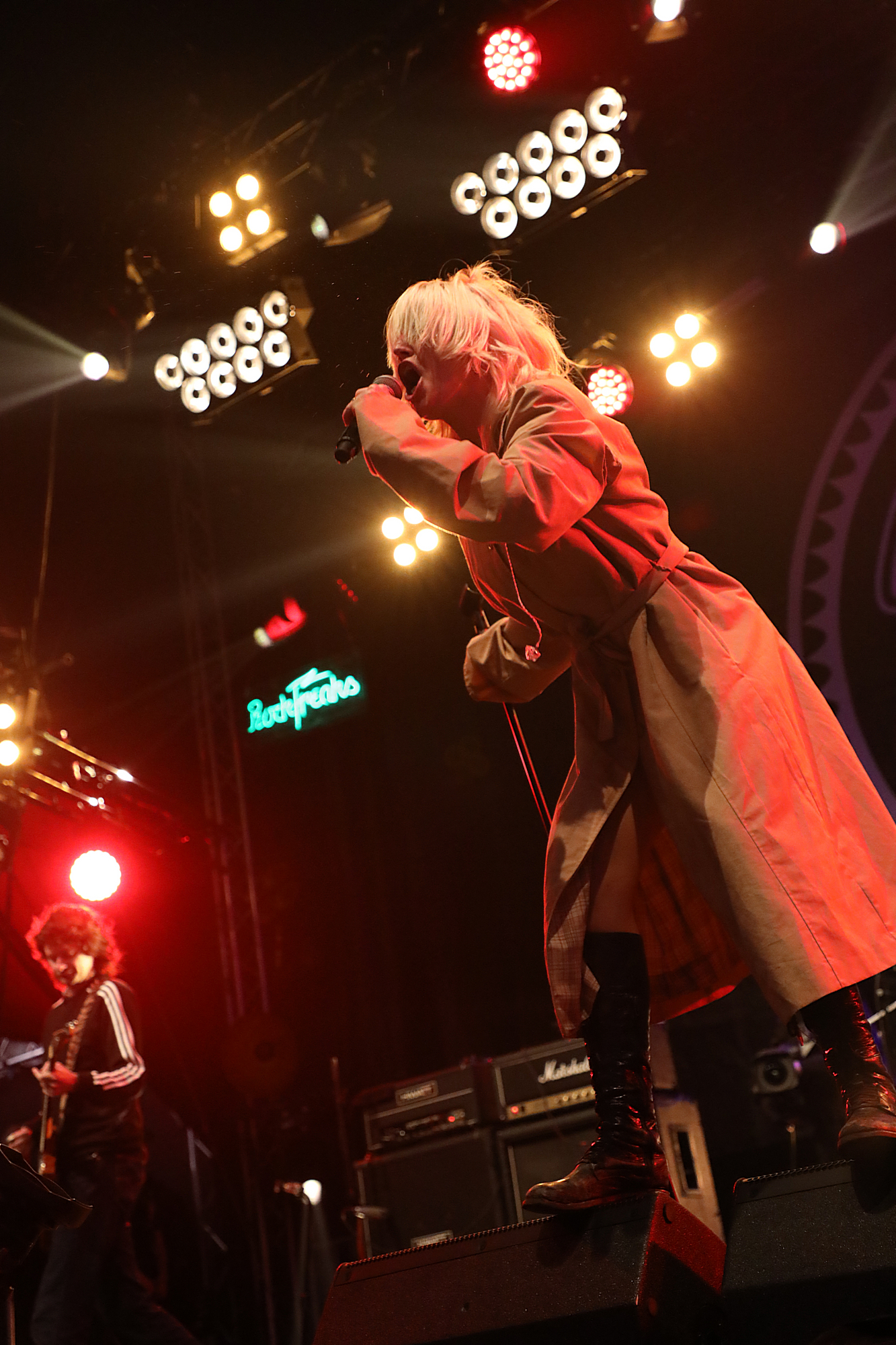
Thrills and such from brash, hard-hitting Aussie punk rockers Amyl and the Sniffers. When they were announced as a headliner, it kind of had me scratching my head, but obviously seeing them you get it in a different way. Their frontwoman, Amyl, came out in an overcoat and stripped it off to reveal her undies while singing a line I interpreted as “I like power,” so yes, if that’s what it was, then clearly. Not gonna take away from the statement or the volume that coincided, but on my coolest day I was never cool enough to be a punker, and today’s certainly not my coolest day. Still, can’t really argue with the ass kicking meted out, and after a certain point, loud groove is loud groove. They shouted out countrymen outfit C.O.F.F.I.N., who played the other day, which was nice, en route to the next onslaught. Rain stopped and started, as it has for most of the day.
I just kind of hung around and let both the noise and the water falling from the sky — because this planet is incredible and to our present knowledge completely unique in the universe in being able to support life and water is why and we treat it like shit; by the way I’m getting on a plane tomorrow morning, so I’m not indemnifying myself, rest assured; if you’re alive to read this you’re complicit there — wash over me while making the rounds saying a few quick goodbyes/hope-to-see-you-next-years. The harsh reality of needing to head to the airport early tomorrow has set in, so better to take care of that earlier than to feel bad about it later. There are a lot of very nice people here, and they are kind to me, and talk to me. I don’t have the kind of brain that always translates being happy to see someone into a smile on my face, but even if you just said hi this weekend, please know it was appreciated. I guess I’m saying goodnight there, too. Guess I got sidetracked talking about Amyl and the Sniffers. Okay.
Kadavar
The one and only. Because as many imitators as they’ve spawned, Kadavar on a level of their own. I knew to expect good things from their still-relatively-recent four-piece incarnation from seeing them play last summer at the aforementioned SonicBlast (review here), and god damn, they’re about as headliner as you get when they take the stage at something like this. They’ve been recording — for what, I don’t know, but I’ve got my hopes — rather than the old tour-tour-tour thing, while it was killer to hear Lupus Lindemann up on stage speak to the crowd in his (and most of their, I assume) native language. He, Tiger, Dragon and Jascha Kreft — last I checked, the ‘new guy’ hadn’t chosen a spirit animal — took the stage to defy the supposition that rock and roll has no more heroes, and while they’re a professional band putting on a show for an audience, on doing so, they throw down like no one else in this thing. “Doomsday Machine” into “Come Back Life” at the start? Come on. I hung around for a few songs, which was a choice facilitated by either the rain mostly stopping or my new Freak Valley hoodie just being soaked enough that I didn’t notice, then made my way out with more than a tinge of sadness at it being over, but secure in the knowledge I’ll see Kadavar again this summer, barring disaster, and as I arrived at the hotel after hailing a cab like the New York metro, throw-your-arm-out-just-at-the-right-time-to-catch-the-driver, it occurred to me to put on the Rockpalast stream. So I got to watch “I Fly Among the Stars” and so on that way. Scrolling back told me I missed “Black Sun” and the clap-along to “Die Baby Die” while in transit, which is a little sad, but I’m grateful for what I got.
—
The same applies to the festival as a whole. I’m grateful for everything I saw and heard — whether it was in accord with my everyday listening habits or not — over the last three days, grateful to Jens for having me over, for Falk watching out for me in the photo pit, to Alex, Marcus, Jamie, and Basti for the rides, and to you for reading any of it if you did. As she often is concerning a wide variety of subjects, The Patient Mrs. was right to give me the push out the door I needed. Such as I’m a duck, I’m a lucky one.
If I have time, I’ll do kind of an epilogue tomorrow, if not, probably Friday, which is probably what I’d prefer to allow for a little actual-processing/distance. We’ll see. Either way, thank you again. More pics after the jump.
I got to the AWO grounds where Freak Valley is held in time to pound a cup of coffee, fill my water bottle and head to the small stage where The Mad Hatter played yesterday evening to do some Doom Yoga. If I was a completely different kind of person, I would study and teach heavy yoga classes tied in with sonic-led meditation. There’s so much room in so much of this music that you could close your eyes and shavasana yourself into oblivion. The stretch and a few quiet minutes were appreciated in the moment, and I suspect that as the day wears on, they will only be more so.
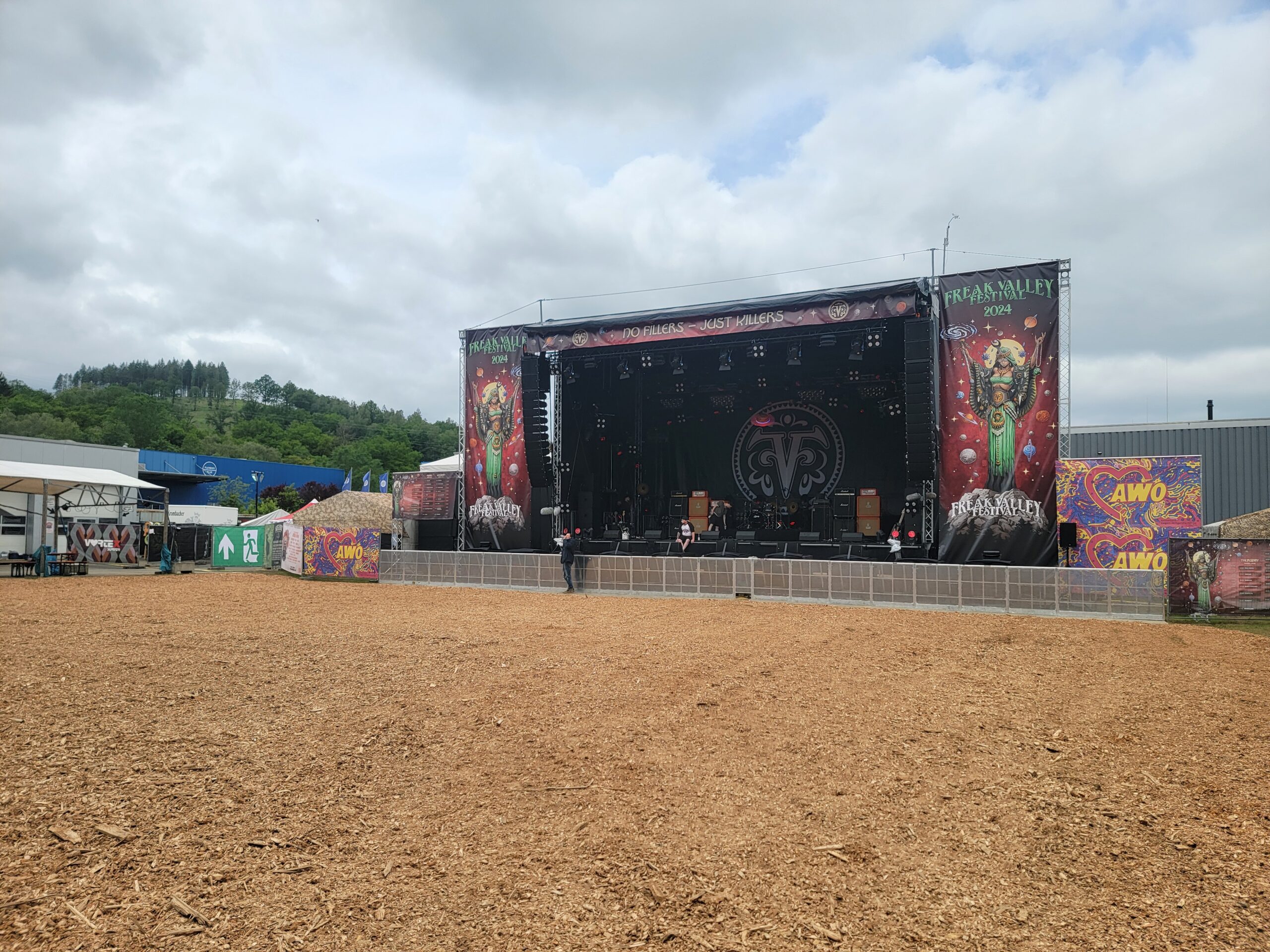
There was a mulch delivery overnight that should cut down on some of the mud factor today, at least at the start, but the weather this far is also better; warmer, some sun but not too much. This makes my intended Saturn-logo hoodie purchase less mandatory, but I’ll get one anyway. Speaking of money, I texted that cab driver who drove me from the train station yesterday and asked if I could PayPal him or something since even after I found a cash machine — not at a gas station, as they commonly are where I come from — I couldn’t take out any money, I assume because I already spent it all existing in 2024, for which there are uncounted ‘premium’-style charges.
But Doom Yoga — which also happens tomorrow; I will hope to be there again — ruled, and finished just as Volker was doing the introduction for Dead Air; his baritone “liebe freunde” was an answer to the gong that finished the yoga session, in its way. Okay, time for the next thing. I didn’t even have the batteries in my camera yet. Welcome to day two.
—
Dead Air
I had listened and written a bit about Dead Air ahead of coming here, and they were both younger and less punk — new song “Three Quarters” notwithstanding– in their presentation than I’d been expecting, so clearly my research skills need some work. Today is kind of all over the place sound-wise — not a complaint — but clearly the intention was to kick it off with, well, a kick, and Dead Air provided that without question. They’re a new-ish band, not too much out, etc., and you could get a sense of onstage as well, but that’s also a specific kind of electricity that a more established act can’t really offer, because even when they’re new to you, they’re not new to themselves, and that was part of enjoying their set too. You can’t fake that, and it is a moment that doesn’t come again in the life of any band. Given the potential in their sound, it will be interesting to hear what the next few years bring from them and how the punk (which is there, just not the sum-total of what they have to offer) and the heavy balance each other out as they take on tasks like a debut full-length and go on from there. But that they were a pleasant surprise despite the fact that I’d heard them before I take as a deeply positive sign of things to come.
Demonauta
Demonauta’s first time in Europe, apparently? I would have thought they’d made the trip sometime in the last 16 years, but I guess not. Either way, the Chilean three-piece were greeted warmly and by that I mean both people and the sun came out to celebrate the start of their set. I had been sitting for a few minutes in a little grove backstage with benches and a table where I’ve done a good bit of this writing that I’ll call Lulu’s Garden, because when I went there yesterday and asked if she minded my presence since it was just the two of us — private moments are rare at these things; sometimes you need or even just want one — herbanswe was a joking claim on it, “come, sit in my garden,” but the desert-style tone of Demonauta’s soundcheck was fuzzy and full enough to serve as clarion, and I wasn’t going to miss a chance that might not come again to catch them live. They manifest a bit of psychedelia along with all the groove-of-riff, which I took as a reminder to chill the fuck out. That was welcome and well-timed, as I had found myself restless in the shade of the smoking tent — too early in the day to smell that terrible; had to go — and needing a spot to breathe. I ended up watching the end of their set as Demonauta told the crowd they loved them before digging into mellow bassy fluidity and finding Kyussian push in an instrumental capper with bonus-extra proggy soloing, from a bench in the back, where it would have been easy to pass the rest of the day since I could see, hear and write all at once. Can’t do that on the swing set, you know. Genuine appreciation from the audience and band alike when they were done. It seemed to be, and I hope it was, worth the trip. For me, the takeaway is I have homework to do in getting to know 2022’s Low Melodies About Chaos better.
Stinking Lizaveta
They moved Cheshire Augusta’s drum riser — and at least while Stinking Lizaveta played, it was most definitely hers, despite Yanni Papadopoulos making an appearance up there once or twice, once with a flying leap off — to the front of the stage, and it was but the first of many “shit yeah” moments while they played. There’s no wrong answer for where to stand during a Stinking Lizaveta set except “anywhere else” but I was up front on the rail at stage left and Alexei Papadopoulos’ bass came through gorgeously. The likewise stalwart, brilliant and weird instrumental trio have been on tour over here for a bit, did the UK with Darsombra and I think are playing with Acid Mothers Temple next or in a couple days, but god damn, what a joy they are to watch and to hear. The sincerity of what they do, how much it’s theirs and how much they own it and embrace it and offer the crowd the chance to share in it — offer accepted, as regards the freaks in the valley — from the dizzying virtuoso twists to the punker spirit underlying it, they’re among the most positive extant outcomes of radical individualism I can’t think of in my mind, and creative with character and breadth that not only doesn’t let you down when they play, but that actively feels uplifting whether a given moment is loud, quiet, fast, slow, whatever. Alexei’s bass solo alone, never mind Yanni hopping off the stage to run his strings over the monitor and the guard rail. I’ve probably said this before and I can only hope to have the chance to say it again, but every festival needs Stinking Lizaveta, and before you start with, “really? even such-and-such?” the answer is still yes. You want to believe in the power of art to enrich your life? Listen to this fucking band.
Fuzzy Grass
All-smiles French heavy stoner blues seemed to hit just right with the crowd and the sunshine, and the first theremin of the festival felt like a thanks-for-showing-up bonus to give the boogie a bit of edge. Their 2023 album, The Revenge of the Blue Nut (review here) stood out, but the vibrancy that came from the stage was a different level entirely, and infectious, whether you were dancing or not. I bought some maybe-vegan sans-rice goulash and hung back for a while — I had scrambled eggs and some cheese with at the hotel, but it’s a long day and protein-plus-peppers didn’t seem like a terrible idea; served me well last year, and so on — as Fuzzy Grass headed toward wrapping up, and sat at one of the shared picnic tables over by the food truck area for a few restorative-despite-the-sauce-in-my-beard (also my shirt; someday I’ll learn how to be a person) moments, but I guess not much more than that in real-time since I made it back up before Fuzzy Grass were actually done. I feel like “spirited” isn’t a word often associated with any kind of heavy music or culture, but Fuzzy Grass’ take was at least that, with soulful vocals, metered groove and a friendly vibe that came across as organic I think mostly because it was.
Tō Yō
A deep dive into languid classic prog and psych, Tō Yō were among my most anticipated bands of the festival, and they did not disappoint. More subdued than not on average, they found a bit of push at the end of the set — briefly, right at the finish — but it was the exploration getting there that was the real highlight. Their debut album, Stray Birds From the Far East (review here), came out last year on King Volume Records, which is ears you can trust even if you don’t know what you’re getting, and was a soothing next-generation extrapolation on Japanese heavy psychedelia, patient and encompassing without overwhelming with their wash or getting lost in the purposeful meander. They drew — I don’t know if there are actually more people here today or if it’s just that the weather is nicer so there are more around — and rightfully so, not only because they trekked from Tokyo to play, but because of the places they went in terms of sound, whether it was that (still relative) blowout or the atmospheric breadth of the material from the album. They sounded like they could’ve played for four more hours and been fine. Might be fun sometime.
Dÿse
Specifically German thrills a-plenty from Berlin two-piece Dÿse, who had the biggest audience since Slomosa last night and treated said assembled masses to a noise rock so laden with quirk and intensity of thrust that you can only really call it progressive. They’ve been at it 20 years or so, and were obviously a known commodity to the singing-along throngs, but it was my first time seeing them and even not speaking the language I could tell they were a blast, if maybe not my thing. They reminded of the Melvins — who played here last year and also tore the place to shreds — in terms of the energy level, which yes, I think of as a compliment, and though I’m thoroughly ignorant of their work, there’s no stopping fun once it starts. It seemed likely that the intention behind putting them after Tō Yō was to lean into the contrast, if not outright shove it over — at one point I’m pretty sure I heard meowing? — and it worked because Dÿse owned the stage while they stood on it, had the crowd with them the whole time. Literal bouncing, like a video from Lollapalooza ’92 or something. It was a thing to see. And between you and me, I’m not gonna go chase down the entire Dÿse catalog and new Mr. Superfan from here on out, but I’m glad to have seen them. At least now I feel like I have some sense of what I’ve missed. Seriously. People went fucking nuts.
Daily Thompson
Snuck in a short changeover set on the small stage, which would’ve been awesome even if their new record, Chuparosa (review here), wasn’t so fresh in mind. I had seen the band show up a couple hours before, and I guess since they weren’t on the bill I assumed they were just here hanging out, but you’ve got 1000mods on the big stage line-checking, Dÿse just finished and here comes Daily Thompson to play “I’m Free Tonight” at the same spot where Doom Yoga when the doors opened. It was of course packed by the time I walked over, so I contented myself to listen to most of it from Lulu’s Garden, where the ladybug larvae have hatched, and to catch my breath before the final three acts of the night. Still, a happy surprise they’re here at all.
1000mods
A week and a half from now, when I still have 1000mods songs stuck in my head, you won’t hear me complain about it. They’re kind of an odd one for me to be sentimental about — they’re from Greece and I’m from New Jersey; it’s not like we hang out — but, well, I’ve been listening to them for about 14 years, and the way they’ve become such a landmark act, whether it’s here or when I saw them at Desertfest NYC last year (review here) or when I’ll see them again this summer at Bear Stone Festival in Croatia, they deliver, and I’ve yet to encounter them in a live setting where it was anything other than a pleasure to do so. As their last record hit during the pandemic, I’m dying to know what they’ll do next and where their ongoing progression will take them — because they’ve never put out the same record twice and never seemed like they wanted to — but for today it was just great to stand and watch them run through the set, to see people get into it, hands in the air, crowdsurfing, all that stuff. They’re one of very few acts I’d play for somebody who knows nothing about heavy rock and roll, and not just because the songs are catchy, but because they’re driven by and delivered with a passion that is unmistakable, as they were at Freak Valley. Sure bet and in a league of their own for what they do.
Alex Henry Foster
Including Foster himself, Alex Henry Foster played as a full six-piece band, The Long Shadows, featuring one drummer and a second kit, a keyboardist/saxophonist/laptopist/vocalist, two guitars in addition to Foster’s own, and a lone bassist. Clearly the former Your Favorite Enemies frontman puts texture into consideration in his work. After the first song, which featured the first bowed guitar of the weekend, Foster explained that he was supposed to play last year but had a medical crisis, then talked about being nervous and the community of the festival making him feel at home, and so on, and was very much the bandleader with a music stand, a shaker and other elements coming and going, keyed for resonance. A depth of arrangement was fair enough for material with such breadth, and the heavy-adjacent-but-not-beholden-to-genre post-emo progressivism was fluid in its reach and various builds, had a density of vibe, was expressive, but in the interest of honesty, something about it rubbed me the wrong way, whether it was too much or I was just tired. So I didn’t stick around long. Dude’s got a career, and I won’t talk shit (not that doing so would affect that career in any way) or belittle the complicated path that brought him to the Freak Valley stage, but I guess I wasn’t looking to be convinced. I went in back and sat for a bit, watched the campers coming and going, and that was fine. Fine. I went back out toward the end of the set and it had picked up, and Foster seemed like he meant every thank you he said, but I was still hearing 1000mods songs, so maybe I’m just too much the stoner rock blogger. Story of my life, to some degree.
Osees
It had been a long day well before Osees went on, but no denying the heavy psych rager that got underway as soon as they got started. I couldn’t hope to keep up with that kind of energy, but it was fun to watch. As will happen, the crowd thinned out some between front and back, but the John Dwyer-led, doubly-drummed troupe supernovaed through the set regardless, bombast and sharp turns and a feel that might’ve been madcap were it not so intentional. It was easier to find a place to sit, but I’ll really admit to being done before they were. I huddled in a corner and closed my eyes for a bit. I won’t call it sleep, but my phone was low in battery and I was more than spent in my limited social engagement resources — I was right to eat those eggs this morning — so with nothing but time until my ride back to the hotel in Siegen, I listened as Osees wove through effects-laced sprawl and intermittent out-the-airlock shove, ebbs, flows, ups, downs, more than a few sideways pivots. To my detriment I’m sure, I’ve never dug into their catalog and with 20-someodd LPs, I recognize I’d be about 18 records late in so doing, but I did my best to hang in as much as I could in the way I could when what I really needed was to be in bed. I’m not gonna complain. I’m here. I’m doing my best. I’m trying. Osees were fucking cool regardless, and Castle Face Records puts out awesome shit. There. I said a thing.
—
Gonna leave it there, but I promise you I’m having a good time, even if I’m feeling somewhat obliterated by it all. I’ll hope to put up a wrap when it’s all over. I’m just trying to live it while I’m here as best I can. More pics after the jump. Thanks for reading.