Posted in Whathaveyou on July 23rd, 2024 by JJ Koczan
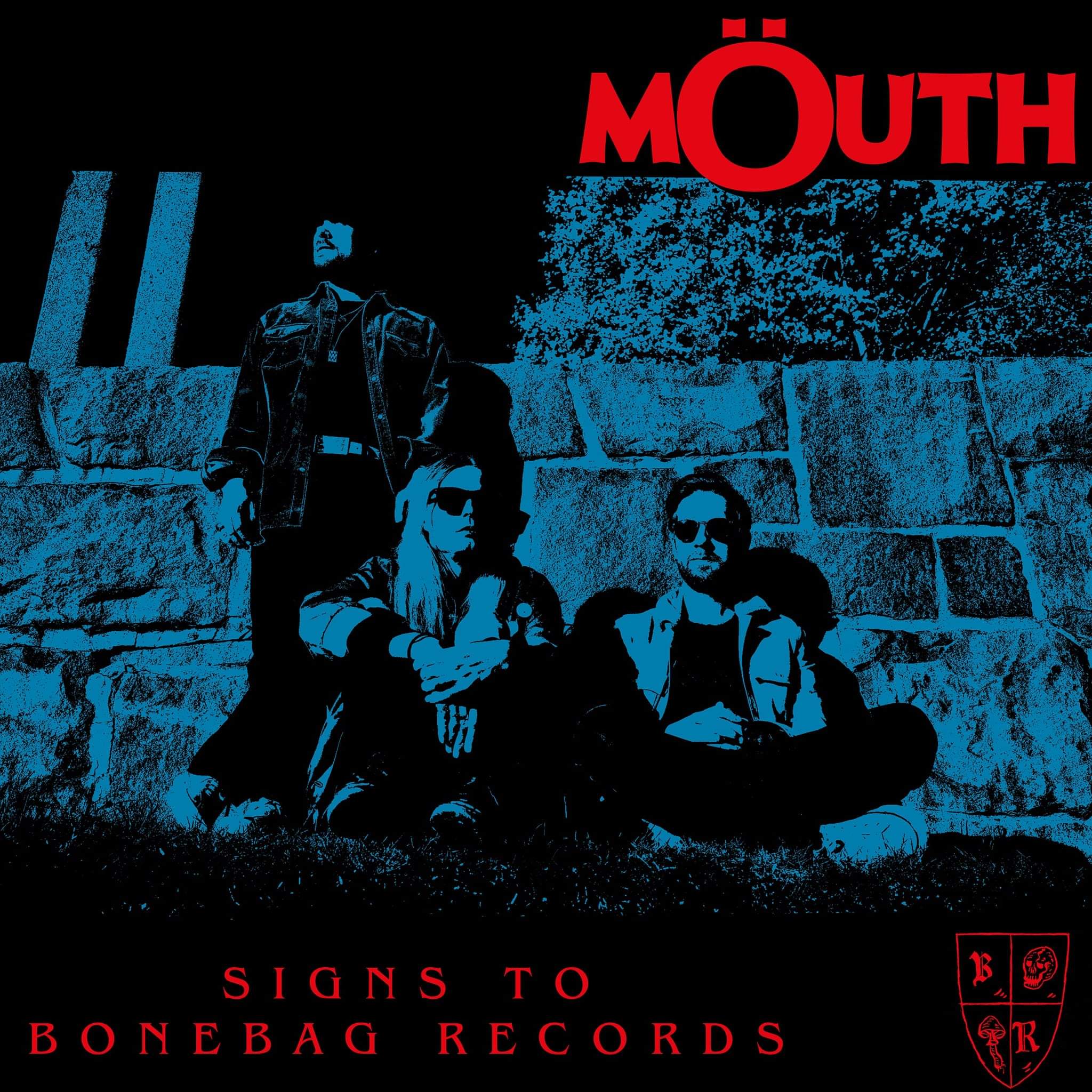
Stockholm newcomers Möuth have signed to Bonebag Records to release their debut album, Global Warning, either later this year or early in 2025. Let’s assume Winter 2025 to be on the safe side, with the acknowledgement that if it happens sooner, that’s not a hardship. The announcement came through last week, and when I tried to find some audio or video to go with it through the ancient Gen-X technology that used to be called ‘googling,’ none was to be had. I hit Bonebag honcho Max Malmer (who also plays in doom conceptualists Cavern Deep) to ask for some assistance in that regard, it turned out not just to be my standard incompetence but also the fact that there wasn’t any. “Holy Ground,” which you’ll find premiering on the player below, would seem to be their first single.
I don’t know much more about the band than is in the post from Malmer under the YouTube embed — their singer’s name is Erik, and apparently he went to Duna Jam, so at least I know I’m jealous — but they’ll play Krökbacken in Dalarna, Sweden, this week (July 25-27) alongside Maha Sohona, Astroqueen, Siena Root, Ocean Chief, I Am Low and a slew of others, and “Holy Ground” gives some idea of what they might be about in a relatively straight-ahead shove spanning four and a half minutes that has something a little more sinister underlying its central riff. You can hear a little stately black metal twist in the lead lines of the intro, which comes back around after the first verse/chorus, and the organ that comes forward after the break/stop likewise speaks to some darker atmospheric aspect amid the heavy rock thrust. They top it off with a mix of solo and stomp and land in feedback to finish, and when it’s done I find myself waiting for the next piece to kick in as it might on Global Warning when it arrives. Momentum, then, is already on their side.
Before I turn you over to the track, I’ll note that Möuth are not to be confused with German heavy progressive/psych rockers Mouth (sans umlaut), who’ve been written about a fair bit around these parts. New band, coming from someplace else both geographically and stylistically. Just a heads up to avoid any confusion.
And you know what? I like new bands. I like new music. Check out something you haven’t heard before today. Maybe it’ll resonate. Maybe you’ll hear that claw-ready edge here and wonder how it pans out on the record to come, or just what it is they’re warning the globe about. “Holy Ground” is an evocative introduction. Let yourself go with it and see where you end up. I ended up looking forward to more.
As always, I hope you enjoy:
Möuth, “Holy Ground” track premiere
We are we very proud to welcome Möuth into the Bonebag Records family!
I got shown Möuth by the singer Erik at Duna Jam this year and was completely blown away and knew there and then that we would have to sign them.
They are performing [this] week at Krökbacken and the plan is to put out some music with them before that and their full debut album will release here on Bonebag Records 2024/2025.
Bringing together a wealth of experience from diverse musical backgrounds, the dynamic trio of long-time friends united forces to birth Möuth in the fall of 2023. Infusing their passion for proto metal, psych, doom and alternative rock with a flair for skillful song-craft and a rebellious punk ethos, Möuth crafts a potent blend of raw energy and refined artistry. Their forthcoming debut album, ‘Global Warning’, slated for release in 2024/2025, promises to deliver a sonic onslaught of themes ranging from personal liberation to societal critique, all underscored by Möuth’s signature fusion of directness and sophistication.
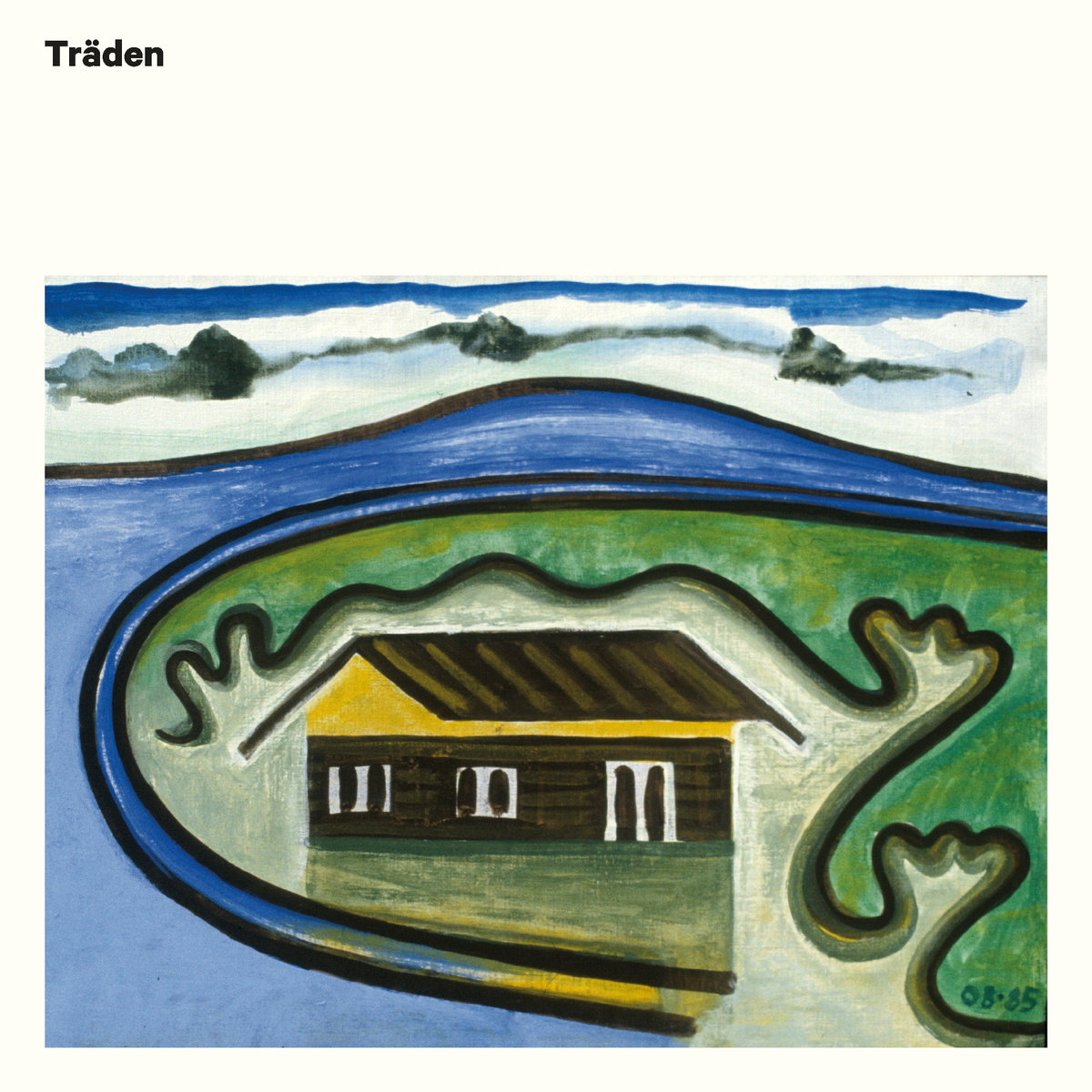
Every now and then I go back to this one. Träden is a nickname for Träd Gräs och Stenar. Formed in 1969, and with their 1970 self-titled debut a landmark in early heavy prog/psych rock, Swedish or otherwise, the band led by more-or-less-founding guitarist/vocalist Jakob Sjöholm donned their abbreviated moniker to match the title of 2018’s Träden (review here), but it’s not the first time they’ve switched it up in that regard. Comprising eight tracks that run an immersive, hypnotic 70 minutes beginning with the longest of the bunch (immediate points) in “När lingonen mognar (Lingonberries Forever)” at 11:51, the album is a varied sprawl to be sure, but the material is tied together through the ultra-organic presentation and open-feeling creativity.
Parts are pretty clearly improvised, whether it’s the guitar solo in “När lingonen mognar (Lingonberries Forever)” or the outset of the lightly shuffling “Kung Karlsson” (7:55) that follows and builds into a noodly wash by its midsection, held together by the rhythm section as Sjöholm and guitarist/organist Reine Fiske (also Dungen) explore a decidedly earthy psychedelia, growing noisier at the finish before “Tamburan” (11:19) begins its pastoralist procession, twists of original-era psych on guitar gracefully distorted over the steady basswork of Sigge Krantz and fluid drumming from Nisse Törnqvist, who shares those duties with Hanna Östergren (also Hills) with the latter playing on most of the tracks and contributing vocals somewhere, somehow. The first instrumental, “Tamburan” is the point of departure for your consciousness; an unfolding fuzzscape of willful meander, almost meditative but leant vibrance through the live feel of the recording.
By this point, Träden are already embroiled in the back and forth between shorter and longer pieces, and that contrast is especially stark as “Å nej (Oh No)” starts out with running water giving over to shaker percussion and a sweetly casual folkish sensibility emphasized by the blend of acoustic strum and lockstep fuzz, shaker percussion, multiple vocalists joining for the simple-sounds-work-best chorus, which is one of few throughout Träden, and feels purposefully included near the center of the record. I don’t speak Swedish, but there’s some comfort in the procession of “Å nej” nonetheless, the humble melody and fun swell of hurdy gurdy or something like it in the midsection; it could even be guitar. If you’re a drinker, it might be what sways you to sleep with a warning of the hangover to follow, still distant enough not to be real in the tragic sense of the word.
“OTO” starts out with foreboding strums of distorted guitar and a quiet-ish tom rhythm from Östergren, with a shimmer of lead guitar cutting through tentatively at first and then markedly less so. They’re moving by the time they’re three and a half minutes into the total nine, but it’s more of a look-back-and-wonder-how-you-got-there than an outwardly purposeful build, and like much of the record that surrounds, it’s content to make its own kind of sense. The guitar tone changes shortly before they hit seven minutes and “OTO” the dreamier early going is somewhat solidified, relatively speaking, but stays mellow and hypnotic even as the guitar threatens howls toward the finish, from which “Hoppas du förstår (Hope You Understand)” picks up with another redirect, putting acoustic guitar at the center with arriving soon after.
What might be the bowed Indian instrument esraj features in the mix (handled by Fiske if that’s it) and adds ethereal lift to the otherwise humble procession. “Hoppas du förstår (Hope You Understand)” is of a kind with “Å nej” in runtime and the fact that it has vocals — in layers, even — but the voice, mood and sentiment conveyed by the music are different, and the later cut is backed by the instrumental “Hymn.” If it was American I would call “Hymn” a ramble — note to self: do Swedes ramble? — but its seven minutes feel contemplative enough to earn the name and after touching ground in the song prior, Träden depart once more into fuzz and wispy psych for the closer “Det finns blått (There is Blue),” which is true enough whether you’re talking about the sky, water, or misery. The finale is the third of the total eight songs to top 10 minutes, and if it was only the fuzz-washed lead and drums for the duration, it would still be a win, but the off-the-cuff-feeling vocals — which may have started as improv, but are doubled in parts — and sax and who knows what else are certainly welcome along for the ride.
And like much of the album that precedes, “Det finns blått (There is Blue)” is a ride, whether or not you realize it’s moving. Thick in vibe and the emergent fuzz alike, with some bordering-on-shouts later, it’s a mind-psych movement outward that’s not entirely unstructured or without form, but that carries a feeling of liquidity just the same, oozing out as it makes its way in its own time to the twisting solo noise that begins the second half, the drums growing accordingly more fervent in crash. By the seven-minute mark, it drops to standalone guitar strum, but the urgency that rose up hasn’t completely dissipated either, whatever solace is offered through the calming strum and peppered notes of epilogue guitar. That last couple minutes, which really could be a whole other song if the jam had gone that way, might be out of place with the preceding piece, but if anything, they only underscore the point of how little that matters in the first place if it doesn’t jolt the listener out of the experience, and by the last three minutes of Träden, the band would have to come to your house and stomp on your foot to snap you out of the spell they’ve just spent the last hour-plus casting. Call it a bonus on an existential level.
My only motivation for closing the week with Träden is to say I hope at some point Sjöholmand company do another album. Whether it sounds like this or wanders off elsewhere musically, whatever. I’ll take it. This record requires a certain kind of patience — don’t go in with expectations beyond hearing sound — but there’s so much life in the songs if you’re willing to meet them on their level. I have no idea if or when Träd Gräs och Stenar might return or in what form, but the world they make here begs further exploration. It’s among the CDs I least regret buying in the last decade.
As always, I hope you enjoy. Thanks for reading.
—
We’re in Budapest — me, The Patient Mrs., The Pecan, and the dog Tilly. In the part of the city called Astoria, which I’ve just been calling Queens, because, well, New York. It’s Friday. We got here Wednesday after two days in Zagreb, Croatia, following my excursion to Bear Stone Festival in the Croatian countryside last weekend. That seems longer ago.
My wife, kid and dog had a place in Zagreb that was apparently alright, but when I came back from the festival — met them at the airport as though I was just flying in from another world; kind of true minus the flying part — we and our five weeks’ worth of kidn-and-dog-inclusive luggage moved to a spot in the Old City, kind of a touristy section. It was above a Napoli pizza place, very clearly owned by the guy who owned the pizza place, and very clearly his fuckpad. The stove didn’t work. The tub didn’t work. There were two wall unit air conditionings: one useless, the other downstairs (yes, it was a two-level apartment) and pointed directly at a large pane of glass.
It was 100-plus degrees out every day as it has also been all throughout this week, and the temperature inside was absolutely punishing. Crippling. The kind of heat that kills people, as climate-crisis era Europe has found out for the last however long and will I guess continue to find out unless somebody here ever figures out how to freeze water. America is a recent enough country to have refrigeration infrastructure. Europe, in this regard, is well and truly fucked. And no, the irony of AC contributing to global warming isn’t lost on me. I’m just trying to stay alive.
The kid has been doing well. Better than on the Southwest trip, which was largely a nightmare. The four-hours-ish drive from Zagreb to Budapest gave a chance to see some of the countryside, the lake in Hungary that I’m told is where the people go to ease their summery sufferings, and so on. We hit a big Tesco and got a Lego excavator for The Pecan to build; she was stoked. The washer where we’re staying broke pretty much immediately on first use, so we need to figure out a laundry solution, so I think that’s this morning’s problem. And yes, the morning has started. It’s after 7AM CET now. The kid’s been going to bed after 9PM, and I’ve had the alarm set for 6AM since I haven’t been getting to sleep before 11 and actually need to be present mentally and physically for these days — that is, I need to have the capacity to engage, ever — and she was up before my phone even started playing that obnoxious, jaunty little tune that I’m too lazy to change. First rays of the rising sun, and all that. That’s been brutal.
Every second I write while we’re here is a scrape, including this one, and only happens because The Patient Mrs. lets it. That’s not a great dynamic for anybody, but I don’t stop needing to write just because I’m someplace else.
There are two shows I’m planning to see while I’m here: Brant Bjork Trio and Stoned Jesus/Dopelord. I have no idea where either is or how I’ll get there, but I’ve got time. We’re here until I think Aug. 7, then fly back to New York (ugh, JFK; weeks out and already I’m dreading it) to finish out the summer. The Pecan is in camp next week, and that should lessen some of the impact of our days as parents — also give her a valuable life experience blah blah — provided she can make it through without getting kicked out, which last year at this time was a standard that proved too high multiple times over. I’ve got my fingers crossed for her, but when she has a hard time, you know it.
This apartment is swank in a bourgeois kind of way, and that’s fine. The air conditioning works. There’s a bag of ice in the freezer we’re rationing out. A Nespresso. A working shower. It does not feel like a fuckpad. I haven’t had much chance to try out my magyarul other than to order coffee, but hopefully at some point I’ll be able to make a fool out of myself attempting to have an actual conversation with someone or trying to glean some necessary information. “Hol van a A38?,” and so on.
I hope you have a great and safe weekend. I have a couple things confirmed for next week, premieres on Tuesday and Thursday, but honestly don’t know how much I’ll be able to do around that. I’ve bowed out on doing two bios already and might do another. There’s news that came in as I was heading to Bear Stone that I’m still behind on. When I get home, much as I’m able, I plan to knuckle down on this thing, but it’s hard being pulled in multiple directions and I can’t really argue for more time when all it is from my family’s point of view is an indulgence for which the occasional payoff is the ego boost of someone saying something nice about my work on the internet and my own fleeting fulfillment before I need to do the next thing.
Speaking of the next thing, that’s breakfast. Thanks for reading. Have fun, stay safe and cool, and hydrate. All the water.
Posted in Whathaveyou on July 4th, 2024 by JJ Koczan
I’m not at all at a place in my life where I could even if I was ever to be invited — which, in a conservative estimate I’ll say is struck-by-lightning-and-live-level unlikely — but man, I’d love to go on this tour. Imagine following Dozer, Gozu and High Desert Queen as they traipse across the US colluding on the delivery of ultra-fine heavy rock and roll for nine days, including stops at Desertfest New York and Ripplefest Texas both. Damn that’d be fun. Also tiring. And my wife would have my ass, if my entering-first-grade daughter didn’t get to kicking it first. Nonetheless, even the daydream of hurry-up-and-wait tour existence is fun in this case.
I think the last time Dozer were in the US was 2000? Something like that. I seem to recall they played the Brighton Bar in my beloved Garden State, but I could be wrong about that. They return Stateside in 2024 riding the utter triumph of their 2023 return LP, Drifting in the Endless Void (review here), which indeed is a cause worth heralding. I was lucky enough to catch Dozer last summer supporting the album (review here) and even luckier that it wasn’t my first time seeing the band, but to have them hit the US (and a lil bit of Canada!) alongside Gozu — their 2023 album, Remedy (review here), remains a standout — and High Desert Queen, who issued their widely anticipated second album, Palm Reader (review here) in May, is even better.
Mark it a win, kids. Poster and such from the ol’ social media:
USA! Endless void tour is coming for you this September…are you ready? 🤘 Support by @highdesertqueen and @gozu_band_boston
DOZER – Endless Void US Tour 2024 feat. Gozu & High Desert Queen 09.13 Braintree MA Widowmaker Brewing 09.14 Queens NY Desertfest NYC 09.15 Montreal QC Piranha Bar 09.16 Toronto ON The Garrison 09.17 Grand Rapids MI Pyramid Scheme 09.18 Chicago IL Reggies Rock Club 09.19 Omaha NE Reverb Lounge 09.20 Oklahoma City OK Resonant Head 09.21 Austin TX Ripplefest Texas
DOZER is: Tommi Holappa – Guitar Fredrik Nordin – Guitar/Vox Johan Rockner – Bass Sebastian Olsson – Drums
People and faces, horses and wolves in the mind, a tumult of inner and outer overwhelm; it’s no wonder that Greenleaf‘s ninth album, The Head and the Habit, starts with the reminder to “Breathe, Breathe Out” amid all the tumult. There’s more to it as well. 2024 makes it 10 years since 2014’s Trails and Passes (review here) introduced vocalist Arvid Hällagård to listeners. Hällagård stepped in to fill the significant shoes of Oskar Cedermalm (also Truckfighters), who had handled vocals on their two prior outings, and has gradually become a defining presence in the band. Never more so than on The Head and the Habit, which in addition to serving as a handy showcase for how the Swedish four-piece founded by guitarist Tommi Holappa (also Dozer) have taken shape in the last decade, is also the band’s first outing for Magnetic Eye after a trilogy of releases — 2021’s Echoes From a Mass (review here), 2018’s Hear the Rivers (review here) and 2016’s Rise Above the Meadow (review here) — issued through Napalm Records.
Hällagård fronts the band — Holappa, bassist Hans Fröhlich and drummer Sebastian Olsson — with marked presence in the material, and with the somewhat contrasting pair of shorter, subdued blues cuts “That Obsidian Grin” and “An Alabastrine Smile” positioned at the end of each side, his soulful delivery has become an essential facet in the band’s consistently evolving dynamic, as well as the symmetry of this LP in its own right. Greenleaf has seen a number of vocalists (not to mention bassists or drummers) come and go, between Fredrik Nordin (Dozer), Peder Bergstrand (Lowrider). and Cedermalm, but the nine songs of The Head and the Habit wouldn’t function as they do with another singer. In framing the lyrics around his experience as a counselor, handling the cover art (Lili Krischke also contributed to the layout) and recording whatever of his own performance wasn’t captured by the esteemed Karl Daniel Lidén (who once upon a time drummed in Greenleaf, lest we forget) at Studio Gröndahl in Stockholm, Hällagård‘s work in cuts like the duly charging “Different Horses” or the eight-minute side B apex “The Tricking Tree” cannot be discounted as part of the band’s persona, especially as they lean further into their own version of a heavy blues sound.
That’s not to say The Head and the Habit lacks for thrust, but where Echoes From a Mass edged closer than ever in terms of riffing to the intensity Holappa might proffer with Dozer — whose first album in 15 years, Drifting in the Endless Void (review here), came out in 2023 on Blues Funeral — this 43-minute collection feels more dug into Greenleaf‘s distinguishing elements. The meandering solo before “The Tricking Tree” slams into its final, nodding roll, answering back to the weight wrought in the likely-titled-for-its-tumbling-riff second cut “Avalanche” much as “That Obsidian Grin” and “An Alabastrine Smile” or even the hooky “Breathe, Breathe Out” and its side-B-opening counterpart “The Sirens Sound” serve as complements. The structure of the record puts one additional song on side A, but the cohesiveness and clarity of purpose throughout — as well as the breadth of the mix/master Lidén at his Tri-Lamb Studios — allows Greenleaf to shift intention from one track to the next without losing sight of where they are in the overarching progression.
The result is that The Head and the Habit flows smoothly despite conveying a bumpier path in theme and sound. Part of what makes it a success is the swagger put into a piece like “Oh Dandelion,” with its start-stop verse and twisting chorus, but as Greenleaf once again diverge from Dozer in terms of style, it’s the bluesier nature underlying even the shove of “Different Horses” or the foreboding “A Wolf in My Mind” — the hook of which brings the album’s title line — that comes into focus as being crucial to the songs. From the righteous shaky-cam rumbles of tone in “Avalanche” to Holappa‘s wistful leads in “An Alabastrine Smile,” as heavy and loud and brash or as quiet, lonely and contemplative as they want to get, it all becomes part of a take that is inextricably Greenleaf while reorienting the band’s position in terms of style, pulling in a direction they seem to be charting as they go.
This is exciting enough in concept — Greenleaf are approaching the 25th anniversary of 2000 their self-titled EP (discussed here); such ongoing creative development is rare regardless of how personnel factors in — but none of it would matter if the songs didn’t hold up. Fortunately, they do. It’s hardly the first time the band have been catchy and able to pack an emotional punch, but they continue to make it sound easier than it actually is from “Breathe, Breathe Out” on. And even in “The Tricking Tree,” with its earlier bashing away and pre-midpoint departure into mellower, jammier, bassier fare, they hold a sense of energy that is individual, unquestionably theirs. Olsson‘s drumming can’t be discounted in keeping the material fluid, but this incarnation of Greenleaf has put in the time on stage and in the studio to win their chemistry as a collective, and the strength of craft across The Head and the Habit feels like its own reward. It’s not just Holappa‘s riffs — though that might be enough, considering — or Hällagård‘s vocals, the character in Fröhlich‘s bass or Olsson‘s drums; it’s how they come together around these songs, which vary in shape but are largely unflinching in quality.
Any album a given band might release is a marker of an ‘era’ in terms of encapsulating a time in that band’s existence — and, obviously, all things end at some point or another; Greenleaf don’t owe anyone anything and have precious little to prove, though they keep proving it anyhow — but The Head and the Habit seems so much to look ahead and to so fervently bask in what makes Greenleaf who they are nearly a quarter-century on that one can’t help but think of it as the realization of what their last decade has been driving toward. A to-date culmination made all the more vital by the high level of performance, the almost deceptively tight songwriting, and the fullness of scope in its component pieces and the flow between them. They’re a special band, and to call The Head and the Habit one of 2024’s best in heavy rock feels like limiting its appeal in terms of time and underselling the growth that’s led Greenleaf to this point — it’s part of a story bigger than itself — but it’s true just the same.
Posted in Whathaveyou on June 26th, 2024 by JJ Koczan
Reliably certain you’re in for a good time when Truckfighters take the stage. Doesn’t matter where you might run into them, and they seem to have an endless supply of drummers to accompany bassist/vocalist Oskar Cedermalm and guitarist Niklas Källgren, which is certainly useful. But I’ve been fortunate enough to see them on multiple occasions and in multiple contexts over the last decade-plus since they first came to the States, and have never, not once, walked away disappointed.
Anchored around previously confirmed slots at Desertfest New York and Ripplefest Texas — not taking away from the gig they’re doing with Acid King on Philly, mind you — this tour is by no means the most expansive the Swedish fuzzlords have undertaken in the 20-plus years since their first split EP came out in 2003, but anytime they hit US shores it’s going to be worth showing up for the show they’re going to deliver.
Truckfighters took a hiatus from Feb. 2018 to March 2019, and since touring became possible again post-pandemic in 2022, their focus has continued to be on live activity such that their most recent studio album, V (review here), is now eight years old, having been issued in 2016. Last I saw them was at the tail end of 2022 in Stockholm at their own Fuzz Festival#3 (review here) and in addition to building up that event — the initial lineup for this year was announced last week; Truckfighters will play, as well as 1000mods, Siena Root, Slomosa, Witchrider, Domkraft, Steak, 10,000 Years, Bottenhavet, Daevar, High Desert Queen (returning), Håndgemeng and Grand Atomic — and touring, they also keep plenty busy releasing bands through their label, Fuzzorama Records. Not by any means inactive, is what I’m saying, even if it’s been a minute since they pressed up an LP.
Dates follow, as per socials:
🔥USA tour🔥 This September we’ll do a bunch of shows from previously announced Desertfest NY to Ripplefest Texas. It’s been a good wile since last time in North America, we are stoked to the max and sure hope you are too! Spread the word, enjoy the fuzz!
Posted in Whathaveyou on June 24th, 2024 by JJ Koczan
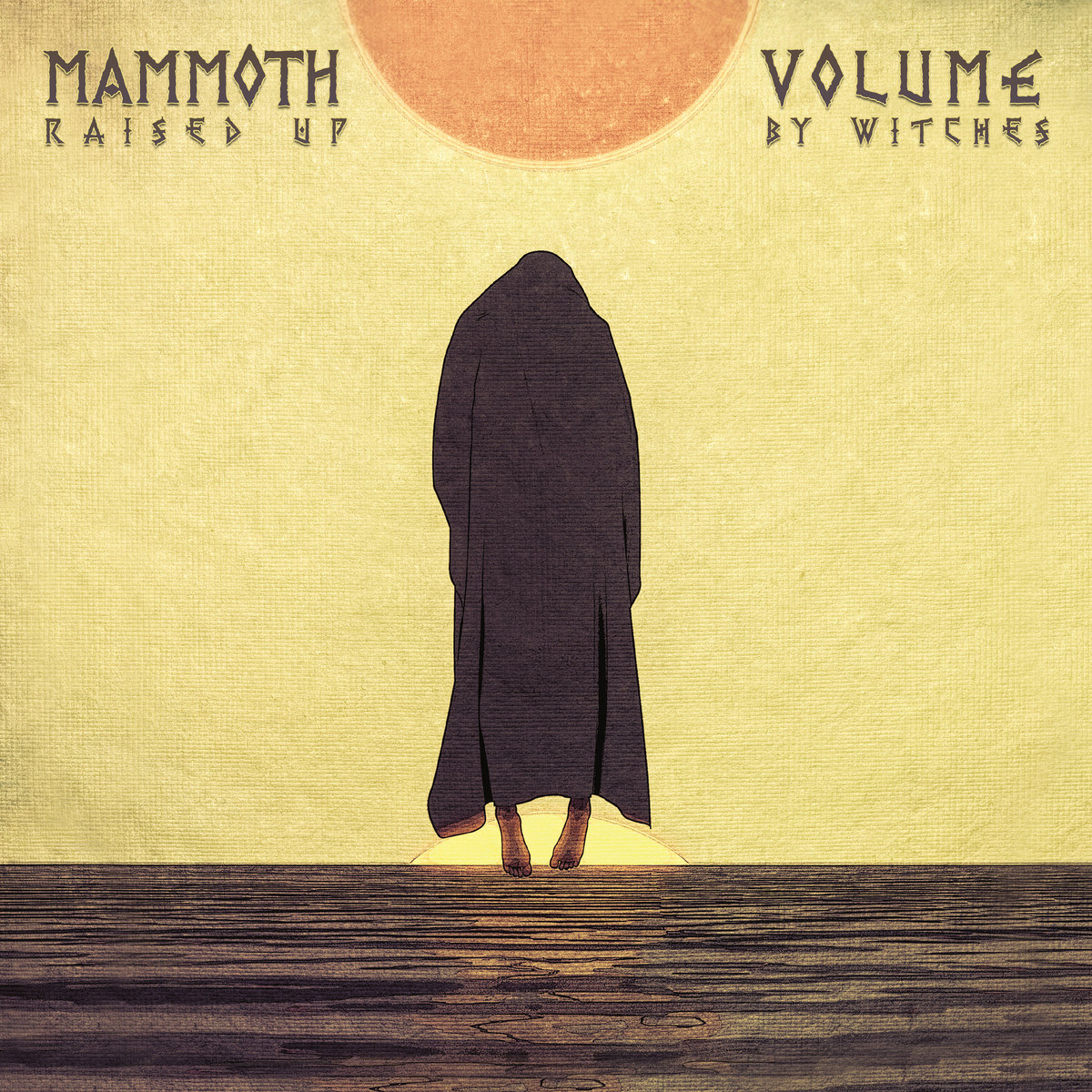
I very pointedly went into the new Mammoth Volume single with no expectations of what was coming. I still managed to be surprised. The yacht-rock synth, classic prog weirdo bounce, somehow so Swedish and yet likewise so much not even of this reality’s wavelength — a decadescopic mashup that’s still later Beatles influenced but has gone so far off the deep end as to define its own normality as a standard for pop. Oh, and it rocks too.
It’s a good thing the record’s not out until August so maybe I can have a chance of getting my brain around this one four-minute segment of it. “Serpent in the Deep” — the track in question — comes from the Lysekil troupe’s new LP, Raised Up by Witches, which is out Aug. 23 on Blues Funeral Recordings. It’s the follow-up to their 2022 return album, The Cursed Who Perform the Larvagod Rites (review here), which came out first through Blues Funeral‘s PostWax subscription series, for which I’ve handled liner notes up to this point (full disclosure, etc.). As for anything more on the new record, I can’t say since I haven’t heard it. If you caught the last one though, you know it’s out there.
This came in a Bandcamp update yesterday, so I expect the PR wire follow-up to roll through probably five minutes after this is posted and shared. So it goes. The song streaming at the bottom is the point anyhow, and that’s there. Have at it:
MAMMOTH VOLUME – Raised Up by Witches
MAMMOTH VOLUME return with Raised Up By Witches, an absorbing trek through head-nodding grooves, wistful instrumentation and quirky brilliance that harnesses their absolute fluency with the surprisingly compatible genres of 70s progressive rock and classic stoner grooves.
MAMMOTH VOLUME has made it their brand to go unexpected places and take surprising turns pretty much every time you think you have them pegged. The latest installment in their angular yet infectious alternative to straightforward boogie van riffage, Raised Up By Witches is an exhilarating new trip where MAMMOTH VOLUME are basically the only vehicle on the road.
1. The Battle of Lightwedge 2. Black Horse Beach 3. Scissor Bliss 4. Diablo III: Faces in the Water 5. Lisa 6. Serpent in the Deep 7. Cult Of Eneera 8. A Tale about a Photon 9. Sången om Ymer
Posted in Whathaveyou on June 12th, 2024 by JJ Koczan
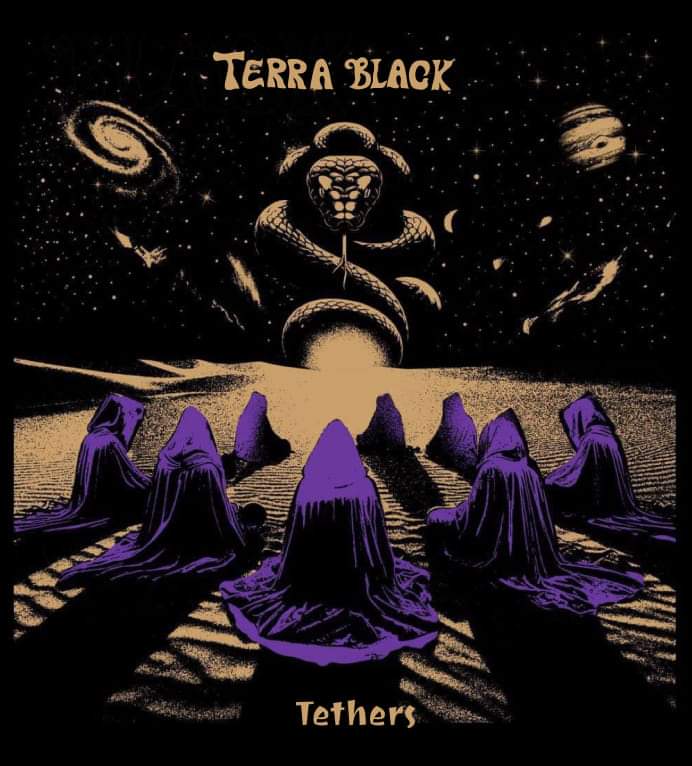
“Tethers” will be the first single from Terra Black since the Gothenburg semi-gazing doom nodders made their full-length debut with 2023’s All Descend (review here), and as that record cast an immediate sense of identity, finding a niche in heavy spacious and grand in its unfolding without being overly derivative in going about it, the song is one to look forward to. I don’t know whether it’s a holdover from the album sessions or a foreshadow of things to come — i.e., a precursor to an album — but it’s their first offering through Bonebag Records, the label headed by members of Cavern Deep, to which the band signed back in March.
Concurrent to the new track is a physical reissue for All Descend — CD and tape, which I love in a kind of contrarian way to the ridiculous production involved in pressing vinyl as I understand it — and if you didn’t hear the record, please accept this gentle encouragement to explore its spaces for at least a while on the player below. I know nobody actually needs something else to spend money on, but, well, maybe you do and you just don’t know it yet. In any case, I wanted to note for myself the new song coming down the line and I sure don’t mind having put All Descend on while writing here. I guess in the end it’s an act of self-interest.
From Bonebag via social media:
Terra Black will release their new one-off single “Tethers” on the 28th of June through Bonebag Records. It will also coincide with the physical re-release of their latest album, “All Descend,” on CD and cassette. More on this later…
Details about the physical release of Terra Black’s All Descend (including pre-order) will be confirmed in due course by Bonebag Records but in the meantime, you can stream the album in full now atterrablackband.bandcamp.com.
Swedish heavy rockers Långfinger have a history of good-times-had-by-all videos, whether that’s “Say Jupiter” (posted here) from their 2016 LP, Crossyears (review here), or the prior “Fox Confessor” (posted here), or the clip for “Herbs in My Garden” from 2010. “Arctic,” premiering below, is the latest in the series of their narrative clips. The song comes from their fourth album, Pendulum(review here), which was released earlier in 2024, and pokes fun at the fact that eight years passed in between Långfinger records while the band were ostensibly still active. A kind of answer to the question one might’ve asked circa 2022: “whatever happened to Långfinger?”
But of course the truth of what happened to them is a little less Blair Witch and a little more band-doing-other-stuff. In 2019, they released Live (review here) and a split with JIRM, and guitarist/backing vocalist Kalle Lilja’s work at Welfare Sounds Studioand participation in outfits like Toad Venom and Wolves in Haze has been discussed here before, so I’ll spare you running through the full timeline, but the fact is Långfinger still existed, even if they weren’t doing the self-imposed album-cycle thing of writing, recording, touring, and so on, or constantly feeding the social-media algorithmic monkey on a daily basis to capture some imaginary quantification of an audience share. Would it have been nice to have another LP in the interim? Sure. Would’ve also been nice if we hadn’t all lost two years to a fucking plague. Can’t have everything, kids.
In light of that stark reality, I’ll just note that it’s worth appreciating the things one has, and in this particular context, Pendulum is all the more a thing to celebrate. Not only did it bring Långfinger back around to those ears waiting for them in the heavy underground and perhaps introduce them to a slew of those who’d come aboard in the intervening time, but it expanded the band’s stylistic palette and found them working in new ideas from a more mature point of view. Not quite “grownup” in the sense of being either boring or lacking energy in their delivery — “Arctic” testifies in contrast — but aware of who they are as players in a way that when they did Skygrounds 14 years ago they couldn’t possibly have been. That it’s still fun is a boon, of course.
If you haven’t heard Pendulum, or if you watch “Arctic” and dig both the tune and the shenanigans, the full LP stream is waiting for you at the bottom of the post. However you go, I hope you enjoy, because there’s really no point to any of this otherwise.
Dig:
Långfinger, “Arctic” video premiere
Långfinger and Aurora Alänge (director) set out to make a video based off of three very distinct things that have been notable in our latest active era.
We’re huge fans of certain 00’s horror movies (who isn’t), we love riff driven ominous rock music and we wanted to give an explanation to – with a tongue in cheek approach – our absence these past 6-7 years from the observable universe.
The idea worked really well with Arctic, which is a song that as much as it pays homage to classic 70’s and 80’s metal tracks it shows us as a band as we venture towards a sound that’s heavier than anything we’ve ever done in the past.
Taken from the album ‘Pendulum’ out now through Welfare Sounds & Records.
Directed, produced, edited and filmed by Aurora Alänge. Band photo by Aurora Alänge. Additional band footage filmed by Carl Thorén.
Långfinger are: Kalle Lilja – guitar/backing vocals Victor Crusner – vocals/bass/keys Jesper Pihl – drums