Posted in Whathaveyou on July 19th, 2024 by JJ Koczan
Since July 11, a little over a week ago, Texas feelgood heavy rockers High Desert Queen have been on a European tour that’s included a stop at Stoned From the Underground and numerous other shows in and around Germany. The tour wraps up Aug. 3 and I assume they’ll fly home out of Schiphol in Amsterdam back to the US. Their arrival on US shores will give them about a month’s time to prepare to hit the road again, this time looping up the East Coast and into the Midwest for club shows and slots at Desertfest New York and the band-affiliated Ripplefest Texas, dates with Dozer and Gozu, Valley of the Sun and more. You would not accuse them of not putting in their time on the road. Or you could, I guess, but you’d be dumb and wrong to do so.
They go (and go, and go) in support of their second full-length, Palm Reader (review here), which came out in May as their first outing for Magnetic Eye Records, and I wouldn’t be the least bit surprised if they managed to sneak in a West Coast run over the coming winter as well. That’s how they do, and by any and all outward indications from the band, they actually enjoy it. Imagine that for a minute.
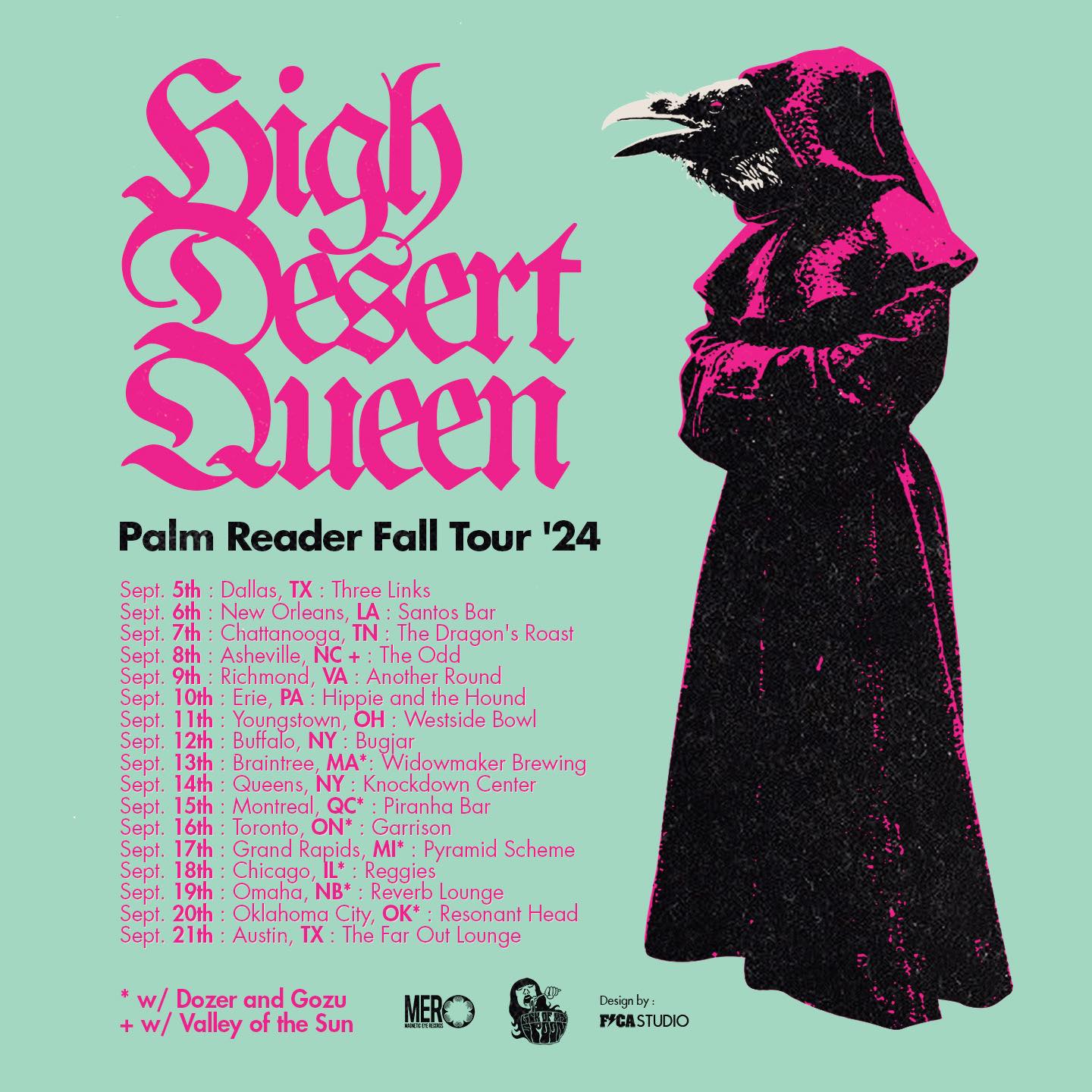
Then imagine that joy being shared from the stage, via riffs. Here are the dates:
FALL USA TOUR! This September we will be playing in cities we’ve never played in! Plus for the last half of the tour we will be supporting the legendary (and our good friends) Dozer. Check your local venues for tickets as these will go fast!
Which show will we see you at? 🤘🔥❤️
Sept. 5 Dallas, TX Three Links Sept. 6 New Orleans, LA Santos Bar Sept. 7 Chattanooga, TN The Dragon’s Roast Sept. 8 Asheville, NC. The Odd+ Sept. 9 Richmond, VA Another Round Sept. 10 Erie, PA Hippie and the Hound Sept. 11 Youngstown, OH Westside Bowl Sept. 12 Buffalo, NY Bugjar Sept. 13 Braintree, MA Widowmaker Brewing* Sept. 14 Queens, NY DesertFest NYC Sept. 15 Montreal, QC Piranha Bar* Sept. 16 Toronto, ON Garrison* Sept. 17 Grand Rapids, MI Pyramid Scheme* Sept. 18 Chicago, IL Reggie’s* Sept. 19 Lincoln, NB Reverb Lounge* Sept. 20 Oklahoma City, OK Resonant Head* Sept. 21 Austin, TX RippleFest Texas
Poster Art by f1ca_studio
Remaining European tour dates:
19/7 Leipzig, DE Kulturlounge 20/7 Munster, DE Rare Guitar 22/7 Bamberg, DE Live Club Bamberg 24/7 Göppingen, DE Gaststätte Zille 25/7 Karlshrue, DE Alte Hackerei 26/7 Neuensee, DE Rock im Wald Festival 27/7 Ulm, DE Hexenhaus 28/7 Cham, DE L.A. Club 29/7 Munich, DE Unter Deck 31/7 Ljubljana, SL Channel Zero 3/8 Amsterdam, NE De Tanker In Noord
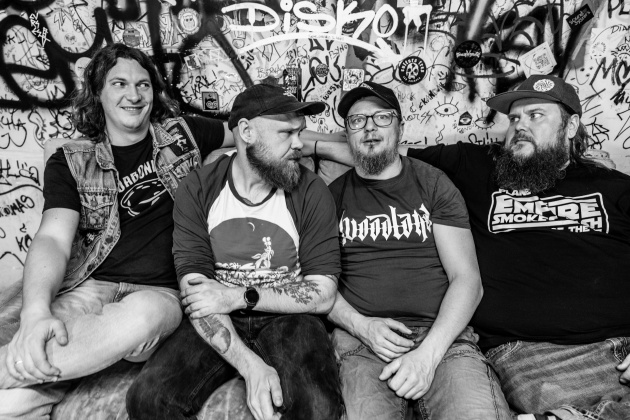
HIGH DESERT QUEEN are: Ryan Garney – vocals Phil Hook – drums Morgan Miller – bass Rusty Miller – guitar
Posted in Whathaveyou on July 17th, 2024 by JJ Koczan
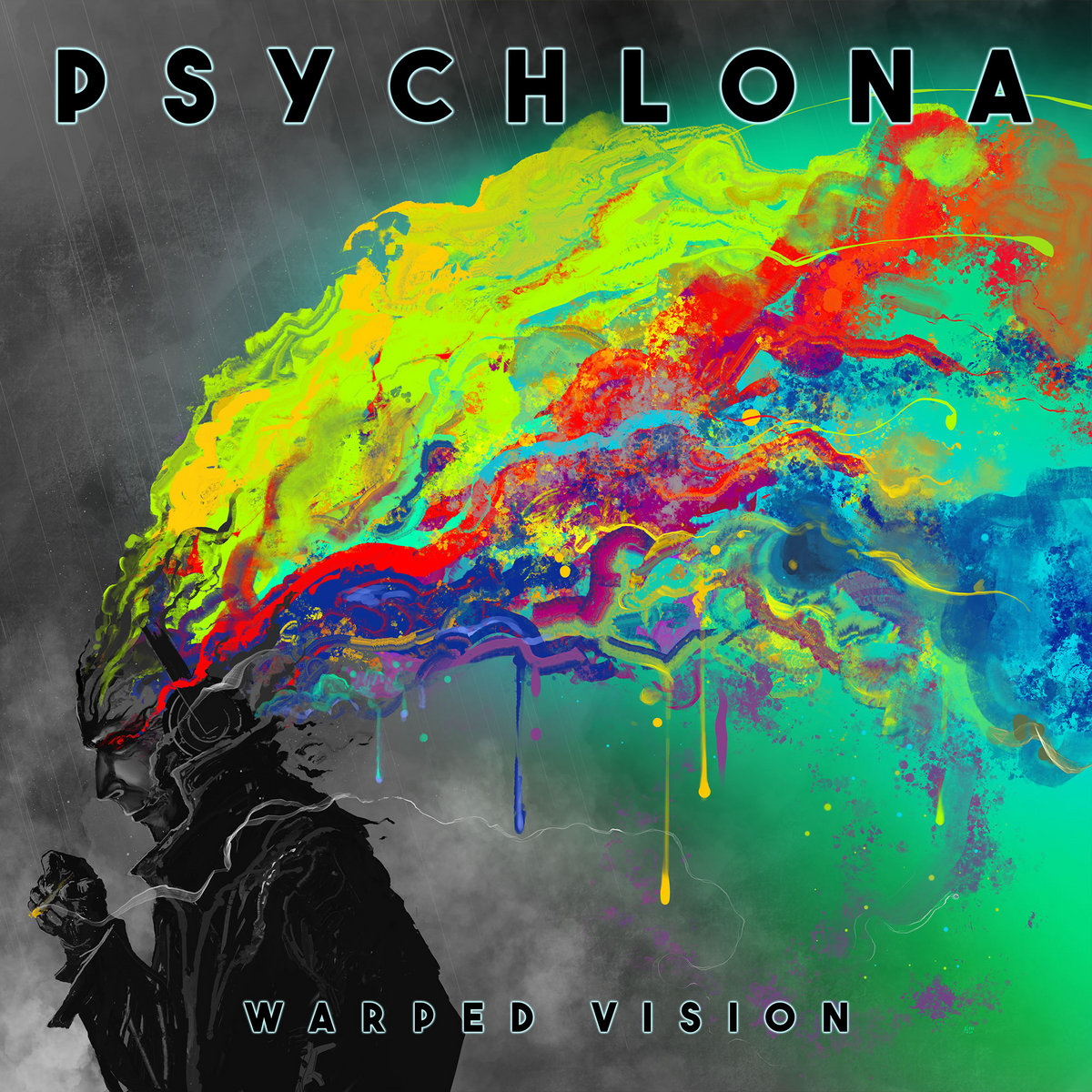
Perhaps if you were at Stoned From the Underground this past weekend in Germany you’d have been fortunate enough to catch UK heavy rockers Psychlona heralding the upcoming release of their fourth album overall and first through Magnetic Eye Records, Warped Vision. If not there, maybe Desertfest London back in May? If not, best I can tell you is wait your turn, they’ll get around to you eventually. There’s only so many places you can be at one time.
On that note, I’ll cop to being a couple weeks behind on posting word of Warped Vision‘s impending Sept. 27 arrival. I’m also a couple weeks behind on everything else in life, so rest assured that’s not a slight on the band. The album’s first single, “Let’s Go,” is streaming at the bottom of the post, and while I’m not Johnny-Fingeronthepulse here by any means, it’s not like it happened three years ago, so maybe we can all chill out with our internet-born attention spans and expectations of instant gratification. Or maybe I just suck at this. I think both things can be true.
From the PR wire:
UK Psych Desert Rockers Psychlona Return!
When it’s time to pick your poison, a blend of KYUSS and FU MANCHU is nearly always the base for a delicious result. PSYCHLONA are experts in their field, their fourth album “Warped Vision” is an exemplary exercise of practised veterans creating a masterpiece.
The album’s foundations are laid down by riff-focused heaviness and breakouts combined with a multitude of chilled vibes. What makes “Warped Vision” stick out from a host of similar recordings is the precision with which each hook hits home and sticks, a dynamic balance of rough edges and catchy melodies.
The city of Bradford in West Yorkshire is neither particularly arid nor situated in a hot climate. But although hailing from the former industrial heartlands of rainy Northern England, PSYCHLONA have developed a particularly British brand of desert rock. The hot summer days of 2016 inspired some local musicians to fry up some sonic ideas from sunny California of decades past and to blend in the raw energy of UK punk, a dash of the New Wave of British Heavy Metal, and spoonfuls of classic English 60s and 70s psychedelia. When this experiment far exceeded their own expectations, PSYCHLONA were born.
PSYCHLONA have established themselves as an impressive live act. Relentless touring and performing at prestigious festivals that included Desertfest (UK & DE), Freak Valley (DE), SonicBlast (PT), Alcatraz Music (BE), Sonic Whip (NL), and at Psycho Las Vegas (US) pushed the Brits higher up the billings. An incident in Las Vegas when they were the only band asked by the casino manager to please turn down the volume only fueled their upward trajectory.
Now, PSYCHLONA are ready to take the next big step. Welcoming two new members aboard the band has added a new dynamic both in writing and recording. The gentle alterations brought about by their fresh input has turned “Warped Vision” into what is clearly the most complete and thrilling album of the psychedelic desert rockers so far. With “Warped Vision”, PSYCHLONA have hit the jackpot, and they are generously offering up rounds for everyone.
Pre-order the album on CD or LP, including both neon yellow and green/black marble variants!
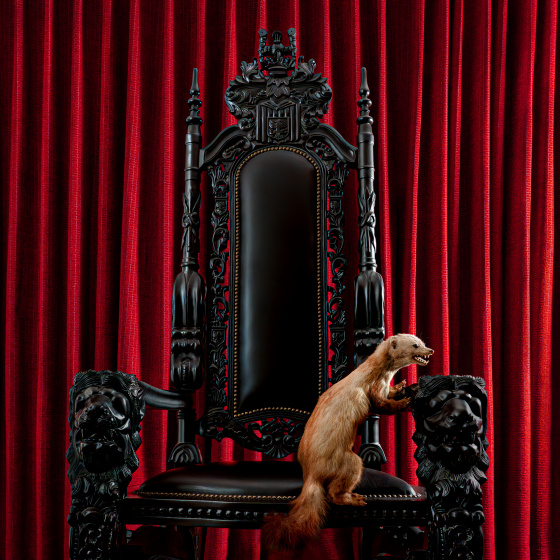
Thank you to guitarist/sometimes-vocalist Jamie McCathie from San Francisco’s Brume for the insights on the band’s new album, Marten (review here). Released in May through Magnetic Eye, it is a stylistic outlier from the bulk of heavy anything, with a character that moves forward from the then-trio/now-four-piece’s past work in ways that are likewise bold and exciting. I’ll put it forward as their best and most expansive collection to-date, and if you’re the type who puts value on year-end lists and things of that sort, I’ve been thinking of it as the one to beat for album of the year.
The songs are accessible, melodic, often beautiful, but it’s not an unchallenging or u h-harsh listen. Bassist/vocalist Susie McMullan, cellist Jackie Perez-Gratz and McCathie often share vocals — drummer Jordan Perkins Lewis even gets a word or two — in arrangements that are dynamic and emotional in kind, and from the accusation in “Run Your Mouth” to the need of “The Yearn,” the righteous spit of “How Rude” and loss-of-place-and-belonging in “Faux Savior,” Marten is unafraid of bearing its heart in a way that any number of genres would benefit by learning from.
I spoke to McCathie and McMullan earlier this year for a video interview, but Marten is such a complete, encompassing listening experience that a dive into the songs themselves felt warranted. As noted above, McCathie was kind enough to get on board with the idea. The results follow.
Thanks for reading:
Brume, Marten Track-by-Track with Jamie McCathie
To start, please tell me about putting the songs together as a four-piece for the first time. How involved was Jackie in the writing? How was it different from when you did Rabbits?
A lil delayed (Euro tour was a blast) so thank you for having me and letting me ramble.
Everything about the approach for this record was new, that’s part of what makes it so exciting.
There were a handful of songs that came out of covid, a huge emphasis on lyrics-first, so there was a lot of instrumentation, arrangement and ideas that all four of us were involved with. Once Jackie started practicing with us on a more regular basis it was amazing how quickly it felt good. Not that I was concerned, but we three have been a unit for 10 years. She brought a level of musicianship and practical music knowledge that elevated everything, our jams, our conversations and even frankly us individually as musicians. She’s really direct about what she likes and dislikes (my favorite trait in a creative) and as you can probably tell, all of these songs have a big influence from her, way beyond just her playing cello.
On our plane ride back from Desertfest NY, me and Jackie talked about doing a ‘Fleetwood Mac’ album now that we had three vocalists. That opened up a lot of ideas and sounds we hadn’t previously explored. We did lots of demos, back and forth critiques with Sonny [DiPerri, producer], so the pre-production process made us talk, question and push each other to try things and get uncomfortable. It was intense but an incredible experience.
Rabbits, I did a little more backing vocals. We pushed ourselves to include more dynamics than previous recordings, but with Marten we just pushed more, further away from the standards of metal/doom. I think Marten sounds like a fairly natural progression from Rabbits. I’m pretty keen to see how much further we go with our new lineup.
How did you land on Sonny DiPerri to produce? Was there something specific you wanted in terms of sound or something about his work that stood out?
We immediately knew from the first few songs we weren’t making a ‘traditionally’ heavy record.
“Jimmy,” “Run Your Mouth” and “The Yearn” were the first. Based on these we felt it would be interesting for us to work with someone else instead of Billy, who definitely makes the most incredible heavy recordings.
I love Emma Ruth Rundle, I had JUST heard her latest and most beautiful (Engine of Hell) record that I thought sounded INSANE. It is so delicate, beautiful and raw. Just her singing and playing. It sounds like you are sat next to her. I immediately googled the producer, and to my excitement, he’d worked on pretty much all of her other records. Marked for Death and On Dark Horses are both amazing, dynamic band performances. Once I read that he had also worked with Lord Huron (another love of mine), Portugal the Man and Diiv, we knew that he would bring an eclectic influence that would help us go where we thought we were headed. I had it in my head that the aim for this record was to make ‘our Kid A’. I used this analogy a lot. Luckily, Sonny is as big a Radiohead nerd as I am. Needless to say we hit it off.
To get into the songs, you start the record with “Jimmy.”
First off (as mentioned last we spoke), this started as a Susie rap. She sent me a trap beat that was a generic Logic loop and that she recorded “Jimmy rise Jimmy rise, from the basement” over. It sounded wild, but I loved the melody and lyrics, they felt fresh for Brume. We pushed the tempo much slower than she originally sent, a more laid back approach. The minimal guitar part made way for the bass to drive the song and the cello to take center stage next to the vocals. The drums have this odd-timed, really interesting rhythm that is really considerate of the vocals, Jordan plays with a lot of restraint on this. Overall there’s definitely a whole bunch of Emma Ruth Rundle influence to this track, but also some Tinariwen / West African guitar (solo/lead part) as well as our first Fleetwood Mac moment, the a capella.
This song originally never had the big ending. We had this idea to make it feel so laid back it kinda never went anywhere, just chillin’. Sonny pushed for it and now I love it. Susie’s vocal performance at the end there is another level. She’s a fucking badass. The big end also gave us the opportunity to take it back down, me and Jackie doing ‘swirlies’ is our happy place. We get to harmonize a bunch and just make pretty, sad-sounding music. It makes me happy.
“New Sadder You”
This song was a jam from Rabbits that never made it. It came into the fold kinda late in the game for Marten. I brought it back because I always liked how odd it was, it just didn’t click before. The big ‘aha!’ moment when it clicked was when the cello took over bass duties in the verses. I envisioned the sound of the flamingos, a doo wop vibe to the guitar.
Susie had this melody / line I was obsessed with: “that’s who I was supposed to be” that sounded like Dusty Springfield or Nancy Sinatra to me. I thought it would be cool to bring in that ’50s/’60s thing that was happening. That and Radiohead “Nude.” The chorus we worked hard on in the studio, that hook being one of Sonny’s faves from the record. The band gets bigger and rockier to meet that epicness, then it gets intense and weird, Melvins meets Brutus. Jordan RIPS on this song. It’s fun to play live. He had all these cool pause ideas that totally add to it and the F-you ending is the cherry on top.
“Faux Savior”
This was Jackie’s first ‘Riff’ she brought to a Brume practice. I feel somewhat bad about this one ‘cos she clearly had this epic, evil doom melody that I heard and desperately wanted to turn it into an alt-country vibe. I heard Sharon Van Etten or Big Thief meets True Widow in the verse, then a spooky Portishead thing in the chorus. Thankfully Jackie got her doom part by the end/drop. Susie had this whole concept lyrically and pushed her vocals to be the most gospel, spoken word and low in her register — it’s real cool. Jackie’s backing vocals are so haunting and beautiful and Jordan even joined us as the fourth vocalist on the ‘Faux Savior’ chants.
“Otto’s Song”
Very personal song for me. Guitar part came from just days after my son was born. It’s like the most Nick Drake thing I could write. He was almost called ‘Thula’ (if he was a girl). This was after a Zulu lullaby my wife grew up singing as a child (she’s from South Africa). Once the idea came to use the lyrics from that poem, I thought it would be cool to do a Ladysmith Black Mambazo, three-part vocal thing. These are prominent throughout but most prevalent at the end. The drums and the bass coming in heavy was an idea based on the song “Wake Up” by Arcade Fire, and then towards the end heavy part a moment of Pumpkins/Weezer. As I type, I realize how very bizarre this song is.
“How Rude”
This originally came from listening to a King Woman song. Sprinkle in plenty of Radiohead/In Rainbows, throw in an epic Yob ending and it probably makes a lot of sense. Ha, SIMPLE!
“Heed Me”
Susie had these amazing lyrics and vocal melody. We toyed with a few ideas but nothing ever quite fit, including drums and guitar. Susie had this idea of making a Fever Ray or Björk-type song, she wanted to get weird and we encouraged her.
Jackie came with this awesome looped cello sound that is the backing track, the rest is Susie and Lorie Sue locked in this intense conversation. Me and Jordan didn’t know what Susie had planned with Lorie on this when she turned up to the studio. We got into it real quick. I think folks should expect more experimentation like this from Brume in the future. I feel like we just scratched the surface of where this could go for us.
“Run Your Mouth”
I picked Susie up on way to practice one day and we listened to Mogwai’s “Helps Both Ways.” We did not talk, just sat and drove. It is so beautiful, my favorite song of theirs. Fast forward a few months, Sonny suggested slowing “Run Your Mouth” down even more than it was, and I utterly fell in love. This is my favorite song on the album, hands down. It’s so raw, so beautiful, so gentle. Everything I wanted to reach on Marten. Originally intended for a collab track with Mark Lanegan before his passing. This was a true homage to Portishead when it began. Mogwai (and Sonny) guided us to the finished piece.
“The Yearn”
Susie had a real Dolly Parton thing going on this song, I was listening to a lot of Angel Olsen and she and Sonny encouraged me to play a bunch of slide guitar. I was in blues rock band for a while back in London (shoutout Rowse), so this felt like a real blast for me. We had also both been obsessed with Arooj Aftab’s record Vulture Prince. Go smoke a joint right now and listen to that album ‘cos it’s life changing. She’s a Pakistani/American singer that creates the most calm, dreamlike music. Her vocals are so utterly haunting and beautiful — it really influenced the overall vibe of this one. Jordan recorded with a tiny jazz kit to get the sound on this and “Run Your Mouth.” Sonny had a Beck / Seachange idea and I think it really paid off and really set the tone for these tracks.
The outro is 100 percent inspired by the best Guns ‘n’ Roses solo, “Nightrain.” Just as Slash is about to let rip, the track fades. His bent at the end is so good. I can’t play guitar solos, so this was my nod.
How long did it take for the running order to come together and what was that process like?
Susie has always been great at developing ‘flows’ for setlists. She has a strong sense of the journey she wants to take people on and she applied that here. There were a few shuffles here and there, but the arc was pretty mapped out.
Anything else you want to mention about the record as a whole, or anything else for that matter?
Sonny said to me halfway through recording that while I thought I was making Brume’s Kid A, we were in fact making our OK Computer. This made me both sad, and completely excited.
I can’t wait to make more music and see where Brume go from here.
People and faces, horses and wolves in the mind, a tumult of inner and outer overwhelm; it’s no wonder that Greenleaf‘s ninth album, The Head and the Habit, starts with the reminder to “Breathe, Breathe Out” amid all the tumult. There’s more to it as well. 2024 makes it 10 years since 2014’s Trails and Passes (review here) introduced vocalist Arvid Hällagård to listeners. Hällagård stepped in to fill the significant shoes of Oskar Cedermalm (also Truckfighters), who had handled vocals on their two prior outings, and has gradually become a defining presence in the band. Never more so than on The Head and the Habit, which in addition to serving as a handy showcase for how the Swedish four-piece founded by guitarist Tommi Holappa (also Dozer) have taken shape in the last decade, is also the band’s first outing for Magnetic Eye after a trilogy of releases — 2021’s Echoes From a Mass (review here), 2018’s Hear the Rivers (review here) and 2016’s Rise Above the Meadow (review here) — issued through Napalm Records.
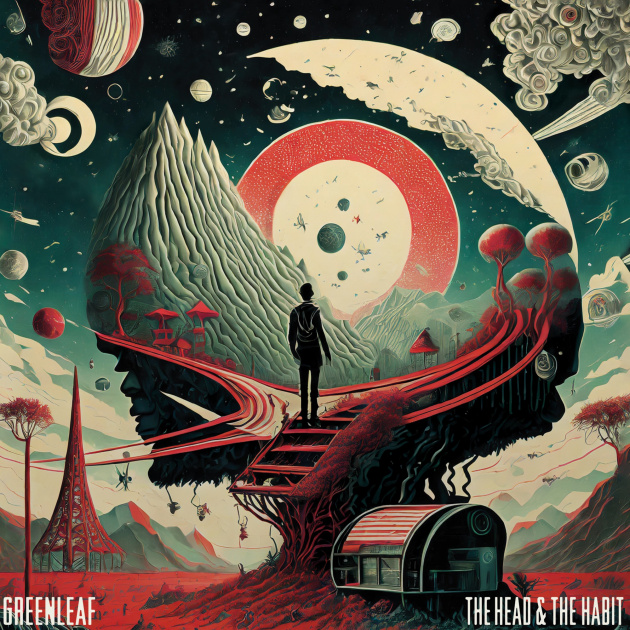
Hällagård fronts the band — Holappa, bassist Hans Fröhlich and drummer Sebastian Olsson — with marked presence in the material, and with the somewhat contrasting pair of shorter, subdued blues cuts “That Obsidian Grin” and “An Alabastrine Smile” positioned at the end of each side, his soulful delivery has become an essential facet in the band’s consistently evolving dynamic, as well as the symmetry of this LP in its own right. Greenleaf has seen a number of vocalists (not to mention bassists or drummers) come and go, between Fredrik Nordin (Dozer), Peder Bergstrand (Lowrider). and Cedermalm, but the nine songs of The Head and the Habit wouldn’t function as they do with another singer. In framing the lyrics around his experience as a counselor, handling the cover art (Lili Krischke also contributed to the layout) and recording whatever of his own performance wasn’t captured by the esteemed Karl Daniel Lidén (who once upon a time drummed in Greenleaf, lest we forget) at Studio Gröndahl in Stockholm, Hällagård‘s work in cuts like the duly charging “Different Horses” or the eight-minute side B apex “The Tricking Tree” cannot be discounted as part of the band’s persona, especially as they lean further into their own version of a heavy blues sound.
That’s not to say The Head and the Habit lacks for thrust, but where Echoes From a Mass edged closer than ever in terms of riffing to the intensity Holappa might proffer with Dozer — whose first album in 15 years, Drifting in the Endless Void (review here), came out in 2023 on Blues Funeral — this 43-minute collection feels more dug into Greenleaf‘s distinguishing elements. The meandering solo before “The Tricking Tree” slams into its final, nodding roll, answering back to the weight wrought in the likely-titled-for-its-tumbling-riff second cut “Avalanche” much as “That Obsidian Grin” and “An Alabastrine Smile” or even the hooky “Breathe, Breathe Out” and its side-B-opening counterpart “The Sirens Sound” serve as complements. The structure of the record puts one additional song on side A, but the cohesiveness and clarity of purpose throughout — as well as the breadth of the mix/master Lidén at his Tri-Lamb Studios — allows Greenleaf to shift intention from one track to the next without losing sight of where they are in the overarching progression.
The result is that The Head and the Habit flows smoothly despite conveying a bumpier path in theme and sound. Part of what makes it a success is the swagger put into a piece like “Oh Dandelion,” with its start-stop verse and twisting chorus, but as Greenleaf once again diverge from Dozer in terms of style, it’s the bluesier nature underlying even the shove of “Different Horses” or the foreboding “A Wolf in My Mind” — the hook of which brings the album’s title line — that comes into focus as being crucial to the songs. From the righteous shaky-cam rumbles of tone in “Avalanche” to Holappa‘s wistful leads in “An Alabastrine Smile,” as heavy and loud and brash or as quiet, lonely and contemplative as they want to get, it all becomes part of a take that is inextricably Greenleaf while reorienting the band’s position in terms of style, pulling in a direction they seem to be charting as they go.
This is exciting enough in concept — Greenleaf are approaching the 25th anniversary of 2000 their self-titled EP (discussed here); such ongoing creative development is rare regardless of how personnel factors in — but none of it would matter if the songs didn’t hold up. Fortunately, they do. It’s hardly the first time the band have been catchy and able to pack an emotional punch, but they continue to make it sound easier than it actually is from “Breathe, Breathe Out” on. And even in “The Tricking Tree,” with its earlier bashing away and pre-midpoint departure into mellower, jammier, bassier fare, they hold a sense of energy that is individual, unquestionably theirs. Olsson‘s drumming can’t be discounted in keeping the material fluid, but this incarnation of Greenleaf has put in the time on stage and in the studio to win their chemistry as a collective, and the strength of craft across The Head and the Habit feels like its own reward. It’s not just Holappa‘s riffs — though that might be enough, considering — or Hällagård‘s vocals, the character in Fröhlich‘s bass or Olsson‘s drums; it’s how they come together around these songs, which vary in shape but are largely unflinching in quality.
Any album a given band might release is a marker of an ‘era’ in terms of encapsulating a time in that band’s existence — and, obviously, all things end at some point or another; Greenleaf don’t owe anyone anything and have precious little to prove, though they keep proving it anyhow — but The Head and the Habit seems so much to look ahead and to so fervently bask in what makes Greenleaf who they are nearly a quarter-century on that one can’t help but think of it as the realization of what their last decade has been driving toward. A to-date culmination made all the more vital by the high level of performance, the almost deceptively tight songwriting, and the fullness of scope in its component pieces and the flow between them. They’re a special band, and to call The Head and the Habit one of 2024’s best in heavy rock feels like limiting its appeal in terms of time and underselling the growth that’s led Greenleaf to this point — it’s part of a story bigger than itself — but it’s true just the same.
Posted in Whathaveyou on June 11th, 2024 by JJ Koczan
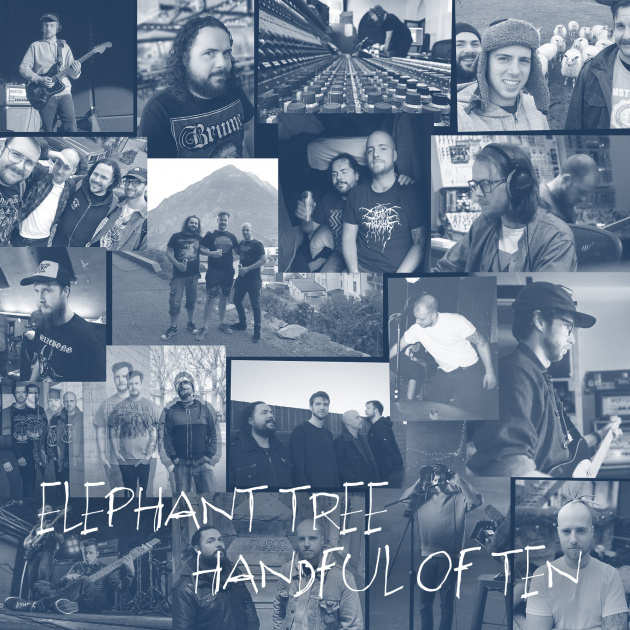
There’s a lot of information below, but what it works out to is Elephant Tree are reissuing 2014’s Theia (review here) and 2020’s Habits (review here), and releasing a new B-sides/rarities compilation, Handful of Ten, in celebration of their 10th anniversary. It’s all out Sept. 6 through Magnetic Eye Records, to which the band returns following the dissolution of Holy Roar Records, and there’s a video up for the previously unreleased “Try” now.
The pitch is easy: the advent and emergence of Elephant Tree from London’s e’er-saturated underground is one of the best things to happen to heavy rock in the last 10 years. Their 2016 self-titled (review here, discussed here) — which I generally count as their debut, with Theia as an EP prior — remains a landmark, and I’m pretty sure the only reason it’s not included in the reissue batch is because it hasn’t been allowed to go out of print. Nor should it. But there is some new-to-listeners music included with Handful of Ten, including “Try” with the video at the bottom of this post.
Oh yeah, and I did liner notes for the Theia release.
I think that’s the basics. The PR wire has a deeper dive on all of it, plus live shows:
ELEPHANT TREE drop video single ‘Try’ & celebrate anniversary with 3 releases
ELEPHANT TREE are having a party and they’re inviting everyone to hitch a ride and join in! September 2024 marks ten years since Magnetic Eye’s release of the beloved British stoner doom quartet’s first album “Theia” (2014), and in observance of that milestone, the label is proud to showcase three releases celebrating one of the label’s landmark bands:
“Theia” (Anniversary Edition) and “Habits” (2020) are presented as reissues without additional audio content, but in new physical formats. The former comes packaged with updated artwork and significantly expanded background content (see below for more details).
The third release entitled “Handful of Ten” is a new full-length containing brand-new tracks, demos, and b-sides, and includes two of the first new ELEPHANT TREE tracks in numerous years, recorded specifically for this compilation. All three albums have been scheduled for release on September 6, 2024. Pre-orders are available viahttp://lnk.spkr.media/elephant-tree-ten
As a first delicious taste from “Handful of Ten”, the Londoners release the video single ‘Try’.
“This was really a cathartic exercise in playing something a little different, written with an initial cast-away attitude after a few pints on a sweltering summer’s day”, guitarist and singer Jack Townley writes on behalf of the band. “We don’t play faster songs often, let alone get space to add them to records. The subject matter is about someone conforming to try be a model citizen, not wanting to step out of line in fear of the repercussions. He tries his hardest to not express his alternate views while others around him conform and in the end it all boils over, leaving him feeling ‘forever lost’.”
Tracklist: 1. Attack of the Altaica (2013 Demo) 2. Visions (The Planet of Doom) 3. Try 4. Bird (2017 Demo) 5. Faceless (2017 Hurin Version) 6. Sunday
The seed for ELEPHANT TREE was planted in a rehearsal space somewhere in the smelly back alleys of England’s sleepless capital of London in 2013. There, the first notes of what would become ‘Attack of the Altaica’ sprang from the bass of Jack Townley and Sam Hart’s drums. Thus, it is fitting that this earliest demo became the opening track of the band’s new rarities collection “Handful of Ten”.
Soon the duo became a trio with the addition of bassist and vocalist Peter Holland, who had already established himself in the London scene with TRIPPY WICKED & THE COSMIC CHILDREN OF THE KNIGHT, allowing Townley to pick up the guitar again. With the addition of Canadian sitar player Riley MacIntyre, who also stepped in as a third singer, the band’s classic first line-up was completed.
From there, things fell into place quickly. The infectious blend of warm, syrupy fuzz and soaring vocal harmonies on the demo ‘Attack of the Altaica’ captured the ears of Magnetic Eye Records. Soon a contract was signed and the debut full-length “Theia” was released in September 2014. ELEPHANT TREE had a lightning start and the debut album achieved an excellent reception by critics and fans alike. Now reissued as “Theia” (Anniversary Edition), the music of this milestone release is untouched, but the artwork has been given a refreshing inversion, and a wealth of rare photos, liner notes and lyrics have been added to provide a thorough look at the band’s first decade since the original release.
These hardworking Englishmen did not rest on their laurels, and in 2015 followed up with the self-titled sophomore full-length “Elephant Tree”. While “Theia” had opened the European continent for touring, their second album carried ELEPHANT TREE across the Atlantic to perform at the tastemaker Psycho Las Vegas.
In the meantime, John Slattery, who initially was added to give support as second guitarist and synth player for the band’s live shows, joined ELEPHANT TREE as a permanent member. About the same time, Riley MacIntyre decided to draw back from the band to focus on production. ELEPHANT TREE also decided to try a label closer to home, a choice which ultimately did not work out as the new label ran into trouble and left the band’s third and latest album “Habits” (2020) without the ongoing support it deserved.
During the turmoil of the global pandemic years, ELEPHANT TREE were affected and set back like everyone else. Jack Townley suffered a serious accident in early 2023, and the time needed for his recovery delayed the band again. Yet despite all of this, they put plans into motion for a return both to the stages and studio. Taking matters into their own hands, the band initiated a plan to self-release some of their material – with a little help from old friends. At long last, ELEPHANT TREE are reissuing the acclaimed “Habits” via Magnetic Eye to make it widely available once more and satisfy the continued demand.
Looking back at ten most exciting years, ELEPHANT TREE enthusiastically present ‘Handful of Ten’ containing great tunes pulled from their archive alongside the brash and blistering new tracks, ready to delight longtime followers and win over new friends to their unique brand of melodic doom: all thriller, no filler!
Mastering of all tracks by Karl Daniel Lidén Artwork & layout by Ieva Misiukonytė
Available formats “Handful of Ten”
“Handful of Ten” is available as digisleeve CD, as a solid white vinyl LP, and as a marbled black & violet vinyl LP.
Available format “Theia” “Theia” (Anniversary Edition) is available as 36-page hardcover CD-Artbook, and as a gatefold LP on marbled clear, white & transparent green vinyl.
Available formats “Habits” “Habits” is available as digisleeve CD, and as a marbled orange & white vinyl LP.
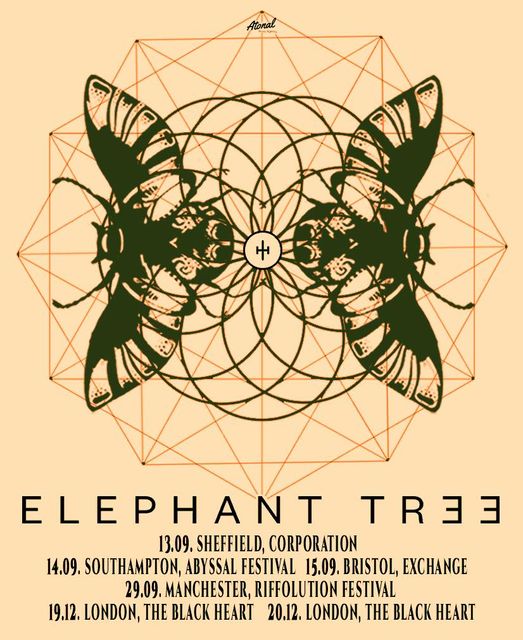
Live: 13 SEP 2024 Sheffield (UK) The Corporation 14 SEP 2024 Southampton (UK) Abyssal Festival 15 SEP 2024 Bristol (UK) The Exchange 29 SEP 2024 Manchester (UK) Riffolution Festival 19 DEC 2024 London (UK) The Black Heart 20 DEC 2024 London (UK) The Black Heart
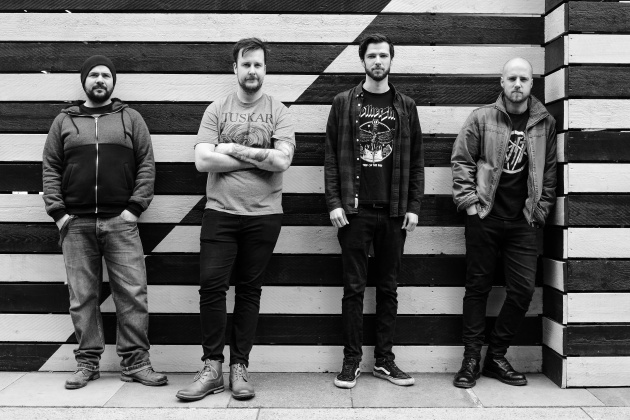
Current line-up: Jack Townley – guitar, vocals, synths Peter Holland – bass, vocals John Slattery – guitar, synths, vocals Sam Hart – percussion
Posted in Whathaveyou on May 7th, 2024 by JJ Koczan
While by no means the longest stretch of touring London’s Elephant Tree have ever done, it is noteworthy in the context of the “return to the stage” mentioned below. That return, which took place at Masters of the Riff III in London in early March, follows a mostly quiet stretch as guitarist/vocalist Jack Townley has been embroiled in an ongoing, months-if-not-years-long recovery from a cycling accident that nearly ended his life. Seriously. I’ve heard the list of bones broken and innards damaged. It is extensive.
So while you’d look at a weekender in September, a stop at Riffolution Festival in Manchester and two nights at London’s famed The Black Heart from a lot of acts and think it’s not the hugest amount of activity ever, that Elephant Tree are “getting back” at all is a reason to rejoice.
They have releases upcoming as well, which I know because I have two ongoing liner-notes projects for the band. One is the split LP with Lowrider that will be out as part of Blues Funeral Recordings‘ PostWax series. The other one I haven’t seen announced as yet — if you’re thinking it might be album-three, it’s not — so I will hold off talking about to be on the safe side, but suffice it to say I’ve been digging back into their catalog of late and as they’re on my mind anyhow, I’m happy to see something like this take shape and the fact that they’ve got a booking agency again speaks of more to come, if not this Fall, then after. I hope that’s how it pans out.
From socials:
Following on from our surprisingly smooth return to the stage earlier this year, we thought we’d team up with Atonal once again to go on a little jolly this September and December. It gets awful stuffy in them recording rooms and we need a rest from reviewing artwork…
Catch us live at: 13.09.2024 – The Corporation, Sheffield 14.09.2024 – Abyssal Festival, Southampton 15.09.2024 – The Exchange, Bristol 29.09.2024 – Riffolution Festival, Manchester 19.12.2024 – The Black Heart, London 20.12.2024 – The Black Heart, London
Posted in Whathaveyou on May 6th, 2024 by JJ Koczan
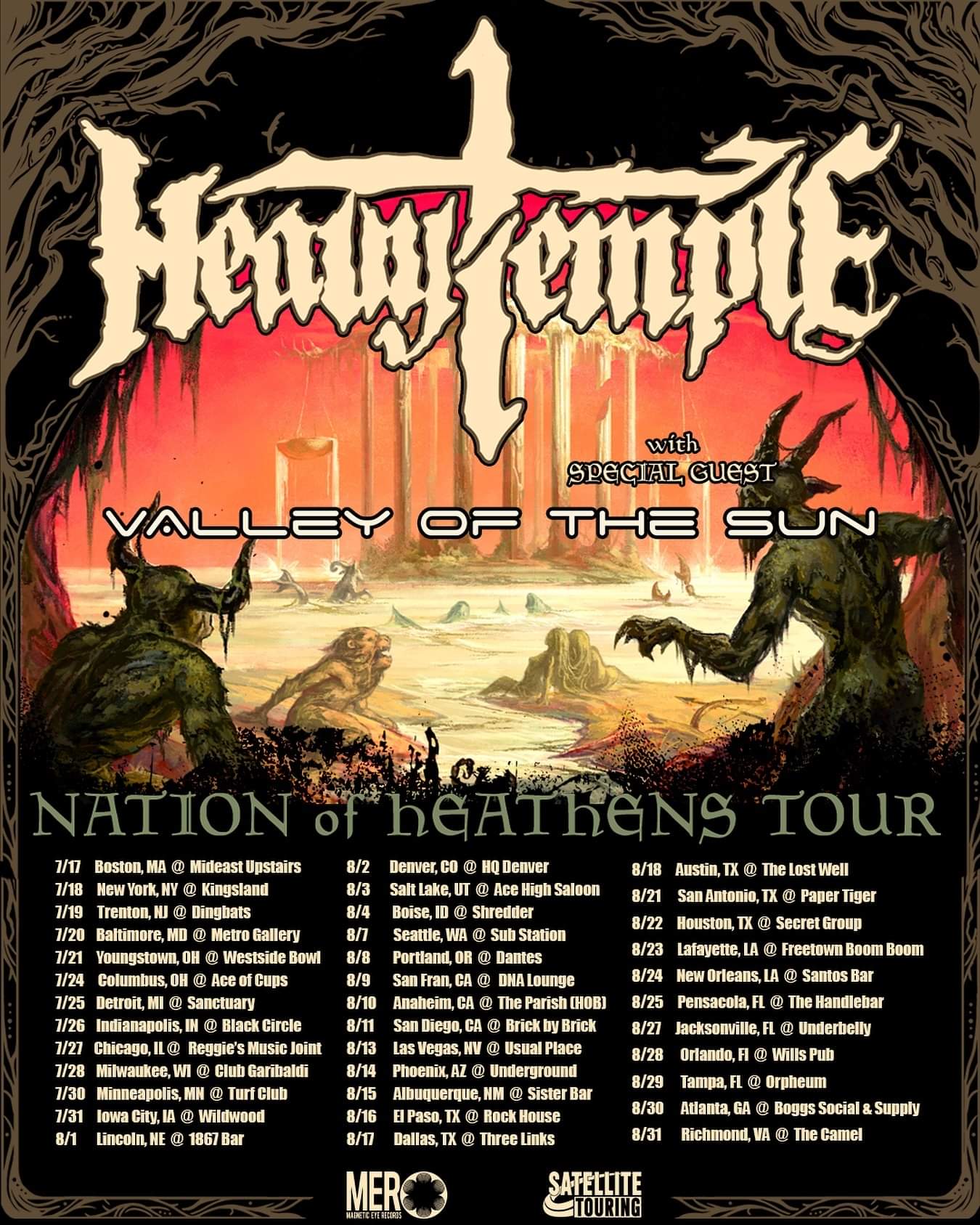
You can’t look at the extensive list of dates below and not accuse Heavy Temple of slacking, to say the least of it. The Philadelphia trio will be out for six-plus weeks on this coast-to-coast US headlining tour, which I think is the longest single stretch they’ve yet undertaken, though I wouldn’t swear to it. In any case, it is a striking amount of shows, and in a time where a lot of bands break up the States into East or West Coast runs and cover the spaces between, Heavy Temple signal a righteous diving-in here.
They go in support of one of 2024’s best LPs, Garden of Heathens (review here), their second record through Magnetic Eye and built on a similarly all-in ethic as regards both craft and bombast. Note as well that support will come from also-no-strangers-to-the-road Valley of the Sun from Ohio, who are currently streaming the first half of and taking preorders for their forthcoming Quintessence LP (info here) ahead of releasing the second part and physical versions in the coming months. I hope they have ’em to bring on the tour.
And by “the tour” I mean this one. Behold:
The Nation of Heathens tour kicks off July 18th! We’re super stoked to have @valleyofthesunband with us on all these dates, and we’ll be joined by some other friends along the way. See dates below! 👇👇👇
7/17 – Boston, MA @ Mideast Upstairs 7/18 – New York, NY @ Kingsland 7/19 – Clifton, NJ @ Dingbats 7/20 – Baltimore, MD @ Metro Gallery 7/21 – Youngstown, OH @ Westside Bowl 7/24 – Columbus, OH @ Ace of Cups 7/25 – Detroit, MI @ Sanctuary 7/26 – Indianapolis, IN @ Black Circle 7/27 – Chicago, IL @ Reggie’s Music Joint 7/28 – Milwaukee, WI @ Club Garibaldi 7/30 – Minneapolis, MN @ Turf Club 7/31 – Iowa City, IA @ Wildwood 8/1 – Lincoln, NE @ 1867 Bar 8/2 – Denver, CO @ HQ Denver 8/3 – Salt Lake, UT @ Ace High Saloon 8/4 – Boise, ID @ Shredder 8/7 – Seattle, WA @ Sub Station 8/8 – Portland, OR @ Dantes 8/9 – San Fran, CA @ DNA Lounge 8/10 – Anaheim, CA @ The Parish (HOB) 8/11 – San Diego, CA @ Brick by Brick 8/13 – Las Vegas, NV @ Usual Place 8/14 – Phoenix, AZ @ Underground 8/15 – Albuquerque, NM @ Sister Bar 8/16 – El Paso, TX @ Rock House 8/17 – Dallas, TX @ Three Links 8/18 – Austin, TX @ The Lost Well 8/21 – San Antonio, TX @ Paper Tiger 8/22 – Houston, TX @ Secret Group 8/23 – Lafayette, LA @ Freetown Boom Boom 8/24 – New Orleans, LA @ Santos Bar 8/25 – Pensacola, FL @ The Handlebar 8/27 – Jacksonville, FL @ Underbelly 8/28 – Orlando, Fl @ Wills Pub 8/29 – Tampa, FL @ Orpheum 8/30 – Atlanta, GA @ Boggs Social & Supply 8/31 – Richmond, VA @ The Camel 🐍🍎
The anticipated sophomore full-length from big-swing Austin, Texas, heavy rockers High Desert Queen, Palm Reader, is set to release May 31 through Magnetic Eye Records. And as the follow-up to 2021’s well-received Secrets of the Black Moon (review here) and the four-piece’s 2023 split with Albuquerque’s Blue Heron, Turned to Stone Ch. 8: The Wake (review here) — both on Ripple Music — it answers the high expectations placed on it with organic craft and a focus on largesse that would seem to put the ‘Texas’ in the self-applied tag ‘Texas desert rock.’
That is to say, with Palm Reader, High Desert Queen are all in. There’s no sneering irony or pretense in the seven included cuts, and as heavy as they are, the vibe is positive even in the mellow first half of the penultimate “Tuesday Night Blues,” which is about as close to a comedown as the band — vocalist Ryan Garney (also of Lick of My Spoon Productions and the ‘head honcho’ of Ripplefest Texas), guitarist Rusty Miller, bassist Morgan Miller, drummer Phil Hook — get, and the collective pursuit of bigger riffs and nods comes through fluidly with an engrossing and reportedly live-performance-centered production by Casey Johns at Yellow Dog Studios in Wimberley, TX, and the subsequent mix/master at Tri-Lamb in Sweden by Karl Daniel Lidén (Greenleaf, Dozer, Katatonia, on and on) highlighting space and impact alike.
With “Ancient Aliens” and “Death Perception” — the latter featuring a duet with guest vocalist Emma Näslund of Gaupa, whom the band met in Stockholm at Truckfighters Fuzz Fest in late-2022 (review here) — at the outset, Palm Reader welcomes the listener into the set, digs in for the first of two nine-minute jammers without losing sight of the hook in “Head Honcho,” and never diverts from its central goals of conveying the band’s onstage energy and penchant for turning choice riffs into good times. If you come out the other side of the massive, increasingly-shoving chug that closes the album in “Solar Rain” — the other nine-minute jam — and say to yourself that High Desert Queen are a band you need to see live, then Palm Reader will likely have fulfilled the band’s mission for it.
It’s not that they’re reinventing their genre or enacting some kind of stylistic insurgency, but High Desert Queen came out of the gate knowing what they were about, and Palm Reader refines their songwriting while staying true to the core purpose. They’re not fixing what wasn’t broken, and the album isn’t just a succession of comfortably-paced lumbering nods and catchy rhymes — as the centerpiece title-track demonstrates with its funkier strut to finish side A with a kick of momentum picking up from the scorching last chorus of “Head Honcho” — but while their material is more about audience-communion than trying to convince anyone within earshot how clever or progressive or even original they are, the sincerity of their delivery and the natural flow that emerges within and between the songs make long-established methods feel fresh, vibrant.
Secrets of the Black Moon did this as well, and the difference might just be the result of High Desert Queen having spent so much of the time between their two-to-date LPs on various stages in various countries, but whether it’s the still-grounded, semi-psych delve in the build toward that climax in “Head Honcho” or the drums setting the start-stop-and-twist pattern for the thickened boogie of “Time Waster” at the start of side B, the songs come across as thoughtful without being overwrought and arranged in such a way as to carry the listener from one end to the other with an overarching movement that doesn’t undercut the impact of the individual pieces comprising it. There’s a sweet-spot for this in heavy rock and roll. High Desert Queen follow the riff to get to it and reside there for the duration.
And nothing they do throughout, from their most mountainous stretches to the screams capping “Solar Rain,” from the declarative nod and post-C.O.C. burl of “Ancient Aliens” to the way “Palm Reader” provides enough of a shift in method that they don’t need an interlude to break up the proceedings, takes away from the heart behind it. I wasn’t kidding above when I said “all in.” Whatever else it might accomplish in songwriting, performance or reach, Palm Reader sounds like nothing so much as a band giving everything they have to each moment of its making. That’s evident in Garney‘s echoing bellows and Miller‘s deceptively-classy soloing on “Time Waster” as well as the point where “Tuesday Night Blues” kicks in from its quieter, spoken-word-topped intro to set its course of fluid loud/quiet trades in motion, and comes to feel like no less of a priority than the heaviest of riffs at the album’s foundation. While certainly self-aware in the sense of knowing what it’s doing, where it’s going and how it’s getting there, Palm Reader is most of all driven by passion.
Of course, chemistry also helps, and even putting aside the fact that Rusty and MorganMiller are related by blood, High Desert Queen have plenty of it on offer as they align around this or that movement, shifting smoothly whether it’s from the verse to the chorus of “Ancient Aliens” or bringing the midsection cacophony of “Solar Rain” to a stop to let the guitar lay down the riff anchoring the mounting intensity of the record’s finish. Front to back, High Desert Queen neither overshoot nor undersell their marks, and Palm Reader is the kind of outing you could play for someone with no prior familiarity or association with underground heavy music as ready argument in favor of conversion. It’s kind of a party, and without seeming like dumbed-down-for-accessibility caricature, it works on its own level to assure that all who might hear it invited. Give it the proper volume and you might just end up making friends.
The e’er-crucial preorder link, live dates and more info follow the premiere of the lyric video for “Death Perception” in the embed below, courtesy of the PR wire.
Please enjoy:
High Desert Queen, “Death Perception” (feat. Emma Näslund) lyric video premiere
HIGH DESERT QUEEN’s sophomore full-length “Palm Reader” is bursting with raw energy and radiates the feeling of 666 diesel horses thundering loud. The album is crammed with cool vibes, ripping leads, and a ton of desert fuzz with a focus on great songs rather than trying to stay confined within a corral of a particular style.
HIGH DESERT QUEEN had what it takes to kick the scene into gear again. Their vast musical influences ranging from grunge to funk, old school metal to doom and much more provide an ideal foundation for new ideas and a rejuvenating approach to the genre. Their thunderous, fuzz-drenched anthems are delivered with a healthy dose of groove and catchy melodies, and get a massive boost from an emotional intelligence in their music that’s hard to find. The newly-minted sound is linked to the rich heritage of their environs, inspiring the style tag ‘Texas desert rock’.
Answering the exponentially multiplying requests for new material from their steadily growing following, HIGH DESERT QUEEN flanked their live activities with the “Turned to Stone Ch. 8” split release with BLUE HERON, and contributed a track to “Best of Soundgarden Redux”, the latest instalment of the bestselling Magnetic Eye Records Redux series.
With “Palm Reader”, HIGH DESERT QUEEN have made a quantum leap in their evolution as the Texans found the perfect balance between the well-loved legacy of the desert rock genre and carving out their very own path. Fueled by the power and spirit of live music, this album rocks as hard and honest as can be done.
HIGH DESERT QUEEN live: 24 MAY 2024 Lafayette, LA (US) Freetown Boom Boom Room 25 MAY 2024 Houston, TX (US) White Oak Music Hall 26 MAY 2024 Arlington, TX (US) Division Brewery 30 MAY 2024 Austin, TX (US) The Far Out Lounge 31 MAY 2024 Bryan, TX (US) The 101 01 JUN 2024 San Antonio, TX (US) The Amp Room 02 JUN 2024 New Braunfels, TX (US) Guadalupe Brewery 13 JUL 2024 Erfurt (DE) Stoned from the Underground Festival 26 JUL 2024 Neuensee (DE) Rock im Wald Festival 21 SEP 2024 Austin, TX (US) Far Out Lounge, RippleFest Texas
Line-up Ryan Garney – vocals Phil Hook – drums Morgan Miller – bass Rusty Miller – guitar
High Desert Queen, “Ancient Aliens” official video