Posted in Reviews on December 11th, 2023 by JJ Koczan
[Full disclosure: this release originally appeared as part of Postwax Vol. II, for which I wrote the liner notes and was compensated. I’m reviewing anyway. If you want to call it a conflict of interest, feel free to sue me in the Open Court of Stoner Rock™ sometime. Or maybe just relax.]
The fifth full-length from Warsaw’s Dopelord, Songs for Satan is a masterpiece of devil-worshiping stoner doom metal. The ideal version of itself. Released through Blues Funeral Recordings, the seven-track (six plus an intro) offering sees the band — guitarist/vocalist Paweł Mioduchowski, bassist/vocalist Piotr Zin, guitarist Grzegorz Pawłowski and drummer Piotr Ochociński — in complete control of their approach on every level, from craft through the intricacies of tone and performance to the headphone-worthy atmospheres that come through material that is pointedly, intentionally, efficiently constructed. Each song is a monument to its own volume, and even the eerie quiet stretches are a call to listeners to join the band in their ceremonial cause.
It strikes an impeccable balance between melody and rhythm, with huge grooves through side A’s “Night of the Witch” — a landmark hook and one of 2023’s strongest singles; it emerges from the nighttime forest noise of “Intro,” comes back around (plus Mellotron!) for the two-minute epilogue/sequel “Return of the Night of the Witch” to wrap side B, becoming something of a root sonic theme for the record’s course — “The Chosen One” and “One Billion Skulls” through the corresponding maddeningly catchy love song “Evil Spell” mirroring “Night of the Witch” while being something else and the de facto capper “Worms” pushing into more extreme sludge ahead of the aforementioned outro, all with an overarching flow and an abiding lack of pretense that says if you came here for riffs and weed and Satan, Dopelord have your number.
There are myriad arguments for and against Satanism in rock and metal. It’s certainly been done before, if that matters (I’d argue less in-genre then generally). It’s an inherent validation of christianity, since even in mockery it acknowledges the dogma as a cultural force. It can be a crutch lyrically for some acts, but that’s not what’s happening across Songs for Satan, which was written lyrically as a political response to catholic cultural oppression in Poland and the hard move toward conservatism the Polish church has made since the ‘end’ of the Cold War. Amid basslines fat enough to keep you warm in a Warsaw winter and a guttural shout that acts as preface for the screams of “Worms” to come, “One Billion Skulls” repeats the lines, “Standing on the edge of time/I’m spitting in the face of god,” as its arrival point, and even the first verse of “Night of the Witch” is an exultation to those alienated by the militant faithful:
Each time they laugh into your face With each stone they throw You lose belief in who you are And cave inside Hear us calling from the dark Through the cold of the night Now your time has finally come To find your way…
A crow caws, the plod starts with fuzz of deceptive warmth and consuming largesse, and Dopelord guide the listener through Songs for Satan with cleverness, righteousness, and skill. To wit, the layering in the chorus of “Night of the Witch.” While consistent with the rest of the song-songs on Songs for Satan (not “Intro” or “Return of the Night of the Witch,” that is) in being circa seven minutes long, “Night of the Witch” stands out for how it’s built as well as its message and aural/stylistic appeal. Most of the album was recorded with Haldor Grunberg at Satanic Audio, who also mixed and mastered, while rhythm tracks, synth and vocals were done in Warsaw in Santa Studio and Silent Scream Studio.
Guitar solos were done separately, by Barszczi Kanada at Giorgio Mordo Studio, with the exception of “Worms,” which boasts guest shred by Midnight guitarist Vanik. This info is on Bandcamp and elsewhere, and is included here for future reference, but it demonstrates as well the process by which Songs for Satan was shaped and for a process that included four different studios at various points, there is not a part on the record, not a song, a verse, or the airy solo held out under the last rolling chorus of “Evil Spell” — that chorus, “What do I have to become for you to love me?/A wizard?/What will you become if you love me back?/A witch?,” imprinting itself upon the brain, perhaps permanently — that is wasted.
Everything on Songs for Satan aligns to the mission at hand. Dopelord are focused, detail-oriented as shown in the low-mixed growl adding weight to the chorus in “Night of the Witch” and throughout “The Chosen One” or the sort of tectonic shimmy as the title-line is delivered in “One Billion Skulls,” they present the most realized vision to-date of themselves. They’ve been at the forefront of Poland’s underground for a while — a rich and varied scene with the likes of Spaceslug, Belzebong, Tortuga, Sunnata, Weedpecker and scores of others — and reaffirm that position handily throughout as they crash and bash across the record’s 38 component minutes with cold grace, taking familiar elements of genre and putting them to specific, admittedly somewhat reactionary, purpose.
Despite being completely over the top in terms of volume and the basic hugeness of its sound, Songs for Satan doesn’t feel like it’s doing too much or too little; the burst-to-riff two minutes into “One Billion Skulls” and the derived-from-’60s-psych manner in which the keys (maybe Mellotron) play out the melody of “Night of the Witch” to conclude with “Return of the Night of the Witch” before they drop back to forest-night noise at the very finish underscores the level of consideration at hand. This is not lazy, nothing-to-say, haphazard, throw-riffs-together songwriting.
Rather, Songs for Satan — which in the PostWax edition included the extra track “Satan’s Call” — revels in its sense of completion. It is professional. Crisp. Sharp. Listenable. Accessible, at least if you’re already a capital-‘h’ Heavy convert. And it sounds massive enough to pull a gravity field. Front to back — and I mean that — Songs for Satan delivers on the promise of Dopelord‘s early output and draws strength from the unified perspective of the lyrics, while staying committed to the stoner-doom at their core, giving intricacies their due alongside the flattening effect of their tonality. Anger as successful motivator? Probably in part, but in these songs of defiance and Satanic praise, Dopelord build as many altars as they tear down. Easily among 2023’s most accomplished albums, and a defining moment for the band.
There will be those who write it off immediately thinking it’s cliché or who will otherwise miss the point. I would encourage you heartily to not be one of them.
Posted in Reviews on December 5th, 2023 by JJ Koczan
The second full-length from Polish heavy psych rockers Wodorost, titled From the Depths, arrives with a direct intent toward immersion. Following on from the Warsaw-based three-piece’s hotly-tipped 2021 self-titled debut, the band — guitarist/vocalist Bartłomiej Głowiński, bassist Jan Witusiński and drummer Anna Żukowska, teamed with returning producer Jacek Stasiak at Kongo Studio — offer a linear experience across two sides of engaging songwriting and what sounds like moments of expressive, fun improvisation on what has been positioned by the band as, “A concept work symbolizing a resurfacing from the abyss, a metaphorical journey through inner exploration and recovery from depression.” The theme can also, of course, be seen on the cover art by M & P Ferenc and Bartłomiej Głowiński.
And sure, one can hear hope in the newschool space boogie of “Whirl,” or in the warm, Colour Hazey tones that go exploring in “Temple” early on, or in the subsequent “Visions,” which is a funky raga wakeup jam with a sans-vocal chorus that returns to end after the song shifts through a Kyuss-style desert riff, but one has to be in it to hear it. That is to say, Wodorost have put it all in front of the listener, but the listener has to pick it up. If you’re not careful, if you don’t give From the Depths its own due time to unfold and reveal its structure in its own way, the eight songs and 45 minutes could wash over you beginning with the intro “Submerged,” which fades slowly in from silence on an atmospheric undersea drone, spooky, loosely threatening, but resonant just the same as the drums begin the march into “Depths.”
Maybe not such a surprise that the post-intro leadoff on a record does a lot of the work in telling the audience about the album, but in tone and purpose, “Depths” is a herald for what Wodorost will do throughout the LP with which the song shares part of its title, while at the same time an excellently placed divergence, since nearly all of what follows is almost completely instrumental. There are two spoken parts — Michał Ferenc (of the art?) contributes voice, Witusiński and Żukowska the words — on “Beyond the Blue” and “Reflections,” but other than that, “Depths” is the only cut on From the Depths that has vocals, and it is the only cut that has singing, which is handled by Głowiński with lyrics once again courtesy of the rhythm section.
This has an effect on the listener almost like a secondary introduction. Wodorost have taken the time to carefully bring you to this place and now they’re going to tell you about it, even if that’s not what the words are actually about. The sound is rawer on the hole, and more cosmically commanding, but the drums hold the procession through the finish and by the time “Depths” is done, Wodorost have completed the welcoming portion of the collection. You could say they did that with “Submerged” but as “Temple” begins its own subdued introduction, the patience and the sense of exploration feel distinct from “Depths,” which thanks to splitting “Submerged” off as the album intro, stood on its own. When the “Temple” riff begins, it’s the kind of next-generation interpretation of heavy psychedelic tenets that made Sungrazer such a draw over a decade ago, only now it’s a new generation again.
But the depth, scope and jam-prone foundations of the style remain firm, and Wodorost use them through the instrumental “Temple” and “Visions” to let parts and entire songs breathe as they seem to want to, and where a lot of bands will tell you they’re chasing creative energies distinct from themselves through the universe, “Beyond the Blue” is particularly organic in its change right around 5:30 when the subtle circling around the band have been doing clicks on the big-sound pedals and they ride that crescendo and its offset chug through the end of the song. Volume, warmth, flow. The spoken part gives a human presence ahead of the danceable “Whirl,” which turns improv-sounding before the guitar shreds in midair, while “Reflections” fades in on wispy runs of memorable lead notes — flicks of melody, almost — and builds on its light bluesy feel, setting itself on a trip that pays off noisy but doesn’t leave the comedown hanging as might be a misstep on an album that feels so otherwise complete.
That notion extends to “Dry Out” as well, which like stretches in “Whirl” and “Reflections,” in that From the Depths is effective in balancing composition and improvisation, and for someone new to the band like myself, the capping nod and entrancing instrumental course of the closer reinforces the potential Wodorost have displayed, whether a given song was more straightforward, set itself to wandering, or brought together both in a dynamic that one hopes will only prove so malleable over a longer term as they move forward. As it builds to its head right near the album’s completion, “Dry Out” still seems to be revealing places Wodorost might go and what they might ultimately bring to a genre that, for all its molten sound, is rarely so able to transcend its own methodologies.
Posted in Whathaveyou on July 26th, 2023 by JJ Koczan
The subscribers to the PostWax series from Blues Funeral Recordings got their Bandcamp download codes over the weekend — I know because I got mine; I’m not just the dork doing the liner notes, I’m also a client! — and I expect by now most if not all who’ve received them have dug into the new Dopelord album, Songs for Satan. Doing so will, perhaps, be revelatory for some.
As the first single, “Night of the Witch,” heralds, Songs for Satan is the broadest range of melody the Warsaw stoner-doom outfit have harnessed to-date in their decade-plus tenure, and if the single doesn’t get stuck in your head, listen again and pay closer attention. That hook is a defining feature of the record from which it comes, and along with the spaciousness of the vocals and the band’s characteristic weight of tone, it’s a can’t-miss for those who’d follow where a rolling riff might lead. Lumbering but not slow-for-show or staid in any way, “Night of the Witch” and Songs for Satan as a whole are landmarks the Polish heavy forerunners, who’ll support the Oct. 6 release on an extensive, previously announced tour.
Despite having, as alluded above, written the liner notes for this release, I’ll probably still try to review this one if I can. There’s a lot to say about what’s happening here, conceptually as well as with sound. We’ll get there.
From the PR wire:
Polish doom metal giants DOPELORD to release new album “Songs for Satan” on Blues Funeral Recordings; first single and preorder available!
Warsaw doom metal heavyweights DOPELORD have announced the release of their fifth studio album “Songs for Satan” to be issued on October 6th as part of Blues Funeral Recordings’ deluxe PostWax series. Dive into this gigantic new album with the debut single “Night Of The Witch” streaming on all platforms now!
“Hear you laughing from the dark/As they pray to their god/Now their time has finally come/To reap what they’ve sown.” – Dopelord, 2023
Having paved the way for Polish doom metal for over a decade by sticking to their strictly DIY ethos and hard work, mighty foursome DOPELORD is about to open a new chapter of its history by joining the coveted ranks of US label Blues Funeral Recordings (Acid King, Dozer, Lowrider, Dead Meadow).
Their fifth full-length “Songs for Satan” is a moment of critical mass for Dopelord. A blast of devil worship in the riffing realms is nothing new, and while they aren’t the first band to openly embrace the motif, their amplified heresy is uniquely triumphant, their fuzz-drenched apostasy genuine and glorious.
Not only does “Songs for Satan” showcase the band’s equal mastery of lumbering plod and silvery hooks, but it also more importantly mines Polish Catholicism’s decades of oppression for lyrical fuel. Tracks like “Satan’s Call,” “The Chosen One,” “One Billion Skulls” and “Worms” are pointed in their defiance of the church’s cultural dominance, even while managing to be contagiously singable at the same time. Maybe the extremity of their position will lead a few listeners to question their own beliefs and examine the church’s role, religion’s role (whether in Polish society or elsewhere) like a strong push to open a door. The voice of rebellion is crucial, and Dopelord’s shout is unmistakable.
Calling to mind Electric Wizard, Windhand, Belzebong and Acid King, “Songs for Satan” is Dopelord’s apex, an iconoclastic milestone for stoner doom that rumbles the earth and shakes our figurative foundations. It will be available on October 6th in various vinyl editions, limited digipack CD and digital. The ultra-limited deluxe vinyl edition will be shipped a few weeks prior to PostWax subscribers.
New album “Songs for Satan” Out October 6th on Blues Funeral Recordings Preorder:
TRACKLIST: 1. Intro 2. Night Of The Witch 3. The Chosen One 4. One Billion Skulls 5. Evil Spell 7. Worms 8. Return To The Night Of The Witch
Derailed from their aggressive live schedule for two years, DOPELORD blasted out the “Reality Dagger” EP in 2021 before setting to work on their boldest statement yet. On October 6th, 2023, their fifth album “Songs for Satan” will induct the mighty foursome as one of Europe’s heaviest and most faithful doom purveyors of the new era, crushing everything on their path under the Blues Funeral Recordings banner.
Dopelord on tour: Oct 12 Prague Modra Vopice Oct 13 Cottbus Muggefug Oct 14 Jena KuBa Oct 15 Braunschweig B58 Oct 16 Hamburg Hafenklang Oct 17 Malmö Plan B Oct 18 Copenhagen Loppen Oct 19 Kiel Schaubude Oct 20 Groningen Café de Walrus Oct 21 Nijmegen Doornroosje Oct 22 Antwerpen Trix DesertFest Belgium Oct 23 Lille La Bulle Café Oct 24 Osnabrück Bastard Club Oct 25 Düdingen Bad Bonn Oct 26 Düsseldorf Pitcher Oct 27 Berlin Lido Heavy Psych Sounds Fest Oct 28 Dresden Chemiefabrik Heavy Psych Sounds Fest
DOPELORD is Paweł Mioduchowski – Guitars and Vocals Piotr Ochociński – Drums Grzegorz Pawłowski – Guitars Piotr Zin – Bass, Vocals and Mellotron
Posted in Whathaveyou on May 5th, 2023 by JJ Koczan
A couple things here. First and foremost, the name of Dopelord’s upcoming Fall tour — the ‘Tour for Satan’ — will make more sense generally in the context of the title of their next full-length, which I don’t think has yet been made public so I’m not going to say. But if you’re scratching your head on why it would be a tour with the devil as its purpose, that’s why. It’s a fitting name in light of that, and I’m sure the album announcement will be along the PR wire sooner or later. Probably five minutes after this post goes live, making me automatically behind as I perpetually seem to be. No, I don’t think that’s about me, and I don’t take it personally. This is doom. Leave your ego in the car.
Second and somehow-also-foremost, the album rules. The Warsaw-based outfit — who’ll hit Desertfest Belgium in Antwerp and Heavy Psych Sounds Festival in Germany (x2) on this run — have outdone themselves in melody and riffcraft and purpose in the impending batch of songs, and I say that as I’m in progress on liner notes for the PostWax edition of the release. Gotta get on that. Behind, as ever.
They mention below that the record will be out before they hit the road, which in addition to meaning I need to get on my shit as regards those liner notes, is also the closest thing to an official announcement I’ve seen of the release (since they got added to PostWax in 2021, anyhow), and apparently that’s well close enough for me to talk about it. The bottom line is whether or not you catch them on these dates, keep an eye for more about the record. Including, eventually, the name of it.
For now, the shows from Doomstar Bookings and the hint of the album’s coming dropped by the band on socials:
DOPELORD – Tour for Satan
Doomstar Bookings present Dopelord’s ‘Tour For Satan’ 2023 across Europe in October! See the confirmed dates below and the bandmark your calendar!
Says the band: “(#128481#)(#128128#)(#128481#) Attention! Tour For Satan will take place this October, shortly after the release of our next full album, thanks to Doomstar Bookings. FB events and tickets are live. (#128481#)(#128128#)(#128481#)”
Confimed dates: 12.10.23 – Prague (CZ) – Modra Vopice 13.10.23 – Cottbus (DE) – Muggefug 14.10.23 – Jena (DE) – KuBa 15.10.23 – Braunschweig (DE) – B58 16.10.23 – Hamburg (DE) – Hafenklang 17.10.23 – Malmö (SE) – Plan B 18.10.23 – Copenhagen (DK) – Loppen 19.10.23 – Kiel (DE) – Schaubude 20.10.23 – Groningen (NL) – Café de Walrus 21.10.23 – Nijmegen (NL) – Doornroosje w/ Bismut & Acid Rooster 22.10.23 – Antwerpen (BE) – Desertfest 23.10.23 – Lille (FR) – La Bulle Café 24.10.23 – Osnabrück (DE) – Bastard Club 25.10.23 – Düdingen (CH) – Bad Bonn 26.10.23 – Düsseldorf (DE) – Pitcher 27.10.23 – Berlin (DE) – Heavy Psych Sounds Festival 28.10.23 – Dresden (DE) – Heavy Psych Sounds Festival
Posted in Bootleg Theater on February 17th, 2023 by JJ Koczan
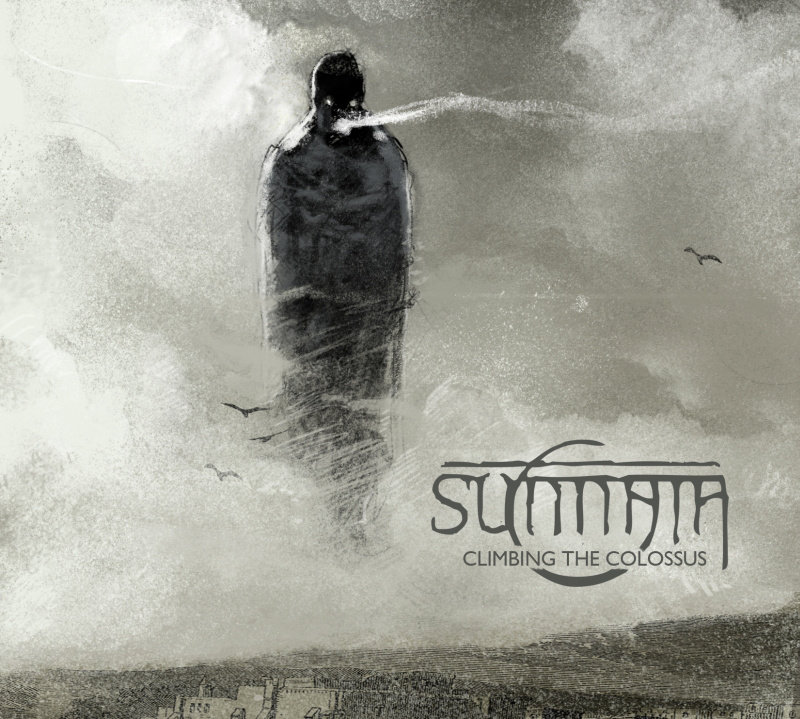
It’s been about a decade since the Warsaw-based heavy rockers Satellite Beaver revamped their name and the concept of their band to become Sunnata, having made their full-length debut with 2009’s Trip Outside Your Mind(review here) and followed it with the 2012 EP, The Last Bow(review here). And if the kind of ritual metal, heavy psych and meditative spirit of Sunnata‘s work was the vision they were chasing all along, unquestionably that moniker swap was the right choice — it was on a few levels, actually. With the continued lineup of guitarist/vocalist Szymon “SZY” Ewertowski, guitarist Adrian “GAD” Gadomski, bassist Michał “DOB” Dobrzański and drummer Robert “ROB” Ruszczyk, the aesthetic turn was made manifest when Sunnata released Climbing the Colossus in March 2014. Here’s what the band had to say about the change at the time:
“Many things have changed since our start in 2008. After three short-length releases and numerous shows we all (finally) agreed to make a step closer to become premium pop-stars. However, the new band name doesn’t imply any lineup or makeup changes. It simply suits our approach to the music, which has become way heavier and trippy in comparison to what we played back in 2008. So here it is. SUNNATA is a soundscape, where noise crossfades clearness – where walls of fuzz, delay and reverb confront the monolith of absolute silence.”
As it turns out, they’d be confronting all kinds of monoliths as Sunnata, be it loud, quiet, in between or existential, and the “heavier and trippy” direction manifests clearheaded in Climbing the Colossus‘ 49-minute run across as series of short-growing-longer tracks the trail through which is marked by a series of aurally diverse interludes, be it the 40-second “I” which opens the record and leads into the horror-slash intensity of the guitar and the massive roll that typifies “Orcan,” repetition becoming ritual, the eight-second echo wisp “II” that swirls into the start of the subsequent “Asteroid,” a fuzzed but sharply executed thrust finding its apex after a series of start-stops in its second half, the shortest of the ‘song-songs’ at 3:39, or the almost-a-minute churn-noise and feedback of “V” that closes the record following the nine-minute “Fomalhaut,” which crescendos the aggression on display throughout Climbing the Colossus without letting go of the atmosphere that’s so much a part of the album’s overarching impression.
On a straight-through listen, as opposed to, say, hearing it on vinyl, the atmospherics become part of the songs. They are transitional intros/outros that flow from one piece to another, not in between every track, but something to move the listener along with the material so that the crushing low-end that rises to such unsullied crush in “Seven” after the end of “Asteroid” — a rolling movement that becomes elephantine as the song, which runs an appropriate 7:07, shifts into its back half, becoming likewise psychedelic and monstrous and massive; a watershed moment — gives over to the jingling and drone of “III” smoothly and with purpose, adding character to tracks that don’t necessarily want for it but that are richer for its being there. A key stretch arrives on what for the LP is the beginning of side B, with “Path” (7:48), “Stalagmites” (7:09) and “Monolith” (6:38) in a row.
There’s a pattern, you see: Interlude, one song, interlude, two songs, interlude, three songs, interlude, song, interlude (and if you want to replace the first and last “interlude” there with “intro” and “outro” I won’t stop you; I use “interlude” to show the consistency of purpose in deepening the ambience), and the intention even nine years after the fact still feels like Sunnata are pulling you deeper into this world as they go. Thus “Path” into “Stalagmites” and “Monolith,” even though each one gets subsequently shorter, is the stretch in which the listener is most immersed. “Path” has a hook and is as aggro in its vocals and chugging low end as it is spacious in the guitar later on — a kind of cosmic metal that in hindsight is very much Sunnata‘s own — and crashes to a stop for a few seconds of that “absolute silence” before “Stalagmites” begins to stir with a few nudges of echoing guitar before the proggy bassline starts that probably could’ve been their own interlude.

Nonetheless, once “Stalagmites” (which come up from the ground; ‘stalactites hold on tight, stalagmites might poke you in the butt’) kicks in from its buildup, it maintains its weight for the duration, and though “Monolith” has a quieter break as part of its procession, the muted stops in the second half are an early example of the band making the studio an instrument — ‘studio’ being a relative term since the drums were done at Demontazownia Studio while guitar, vocals and presumably bass were handled via home recording, ‘edited’ by Dobrzański while Jan Galbas had the difficult task of mixing and mastering to find balance amidst the purposefully conjured chaos — and pummeling in their own right, another call out to the metal of the mid-to-late ’90s. A moment to process in “IV” and then “Fomalhaut” feedbacks into immediate destruction. It is a summary as much conceptual as practical, sound-wise, has a mellow bridge and a languid lead that’s almost stoner rock as it moves to the halfway point, but makes that jangly chug transcend and become something bigger, a march that gets topped with a clean, low-register verse like cosmic spiritual swagger, growing more feverish as it goes before a resolute twist finishes, some residual feedback smoothing the way into the postscript grey psychedelia of “V,” which fades quickly on its way out.
It’s not just that Sunnata pulled off an aesthetic turn with Climbing the Colossus. They did, to be sure. But this record also set in motion a stylistic growth that continues to this day, with the same lineup behind it. That they’ve together undertaken the journey from Climbing the Colossus to 2016’s Zorya (review here), 2018’s Outlands (review here) and 2021’s Burning in Heaven, Melting on Earth (review here) isn’t to be understated, as they’ve managed to consistently move forward with a sense of progression while reveling in the enduring atmospheric elements of their approach. In the varied realms of Polish heavy, they’re part of a generation of players emergent over the last decade who stand astride the 2020s as still-evolving veterans, and even as one looks back at the beginning steps of that process here, robes and harem pants and all, it’s almost impossible not to look forward to what they might do next.
As always, I hope you enjoy. Thanks for reading.
—
5:19AM at present. I woke up this morning at about 2:30, spent the next hour-plus tossing and turning, drifting to sleep and waking up again about every 20 minutes, until at 3:40 I gave up and decided I was just awake and that was it. That’s been a fairly steady pattern the last couple weeks. Yesterday, I think it was, I made it until the alarm went off at 4, and I felt like I had slept late.

So anyway, coffee.
Okay. Last weekend was The Patient Mrs.’ birthday. Happy birthday. All was good. We had my family over for dinner Saturday, and Sunday went to brunch in Brooklyn with friends of hers (who have three kids) who live there. After that, because The Pecan said it was his only goal for this year to see a dragon dance (he is a special kind of kid), we went to the Chinese New Year parade. It was overwhelming on the whole, but I was glad there wasn’t a mass shooting, which pretty much anytime you put humans in a place together these days in America becomes a concern; I’m standing there with the kid on my shoulders (he’s getting big for that), scanning the crowd for people who look like me except particularly distraught. Glad to see there weren’t any and nobody got killed. Mark it a win.
Except for the fact that The Patient Mrs. starting on Tuesday was violently ill. Not covid, she tested, but a stomach thing she and the friends’ kids seemed to share. Neither The Pecan nor I picked it up, which feels like a great, great victory, having seen her go through Tuesday and Wednesday, especially, without being able to eat or even really drink water without unfortunate consequences, but she was miserable and mostly in bed for that time, so probably not the post-birthday week she was hoping to have. I don’t understand how anyone who lives in a human body can believe it was made in the image of an almighty deity. Yeah, I hear god also projectile vomits when he eats some funky strawberries. Totally legit.
She seems like she’s on the other end of it now — or at least she managed to hold onto the white rice and scrambled egg she ate for dinner last night — but that kind of defined the week. The Pecan, meanwhile, had his first and second Tae Kwon Do classes with other kids. He likes it, seems to like it a lot, but is sort of transient by nature so we’ll see if he wants to stick with it after a couple more lessons. He likes things that are new, tires eventually and moves onto the next thing.
When I was a kid, the messaging that went along with that was that you needed to dedicate yourself to something, to “stick with it.” Having already seen him ice skate, play soccer, do tee-ball, track and field — he’s five, remember — I don’t necessarily believe he needs to “stick with” something that’s going to make him unhappy and think that his time might be better spent exploring new things until he finds what fits. I stuck with a bunch of shit in my time, including Tae Kwon Do, well past the point where I was enjoying any of it, and all I feel like I got for that was an obsessive personality and a constant feeling of failure. So yeah, when and if he’s ready to move on, that’s fine.
I need to remind myself of this because at this point it’s my nature to dig into a thing entirely regardless of enduring pleasure or displeasure. You might say it’s how and why The Obelisk exists and persists. Part of it, anyway. I consider myself fortunate that when I put on a record like the new Sandrider or REZN, or an older one like the Sunnata above, that I can still enjoy hearing it. Music has been the most consistent source of joy in my life. Worth waking up for.
This weekend, more family time. I was thinking of inviting my mother and sister and that crew for dinner tomorrow, but we might actually just mellow it out — can it be both? not entirely sure — and take a break for a day since on Sunday into the holiday Monday, The Patient Mrs.’ sister, her own two kids and two dogs are coming to stay, having not been able to make the trip down from Connecticut for her actual birthday. So you see how those afternoon hours on Saturday, which surely will drag without some ‘event’ scheduled, might be a bit of restorative boredom worth undertaking.
Whatever you’re up to, I hope it’s great and that you enjoy. Today at 5PM is a new ‘The Obelisk Show’ on Gimme Metal. Please listen. The music’s good and the support is appreciated. Plus it’s free on their app or site: http://gimmemetal.com
5:54 now and The Pecan just opened his door, which means it’s the start of the morning shift. It’ll be Sesame Street in no time. I hope you have a great and safe weekend. Have fun, watch your head, hydrate all that stuff. Next week is jammed front to back — premieres for Slumbering Sun, Dead Shrine, an Enslaved review, etc. — so that’ll all start to unfurl on Monday. Hope to see you then, and thanks for reading, as always.
Posted in Bootleg Theater on February 10th, 2023 by JJ Koczan
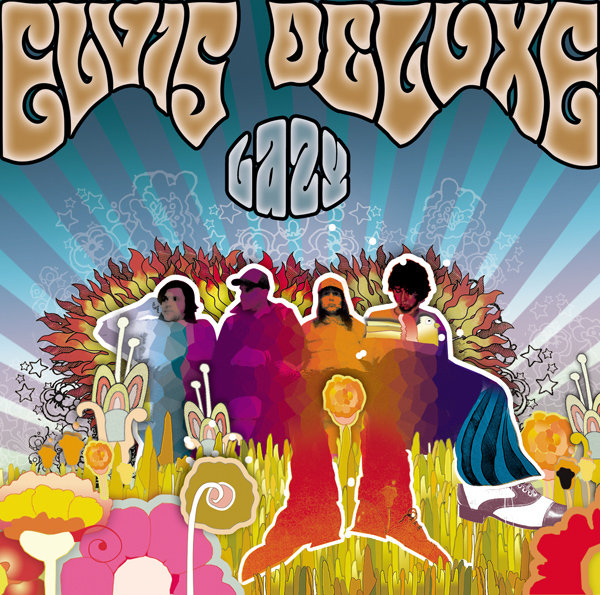
I always thought these guys had another album in them. Elvis Deluxe formed in 2002, concurrent to acts like Sweden’s Dozer from whose earliest work they took some notable influence, and while they by no means were the first Polish heavy rock band, their 2007 debut album, Lazy (review here) was in conversation with desert-style rock in a way that was an early arriver to the shifts in international creativity that the internet provided. In the era of bands flourishing by finding friends on MySpace — the quaint notion of a social media company actually allowing streams on a page — Elvis Deluxe were fuzzy and classic-swinging and, yeah, maybe more than a little stoned; a precursor to some extent of the modern Polish heavy rock scene, which is among Europe’s most vital in line with Greece, the UK, Germany, and so on.
During their time, which was relatively short, they offered up three albums — Lazy, 2011’s brilliant-yes-I-mean-that Favourite State of Mind, and 2013’s The Story So Far (review here), which was a mix of songs recorded live in the studio in 2012, demos from 2003, and a Stooges cover compiled — and seemed to be fading out from the vanguard just as Polish heavy began to flourish with the rise of bands like Belzebong, Satellite Beaver (who’d become Sunnata) and Dopelord, among others.
The band for Lazy‘s 10-song/40-minute run was the four-piece of bassist/vocalist Wojciech Ziemba, guitarists Tomasz “Bolek” Sierajewski and Marcin “Mechu” Hejak and drummer Mikołaj “Miko” Malanowski, and the work of the latter is particularly crucial. Not devaluing any performance here — how could I as “27” imagines Fredrik Nordin fronting Fu Manchu and “Money to Burn” rolls its second-half jam to a finish like a lost Kyuss B-side? — but as most of the album’s tracks run in the three-to-four-minute range, there’s an abiding sense of casual cool, and it’s rooted in the swing of Malanowski‘s drums before it can be built on with the deceptively light fuzz in the guitars as bolstered by the bass and the laid-back delivery of Ziemba‘s vocals.
From the loud-then-quiet noise that introduces opening track “Superorfeo,” which is among the speedier of the pieces included, through the breaking-apart wash that is the culmination of Lazy in closer “Between Heaven and Hell,” the band does nothing so much as toss off one memorable song after another like it’s no big deal, the second track “Extraterrestrial Hideout Seeker” emblematic of their ability to take garage rock push and desert tonality with more than an edge of swagger and build songs that, while largely traditional in their verse-chorus structures, nonetheless felt open and languid regardless of tempo, resulting in a vibe that was all Elvis Deluxe‘s own and that few bands I’ve come across from Poland or otherwise have been able to capture in quite the same way. If it needs to be said — and over 15 years later, maybe it does — the album was not lazy. In fact it was rife with movement.
To wit, the count-in-and-go of “Perfect Ride,” which sets its ambition in its title, is one of the more punkish cuts, maybe a bit of Demon Cleaner or Lowrider in there, as it definitely sounds aware of what stoner rock was at this point, but turned toward its own purposes, and off at a solid clip to do so. After the start-stop-and-roll of “27,” the outright nod of “Sleep Brings No Relief” taps …And the Circus Leaves Town-style bounce, but is given hints of psychedelia by the vocals, which sweetly contrast some of the rougher fuzz in the guitar and the buzzsaw wah solo (actually solos, since there are two lead layers there) that follows while the drums hold down the central progression they started with as though waiting for everyone else to rally around the verse again, which of course they do before a full-on distortion-wall push into a final chorus.
The subsequent “For the Soul” blends thrust and a tension-release bridge that’s not quite a chorus but not quite not, the mellow vocals pulling back from the harder delivery of the verse, the riff of which is delightfully twisty boogie rock, before it opens up again, resolidifying for its final stretch, topped with either synth or effects for good measure. Perhaps unsurprisingly, “Ready to Rage” goes even faster, and underscores its urgency with Little Richard piano strikes in its culmination, crashing out ahead of “Money to Burn” which starts with the bass and drums and is the longest track at a still-manageable 6:49, using that time to showcase nearly every strength that has worked to Lazy‘s benefit thus far, including a bit of weirdo jamming skillfully brought around to a righteous but not overblown finish.
Placed between that jam and the closer, “The Mountain” feels somewhat like an afterthought, but isn’t, as the second half of the song reveals another highlight melody in the layered vocals to go along with its engaging hook before giving over directly to “Between Heaven and Hell” as it might have done on stage. And “Between Heaven and Hell” is blown out even before its blowout, rising to a crescendo of noise that borders on the caustic before it fades out to cap the record. Even in that moment, Elvis Deluxe maintain their complete lack of pretense and easygoing mentality — like, “Oh the universe is collapsing on itself now? yeah that’s fine” — to the very last, letting it be a defining aspect of a debut that demonstrates nothing if not a purposeful declaration of who they were as a band.
And again, they’d build on that with Favourite State of Mind before the kind-of half-album that was The Story So Far, and to me, their second record always seemed to call for more of a follow-up than it got. Everybody is still alive and active musically, so never say never. Ziemba currently plays in The Heavy Clouds, Malanowski is in Wij, and Wojciech “Bert Trust” Trusewicz, who took over on guitar for Hejak in 2010, is in the Warsaw Afrobeat Orchestra, while Sierajewski started the hardcore punk outfit Czerwone Świnie in 2019. It’s not impossible they could come back together at some point — certainly there are many from their time doing so now, be it Mammoth Volume, Josiah or the aforementioned Lowrider and Dozer — and if they did, it would be a welcome return to be sure, and one would hope they’d get a bit of the respect at last that this record and the rest of their studio work diligently earned.
As always, I hope you enjoy. Thanks for reading.
—
Good morning. Everybody’s up. I got up at 4 with the alarm, The Pecan got up at 5:30, The Patient Mrs. about 15 minutes after that. It’s about 6:10 now and I’m just happy I managed to get the above done. These mornings I take what I can get.
Yesterday was a trip. I woke up at 2:30AM to go to the bathroom like the old man that I am — at least I woke up — and never got back to sleep. The kid took a Tae Kwon Do lesson yesterday afternoon — which he fucking loved — and it was a trip to be sure. Fun fact: I also did Tae Kwon Do for a few years as a kid, and unbeknownst to me, The Patient Mrs. booked him at the same school I went to when I was young. So I’m sitting there while the master is teaching The Pecan how to do a high block and I’m having flashbacks to when I was a little older than him doing the same thing. Different teacher, obviously. But yeah, weird. He wants to take classes. They’re expensive. We’ll see what happens.
This weekend is The Patient Mrs.’ birthday. I bought her present shortly after Xmas and it’s been nice to have that taken care of rather than hanging over my god damned head like it otherwise would be. We’re having my family over, as we will, while her sister and her sister’s family will come down from Connecticut next weekend. Gonna be a lot, but a hoot, which is pretty much how it goes with the loved ones. My entire family gets high now, which I think is hilarious. If you’d told my 18-year-old, just-got-busted-for-possession ass that someday I’d be asking my mom if she needs any edibles, well, I might believe it but I’d certainly be more pissed about having gotten arrested in the first place back then. But anyway, the slowdown of anxiety and general brain intensity is good for all of us, I think. I’ll gladly slough deeper into middle age with a goofy grin rather than my generally wretched, cruelly lucid state of self-loathing. Largely to myself, I’ve been thinking of it as a brain break, and in that regard, it both feels better and is more effective than xanax.
Next week is packed. I’m triple-booked for Tuesday, which is Valentine’s Day. Lot of love to go around, apparently. The rest of the week is full too, which is daunting but barring disaster I should be able to get through it alright. Does not allow for much fuckoff time, though, which is like mana to me. Also a Gimme Metal show next Friday, so I need to turn that in, and the PostWax liner notes for the REZN/Vinnum Sabbathi collaboration are coming due this weekend. I’ve only been talking about needing to bang those out for, oh, four months or so, so yes, it’s probably time to do so. I’ve also just been asked to finish an interview I started a while back that goes pretty deep into some of the back end work involved in this site and my personal history, so yeah. Busy, I guess, is the bottom line. Apparently that’s how I like it. Who doesn’t want to feel completely overwhelmed like all the time? Certainly no one I know.
Did you listen to that Westing track? Did you listen to Polymoon? Bastard Sword earlier today? I’ve resolved to dedicate more of my time to albums I choose rather than what comes across in premiere pitches and things like that, so that’s how you get Polymoon and Mathew’s Hidden Museum at the start of this week. I’ve been feeling a bit like I’m shouting into the void about records like that, but I’m enjoying writing about them, and in the next few weeks as we move into March, I’ve locked in album streams for the aforementioned REZN, Sandrider and Stoned Jesus, among others, and those are three of the best records I’ve heard so far this year, so I’m stoked on the alignment there. This coming week, I’ll also premiere a video from The Machine’s new LP, which is a gem. That’s one of the three slated for Tuesday. Indeed, lovely.
I hope you have a great and safe weekend. Have fun, hydrate, watch your head, get laid if you can and the vibe is right. I’ll be back on Monday with a L’Ira del Baccano video premiere and more besides. Good stuff to come. Thanks again for reading.
Posted in Bootleg Theater on February 3rd, 2023 by JJ Koczan
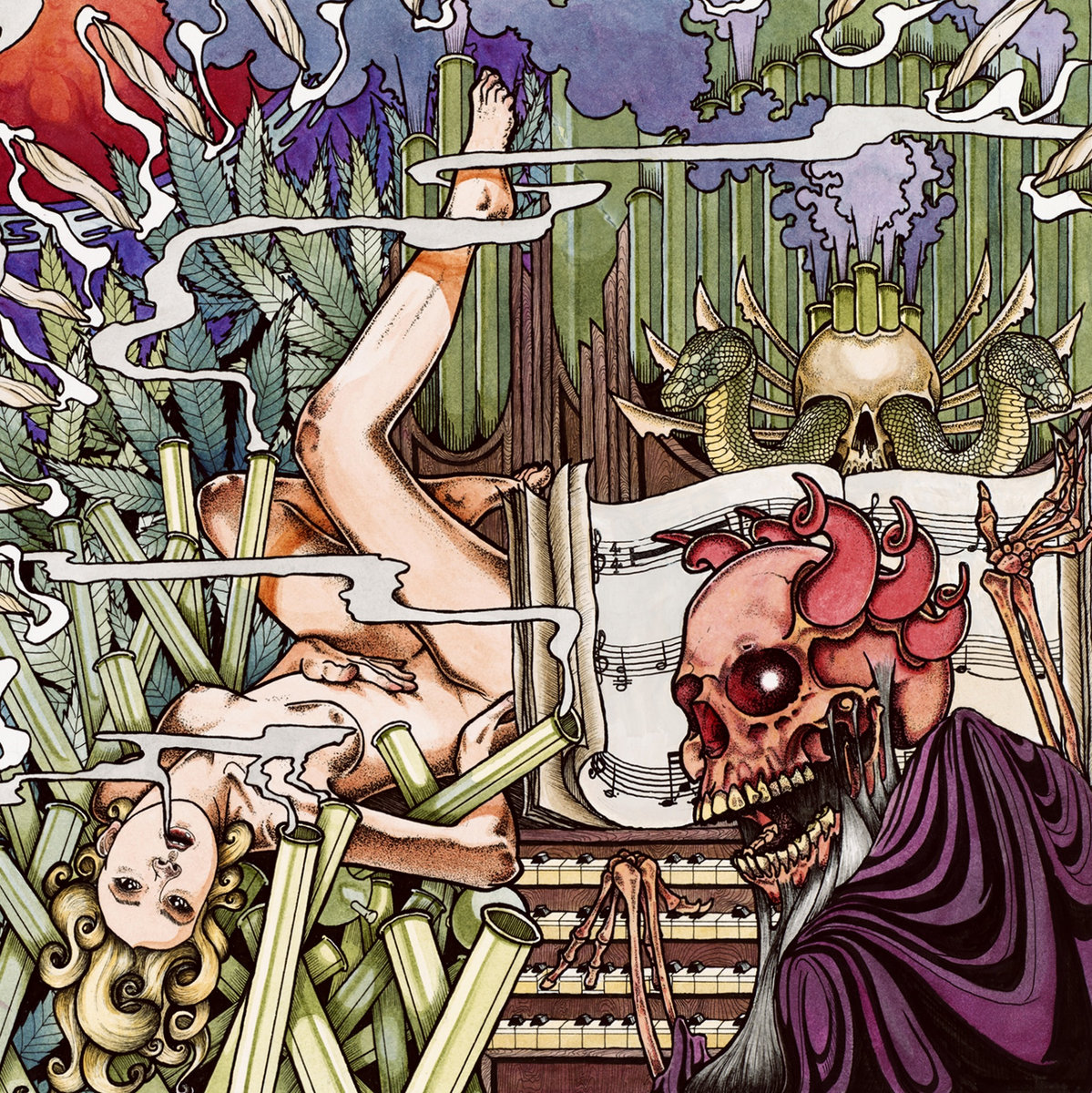
If one considers the cover art’s pipe-organ bongs emitting purple smoke, stoner pinup, Satanskull on keys — and of course he has a beard — a red sky far back and all the pot leaves, then yeah, you could probably say Dopelord‘s Black Arts, Riff Worship & Weed Cult is a what-you-see-is-what-you-get kind of record. The sophomore full-length from the Warsaw-based four-piece was self-released on April 24, 2014, which one assumes is as close as they could get to 4/20 that year, and fair enough.
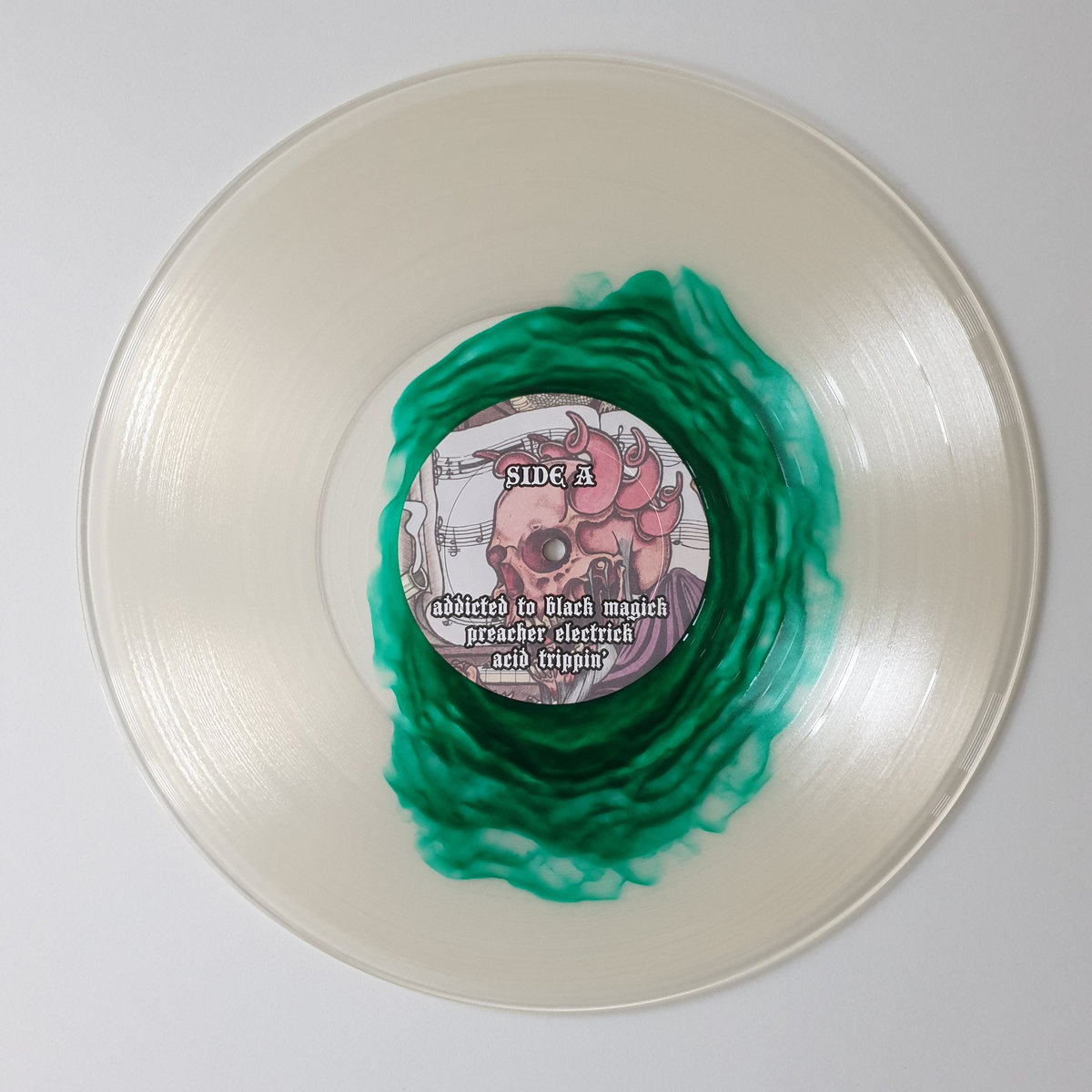
Comprised of five tracks and running a tidy 40 minutes, with a sample about a sabbath at the start of the hooky “Addicted to Black Magick,” some standalone horror piano at the end of “Preacher Electrick,” a languid slog even behind the buzzsaw solo in the second half of “Acid Trippin'” that calls back to Black Sabbath‘s “Snowblind” before the tempo finally kicks up to its winding finish, the sense that “Green Plague” is falling apart even as it runs at a gallop reminiscent specifically of “Into the Void,” or the way the 11-and-a-half-minute finale “Pass the Bong” seems to lay it all on the line in its combination of Electric Wizard and Sleep influences, pulling together a Jus Oborn-style vocal over tonality that rests nicely alongside Sleep‘s “The Clarity,” which was released in July of the same year.
Black Arts, Riff Worship & Weed Cult — which certainly could be the name of a catalog I’d look forward to getting in the mail every month — codifies the ultra-stoner foundation Dopelord put forth on 2012’s Magick Rites (review here) and is a crucial moment for the band, coming at a time when the next generation of meme-ready weedian heavy was really just taking shape. Part of the record’s brilliance is in speaking to the subculture from within the subculture, as believe it or not, not everyone in the world is going to look at a bong pipe organ and understand that translates to the thick walls of fuzz distortion wrought by guitarist/lead vocalist Paweł Mioduchowski, guitarist Grzegorz Pawłowski, bassist/vocalist Piotr Zin and drummer Grzesiek “Xerxes” Wilpiszewski (currently in Black Tundra) or know immediately what planet that red sky is on.
Stoner doom is not the only subgenre under the heavy metal umbrella that preaches to the converted — see all, yes all, thrash metal since about 1989 — but the sense of Dopelord being fans of the style as well as players, rather than distancing themselves from it to pretend toward some kind of artistic objectivity, which is a fantasy at best in 99 percent of cases, is palpable throughout, and their revelry of nod becomes all the more accessible to the listener for the fact that the band is actually enjoying what they do.
And from the still-goes-where-you-think-it’s-going-but-twists-on-the-road-to-get-there changes in “Addicted to Black Magick” through the subversive critique buried in the lumber of “Preacher Electrick” — I saw Dopelord in October and before they played “Hail Satan” from 2020’s Sign of the Devil (review here), Mioduchowski noted from the stage that they could get arrested for playing that kind of song in a church in their home country; “Preacher Electrick” feels like the prototype on which that’s built — as the record moves into that three-song mega-dig of doomed riffs and hazy vibes, in “Preacher Electrick” (8:52), “Acid Trippin'” (7:39) and “Green Plague” (7:29), the roll they conjure coming out of the album’s opener is deepened, stretched out, beat up and chugged into oblivion across this span of tracks, listenable and melodic but never failing to speak to the style, is the heart of Dopelord‘s righteous in self-awareness.
That is to say, they know what they’re doing as they enjoy it, and whether it’s the black arts, the riff worship, or the weed cult, the vibe in the album is celebratory even as the riffing that leads the way through so much of it is downer-doomed and baked to the nines. It’s not so much “drop out of life with bong in hand” as it is, “we already dropped out of life with bong in hand, we recommend you do the same immediately, in fact, here’s an extra bong we have lying around, why don’t you take it and come party with us for a bit?” As invitations go, one could do far, far worse.
Whether or not you get the VHS-horror references tucked into the lyrics of “Addicted to Black Magick” — Riding with the Devil, anyone? — or get swept up in the is-that-an-extra-layer-of-drums headfuckery of noise in “Green Plague,” Black Arts, Riff Worship & Weed Cult remains brazen in its adherence to the tenets of genre, breaking the fourth wall a bit with a knowing wink directed toward its listenership, but clearly executed with a love of the heft it makes even in that chaotic wah-swirl as “Green Plague” moves toward its residual feedback culmination and “Pass the Bong” slams its massive initial crashes as if to announce you’ve arrived at the gates of the Riff-Filled Land with Al Cisneros as St. Peter, the consuming spirit of fun is reaffirmed in gloriously voluminous fashion.
Yes, fun. Among the greatest innovations of the generation of stoner heavy to which Dopelord belongs is to remember that for both those playing it and those hearing, this kind of music can be a good time, celebrating the legacy of the style and inherently adding something new to it in tone, method and construction of its own songs. Coming off their debut, Black Arts, Riff Worship & Weed Cult was a moment of realization for Dopelord, and for all its overbearing plod, there are flourishes and details throughout, be it vocal patterning, a run on bass, or what seems to be an extra layer of snare drum, or even just the way “Pass the Bong” seems to decide to swing on a whim in its final couple minutes on the way to the inevitably noisy ending, the is-as-does weedism of Dopelord is no less infectious than their catchiest chorus, and nine years after its initial release — there have been other reissues and pressings along the way — Black Arts, Riff Worship & Weed Cult speaks to a time of heavy resurgence not just for its native Polish underground, but for the heavier realms of fuzz as a whole. If it isn’t yet, it’s the kind of thing that those who were there will at some point be nostalgic about.
As always, I hope you enjoy. Thanks for reading.
—
On Sesame Street this morning, they’re using science to make a rainbow. There are human beings who would find such a thing threatening, and I don’t mind telling you those people are fucking idiots. No, that’s not a hot take, but it’s true just the same.
The Pecan got up at 5:15 this morning, made his way downstairs, and believe it or not was more interested in watching tv on my laptop than letting me finish writing the above. And as I was in the bathroom moments ago, number one, I could hear him in the living room yelling, “Daddy, yogurt!” as though I’d either forgotten or not told him I was hitting the can first. At least I didn’t get punched when I “finally” got back to the couch with the coveted Siggi’s vanilla. In a bit of a tyrant phase, we are.
The Patient Mrs., meanwhile, sleeps, and where I might otherwise get her up so I can go swimming, I’ll let her get whatever rest she can since she was out last night having dinner with a friend in Jersey City. I’ll go later, or tomorrow, it doesn’t matter. I do need to buy more yogurt at the Wegmans by the gym though, so that’s gonna weigh on my brain until it gets done, as that kind of thing does. Also, I missed taking out the garbage yesterday and I’m a little furious at myself for it.
My neurologist put me on Adderall, for ADHD, presumably. I started on 5mg last month, which was nothing, and moved up to 10mg this month, which by the way is also not a magic bullet for shutting up an apparently persistent sense of panic in my brain. This and 150mg of Wellbutrin for depression, along with a slew of vitamins, are the current morning regimen. I don’t like Wellbutrin and don’t think it helps, but I take it because I’m told to, and without my support whatever would become of those poor pharmaceutical companies? They should have a Bandcamp Friday for pills.
Speaking of, it’s Bandcamp Friday. I got a bit of cash from merch sales so have been enjoying that. Thanks if you bought a shirt or anything: http://mibk.bigcartel.com/products.
While I’m dropping plugs, new Gimme show at 5PM Eastern. Playlist will be posted before this is, and go here to stream it: http://gimmemetal.com.
Before I go make toast for the next stage of The Pecan’s breakfast, I’d like to thank you for the love this week as regards The Obelisk’s 14th anniversary. It doesn’t feel like all that long, but we’re heading toward 16,000 posts, so I guess my perspective on that is a bit warped. I’m pretty sure I’ve still missed more good stuff than I’ve caught, but I’m doing my best, gonna continue with that. In any case, the response was appreciated. I’m glad to know I’m not the only one getting something out of this.
Up and down week. Most are. Last weekend was crazy busy and I’m hoping this one will be less so. You know, once the sun finally comes up today.
Whatever you’re up to, have a great and safe time. Have fun, hydrate, watch your head. Next week I’m reviewing Polymoon and there’s a bunch of other stuff going on that I need to organize, so I’m gonna go do that. Okay. Thanks again.
Posted in Reviews on September 27th, 2022 by JJ Koczan
Here we go again as we get closer to 100 records covered in this expanded Fall 2022 Quarterly Review. It’s been a pretty interesting ride so far, and as I’ve dug in I know for sure I’ve added a few names (and titles) to my year-end lists for albums, debuts, and so on. Today keeps the thread going with a good spread of styles and some very, very heavy stuff. If you haven’t found anything in the bunch yet — first I’d tell you to go back and check again, because, really? nothing in 60 records? — but after that, hey, maybe today’s your day.
Here’s hoping.
Quarterly Review #61-70:
Spirit Adrift, 20 Centuries Gone
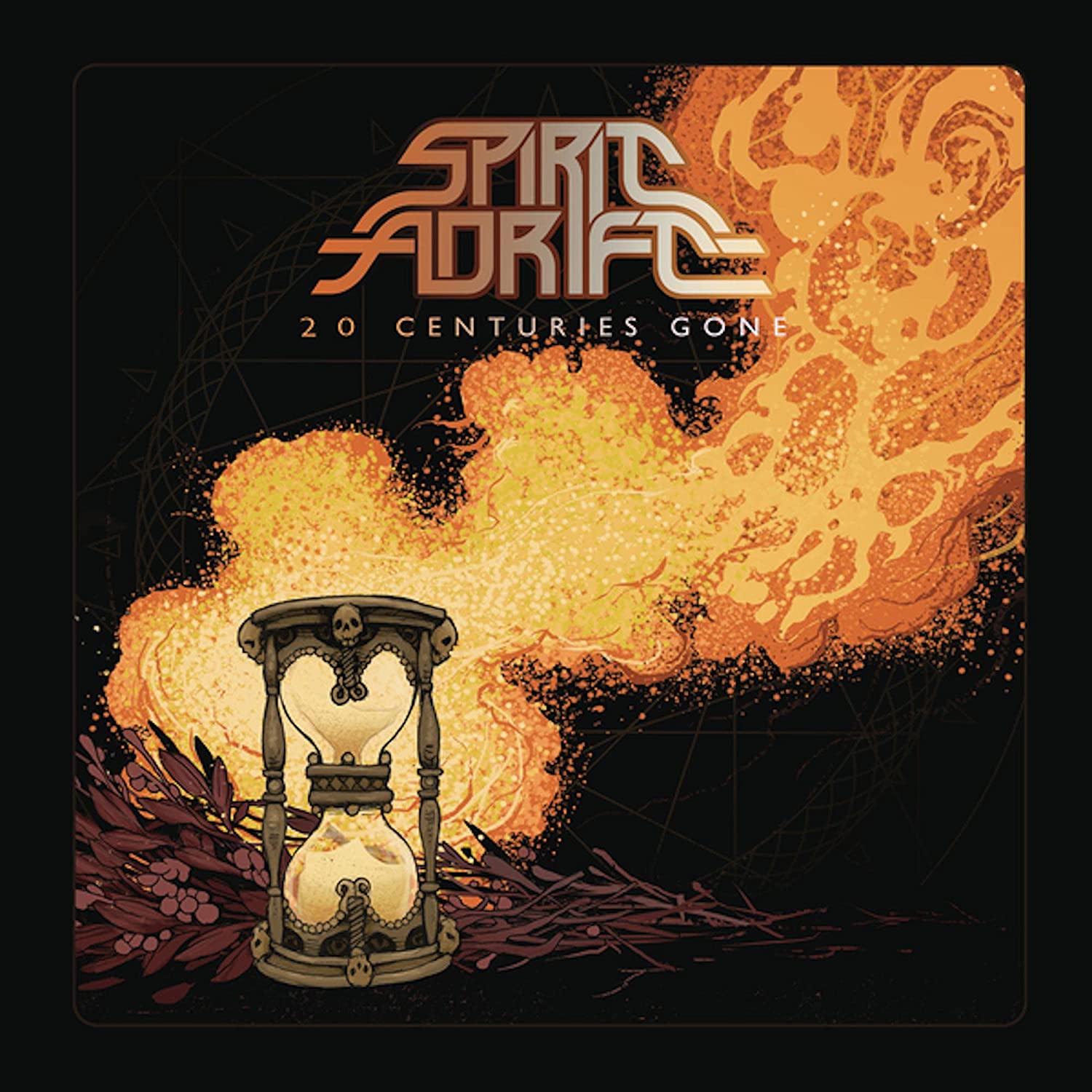
The second short release in two years from trad metal forerunners Spirit Adrift, 20 Centuries Gone pairs two new originals in “Sorcerer’s Fate” and “Mass Formation Psychosis” — songs for our times written as fantasy narrative — with six covers, of Type O Negative‘s “Everything Dies,” Pantera‘s “Hollow,” Metallica‘s “Escape,” Thin Lizzy‘s “Waiting for an Alibi,” ZZ Top‘s “Nasty Dogs and Funky Kings” and Lynyrd Skynyrd‘s “Poison Whiskey.” The covers find them demonstrating a bit of malleability — founding guitarist/vocalist does well with Phil Lynott‘s and Peter Steele‘s inflections while still sounding like himself — and it’s always a novelty to hear a band purposefully showcase their influences like this, but “Sorcerer’s Fate” and “Mass Formation Psychosis” are the real draw. The former nods atop a Candlemassian chug and sweeping chorus before spending much of its second half instrumental, and “Mass Formation Psychosis” resolves in burly riffing, but only after a poised rollout of classic doom, slower, sleeker in its groove, with acoustic strum layered in amid the distortion and keyboard. Two quick reaffirmations of the band’s metallic flourishing and, indeed, a greater movement happening partially in their wake. And then the covers, which are admirably more than filler in terms of arrangement. Something of a holdover, maybe, but by no means lacking substance.
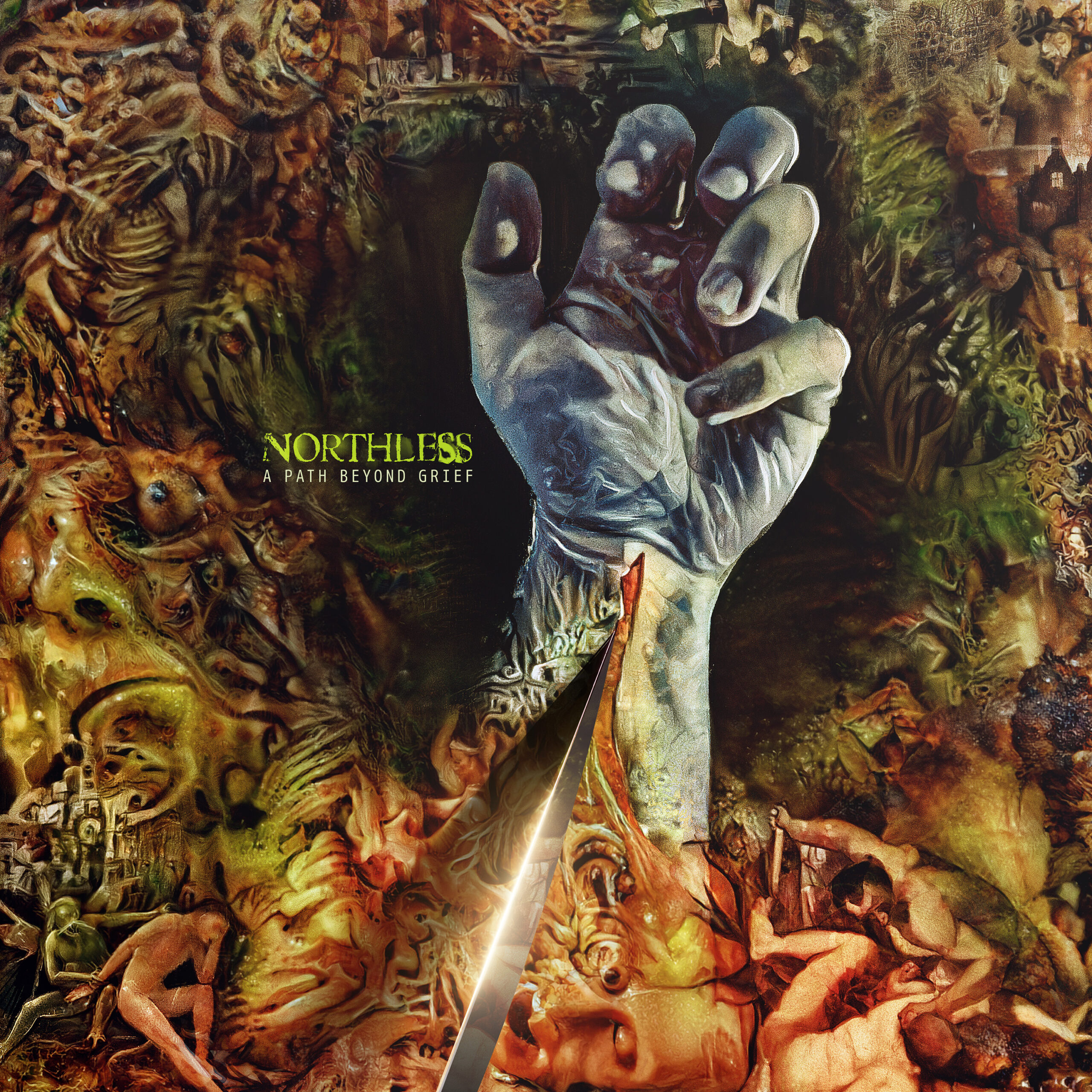
Just because it’s so bludgeoning doesn’t necessarily mean that’s all it is. The melodic stretch of “Forbidden World of Light” and delve into progressive black metal after the nakedly Crowbarian sludge of “A Path Beyond Grief,” the clean vocal-topped atmospheric heft of “What Must Be Done” and the choral feel of centerpiece “Carried,” even the way “Of Shadow and Sanguine” seems to purposefully thrash (also some more black metal there) amid its bouts of deathcore and sludge lumbering — all of these come together to make Northless‘ fourth long-player, A Path Beyond Grief, an experience that’s still perhaps defined by its intensity and concrete tonality, its aggression, but that is not necessarily beholden to those. Even the quiet intro “Nihil Sanctum Vitae” — a seeming complement to the nine-minute bring-it-all-together closer “Nothing That Lives Will Last” — seems intended to tell the listener there’s more happening here than it might at first seem. As someone who still misses Swarm of the Lotus, some of the culmination in that finale is enough to move the blood in my wretched body, but while born in part of hardcore, Northless are deep into their own style throughout these seven songs, and the resultant smashy smashy is able to adjust its own elemental balance while remaining ferociously executed. Except, you know, when it’s not. Because it’s not just one thing.
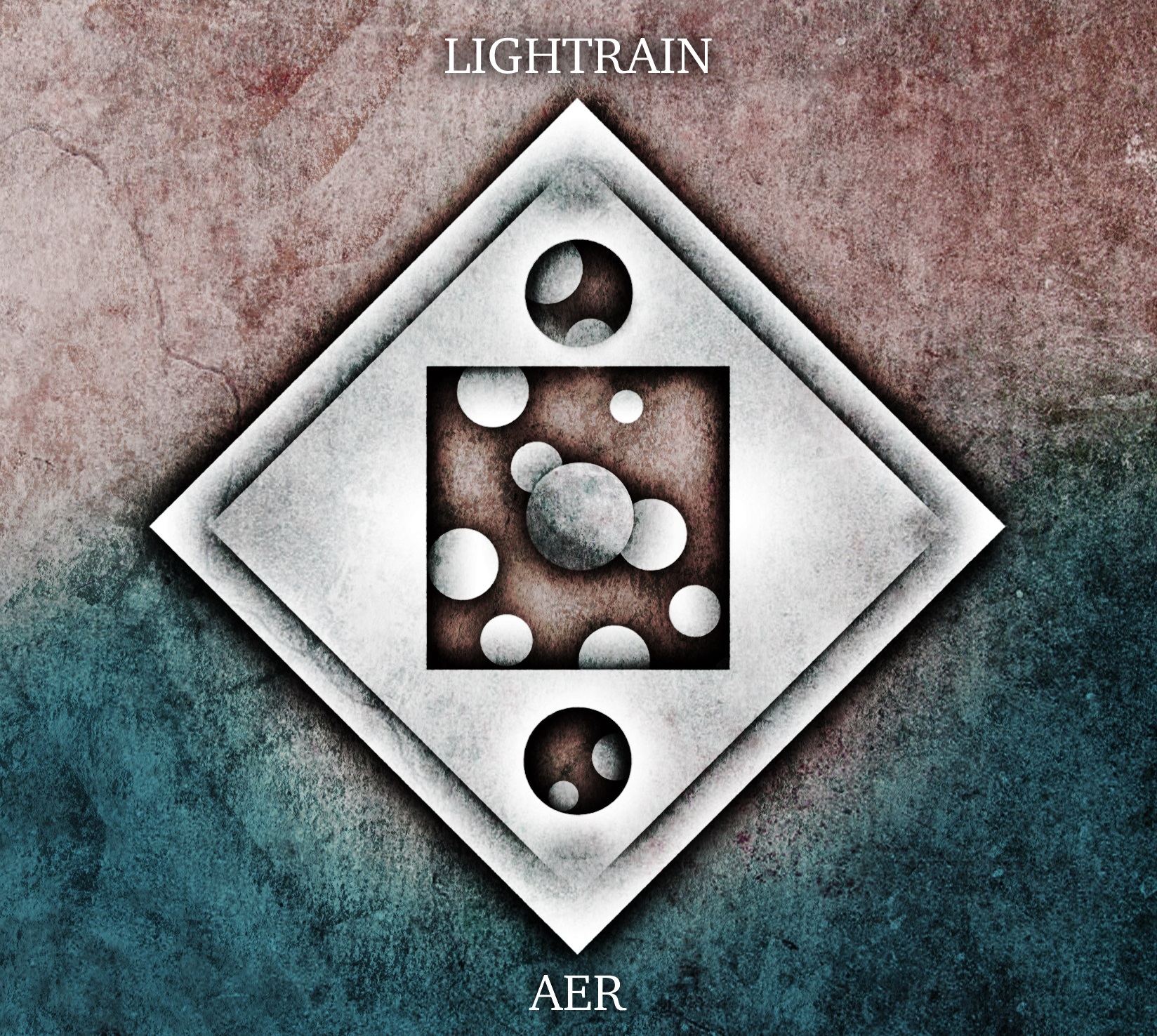
Comprised of five songs running a tidy 20 minutes, each brought together through ambience as well as the fact that their titles are all three letters long — “Aer,” “Hyd,” “Orb,” “Wiz,” “Rue” — AER is the debut EP from German instrumentalists Lightrain, who would seek entry into the contemplative and evocative sphere of acts like Toundra or We Lost the Sea as they offer headed-out post-rock float and heavy psychedelic vibe. “Hyd” is a focal point, both for its eight-minute runtime (nothing else is half that long) and the general spaciousness, plus a bit of riffy shove in the middle, with which it fills that, but the ultra-mellow “Aer” and drumless wash of “Wiz” feed into an overarching flow that speaks to greater intentions on the part of the band vis a vis a first album. “Rue” is progressive without being overthought, and “Orb” feels born of a jam without necessarily being that jam, finding sure footing on ground that for many would be uncertain. If this is the beginning point of a longer-term evolution on the part of the band, so much the better, but even taken as a standalone, without consideration for the potential of what it might lead to, the LP-style fluidity that takes hold across AER puts the lie to its 20 minutes being somehow minor.
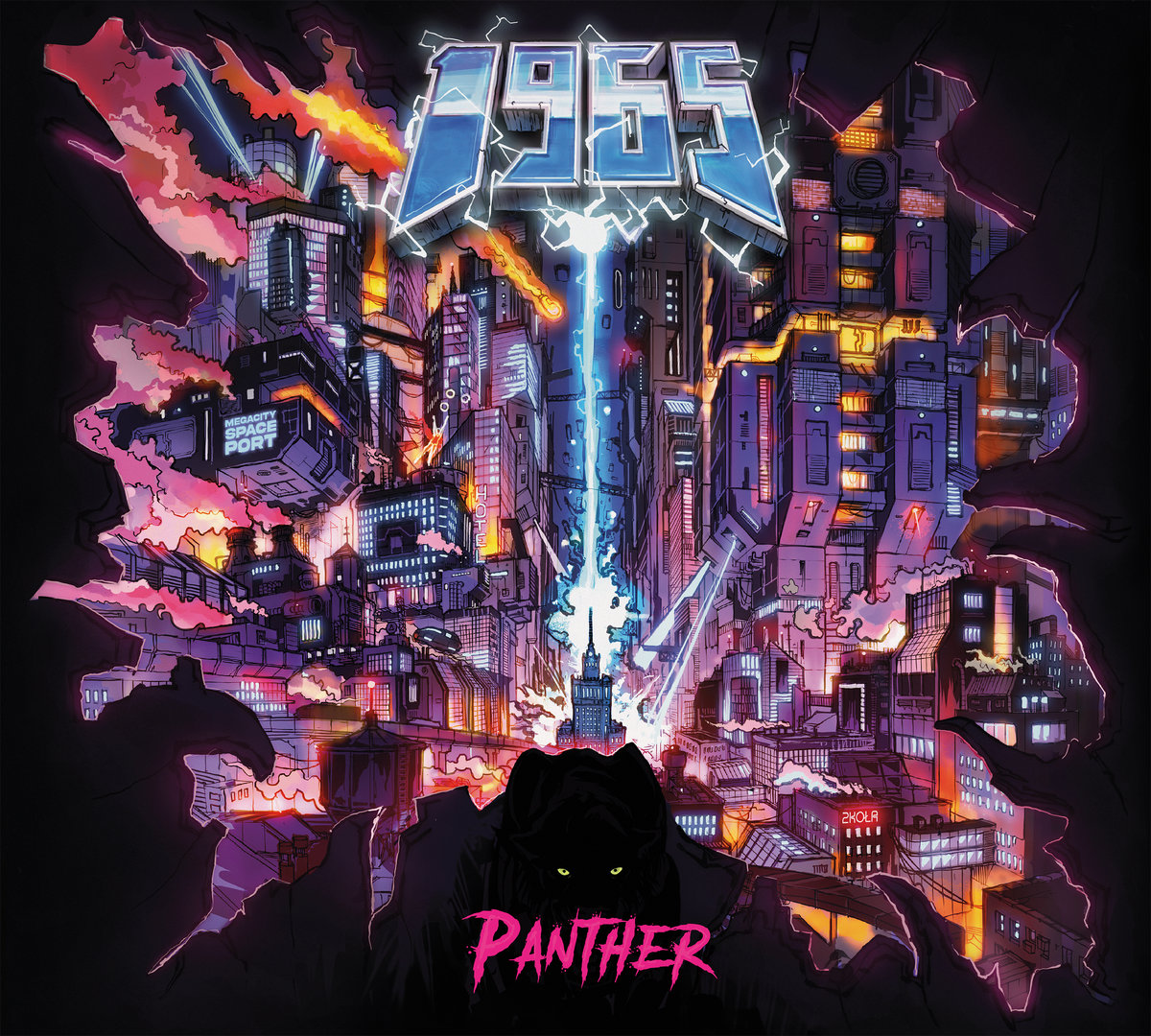
Cleanly produced and leaning toward sleaze at times in a way that feels purposefully drawn from ’80s glam metal, the second offering from Poland’s 1965 — they might as well have called themselves 1542 for as much as they have to do sound-wise with what was going on that year — is the 12-song/52-minute Panther, which wants your nuclear love on “Nuclear Love,” wants to rock on “Let’s Rock,” and would be more than happy to do whatever it wants on “Anything We Want.” Okay, so maybe guitarist, vocalist and principal songwriter Michał Rogalski isn’t going to take home gold at the Subtlety Olympics, but the Warsaw-based outfit — him plus Marco Caponi on bass/backing vocals and Tomasz Rudnicki on drums/backing vocals, as well as an array of lead guitarists guesting — know the rock they want to make, and they make it. Songs are tight and well performed, heavy enough in tone to have a presence but fleet-footed in their turns from verse to chorus and the many trad-metal-derived leads. Given the lyrics of the title-track, I’m not sure positioning oneself as an actual predatory creature as a metaphor for seduction has been fully thought through, but you don’t see me out here writing lyrics in Polish either, so take it with that grain of salt if you feel the need or it helps. For my money I’ll take the still-over-the-top “So Many Times” and the sharp start-stops of “All My Heroes Are Dead,” but there’s certainly no lack of others to choose from.
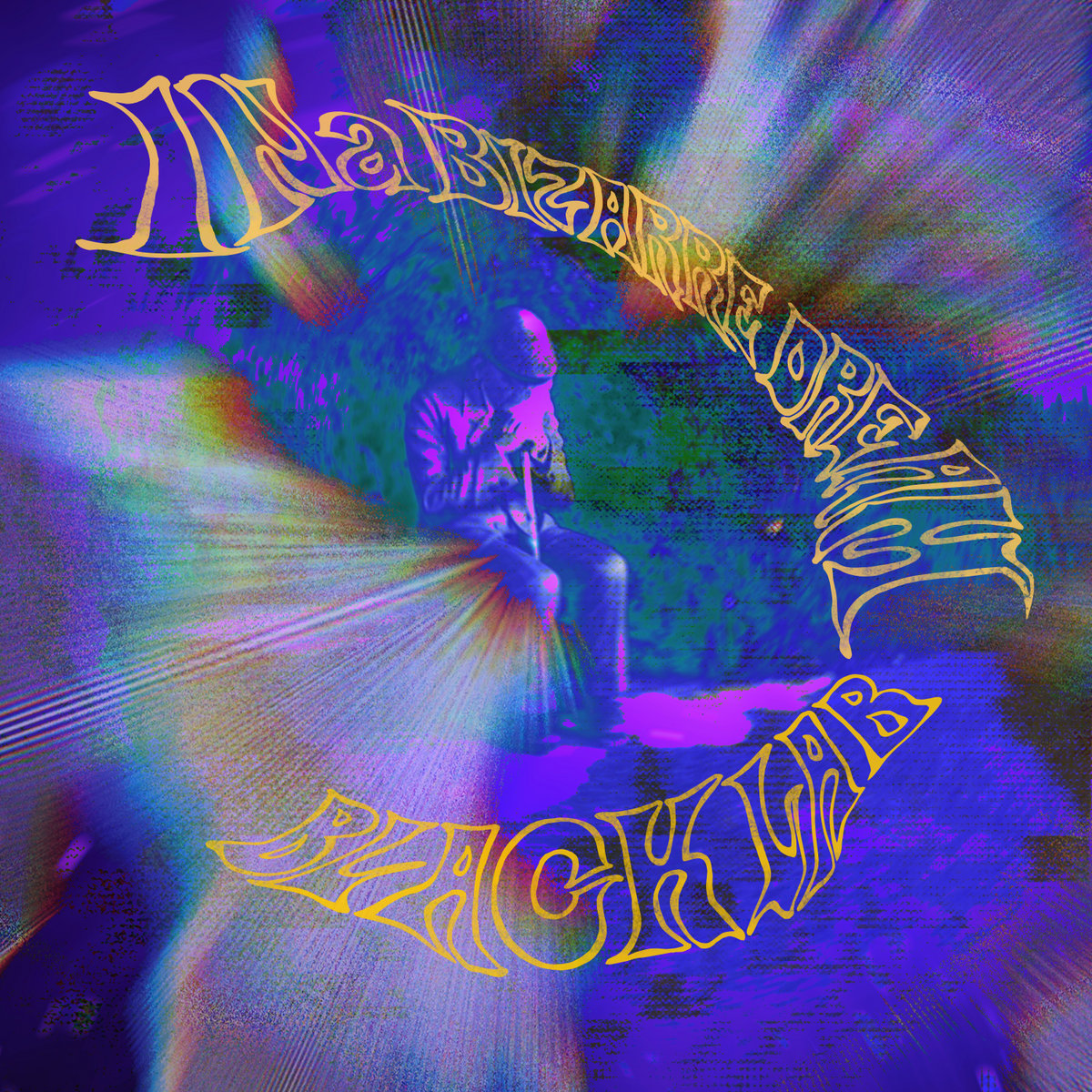
Blacklab — also stylized BlackLab — are the Osaka, Japan-based duo of guitarist/vocalist Yuko Morino and drummer Chia Shiraishi, but if you’d enter into their second full-length, In a Bizarre Dream, expecting some rawness or lacking heft on account of their sans-bass configuration, you’re more likely to be bowled over by the sludgy tonality on display. “Cold Rain” — opener and longest track (immediate points) at 6:13 — and “Abyss Woods” are largely screamers, righteously harsh with riffs no less biting, and “Dark Clouds” does the job in half the time with a punkier onslaught leading to “Evil 1,” but “Evil 2” mellows out a bit, adjusts the balance toward clean singing and brooding in a way that the oh-hi-there guest vocal contribution from Laetitia Sadier of Stereolab (after whom Blacklab are partially named) on “Crows, Sparrows and Cats” shifts into a grungier modus. “Lost” and “In a Bizarre Dream,” the latter more of an interlude, keep the momentum going on the rock side, but somehow you just know they’re going to turn it around again, and they absolutely do, easing their way in with the largesse of “Monochrome Rainbow” before “Collapse” caps with a full-on onslaught that brings into full emphasis how much reach they have as a two-piece and just how successfully they make it all heavy.
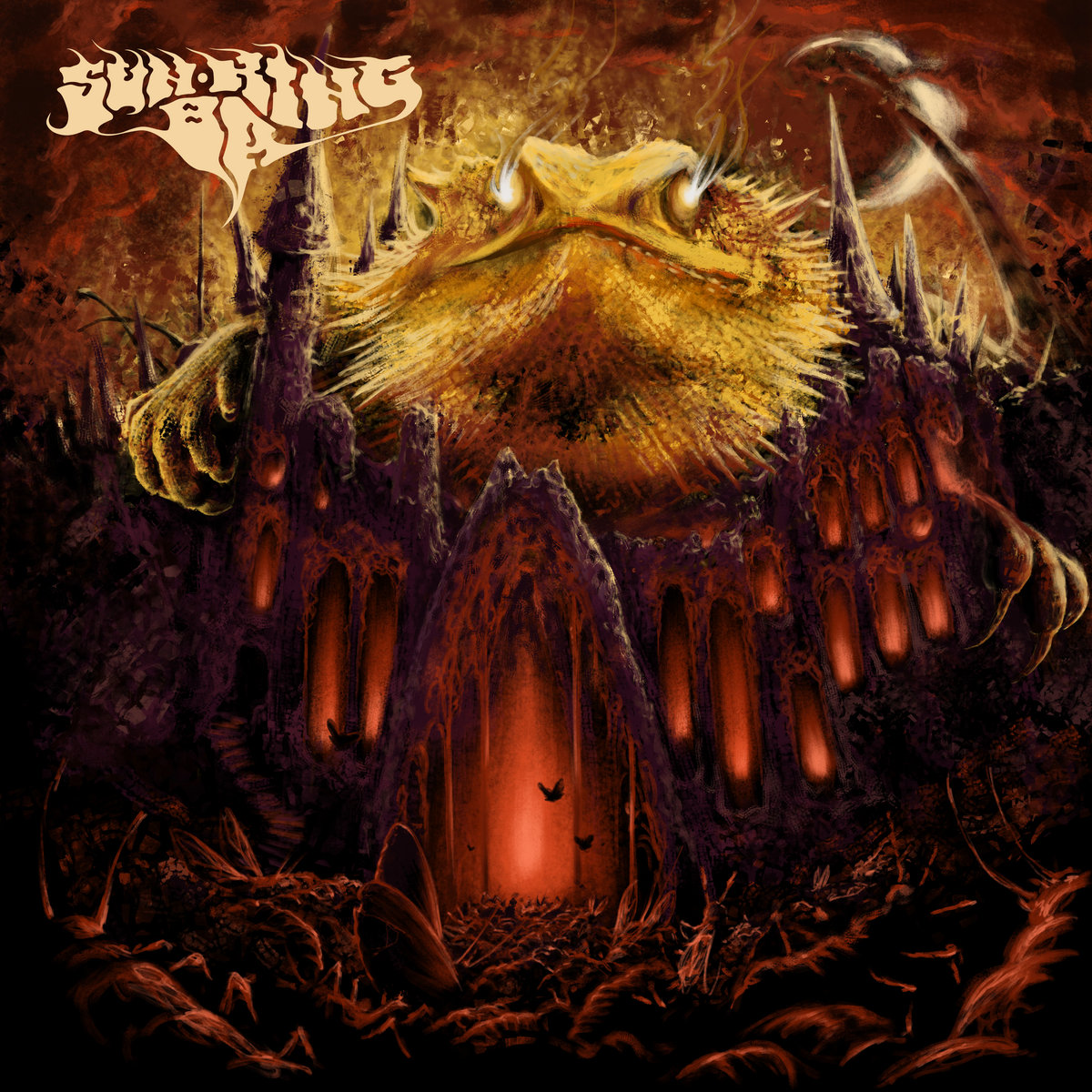
I guess the only problem that might arise from recording your first two-songer with Steve Albini is that you’ve set an awfully high standard for, well, every subsequent offering your band ever makes in terms of production. There are traces of Karma to Burn-style chug on “Ectotherm,” the A-side accompanied by “Writhing Mass” on the two-songer that shares the same name, but Chicago imstrumental trio Sun King Ba are digging into more progressively-minded, less-stripped-down fare on both of these initial tracks. Still, impact and the vitality of the end result are loosely reminiscent, but the life on that guitar, bass and drums speaks volumes, and not just in favor of the recording itself. “Writhing Mass” crashes into tempo changes and resolves itself in being both big and loud, and the space in the cymbals alone as it comes to its noisy finish hints at future incursions to be made. Lest we forget that Chicago birthed Pelican and Bongripper, among others, for the benefit of instrumental heavy worldwide. Sun King Ba have a ways to go before they’re added to that list, but there is intention being signaled here for those with ears to hear it.
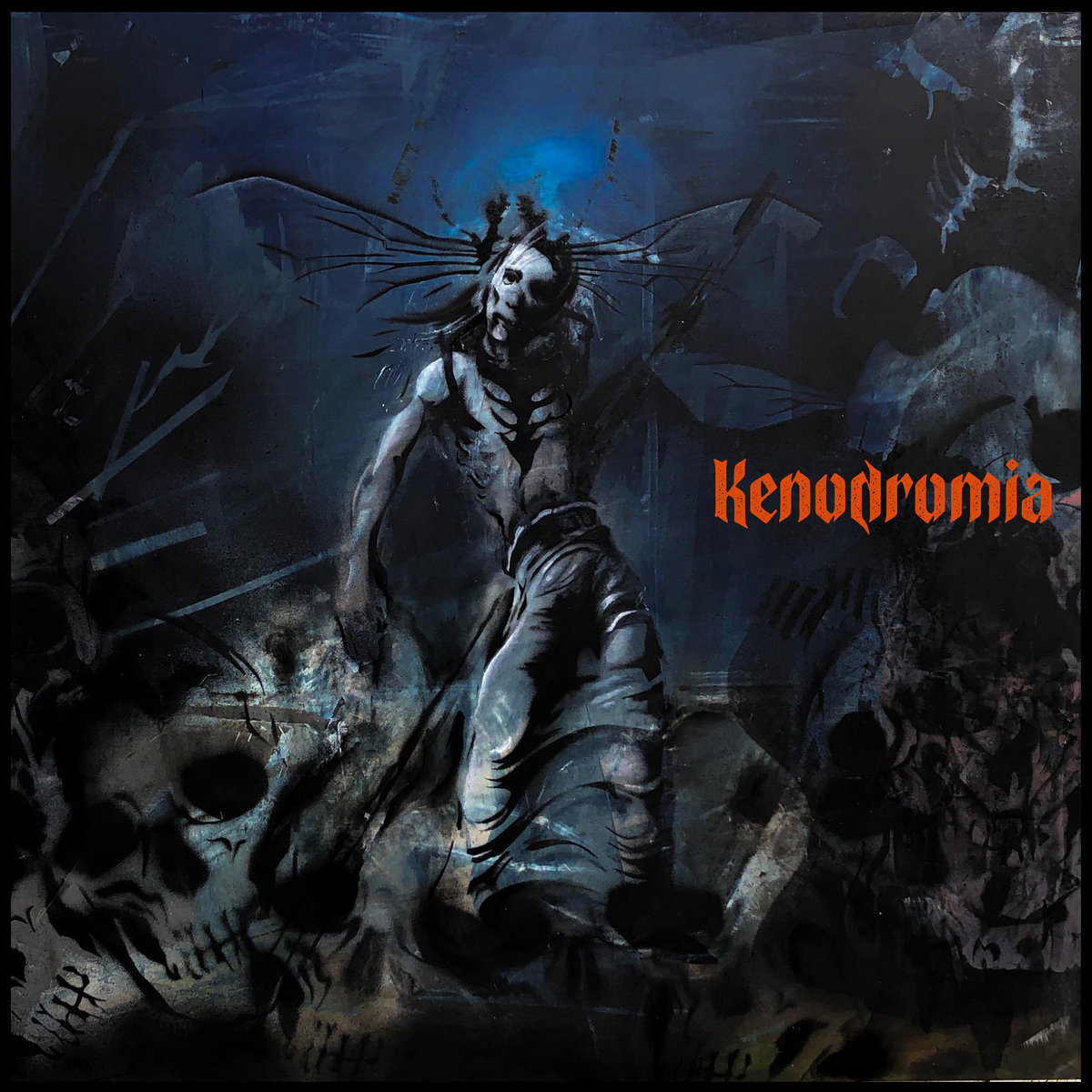
Despite the somewhat grim imagery on the cover art for Kenodromia‘s self-titled debut EP — a three-cut outing that marks a return to the band of vocalist Hilde Chruicshank after some stretch of absence during which they were known as Hideout — the Oslo, Norway, four-piece play heavy rock through and through on “Slandered,” “Corrupted” and “Bound,” with the bluesy fuzzer riffs and subtle psych flourishes of Eigil Nicolaisen‘s guitar backing Chruicshank‘s lyrics as bassist Michael Sindhu and drummer Trond Buvik underscore the “break free” moment in “Corrupted,” which feels well within its rights in terms of sociopolitical commentary ahead of the airier start of “Bound” after the relatively straightforward beginning that was “Slandered.” With the songs arranged shortest to longest, “Bound” is also the darkest in terms of atmosphere and features a more open verse, but the nod that defines the second half is huge, welcome and consuming even as it veers into a swaggering kind of guitar solo before coming back to finish. These players have been together one way or another for over 10 years, and knowing that, Kenodromia‘s overarching cohesion makes sense. Hopefully it’s not long before they turn attentions toward a first LP. They’re clearly ready.
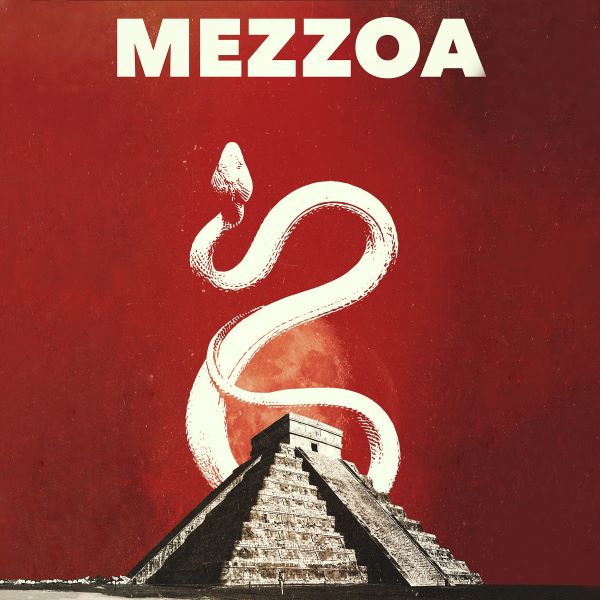
Mezzoa are the San Diego three-piece of guitarist/vocalist Ignacio “El Falcone” Maldonado, bassist Q “Dust Devil” Pena (who according to their bio was created in the ‘Cholo Goth Universe,’ so yes, charm is a factor), and drummer Roy “Bam Bam” Belarmino, and the 13-track/45-minute Dunes of Mars is their second album behind 2017’s Astral Travel. They sound like a band who’ve been around for a bit, and indeed they have, playing in other bands and so on, but they’ve got their approach on lockdown and I don’t mean for the plague. The material here, whether it’s the Helmet-plus-melody riffing of “Tattoos and Halos” or the more languid roll of the seven-minute “Dunes of Mars” earlier on, is crisp and mature without sounding flat or staid creatively, and though they’re likened most to desert rock and one can hear that in the penultimate “Seized Up” a bit, there’s more density in the guitar and bass, and the immediacy of “Hyde” speaks of more urgent influences at work. That said, the nodding chill-and-chug of “Moya” is heavy whatever landscape you want to say birthed it, and with the movement into and out of psychedelic vibes, the land is something you’re just as likely to leave behind anyway. Hit me as a surprise. Don’t be shocked if you end up going back to check out the first record after.
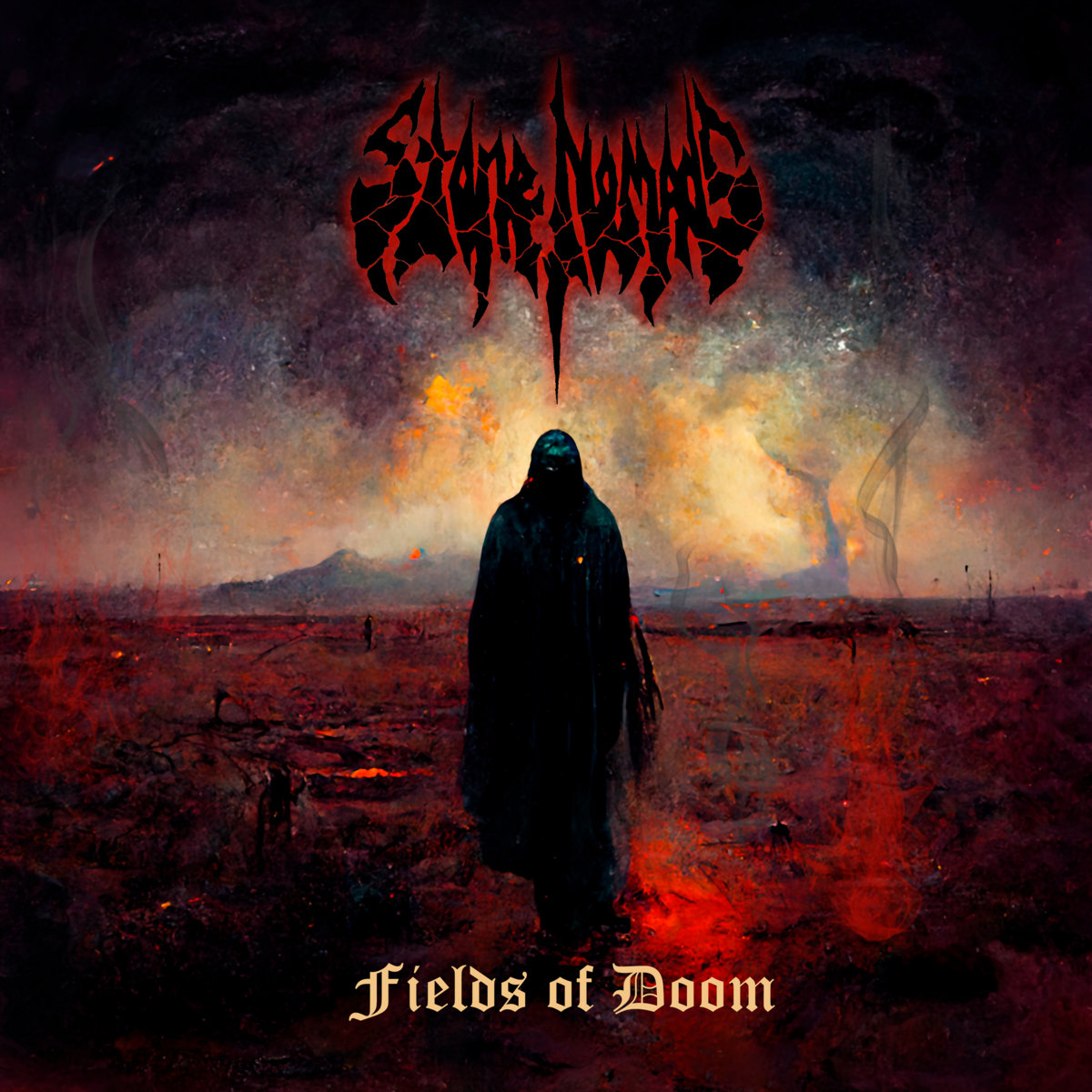
Released through emergent Texas-based imprint Gravitoyd Heavy Music, Stone Nomads‘ Fields of Doom comprises six songs, five originals, and is accordingly somewhere between a debut full-length and an EP at half an hour long. The cover is a take on Saint Vitus‘ “Dragon Time,” and it rests well here as the closer behind the prior-released single “Soul Stealer,” as bassist Jude Sisk and guitarist Jon Cosky trade lead vocal duties while Dwayne Crosby furthers the underlying metallic impression on drums, pushing some double-kick gallop under the solo of “Fiery Sabbath” early on after the leadoff title-track lumbers and chugs and bell-tolls to its ending, heavy enough for heavy heads, aggro enough to suit your sneer, with maybe a bit of Type O Negative influence in the vocal. Huffing oldschool gasoline, Fields of Doom might prove too burled-out for some listeners, but the interlude “Winds of Barren Lands” and the vocal swaps mean that you’re never quite sure where they’re going to hit you next, even if you know the hit is coming, and even as “Soul Stealer” goes grandiose before giving way to the already-noted Vitus cover. And if you’re wondering, they nail the noise of the solo in that song, leaving no doubt that they know what they’re doing, with their own material or otherwise.
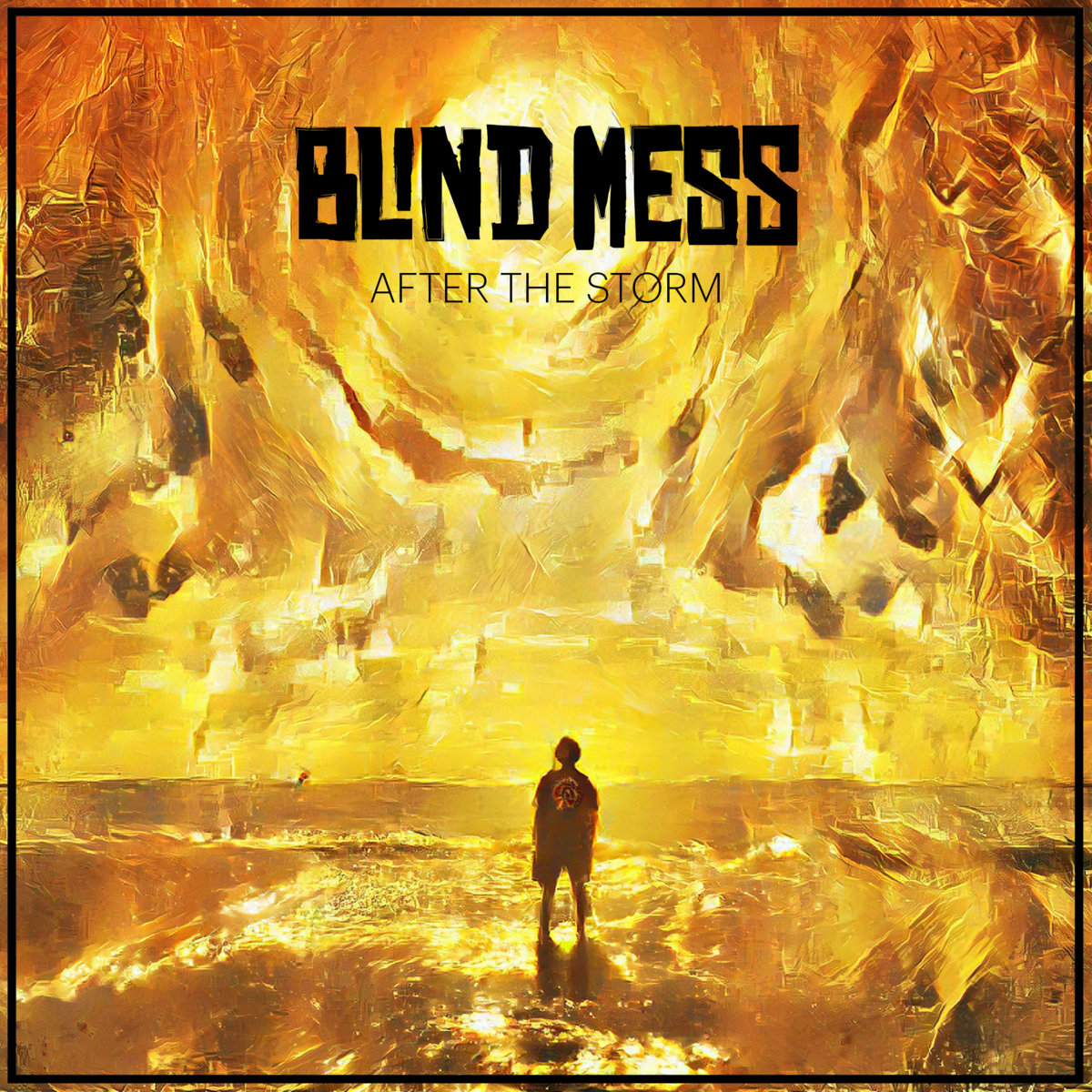
Drawing from various corners of punk, noise rock and heavy rock’s accessibility, Munich trio Blind Mess offer their third full-length in After the Storm, which is aptly-enough titled, considering. “Fight Fire with Fire” isn’t a cover, but the closing “What’s the Matter Man?” is, of Rollins Band, no less, and they arrive there after careening though a swath of tunes like “Twilight Zone,” “At the Gates” and “Save a Bullet,” which are as likely to be hardcore-born shove or desert-riffed melody, and in the last of those listed there, a little bit of both. To make matters more complicated, “Killing My Idols” leans into classic metal in its underlying riff as the vocals bark and its swing is heavy ’70s through and through. This aesthetic amalgam holds together in the toughguy march of “Sirens” as much as the garage-QOTSA rush of “Left to Do” and the dares-to-thrash finish of “Fight Fire with Fire” since the songs themselves are well composed and at 38 minutes they’re in no danger of overstaying their welcome. And when they get there, “What’s the Matter Man?” makes a friendly-ish-but-still-confrontational complemement to “Left to Do” back at the outset, as though to remind us that wherever they’ve gone over the course of the album between, it’s all been about rock and roll the whole time. So be it.