Posted in Whathaveyou on January 6th, 2026 by JJ Koczan
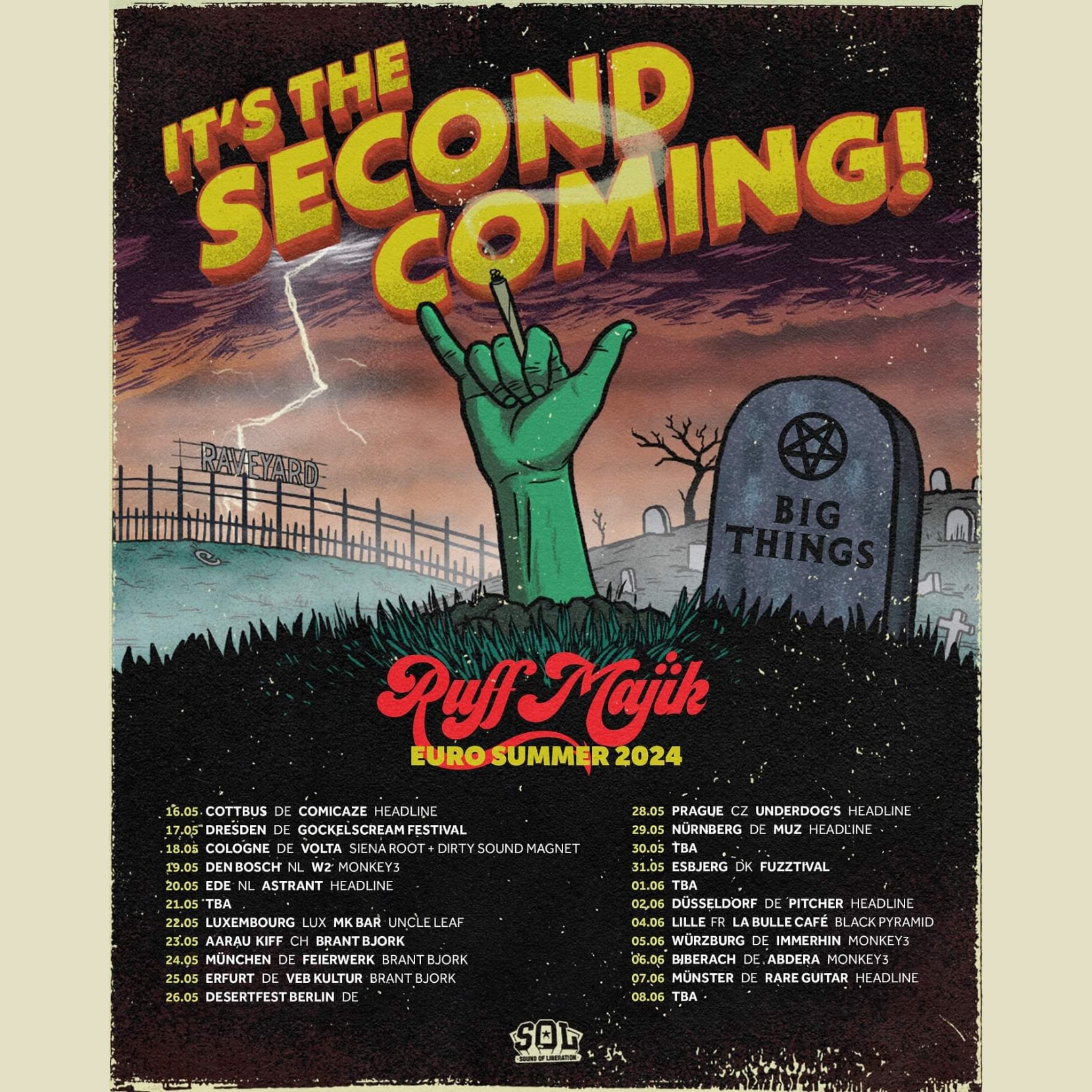
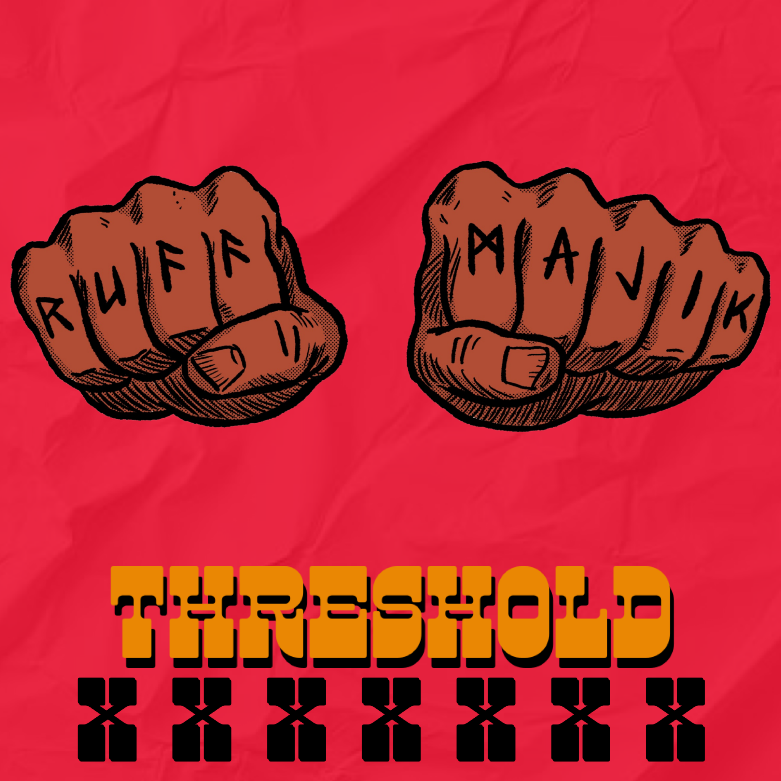
South African heavy rockers Ruff Majik walked away last May, alluding to concerns of mental health and the drain/drag of being in a band trying to engage an audience. No, they didn’t use those words. Their return with a new single, which features Ben from Slomosa and apparently a slew of others from the South African underground on vocals, expressing a collective point of view of those left behind by suicide. The chorus, “May valkyries carry you home,” is duly stirring, and all the more effective for the group voice delivering it. Ruff Majik always had a good sense of production adding to their material.
The band’s last album, late 2024’s Moth Eater (review here), stepped forward from 2023’s Elektrik Ram (review here) but was perhaps too much too soon as the band’s manic pace of touring and releasing led to their unwinding, even if just for a time. There’s talk of restraint in the PR wire info below, but you’ll find the track has plenty of let-loose behind its push, and while it’s not the first time Ruff Majik have purposefully directed themselves toward the anthemic, they’re going for community resonance here, and the track is affecting. More so when you read the lyrics on the Bandcamp page.
Surprise this morning from the PR wire:
A new chapter begins for Ruff Majik with the release of latest single Can Of Wyrms
South African heavy rock outfit Ruff Majik return with Can Of Wyrms, a stark and emotionally unguarded single that confronts suicide from the perspective of those left behind.
Rather than romanticizing loss or framing it through spectacle, Can Of Wyrms documents grief as an ongoing presence — unresolved, heavy, and communal. The song was written years ago, but only now finds its moment, arriving as the band re-emerge after a period marked by silence, distance, and personal reckoning.
Frontman Johni Holiday has previously spoken openly about PTSD, agoraphobia, and cycles of dependency formed while touring — struggles that ultimately led to Ruff Majik stepping away before the weight became fatal. That pause, and the clarity it forced, directly informs the song’s restraint. Can Of Wyrms does not seek answers. It acknowledges absence, as well as the battle waged by those in the thick of it.
Musically, the track balances Ruff Majik’s stoner-punk urgency with a raw yet anthemic vulnerability. Gang vocals — recorded with friends and members of the South African underground music community — form the emotional core of the song, reinforcing its central idea: this grief is shared, not isolated.
The single also features guest vocals by Ben from Slomosa, adding a further layer of communal voice and international solidarity to a deeply personal release.
All proceeds from Can Of Wyrms, including associated merchandise, will be directed toward mental-health support initiatives.
The release coincides with Ruff Majik’s first live performance (31 January, Pretoria, South Africa) , since their hiatus — not framed as a victory lap, but as a statement of intent. In the band’s own words: “There is work to be done.”
Can Of Wyrms is not a eulogy. It is a warning, a remembrance, and a refusal to buckle under the pressures of the world.
This single is currently available on BandCamp only, and will be released on all other platforms on 16 January 2026. The band will take no requests for press until the first phase is complete.
Special crowd vocal features from Delilah LaVey, Shinesh Rambali, Danny Ylang, Jess Anderson, Matthew Nijland, Wilco Meyer, Estian Smith, Jimmy Glass, Brendon Bez, Lars Key, Kayleigh Mocke, Ahreev Govender, Zuanre Voges, Lumar Schutte
Ruff Majik are: Johni Holiday (vocals & guitar) Cowboy Bez (guitar & vocals) Jimmy Glass (bass) Steven Bosman (drums)
Posted in Questionnaire on November 25th, 2025 by JJ Koczan
The Obelisk Questionnaire is a series of open questions intended to give the answerer an opportunity to explore these ideas and stories from their life as deeply as they choose. Answers can be short or long, and that reveals something in itself, but the most important factor is honesty.
Based on the Proust Questionnaire, the goal over time is to show a diverse range of perspectives as those who take part bring their own points of view to answering the same questions. To see all The Obelisk Questionnaire posts, click here.
Thank you for reading and thanks to all who participate.
The Obelisk Questionnaire: Caitlin Mkhasibe of P+A+G+E+S
—
How do you define what you do and how did you come to do it?
For our album, No More Can Be Done, I’ve been asked by other musicians if I’m bored when playing sparsely and I’ve responded that it’s actually challenging to deliberately play slowly and maintain a decent sense of timing for the band to rely on. My body finds ways to fill in the gaps and that comes in the form of movement. I saw on KEXP, Cheryl Waters noted that Adrienne Davies of ‘Earth’ dances behind the kit. Helo (guitarist) and Frank (bassist) do watch me closely for timing visual cues. I follow everyone too, but if I mess up, it’s the most noticeable mistake out of everyone’s cavernous sound, so there’s a lot of pressure to stay present.
In my mind, a lot of my accented cymbals are back-up vocals too. What I enjoy is that I’m not trying to impress listeners with ‘chops’ or drown out anyone else in the band, and if I do play faster or fuller, it’s relevant to the intention of the song. We really worked hard towards this.
I love that I’m inevitably going to play shows predominantly in spaces full of men, and they’re going to have to exercise a kind of respectful patience and listening to me that I wouldn’t normally get in everyday life. It’s very feminist and I hope more women and girls of colour who know me as a quiet and shy person feel like they can take up space with their drums too.
The first time I played drums was at 13 in my friend’s bedroom. Her older brother’s band used her room as storage and we took turns on the kit and played basic rock beats, suggesting ideas to each other.
I want every time I play to feel as welcoming and fun. I’ve heard too many horror stories from women who’ve said, as teens, their male music teachers sexually assaulted them, were misogynists who held them back on purpose or that it felt unsafe to play live. That trauma deterred them from their instrument for a while. I really took my safe passage into drums for granted. Women, non-binary and transgender folks defy many odds by picking up an instrument.
In various settings, patriarchal men feel entitled to being hyper critical of us because of internalized self-hatred. To them, everything we do is lame by default so we’re easily disregarded or irrelevant. Perfectionism is a patriarchal prison and I think truly living is challenging the -isms or making grumpy, oppressive people irritable.
Describe your first musical memory.
My late gran singing and consoling five-year-old me on my parent’s stoep. She knew many unfamiliar British songs and hymns. I started ballet and gymnastics around that time too so there was a lot of forgettable music on tape to stiff choreography on mats, wooden floors, by barres and on stages.
I’ll give another early memory: No matter how ferociously loud the music in my headphones were, nothing drowned out my late dad’s Pan Pipe: Moods CD playing in the car on long car rides to a Zulu family wedding or funeral where people would sing there. My dad was the calmest driver ever though.
Describe your best musical memory to date.
In 2015, as an opening band for a show, we did soundcheck and the sound engineer said, “Right, so as soon as the drummer arrives, you guys can start playing,” and while still sitting behind the kit I said, “I am the drummer”, and he looked bewildered.
Seeing ‘As Is’ play live was always phenomenal (Lliezel Ellick, Garth Erasmus, Manfred Zylla, Niklas Zimmer). In 2016, we did a show together once with their drummer, Andrea Dicò, at Alexander Theatre. For that performance, Andrea said I could pick anything from his metal suitcase of Milnerton thrift market trinkets to add to my kit. I was deeply honoured. His textural approach to drumming was really something myself and our guitarist, helo, resonated with. Andrea said his goal was to find the most messed up sounding kit and play it. That reminded me of Brian Chippendale from Lightning Bolt, without the mic and pedals.
When was a time when a firmly held belief was tested?
At least by 2025, I hoped that the world would be a lot more progressive in its thinking and accountable in its responses to the environmental destruction caused by AI and the human rights violations from mining in Congo and the genocides in Sudan and Palestine. I’m surprised that anger is still not seen as a normal response to injustices of Capitalism or understanding that racism in all of its iterations stems from White Supremacy and it contorts us to uphold and coddle Whiteness. I can’t believe respectability politics still exist, even on the left.
Where do you feel artistic progression leads?
It leads to innovation, creativity and a more fulfilled society because we’re embracing ourselves. Hope is humbling.
How do you define success?
I believe award systems are biased, so I don’t rely on them as guides. I do appreciate kind feedback and ways to improve from peers. Caring, doing your best, working collaboratively, working fairly, being proud of a finished project, being inspired and having okay mental health are all good measures of success for me when considering, contextually, the overculture protects itself and takes pleasure in punishing others for being different. Some people are also scared of finding themselves in the position of being the misunderstood ‘other’, so they self-police their own joy. Success is also just being yourself and being brave in standing up for unique people or what they create. Standing by some-one’s work, even if you’re the only one who sees its value, is huge to me.
What is something you have seen that you wish you hadn’t?
I’m half Zulu, so, in one day, in the name of a patriarchal culture, I saw a goat crying for help before being slaughtered. Its guts were in a bucket. I saw the sweetest cow fighting against being slaughtered and eventually saw its body hung up while being carved out. Then I saw steaming hot, cooked tripe being dished on a plate. I absolutely despise the smell. I really don’t think I’ve lost my ‘Zulu-ness’ by being vegan for the past 10 years. : )
Describe something you haven’t created yet that you’d like to create.
I’m also a visual artist and I have reccurring dreams of doing a residency. It’s located on an achingly beautiful mountain with patches of dense forest. I walk down a wide dirt road to get to the small town. I’ve almost mentally mapped out the whole place now. It keeps getting eerie and detailed per dream visit because of its surrealism and my anxiety around institutions. Maybe this will become an art residency horror comic.
What do you believe is the most essential function of art
It’s both refuge from and a mirror to the ugly world. It’s a space for marginalized voices, a medium for catharsis, to process trauma and is an empathy builder. I do not think intellectualizing and debating people’s humanity is art. It’s unethical because that’s rooted in racism, sexism, classism and queerphobia.
Say something positive about yourself.
As different as I feel I am, I’m proud of my self-belief, and in turn, that gives me hope in other people. I wish for people to be able to do what they love and that that makes them kinder.
Something non-musical that you’re looking forward to?
I recently finished reading The High Desert by James Spooner (who also did Black Punk Now with Chris L. Terry) and Ducks by Kate Beaton. I’m looking forward to Ijeoma Oluo’s Be a Revolution and House of Leaves by Mark Z. Danielewski.
Posted in Reviews on October 10th, 2025 by JJ Koczan
This isn’t the end of the Quarterly Review — it wraps up on Monday — but it is the end of the week, and I’m ready for it. The music’s been good though and that’s something of a salvation for times where it seems like the strange and terrifying are in competition with each other to make life more awful. That doesn’t end on the weekend, of course, but at least I’ll have two days to put together the last post of this QR, and when you’ve been writing 10 reviews a day all week, half that counts as respite. Something like it, anyhow.
So before we wrap up the week with whatever on earth I’ll actually pick to close it out (any requests?), here’s one more batch, with my thanks for your valuable time and attention. Hope you find something cool.
Quarterly Review #51-60:
P+A+G+E+S, No More Can Be Done
No More Can Be Done is the debut album from South Africa’s P+A+G+E+S, but the Cape Town trio spent five years in the 2010s together as Morning Pages, so that their first record would hold so much intention behind it shouldn’t necessarily be a shocker. The reason behind the name change? An apparent change in their project, which is to say the band got way, way darker, way, way heavier and nasty in that sharp-toothed-thing-you-can’t-see-but-you-know-is-there-also-there-are-no-lights kind of way. The 15-minute opener/longest track (immediate points) “The Passage” leads the way down into the bleak, extreme sludge that follows, but as the careful linear build of “Shine On” later demonstrates, P+A+G+E+S are more methodical than the noise and outwardly chaotic feel would seem to indicate. Atmosphere plays a central role in what they do, and that’s consistent from their run as Morning Pages, but No More Can Be Done is about what’s lurking and lurching in the bleakness.
Following the intro “Chasm,” Bask launch their fourth album, The Turning, with minor-key mystique and subsequent crush via “In the Heat of the Dying Sun” and “The Traveler,” piling triumph upon triumph in a way that is indicative of the progressive songwriting at work. “The Cloth” is slower, but neither less weighted nor less gorgeous for that, and as “Dig My Heels” works in some of the Southern/Americana pastoralism the Asheville, North Carolina, outfit have always been known for, the melody proves a standout, setting up another life-affirming payoff in the seven-minute “Unwound,” the mellower turn for the build of “Long Lost Light” and the somewhat wistfully twanging undertones of the title-track, which closes with grace and poise rare enough in heavy anything. Clearly a band who have worked to and been successful in transcending their root influences, and an identity that’s been hard-forged over their decade-plus. The Turning sees them actively bring their approach to another level.
A 15-minute two-songer from Lima, Peru’s Matus, as the psychedelic weirdo sometimes-cultists of long standing offer “El Aullido” (8:45) and “Planetario” (6:55) as their first outing since 2021’s Espejismos II (review here). Both processions — and they are that — feel built out from jams, but the recordings have guitarist Manolo Garfias and keyboardist Richard Nossar (both also alternate bass duties) at their core, along with Roberto Soto‘s drumming, Veronik‘s theremin in the deep-freakout section of “Planetario,” Úrsula Inga‘s vocals on “El Aullido,” and so on with other guests (including Camilo Uriarte, who co-produced and mixed, along solo artist Chino Burga on guitar, and Cristóbal Pérez on sax for “Planetario”) adding to the movement. “El Aullido” pairs shoegaze with a roll informed by South American folk, perfect for Inga‘s vocals, while “Planetario” carries more of its melody in the keyboards and surrounding ambience. It’s a welcome check-in from Matus as they celebrate the 20th anniversary of the band.
Where New England bizarropsych rockers November’s Fire‘s 2024 album, Through a Mournful Song, took an approach to its material like some of earliest Monster Magnet‘s underproduced kitchen-sink quirk, the two-song EP 2025 presents two different faces, and that turns out to be because the songs included are over 30 years old. “2025” and “Somnia” — the latter which brings in original guitarist Greg Brosseau for a guest spot that includes clean lead vocals — were allegedly written in the early 1990s, and if you told me the root of the title-track was a teenaged thrash riff, they make that easy enough to believe in the modernized, thickened chug of the song as it stands now. That is to say, they’ve brought it into the sludgy experimentalist context of the work now, but it remains dark. As it inevitably would. “Somnia” is shorter, has some backing chants, and feels meditative even as the guitar holds to its restlessness. Weird band staying weird, screwing around with their old stuff and getting something out of it. Sometimes an experiment works.
Bergen, Norway, four-piece Goatmilker don’t really leave you with much choice other than to call them progressive, though that hardly says boo about the reach of their self-titled debut, which is as much psychedelic punk as it is black metal in its rhythms, but remains a work of heavy rock and roll nonetheless, grooving, catchy on “Devils on My Tail,” aggro-weird on “Time… Tearing Apart,” all-in on tonal overwhelm for “Mountains” and cheekily grandiose in the finale “Storm” only after they’ve seen fit to take on Journey‘s “Separate Ways (Worlds Apart),” which given the goes-where-it-wants succession leading up to it hardly feels out of place at all. While at no risk of overstaying its welcome at eight songs and 34 minutes, Goatmilker does make for a challenging listen at times, but the rewards for actually paying attention to what they’re doing are worth whatever effort is required. That is to say, engage actively for best results.
If Grin sound a little different on Incantation, a two-track 7″ with a digital bonus cut in the flatteningly heavy “Echoes in the Static,” that might be because the duo of drummer/vocalist Jan Oberg and bassist Sabine Oberg didn’t record themselves as usual, but instead tracked live at Wave Akademie in their native Berlin with Anton Urban (Jan Oberg co-produced, mixed and mastered, so still had a hand for sure). So, rather than the studio leftovers one might expect mere months after the band’s last full-length, Acid Gods (review here), the songs may have their origins as such but arise from different circumstances. There’s some more of a wash to “Incantation” and “The Color of Ghosts,” and “Echoes in the Static” is consumed by its titular noise toward its finish, but “The Color of Ghosts” dares some melodic vocals amid all that bombast, and as usual, Grin forge their own take on metal, sludge and intense atmospheric heavy.
A collection of bangers on the second LP through Glory or Death Records from San Diego rockers Mezzoa, TON 618 plays out over the course of a taut 13 songs and 39 minutes, careening desert style in “Hard to Hear,” punking up the groove in “Chump” before basking in Sabbath worship for “Wasted Universe” (think “Symptom” thereof), building crunching tension in “Uncle Cho” only to release it in the second half of the song with a grunge melody, carrying that melody into “Smiles for Everyone,” and then slamming all that momentum into the fuzzed radness of the lead tone and Alice in Chainsy vocal of “How You Been.” That’s not the end, I’m just less efficient than the band and so I’m running out of space. “Blessing” attains inner Nirvana while “Desert Snakes” sounds like it’s ready for a John Garcia guest spot, “Chachi Liberachi” echoes the sharper corners of “Wasted Universe,” “Goin’ Down” has that riff that every New York hardcore song ever (yes, all of them. don’t @ me.) has but goes somewhere completely different with it, and closer “How Are We” highlights the craft that’s let them do it all in the first place. Hey kid, you like rock music? Well get a load of this.
Beginning with its longest track in the nine-minute “Biting In,” Orsak:Oslo‘s Silt and Static finds the Norwegian/Swedish outfit somewhat outgrown from their dronier foundations, harnessing a psychedelia that moves with krautrocking purposes, while retaining the band’s previously-established ambient instrumentalist approach. “Days Adrift” is an even thicker roll, with ebbs and flows that give precedent to the shove that results in “Salt Stains,” which follows, while “Petals” dips momentarily into minimalism. But the story here is the fullness of sound, with pieces like the subdued-but-building “Resonance in Ash” or “Petals” in conversation with Pelican/Russian Circles-style heavy, while “The Onward Stride” and “Time Leak” bring prog more to the forefront and “Bread and Sink” lets the rumble bring it all together. In these ways, Silt and Static rewrites the story of Orsak:Oslo as a band, and their reach has never seemed so broad.
Modder, Destroying Ourselves for a Place in the Sun
The hypnotic drone finish of “Type 27” that ends side A of Modder‘s second album, Destroying Ourselves for a Place in the Sun, is just one way the band incorporate ambience as a key element in their trades between loud and quiet, tense and open, and crushing and spacious. These different sides come together in various combinations across the six cuts on the Belgian instrumentalist five-piece’s 41-minute run, which sets out in oppressive and blasting fashion with “Stone Eternal,” as heavy as whatever doom you want to put it next to and still able to hit with the precision of Gojira. The shorter “Mather” is more angular, glitchy and mirrored by “Chaoism” on the album’s second half, and though they lead off with their longest track (immediate points) in “Stone Eternal,” the heavy djenty chug that comes to fruition on “In the Sun” is unmistakable as anything but the closer, building, receding, tossing in what sure sounds like a human voice chanting and surging in intensity to round out with a keyboard-overlaid bludgeoning. By then you’re pretty much pulp anyway.
Past Warnings of Present Futures tells you a lot about its point of view in the title, but electronic experimentalists Futuredrugs push the meaning deeper still, opening with a barely recognizable take on “What a Wonderful World” with “Skies of Blue” and revamping Tom Waits‘ “Dirt in the Ground” on “…And the Gallows Groaned.” The cinematic, dark synth/programmed backdrop of these and the sampled “No Home” blur the line between originality and reinterpretation/manipulation, and I won’t claim to know whether pieces like “Ice Age Coming” or “When the Last Tree Falls” are similarly sourced, but maybe. In any case, in a time when remembering things like “nothing matters anyway” is a comfort, there is space for the open-minded listener to dwell among these seven tracks, which when taken as a whole succeed in embodying the apocalyptic hellscape of recent years. I don’t know if they’re offering sanctuary so much as a snapshot, but as that, it sure feels like an accurate depiction.
Posted in Whathaveyou on August 21st, 2025 by JJ Koczan
I’m not trying to be out here spoiling a thing that’s not coming out for another two months, but if you check out P+A+G+E+S‘ debut album, No More Can Be Done, the Cape Town, South Africa, extreme atmospheric sludge trio open with a 15-minute slab of worldmaking grimness called “The Passage,” and indeed it’s kind of like being passed from beneath a grindstone to whatever chute has been tasked with extricating the chaff. A crushing plunge, in other words.
If you’re the type to capitalize letters when typing using the caps lock button, their moniker will be a challenge. I advise going with shift in typing it out. Is this a note to myself for an eventual album review? Maybe, but I’ve got more listening to do before I get there. There isn’t a single public from it yet or I’d probably have a Bandcamp player below, but if you want to get a sense of the vibe and all the surrounding void of the band photo and cover art aren’t enough of a hint where they’re coming from, then yes, for sure that clip should answer any questions you have. With punishment.
Note that this is their debut album but from 2014-2019 the band operated as Morning Pages, and there are still a few experimentalist singles you can find on Bandcamp if you’re remotely willing to search. Here’s what the PR wire brought:
P+A+G+E+S – No More Can Be Done – RELEASE DATE 25th October 2025
Cape Town’s doom, atmospheric noise, drone, and sludge post-metal trio P+A+G+E+S are set to unleash their debut full-length album, NO MORE CAN BE DONE, recorded with producer Simon Ratcliffe at Sound and Motion Studios between 3 and 7 February 2025. The album is a stark, slow-burning monolith of existential dread, geopolitical despair, environmental decay, and raw emotional weight—tempered by a glimmer of perseverance in a world teetering toward collapse. P+A+G+E+S’ message is to take note of environmental degradation and to challenge oppression by standing up for BIPOC, women, LGBTQI+, human and animal rights.
Since pivoting from their post-rock and noise roots in 2017, Caitlin Mkhasibe (drums), Frank Lunar (bass), and helo samo (guitar, vocals, sampling, and textural noise) have pushed their sound toward heavier, drudging territory. NO MORE CAN BE DONE represents the culmination of years of interrupted yet purposeful writing, with its earliest riffs born in late 2019 and its completion delayed by the global pandemic until writing resumed in March 2024.
“Grief and the depressing state of the world were big inspirations,” says the band. “We wanted to create something that embodies that state and cast a light on things that are often hard to address—while writing music we would want to hear ourselves.”
Musically, the album unfolds like a descent into shadow:
Side A begins as a metamorphosis of chaotic, jolting noise before shifting into an industrial, mechanical gait, eventually dissolving into a fragile, symphonic closure.
Side B surges forward with dissonant, discordant tones anchored by hefty, deliberate drums, each moment meticulously constructed.
Lyrically, the record distills vast, overwhelming concepts into simple mantras, delivered through a detached, almost spectral vocal style—an intentional choice to let meaning resonate in repetition.
The songs began with helo samo bringing guitar riffs to rehearsal, where the trio shaped and stripped ideas through process of elimination. Rough phone recordings became the blueprint, later evolving into demos tracked on an electronic kit and home setup. Vocals were initially captured on an SM58 in the back seat of a car, underscoring the band’s raw, unvarnished approach.
All instruments were tracked live in one room to preserve the immediacy and weight of their sound. After establishing the perfect mic configurations, the band spent days building the album layer by layer: foundational live takes, doubled guitars for stereo depth, noise and sampling textures, and finally, the haunting vocal performances.
Created by helo samo, the cover depicts the stages of a dandelion’s life cycle—symbolizing resilience and perseverance amidst chaos. The image’s calmness stands in deliberate contrast to the crushing sonic force within.
“The dandelion embodies the quality of being gentle but strong, spreading with the wind,” the band notes.
In four words – Slow, crushing, dissonant doom.
Track Listing: 1. The Passage 2. Ascension 3. Devastation Junkie 4. Shine On 5. Moribund
The members consist of Caitlin Mkhasibe (drums), Frank Lunar (bass), helo samo (guitar, vocals, sampling and textural noise).
Posted in Whathaveyou on May 27th, 2025 by JJ Koczan
Admittedly, I’m not getting “band is done forever” vibes off Ruff Majik‘s somewhat vague breakup post. Some bands lay it all out — this is what happened, who what where when, etc. — but Ruff Majik founding guitarist/vocalist Johni Holiday is lighter on details: “…I want to live. I want to survive whatever this is. I want to feel, without bleeding for it.”
Mental health has been at play for Ruff Majik all the while, sometimes with emphasis on ‘play.’ Their two most recent albums, last Fall’s Moth Eater (review here) and 2023’s Elektrik Ram (review here), certainly put the theme forward, and chaos has been a friend of the South African rockers for the last decade. If you shake hard enough, eventually the wheels are going to come off. If they need to stop before that happens, it’s a commendable thing that they’re stopping.
But there’s no “done forever” here. The word ‘hiatus’ isn’t used, and Holiday is one to choose words carefully if you’ve ever read his lyrics, but it’s pretty clear he and Ruff Majik aren’t disappearing forever so much as stepping back and sorting out what they feel like needs sorting. Holiday, joined in the band by bassist/sometimes-vocalist Jimmy Glass, guitarist/sometimes-vocalist Cowboy Bez and drummer Steven Bosman, recently opened a venue, Sowaar Bar, in Pretoria, and surely that’s going to eat up some of your available-otherwise-for-anything hours. And between that, life, and the state of the world, taking care of yourself can sometimes require radical action. Ruff Majik were never strangers to being rad.
I included a couple links above. I could’ve included more. Going back to their early EPs, Ruff Majik‘s brash, attitude-laced and readily transgressive desert-heavy rock undertook a special, distinctive and honest progression. Whether that’s all the way done or not — and if we’re placing bets, I’m going with “not” — if it’s done for now, that’s an ending worth marking on the way to whatever the future might bring, even if that’s nothing.
Either way, I’m really, really glad I got to see this band the one time I did. Here’s looking forward to the next one.
From social media:
2015 – ♾️
For years now I’ve been pushing through grief, exhaustion, heartbreak, sickness, and occasional self-sabotage. Now, for the sake of myself, I need to stop.
I don’t know what happens next — and I think that’s okay.
What I do know is that I want to live. I want to survive whatever this is. I want to feel, without bleeding for it.
We’ll see each other again somewhere in a dimly lit dive bar. We’ll sing together again. Until then, thank you for everything.
— Johni Holiday
Ruff Majik are: Johni Holiday (vocals & guitar) Cowboy Bez (guitar & vocals) Jimmy Glass (bass) Steven Bosman (drums)
Day three. Yesterday had its challenges as regards timing, but ultimately I wound up where I wanted to be, which is finished with the writing. Fingers crossed I’m so lucky today. Last time around I hit into a groove pretty early and the days kind of flew, so I’m due a Quarterly Review where it’s a little more pulling teeth to make sentences happen. I’m doing my best either way. That’s it. That’s the update. Let’s go Wednesday.
Quarterly Review #21-30:
Godzillionaire, Diminishing Returns
Tell you what. Instead of pretending I knew Godzillionaire at all before this record came along or that I had any prior familiarity with frontman Mark Hennessy‘s ’90s-era outfit Paw — unlike everything else I’ve seen written about the band — I’ll admit to going into Diminishing Returns relatively blind. And somehow it’s still nostalgic? With its heart on its sleeve and one foot in we’re-all-definitely-over-all-that-shit-from-our-20s-by-now-right-guys poetic moodiness, the Lawrence, Kansas, four-piece veer between the atmospherics of “Spin Up Spin Down” and more grounded grooves like that of “Boogie Johnson” or “3rd Street Shuffle.” “Unsustainable” dares post-rock textures and an electronic beat, “Astrogarden” has a chug imported from 1994 and the seven-minutes-each capstone pair “Common Board, Magic Nail,” which does a bit of living in its own head, and “Shadow of a Mountain,” which has a build but isn’t a blowout, reward patient listens. I guess if you were there in the ’90s, it’s god-tier heavy underground hype. From where I sit, it’s pretty solid anyhow.
In Flight is the second full-length from Portland, Oregon’s Time Rift, and it brings the revamped trio lineup of vocalist Domino Monet, founding guitarist Justin Kaye and drummer Terrica Catwood to a place between classic heavy rock and classic metal, colliding ’70s groove and declarative ’80s NWOBHM riffing — advance single “The Hunter” strikes with a particularly Mob Rulesian tone, but it’s relatable to a swath of non-sucky metal of the age — such that “Follow Tomorrow” finds a niche that sounds familiar in its obscurity. They’re not ultimately rewriting any playbooks stylistically, but the balance of the production highlights the organic foundation without coming across like a put-on, and the performances thrive in that. Sometimes you want some rock and roll. Time Rift brought plenty for everyone.
Canadian instrumentalist trio Heavy Trip released their sophomore LP, Liquid Planet, in Nov. 2024, following on from 2020’s Burning World-issued self-titled debut (review here). A 13-minute title-track serves as opener and longest inclusion (immediate points), setting a high standrad for scorch that the pulls and shred of “Silversun,” the rush and roll of “Astrononaut” (sic) and capper “Mudd Red Moon” with its maybe-just-wah-all-the-time push and noisy comedown ending, righteously answer. It’s easy enough on its face to cite Earthless as an influence — instrumental band with ace guitarist throwing down a gauntlet for 40 minutes; they’re also touring Europe together — but Heavy Trip follow a trajectory of their own within the four songs and are less likely to dwell in a part, as the movement within “Astrononaut” shows plainly. I won’t be surprised when their next one comes with label backing.
An impressive debut from UK four-piece Slung, whose provenance I don’t know but who sound like they’ve been at it for a while and have come into their first album, In Ways, with clarity of what they want in terms of sound and songwriting. “Laughter” opens raucous, and “Class A Cherry” follows with a sleeker slower roll, while “Come Apart” pushes even further into loud/quiet trades for a soaring chorus and “Collider” pays off its early low-end tension with a melodic hook that feels so much bigger than what one might find in a three-minute song. It goes like that: one cut after another, for 11 songs and 37 minutes, with Slung skillfully guiding the listener from the front of the record to the back. The going can be intense, like “Matador” or the crashing “Thinking About It,” more contemplative like “Limassol” and “Heavy Duty,” and there’s even room for a title-track interlude before the somewhat melancholic “Nothing Left” and “Falling Down” close, though that might only be because Slung use their time so well.
Madrid-based progressive heavy rockers Greengoat return on a quick turnaround from 2024’s A.I. (review here) to Aloft, which over 33 minutes plays through seven songs each of which has been given a proper name: the album intro is “Zohar,” it moves into the grey-toned tension of “Betty,” “Jim” is moody, “Barney” takes it for a walk, and so on. The big-riffed centerpiece “Travis” is a highlight slog, and “Ariel,” which follows, is thoughtful in its melody and deceptively nuanced in the underlying rhythm. That’s kind of how Greengoat do. They’ve taken their influences — and in the case of closer “Charles,” that includes black metal — and internalized them toward their own methodologies, and as such, Aloft feels all the more individually constructed. Hail Iberia as Western Europe’s most undervalued heavy hotspot.
If it seems a little on the nose for Author & Punisher, modern industrial music’s most doom-tinged purveyor, to cover Godflesh, who helped set the style in motion in the first place, yeah, it definitely is. That accounts for the reverence with which Tristan Shone treats the track that originally appeared on 1994’s Selfless LP, and maybe is part of why the song’s apparently been sitting for 11 years since it was recorded in 2014. Accordingly, if some of the sounds remind of 2015’s Melk en Honig (discussed here), the era might account for that. In Shone‘s interpretation, though, the defeated vocal of Justin K. Broadrick becomes a more aggressive rasp and the guitar is transposed to synth. One advantage to living in the age of content-creation is stuff like this gets released at all, let alone posted so you can stream or download as you will. Get it now so when it shows up on the off-album-tracks compilation later you can roll your eyes and be extra cool.
Children of the Sün, Leaving Ground, Greet the End
It’s gotta be a trap, right? The third full-length from Arvika, Sweden, heavy-hippie folk-informed psychedelic rockers Children of the Sün can’t really be this sweet, right? The soaring “Lilium?” The mellow, lap-steel-included motion in “Come With Us?” The fact that they stonerfy “Whole Lotta Love?” Yeah, no way. I know how this goes. You show up and the band are like, “Hey everything’s cool, check out this better universe we just made” and then the next thing you know the floor drops out and you’re doing manual labor on some Swedish farm to align yourself with some purported oneness. I hear you, “Starlighter.” You’re gorgeous and one of many vivid temptations on Leaving Ground, Greet the End, but you’ll not take my soul on your outbound journey through the melodic cosmos. I’m just gonna stay here and be miserable and there’s nothing you or that shiver-down-the-spine backing vocal in “Lovely Eyes” can do about it. So there.
While the core math at work in Pothamus‘ craft in terms of bringing together crushing, claustrophobic tonality, aggressive purposes and expansive atmospherics isn’t necessarily new for a post-metallic playbook, but the melodies that the Belgian trio keep in their pocket for an occasion like “De-Varium” or the drone-folk “Ykavus” before they find another layer of breadth in the 15-minute closing title-track are no less engrossing across the subdued stretches within the six songs of Abur than the band are consuming at their heaviest, and the percussion in the early build of the finale says it better than I could, calling back to the ritualism of opener “Zhikarta” and the way it seems to unfold another layer of payoff with each measure as it crosses the halfway point, only to end up squeezing itself through a tiny tube of low end and finding freedom on the other side in a flood of drone, the entire album playing out its 46 minutes not like parts of a single song, but vivid in the intention of creating a wholeness that is very much manifest in its catharsis.
Gentle Beast, Vampire Witch Reptilian Super Soldier (…From Outer Space)
Gentle Beast are making stoner rock for stoner rockers, if the cumbersome title Vampire Witch Reptilian Super Soldier (…From Outer Space) of the Swiss five-piece’s sophomore LP didn’t already let you know, and from the desert-careening of “Planet Drifter” through the Om-style meditation of “Riding Waves of Karma” (bonus points for digeridoo) ahead of the janga-janga verse and killer chorus of “Revenge of the Buffalo,” they’re not shy about highlighting the point. There’s a spoken part in the early going of “Voodoo Hoodoo Space Machine” that seems to be setting up a narrative, and the organ-laced ending of “Witch of the Mountain” certainly could be seen as a chapter of that unfolding story, but I can’t help but feel like I’m thinking too hard. Go with the riffs, because for sure the riffs are going. Gentle Beast hit pretty hard, counter to the name, and that gives Vampire Witch etc. etc. an outwardly aggressive face, but nobody’s actually getting punched here, they’re just loud having a good time. You can too.
Metal and psychedelia rarely interact with such fluidity, but South Africa’s Acid Magus have found a sweet spot where they can lead a record off with a seven-minute onslaught like “War” and still prog out four minutes later on “Incantations” just because both sound so much in their wheelhouse. In addition, the fullness of their tones and modern production style, the way post-hardcore underlines both the nod later in “Wytch” and the shoving apex of “Emperor” is a unifying factor, while the bright-guitar interludes “Ascendancy” and “Absolution” broaden the palette further and contrast the darker exploration of “Citadel” and the finale “Haven,” which provides a fittingly huge and ceremonious culmination to Scatterling Empire‘s sense of space. It’s almost too perfect in terms of the mix and the balance of the arrangements, but when it hits into a more aggressive moment, they sound organic in holding it together. Acid Magus have actively worked to develop their approach. It’s hard to see the quality of these songs as anything other than reward for that effort.
Posted in Bootleg Theater on February 17th, 2025 by JJ Koczan
Filthy Hippies released their new single “Wilt” this past Friday on the usual internetty smattering of streaming services. Lots of big names and no paychecks, you know the type. The South African heavygazer outfit say farewell to their now-former drummer, Mark Van Zyl, with their upcoming full-length, A Colourful Trip Through Melancholy — a title to which the music absolutely does live up — which lands April 4 with the backing of Mongrel Records. The new LP is coming on a quick turnaround from 2024’s Share the Pill (review here), but perhaps the fact that their drummer was moving to New Zealand — not gonna say I don’t get it — lit a fire under the process; I honestly don’t know. In any case, there are far worse things for a band to be than prolific.
The album is keyed for immediate immersion as “Get Out of My Way” begins. The vocals of guitarist/keyboardist Andrew Paine sit mellow and breathy deep within the fliud mix, the guitars of Ca’lee Tucker and Tim Ball create an engrossing backdrop of effects and noise, bassist Mandy Backstrom (also vocals) locked in on bass while what may or may not be a drum machine holds a subtle intensity beneath all the slow swirl. “Wilt” follows immediately and brings a clearer acoustic strum, but hey, big shocker, the album they decided to call A Colourful Trip Through Melancholy has a pretty vital focus on mood. Further to that, the sound isn’t monolithic. As with Share the Pill, Filthy Hippies dare to lean into indie and pop-psych — the latter in the second-half lead guitar of “Miserable,” for example — but the megafuzz blowout “Sad Things Write Themselves,” the psychedelic trip-hop of “Mind Pollution” and the comparatively minimalist guitar contemplation “Flashbacks” are also accounted for in their scope, so in addition to a world being made, it’s one that is full of life.
But of course, evolution is slow and so for the most part are Filthy Hippies. A transcendental hum in “Throw Away” feeding into “Flashbacks” gives the middle of the record a particularly entrancing bent, but “Smells Like Rehab” grounds with a straightforward folkish acoustic guitar and leaves it to the vocals and backing keys to get weird with just a hint of twang, subsequently shoved cosmic by “Sad Things Write Themselves.” The story of the back half of A Colourful Trip Through Melancholy gets more complex with the combined vocals and ambient layering of “Colours Fade Away,” which creates a space and threatens to fill it but recedes calmly into an ethereal drift. All of this is headed toward the druggy ’90s experimentalism of “Stargazer” (more fun with pop malleability here) and “Absolution,” but before the closing duo, “Into a Dream” gives one last space-rocking push, tambourine included for extra movement. That divergence into the relatively straightforward does a lot to realign the listener before side B wraps up as weirdo-celebrant as it does. They say in space no one can hear you scream. I’m pretty sure that means no one can hear you chill the fuck out either.
Considering the ephemeral nature of the band’s lineup as presented here, the adieu being bid to the five-piece they were presumably in the name of being able to get on stage and do the thing, A Colourful Trip Through Melancholy covers a lot of ground and finds the band getting more expansive in terms of style. I don’t know the actual circumstances under which it was made — that is, if it was recorded at the same time as the last album, or if the fact that they do it all themselves lets them jam and explore and they like to get the stuff on tape while it’s fresh, or whatever else in this universe of infinite possibility — but it feels less about impact than its predecessor and that comes across like an organic progression of craft in this material. Quick turnaround or not, it’s a dynamic worth preserving.
Enjoy the premiere of “Wilt” below, followed by more from the PR wire:
Cape Town-based alternative-psychedelic band Filthy Hippies have made a name for themselves in the South African music scene with their signature shoegaze-infused sound. Since their formation in 2018, they have cemented their reputation as a standout act in the country’s thriving psych scene, sharing stages with notable bands such as Dangerfield and delivering an unforgettable performance at the 2019 Endless Daze Festival.
After a period of evolution and lineup changes, Filthy Hippies are thrilled to announce their latest album, ‘A Colourful Trip Through Melancholy’. This release marks a significant chapter for the band as they bid farewell to longtime collaborator Mark Van Zyl, who was instrumental in shaping the record before his upcoming move to New Zealand.
“His intense creativity will be sorely missed,” shares frontman Andrew Paine. “But it was awesome to get to go down the rabbit hole one last time with him before he goes.”
‘A Colourful Trip Through Melancholy’ is exactly that—a vibrant yet introspective journey through the highs and lows of life. “It’s just reflections on everyday experiences and emotions,” Paine explains. “A journey through a slightly jaded mind.” The album embraces a message of presence and acceptance, reminding listeners to cherish fleeting moments. “Enjoy every moment as it happens,” says Paine. “Things fade away far too quickly, and life moves in very definite cycles.”
The recording process was an immersive and intensive experience, with the band diving deep into latenight brainstorming sessions and extended tracking marathons. “Everything was recorded at our home studio, The Sanctuary. Lots of late-night brainstorming and intensely long sessions—it was a lot of fun.”
With a Phil Spector-esque wall of sound blending rich textures, layered harmonies, and deep-rooted pop sensibilities, ‘A Colourful Trip Through Melancholy’ stands as a defining statement from Filthy Hippies.
Track Listing: 1. Get Out Of My Way 2. Wilt 3. Miserable 4. Fuzzbox 5. Mind Pollution 6. Throw Away 7. Flashbacks 8. Smells Like Rehab 9. Sad Things Write Themselves 10. Colours Fade Away 11. Into A Dream 12. Stargazer 13. Absolution
Video filmed by Meg Davidson Edited by Filthy Hippies with Mark Van Zyl. 2025 Mongrel Records
Line Up: Andrew Paine – Vox/Guitars/Keys Mandy Backstrom – Bass/Vox Tim Ball – Guitars Ca’lee Tucker – Guitars with Mark Van Zyl
Posted in Whathaveyou on November 19th, 2024 by JJ Koczan
There’s not exactly a mountain of information to go on, but there is a mountain’s worth of volume packed into Acid Magus‘ new single — see what I did there? — “Emperor,” which is a herald of their third full-length to come. Though it is particularly satisfying in its largesse and melodic reach, progressivism and raw, heavy impact aligning comfortably side-by-side in their sound, “Emperor” follows behind “Wytch” (posted here), which came out this past August. There’s one more track to be unveiled from the apparently-not-that-impending long-player, which will be the follow-up to 2023’s Hope is Heavy (review here), but to keep centered in the moment, “Emperor” offers plenty to chew on in the meantime.
Even more than “Wytch,” it speaks to the growth of the band’s songwriting and aspirations toward spaciousness in the production. They float and crush in kind. I don’t know the release date for the album — next single early 2025, LP sometime thereafter, preferably sooner than later? — or even when the last song to advance it will drop, but “Emperor” is a reminder of why I look forward to hearing both.
To the PR wire, then:
Acid Magus Drops Explosive New Single Emperor from Upcoming Album
Emerging from the shadows of Pretoria’s rock scene, Acid Magus unleash Emperor, the fiery second single from their upcoming album. Known for their intoxicating blend of doom, stoner, punk, and psych rock, Acid Magus has crafted a track that is both an intense journey into sound and a searing exploration of power’s dark allure.
In a swirl of distorted guitars, heavy riffs, and hypnotic rhythms, Emperor introduces the album’s central antagonist—a power-hungry overlord who thrives on destruction. As a metaphor for colonialism and the erasure of culture, the Emperor embodies raw, destructive ambition. The track invites listeners to confront the brutality of conquest, with haunting lyrics that echo the relentless drive for control. Acid Magus’s characteristic musical grit and psychedelic edge deliver a visceral experience, drawing inspiration from the likes of Mastodon, Kylesa, and Baroness, all while infusing their signature South African flair.
Emperor is also the shortest track on the upcoming album, offering a potent glimpse into the broader narrative Acid Magus has woven. With epic vocal cries and spine-chilling drops into sonic oblivion, the song encapsulates the wild thoughts of the loathsome Emperor himself, pulling listeners deeper into his tortured psyche. Acid Magus’s commitment to a raw, DIY approach comes through in every heavy beat and spiraling riff, creating a sound that’s both timeless and immediately captivating.
“We wanted to capture the Emperor’s madness and the absolute corruption of power,” the band shares. “This song channels the darkness in humanity that few dare to confront. Psychosis never sounded this good.”
Fans of Zeppelin, Sabbath, and the heavy psychedelia of modern bands like Slift will recognize Acid Magus’s reverence for rock’s legends, while newcomers to the genre will find themselves immersed in a hypnotic mix of styles, from 60s psych to alt-rock intensity.