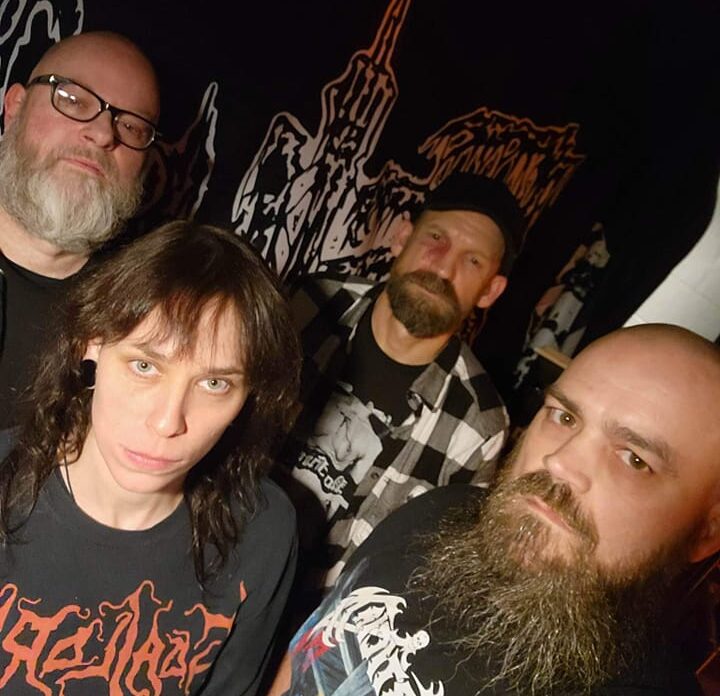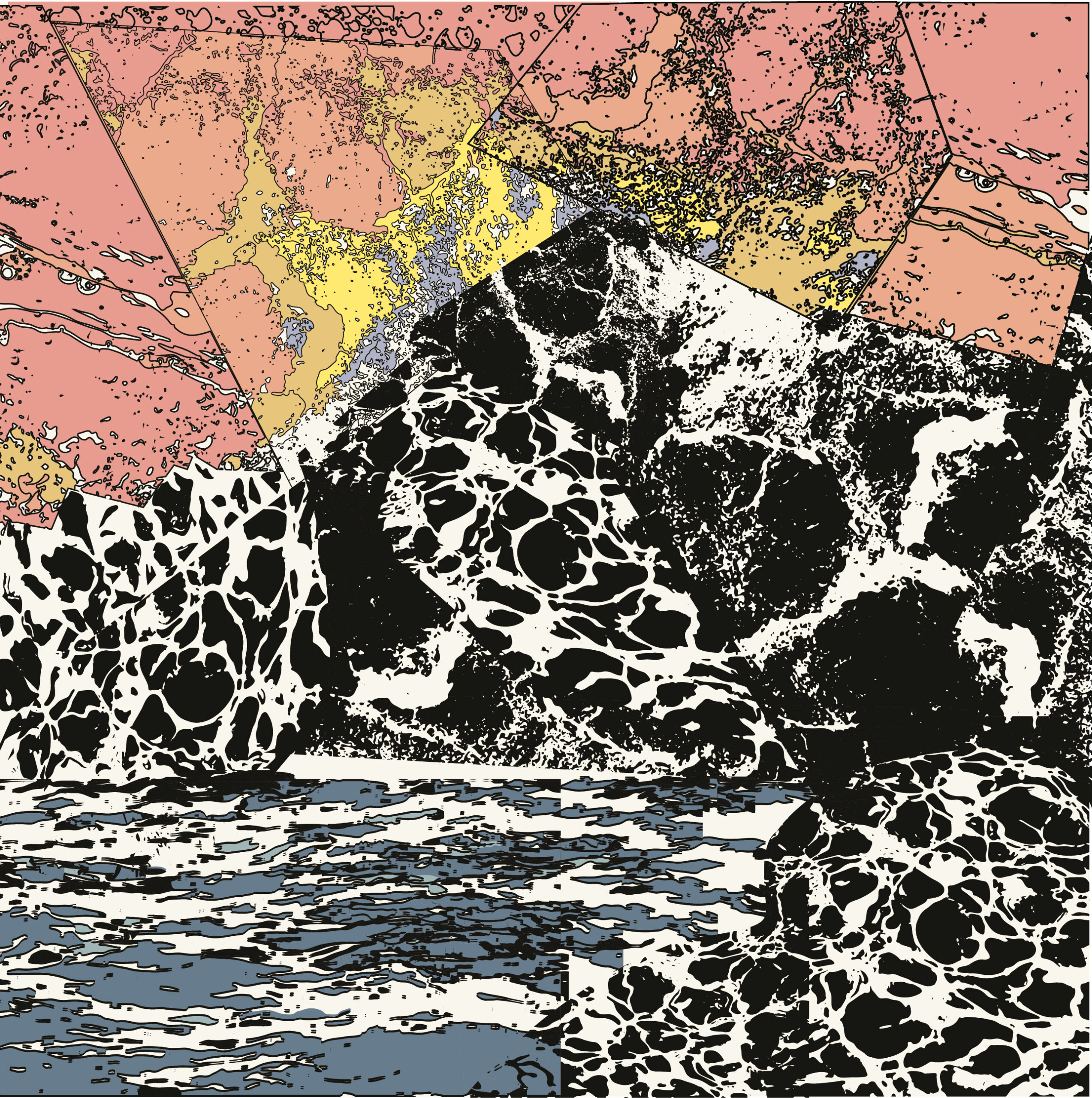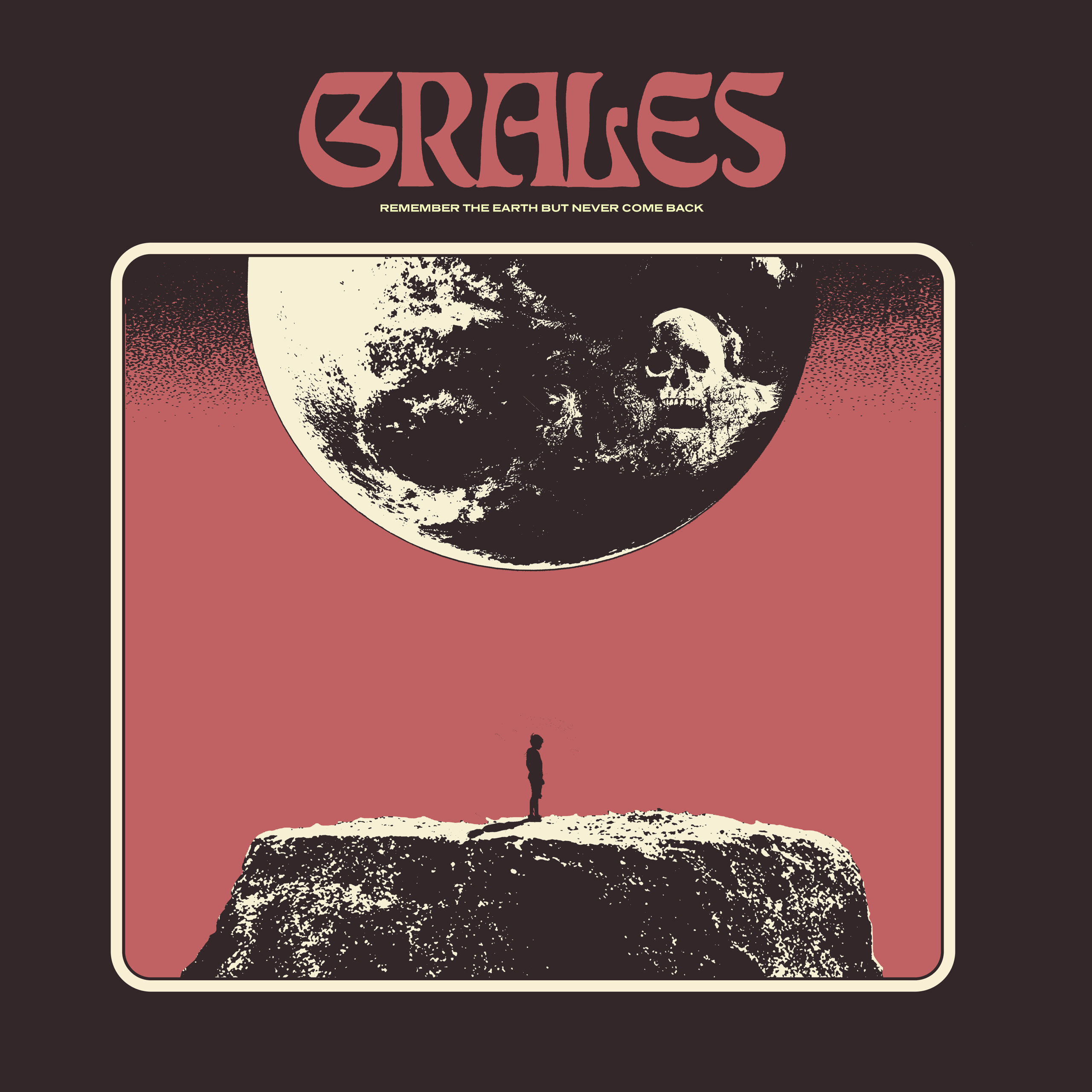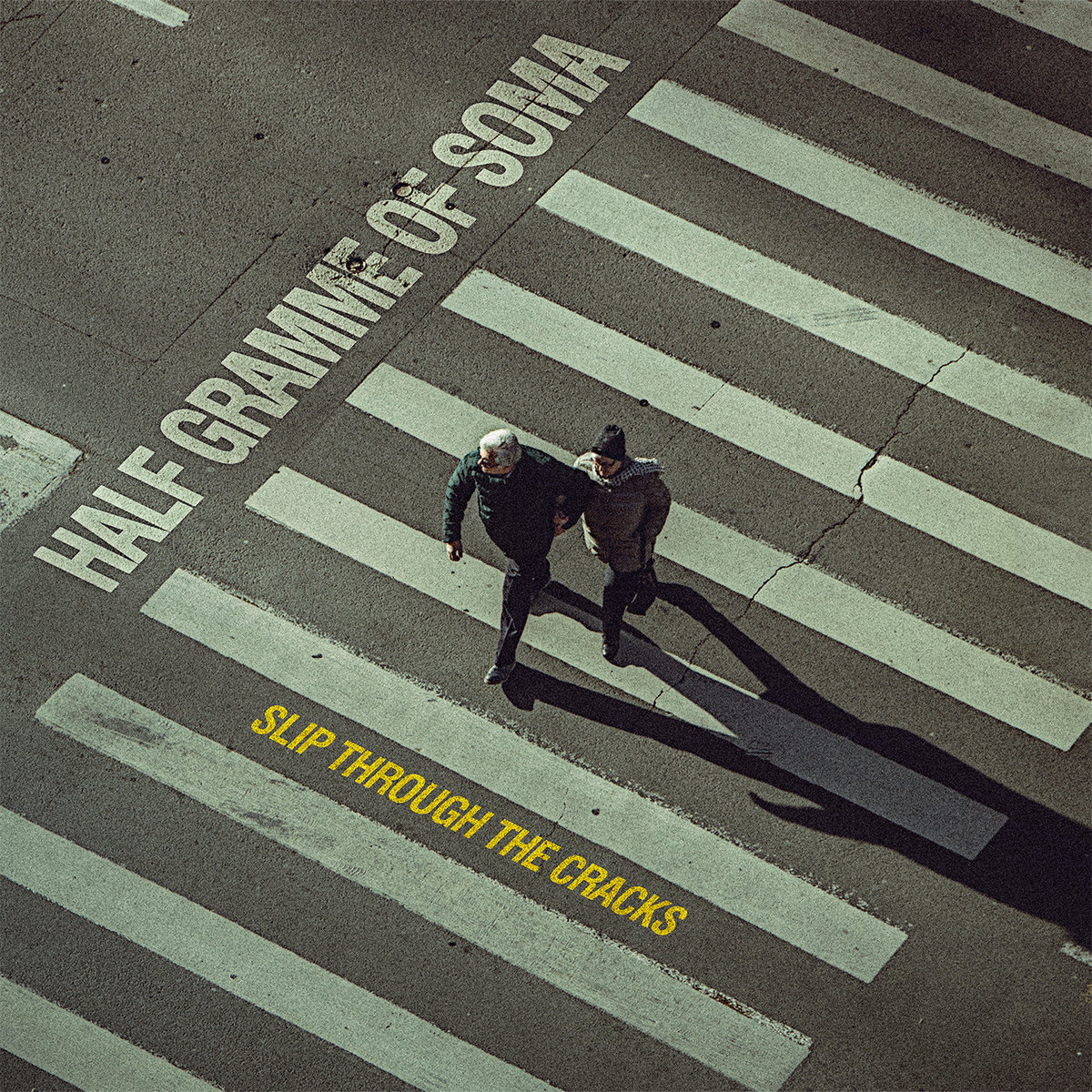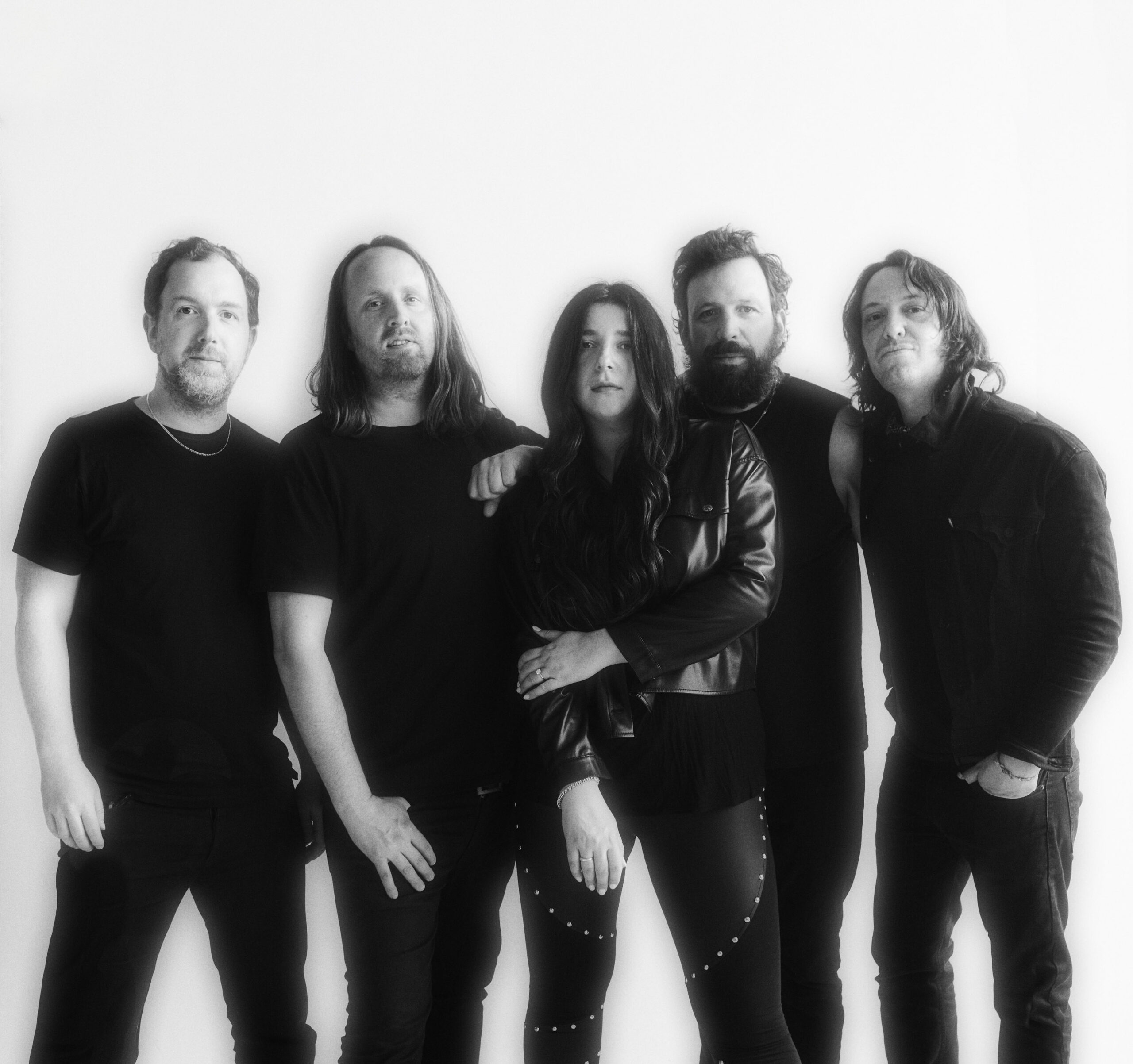
French heavy post-metallic psych-gaze rockers Occult Hand Order release their second album, Meaningless Monuments, through Totem Cat Records this Friday, April 17. The Lyon-based troupe made their self-titled debut in 2019, followed with an EP in 2021, and with these five songs cast their niche in atmospheric sprawl and impact. Opening with the longest of the inclusions (immediate points) in the 10-minute “Błędów” — named for Central Europe’s largest desert, in Poland — the album follows a thread of complex craft through the subsequent “Brno,” quiet and melodic almost to a point of minimalism until it turns around and crushes like YOB, shifting into and out of a pretty part to a last round of crush from there. The tradeoffs aren’t quite so stark as that sentence makes it seem, in “Brno” or “Błędów” or anything that follows — flow is in ready supply — but very quickly, Meaningless Monuments immerses the listener in its sense of journey and one experiences their dynamic in this feeling of going from place to place. I’ll allow that the songs having placenames for titles might be a factor there, but it’s in the music just the same.
Side B begins with the centerpiece “Mollerussa” (in Spain), which pairs quiet Isis fluidity with the stately flattening tonality of modern Author and Punisher, with a bit of Angelo Badalamenti Twin Peaks-style in the post-midpoint bass inherited from the opener. They call it ‘cinematic,’ and fair enough for a bit of drama, but more than that, Meaningless Monumentsfeels constructed out of marble for how solidified it is in its purposes, and ‘cinematic’ to my mind implies something soundtrackier and more ambient, and lush as they are, Occult Hand Order‘s songs are just that: songs. But the patience behind “Błędów,” “Mollerussa” and the album as a whole — side B’s “Mollerussa,” “Novo Mesto” (in Slovenia) and “Gerlach” (maybe Slovakia?) are shorter but still pointed in their atmospherics — is a key to what lets the band build the album’s world, skillfully and subtly laying out the tone and mood in “Błędów” and moving outward from there through “Brno” on side A.
“Mollerussa” ends with feedback and residual bass, and the drums that start “Novo Mesto” pick up directly as the shortest piece on the record begins, the guitar cutting out to allow space for the arrival of the vocal melody. It’s not long before the full tonal brunt is unveiled, layers of shouts worked in behind the melodic vocals, buried but there enough to do more than hint at aggression. The second cycle through, they depart into a speedier section before a last-minute roller crescendo finishes cold and lets the chug at the outset of “Gerlach” have its say. And before the closer’s six-plus minutes are done, Occult Hand Order have reinterpreted the gamut not as verse/chorus trades, but a swell in volume that let’s go into a vocals-and-drone midsection as a serene setup for the onslaught that soon enough follows, galloping on the drums like in “Novo Mesto,” but hitting with greater impact and a wash of a finish whose leftover echoes and feedback provide Meaningless Monuments‘ last stretch.
Taking its title from the lyrics of “Gerlach” — “Here’s what we need/The stones we carved for them/Left in ruins/Meaningless monuments” — the album moves through melancholic viewpoints and is largely vague in verbiage, and that speaks to the impressionist impulse of Occult Hand Order‘s creativity; the idea that not everything is going to be explained clearly. This does more to create mystique than one might first anticipate, and part of that is the clarity of vision that defines each one of these songs and the entirety they comprise. The album streams in full on the player below, followed by more info from the PR wire and tour dates.
As always, I hope you enjoy:
Formed in the French city of Lyon in 2018, heavy psychedelic trio Occult Hand Order marry the crushing weight of doom, post-rock and ethereal soundscapes, all lifted by soaring vocal harmonies that conjure arcane rituals and otherworldly mysticism.
After a striking self-titled debut in 2019, the band teamed up with the aptly named Interstellar Smoke Records to unleash The Chained, The Burned, The Wounded. The EP was hailed by critics, and the roar from the underground blasted open the doors to Europe’s finest stages, where the trio now stands, locked in and levitating. They’re now ready to propel their unique soundscapes into outer space again, with the release of their sophomore album Meaningless Monuments on Totem Cat Records this spring.
With Meaningless Monuments, the band delves into themes of apocalypse, inner collapse and the search for meaning. Darker, slower and more cinematic, the record unfolds through long, hypnotic structures where massive riffs meet meditative, atmospheric passages. The mystical trio truly delivers a mind-elevating rock ritual — a journey through inner ruins, a quest for what remains when everything falls apart.
Tracklisting: 1. Błędów 2. Brno 3. Mollerussa 4. Novo Mesto 5. Gerlach
European spring shows 17.04 – Lyon (FR) Marché Gare – RELEASE PARTY 18.04 – La Fare les Oliviers (FR) L’Humus 19.04 – Bologna (IT) Freakout Club 21.04 – Ljubljana (SL) Channel Zero 22.04 – Milano (IT) Cascina Torchiera 23.04 – Vevey (CH) Le Bout Du Monde 24.04 – Köln -(DE) Valhalla 26.04 – Groningen (NL) Cafe Witte de Wolfe 29.04 – Le Mans (FR) Lezard Bar 30.04 – Paris (FR) Le Cirque Electrique 01.05 – Les Brouzils (FR) Chez Hervé 02.05 – Rennes (FR) Uzine Bar 28.05 – St Imier (FR) Toxoplasmose Fest 29.05 – Nice (FR) Altherax Music 26.06 – Manigod (FR) Namass Pamouss 28.06 – Bourlon (FR) Rock In Bourlon Fest 02.08 – St Maurice de Gourdans (FR) Sylak Open Air
Ohio sludge malevolents Fistula release their 11th full-length, Galaxies of Disappointment, this Friday, March 10, with vinyl on Totem Cat Records and cassettes through Bastard Premonition Tapes. And if you’re the type to look at the world around you in absolute visceral disgust, hang your head at the new depths and lows human beings seem to take such stupid delight in discovering hour by hour and feel sick to your stomach, Fistula are there and have been for the better part of the last 30 years. In any incarnation — and lineup changes aren’t necessarily constant, but happen — Fistula remain among the most scathing the Midwestern underground has to offer, with a bite and hard-drugs nod that still sound like sludge taken to its logical, misanthropic extremity. With founding drummer Corey Bing (Sollubi, Morbid Wizard, Ultralord, many others) as the mainstay, guitarists Scott Stearns (also Sollubi, Morbid Wizard, Ultralord, and also many others) and Greg Bacher, bassist Greg “Buddy” Peel (who’s been with them at least a decade now) and vocalist Shane Post (Bird of Ill Omen), the procession is punishing enough to meet the high standard the band have set in that regard, and revels in it with a catharsis most people’s minds would be unable to process even if they were inclined to try.
Opener “You Were Abused… And So On” and “The Unhappy Man,” then, aren’t throwing shit by happenstance, and as they draw a line from punk and hardcore through tonal morass into a pummel that would be death metal if it wanted, Fistula are for sure in their element. Galaxies of Disappointment runs like a seven-track/36-minute endurance test, and it’s one that many, many people who take it on will fail. That’s always been the case, and the level of disaffection in Post‘s raw-throated, high-register screams, in the wash of the cymbals and the distorted rumble of bass at the outset of “Expire” are prime examples of how Fistula occupy their own place in the annals of fuckall. If it seems like I’m speaking in hyperbole, congratulations, you get it. Stylistically, that’s exactly how Fistula operate — they are all in on the in-dark-hallways violence and harshness; letup is rare to the point of nonexistence, and the most accessible thing about Galaxies of Disappointment is that it’s under 40 minutes long — and as they make a centerpiece of the 11-minute title-track, the caustic lumber is like running facefirst into a wall of loathing, trading out the ripper sensibility of “You Were Abused… And So On” for longer-form fire-setting.
Samples are peppered into “Something Real” — the stuff of classic sludge metal — from the 1985 movie Mask and I don’t know where, portraying the outsider, positioning the band as ‘other,’ not that the song surrounding didn’t. There’s a kind of punched-numb feeling after “Galaxies of Disappointment” and the clear (sampled) speech in “Something Real” grounds some, but the onslaught gets correspondingly nastier, so no worries. The penultimate “You Take” follows and ups the tempo some, with Post again losing his fucking mind in sustained, largely indecipherable screaming, and more omnidirectional rage, while closer “Fool’s Choice” slows down slightly and thickens up the low end enough to sound bigger without actually cutting the pace all that much until a quick bass-and-vocals-and-noise break turns around to a slower roll. That seems for a time to be how they’re going to end it, but ultimately they bring “Fool’s Choice” back around to that break and play off that again to cap in as noisy and skin-peeling as possible. You couldn’t ask for more.
The album’s on the player below and you can hear it if you’re feeling bold, but here’s the thing about Fistula: someone’s going to tell you they don’t give a shit. With such pervasive antieverythingism, they might even tell you themselves. But a band like this doesn’t exist for 28 years if the people behind it don’t on some level in fact care very deeply about the expression, the sound, the physicality of the music in their lives. It’s not that Fistula don’t give a shit. What they portray is actively against norms, and the key word is active. They can proffer all the disdain in the world, but they’re still making art from it, and that is a creative rather than destructive process, as destructive as the art itself may feel.
Something to think about while you pound your brains with the record premiering here, followed by more from the PR wire. Please enjoy:
Fistula, Galaxies of Disappointment album premiere
Ohio’s Fistula return with yet another devastating collection of raw punk/sludge/doom on their latest album, titled Galaxies of Disappointment. Marking album number 11, along with countless EPs and splits, since their 1998 inception, Fistula have been impressively prolific to say the least, while also teetering on the edge of obscurity. It’s no easy feat being a band that long and steadily churning out consistent top-notch releases, despite line-up changes, but Fistula – with Corey Bing at the helm – have done it over and over again, and this album is no exception.
Created over the past few years while on hiatus from playing shows, Galaxies of Disappointment features Fistula’s intense and distinct brand of pure, grimy, noisy punk combined with NOLA-esque sludge and gnarly, nihilistic doom. The album is comprised of seven relentless new tracks, incorporating a balanced mix of heavy, mid-tempo aggression with groove-filled low and slow crawling misery. Fistula keep things simple, as all good sludge should be, yet the shift in tempos maintains interest and unpredictability, while the musicianship is legitimately tight throughout.
Each track is as ugly and nasty and Fistula’s moniker suggests. Acidic fuzzed-out guitars and scathing noise are coupled with blood-pumping drums and corrosive vocals, which creates an intense, vitriolic listening experience akin to the likes of crust-sludge legends Dystopia. Even during the moments the tempo slows down, Fistula’s crushing intensity still grabs you by the throat and never lets go. Completely visceral and abrasive, Galaxies of Disappointment is the sonic equivalent to the despondent world we live in. Bing says, “These songs weren’t supposed to see the light of day, it was just a time where this music reflects the life around us, and we just document it.”
Fistula now also have a reinvigorated line-up, with Bing holding it down as the only original member, and they are once again returning to playing live. He says, “We have been getting tons of emails and texts with people showing us love and wanting us to tour and exist again and it is flattering that anyone gives two shits about the noise we make. I’m fortunate anyone cares.”
Galaxies of Disappointment is being released on vinyl courtesy of Totem Cat Records in France. CDs self-released by the band and tapes handled by Bastard Premonition Tapes. (Press release written by Denise McCready.)
Posted in Whathaveyou on February 11th, 2026 by JJ Koczan
Montreal-based crust sludge metallers Dopethrone will make their return to US soil this Spring as the trio take on the task of a West Coast tour headed to Lawrence, Kansas, for what I’m pretty sure is a headlining set at Midwest Doom Fest, and fair enough. Joining them is Year of the Cobra, who were on the road last Fall with Fu Manchu and who spent much of 2025 supporting their most righteous and declarative self-titled album (review here), released early in the year, while also sharing bassist/vocalist Amy Tung Barrysmith with Amenra, who are always up to something or other in some country or other. Everybody’s keeping busy, is the point I’m making.
They’ll be hitting spots on the circuit in addition to the festival, and if you happen to be in Chicago, I can think of far worse celebrations for your high holidays than that gig at Reggies, plus there are two shows in South Dakota, which rules on principle. I don’t know if it’ll be anybody’s last tour of the year, but it looks like a good one just the same.
From socials:
BREAKING NEWS!!!
Dopethrone is back in the USA in April!!!
With the direct support from the infamous YEAR OF THE COBRA and our friends from R.I.P. opening a couple shows!!!
ALL KILLER / NO FILLER!!!
04.10 Seattle WA El Corazon* 04.11 Portland OR Star Theater 04.12 Boise ID Neurolux 04.14 Salt Lake City UT Metro Music Hall 04.15 Frisco CO 10 Mile Music Hall 04.16 Denver CO HQ 04.17 Omaha NE Reverb Lounge 04.18 Lawrence KS Midwest Doom Fest 04.20 Chicago IL Reggies 04.21 Milwaukee WI X-Ray Arcade 04.22 Minneapolis MN 7th Street Entry 04.23 Fargo ND The Aquarium 04.24 Sioux Falls SD Icon 04.25 Rapid City SD Aby’s *w/ R.I.P.
Posted in Bootleg Theater on September 12th, 2025 by JJ Koczan
For being 11 years old, if you’d expect the self-recorded debut full-length from Glaswegian duo Lucid Sins to sound out of date, well, that was kind of the whole idea in the first place. Occultation runs all of 28 minutes and is comprised of six songs, one of which is a cover, so it’s probably fair to call it unassuming — as opposed to grandiose — as a first statement, and that becomes part of the personality of the outing.
It’s organic to a smell-dirt degree, and traditional in its approach to heavy rock, incorporating elements of British folk that the two-piece of Andreas Jönsson (guitar, lead vocals, keys, etc.), and Ruaraidh Sanachan (drums, backing vocals, bass, guitar, maybe more keys, etc.) would go on to flesh out over subsequent releases, and short enough to leave the listener feeling like they just listened to some lost private-press LP known only to the most diligent of cultist crate-hunters, while at the same time being unmistakably of its retroist moment. If you hear shades of earliest Kadavar, Graveyard, Witchcraft, and so on — the heavy ’10s picking up from the heavy ’70s — that’s a factor in the presentation here as well, production-wise and in terms of the structure of the songs.
But, mostly, Occultation is chasing its own ends, and the Britfolk aspects of their sound are a distinguishing feature even in this comparatively nascent state. Swinging second cut “Hidden in the Dark” has some of that vibe, as does “Reason for My Living,” but especially at the outset, the album is about movement. Lead track “The Witcher” (it was a book before it was a game before it was a tv series) has a sleek, classic-style shuffler of a groove that immediately makes itself familiar to the listener if it isn’t to start with, and a hook that speaks to the more modern impulse that, in terms of sequencing, takes care of business up front so the back end can party. I’ve called it a mullet sequence on many occasions. Here’s another, though it’s not like “Wasting Time,” their take on Medusa‘s “Black Wizard” and the subsequent closer “Reason for My Living” are so far out and distant from where they set out with “The Witcher.” I’ll gladly argue, however, they dig in deeper as they go, and on the most superficial level of consideration, I’ll note that “Reason for My Living” is the longest inclusion at 5:40.
At the time, there was a generational blossoming of sound in what became known as garage-doom. Raw, often cult or exploitation-leaning (not really in this case) songs with stripped-down structures and proto-metallic nod of the sort that Lucid Sins take up so naturally. The elephant in the room as regards “Wasting Time” or even some of the later reaches in “Hidden in the Dark” is Uncle Acid and the Deadbeats, who would seem to be an influence in terms of the layered vocals, but that isn’t the extent either of what Lucid Sins get up to on the short album, but rather a piece of their subtly complicated sound made accessible through craft.
The fact that they did it DIY in terms of the recording is another distinguishing consideration, if mostly on paper, but it speaks to the sense of purpose behind the record and the component material. That they kept it comparatively brief as well feels like an aesthetic choice, and while I don’t know that it was and it may be that they just didn’t have or didn’t want to write another piece as filler, it becomes a part of the persona just the same. It’s a quick glimpse of another time or place, but too grounded in the songwriting to really be escapist or psychedelic, though there are certainly flashes of trippier takes, including the vocal arrangement that caps “Reason for My Living” and the quiet break in “Hidden in the Dark.” But a relative straightforwardness of intent doesn’t negate the progressive aspects of their sound either, and Lucid Sins are as likely to be found in the pastoral, maybe-Mellotron-infused flow in the back half of “Wasting Time” as they are doing an aural softshoe at the start of “The Witcher.”
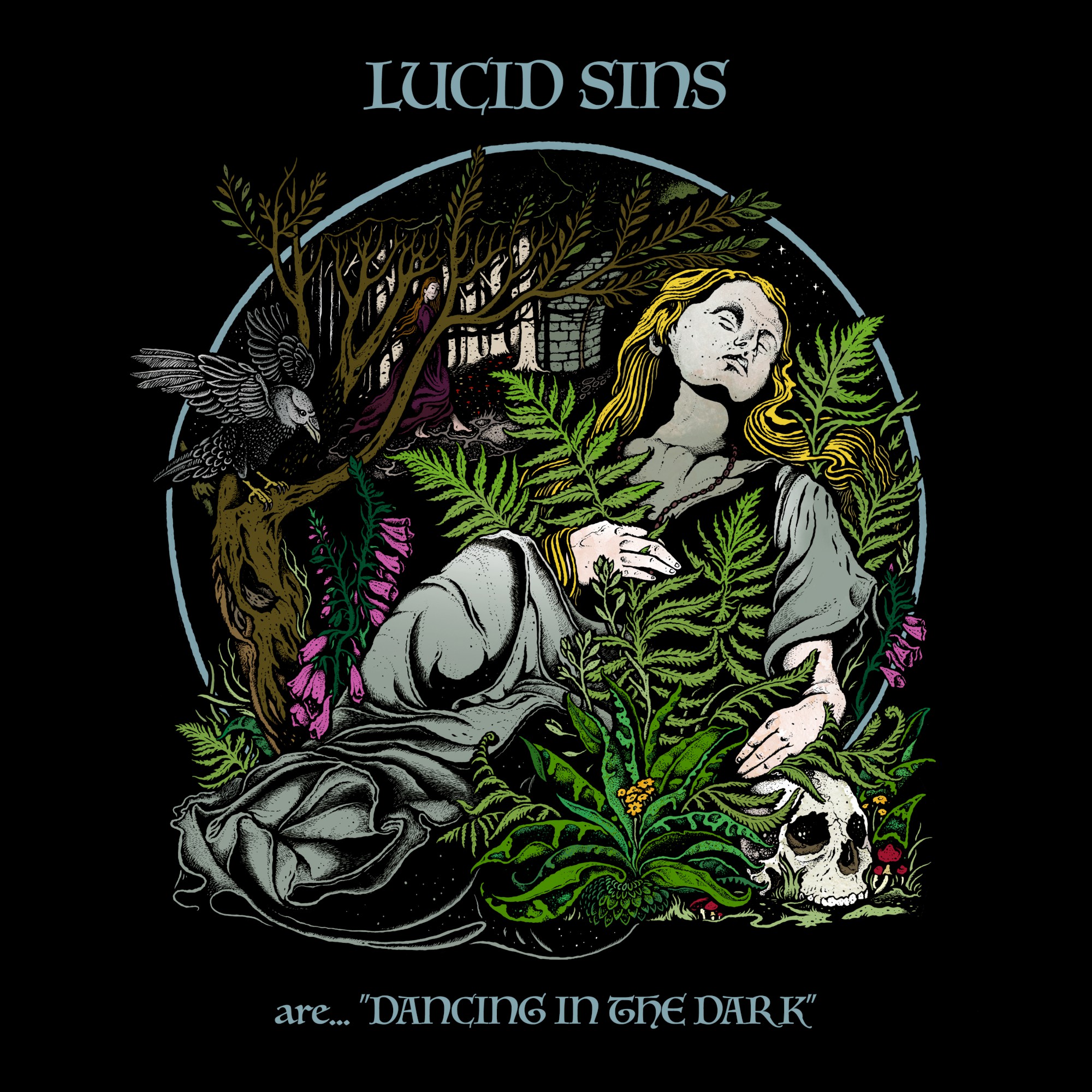
Wherever the album goes, it maintains its character of tone and melody, and as one would expect, that draws a thread through the material, uniting it — not that, working with just 28 minutes of your busy day, Lucid Sins are in danger of veering too far off course. But this too is a strength that makes the production relevant, and Jönsson and Sanachan have continued to record Lucid Sins outings as time has gone on. Their exclamatory second album, Cursed! (review here), would arrive in 2021, issued like Occultation through Totem Cat Records, and a third LP, Dancing in the Dark (review here), followed on a notably quicker turnaround in 2023. Both are longer, cleaner in the recording, and have further developed the folk and progressive elements on display throughout Occultation, showcasing a growth that one dares to presume is ongoing in the band and greater ambition in terms of style, though if you want to take it all at its root, it’s still an individual perspective on genre, just a broader perspective in the first place.
This isn’t a band that’s ever been super-hyped so far as I know, but in my mind they’re an example of an act who came into making this first album with a definite idea of what they wanted to do, then learned from that and continued to move forward. Perhaps their goals have become more amorphous with time, or perhaps not — I don’t know them personally, so it’s hard to say — and from their point of view the trajectory has always been the same. In either case, Occultation marks a vivid outset, and for all its hyper-unpretentiousness, it stands apart from both the vintage stylizations of the era in which it landed and the crux of indie-style proto-doom for its intelligence, cohesion and poise. As always, I hope you enjoy. Thanks for reading.
—
Okay. I didn’t close out last week, though by Friday morning I’d already long since started this post. The Pecan started school after Labor Day and it’s been mostly a wreck since. We’ve had a ton of meetings with the school, and I’m back and forth to that building three times a day minimum anyhow — that’s drop-off, lunchtime meds boost, and pickup — and they seem to be largely out of ideas and/or the will to try new things at out suggestion. In addition, a bunch of the I-think-eight evaluations we had done over the course of July/August for various hearing/seeing deficiencies have turned up relevant data, resulting in even more suggestions for how to support this kid in getting through her day.
Last Friday we had a call with her teacher, who was like, “She gets a three-minute break and then doesn’t want to do her work,” and the answer there is that then she’s not ready to be doing the work and don’t force it or she’ll melt down. What she needs there is likely what she’s telling you: a longer break and less demands on her. That’s a lot to ask of a young woman leading a class of 27 students, however, even when The Pecan has a para assigned to help her stay on task and regulated throughout her day. Bottom line, though, ‘her day’ as a thing that happens, isn’t working. She’s stressed, sad, and on-edge all the time. It is no way to live and certainly not the kind of experience of school or of fucking anything that I want her to have.
We’ve begun to consider advocating for out-of-district placement and I have the name of a volunteer lawyer to reach out to who will hopefully be able either to help us with that or point us in the direction of someone who can. The school she’s at did right a decade ago by my nephew, who’s deeper on the autism spectrum and will require assistance and care his whole life, but it was largely a different team at that point, and little I’ve seen over the last two years — apart from her relationship with her first-grade teacher last year, which was special in itself — has given me confidence they can or are willing to support her in the ways she needs throughout the day/week/year. Mostly they seem either to be out of ideas or just generally done with her, and that’s also sad. That’s not to say there aren’t also members of the team who care. We had a full-team bring-in on Wednesday, however, and the fact that I had to leave and actually take The Pecan home because she saw us there, burst in on the meeting, and then wouldn’t go back to class, says to me that they either can’t handle her or they’re finished trying.
There’s a school nearby that specializes in twice-exceptional kids — that is smart-but-complicated — and I don’t know how long a process that even is, but it seems worth it to me to get the ball rolling, even if just to pursue the idea of putting her in a smaller classroom, let alone whatever else a program like that might offer.
In any case, I gave her the day off today. She’s been invited to a birthday party this evening — the mom in question is friendly with The Patient Mrs. and it feels like that’s a factor since the kids aren’t in the same class this year, but I’ll take it however it comes — and is going to that at the same time I have a different familial obligation for the other side of the family (my sister’s husband’s sister’s kid kind of thing), so that will be the lead-in to our weekend, and hopefully we can find something fun and not-stressful that doesn’t cost $300 to do. I don’t think those things exist anymore either.
But hey, at least there’s one fewer willfully ignorant nazi motherfucker still walking the planet making it less safe for my family and families like mine. I’d call it a decent start, and I hope they find the person who did it only so I can spend the rest of my life praising their name.
If you’re not a fascist, I hope you have a great and safe weekend. Next two weeks are slammed, but I’m prioritizing review-writing, so if there’s less news or three posts a day instead of four, I’m doing my best with the time and brainpower I have. I appreciate your understanding.
FRM. Heads up, Facebook is run by a bootlicking oligarch, there’s no Obelisk merch and I’m pretty sure the Radio stream is still broken. Nonetheless…
This is day four of the Summer 2025 Quarterly Review, and though I might pay for it later, say right around late-September when I’m doing the Fall one, I think I’m going to keep it to five days. Mostly that’s about not pressing my luck. This has been an exceedingly easy QR to get through, a breeze compared to some — one downer day is all it takes and I feel like I never have my groove again, but that hasn’t happened here — and I’m content to take the win and move on, as opposed to pushing for an extra day or two next week.
So this is the penultimate day, and we’ll finish tomorrow. I hope you’ve enjoyed the Quarterly Review nearly as much as I have. Not one day has passed without me adding at least one release to my year-end list(s), which is a pretty killer thing to realize as I type it. Let’s see how today goes.
Quarterly Review #31-40:
Muto Tapes, Side Effects
One of apparently five singles that Mexico City’s Muto Tapes will release over the course of 2025 — year’s half-over, they’d better hurry up — “Side Effects” runs four riffy minutes of thickened, aggressive chug-metal, calling to mind Sepultura in its spit-out guttural vocals, but creating a denser mass of distortion and leaving in trade the thrashy, sometimes bloody, roots. Past the halfway point in the song, circa 2:30 into the total 4:05, the tempo drops and the guitar/drum duo bask in some of the minimal spaces their configuration lets them occupy, saving a fair round of shove for the finish after setting it up with due foreboding guitar creep. Not sure if Muto Tapes are building toward an EP or LP or what, or just releasing singles because not everything needs to be a package to sell, but they bring a blend of heft and intensity that immediately distinguishes them in the heavy underground, and they look to be developing their sound on their own terms. Guitarist/vocalist/bassist Jorge S. and drummer Roy B. have been meting out punishment in this manner since 2023, so we’re just beginning to see where it’s all headed.
It hasn’t been that long since Turkey Vulture released their Oct. 2024 EP, On the List, or maybe I just blinked out for a few months. The Connecticut duo of Jessie May (guitar, bass, vocals) and Jim Clegg (drums, backing vocals) have long-enough since carved their niche in doom and punk rock, and “Dead to Me” and “Jill the Ripper (Heavy Take)” — the two of them running about four and a half minutes, combined — continues the thread. They don’t list the recording info, so I don’t know if these two songs were done at the same time as the EP or not, but “Jill the Ripper (Heavy Take),” as the title describes, is a louder and punkier take on the closing “Jill the Ripper” from that also-short release. “Dead to Me,” meanwhile, seems to be about not going to shows anymore, presumably because you have a kid, and the changing nature of friendships as a result of that. Turkey Vulture have a whole series of songs about these life-stages; just six years on from their debut, they’ve done a lot of growing.
Philippines heavy psych wanderers Polymerase are back two years after their two-part Dreams and Realities I & II full-length cycle with the mood-altering 78 minutes of Mindspace, seemingly named for the two things on which the material has the greatest effect. Pairing extended, jammier pieces with, well, shorter, jammier pieces, songs like “Divine Reefer” (12:08) can touch on Sleep while “Space Child” (7:10) is anything but grounded in its repetitions and evident outbound plotted trajectory. There’s more to Mindspace than mellow-out stoner idolatry, though, as the bassy rumble underwriting the harsher shouts of “Interplanetary Echoes” (13:08) demonstrates, taking some of the sludgier moments paired with heavygaze in “Crows and Doves” (11:57) and using them to call out to the expanse of the band’s own making. Closer “Downward Spiral” (12:22) functions similarly at the conclusion, calling to mind modern practitioners like Rezn while feeling empowered through their individual processes. I don’t know how much is actually improv, but Mindspace is way open, and that’s how it should be.
Something of a specialty item, perhaps. Fade Into You is a two-tracker split 12″ with London outfits Troy the Band and Cower taking its name from the Mazzy Star song, which both bands cover. Like, they do the same song. And much to their credit, they do it differently. Troy the Band, who early last year released their debut album, Cataclysm (review here), on Bonebag Records, take a heavygaze viewpoint on the 1993 single, fleshing out the moody atmosphere with echoing effects and hard-landing, immersive roll. Cower, whose second full-length, Celestial Devastation (review here), also came out last year, reimagine it as Nick Cave or latter-day Wovenhand, holding to the emotional crux of the original with ethereal drones and new age-y keyboard. A stopgap? Probably, but an interesting project just the same, and the song, of course, stands up to the manipulation.
What would seem to be the debut offering from Tijuana-based post-metal four-piece Jaspe, Grietas runs just 23 minutes at three songs, but carries a full-length’s sense of breadth in doing so. Shades of Amenra persist in the quiet/spoken stretch of “Rios de Polvo II” (11:52), where the lumber that begins opener “Litorales” (9:46) crushes as might a modern Isis before departing into the inevitable stretch of pretty guitar, Russian Circles-esque, but with more plunge in the low frequencies, and the arriving guttural growl of vocals is genre-transgressive in a way that satisfies wholly. Separating the larger pieces is the two-minute droner “Rios de Polvo I,” obviously aligned to the second part that follows, which adds to both the tension and atmosphere of this resoundingly impressive post-doom showcase and highlights the potential that’s so prevalent in Jaspe‘s sound. I’ll take an album of this for sure. Just say when.
Two songs, 20 minutes. Yung Druid, in continued collaboration with Totem Cat Records, offer Wooden Lungs, comprised of the 11-minute “Wooden Lung” and the nine-minute “Space Cowboy.” Both songs owe some debt in swagger to Led Zeppelin, but “Wooden Lung,” in the vocal arrangement and steady nod, reminds more of Iota‘s 2024 return, Pentasomnia, in its fluid progression and grunge-style harmonies. Not a complaint. Also not complaining about the uptick in fuzz for “Space Cowboy,” which still manages to move despite the primordial pool of tone in which it seems to soak. A riff for riffers, that one. Originally based in London around the time of their 2019 self-titled debut (discussed here), the band have moved between the Spain, Australia and New Zealand. It can be difficult for a band who were all together in the rehearsal space to transition to working remotely, but if Wooden Lungs is their proof of concept, they can make a go of it.
Issued through Rise Above Records imprint Popclaw (see also Bobbie Dazzle and Scott Hepple and the Sun Band), The Crystal Teardrop‘s debut long-player, …Is Forming, sounds remarkably ‘formed,’ if you want to think of it in those terms, as regards aesthetic. Taking a heaping dose of influence from ’60s garage and daring toward Beatlesism on the sweetly bouncing “Borrowed Time” or the Help-toned “Two Hearts,” the band present a retroist face but hold back from IYKYK-style gatekeeping via pop songwriting and the sweep of the later “Turn You Down,” which is a ruffled-hair rush ahead of the similarly shoving “Stealing Suggestions” and the perhaps inevitable psychedelic delve of the closing pair “Nine Times Nine.” and “…Is Forming,” the latter of which has enough backward guitar to meet whatever your quota might be before it unfurls darker instrumental heavy proto-prog like it’s something the band just invented. Rise Above is ready for the garage rock revolution, ready to foster a new generation of artists, but as ever, the question is whether or not the world at large can keep up. …Is Forming argues fervently in favor of trying.
The adventures of Alaska’s Leo Scheben and his Doom Lab continue, declaring a genre in Desert Caravan Doom and then immediately setting about defying its parameters with an encompassing, continually on-its-own-wavelength craft, increasingly clear production, and varied intent across the 12-song/43-minute long-player, with creeps like raw East Coast hardcore in “What’s Your Angle?” before the jazzy puns take further hold in “Feeling Minor and Diminished,” pieces like “Fives” and “Desert Hailstorm” tapping into some Stinking Lizaveta-type intensity while the sweetly alt-rocking “At Dusk” and the “Gimmie One Drop (Dub)” and “Desert Caravan Improvisation” — with a new live drummer, reportedly — add to the fabric of Doom Lab‘s ongoing explorations in style and expression. Desert Caravan Doom isn’t as dark, on average, as some of Doom Lab‘s output, and that comparative lightness of mood lets it swing all the more, but Scheben‘s never just been/done one thing, and Desert Caravan Doom holds to this dynamic as well.
The synth and keyboard elements play a significant role throughout Liquid Pennies‘ Fore, as “Tapered Scape” and “Ready Tide” demonstrate early on, never mind the 11-minute “Echolalia,” which also has plenty of time for its heavy breakout in the middle third and doomier-until-it-thrashes ending. “Sight Skewer” finds the adventurous Floridian unit evoking nostalgia with fuzz and melody, the drum machine patterning working in contrast to the heavier tones, but feeling by that point very much part of the thing. Presumed side B starter “Elliptic Triptych” brings a bit more functional aggression to the mix, while the three-minute droner “Further Ennui” gives transition to the terrestrial acoustic strum in the pastiche of “The Bone,” which grows broader while remaining melodically intricate, and the closing title-track runs the atmospherics backwards for, well, backwards atmospherics. There’s some influence from All Them Witches at work, but four albums in, Liquid Pennies are onto something special in sound, and one hopes the pursuit continues.
A fascinating debut three-song EP from Portland, Oregon’s Mordbear, released by Dipterid Records as a single-sided 12″ vinyl, comic book included. If that seems elaborate for what’s basically a demo, there’s the rub. “Like the Dead,” “A Mirror with a Sea of Flames” and “The Alchemist” are resoundingly cohesive and sure of their construction. The style is modern stoner with nascent hints of prog leaking through — again, modern — and in the seven minutes of “The Alchemist,” the scope feels broader as they methodically unfurl their riffing. Meanwhile, “Like the Dead” leads off with atmospheric semi-desert heavy, catchy and nodding and slow, and “A Mirror with a Sea of Flames” has more of a rhythmic tumble. When Mordbear lock into a bigger groove in the middle cut, there’s some hint of Monolord to their sound, but ‘their sound’ is hardly a settled issue, so the exploration is welcome even as they seem to have so much nailed down in terms of style.
This Friday, Porto-based heavy dream-proggers and baskers-in-cosmos Astrodome will release their third album, Seascapes, through a consortium that includes Totem Cat Records (EU), Copper Feast Records (UK) and Gig.rocks! (Portugal). As the title hints, the lush four-piece take their thematic from the sea, and the proves to be breadth enough for them to dwell in the record as a single, if varied, meditation-through-sound. It’s not just about hypnosis, the band lulling their listenership away from consciousness through repetition and/or floating wisps of effects and entrancing, humming instrumentalist melodies — though that’s definitely part of it — across 43 minutes and eight songs, from the moving water and sun-drone sprawl and drift of the intro “Sandwaves” through the suitable level of gentle proggy shuffle beneath the ambient lead guitar to suit the reference in “Doldrums End,” which follows, tacking into a fuzzy, krautrocking shimmer in the eight-minute “Maelstrom” before presumed side A finale “Espic Hel Horizon” opens wide from that flow in a beachy warmth — if we’re headed into the underworld, the vibe is a weekend getaway way more than eternal condemnation — gives a payoff to the linear progression heard across the first half of the record.
There is a definite reorientation as the last residual tones of “Espic Hel Horizon” fade out and the three-minute “Erebus” fades in that speaks to intent on Astrodome‘s part to let Seascapes function as two sides regardless of the actual format on which the audience is hearing it. Named for a volcano in Antarctica, “Erebus” is not frigid but perhaps conveys some chill through its tonal flourish, toms joining in after the halfway point as the band shift into near-silence ahead of the start of “Riptide,” which operates true to the urgency of “Doldrums End” while affecting a spacier impression in the keyboard/synth running alongside the guitar’s core melody. Just before the two-minute mark, there’s a rush to signal the change into the next, mellower stretch that brings to light just how smooth Astrodome — the first-names-only contingent of Zé, Kevin, Mike and Bruno — make the shifts between these ebbs and flows and how much Seascapes benefits from that in being able to portray a that-much-clearer picture of what the band are saying about open waters, reaches and freedom in their material.
Side B functions somewhat differently from side A, but the two halves of Seascapes are fitting companions regardless. If one takes the wash of “Erebus” and “Aequorea” as intros to the longer pieces they complement — “Riptide” and 10-minute album-closer “Sirens,” respectively — the last four songs enact two miniature versions of the progression that took place across “Sandwaves,” “Doldrums End,” “Maelstrom” and “Espic Hel Horizon,” so that almost like a pattern of waves on the shore, the very structure of the album itself carries a feeling of moving water. “Aequorea” feels cinematic as it sets stark lower strums against the by-then-familiar backdrop of drone, but the subdued launch of “Sirens” is a comfort, a salve as the band gives one more encompassing glimpse of Seascapes‘ realization. And surely the fluidity with which Seascapes carries its listenership from the start to its finish is another embodiment of the oceanic theme, regardless of when that entered the picture, either during composition as the band assembled parts or during recording when those parts revealed the persona of the LP waiting to be given voice, if not literally.
Most of all, Seascapes reminds that while being near water can be a comfort for humans, and the ocean seen from space can look like a static blue singularity, it is also the broadest single ecosystem on Earth, and Astrodome are accordingly full of life in their craft here. Like spirulina in currents, there are hidden pockets of nuance throughout “Maelstrom,” “Riptide” and so on that beg for inspection at the microscopic level, and the closer one listens, the more likely one might be to wind up in a kind of aural kelp forest, sunlight refracted through water on giant, alien-seeming stalks supporting entire cities of creatures very much unlike ourselves. I do now know if Seascapes was inspired by some particular experience either of the beach, the ocean or the miracle of liquid water more generally, but there’s more than just the power of suggestion behind Astrodome‘s assertion of centering the aquatic in the album’s material, and as the songs play out in various degrees of tumult, shifts in mood and weather, the foursome prove trustworthy as navigators in guiding the listener from one end to the other. It feels definitive on the part of the band.
PR wire info follows the full album stream on the player below.
Please enjoy:
‘For this album, unlike the previous two, which were practically live recorded, we decided we wanted to have total control over the recording, arranging, and mixing process. We embraced the infinite possibilities and freedom that a computer provides, allowing the process of editing to behave more like an instrument rather than just a recording environment. This approach not only gave us the outcome we were looking for but also allowed us to experiment with new techniques and sounds that were previously out of reach, adding a fresh dimension to our music. However, this method was also very demanding and time-consuming. Paradoxically, the lack of restraints that we desired ended up becoming a difficulty we had to overcome, pushing us to grow both creatively and technically. Ultimately, this journey resulted in an album that we feel represents a significant evolution in our sound.
The sea was the “theme” that we wanted to explore this time, we tried to find new textures and harmonies that could somehow transport the listener to that environment without being too obvious. In our opinion, this album is a whole piece and should be listened that way.
A crucial part of the process was, once again, trying to create something without any musical or style restraints but always trying to find a mutual ground between us, inspired by different things, leading us to a unique mix of different styles.’
Astrodome live: Oct 26 Café Avenida Fafe, Portugal Oct 31 Woodstock 69 Rock Bar Porto, Portugal Nov 1 Musicbox Lisbon, Portugal Nov 2 Texas Club Leiria, Portugal Nov 8 Centro Cultural do Cartaxo Cartaxo, Portugal Nov 9 RUM by Mavy Braga, Portugal Nov 15 Centro Para Os Assuntos da Arte e Arquitectura (CAAA) Guimaraes, Portugal Nov 16 XAPAS LOUNGE Paredes de Coura, Portugal
Credits: Produced and recorded by Astrodome Mixed by Mother Jupiter (Kevin Pires) Mastered by Clara Araújo at Arda Recorders Graphic Design by José Luís Dias
It is an age of plenty as regards the underground. Between bands being able to form with members on different continents, to being able to record basically anything anywhere anywhen, the barriers have never been lower. I heard an all-AI stoner rock record the other day. It wasn’t great, but did it need to be?
The point is there’s gotta be a reason so many people are doing the thing, and a reason it happens just about everywhere, more than just working/middle class disaffection and/or dadstalgia. There’s a lot of documentary research about bands, but so far I don’t think anyone’s done a study, book, bio-doc, whatever about the proliferation of heavy sounds across geographies and cultures. No, that won’t be me. “Face made for radio,” as the fellow once said, and little time to write a book. But perhaps some riff-loving anthropologist will get there one day — get everywhere, that is — and explore it with artists and fans. Maybe that’s you.
Happy Thursday.
Quarterly Review #31-40:
—
Uncle Acid and the Deadbeats, Nell’ Ora Blu

My favorite part of the press release for Uncle Acid‘s Nell’ Ora Blu was when founding guitarist/vocalist and apparent-auteur Kevin Starrs said, “I know something like this might have limited appeal, but who cares?” Though it was initially billed as an instrumental record and in fact features Starrs‘ trademark creeper vocal melodies in a few of its 19 tracks, the early “Giustizia di Strada/Lavora Fino Alla Morte” and pretty-Uncle–Acidic-feeling “La Vipera,” and the later march of the seven-minute “Pomeriggio di Novembre Nel Parco – Occhi Che Osservano,” catchy and still obscure enough in its psychedelia to fit, and “Solo la Morte Ti Ammanetta,” though most of the words throughout are spoken — genre cinephiles will recognize the names Edwige French and Franco Nero; there’s a lot of talking on the phone, all in Italian — as Starrs pays homage to giallo stylization in soundtracking an imaginary film. It’s true to an extent about the limited appeal, but this isn’t the first time Uncle Acid have chosen against expanding their commercial reach either, and while I imagine the effect is somewhat different if you speak Italian, Starrs‘ songwriting has never been so open or multifaceted in mood. Nell’ Ora Blu isn’t the studio follow-up to 2018’s Wasteland (review here) one might have expected, but it takes some of those aspects and builds a whole world out of them. They should tour it and do a live soundtrack, but then I guess someone would also have to make the movie.
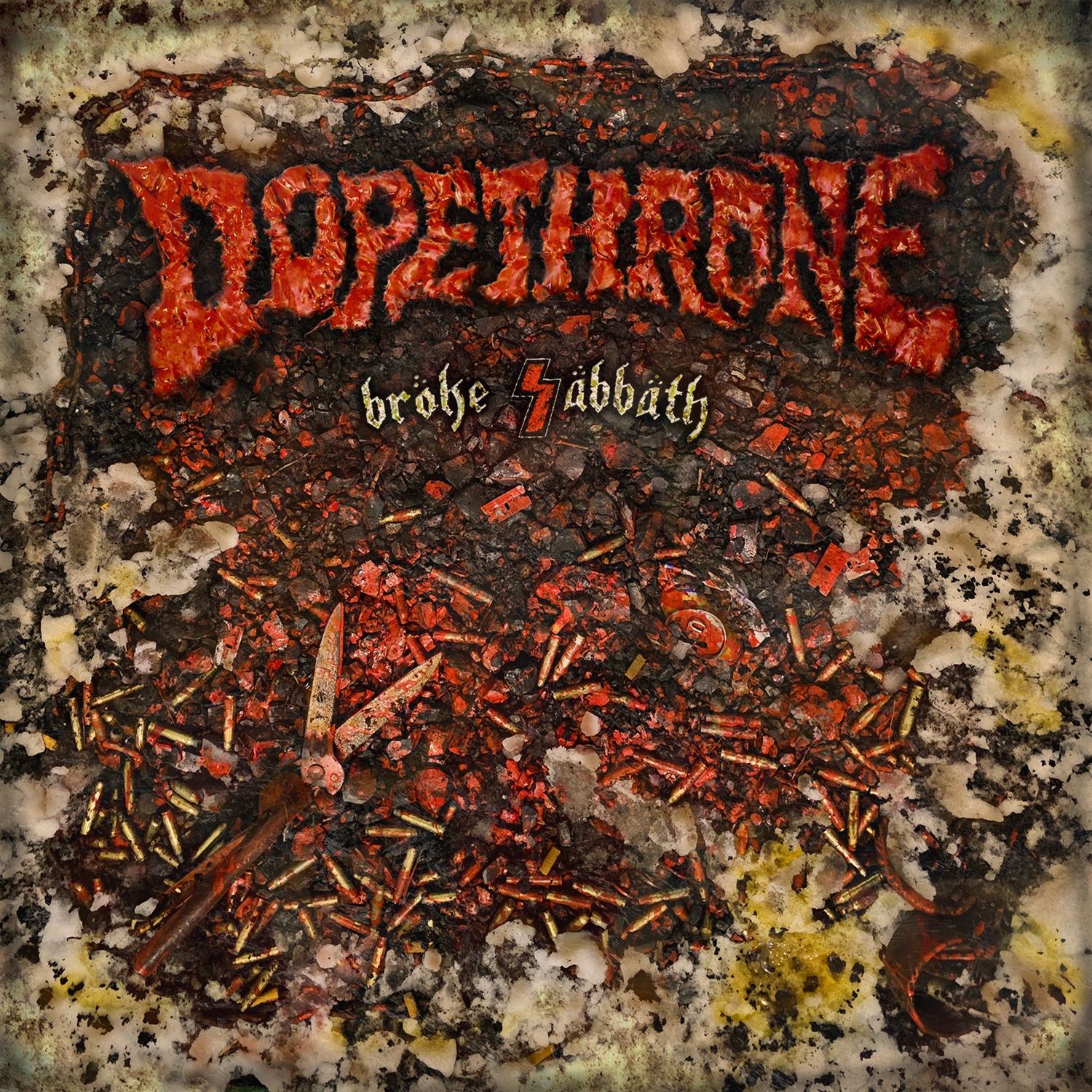
If “fuck you” were a band, it might be Dopethrone. With six new tracks spread across a sample-laced (pretty sure Joe Don Baker is in there somewhere; maybe “Truckstop Warlock?”) and mostly-crushing-of-spirit-and-tone 39 minutes, the crusty Montreal trio of guitarist/vocalist Vince, bassist Vyk and drummer Shawn pound at the door of your wellness with their scum-sludge extremity, living up to their reputation in gnash and nastiness for the duration. The penultimate “Uniworse” brings in Weedeater‘s “Dixie” Dave Collins for a guest spot, but by the time they get there, the three-piece have already bludgeoned your bones with album-centerpiece “Shlaghammer” and loosed the grueling breadth of “Rock Slock,” so really, Collins is the gravy on the pill-based bottom-hitting binge. From opening single “Life Kills You” through the final punishing moments of “Sultans of Sins” — presumably a side B mirror in terms of heft to “Slaghammer” — and the choice Billy Madison sample that follows, Dopethrone offer a singular unkindness of purpose. I feel like I need a shower.
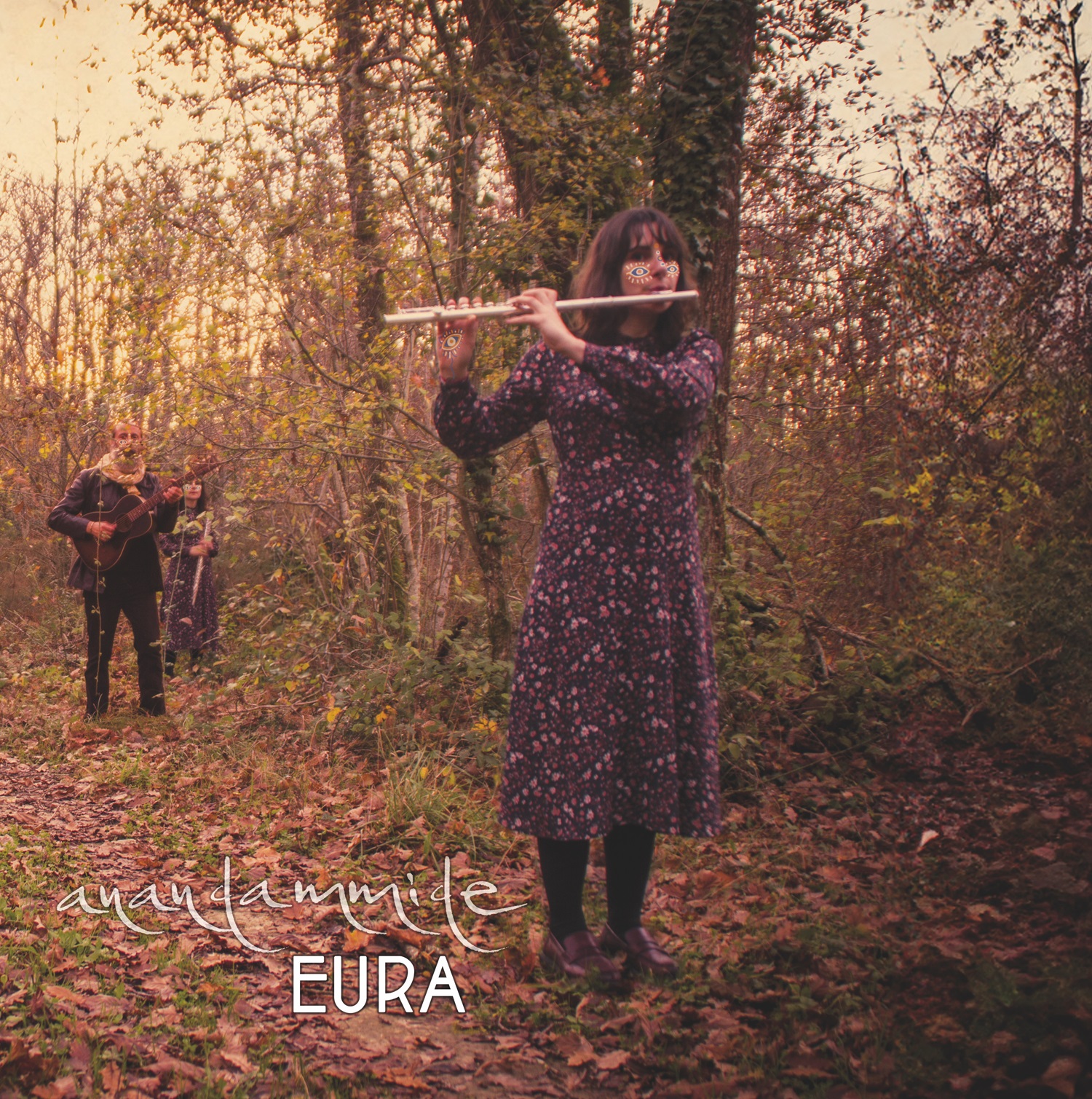
Where even the melancholy progression of “Song of Greed” is marked by the gorgeousness of its dual-vocal melody and flowing arrangement of strings, guitar, and strings, Eura is the second full-length and Sulatron Records label-debut for Parisian psych-folkies Anandammide. At the core of the diverse arrangements is songwriter Michele Moschini (vocals, synth, organ, guitar, drums), who brings purposefully Canterburyian pastoralia together with prog rock tendencies on “Phantom Limb” and the title-track while maintaining the light-touch gentility of the start of “Carmilla,” the later flow between “Lullaby No. 2” and “Dream No. 1,” or the gracefully undrummed “I Am a Flower,” with synth and strings side-by-side. Though somewhat mournful in its subject matter, Eura is filled with life and longing, and the way the lyrics of “Phantom Limb” feel out of place in the world suits the aural anachronism and the escapist drive that seems to manifest in “The Orange Flood.” Patient, immersive, and lovely, it sees ruin and would give solace.
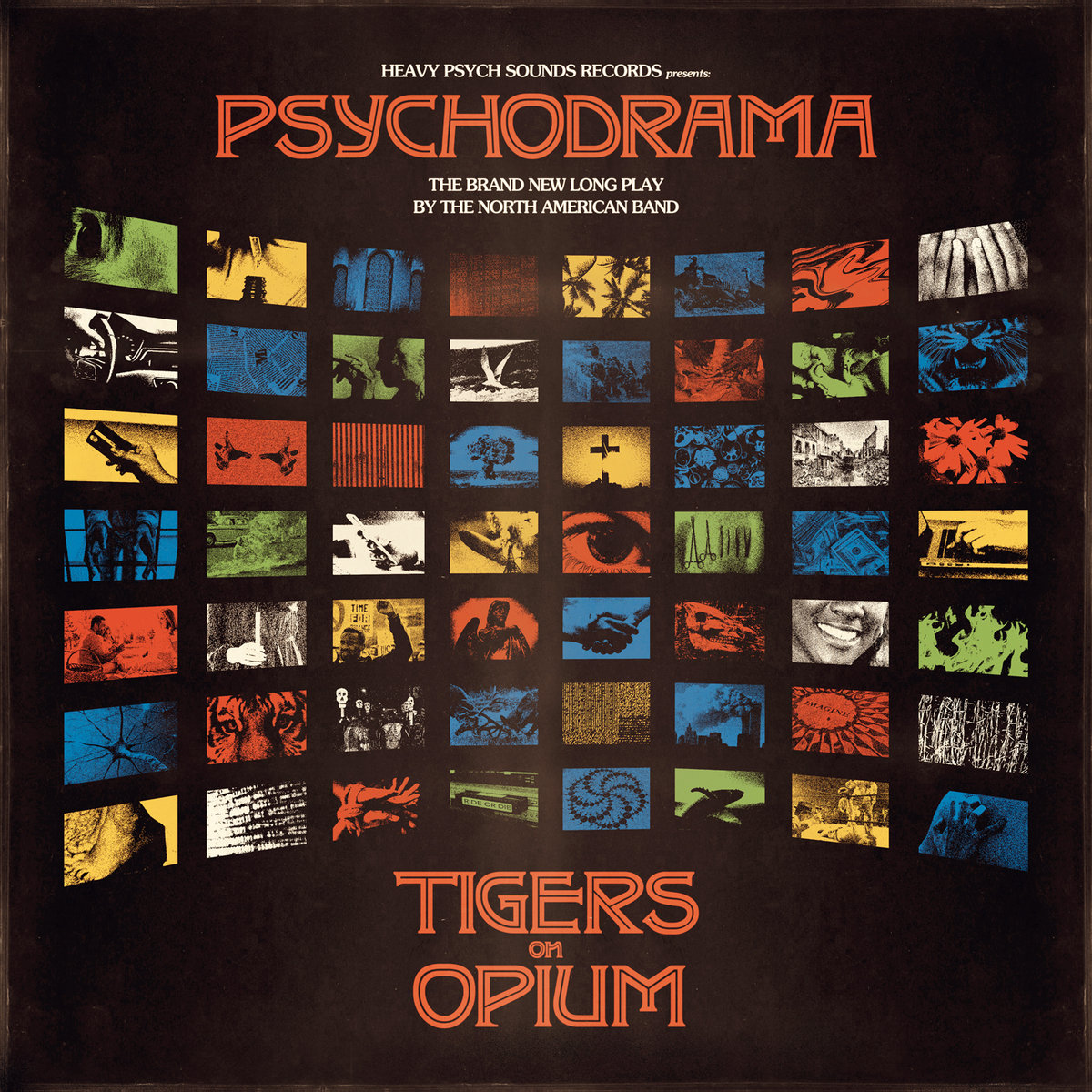
An awaited first full-length from Portland, Oregon’s Tigers on Opium, the 10-song/44-minute Psychodrama builds on the semi-sleazed accomplishments of the four-piece’s prior EPs while presenting a refreshingly varied sound. The album begins as “Ride or Die” unfolds with Juan Carlos Caceres‘ vocals echoing in layers over quiet guitar — more of an intro, it is reprised to deliver the title line as a post-finale epilogue — and directly dives into garage-doom strut with “Black Mass” before a Styx reference worked into “Diabolique” makes for an immediate, plus-charm highlight. The parade doesn’t stop there. The Nirvana-ish beginning of “Retrovertigo” soft-boogies and drifts into Jerry Cantrell-style melody backed by handclaps, while Thin Lizzy leads show up in “Sky Below My Feet” and the more desert rocking “Paradise Lost” ahead of the farther-back, open swing and push of “Radioactive” giving over to “Wall of Silence”‘s ’70s singer-songwriterism, communing with the “Ride or Die” bookend but expanded in its arrangement; capper-caper “Separation of the Mind” paying it all off like Queens of the Stone Age finding the Big Riff and making it dance, too. On vocals, guitar and keys, Caceres is a big presence in the persona, but don’t let that undercut the contributions of guitarist Jeanot Lewis-Rolland, bassist Charles Hodge or drummer Nate Wright, all of whom also sing. As complex in intent as Psychodrama is, its underlying cohesion requires everybody to be on board, and as they are, the resulting songs supersede expectation and comprise one of 2024’s best debut albums.
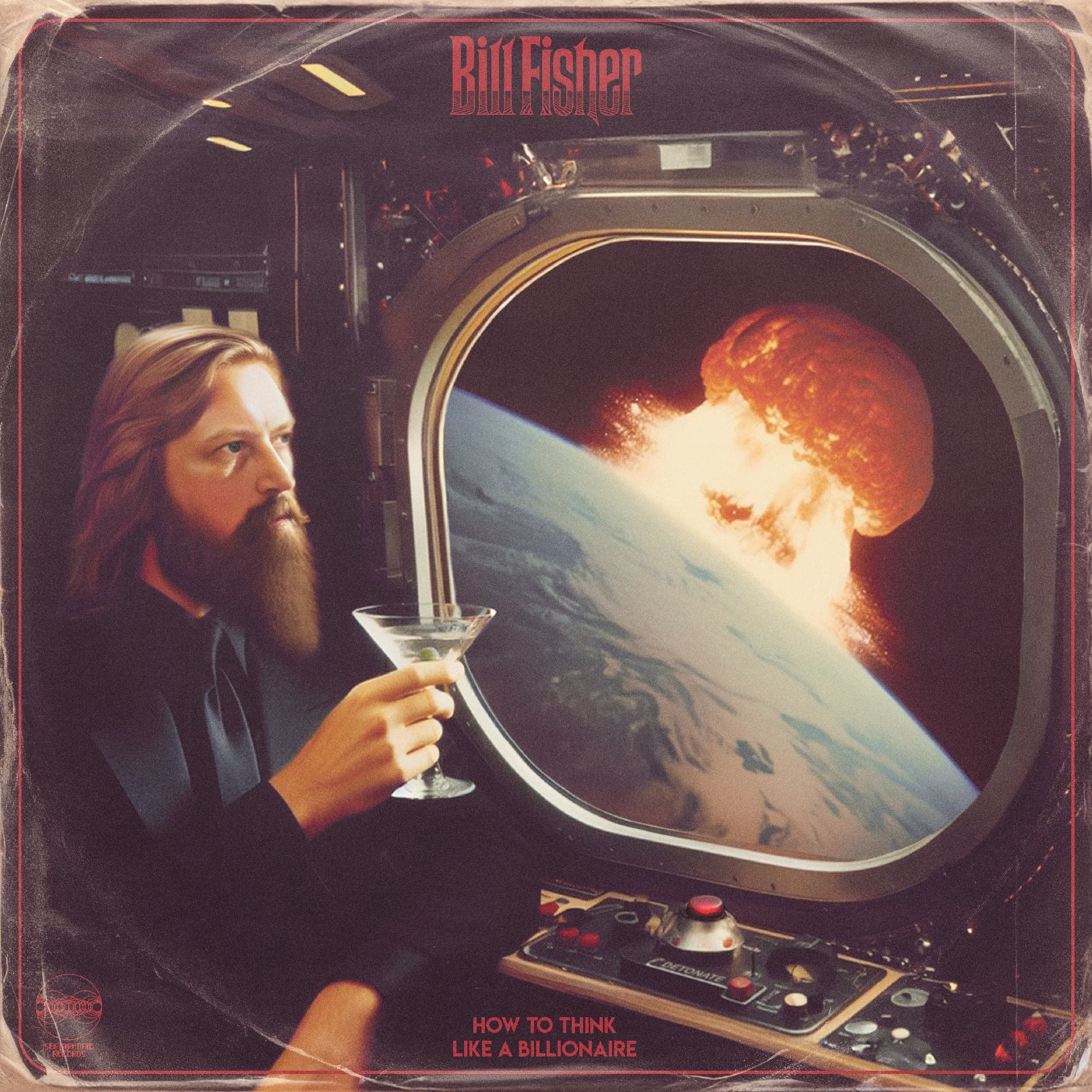
Self-identifying as “yacht doom,” How to Think Like a Billionaire is the third solo full-length from Church of the Cosmic Skull‘s Bill Fisher, and while “Consume the Heart” and “Yell of the Ringman” tinge toward darkness and, in the case of the latter, a pointedly doomly plog, what the “yacht” translates to is a swath of ’80s-pop keyboard sounds and piano rock accompanying Fisher‘s guitar, vocals, bass and drums, a song like “Xanadu” sending up tech-culture hubris after “Ride On, Unicorn” has given a faux-encouraging push in its chorus, rhyming “Ride on, unicorn” with “In the valley of Silicon.” Elsewhere, “Overview Effect” brings the cover to life in imagining the apocalypse from the comfort of a private spaceship, while “Lead Us Into Fire” idolizes a lack of accountability in self-harmonizing layers with the thud that complements “Intranaut” deeper in the mix and the sense that, if you were a big enough asshole and on enough cocaine, it might just be possible Fisher means it when he sings in praise of capitalist hyperexploitation. A satire much needed and a perspective to be valued, if likely not by venture capital.
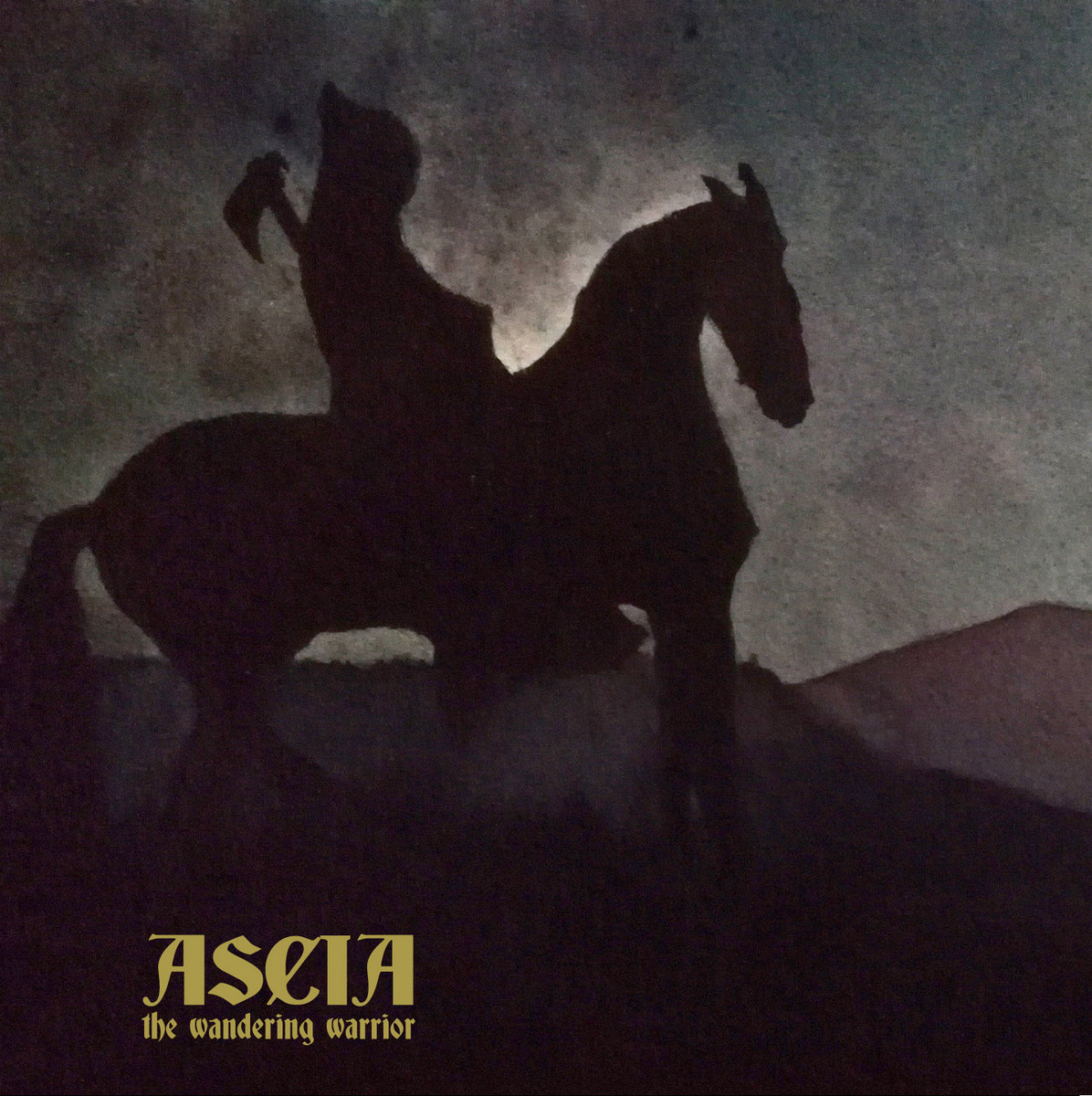
While one could liken the echo-born space that coincides with the gallop of opening cut “Greenland” to any number of other outfits, and the concluding title-track branches out both in terms of tempo and melodic reach, Ascia‘s debut long-player, The Wandering Warrior follows on from the project’s demoes in counting earliest High on Fire as a defining influence. Fair enough, since the aforementioned two are both the most recent included here and the only songs not culled from the three prior demos issued by Fabrizio Monni (also Black Capricorn) under the Ascia name. With the languid fluidity and impact of “Mother of the Wendol” and the outright thrust of “Blood Bridge Battle,” “Ruins of War” and “Dhul Qarnayn” set next to the bombastic crash ‘n’ riff of “Serpent of Fire,” Monni has no trouble harnessing a flow from the repurposed, remastered material, and picking and choosing from among three shorter releases lets him portray Ascia‘s range in a new light. That may not be able to happen in the same way next time around (or it could), but for those who did or didn’t catch the demos, The Wandering Warrior summarizes well the band’s progression to this point and gives hope for more to come.
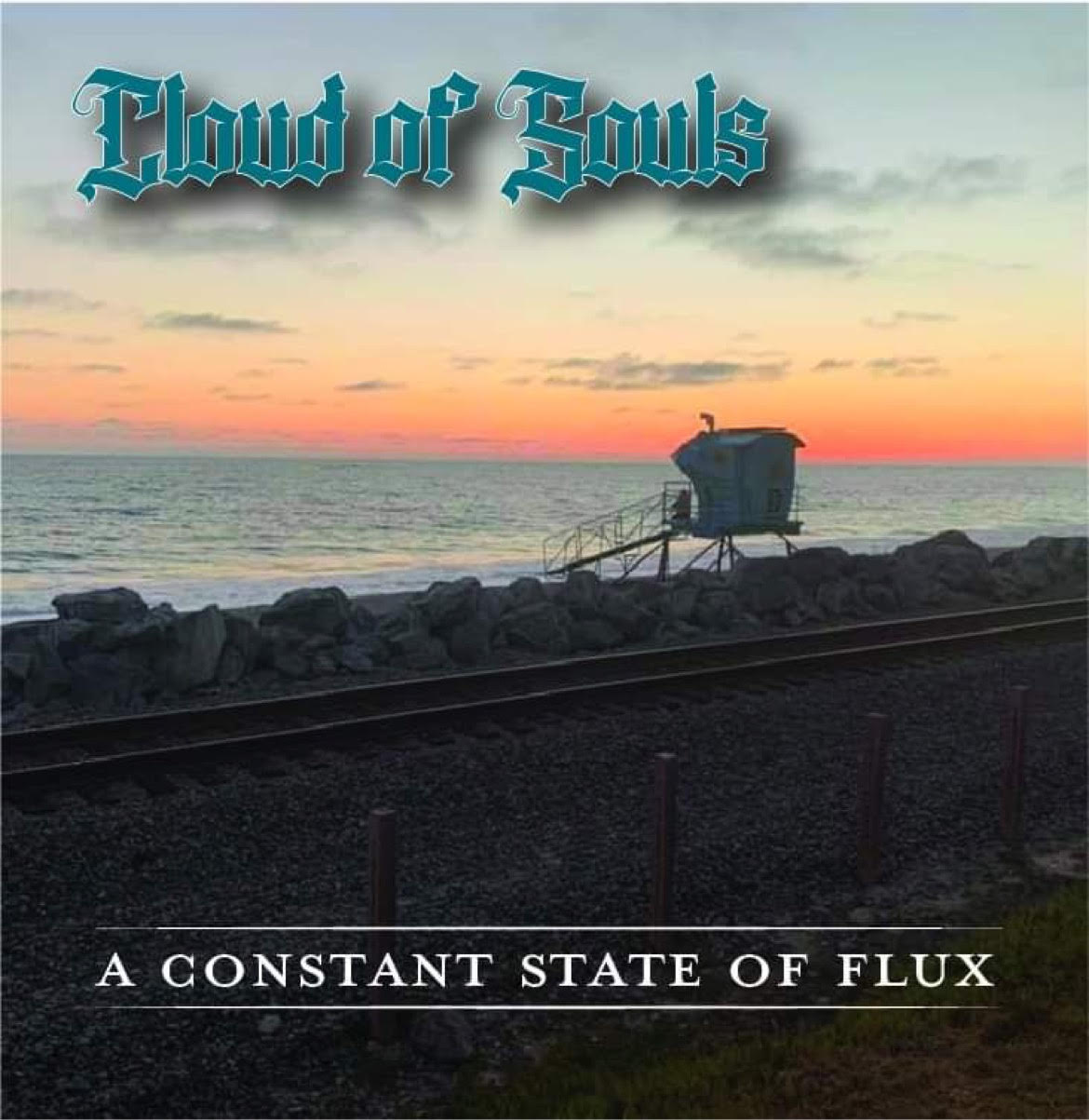
Indianapolis-based solo-project Cloud of Souls — aka Chris Latta (ex-Spirit Division, Lavaborne, etc.) — diverges from the progressive metallurgy of 2023’s A Fate Decided (review here) in favor of a more generally subdued, contemplative presentation. Beginning with its title-track, the five-song/36-minute outing marks out the spaces it will occupy and seems to dwell there as the individual cuts play out, whether that’s “A Constant State of Flux” holding to its piano-and-voice, the melancholic procession of the nine-minute “Better Than I Was,” or the sax that accompanies the downerism of the penultimate “Love to Forgive Wish to Forget.” Each song brings something different either in instrumentation or vibe — “Homewrecker Blues” harmonizes en route to a momentary tempo pickup laced with organ, closer “Break Down the Door” offers hope in its later guitar and crash, etc. — but it can be a fine line when conveying monotony or low-key depressivism, and there are times where A Constant State of Flux feels stuck in its own verses, despite Latta‘s strength of craft and the band’s exploratory nature.
Not Today, Satan, in either its 52-minute runtime or in the range of its songcraft around a central influence from Queens of the Stone Age circa 2002-2005, is not a minor undertaking. The ambitious debut full-length from Berlin trio Deaf Wolf — guitarist/vocalist Christian Rottstock (also theremin on “Silence is Golden”), bassist/vocalist Hagen Walther and Alexander Dümont on drums and other percussion — adds periodic lead-vocal tradeoffs between Rottstock and Walther to further broaden the scope of the material, with (I believe) the latter handling the declarations of “Survivor” and the gurgle-voice on “S.M.T.P.” and “Beast in Me,” which arrive in succession before “The End” closes with emphasis on self-awareness. The earlier “Sulphur” becomes a standout for its locked-in groove, fuzz tones and balanced mix, while “See You in Hell” finds its own direction and potential in strut and fullness of sound. There’s room to refine some of what’s being attempted, but Not Today, Satan sets Deaf Wolf off to an encouraging start.
Five years on from their also-newly-reissued 2019 debut, We Are Just Floating in Space, French instrumentalist heavy space rock two-piece Alber Jupiter — bassist Nicolas Terroitin, drummer Jonathan Sonney, and both of them on what would seem to be all the synth until Steven Michel guests in that regard on “Captain Captain” and the title-track — make a cosmic return with Puis Vient la Nuit, the bulk of which is unfurled through four cuts between seven and 10 minutes long after a droning buildup in “Intro.” If you’re waiting for the Slift comparison somewhat inevitable these days anywhere near the words “French” and “space,” keep waiting. There’s some shuffle in the groove of “Daddy’s Spaceship” and “Captain Captain” before it departs for a final minute-plus of residual cosmic background, sure, but the gradual way “Pas de Bol Pour Peter” hits its midpoint apex and the wash brought to fruition in “Daddy’s Spaceship” and “Puis Vient la Nuit” itself is digging in on a different kind of vibe, almost cinematic in its vocal-less drama, broad in dynamic and encompassing on headphones as it gracefully sweeps into the farther reaches of far out, slow in escape velocity but with depth in three dimensions. It is a journey not to be missed.
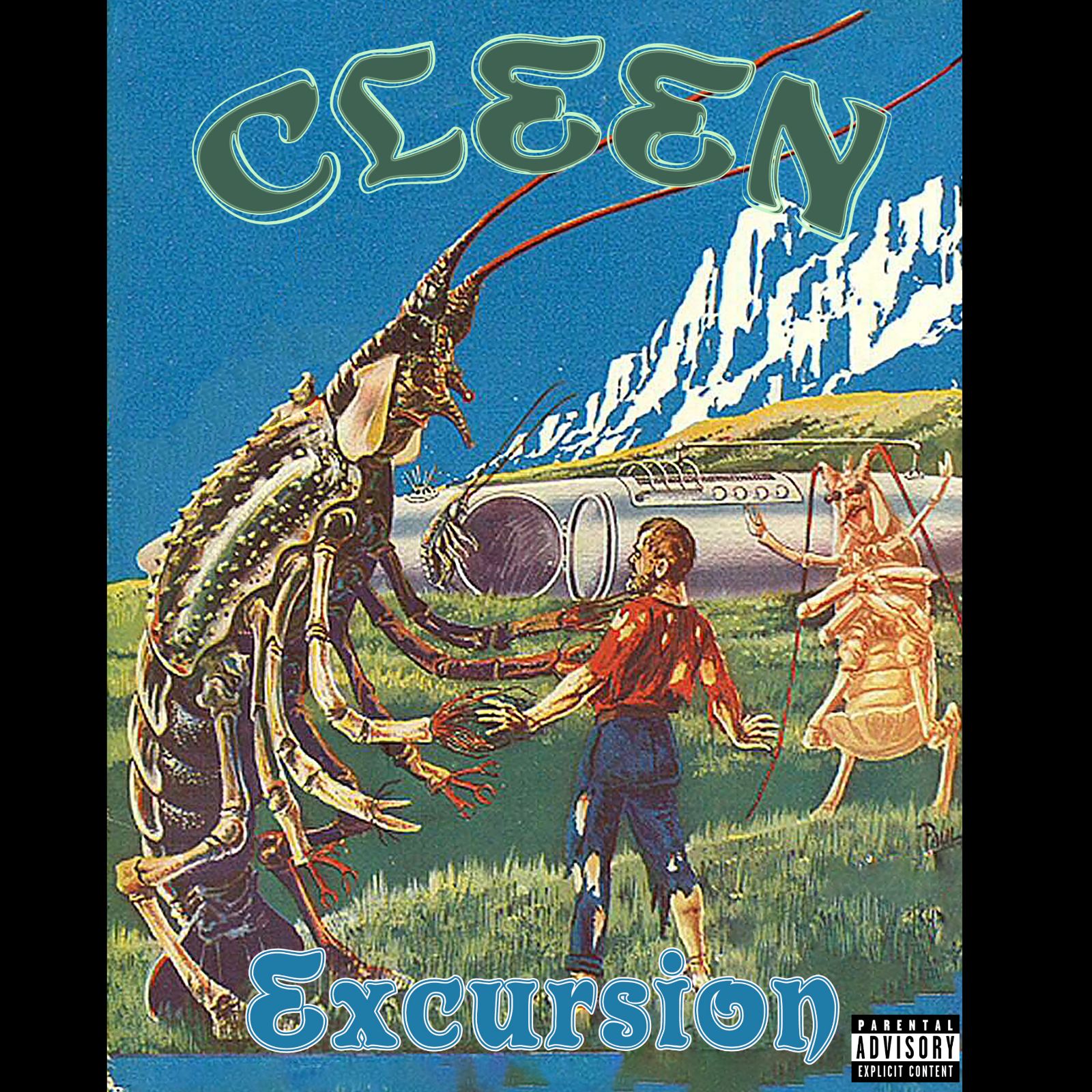
There’s something of a narrative happening in at least most of the 10 tracks of Cleen‘s impressive debut album, Excursion, as the character speaking in the lyrics drifts through space and eventually meets a perhaps gruesome end, but by the time they’re closing with “A Means to an End” (get it?), the Flint, Michigan, trio of guitarist/vocalist Patrick, bassist Cooley and drummer Jordan are content to leave it at, “I just wanna worship satan and go the fuck to sleep.” Not arguing. Their sound boasts an oozing cosmic ethereality that might remind a given listener of Rezn here and there, but in the post-grunge-meets-post-punk-oh-and-there’s-a-scream movement of “No One Remembers but You,” the punkier shove in the first half of “Year of the Reaper,” the dirt-fuzz jangle of “Aroya” and the sheer heft of “Menticidal Betrayal,” “Sultane of Sand” and “Fatal Blow,” Cleen blend elements in a manner that’s modern but well on its way to being their own in addition to being a nodding clarion for the converted.
Posted in Whathaveyou on January 25th, 2024 by JJ Koczan
Montreal extreme sludgers Dopethrone — they call it ‘slutch’, presumably because the harder consonant sound makes it nastier, which it kind of does — have a Western Canadian tour coming up with Severed Arm that will take them from British Columbia through Alberta, Saskatchewan and Manitoba before it’s done, and apparently a new album for Totem Cat Records. The latter will be the three-piece’s first since 2018’s Transcanadian Anger (review here), and for proof of life, the band have posted “Life Kills You” — also the name of the tour, either will or won’t be the name of the LP — to sate the disaffected masses yearning for their particular brand of fuckall.
When’s the album coming? I don’t know. They make a point of not saying. Maybe tomorrow, maybe yesterday, as Ben Sisko once put it. But knowing such a thing is in their pocket is a comforting discomfort, and one imagines they might want to take a few records to the UK with them when they go to headline Masters of the Riff III (info here) as an exclusive appearance, so it could be that the pressing is in the works for March, could be April for the tour dates listed below, or could be never because fuck you anyway it’s Dopethrone and that’s just how it is. I won’t pretend to know the future, but if I see a definite date or more details, I’ll post accordingly.
Till then, the track’s at the bottom of the post, just under the tour dates and album-existence announcement:
“LIFE KILLS YOU” by DOPETHRONE
Our slutchiest album is ready to shart blood in your eardrums.
No, we’re not telling you when.
Recorded and mixed by Jean-Baptiste Joubeaud Mastered by Brad Boatright at Audiosiege
Videoclip by Vincent Houde, Marianne Martinez and Rodolphe Tremblay
DOPETHRONE “LIFE KILLS YOU” – WEST COAST 🍁 TOUR HOP ON THE NIGHT TRAIN – 100% HELL – ZERO SHAME.
19/04/24 Victoria, BC – Wicket Hall 20/04/24 Vancouver, BC – Green Auto 21/04/24 Kelowna, BC – Jackknife Brewery 22/04/24 Nelson, BC – The Royal 24/04/24 Edmonton, AB – The Buckingham 25/04/24 Calgary, AB – Modern Love 26/04/24 Regina, SK – The Exchange 27/04/24 Winnipeg, MB – Handsome Daughter