Posted in Whathaveyou on March 12th, 2019 by JJ Koczan
Doom upon the land as Lord Vicar make ready to return with their fourth long-player. Titled The Black Powder and recorded in Turku, Finland, the offering will be made through The Church Within Records on May 3 and a tour has been announced to coincide that will take the four-piece through Germany and into Poland on their way to the Doom Days Festival in Tilburg, the Netherlands. Having had the pleasure to witness Lord Vicar live before, I’ll say it’s a thing of doomed righteousness to which few acts could hope to compare, but the chance to see them heralding a new release seems all the more deathly and awesome. You probably don’t need me to tell you to go to a show if one’s near you, but consider it said anyhow.
And me, I’ll be trying my damnedest to chase down The Black Powder in hopes of reviewing, because writing about this kind of thing I consider doing myself a favor and a bit of #selfcare never hurt.
From The Church Within on thee social medias:
Mark the date: 3rd of may! LORD VICAR: THE BLACK POWDER
The Black Powder is the fourth album from Lord Vicar. It was, like the previous album Gates of Flesh, recorded by audio wizard Joona Lukala at Noise for Fiction studio in Turku, Finland. All studio work took place in February and March of 2019. The studio has the benefit of a huge live room which gave the band the opportunity to capture a sound that breathes with the ambience of the space, but maintains the sonic weight for which they are rightly known.
This album is a return to longer form, and even more progressive song structures, but the punchier material is also provided with merciless precision, as well as soothing acoustic moments. The songwriting duties are shared by Kimi and Gareth, also Chritus providing lyrical output.
The album contains a loose lyrical concept relating to mankind’s endless lack of reason and weakness of stability, resulting to violence, war, manipulation of children, and numbing our minds in order to shut out the horror that is the reality we live in. We blow the black lines to feel good. This takes place generation after generation, in an endless cycle of standing and falling. Musically and lyrically the album covers a wide spectrum of textures from the all out punky attack of ’The Temple in the Bedrock’, fragile beauty of ‘Nightmare’, to the oppressive menace of the more intense moments of ‘Sulphur, Charcoal and Saltpetre’. This album is a grower, meant to be listened repeatedly, full of subtle details that reveal themselves with each subsequent listen.
’But children of that place remain with us They illustrate the burden of our lies And make us feel the hell of all those memories Buried in the grave of the fireflies’
Tracklisting: I Sulphur, Charcoal and Saltpetre (Kärki) II Descent (Millsted) III World Encircled (Millsted) IV Levitation (Kärki) V The Temple in the Bedrock (Millsted, lyrics Kärki) VI Black Lines (Millsted, lyrics Kärki, Linderson, Millsted) VII Impact (Kärki) VIII Nightmare (Kärki) IX A Second Chance: Including The Wagoner, My Soul Is Never Free, and Strict Master (Millsted)
Lord Vicar and Thronehammer live in May! 03.Mai Würzburg (D) @Immerhin 04 Mai Weikersheim (D) @Club W71 05 Mai Karlsruhe (D) @P8 06 Mai Hamburg (D) @Marx 07 Mai Szczecin (PL) @Jambar 08 Mai Berlin (D) @Slaughterhouse Moabit 09 Mai Halle (D) @Hühnermanhattan 10 Mai Oberhausen (D) @Helvete 11 Mai Tilburg (NL) @Little Devil Doom Days Festival
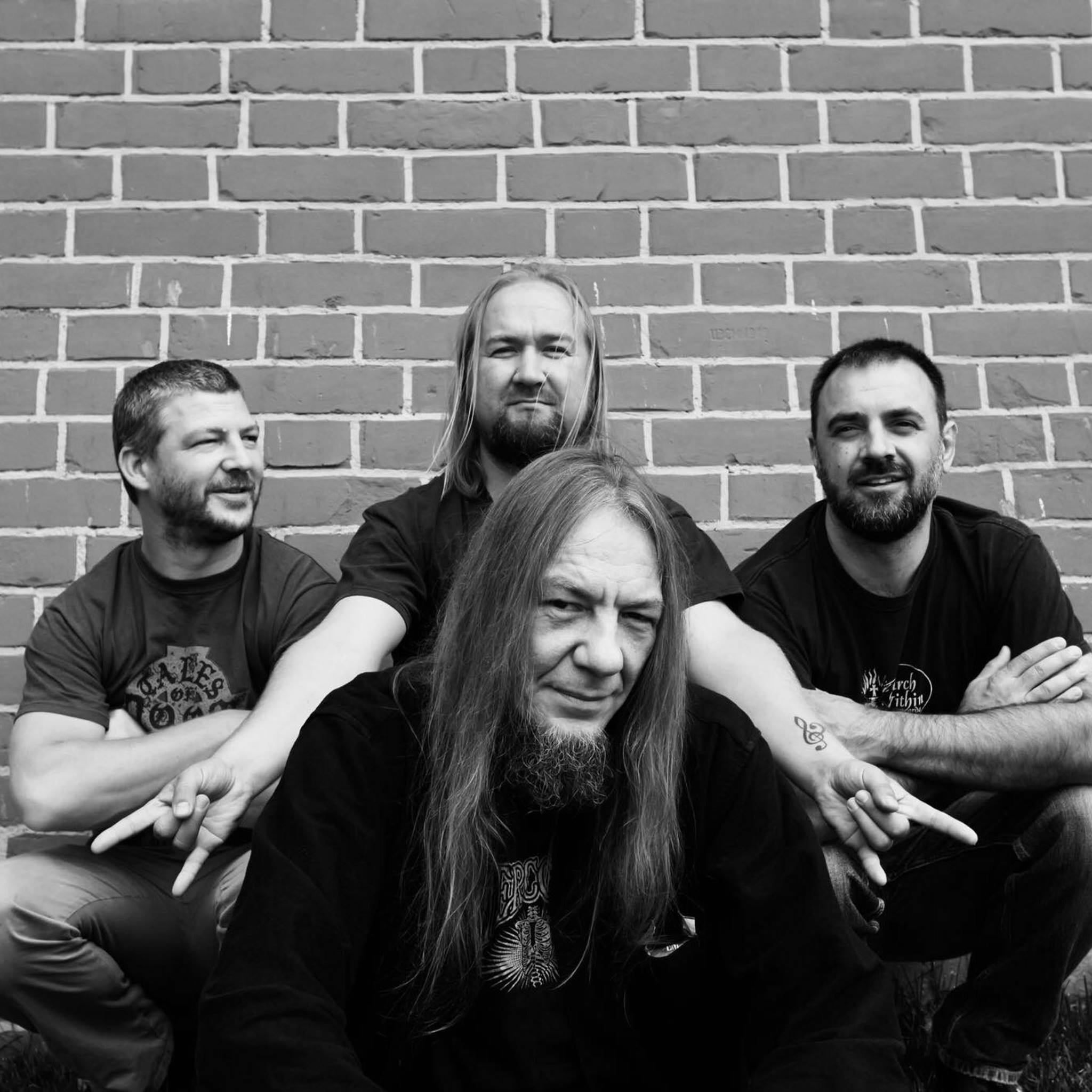
Lord Vicar is: Chritus on vocals Kimi on guitars Milly on drums Rich on bass
As side A plays out with its lush melodies and arrangements of flute and violin and cape-donned acoustic folk strum, past the pervasive sense of worship brought to “Son of the Sky” and “Old Tree,” Hexvessel frontman Mat “Kvohst” McNerney intones in “Changeling” the repeated line, “Come back home.” And so it seems the band has done just that. From the harmonized chants opening All Tree in the brief introduction “Blessing” through the birdsong of “A Sylvan Sign,” the quiet but present and foreboding layer of distortion in “Otherworld Envoy,” and the crackling fire of “Liminal Night,” the Finnish outfit have gone to ground aesthetically, and returned to the spirit of their earlier recordings, 2011’s Dawnbearer, 2012’s No Holier Temple, and 2013’s Iron Marsh EP.
Fair enough territory for McNerney and multi-instrumentalist Kimmo Helén (bass, piano, viola), guitarist Andrew McIvor, drummer/bassist Jukka Rämänen, vocalist/percussionist Marja Konttinen, guitarist Jesse Heikkinen and field recording specialist Antti Haapapuro to cover, but it’s a stark change from where Hexvessel were three years ago on When We are Death (review here). Their third album was a break-away from the methods of No Holier Temple et al, and found Hexvessel delving into psychedelic goth, death-driven Bowie swagger, and a broad pastiche of styles. In the context of the work they’ve done over the course of the last decade, All Tree makes When We are Death feel like an anomaly. Maybe it was. But the turn that brought Hexvessel there was no less stark than the turn that brings them to All Tree. Once again, the band as a whole are defying expectation, and as they lay claim once more to what one previously thought of as their core sound, they don’t necessarily forget the lessons of When We are Death in terms of tight songcraft — the ceremony runs a brisk 13 songs and 45 minutes — and nuance of arrangement, but there’s no question that the shift is a drastic one and it leaves one scratching their head at what might’ve been behind it. Even the cover art was done by the same artist who did No Holier Temple.
Perhaps the songs themselves hold the key to understanding the motivation. Like that “Come back home” in “Changeling,” or the chorus, “You can’t change this wilderness spirit,” in “Wilderness Spirit,” there is something about All Tree that feels very much to the core of Hexvessel‘s project. It brings together elements of British folk with a pointed naturalism that presents an alternate view of the modern world in which hillsides might be the shoulders of some giant unseen to human eyes or ghosts seem to populate the landscape as much as any form of life. In minimalist stretches like the finale “Closing Circles” or pieces of “Old Tree” earlier on, McNerney‘s voice is given a showcase it’s more than up to handling, and as much as there’s an overarching theme to the band’s sound, they subtly work in a surprising amount of variety, tapping into weepy pedal steel on “Birthmark,” bringing in session violinist Daniel Pioro for “Old Tree,” or recalling 16 Horsepower-style swing in “Wilderness Spirit.”
Be it the more severe strumming of “Ancient Astronaut” or the quiet brooding of the brief mostly-instrumental “Vision of A.O.S.” that follows, “Otherworld Envoy” with its build toward a resonant wash or the brief interplay of keys and guitar on “Journey to Carnac,” All Tree does not to away with the prior album’s fascination with alternate dimensional planes, but it is by reinterpreting the means of conveying these ideas that so much about All Tree feels different. Even in “A Sylvan Sign,” which is the longest inclusion here at 6:28 as well as the centerpiece of the tracklisting, there’s something ethereal about the proceedings and the hypnotic repetitions of the title amid the plucked strings of acoustic guitar. As dug into the earth as some of these songs seem, wandering aged forests with dirt under the fingernails, there is no lack of mystique or wonder to them. A decade on from their beginnings, Hexvessel seem to be returning to marvel at what surrounds them, telling stories of the place of one’s self in nature and nature’s place in one’s self. “Wilderness Spirit,” in that regard, is a declaration of freedom as much as anything.
So where does that leave Hexvessel? They’re not back where they started, by any means. The level of craft, the diversity of their arrangements and their ability to shift in mood has carried over from When We are Death to All Tree in a way that distinguishes the new work from anything they’ve done before, but at the same time, there’s no getting around the fact that Hexvessel have stepped back into a forest-folk style that, for the most part, they let go three years ago. Does that make All Tree a moment of reconciliation between who Hexvessel were and who they became? Does their fourth album negate the accomplishments of their third or invalidate them somehow? Did Hexvessel hear those songs and think it wasn’t working on some level? How did we get here? Maybe (almost certainly) I’m overthinking it, but what does the fact that Hexvessel returned at least to the general vibe of their earlier work say about who they are as a band?
I’m not sure, and I’m not sure we’re supposed to know. For a band who made so much of their statement stylistically, it was particularly bold when Hexvessel dropped (almost) everything and went in a different direction. Likewise, listening to All Tree, it feels no less bold for Hexvessel to be back under such open skies. I can’t answer the questions above and I’m not going to try, but it feels like much of the purpose in these songs is self-discovery as it is expression. In that regard, Hexvessel have never wavered at all. As a collection in its own right, All Tree has moments of pain, beauty and awe that come across as genuine and driven by an urgency in their creation. On a level of craft, Hexvessel have never sounded more sure of what they want to do or how they want to make that unreal real. As to the rest, their story clearly isn’t done being written, and the narrative has grown more complex with time. Something tells me they wouldn’t have it any other way.
Posted in Reviews on December 18th, 2018 by JJ Koczan
What one didn’t necessarily expect from Mansion’s debut album was how much it would convey its rigidity in tone as well as in its theme. First Death of the Lutheran has been a long time in the making, as the Turku, Finland, outfit started in 2013 by self-releasing their We Shall Live EP (review here), which was soon picked up by Nine Records, and certainly they’ve covered a swath of styles since then with the subsequent The Mansion Congregation Hymns Vol. 1 single (discussed here) and the Uncreation EP (review here) in 2014, 2015’s Altar Sermon (review here) or their comporting-with-sinners 2017 split with Cardinal Wyrm, but still, the five-track/42-minute offering through I Hate Records is a surprise in its general sound. Where their earlier work had more of a retro feel, not quite boogie rock but not shy in its shuffle either, First Death of the Lutheran seeks to and succeeds in conveying the severity of its lyrical basis by sharpening its guitar tones and the production overall.
In defiance of what has become the standard for cult rock in Europe and elsewhere, it is not a warm-sounding album, with sing-songy lyrics about worshiping the devil or whatever else. Mansion‘s perspective has always been on another level. Now their sound matches that idea. They are, as of now, inseparable from their conceptual foundation, born out of the idea of not just singing about a thing, but becoming the thing itself. And specificity. I don’t know how much of general Finnish history covers the endtime-obsessed Kartanoist sect and their strict belief in the Christian Bible, celibacy, and the notion that after World War I in Europe, Jesus was returning to punish sinners, but the band and appointed lyricist Mikael have certainly dug into the history.
Mansion vocalist Alma takes her name from Alma Kartano, who led the group, and sure enough is joined by a congregation, with fellow vocalist Osmo, guitarists Jaakob and Veikko-Tapio, bassist Immanuel, drummer Atami, organist Matti-Juhani, as well as a range of guests appearing on First Death of the Lutheran, including Sami Albert Hynninen (ex-Reverend Bizarre) on “The Eternal,” as well as saxophonist Toivo on closer “First Death,” Antti-Mikael on percussion, Kimmo on violin and trumpet, Ivan on hurdy-gurdy, and so on. All of these arrangement elements are put to work toward the singular if varied purpose of embodying the harshness of dedicated dogmatic idolatry. The snare in opener “Wretched Hope” (premiered here) evokes flagellation. The effects-laden condemnations of “Lutheran” — of which even the single-word title seems accusatory — lumbering low end and far-back piano line and emergent mournful violin add an air of authoritarianism to Alma‘s highlighted vocals, Hynninen-led testimony of “The Eternal,” choral apex of “1933” and darkly psychedelic cacophony that closes in the 12-minute stretch of “First Death”: it all feeds into the centrality of the point of view.
They do not waver. There is no relenting, and particularly in the call and response between Alma and Osmo on “First Death” or in the chorus of “Wretched Hope,” or even as Alma relinquishes the forward position on the centerpiece, there is an underlying sexual tension that speaks to the corrupt nature of religious fanaticism. Tempt and condemn. This trait has always been in Mansion‘s approach, but on First Death of the Lutheran, especially in the vocal trades and amid the increased experimentalism of the instrumental side and production, it’s all the more resonant, and it adds to the sinister nature of the material itself. Certainly the summary hook in “Wretched Hope” of “Hear my warning/The lord is calling/Do you see the signs?/It’s the end of times,” and the doomly march to which they set it is made all the stronger for it, and likewise the bleak swirl that follows in “Lutheran.” And as the album unfolds, it only grows bolder and broader in its encompassing stylization, such that by the time “First Death” starts with its combination of earthbound rhythm and airier guitars in the initial, trumpet-inclusive forward progression and steps into alignment around the riff that holds sway for its first half, the sense is that Mansion have set themselves up to go anywhere.
There’s less of an expectation as the record plays through, then, for songs to sound the same or to carry a similar approach to their making, because already the band have worked diligently — and again, successfully — to undermine any. At the same time they do this, though, it’s the theme that unites the album on the whole, so that as far as Mansion range considering where they started from half a decade ago, they never lose sight of what it is bringing their songs together, the underlying purpose of expression. So the theme not only proves strong enough to maintain itself lyrically throughout the five tracks, but to help present First Death of the Lutheran as a singular work, however varied its sound might ultimately be. The production has a role in this as well, of course, but as noted, even that ties into the band’s adoption of the tenets of Kartanoism. As “First Death” makes its way into its second half around the winding vocal lines that resolve themselves with the final assessment, “You’re a sinner,” it’s a culmination on every level through which that song and those before it have functioned.
And yet the crescendo is still to come. That takes hold as the back end of “First Death” builds into its final wash, Alma cutting through all the while in last moments of preach, with a long-held sax note — excruciatingly tense by the time it lets go — as the final element sacrificed. The level of achievement here isn’t to be understated. Not only have Mansion stretched their conceptual designs out over the course of a full-length, which is something that, frankly, they’ve been ready to do for a while, but with that full-length, they’ve actively worked against what was expected from them, while moving forward in craft overall, greatly increasing their scope and carving out a sonic niche beyond microgenre that is immediately their own and, more importantly, immediately under their command. It is a powerful, awaited debut that moves beyond what one could have even hoped for it, and it not only puts Mansion on their own echelon of cultistry, but realizes their righteousness in a new form that feels like a grim future made flesh.
Posted in Reviews on December 14th, 2018 by JJ Koczan
I had a terrible thought yesterday: What if this one… went to 11? That is, what if, after 10 days of Quarterly Review ending today with a grand total of 100 records reviewed since last Monday, I did another batch of 10? Like a bonus round? Like I said, terrible thought.
Pretty sure it won’t happen. I’ve already got a review and a video premiere booked for next Monday, but I definitely had the thought. It was easy, of course, to fill out another 10 slots, and who knows, maybe this weekend for the first time ever I wind up with some extra time and energy on my hands? Could happen, right?
Again, I’m fairly certain it won’t. Let’s proceed with the assumption today’s the last day. Thank you for reading. I hope you have found something cool in all of this that has really hit home. I certainly have. We cap very much in last-but-not-least fashion, and if nothing’s resonated with you yet, don’t count yourself completely out. You might just get there after all. Thanks again.
Quarterly Review #91-100:
Surya Kris Peters, Ego Therapy
Those feeling technical will note the full title of the album is Surya Kris Peters’ Ego Therapy, but the point gets across either way. And even as Christian Peters — also guitarist/vocalist for Samsara Blues Experiment — acknowledges the inherent self-indulgence of the proverbial “solo-project” that his exploration of synth and classically progressive textures under the moniker of Surya Kris Peters has become, with Ego Therapy as his second full-length of 2018, he branches out in including drums from former Terraplane bandmate Jens Vogel. The 10-song/53-minute outing opens with its longest cut (immediate points) in the 15-minute “Angels in Bad Places,” a spaced-out and vibrant atmosphere more cohesive than psychedelia but still trippy as all hell, and moves through a bluesy key/guitar interplay in “Wizard’s Dream” following the dancey thriller soundtrack “Beyond the Sun” and into the Blade Runner-style grandeur of “Sleeping Willow” and the video game-esque “A Fading Spark” before bookending with the sci-fi “Atomic Clock” at the close. I don’t know how ultimately therapeutic Peters‘ solo offerings might be, but he only seems to grow bolder each time out, and that certainly applies here.
How are you not gonna love a release that starts with a song called “Sexadelic Galactic Voyage?” Barcelona vamp rockers Lewis and the Strange Magics embrace their inner funk on the 23-minute self-released EP, The Ginger Sessions, finding the place where their uptempo ’70s fusion meets oldschool The Meters-style rhythm, digging into the repetitions of “Candied Ginger” after the aforementioned instrumental opening burst and then holding the momentum through “Her Vintage Earrings.” Some departure happens on what might be side B of the 10″, with “The Shadow of Your Smile” turning toward pastoral psychedelia, still rhythmic thanks to some prominent wood block and xylophone sounds, but much calmer despite a consistency of wah and keys. “Suzy’s Room II” follows in fuzzy fashion, bridging the earlier cologne-soaked, chest-hair-out vibes with garage buzz and a heavier low end beneath the synthesized experimentation. Mellotron shows up and continues to hold sway in closer “Witch’s Brew,” playing the band outward along with layers of drifting guitar for about two and a half minutes of bluesy serenity that feel cut short, as does the release on the whole. One hopes they don’t lose that funky edge going into their next album.
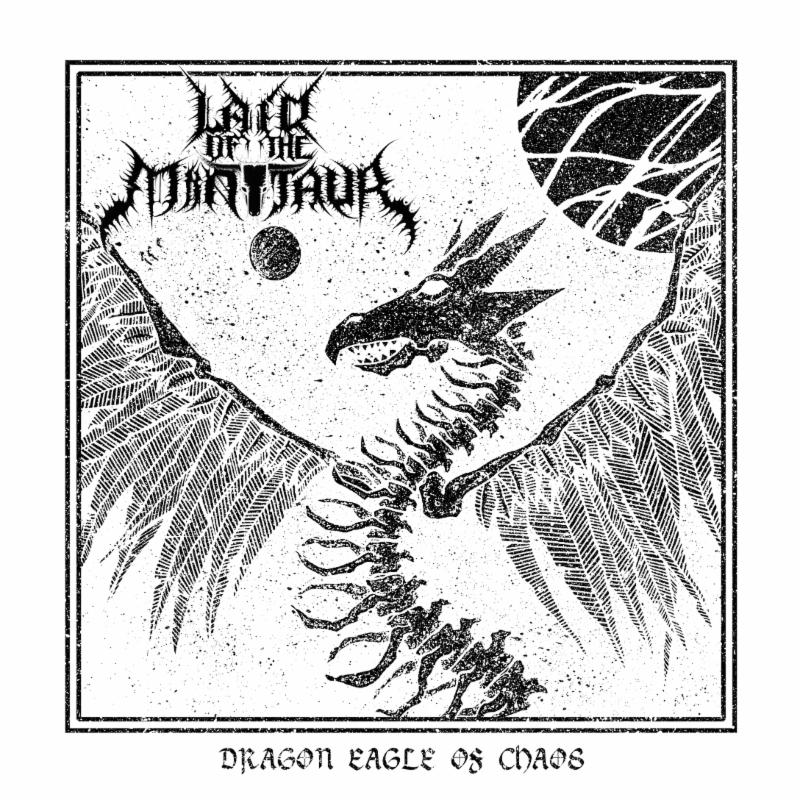
Once upon the mid-aughts, Chicago’s Lair of the Minotaur roamed the land as the long-prophesied American answer to Entombed, as much classic, dirt-covered death metal as they were laden with heavy groove. Their tones filthy, their assault brutal all the while, war metal, ultimate destroyers. The whole nine. They released their last album, Evil Power (review here), in 2010. The two-songer Dragon Eagle of Chaos follows a 2013 single, and was released to mark the occasion of perhaps a return to some measure of greater activity. I don’t know if that’ll happen, but as both “Dragon Eagle of Chaos” and “Kunsult the Bones” affirm in about seven minutes between them, Lair of the Minotaur remain a wrecking ball made of raw meat when it comes to their sound. The madness that seemed to always underline their material at its most effective is present and accounted for in “Dragon Eagle of Chaos,” and the stripped-down production of the single actually helps its violent cause. Will they do another record? Could go either way, but if they decide to go that route, they clearly still have the evil power within.
Eight tracks/34 minutes of smoothly-arranged and well-executed doom rock brought to bear with an abiding lack of pretense and a developing sense of songcraft and dynamic — there’s very little not to dig about Sonic Wolves‘ self-titled LP (on Future Noise and DHU), from the Sabbathian stretch of “Ascension” down through the bouncing low-key-psych-turns-to-full-on-wah-overdose-swirl in the penultimate “Heavy Light.” Along the way, bassist/vocalist Kayt Vigil (ex-Pentagram, etc.) — joined by guitarists Jason Nealy and Enrico “Ico” Aniasi and drummer Gianni “Vita” Vitarelli (also Ufomammut) — gallop through the traditional metal of “Red Temple” and ride a fuzzy roll in “Tide of Chaos,” leaving the uptempo shuffle of “You’ll Climb the Walls” to close out by tapping into a “Wicked World”-style vision of heavy blues that casts off many of the tropes of what’s become the subgenre in favor of a darker approach. If their self-titled is Sonic Wolves declaring who they are as a band after making their debut in 2016, the results are only encouraging.
There is an immediate sensibility drawn from classic heavy rock to the vocals on Spacelord‘s second record, Indecipher, like Shannon Hoon fronting Led Zeppelin, maybe? Something like that, definitely drawn from a ’70s/’90s blend. Produced, mixed and mastered by guitarist Rich Root, with Chris Cappiello on bass, Kevin Flynn on drums and Ed Grabianowski on vocals, the four-piece’s sophomore LP is comprised of a neatly-constructed eight songs working around sci-fi themes on bruiser cuts like “Super Starship Adventure” and the particularly righteous “Zero Hour,” as opener and longest track (immediate points) “For the Unloved Ones” sets forth the classic vibe amid the first of the record’s impressive solos and resonant hooks. Something about it makes me want them to go completely over the top in terms of production their next time out — layers on layers on layers, etc. — but the kind of false start Grabianowski brings to the ultra-Zepped “New Machine” has a charm that I’m not sure it would be worth sacrificing.
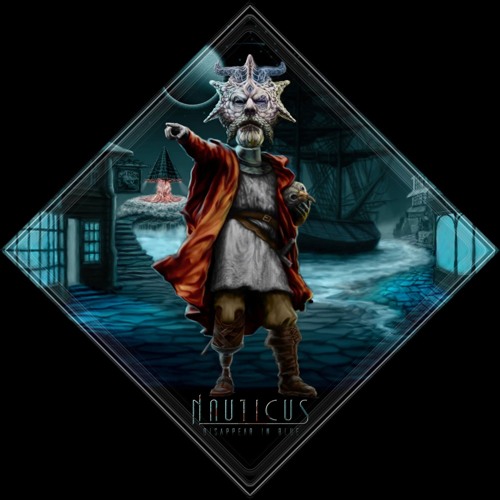
Six years after the release of their second album, The Wait (review here), Finnish atmospheric progressive metallers Nauticus effect a return with the 78-minute Disappear in Blue, which following the relatively straightforward opening with “Magma” casts out a vast sprawl in accordance with its oceanic theme. Longer tracks like “Claimed by the Sea,” “Strange Sequences/Lost Frequencies,” “Arrival” and “Hieronymus” are complex and varied but united through a deep instrumental dynamic that’s brought to light even in the three-minute ambient post-rocker “Desolation,” which is something of an interlude between “Strange Sequences/Lost Frequencies” and the tense build of “Singularity.” Other ambient spaces “Jesus of Lübeck” and the later “Whale Bones” complement and add reach to the longer-form works, but it’s hardly as though Nauticus‘ material lacks character one way or the other. Overwhelming in its length, Disappear in Blue might take some time to wade through, but what a way to go.
As the greater part of anything related to post-metal invariably does, UK outfit Yuxa have their “Stones from the Sky” moment in “Founder in Light,” the opening cut from their self-titled debut EP, that most formative of progressions making itself known in modified form to suit the double-guitar four-piece’s intent with dramatic screams and shouts cutting through an ably-conjured surge of noisy adrenaline resolving in winding chug and crash en route to “Exiled Hand,” the seven-minute cut that follows and serves as centerpiece of the three-tracker. “Founder in Light,” “Exiled Hand” and nine-minute closer “Peer” are arranged shortest to longest, and the effect is to draw the listener in such that by the time the angular, purposeful lurch of the finale begins to unfold, Yuxa‘s rhythmic hypnosis is already well complete. Still, the straightforward arrangements of guitar, bass, drums and vocals give them a rawer edge than many synth- or sample-laden post-metallic cohorts, and that suits the atmospheric sludge with which they close out, harnessing chaos without giving themselves over to it. A quick sample of a creative development getting underway, though it’s telling as well that Yuxa ends with a sudden buzz of amp noise.
The first EP release from Forktie — who stylize their moniker and titles all-lowercase: forktie — is untitled, but contains five tracks that tap into proto-emo post-hardcore and ’90s alt rock sensibilities, finding a place between heavy rock and grunge that allows for Aarone Victorine‘s bass to lead toward the hook of centerpiece “Decomposition Book” with a smooth presence that’s well complementary the vocals from guitarist Dom Mariano, their presence low in the mix only adding to the wistful feel of “Anywhere but Here” and “September Morning,” before the shorter “Spores” lets loose some more push from drummer Corey LeBlanc and closer “Ph.D. in Nothing” reinforces the underlying melancholy beneath the thicker exterior tones. It’s a new project, but Forktie have worked their way into a niche that suits their songwriting well, and given themselves a space to grow within their sound. Members experience in bands like UXO, Test Meat and textbookcopilot will serve them in that effort.
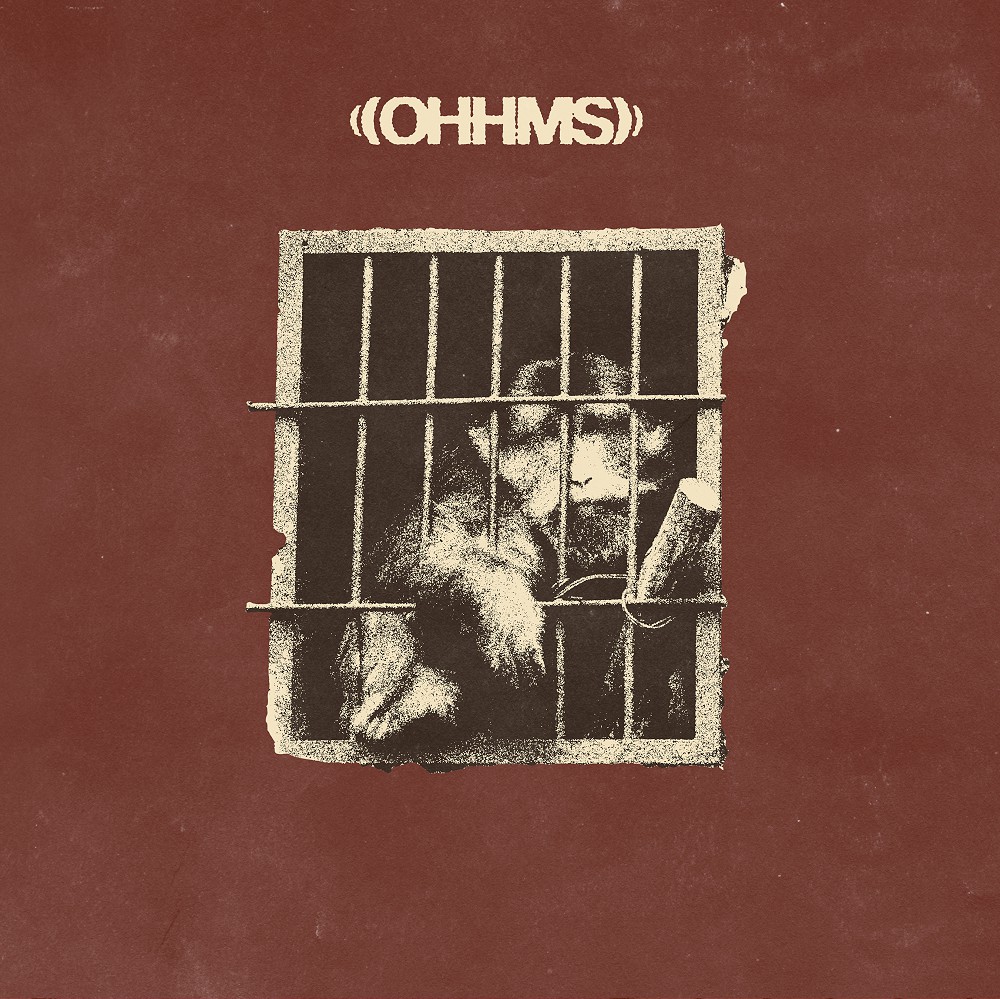
As a fan generally of bands opening albums with the longest song included, I can get on board with UK heavy progressive metallers Ohhms opening Exist with the 22-minute “Subjects.” Immediate points and all that. Far more consequential, however, is the substance of that launch for the four-song/43-minute Holy Roar LP, which is the band’s fourth in four years. It’s a vast, broad and complex offering unto itself, consuming side A as vocalist Paul Waller embodies various entities, “I am wolf” (preceding a Duran Duran reference, perhaps inadvertent), “I am child,” and so on. Those proclamations are just the culmination of a progression that, frankly, is an album unto itself, let alone a side, and maybe should’ve been released as such, though the absolute post-metallic crush of “Shambles,” the seething of “Calves” and the heavy post-rock reach of “Lay Down Your Firearms” need no further justification than a simple listen provides, the last of them pummeling side B to a then-sudden stop. Ohhms are no strangers to longform work, and it suits them well enough to make one wonder if they couldn’t be headed toward a single-song LP in the near future.
Chicago four-piece Blue Dream issued their first LP, Volume Won, early in 2018 and follow with Volume Blue — as opposed to “two”; could ‘Volume Tree’ be in the works? ‘Volume Free?’ — which collects nine neo-psych-mit-der-funky-grooves cuts chic enough to be urbane but fuzzed out enough to make the freakouts more than just a come on. They open peaceful enough with “Delta,” before the hook of “9,000 lb. Machine” defines the course and cuts like “Thank You for Smoking” and the almost woefully catchy “She’s Hot” expand the parameters. I’ll take the dream-tone shimmer of “Kingsbury Goldmine” any day in a kind of self-aware reflection of British folk and/or the garage rock of “Shake the Shake,” but the dense roll of “Viper Venom” that immediately follows reimagines grunge as more than just an influence from three popular bands and something that could genuinely move forward from the perspective of a new generation. Hearing Blue Dream close out with the boogie of “The Glide,” one hopes they do precisely that, though I’d by no means limit them to one avenue of expression. They’re clearly able to harness multiple vibes here.
Posted in Whathaveyou on December 11th, 2018 by JJ Koczan
How many clever-as-hell reviewers do you think are going to talk about how forest folkers Hexvessel are getting ‘back to their roots’ (nudge nudge) on their new album? All of them? All of them twice? If it’s anything less than an 80 percent number, I’ll be disappointed in the modern press.
Hexvessel‘s nonetheless brilliant 2016 outing, When We are Death (review here), was indeed a departure for the band into go-anywhere-do-anything-even-pop songcraft that showcased a host of influences, some less derived from the natural world than others. They still danced like mad pagans, though, and it seems that All Tree will bring back some of the nature worship of the collective’s earlier work. Preorders are up for the album now for those in Europe, and they’ve posted a video for “Old Tree” that you can see at the bottom of this post. It’s serene and sad and gorgeous, and if you’d expect less, you have some homework to do.
From the social medias:
The first single and video “Old Tree” from our new album is out now!
From the ghostly notes of the dead tree branch, played with a violin bow by Antti Haapapuro, to Andrew McIvor’s haunting guitars, violin by Daniel Pioro and found forest sounds, our new song “Old Tree” sings of personal loss with a pagan heartbeat.
Mat McNerney says: “I wrote this song at a time of what should have been deep sadness, but as a way of finding solace in nature. We tend to think of life from such a short term perspective. Nature takes millions of years to develop some of the intricate life support systems we depend on to survive. I found my answers in the trees and what they tell me. As Hesse said, when we listen to trees, we learn the ‘ancient law of life’. This song ‘Old Tree’ is very much like the first song I ever wrote as HEXVESSEL and goes to the core of what our music is about. To quote Lord Byron, ‘I love not Man the less, but Nature more’.”
With visuals beautifully captured in the old growth rainforests of Vancouver Island by British Columbian filmmaker Mark Wyatt, our video is a reverential paean to the intrinsic and eternal divinity of nature.
“We are happy to announce that our fourth album “All Tree” will be released on CD, LP and digitally on February 15th, 2019 worldwide. The album will be made available via our own label Secret Trees, in exclusive partnership with Century Media Records.
“All Tree is not just about going back to the heart of Hexvessel, with a slight return to our forest folk roots, it’s about drawing fresh inspiration from my own heritage too. The English pastoral folk influences are infused with Celtic mythology from my Anglo-Irish blood, with Finnish nature as our backdrop.
“From the Canterbury folk scene and early prog bands that soundtracked my youth in England, to the ghost stories I was told as a child on my uncles farm in Ireland, this album is a spiritual journey where the old myths are doorways to enlightenment. The dawn light across boggy fields, the wind blowing through the keyhole, the branches dragging their breath inwards as the seasons ignite a magic sense of mystery about the wilderness. That’s what we tried to bring out into the songs on this album. By bowing old dead tree branches with violin bows, by summoning the sounds of the fire and the birds in the field outside, we gave the music a life which, like the liminal spirits of Samhain drifts in and out of this world. That’s what folk means. It’s the countryside singing out from within me. It’s their story we sing. And no matter where I go or where I end up staying, it’s that folk countryside which is the seed from which I sprang. All Tree.” – Mat McNerney
Cover art photography by Bastian Kalous (who created the cover for No Holier Temple).
You’ll see Turku, Finland’s Mansion referred to as ‘cult rock’ a lot. It’s kind of true the way abbreviations stand in for words. The truth of what Mansion do and have done since their 2014 premiere EP, We Shall Live EP (review here), and its soon-after follow-up, Uncreation (review here), is much more complex. Their awaited debut album, First Death of the Lutheran, is out this week on I Hate Records, and it pushes to new ground in both the conceptual framework and actual songwriting approach on the part of the band. As 12-minute summary/closer “First Death” starts out with psychedelic flourish and effects en route to a sax-inclusive tumult of experimentalist noise, it is as affecting in atmosphere as in impact, and though I’ll have a review of the album in the coming weeks, I was given the opportunity to ask the band some questions, and it wasn’t one I was going to pass up.
For those who didn’t hear Uncreation, 2015’s Altar Sermon (review here), or any of the other short releases they’ve had out along the way, Mansion follow a theme not just of vague, generalized occult thematics, but actually take on Kartanoism as their working foundation. The doomsday-obsessed post-WWI breakaway Protestant group followed leader Alma Kartano and her strict interpretations of the Bible and rules for everyday life. That kind of severity shows up in every whip-crack of the snare drum on opener “Wretched Hope” (premiered here) and in the grueling forward march and unremitting low-light claustrophobia of “Lutheran” and “The Eternal,” which follow. With mysterious “1933” ahead of the finale, First Death of the Lutheran is an appropriate endgame for the style of cult heavy as a whole, but at the same time, it works against genre convention in its sound and the overarching harshness of its production. Not raw — it’s clear-sounding — but sharp.
I’ll have a proper review of the album up in the coming weeks, but on the occasion of the release, I’m flat-out honored to host the premiere of its entirety below. It’s one I’ve been waiting a while for, and its reach only exceeds what I imagined they’d come up with for it.
Please enjoy the stream and the following Six Dumb Questions:
Six Dumb Questions with Mansion
—
It’s been five years since We Shall Live was released and First Death of the Lutheran is the band’s debut album. How do you see Mansion as having grown in that time? Were there specific goals you wanted to accomplish with the LP?
Our musical expression has progressed from a traditional retro approach to a more experimental direction. With time the congregation has grown both spiritually and in number. The album was released as a reminder for the sorrowless that the endgame has begun. For the most of them salvation is out of reach.
Tell me about writing First Death of the Lutheran. Over how long a period were the songs put together? Was it a different frame of mind writing for an album instead of an EP or a single? Beyond their theme, how do the songs fit together for the band? How much of the song placement and the progression of the record was mapped out before you went into the studio?
The first song on the album, “Wretched Hope,” was written right after We Shall Live EP was released, while the last song, First Death was written during the recordings of the debut album. The songs on the album might span over several years but it doesn’t mean that those were the only ones we have written so far. We have songs ready or half-ready for at least three albums. The songs you hear on First Death of the Lutheran are picked from our vault based on how they fit together. We recorded seven songs but decided to cut two as they didn’t fit in with the others.
The Uncreation EP was supposed to be our debut album. Due to some technical issues we had to cut two tracks off the album. Those were re-recorded later and released as the Altar Sermon EP.
The whole album seems to lead to “First Death.” Did you know in writing that song that it would be the finale? What is happening there to summarize the album?
As soon as the song was starting to find its form we knew that it would be the finale. In ”First Death” we simply state that there is a difference between us and you. We will be saved and you will burn in the everlasting fires of hell while we bathe in glory in the Kingdom of Heaven by His side. Pretty much what we want to say with the whole album.
What were the circumstances of the recording? There’s so much a blend of harsh noise and melody throughout, and it seems real attention was paid to the details of tone and effects. How long were you in the studio?
We recorded most of the album at our secret cottage in Huittinen. That only took a week. The mixing, though, was a different story. We had to change the mixing engineer after the first version of the album was done. There were too many details that got buried in the mix and so we had to start all over again to get it right.
How would you explain the central philosophy of Kartanoism? What’s the significance specifically of the year 1933?
We believe that most of the sorrowless wretches roaming the earth haven’t got a clue how mighty God is and how powerful his wrath is. Judgement Day will be a merciless slaughter of man and only the chosen few will be saved for eternal agony in the afterlife. We believe sex is a mortal sin and that there should not be an organisation between man and God.
Blasphemous churches will fall, mark our words. We in Finland are surrounded by Lutherans, whose way of life is hypocritical and untrue. They have lost their connection to the Lord Almighty tempted by greed and their vain egos. They will be surprised when their days are done. 1933 is the year when these losers released a sacrilegious translation of the Holy Bible.
Will Mansion tour in 2019 to support the release? Any other plans or closing words you want to mention?
We have live sermons and festivals booked for 2019. Book us. Today!
Posted in Reviews on December 4th, 2018 by JJ Koczan
Day Two of the Quarterly-Review-Mega-Super-Ultra-Year-End-Wrap-Up-Spectacular-Gnarly-Edition — name in progress — begins now. First day? Smooth. Wrote it over the weekend to get a jump on the week, cruised through a morning and into baby-naps, finished with time left over to still go and read the Star Trek novel I’m currently making my way through. Easy. Also peasy.
Today? Well, apparently I turned off my alarm in my sleep because I rolled over 40 minutes later and certainly didn’t remember it going off. Whoops. Not a great start, but there is a lot of cool stuff in this batch, so we’ll get through it, even if it’s awfully early in the week to be sleeping in. Ha.
Have a great day everybody. Here are 10 more records for the QRMSUYEWUSGE. Rolls right off the tongue.
Quarterly Review #11-20:
A Storm of Light, Anthroscene
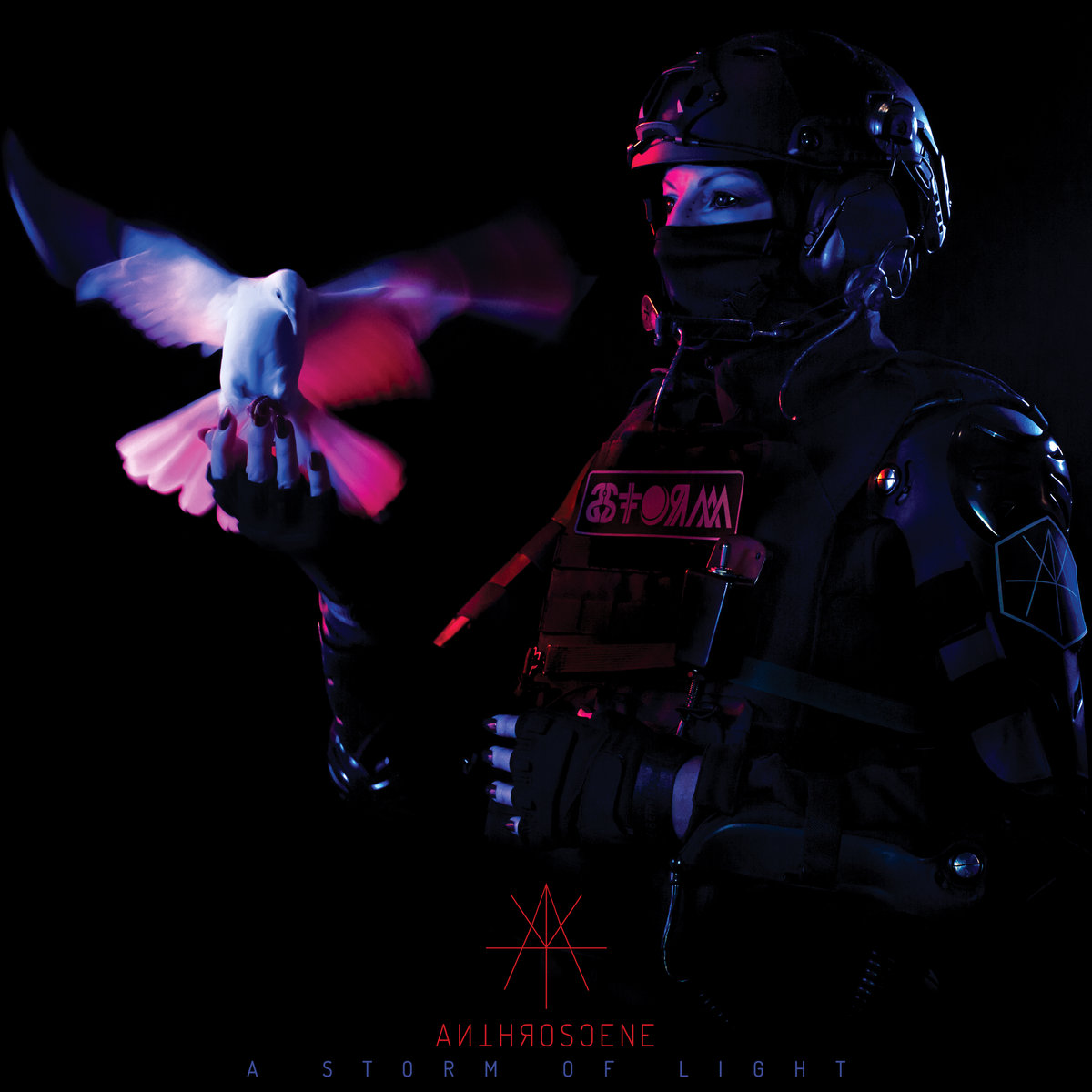
“America the sick and crumbling/Liberty she’s weeping/The tired and poor are huddled and dying/As the wretched ones are touched aside.” The lines, from A Storm of Light‘s “Blackout” — the second cut from their fifth LP, Anthroscene (on Translation Loss) — lead to the inevitable question: “What the fuck is wrong with us?,” and thereby summarize the central sociopolitical framework of the record. A dystopian thematic suits the band’s aesthetic, and there’s certainly no shortage of material to work from between current events and future outlook. Guitarist/vocalist/keyboardist/graphic artist Josh Graham, bassist Domenic Seita and guitarist/keyboardist Dan Hawkins are five years removed from the band’s last outing, however, so their post-apocalyptic post-metal is welcome either way, and Anthroscene taps a Killing Joke influence and turns it to its dark and churning purposes over the course of its eight tracks/51 minutes, delving into harsh shouts on “Short Term Feedback” and capping with the resistance-filled “Rosebud,” which surges forth from ambience like the anti-facist/anti-capitalist critique that it is, ending with the lyric, “When you die, we will spit on your grave,” which could hardly be more appropriate.
Massachusetts’ Z28 — also stylized as Z/28 and Z-28; I don’t think they care so long as you get the point they’re named after the Camaro — make their full-length debut with Nobody Rides for Free on Fuzzdoom Records, and with the occasional bit of organ on songs like “Touch of Evil” and “Angst III (I Don’t Want to Die),” they nonetheless give a raw take on heavy rock laced with that particularly Northeastern aggression. Guitarist Jeff Hayward (also organ), bassist/acoustic guitarist/engineer Jason Negro and drummer Breaux Silcio all contribute vocals to the outing, and yet the minute-long instrumental intro tells much of the story of what it’s about in terms of the chemistry between them. Impressive guitar solos are rampant throughout, and the rhythm section carries over a weighted groove through cuts like “Wandering” that’s fluid in tempo but still able to create an overarching flow between the tracks. I’ll give bonus points for the Black Sabbath nods in the multi-layered lead work toward the end of “Spirit Elk (Lord of the Hunt)” as well as the title “Keep on Rockin’ (In the Invisible World),” and Z28 have something to build on here in terms of songwriting and that chemistry. It’s raw-sounding, but that doesn’t necessarily hurt it.
Granted, Forrest telegraph some measure of quirk by naming their debut EP Kickball with Russians, but the four-piece from Lexington, Kentucky, still seem to be rolling along in a straightforward-enough manner on six-minute instrumental opener and longest track (immediate points) “(I Dream of) Kickball with Russians,” until the keyboards start in. That turn gives their EP an edge of the unexpected that continues to inform “DAN,” “Deew” and the closing “My Son Looks Just Like Me,” and “DAN” continues the thread with gang shouts popping up over its chugging progression and receding again after about two words to let the track get quiet and build back up. And is that a velociraptor at the start of “Deew?” Either way, that song’s Mr. Bungle-style angularity, a return of the keys and intermittent heavy nod work to underscore the willful weirdness that’s very much at play in the four-piece’s work, and the closer adds Ween-style effects work into the mix while still keeping a heavy presence in tone and lumber. They’ll get weirder with time, but this is a good start toward that goal.
Coastal melancholy and a pervasive sense of atmosphere seem to unite the varied tracks on 1476‘s 2017 Prophecy release, Our Season Draws Near, which otherwise draw across their span from goth rock, punk, doom and extreme metal, able to blur the line especially between punk and black metal on songs like “Ettins” while acoustics pervade “Solitude (Exterior)” en route to the Anathema-gone-char rasps of “Solitude (Interior)” a short time later. I know I’m late to the party on the Salem, MA, duo, and likewise late on this record, but from opener “Our Silver Age” to closer “Our Ice Age” to the “Solitude” pairing to “Winter of Winds” — finally: David Bowie fronts Joy Division — and “Winter of Wolves,” there’s so much of Our Season Draws Near that has a bigger-picture thought process behind its construction that its impact is multi-tiered. And it’s not just that they pit genres against each other in their sound, it’s that their sound brings them together toward something new and malleable to the purposes of their songwriting. Not to be missed, so this is me, not missing it. Even though I kind of missed it.
Joined on Nights in Distortion by bassist René Marquis as well as longtime drummer Patrick Schroeder, guitarist/vocalist/synthesist Christian Kolf (also Valborg) greatly expands his former solo-ish-project Owl with their second release of 2018 behind March’s Orion Fenix EP (review here), bringing together elements of post-metal churn with deeply atmospheric sensibilities, cuts like “Transparent Moment” churning as much as they are surprising with their underlying melody. A Type O Negative influence continues to be worked into their sometimes grueling context, but it’s hard to listen to the keyboard-laced “Inanna in Isolation” and hear Owl being anything other than who they’ve become, and their third album is the most distinct statement of that yet, airy lead guitars floating over a still-fervent, industrial-style chug amid vocals veering from barking shouts to quiet, low-register semi-spoken fare and cleaner singing. Nights in Distortion is the evolving work of a mastermind, captured in progress.
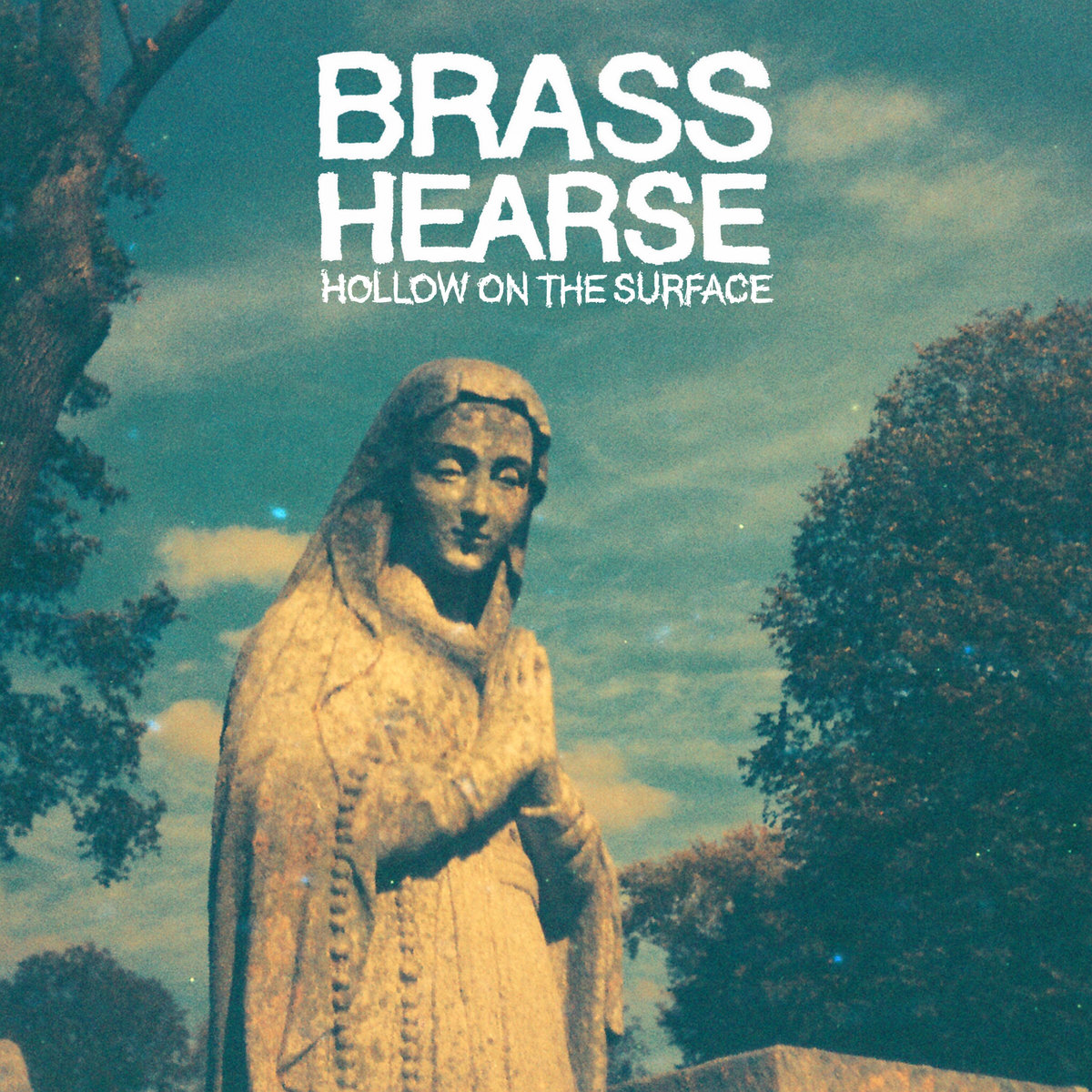
Synth-laden heavy horror garage dance rock could probably use a more succinct genre name, but while those in charge of such things sit and scratch their butts, Boston’s Brass Hearse carve out a niche unto themselves with their second EP, Hollow on the Surface. The five-track offering is in and out in 14 minutes but wants nothing for either a show of craft or arrangement, tapping into psych-folk in the strummy interlude “Dwellers in the Static Valley” after the hook-led “Death by Candlelight” and before the John Carpenter-style pulsations that underscore “The Thing from Another World.” Opener “Fading” is the only song to top four minutes and has a distinctly progressive take, but while it and the organ-ic closer “Headaches & Heartbreaks” has a theatricality to it, Brass Hearse are too cohesive to charge with being weird for weirdness’ sake, and their experimentation is presented in complete, engaging songs, rather than self-indulgent collections of parts mashed together. Would love to hear what they do over the course of a full-length.
Different missions from Finland’s Craneium and Switzerland’s Black Willows on their BloodRock Records split. Craneium nod through “Your Law” and mark their second inclusion, “Try, Fail, Repeat,” with a Sabbathian swing that only kicks up in tempo as it moves through its five minutes. Black Willows, on the other hand, present a single track in the 19-minute, noise-soaked post-everything “Bliss,” which trades back and forth between minimalism and crushing riffs en route to a consuming wash and long, long, long fadeout. Released in March, the outing showcases both bands well, but one is left wondering where the connection is between the two of them that they’d come together for a joint vinyl release. Either way, I won’t detract from what they do individually, whether it’s the catchiness of “Your Law” and the jam in its second half or “Bliss” with its frost-covered expanse of tonality, it’s just a marked leap from side A to side B. Maybe that was the idea all along, and if that’s the case, then one can only say they succeeded.
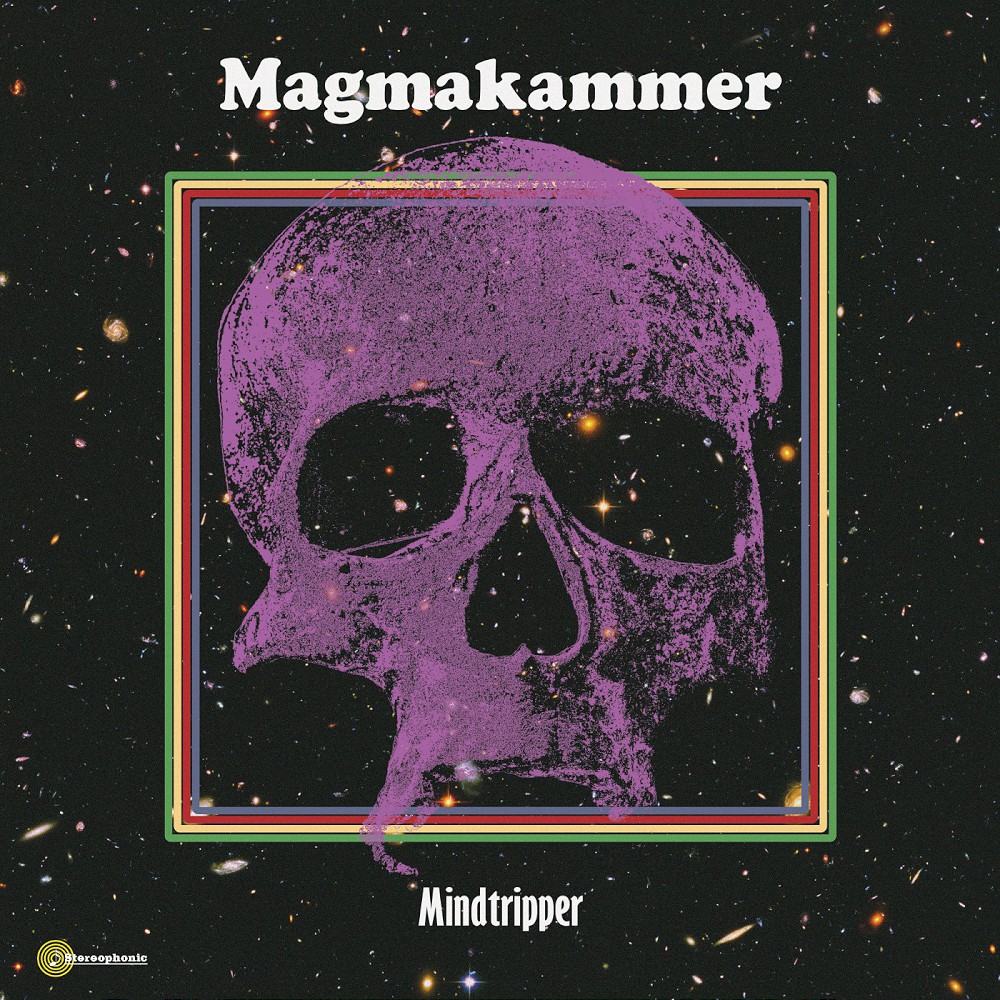
Following a 2015 self-titled debut EP, Oslo trio Magmakammer align with Kozmik Artifactz for their first long-player, Mindtripper, and so effect a garage doom sound that’s quickly relatable to Uncle Acid on songs like “Fat Saturn” and the chug-shuffling “Along the Crooked Roads.” Where they distinguish themselves from this core influence, though, is in the density of their tones, as opener “Druggernaut” and the rolling “Acid Times” prove thicker in their charge. Still, there’s no mistaking that swing and the blown-out sound of the vocals. Closer “Cosmic Dancers,” which is one of two tracks over seven minutes long, shows more dynamic in its loud/quiet tradeoffs, and resolves itself in a righteous nodder of a riff. It’s essentially in the same vein, but still displaying some emerging personality of Magmakammer‘s own that one hopes they continue to develop. And in the meantime, the foundation of craft and stylistic awareness they hone is still welcome, familiar or not.
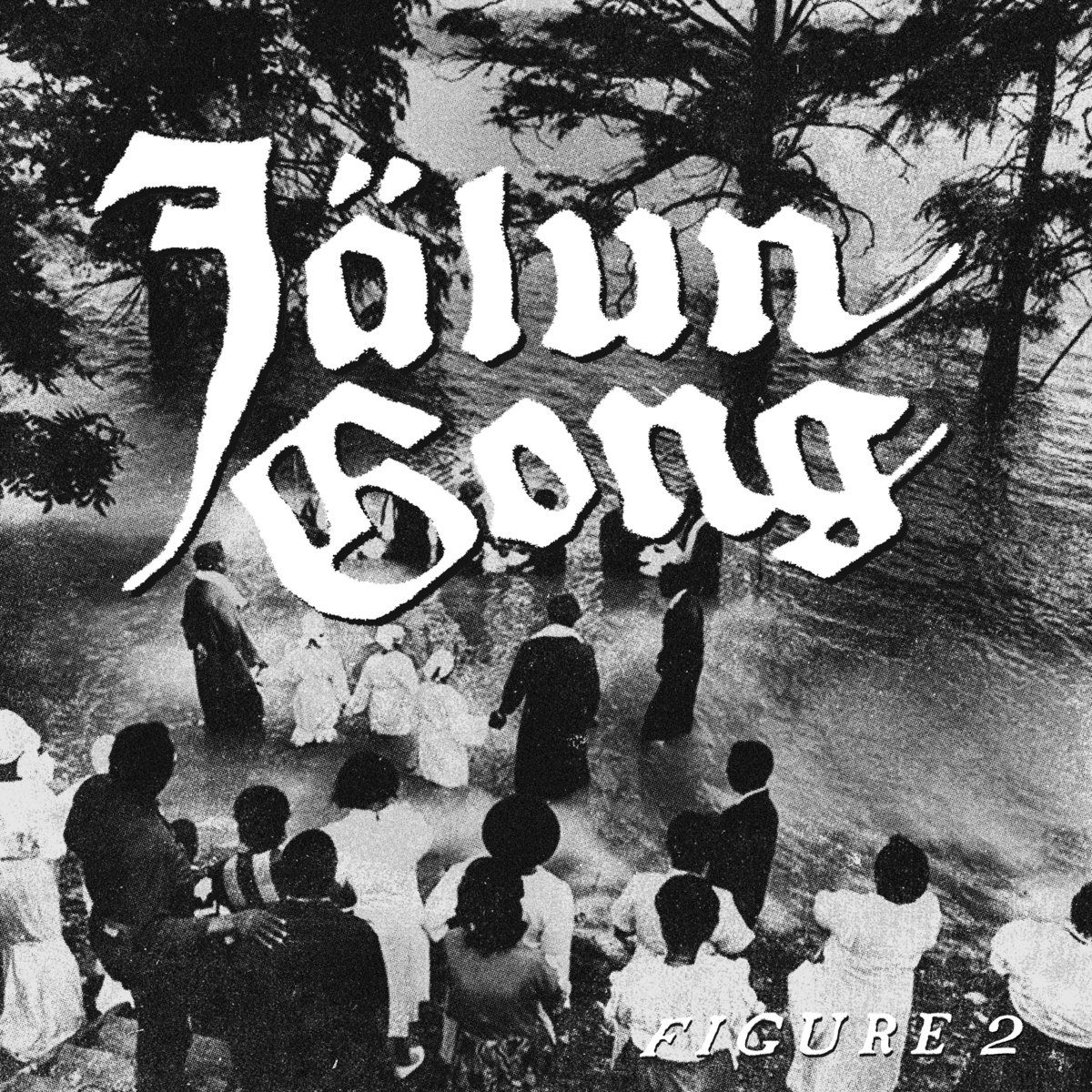
Mystique isn’t easy to come by in this Age of Access, but the anonymous London-dwelling duo Falun Gong have succeeded in piquing interest with their two-to-date singles, “Figure 1” (review here), and the eight-minute “Figure 2,” which like its predecessor is raw in the recording, sounds like it was performed live, and follows a trance-inducing course of riffing. The central groove is a slow march that makes its way through obscure voices delivered in buried fashion — the whole thing may or may not be mastered; somehow I’m thinking not, but I’ve been wrong before — through a self-aware drift that rounds out following a soulful culmination fitting the song’s lyrical theme, which would seem to be tied to the cover art about baptism in a river’s waters. There’s just something off-kilter about Falun Gong to this point, and while it’s still early going for them, they bring an eerie persona to their work that feels less performative than it so often does.
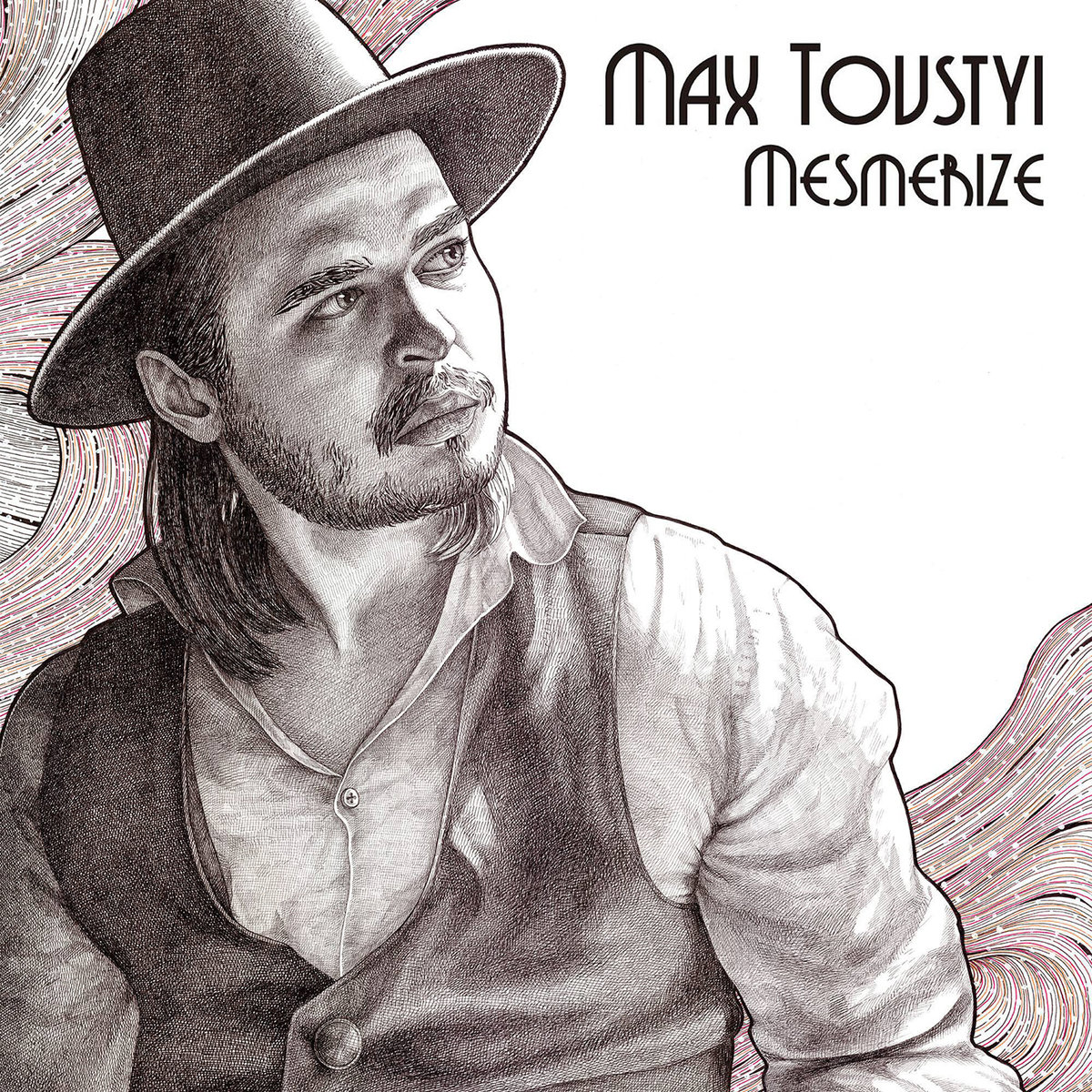
Though he’s had a slew of live outings out with the Max Tovstyi Blues Band and the Max Tovstyi Blues Association, Mesmerize (LP on Nasoni) is the Ukrainian heavy blues rocker’s first solo studio outing since 2014. He’s credited with all the instruments on the 10- or 12-track offering save for a couple arrangement-flourish guest appearances, and he pulls in a classic spirit and full-band sound without any trouble on a moody piece like “World of Sin” or the bonus track “Show Me the Way,” which isn’t a Peter Frampton cover so far as I can tell but still has plenty of guitar scorch to go around. “From the Blues to the Funk” jams its way along its stated trajectory, and “Feel Like Dying Now” brings together organ and keys in a fashion far less dramatized than one might initially think. With a clean production, Tovstyi — also known for his work in The Heavy Crawls, Lucifer Rising, and others — carries through his sentimentality for blues rock’s past and finds himself well at home leading the pack of guest vocalists on “Make Up Your Mind,” which closes the album proper with a semi-country twang and sweet melody.
Posted in Whathaveyou on November 23rd, 2018 by JJ Koczan
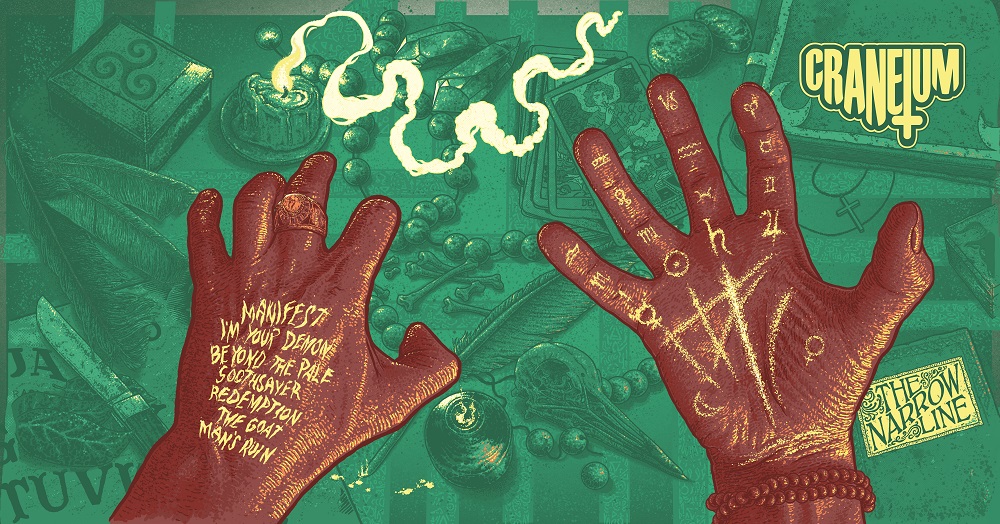
This digital release for Craneium‘s second long-player, The Narrow Line (review here), will be followed in a couple weeks by the physical version of the album. The band premiered the rocker “I’m Your Demon” here and tap into more stretched-out vibes on other songs, but the occasion is worth making either way, and so here we are. They talk a little bit about the recording process — six months in the making — and the work that went into getting the songs ready through preproduction and so on, and I think the finished product is pretty emblematic of the effort that went into building it from the ground up.
That finished product, by the way, is streaming at the bottom of this post.
Happy release date to Craneium, and enjoy:
Craneium – The Narrow Line
We are really happy to finally share our second album “The Narrow Line” with all of you. It has been a long time coming since our first one in 2015. We found ourselves without a bass player two times since then, so finding a band member, rehearsing, getting to know each other, write new material and move on to the stage when we finally had everything in place and ready to hit REC took a while. But we’re back and we’re stoked about the new album, and we’re really hoping you all will dig it too!
We recorded it with the same guy who worked with us on the last record, and we did it here in our hometown of Turku. Took about 6 months from start to finish. This time we put more effort into the pre-production and tested ideas. The main different being that we’ve learnt how to do things better and how to do things right. Recording it was a blast and many ideas came about in the studio, like the intro solo on “I’m Your Demon”. For this record we had it mastered at Studio Underjord in Sweden and we think the overall sound is so much better this time with more low-end and punch in the songs. The artwork was done by the Talented Dominic Sohor from Bolton, UK.
The album consists of 7 tracks exploring various styles within the genre of fuzzy-rock. From fuzz rock, stoner and desert influences via doom, space, psychedelia and heavy music in general. We’d like to think this is the sound of the band, not really able to stick it in one category, but instead a mishmash of everything we like which in turn makes us into the band we are. Metal Temple put it quite well in their review: What CRANEIUM present here is not so much an album but an adventure, escapism for the listener, there is enough talent and invention throughout the recording to keep you hooked, however, their greatest achievement is in how they seemed to throw off the shackles of staying within the perimeter of conventional stoner, desert rock and still appeal to that genre.
We don’t like to be conventional, we like being Craneium!
Craneium is: Andreas Kaján – Vocals & Guitars Martin Ahlö – Vocals & Guitars Joel Kronqvist – Drums Jonas Ridberg – Bass