Posted in Whathaveyou on May 23rd, 2023 by JJ Koczan
Putting this here in part as a note to myself. Asimov and the Hidden Circus released their album Flowers in June 2020, and while the fact that it’s three years later invariably makes the Saturn Eye Records cassette (K7) edition out now a reissue, it’s also the first physical pressing the full-length has received, so again we see old paradigms and definitions not really fitting what’s happening now. But the songs are interesting, and I hear a sonic point of view in the material that has depth as well as space in atmospheric terms, so while I’ve skimmed through, this is basically me making a note to myself to dig in further. Will that happen this week, month, year? I would say part of what makes life exciting is not knowing, but really it just makes life overwhelming, frenetic and depressing.
Still, the music’s good, and one hangs a hat on that when possible. Also, I like tapes. They’re never gonna be as cool as LPs, even ironically, but they continue to fill a gap between CDs and vinyl and if you’re wondering why they’re still pressed, the answer is that sometimes somebody will see something about a tape release and think, hey gee, maybe I should check that out, and then share that with a friend or two of their own, which is exactly what has happened here if you’re reading this sentence.
New Release SE-008: May has finally brought us ‘Flowers’ on tape from Asimov And The Hidden Circus. This is a very special reissue for Saturn Eye Records and has been in the making for several months now.
Asimov’s unique blend of hypnotic, far out sounds have a way of breaking through barriers of negativity and bringing one to head-nodding peace. You will groove – you will smile. It’s therapeutic psychedelic music in its heaviest form, and we are absolutely thrilled to share it with you on this new format.
These tapes are in a limited edition of 100 copies (an undisclosed amount will be available direct from @asimovstenarmusik in August). Available now from shop.saturneyerecords.com.
Recorded at the height of the Covid 19 pandemic. Original vinyl release was June 1st, 2020. New tape released May 12th, 2023.
Tracklisting: 1. People Of The Mountain Sermon 07:40 2. The Seeker 04:45 3. Until The Morning Comes 05:43 4. Shaman Sacrifice 05:44 5. Shadows Of Summer 04:20 6. The Merchant 08:06 7. The Healer 13:07
Posted in Reviews on January 9th, 2023 by JJ Koczan
Welcome to the second week of the Quarterly Review. Last week there were 50 records covered between Monday and Friday, and barring disaster, the same thing will happen this week too. I wish I could say I was caught up after this, but yeah, no. As always, I’m hearing stuff right and left that I wish I’d had the chance to dig into sooner, but as the platitude says, you can only be in so many places at one time. I’m doing my best. If you’ve already heard all this stuff, sorry. Maybe if you keep reading you’ll find a mistake to correct. I’m sure there’s one in there somewhere.
Winter 2023 Quarterly Review #51-60:
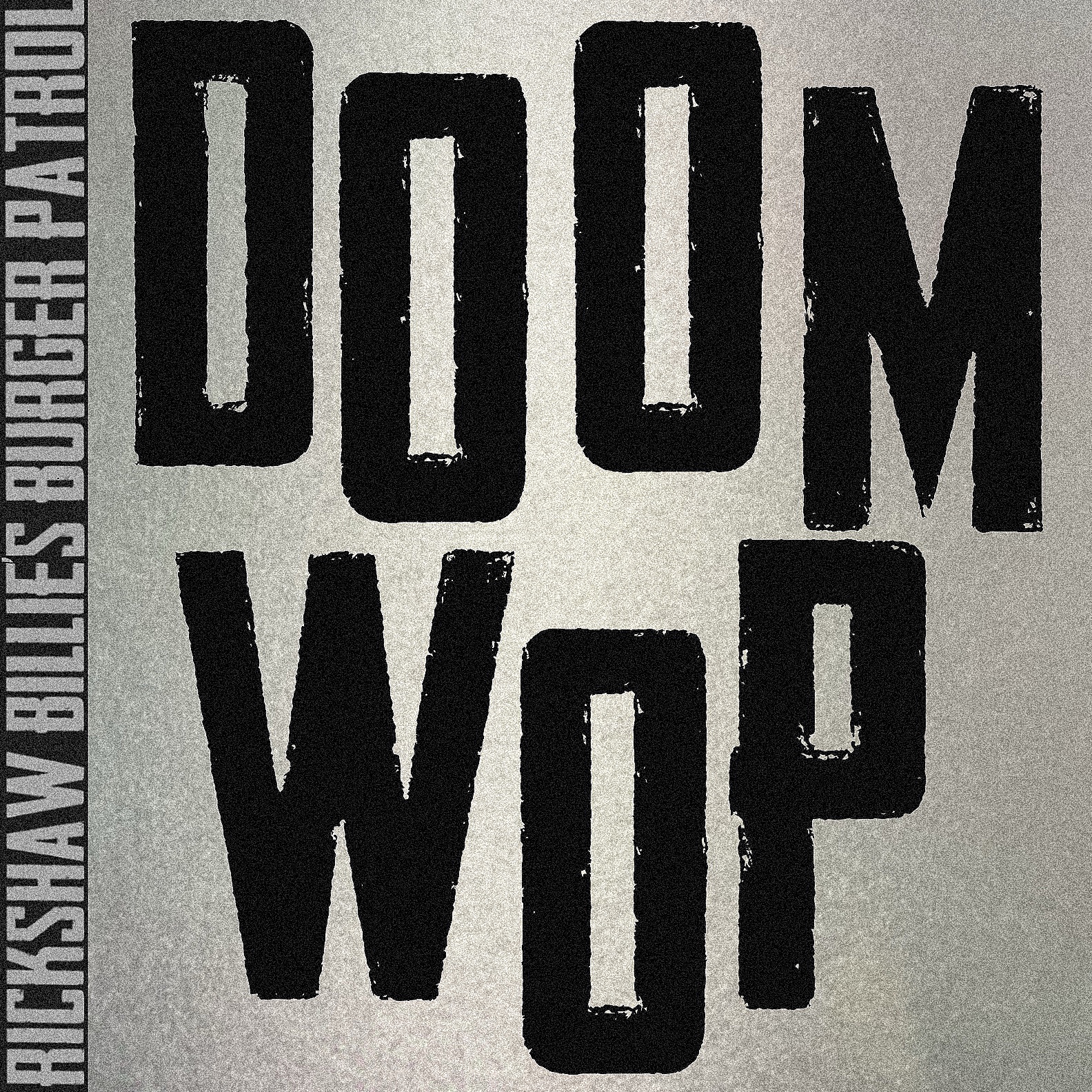
Rickshaw Billie’s Burger Patrol, Doom Wop
Powered by eight-string-guitar and bass chug, Austin heavy party rockers Rickshaw Billie’s Burger Patrol offer markedly heavy, Steve Brooks-style weight on “Doom Wop,” the title-track of their second album, and prove themselves catchy through a swath of hooks, be it opener “Heel,” “Chew” or “I’m the Fucking Man,” which, if the finale “Jesus Was an Alien” — perhaps the best, also the only, ‘Jesus doing stuff’ song I’ve heard since Ministry‘s “Jesus Built My Hotrod”; extra kudos to the band for making it about screwing — didn’t let you know the band didn’t take themselves too seriously, and their moniker didn’t even before you hit play, then there you go. Comprised of guitarist Leo Lydon, bassist Aaron Metzdorf and drummer Sean St. Germain, they’re able to tap into that extra-dense tone at will, but their songs build momentum and keep it, not really even being slowed by their own massive feel, as heard on “Chew” or “The Bog” once it kicks in, and the vocals remind a bit of South Africa’s Ruff Majik without quite going that far over the top; I’d also believe it’s pop-punk influence. Since making their debut in 2020 with Burger Babes… From Outer Space!, they’ve stripped down their songwriting approach somewhat, and that tightness works well in emphasizing the ’90s alt rock vibe of “The Room” or the chug-fuzzer “Fly Super Glide.” They had a good amount of hype leading up to the Sept. 2022 release. I’m not without questions, but I can’t argue on the level of craft or the energy of their delivery.
French heavy rock traditionalists DoctoR DooM return following a seven-year drought with A Shadow Called Danger, their late 2022/early 2023 follow-up to 2015’s debut, This Seed We Have Sown (review here). After unveiling the single “What They Are Trying to Sell” (premiered here) as proof-of-life in 2021, the three-piece ’70s-swing their way through eight tracks and 45 minutes of vintage-mindset stylizations, touching on moody Graveyardian blues in “Ride On” and the more uptempo rocker “The Rich and the Poor” while going more directly proto-metallic on galloping opener “Come Back to Yourself and the later “Connected by the Worst.” Organ enhances the sway of the penultimate “In This Town” as part of a side B expansion that starts with tense rhythmic underlayer before the stride of “Hollow” and, because obviously, an epilogue take on Händel‘s “Sarabande” that closes. That’ll happen? In any case, DoctoR DooM — guitarist/vocalist Jean-Laurent Pasquet, guitarist Bertrand Legrand, bassist Sébastien Boutin Blomfield and drummer Michel Marcq — don’t stray too far from their central purpose, even there, and their ability to guide the listener through winding progressions is bolstered by the warmth of their tones and Pasquet‘s sometimes gruff but still melodic vocals, allowing some of the longer tracks like “Come Back to Yourself,” “Hollow” and “In This Town” to explore that entirely imaginary border where ’70s-style heavy rock and classic metal meet and intertwine.
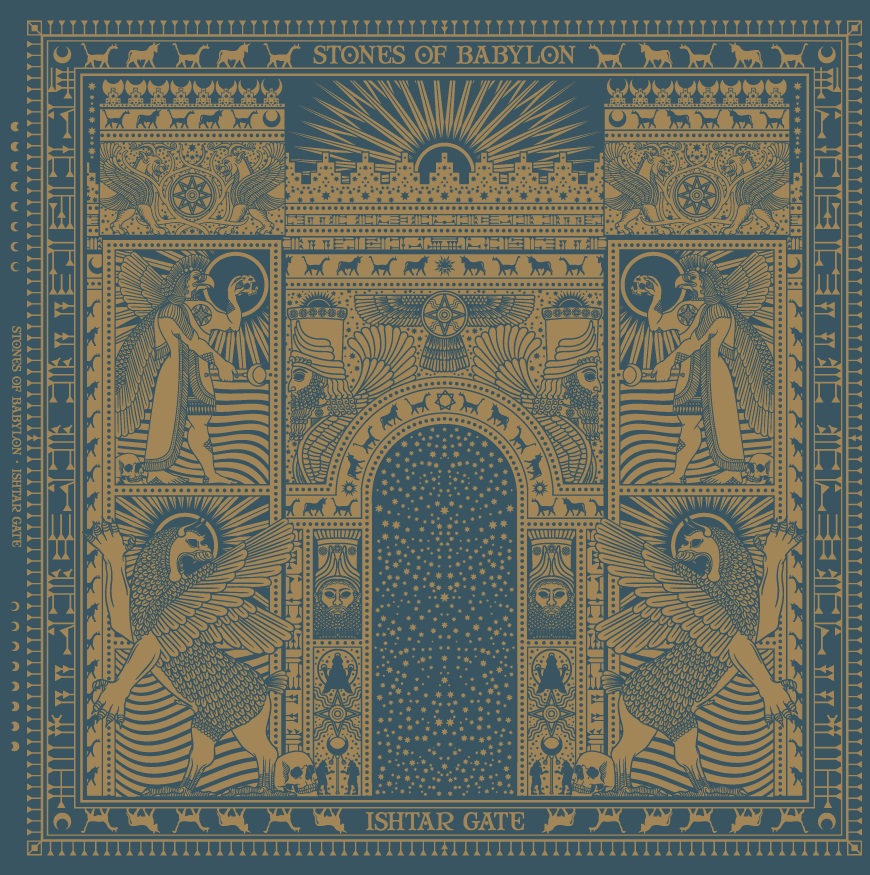
Clearly when you start out with a direct invocation of epic tales like “Gilgamesh (…and Enkidu’s Demise),” you’re going big. Portugal’s Stones of Babylon answer 2019’s Hanging Gardens (review here) with Ishtar Gate, still staying in Babylon as “Annunaki,” “Pazuzu,” the title-track, “The Fall of Ur,” and “Tigris and Euphrates” roll out instrumental embodiment of these historical places, ideas, and myths. There is some Middle Eastern flourish in quieter stretches of guitar in “Anunnaki,” “Pazuzu,” “The Fall of Ur,” etc., but it’s the general largesse of tone, the big riffs that the trio of guitarist Alexandre Mendes, bassist João Medeiros and drummer Pedro Branco foster and roll out one after the other, that give the sense of scale coinciding with their apparent themes. And loud or quiet, big and rolling or softer and more winding, they touch on some of My Sleeping Karma‘s meditative aspects without giving up a harder-hitting edge, so that when Ur falls, the ground seems to be given a due shake, and “Tigris and Euphrates,” as one of the cradles of civilization, caps the record with a fervency that seems reserved specifically for that crescendo. A few samples, including one at the very end, add to the atmosphere, but the band’s heart is in the heavy and that comes through regardless of a given moment’s volume.
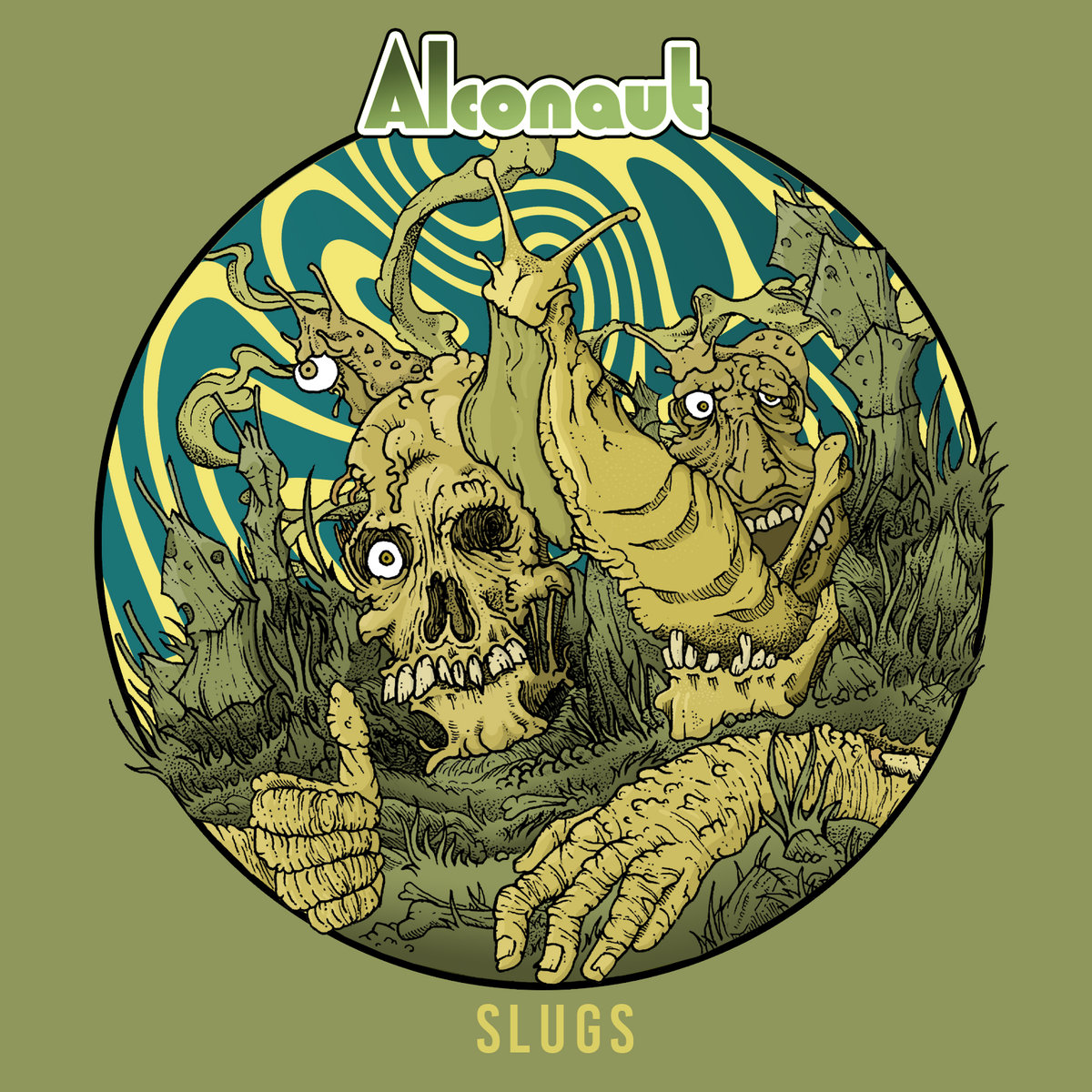
Released on Halloween 2022, Alconaut‘s “Slugs” is a six-minute roller single following-up their 2019 debut album, Sand Turns to Tide, and it finds the Corsican trio fuzz-grooving their way through a moderate tempo, easy-to-dig procession that’s not nearly as slime-trail-leaving as its title implies. A stretch building up the start-stop central riff has a subtle edge of funk, but then the pedal clicks on and a fuller tone is revealed, drums still holding the same snare punctuation behind. They ride that stretch out for a reasonably unreasonable amount of measures before shifting toward the verse shortly before two minutes in — classic stoner rock — backing the first vocals with either organ or guitar effects that sound like one (nobody is credited for keys; accept the mystery) and a quick flash of angularity between lines of the chorus are likewise bolstered. They make their way back through the verse and then shift into tense chugging that’s more straight-ahead push than swinging, but still friendly in terms of pace, and after five minutes in, they stop, the guitar pans channels in re-establishing the riff, and they finish it big before just a flash of feedback cuts to silence. Way more rock and way less sludge than either their moniker or the song’s title implies, their style nonetheless hints toward emergent dynamic in its tonal changes even as the guitar sets forth its own hooks.
Instrumental save for the liberally distributed samples from Planet of the Apes, including Charlton Heston’s naming of Nova in “Nova” presented as a kind of semi-organic alt-techno with winding psychedelic guitar over a programmed beat, Maybe Human‘s Ape Law is the second long-player from the Los Angeles-based probably-solo outfit, and it arrives as part of a glut of releases — singles, EPs, one prior album — issued over the last two years or so. The 47-minute 10-songer makes its point in the opening title-track, and uses dialogue from the Apes franchise — nothing from the reboots, and fair enough — to fill out pieces that vary in their overarching impression from the heavy prog of “Bright Eyes” and the closing “The Killer Ape Theory” to the experimentalist psych of “Heresy.” If you’re looking to be damned to hell by the aforementioned Heston, check out “The Forbidden Zone,” but Ape Law seems to be on its most solid footing — not always where it wants to be, mind you — in a more metal-leaning guitar-led stretch like that in the second half of “Infinite Regression” where the guitar solo takes the forward role over a bed that seems to have been made just for it. The intent here is more to explore and the sound is rawer than Maybe Human‘s self-applied post-rock or pop tags might necessarily imply, but the deeper you go there more there is to hear. Unless you hate those movies, in which case you might want to try something else.
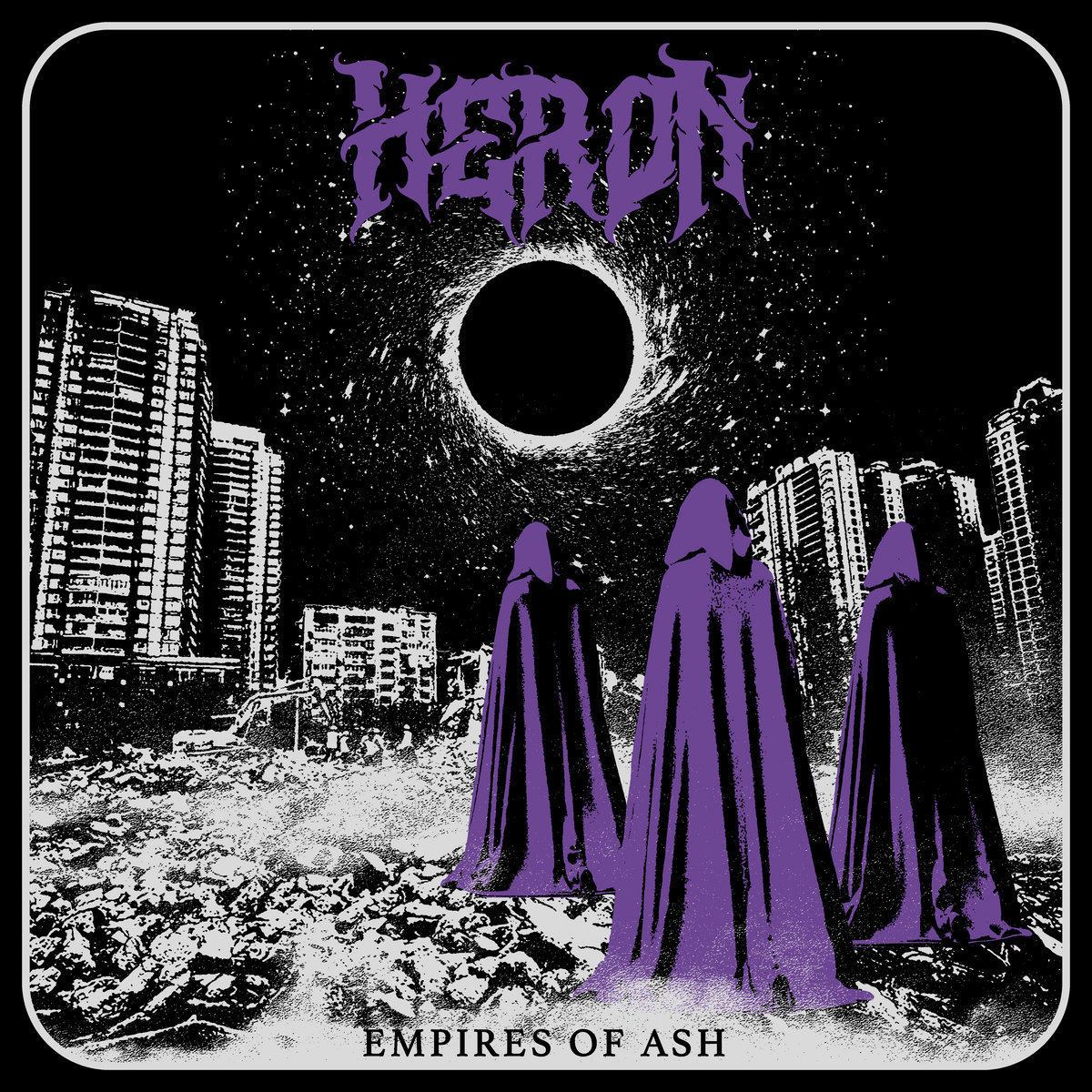
Beginning with its longest track (immediate points) in the nine-minute “Rust and Rot,” the third full-length from Vancouver’s Heron, Empires of Ash, offers significant abrasive sludge heft from its lurching outset, and continues to sound slow even in the comparatively furious “Hungry Ghosts,” vocalist/noisemaker Jamie having a rasp to his screams that calls to mind Yatra over the dense-if-spacious riffing of Ross and Scott and Bina‘s fluid drumming. Ambient sections and buildups like that in centerpiece “Hauntology” allow some measure of respite from all the gnashing elsewhere, assuring there’s more to the four-piece than apparently-sans-bass-but-still-plenty-heavy caustic sludge metal, but in their nastiest moments they readily veer into territory commonly considered extreme, and the pairing of screams and backing growls over the brooding but mellower progression on closer “With Dead Eyes” is almost post-hardcore in its melding aggression with atmosphere. Still, it is inevitably the bite that defines it, and Heron‘s collective teeth are razor-sharp whether put to speedier or more methodical use, and the contrast in their sound, the either/or nature, is blurred somewhat by their willingness to do more than slaughter. This being their third album and my first exposure to them, I’m late to the party, but fine. Empires of Ash is perfectly willing to brutalize newcomers too, and the only barrier to entry is your own threshold for pain.
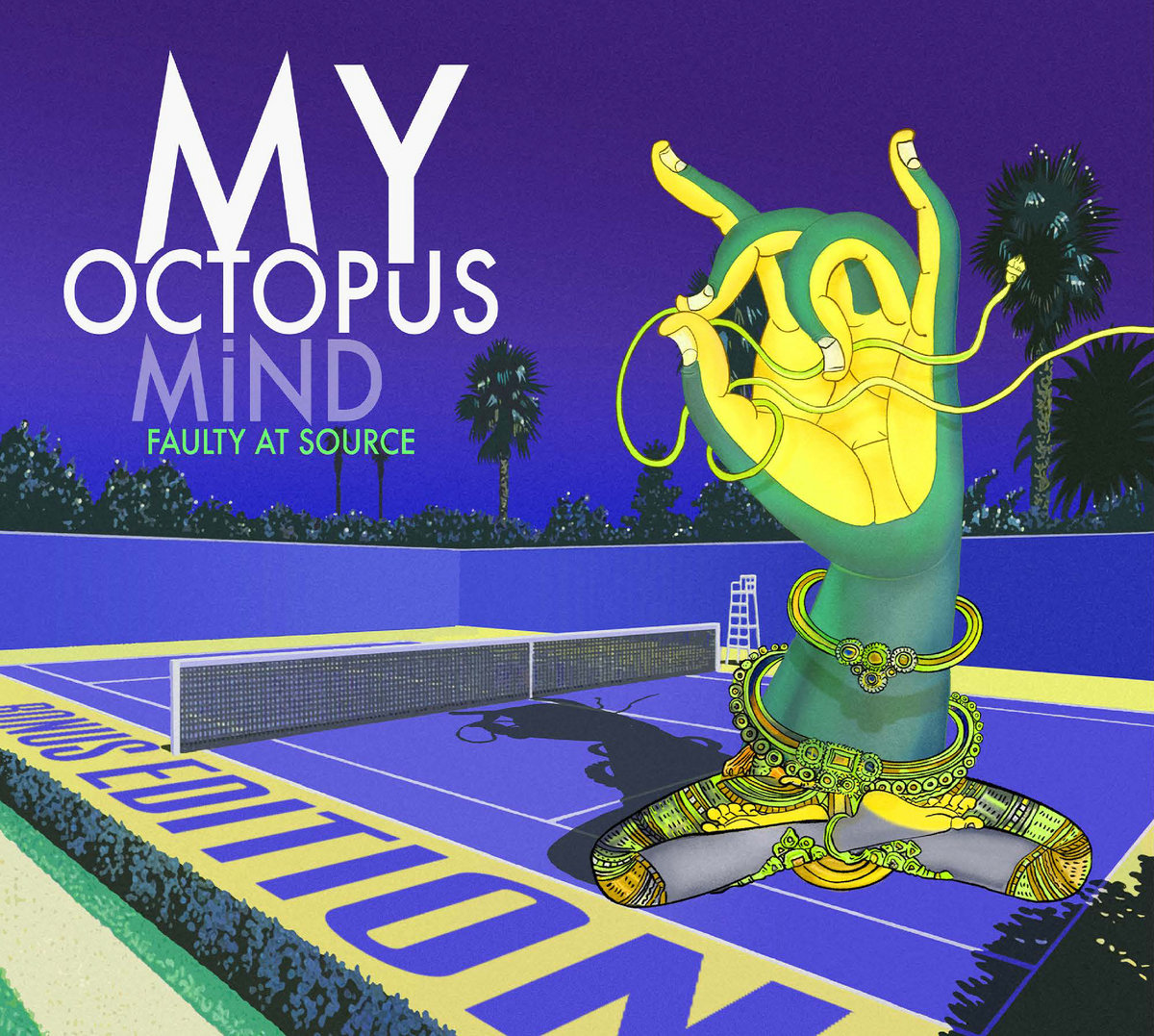
A reissue of their 2020 second LP, My Octopus Mind‘s Faulty at Source (Bonus Edition) adds two tracks — “Here My Rawr,” also released as a single, and “No Way Outta Here Alive” — for a CD release. Whichever edition one chooses to take on, the range of the Bristol-based psych trio of guitarist/vocalist/pianist Liam O’Connell, bassist Isaac Ellis and drummer Oliver Cocup (the latter two also credited with “rawrs,” which one assumes means backing vocals) is presented with all due absurdity but a strongly progressive presence, so that while “The Greatest Escape” works in its violin and viola guest appearances from Rebecca Shelley and Rowan Elliot as one of several tracks to do the same, the feeling isn’t superfluous where it otherwise might be. Traditional notions of aural heft come and go — the riffier and delightfully bass-fuzzed “No Way Outta Here Alive” has plenty — while “Buy My Book” and the later “Hindenburg” envision psychedelic noise rock and “Wandering Eye” (with Shelley on duet vocals as well) adds mathy quirk to the proceedings, making them that march harder to classify, that much more on-point as regards the apparent mission of the band, and that much more satisfying a listen. If you’re willing to get weird, My Octopus Mind are already there. For at least over two years now, it would seem.
Having become a duo since their debut, 2019’s Lux in Morte (review here), was released, Et Mors are no less dirgey or misery-laden across Lifeless Grey for halving their lineup. Wretched, sometimes melodic and almost universally deathly doom gruels out across the three extended originals following the shorter intro “Drastic Side Effects” — that’s the near-goth plod of “The Coffin of Regrets” (9:45), “Tritsch” (16:13), which surprises by growing into an atmosludge take on The Doors at their most minimalist and spacious before its own consumption resumes, and “Old Wizard of Odd” (10:29), which revels in extremity before its noisy finish and is the ‘heaviest’ inclusion for that — and a concluding cover of Bonnie “Prince” Billy‘s “I See a Darkness,” the title embodied in the open space within the sound of the song itself while showcasing a soulful clean vocal style that feels like an emerging distinguishing factor in the band’s sound. That is, a point of growth that will continue to grow and make them a stronger, more diverse band as it already does in their material here. I’d be interested to hear guitarist/vocalist Zakir Suleri and drummer/vocalist Albert Alisaug with an expansive production able to lean more into the emotive aspects of their songwriting, but as it is on Lifeless Grey, their sound is contrastingly vital despite the mostly crawling tempos and the unifying rawness of the aural setting in which these songs take place.
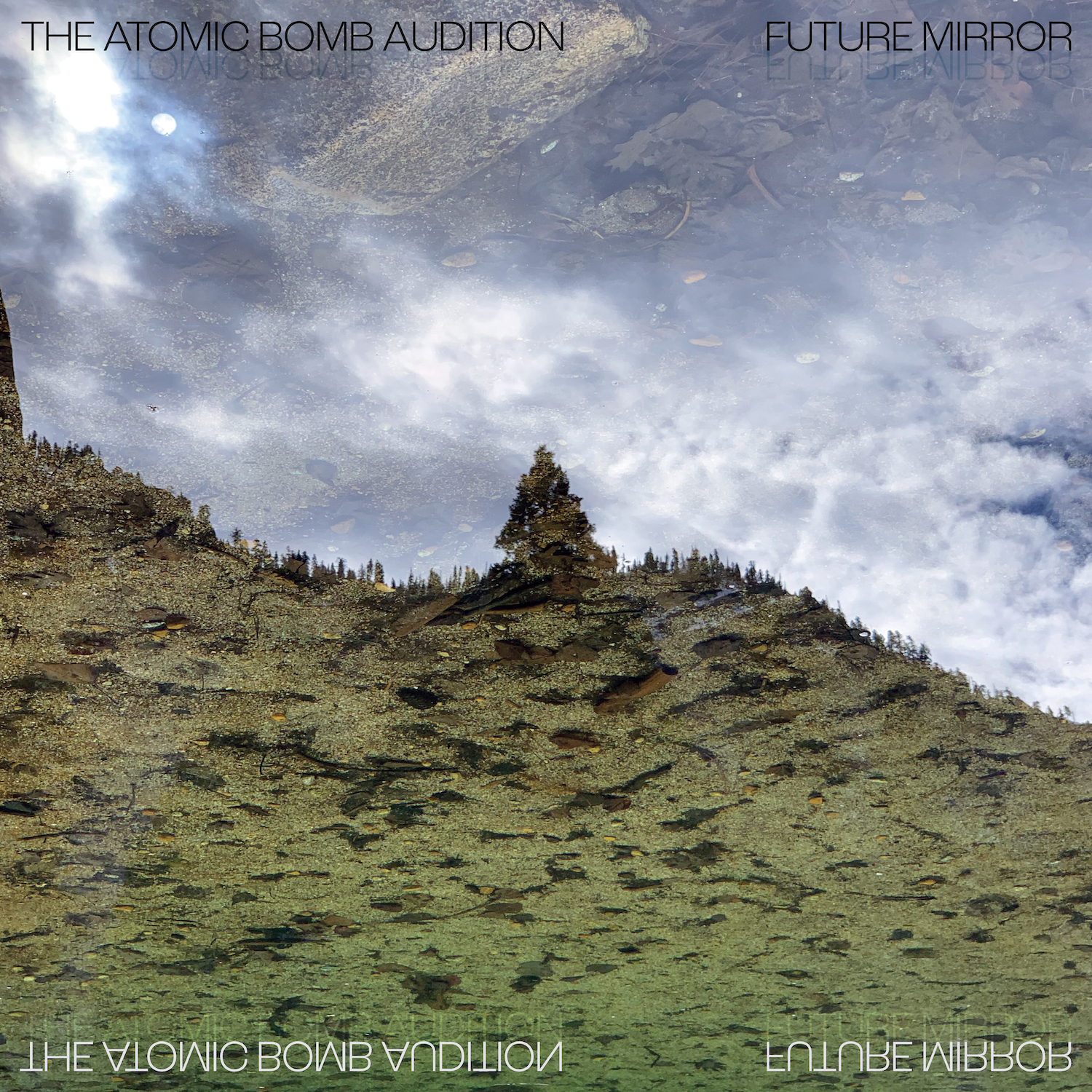
Future Mirror is The Atomic Bomb Audition‘s first release since 2014 and their first studio album since 2011’s Roots into the See (review here), the returning Oakland-based four-piece of guitarist/vocalist Alee Karin, bassist/vocalist Jason Hoopes, drummer Brian Gleeson and synthesist/engineer The Norman Conquest reigniting their take on pop-informed heavy, sometimes leaning toward post-rock float, sometimes offering a driving hook like in “Night Vision,” sometimes alternating between spacious and crushing as on “Haunted Houses,” which is as much Type O Negative and Katatonia darkness as the opener “Render” was blinding with its sweet falsetto melodies and crashing grandeur. Two interludes, “WNGTIROTSCHDB” and “…Spells” surround “Golden States, Pt. 1” — note there is no second part here — a brief-at-three-minutes-but-multi-movement instrumental, and the linear effect in hearing the album as whole is to create an ambient space between the three earlier shorter tracks and the two longer ones at the finish, and where “Dream Flood” might otherwise be a bridge between the two, the listening experience is only enhanced for the flourish. Future Mirror won’t be for everybody, as its nuance makes it harder to categorize and they wouldn’t be the first to suffer perils of the ‘band in-between,’ but by the time they get the payoff of closer “More Light,” tying the heft and melody together, The Atomic Bomb Audition have provided enough context to make their own kind of sense. Thus, a win.
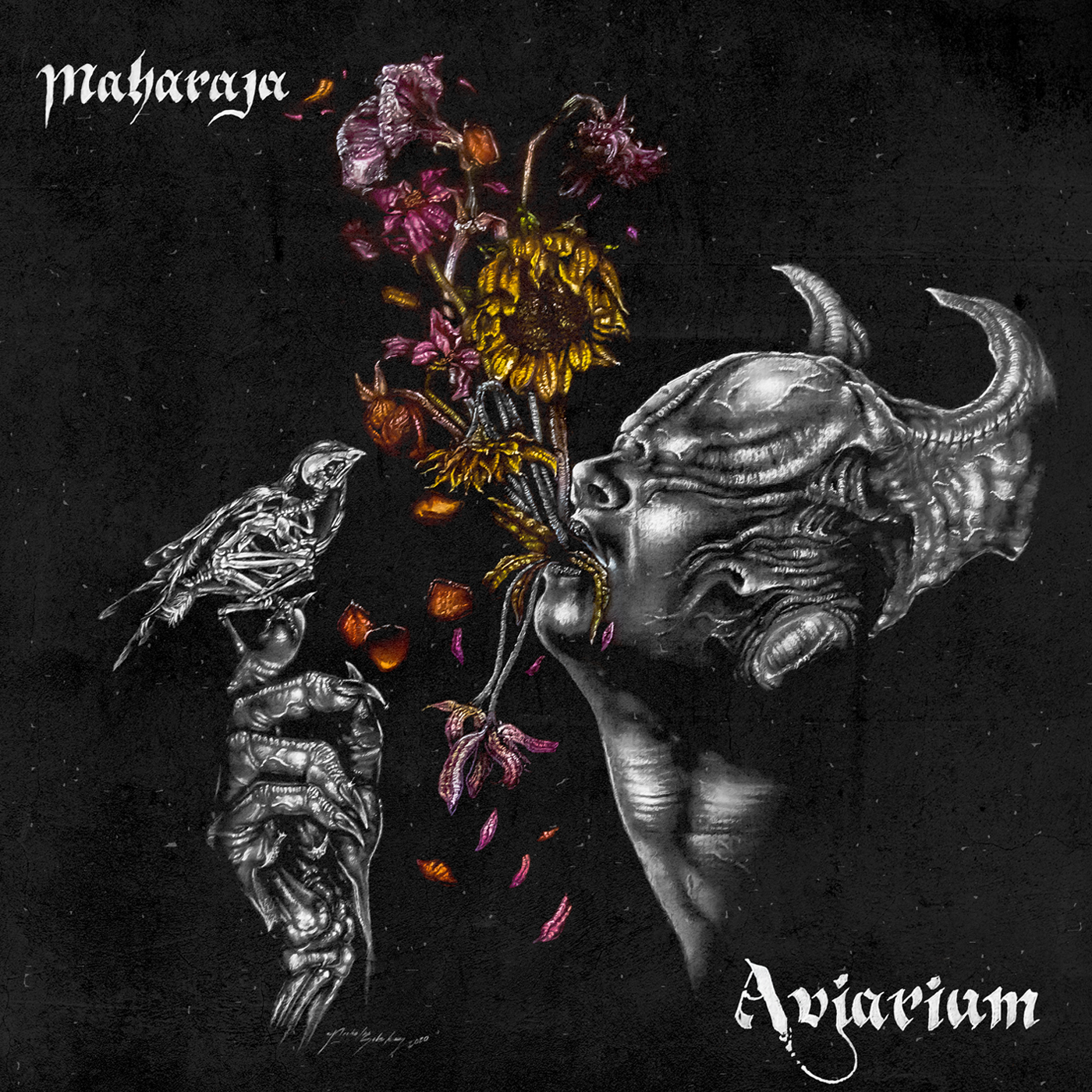
Maharaja‘s new EP, Aviarium (on Seeing Red), might be post-metal if one were to distill that microgenre away from its ultra-cerebral self-indulgence and keep only the parts of it most crushing. The downer perspective of the Ohio trio — guitarist Angus Burkhart, bassist Eric Bluebaum, drummer Zack Mangold, all of whom add vocals, as demonstrated in the shouty-then-noisy-then-both second track — is confirmed in the use of the suffix ‘-less’ in each of the four songs on the 24-minute outing, from opener “Hopeless” through “Soulless,” into the shorter, faster and more percussively intense “Lifeless” and at last arriving in the open with the engrossing roll of 10-minute finisher “Ballad of the Flightless Bird,” which makes a home for itself in more stoner-metal riffing and cleaner vocals but maintains the poise of execution that even the many and righteous drum fills of “Hopeless” couldn’t shake loose. It is not an easy or a smooth listen, but neither is it meant to be, and the ambience that comes out of the raw weight of Maharaja‘s tones as well as their subtle variation in style should be enough to bring on board those who’d dare take it on in the first place. Can be mean, but isn’t universally one thing or the other, and as a sampler of Maharaja‘s work it’s got me wanting to dig back to their 2017 Kali Yuga and find out what I missed.
Posted in Whathaveyou on October 24th, 2022 by JJ Koczan
I think a lot about the distant future, if humans have another few thousand years living in organized societies such as we do, and what that time will know about this one. That’s not just me saying I think we’re all savage idiots and the future will look upon us with condescension as primitives, but yeah, I do basically believe that. Stones of Babylon, obviously, look to the past from a distant future as well, but there’s a bit of respect in the largesse of tone from the Lisbon-based outfit, who released their debut, Hanging Gardens (review here), in 2019. That is, when I listen to “Pazuzu,” I don’t get the sense that the three-piece are infantilizing or dehumanizing the past in their slow-wah riffy rollout. I’m not sure what the Exorcist movies have to do with any of it, but sometimes a thing fits and you use it anyway.
The PR wire brings album info and the stream of “Pazuzu,” which is the first single. Dig in below:
Stones Of Babylon – Ishtar Gate
Release: 21 November 2022
Somewhere in Babylon, in a space almost lost in time, the eighth gate of the city was erected. Like any door, the Ishtar Gate symbolizes access to coded worlds, the closing of crossroads, or simply the thunderous force of power.
Traveling back in time to the ancient history and myths of Mesopotamia and the fertile crescent, Stones of Babylon continue where they left off with their 2019 debut album “Hanging Gardens”: they start from song titles with the aim that the listener can embark on a journey and, somehow, be taken to the places of an always mysterious past that fills the lines of history.
With the entry of Alexandre Mendes on the guitar, there is an evolution in continuity, where, without losing the thread of the path followed previously, they intend not only to cement the concept of the project but also to expand it either through the composition or through the loudness.
In this way, the six thick tracks that make up “Ishtar Gate”, intend to take the listener to feel an approach to the sounds of the Middle East in fusion with the densest and most massive riffs of the West, something like sonic mantras alternating between weight and subtlety and culminating in a psychedelic and travel atmosphere.
Recorded by Paulo Vieira at Brugo Studio, Lisbon, Portugal in August and September 2021 Mixed and Mastered by Paulo Vieira, October 2021 Artwork “Ishtar Gate” by Soares Artwork Thanks to Pawel Nowak, Pedro Lima and Rui Belchior, previous band members, for participation in the creation of “Anunnaki” (only available on CD and Digital versions)., “The Gate of Ishtar” and “Gilgamesh (…and Enkidu´s Demise)” tracks. All intros by Stones of Babylon, except Pazuzu´s intro taken from “Exorcist II: The Heretic”.
Tracklisting: 1. Gilgamesh (…and Enkidu’s demise) 2. Anunnaki 3. Pazuzu 4. The Gate of Ishtar 5. The Fall of Ur 6. Tigris & Euphrates
Stones Of Babylon are: Guitar – Alexandre Mendes Bass – João Medeiros Drums – Pedro Branco
Posted in Questionnaire on February 8th, 2022 by JJ Koczan
The Obelisk Questionnaire is a series of open questions intended to give the answerer an opportunity to explore these ideas and stories from their life as deeply as they choose. Answers can be short or long, and that reveals something in itself, but the most important factor is honesty.
Based on the Proust Questionnaire, the goal over time is to show a diverse range of perspectives as those who take part bring their own points of view to answering the same questions. To see all The Obelisk Questionnaire posts, click here.
Thank you for reading and thanks to all who participate.
The Obelisk Questionnaire: Rui Inácio of The Crazy Left Experience
—
How do you define what you do and how did you come to do it?
Being part of TCLE is having freedom to explore all the music textures, from poetry to painting from playing to dreaming.
Describe your first musical memory.
Listening to Bruce Springsteen in my godfather’s room when I was 3, and the drum solo part was so thundering and so powerful that it made me exhilarate.
Describe your best musical memory to date.
First Pearl Jam concert I attended in 1998 in Lisbon one of the best days of my life.
When was a time when a firmly held belief was tested?
Music wise when I saw that I was alone listening to ABBA.
Where do you feel artistic progression leads?
To freedom and to juggle with multiple knowledge in different arts form.
How do you define success?
It’s a personal voyage, for me having TCLE reaching its full potential and to have some people around the world recognizing it is enough.
What is something you have seen that you wish you hadn’t?
Violence.
Describe something you haven’t created yet that you’d like to create.
An album and book that describes both process and creation within TCLE.
What do you believe is the most essential function of art?
To spread Love.
Something non-musical that you’re looking forward to?
To see my two children to grow into beautiful human beings.
Posted in Questionnaire on March 1st, 2021 by JJ Koczan
The Obelisk Questionnaire is a series of open questions intended to give the answerer an opportunity to explore these ideas and stories from their life as deeply as they choose. Answers can be short or long, and that reveals something in itself, but the most important factor is honesty.
Based on the Proust Questionnaire, the goal over time is to show a diverse range of perspectives as those who take part bring their own points of view to answering the same questions. To see all The Obelisk Questionnaire posts, click here.
Thank you for reading and thanks to all who participate.
The Obelisk Questionnaire: Johnny Lee of Miss Lava
—
How do you define what you do and how did you come to do it?
My first art expression and my first roots were drawing. Since forever, I remember drawing and trying to replicate everything all the time. The more realistic or the closest to the original the best.
But as I grew up, I became a huge music fan and music turns out to be my favorite type of art, especially metal and rock music. I’ve learned most of my English by reading metal bands’ lyrics. I developed my drawing skills by drawing, countless times, all of Iron Maiden’s album covers, and by drawing every band logo I could.
Since a very early age, I sang along with all of my favorite metal bands of the ’80s and I started to sing and write lyrics on top of instrumental songs as well.
That was the starting point of everything, but in one-way or another, I’ve always wanted to become a singer and wanted to do something art related. And that’s what I’ve been doing ever since.
Nowadays, I work as a Creative Director in an advertising agency and I’m the singer of a Stoner Rock Band. I guess I could say “Mission accomplished”.
Describe your first musical memory.
When I was four or five years old, around 1980/81, I remember grabbing one of my mother’s tapes and playing it over and over. Side A – Pink Floyd “Dark Side of the Moon” and side B – Supertramp “Crime of The Century”. I guess that first impact of reproducing some music made me feel very powerful, like I had a superpower or something. In a way I think that feeling still lasts as I have become a music collector. I own more than 1,000 records and almost 1,500 CDs.
Describe your best musical memory to date.
In 1995 Megadeth and Corrosion of Conformity played in my hometown, Cascais in Lisbon, Portugal.
I was a big C.O.C. fan, I am still, and me and K. Rafaah (Miss Lava’s Guitarist) found Pepper Keenan and Woody Weatherman drinking some wine in a terrace in Cascais the night before the show. We invited them to a pool house bar where we used to hang.
Turns out we spent that night partying with Corrosion’s Pepper, Woody and Reed Mullin and Megadeth’s late Nick Menza. We drank, played some pool, talked about music all night and by the time we were so drunk, me and Pepper sang together, in the middle of the street, the song “Shelter” from the album Deliverance that they were promoting at the time.
On the next day, during the show, Reed pulled me from the crowd onto the stage to sing with them “Rather See You Dead” (Legionaire’s Disease Band cover) and before playing “Vote with a Bullet,” Pepper dedicated the song to us, me and Raffah.
I was 19 years old at the time, and I think nothing will ever top that for as long as I live. Epic!
When was a time when a firmly held belief was tested?
That is a tough one. I guess all the time. I try to be as straightforward, true and honest as I can, but honesty and truth most of the times are too hard to handle by others. Certainly, I compromise more than I should or want. I guess it’s a learning process.
Where do you feel artistic progression leads?
Hopefully will lead to better places, better times, freedom and deeper emotions.
For me, Art is a constant, shifting universe that stimulates my very own space and time.
It’s the way that I chose to live my life, to challenge my boundaries and I hope that I’ll continue to make something meaningful and different each time.
How do you define success?
I guess success is: to look back and being able to understand and appreciate how far we’ve come. Have no regrets. Feel good with the choices we’ve made and to be proud of our achievements. Success should put us in a good place and make us feel happy about the journey. But the most important thing about success is being able to share it with your friends, family and keep them all around you.
We can’t be successful all alone.
What is something you have seen that you wish you hadn’t?
Back in 1996 I went to a soccer match in Lisbon, Portugal. It was the Cup Final between my team, Sporting Portugal and our main rivals Benfica. During Benfica’s first goal celebration, one of Benfica’s supporters fired a rocket flare towards Sporting fans. I saw the rocket speeding my way, crossing from one point of the stadium to another, only a few meters above the players’ heads, when suddenly it changed direction and hits a peaceful man, next to me, in the throat and kills him on the spot (he was the father of two small children). I was just a few meters away. I remember seeing all the blood splashing from the man’s throat as the rocket was still burning inside him and I remember thinking that could have happened to me. Very sad memory.
Describe something you haven’t created yet that you’d like to create.
I would like to direct a music video for our band.
And I’ve never tried doing a sculpture. I think I would like to make a realistic one someday. Maybe an Ozzy or a Lemmy bust or even a Cristiano Ronaldo’s, to see if I can top the ridiculous one hahaha.
What do you believe is the most essential function of art?
Establishing communication with our emotions.
Something non-musical that you’re looking forward to?
Like I said before, I like do draw as realistic as I can. In the near future, I want to make a full detailed gigantic realistic painting of a foot plant, hahaha. Don’t know why? Probably it’s going to be the unfinished work at the end of my life.
Portuguese heavy rockers Miss Lava release their new album, Doom Machine, Jan. 15 on Small Stone and Kozmik Artifactz. The band’s fourth long-player and second through Small Stone behind 2016’s Sonic Debris (review here), it is an explosion of well-crafted, professional-sounding material that feels built for European heavy-fest stages. Your Desertfests, certainly SonicBlast, they’re already booked for a festival in Spain this March (which seems ambitious), and so on. It was, appropriately enough, recorded live, with Miguel “Veg” Marques at the helm of Generator Music Studios in Sintra. The energy with which the songs are delivered is only part of the album’s personality though, because the CD version comes with a whopping 15 tracks running a total of 56 minutes, as the returning four-piece of vocalist Johnny Lee, guitarist K. Raffah, bassist Ricardo Ferreira and drummer J. Garcia tear into one hook after the other, careening with desert-inspired purpose through “Fourth Dimension” and “In the Mire” at the outset like an all-grown-up Kyuss with the rest of the album that follows working in different stages set off by interludes, groups of one or two songs complemented by short pieces of varied atmosphere that lend breadth to the proceedings as a whole.
Most of those spacers are quick instrumentals. Guitar, bass, drums. “Magma,” the first of them, and “Karma” follow that pattern, while “Alpha” adopts a more mellow spirit and the last, “Terra” captures wave sounds and guitar noise ahead of the closing title-track, which is also the longest song on the outing at 6:58. The interludes bolster Doom Machine‘s flow and make it all the more immersive despite being largely based around straightforward craft of high grade verses and choruses, though certainly longer stretches like “Brotherhood of Eternal Love” (5;46), the Alice in Chains-style harmonized “The Fall” (6:31) and “Doom Machine” itself want nothing for atmosphere. “The Fall” is a highlight in that regard, but it contends with single-worthy cuts like the maddeningly catchy “Sleepy Warm” and the slower, more spacious “The Great Divide” nearby for that title, with the latter as the assumed end of the vinyl’s side A and, indeed, the split between the first half of the album and the second — not counting the bonus tracks. That’s not to mention a cut like “The Oracle,” later on, which singlehandedly shows how Miss Lava take cues from classic desert rock and turn them into something of their own all across Doom Machine as a whole. Maybe it’s safer not to talk about highlights.
Amid the many hooks, interludes and spot-on moves made throughout Doom Machine is the narrative of K. Raffah having lost a child after only a month and a half from birth. That brutal context underpins even the most uptempo of Miss Lava‘s songs here, and adds weight to already impactful pieces like “The Fall” and “In the Mire” earlier on, the melodies and momentum betraying little of what’s actually going on but remaining expressive nonetheless. One doesn’t want to call it a disconnect, but Doom Machine hardly sounds dragged down by grief or anything else as Miss Lava courses through. Even the bonus tracks, “God Feeds the Swine,” ‘Feel Surrea” and “Red Atlantis,” boast quality hooks — the last one of them especially so — so there is a balance of elements and themes at play throughout, and the band aren’t necessarily beholden to one or the other of them, as impossible as that might seem.
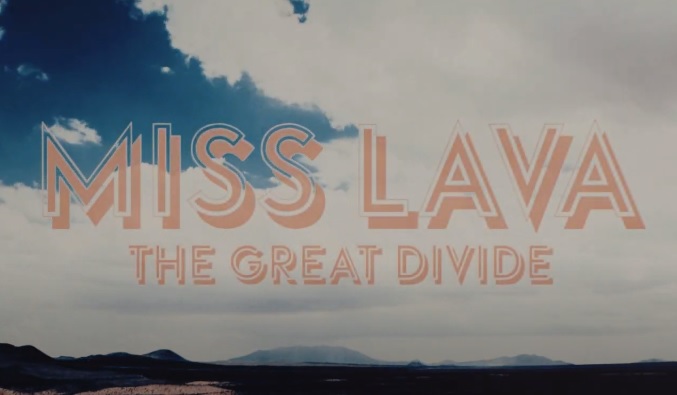
To wit, the video premiering below for “The Great Divide” takes a post-apocalyptic environmentalist stance, looking out at the world and seeing it being used and torn down by humanity as a whole. The clip was directly by José Dinis, who offers some comment on it below, along with that of Johnny Lee.
As always, I hope you enjoy:
Miss Lava, “The Great Divide” official video premiere
According to singer Johnny Lee, “‘The Great Divide’ is a euphemism for death, an apocalyptic vision for mankind. We keep destroying our planet and forgetting that when this ends, it ends for everyone.”
Director José Dinis reflects that this is “A concept story about an apocalyptic world, where an unhopeful man just tries to survive. As in real life, there is always a way out, a solution, a chance to live a more colourful life, no matter what.”
“The Great Divide” was filmed at Mina de São Domingos, a deserted open-pit mine in Alentejo, Portugal. The site is one of the volcanogenic massive sulfide ore deposits in the Iberian Pyrite Belt, which extends from the southern Portugal into Spain. It was the first place in Portugal to have electric lighting.
Posted in Whathaveyou on November 13th, 2020 by JJ Koczan
Issuing through Kozmik Artifactz and Small Stone, the impending Doom Machine full-length from Miss Lava will be the band’s first since 2016’s Sonic Debris (review here). The title, Doom Machine, doesn’t inspire much in considerations of individuality — it’s kind of a generic name for a record, band, song, riff, amp, heavy thing, etc. — but the album actually deals with some hard-hitting emotional content on the part of the group, and as one expects from Miss Lava well more than a decade into their tenure, they know exactly what they’re doing when it comes to songwriting and capturing a stage-ready energy in the studio.
Will there be stages for Miss Lava to support the record once it’s out? Hell if I know. Seems unlikely in January, but you know, maybe at some point, ever, they’ll get to tour again.
To preface Doom Machine‘s arrival, Miss Lava have a video up now for the opening track “Fourth Dimension,” and you can see that at the bottom of this post, following the PR wire info and this kickass cover art right here:
MISS LAVA: Lisbon Heavy Rock Unit To Release Doom Machine This January Via Small Stone / Kozmik Artifactz; “Fourth Dimension” Video Now Playing + Preorders Available
Lisbon’s premier heavy rockers MISS LAVA will release their long-awaited new full-length, Doom Machine, this January via Small stone.
The perfect soundtrack for the post-lockdown world, the band’s fourth album and follow-up to 2017’s Dominant Rush EP stands as their densest output to date doused in kaleidoscopic riff explorations and hypnotic interludes; a multi-textured sonic journey that’s at once deep, heavy, mesmerizing, and cathartic. Captured live at Generator Music Studios in Sintra, Portugal by Miguel “Veg” Marques, the record carries with it the warmth and soul of a band full of fresh vigor and perhaps the demons of these tumultuous times.
The record is loosely focused on the tragic death of guitarist K. Raffah’s baby son and the other members’ children born during the creative process. “Doom Machine is a very emotional experience for us…,” Raffah shares. “[My son] was only here for a month and a half, but his light was very bright. We feel his presence every time.” Thematically vocalist Johnny Lee adds, “This album reflects on how each one of us can breed and unleash our own self-destructive force, assembled to be part of a giant ‘Doom Machine.'”
In advance of the record’s release, today the band is pleased to unveil a video for first single, “Fourth Dimension,” noting, “this is a riff raff explosion that urges people to get out of the cave allegory they live in.”
Directed by José Dinis, view MISS LAVA’s “Fourth Dimension.”
Doom Machine will be released on CD and digitally via Small Stone with Kozmik Artifactz handling a limited vinyl edition. Find preorders atTHIS LOCATION.
Doom Machine Track Listing: 1. Fourth Dimension 2. In The Mire 3. Magma 4. Brotherhood Of Eternal Love 5. Sleepy Warm 6. The Great Divide 7. Karma 8. The Fall 9. Alpha 10. The Oracle 11. Terra 12. Doom Machine 13. God Feeds The Swine * 14. Feel Surreal * 15. Red Atlantis * ** Bonus tracks on CD and digital only
Doom Machine is the successor to MISS LAVA’s Dominant Rush EP (2017), Sonic Debris (2016), Red Supergiant (2013), and Blues For The Dangerous Miles (2009), as well as a limited edition self-titled blood red vinyl EP (2008).
Posted in Reviews on January 8th, 2020 by JJ Koczan
Welcome to Day Three of The Obelisk’s Winter 2020 Quarterly Review. It’s gonna be kind of a wild one. There’s a lot going on across this batch of 10 records, and it gets kind of weird — also, it doesn’t — so sit tight. It’ll be fun either way. At least I hope so. I’ll let you know when I’m finished writing. Ha.
Today we pass the halfway point on the road to 50 reviews by Friday. I think I’m feeling alright up to this point. It’s been a crunch behind the scenes, but it usually is and I’ve done this plenty of times now, so it’s not so bad. I always hold my breath before getting started, but once I’m in it, I rarely feel anymore overwhelmed than I might on any other given day. Which is still plenty, but you know, you make it work.
So let’s do that.
Quarterly Review #21-30:
Alcest, Spiritual Instinct
Perhaps unsurprisingly given the label’s modus in this regard as it’s picked up bands from the heavy underground over the last eight to 10 years — arguably a movement that began with Graveyard in 2012 — but Parisian post-black metal innovators Alcest make something of an aesthetic shift with their first outing for Nuclear Blast, Spiritual Instinct. Melody, of course, remains central to their purposes, but in the nine-minute side B opener “L’Île des Morts” as in its side A counterpart “Les Jardins de Minuit,” the subsequent “Protection” and “Sapphire” and even in the crescendo — glorious wash as it is — of the closing title-track, one can hear a sharper, decidedly metallic edge to the guitar and impact of the drums. That’s a turn from 2016’s Kodama (review here), which offered more of a conceptual progressivism, and of course the prior 2014 LP, Shelter (review here), which cast of metallic trappings almost entirely. Why the change? Who cares, it works, and they still have room for the cinematic keyboard-led drama of “Le Miroir” and plenty of the wistful emotionalism that’s been their hallmark since their debut in 2007. They’ve long since mastered their approach and Spiritual Instinct serves as another example of their being able to make their sound do whatever they want.
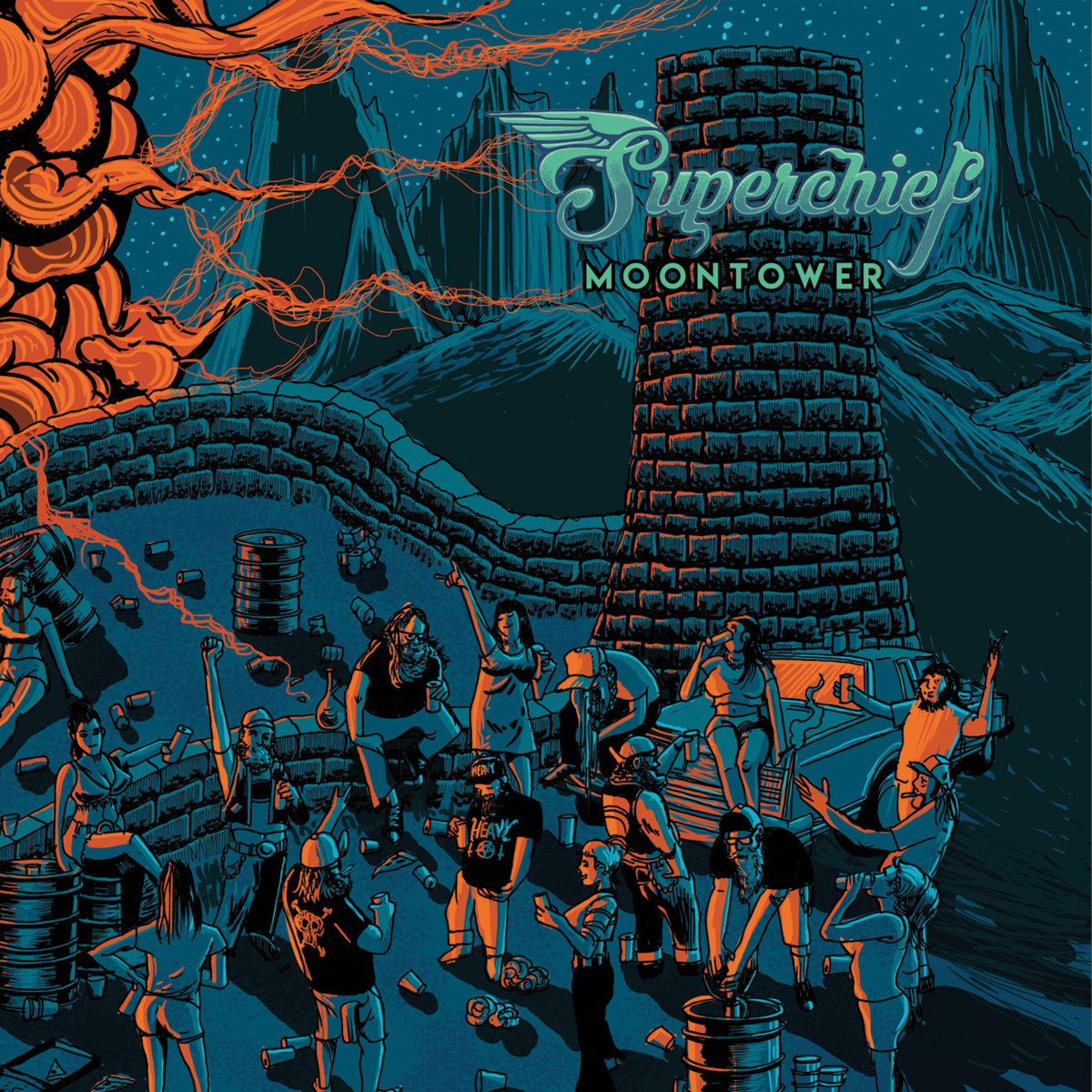
Four records and just about a decade deep into a tenure that began with the 2010 Rock Music EP (review here), Iowa heavy rockers Superchief have found ways to bring an inventiveness to what’s still an ostensibly straightforward approach. Moontower, named for a lookout point where — at least presuming from the album’s artwork — people tailgate and get drunk, finds the dudely five-piece no less embroiled in burl than they’ve ever been, but using samples and other elements in interesting ways as with the revving motor matching step with the drums at the start of “Barking Out at the Blood Moon” or keyboards in “Rock ‘n’ Roll War” filling out the breaks where the riffs take a step back. Handclaps early in “Beer Me Motherfucker” — as much post-“Introduction” mission statement for the LP as a whole as anything — set the party tone, and from the shaker on “The Approach” to the Southern tinged shred and organ on closer “Priority of the Summer,” a car speeding by at the finish, Superchief find ways to make each of their songs stand out from its surroundings. Then they pair that with choice riffery, pro-shop sound and hooks. Sure enough, it’s once again a winning formula and a distinct showing of personality and craft that still comports with classic heavy style.
Boston duo Test Meat are so utterly bullshit-free as to be almost intimidating. Guitarist/vocalist Darryl Shepard (Kind, Blackwolfgoat, Hackman, Milligram, etc.) and drummer Michael Nashawaty (Planetoid) dig into heavy grunge and noise rock influences across a 10-track/27-minute full-length that resounds with punker roots and an ethic of willful straightforwardness. It’s not that the music is so intense there would be no room for frills, it’s that the structures are so tight and so purposefully barebones that they’d be incongruous. And it’s not that Test Meat are writing half-hearted songs, either. Frankly, neither the quality of their material nor the sharpness of the sound they captured at New Alliance Studio with Alec Rodriguez would remotely lead one to believe so, and nothing with such stylistic clarity happens by mistake. This is a band with a mission, and Enjoy finds them bringing that mission to life with a complete lack of pretense. It’s a reminder of what made grunge so appealing in the first place some 30 years and an entire internet ago. Songs and performance. Yes.
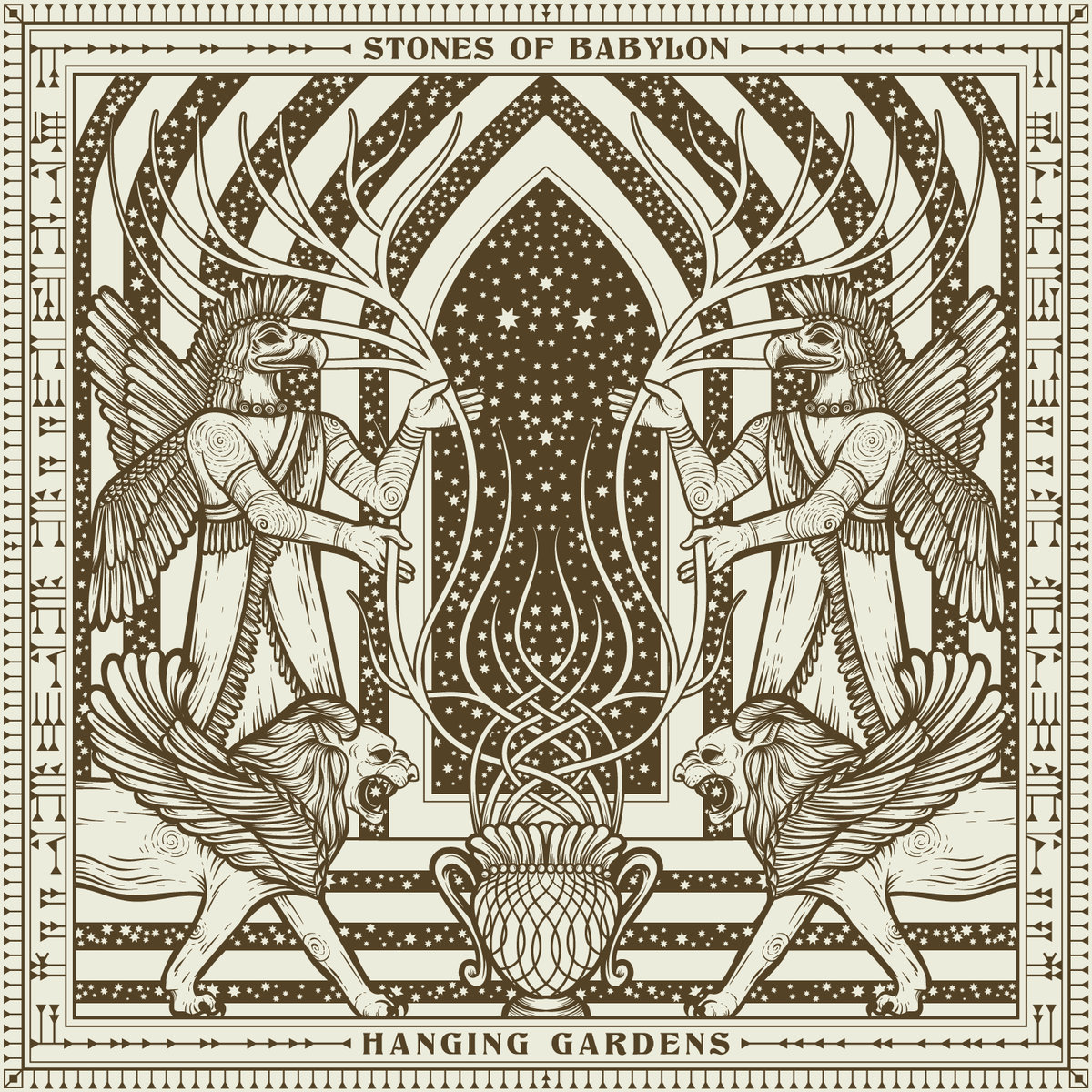
Following a 2018 live demo, Portuguese instrumental three-piece Stones of Babylon — guitarist Rui Belchior, bassist João Medeiros, drummer Pedro Branco — embark with a conceptualist intent on their debut full-length, Hanging Gardens, issued through Raging Planet. An opening sample in the leadoff title-track describing the hanging gardens of Babylon sets the stage for what the band goes on to describe with wordless atmospheres over the five-song/47-minute long-player, their vision of heavy psychedelia touched with a suitable Middle Eastern/North African influence in the initial unfolding of the meditative 11-minute “Coffea Arabica” or the winding lead work over the punchy low end of “Black Pig’s Secret Megalith.” But Hanging Gardens is still very much a heavy rock release, and its material showcases that in tone and mood, with volume changes and builds taking hold like that in centerpiece “Ziggurat,” which in its second half sets a march of distorted largesse nodding forth until its final crashout. They save the most drift for “Babylonia (The Deluge),” and if they’re finishing with the story of the flood, one can’t help but wonder what narrative course they might follow in a second record. On the other hand, if one comes out of Hanging Gardens trying to envision Stones of Babylon‘s future, then the debut would seem to have done its job, and so it has. There’s stylistic and tonal promise, and with the edge of storytelling, an opportunity for development of which one hopes they avail themselves.
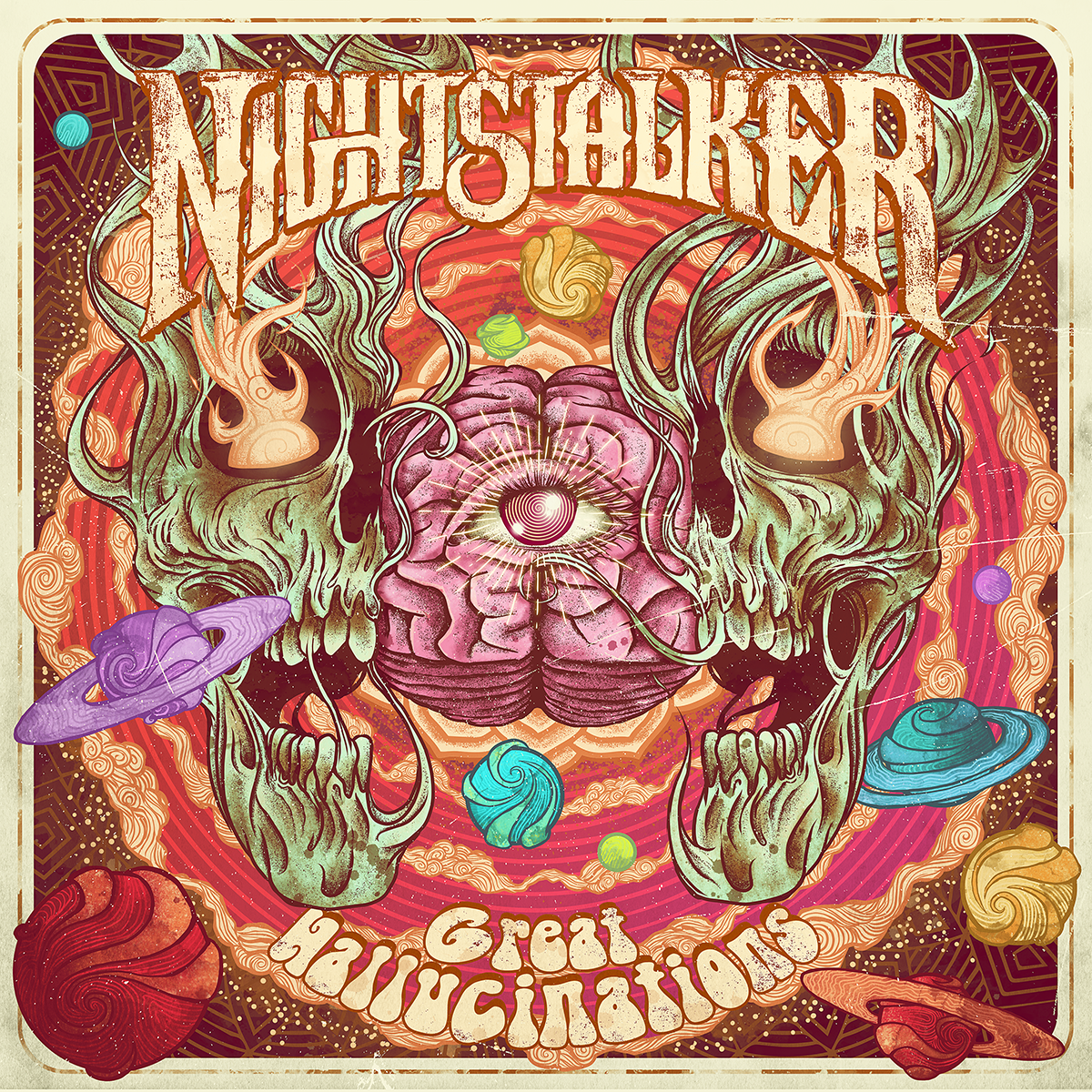
Frontman Argy and Greek heavy rock institution Nightstalker return with their eighth album in a quarter-century run, Great Hallucinations. Also their first LP for Heavy Psych Sounds after issuing 2016’s As Above So Below (review here) on Oak Island Records, it’s an up-to-par eight-track collection of catchy tracks marked out by psychedelic elements but underpinned by traditionalist structures, Argy‘s distinctive frontman presence, and an all-around unforced feeling of a mature, established band doing what they do. Not going through the motions in the sense of fulfilling some perceived obligation to stay on the road, but creating the songs they want to create in nothing less than the manner they want to create them. I won’t take away from the roll of “Seven out of Ten,” but as “Cursed” taps into a legacy of European heavy rock that runs from Dozer‘s turn of the century work — not to mention Nightstalker‘s own — to outfits today, it’s hard not to appreciate an act being so assured in what they do in terms of execution while actually doing it. In that way, Great Hallucinations is as refreshing as it is familiar.
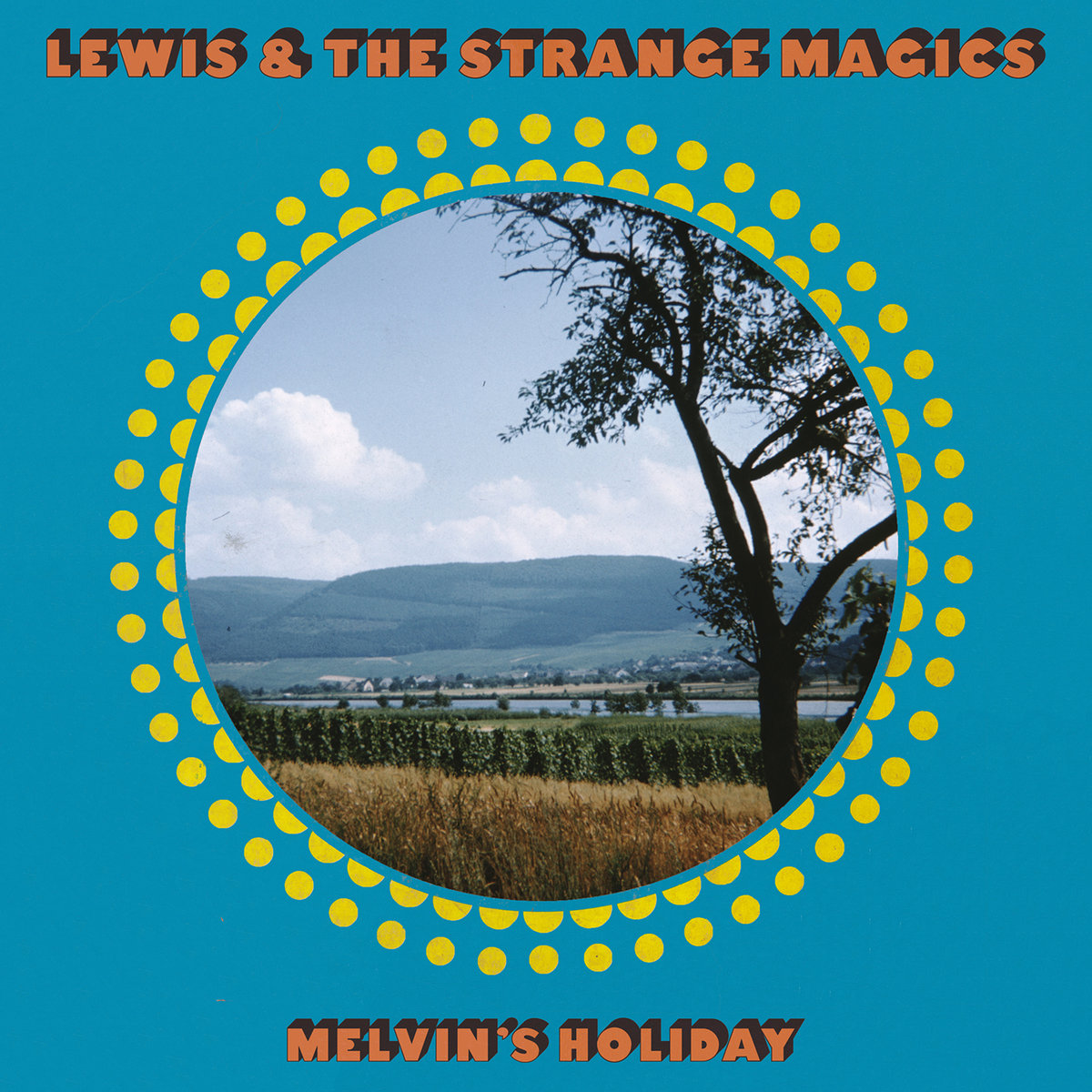
From their beginnings in garage doom and subsequent dive into exploitation/vamp psych, Barcelona’s Lewis and the Strange Magics put themselves in even weirder territory on their third album, Melvin’s Holiday, centering a story around the titular character whose life is in turmoil and so he goes on vacation. The sound of the band seems to do likewise, veering into ’70s lounge sleaze and island influences, toying with funky rhythms and keyboards amid catchy choruses across what still would have to be called an experimental 34-minute run. It is a concept album, to be sure, and one that comes through in its stylistic choices like the dreamy keyboards of the centerpiece “Carpet Sun” or the fuzzy stomp in “Sad in Paradise” and the percussion amid the Ween-sounding lead guitar buzz of “Lounge Decadence.” This could be Lewis and the Strange Magics working purposefully to cast off any and all expectation that might be placed on them, or it could just be a one-off whim, but there’s no question they pull off an impressive turn and carry the concept through in story and substance. When it comes to what they might do next time, the payoff of closer “Afternoon on the Sand” serves as one more demonstration that the band can do whatever the hell they want with their sound, so I’d expect them to do no less than precisely that.
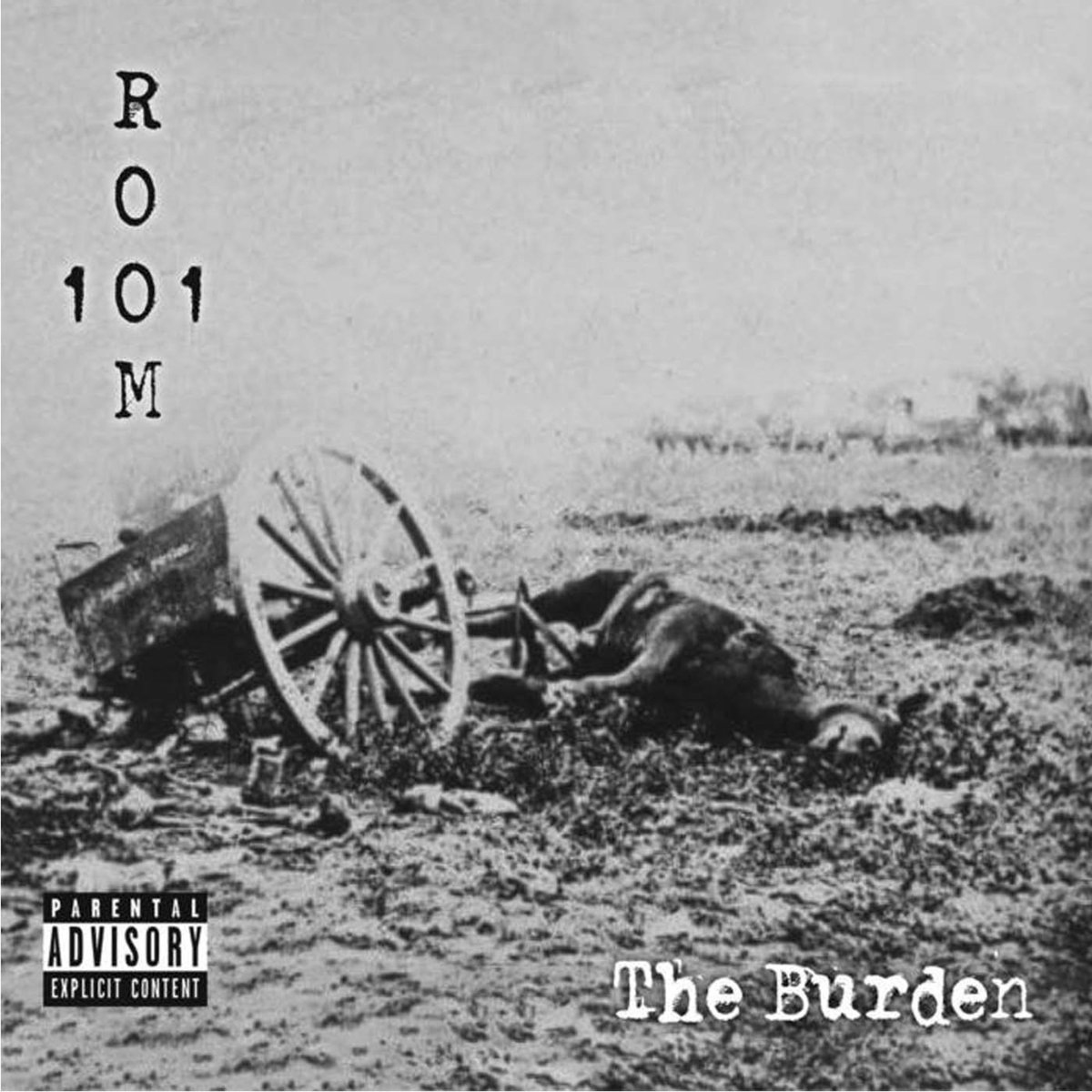
The debut EP from Lansing, Michigan, four-piece Room 101, called simply The Burden, would seem to take a scorched-earth approach to atmospheric sludge, setting their balance to exploring ambient textures and samples in pieces like “You Will Never Know Security” — which, sure enough, samples 1984 to recount the origin of the band’s name — and the brief “A Place to Bury Strangers,” while the churning “As the Crow Flies” and “Missing Rope” present an outright extremity that comes through in post-Godflesh vocal barks and a Through Silver in Blood-style intensity of churn and general approach. Yet I wouldn’t necessarily call Room 101 post-metal — at least not here. The solo on “Missing Rope” seems to draw from more traditional sources, and the manner in which the chugging in “Plague Dogs” caps with a sudden quick series of hits recalls grindcore’s pivoting brutality. One might hope all of these elements get fleshed out more over subsequent releases, but as a first outing, part of The Burden‘s promise is also drawn from the sheer rawness of its impact and the lack of compromise in its wrench of gut.
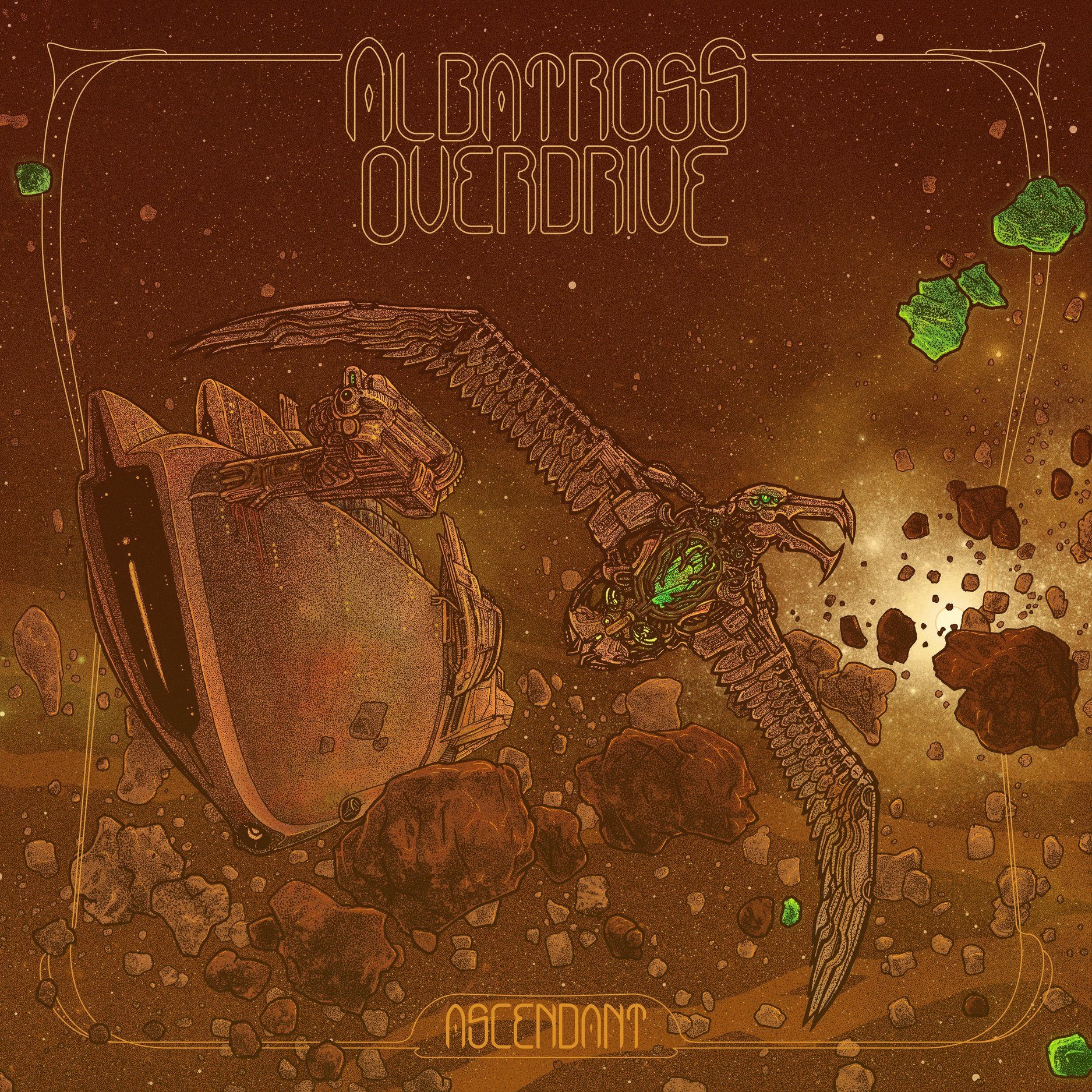
Albatross Overdrive‘s 2016 LP, Keep it Running (review here), ran 31 minutes. Their follow-up, Ascendant, reaches to 33, but loses two tracks in the doing. Clearly, one way or the other, this is a conscious ethic on the band’s part, and it tells you something about their approach to heavy rock as well. There’s nothing too fancy about it — even in “Come Get Some,” which is the longest song the band have ever written at 6:40 — and they are not an outfit to waste their time. Structures run from verse to chorus to verse to chorus led through by guitarists Andrew Luddy and Derek Phillips and Art Campos‘ gritty delivery with an expectedly solid underpinning from bassist Mark Abshire (ex-Fu Manchu) and drummer Rodney Peralta and songs like the careening title-track and the blues-licked shover “Undecided” are enough to give the impression that anything else would be superfluous. They’re not lacking style — because ’70s-meets-’90s-straight-ahead-heavy is, indeed, a style — but it’s the level of their craft that stands them out.
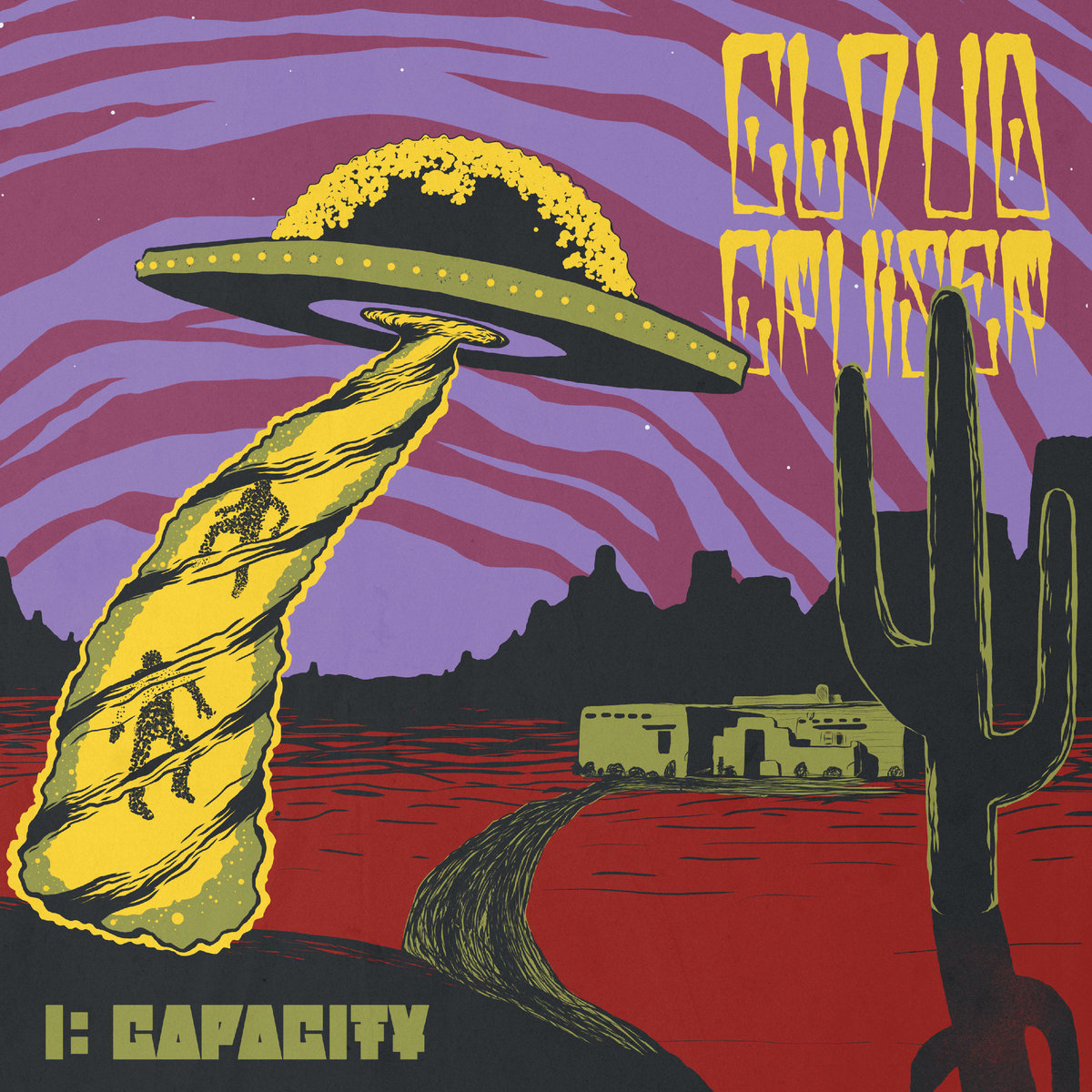
Kyuss-style riffing takes a beating at the hands of Chicago newcomers Cloud Cruiser — who are not to be confused with Denver’s Cloud Catcher — who make their debut on vinyl through Shuga Records with I: Capacity, giving an aggressive push to what’s commonly considered a more laid back sound. In tone and rhythm and general gruffness, they are a deceptively pointed outfit, with turns of broader groove like that at the outset of “575” that speak to more influences than simply those of the Cali desert. They start off catchy and familiar-if-reshaped, though, on “Transmission” and “Glow,” letting their tale of alien abduction unfold across the lyrics while setting up the shifts that “Gone” and “575” and the thick-boogie of “Orbitalclast” will make before the EP’s would-be-clean-but-for-all-that-dirt-it’s-kicked-up 23-minute run is through. The balance they present speaks to a background in metal, though if they’re fresh arrivals in this realm of heavy, you’d never know it from the lumbering finish they present. Sometimes you just gotta get mean to get your point across. It suits
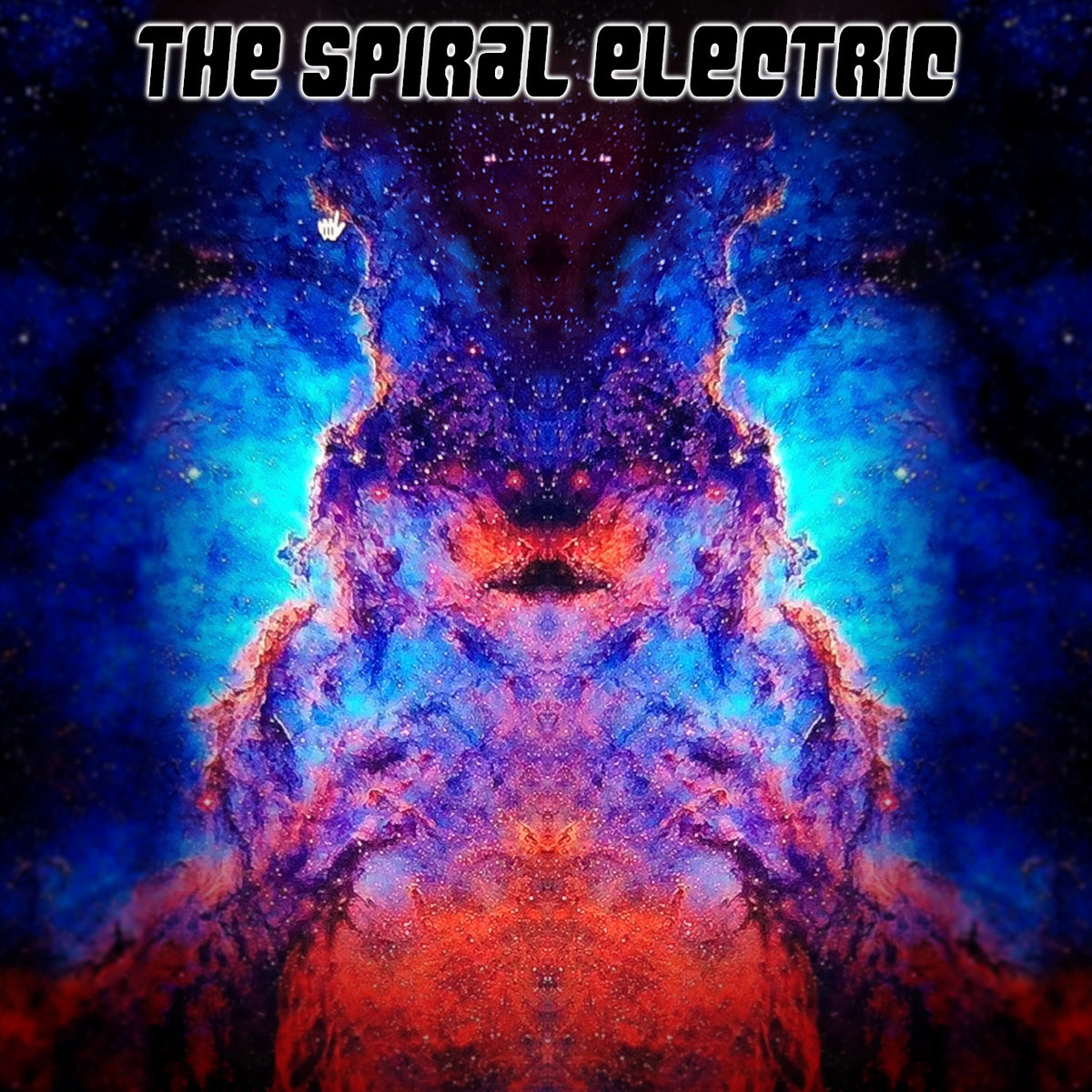
It is a progressive interpretation of fuzz ‘n’ buzz that San Francisco four-piece The Spiral Electric realize on their self-titled, self-released debut long-player, with recording and mixing by Dead Meadow‘s Steve Kille, the band — vocalist/synthesist/noisemaker/guitarist/percussionist/co-producer Clay Andrews, lead guitarist/backing vocalist Nicolas Percey, bassist Michael Summers and drummer Matias Drago — bridge the generally disparate realms of heavy psych and riffer heavy rock, giving a dreamy sensibility to “Marbles” with no less an organic vibe than they brought to the howling, attitudinal push of “No Bridge Left Unburned” earlier. They skillfully mess with the scale across the lengthy 14-track span, and thereby hold their audience for the duration in longer pieces like “The True Nature of Sacrifice” (8:24) as easily as they do in a series of three episodic interludes of noise, field recordings, synth, etc. This is a band ready, willing and able to space. the hell. out., and after listening to the record, you’d be a fool if you wanted to try. Not that they don’t have aspects to shore up or shifts that could be tightened and so on, but from ambition to fruition, it’s the kind of first record bands should aspire to make.