Quarterly Review: Jo Quail, Experiencia Tibetana, People of the Black Circle, Black Capricorn, SABOTØR, The Buzzards of Fuzz, Temple of Void, Anomalos Kosmos, Cauchemar, Seum
Posted in Reviews on July 8th, 2022 by JJ Koczan
Last day. Maybe I’m supposed to have some grand reflection as we hit 100 of 100 records for the Quarterly Review, but I’ll spare you. I’ve put a few records from the bunch on year-end lists, enjoyed a lot of music, wondered why a few people got in touch with me in the first place, and generally plotzed through to the best of my ability. Thanks as always to The Patient Mrs., through whom all things are possible, for facilitation.
And thank you for reading. I hope you’ve managed to find something killer in all this, but if not, there’s still today to go, so you’ve got time.
Next QR is probably early October, and you know what? I’ve already got records lined up for it. How insane is that?
Quarterly Review #91-100:
Jo Quail, The Cartographer
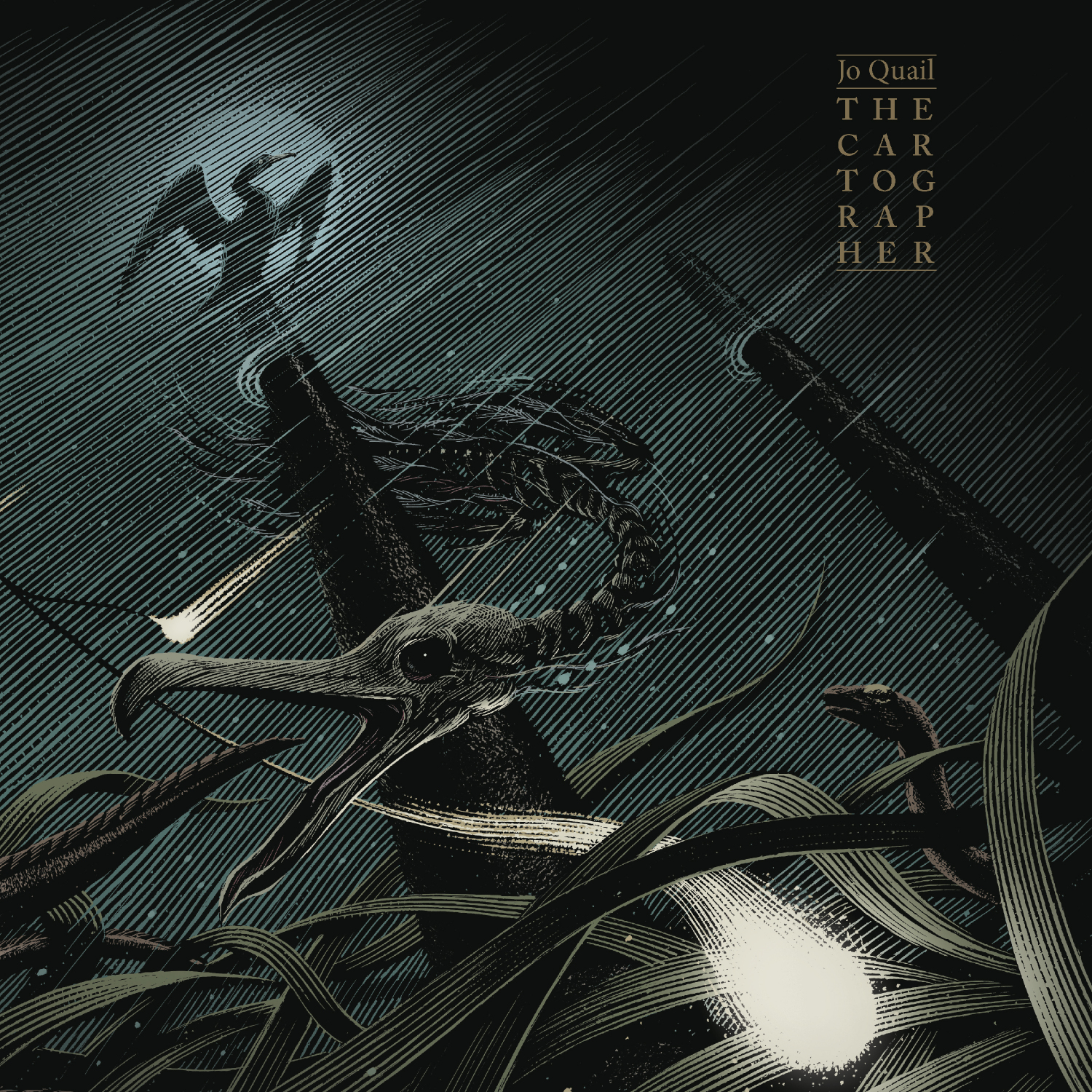
To list the personnel involved in Jo Quail‘s Roadburn-commissioned five-movement work The Cartographer would consume the rest of this review, so I won’t, but the London electric cellist is at the center of an orchestral experiment the stated purpose of which is to find the place where classical and heavy musics meet. Percussion thuds, there’s piano and electric violin and a whole bunch of trombones, and whatever that is making the depth-charge thud underneath “Movement 2,” some voices and narration at the start by Alice Krige, who once played the Borg Queen among many other roles. Though Quail composed The Cartographer for Roadburn — originally in 2020 — the recording isn’t captured on that stage, but is a studio LP, which lets each headphone-worthy nuance and tiny flash of this or that shine through. So is it heavy? Not really in any traditional sense, but of course that’s the point. Is SunnO))) heavy? Sure. It’s less about conforming to given notions of genre characteristics than bringing new ideas to them and saying this-can-be-that in the way that innovative art does, but heavy? Why the hell not? Think of it as mind-expansion, only classy.
—
Experiencia Tibetana, Vol. II
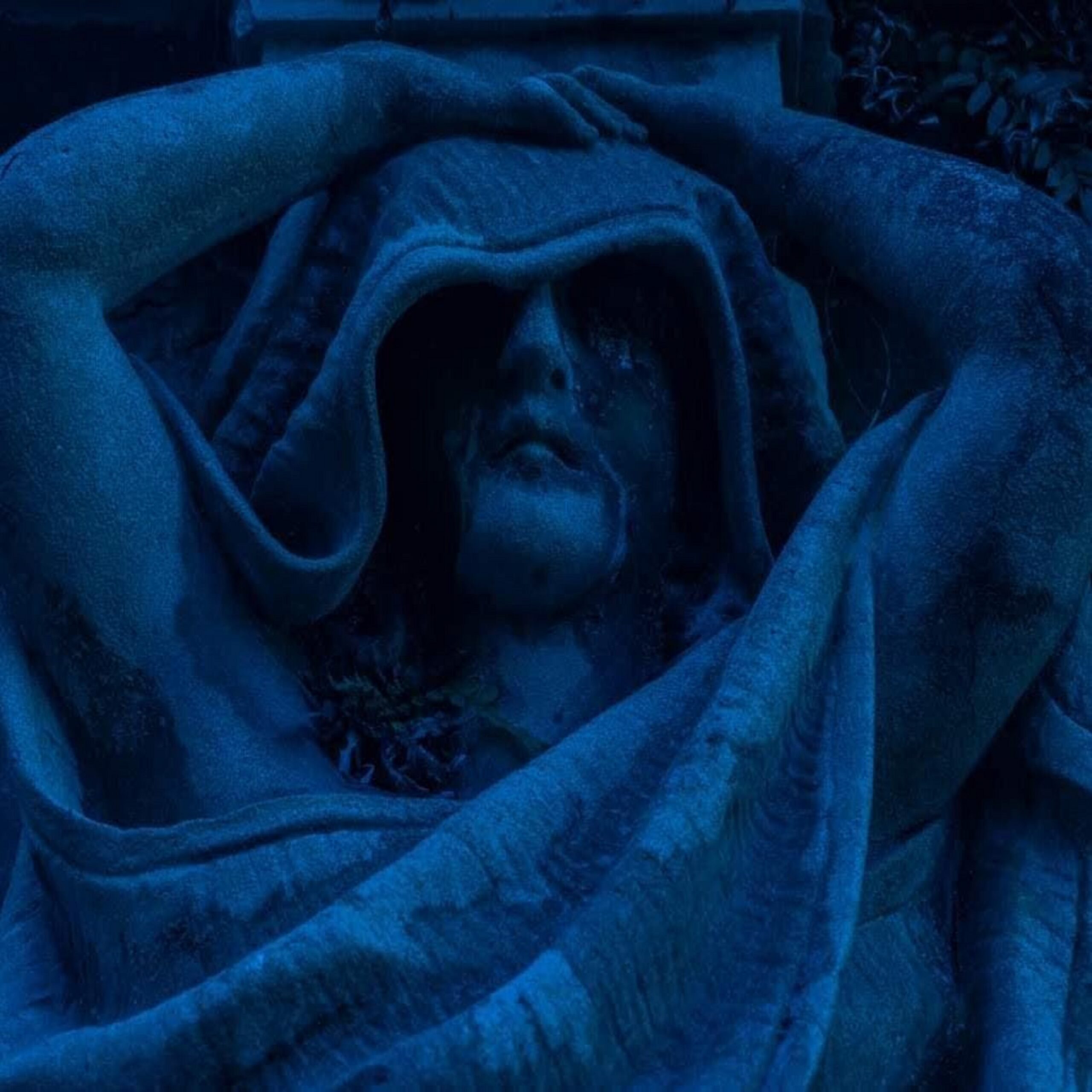
An aptly named second full-length from Buenos Aires trio Experiencia Tibetana greatly solidifies the band’s approach, which of course itself is utterly fluid. Having brought in Gaston Saccoia on drums, vocals and other percussion alongside guitarist/vocalist Walter Fernandez and bassist Leandro Moreno Vila since their recorded-in-2014-released-in-2020 debut, Vol. I (review here), the band take the methodology of meditative exploration from that album and pare it down to four wholly expansive processions, resonant in their patience and earthy psychedelic ritualizing. Each side of the 48-minute LP is comprised of a shorter track and a longer, and they’re arranged for maximum immersion as one climbs a presumably Tibetan mountain, going up and coming back down with the longest material in the middle, the 16-minute pair “Ciudad de latahes” and “(Desde el) Limbo” running in hypnotic succession with minimalism, noise wash, chanting, percussive cacophony, dead space, bass fuzz, spoken word and nearly anything else they want at their disposal. With “El delito espiritual I” (8:18) and the maybe-eBow(?) ghost howls of “El delito espiritual II” (7:19) on either side, Vol. II charts a way forward for the trio as they move into unknown aural reaches.
Experiencia Tibetana on Facebook
Experiencia Tibetana on Bandcamp
—
People of the Black Circle, People of the Black Circle

Not quite like anything else, Athenian conjurors People of the Black Circle plunge deep into horror/fantasy atmospheres, referencing H.P. Lovecraft and Robert Howard within the five tracks of their nonetheless concise 34-minute/five-track self-titled debut. Weighted in tone and mood, almost garage-doom in its production, the synth-backing of “Cimmeria” unfolds after the outward crunch of leadoff “Alchemy of Sorrow” — like Euro doom dramaturge transposed onto a bed of ’80s synths with Om-style bass — and from centerpiece “The Ghoul and the Seraph (Ghoul’s Song II)” through the bookending choral figures and either sampled or synthesized horns over the resolute chug of “Nyarlathotep” and more straight-ahead slow-motion push of closer “Ghosts in Agartha,” which swirls out a highlight solo after a wailing verse lets go and seems to drift away after its payoff for the album as an entirety. While in concept, People of the Black Circle‘s aesthetic isn’t necessarily anything new, there’s no denying the boundaries of dungeon synth and horror/garage doom are being transcended here, and that mixture feels like it’s being given a fresh perspective in these songs, even if the thematic is familiar. A mix of new and old, then? Maybe, but the new wins out decisively. In the parlance of our times, “following.”
People of the Black Circle on Facebook
Red Truth Productions on Bandcamp
—
Black Capricorn, Cult of Blood
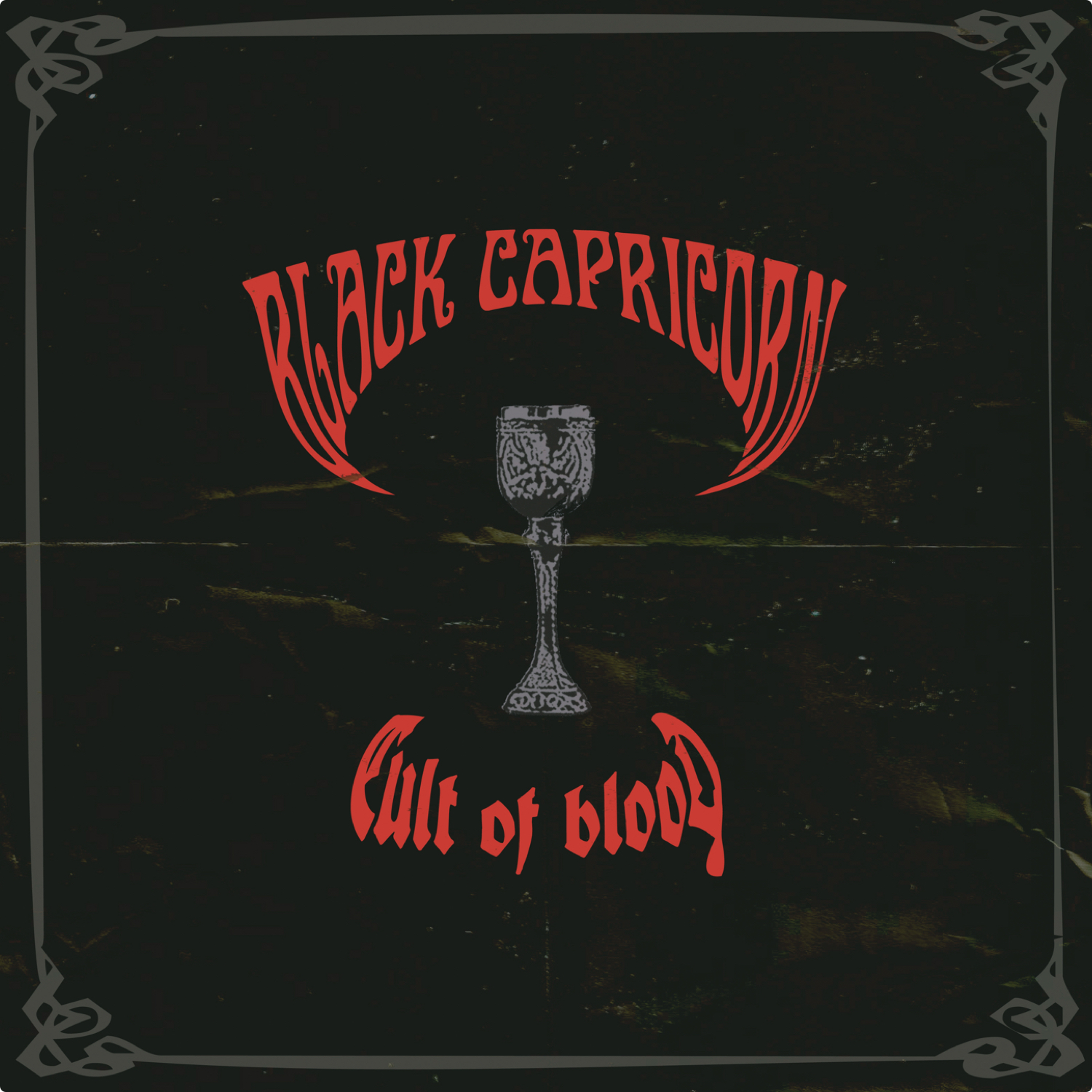
It always seems to be a full moon when Black Capricorn are playing, regardless of actual cloud cover or phase. The Sardinian trio of guitarist/vocalist Fabrizio Monni (also production; also in Ascia), bassist Virginia Pras and drummer Rachela Piras offer an awaited follow-up to their 2019 Solstice EP (discussed here). Though it’s their fifth full-length overall, it’s the second with this lineup of the band (first through Majestic Mountain), and it comes packed with references like the doomly “Worshipping the Bizarre Reverend” and “Snake of the Wizard” as distorted, cultish and willfully strange vibes persist across its 44-minute span. Doom. Even the out-there centerpiece kinda-interlude “Godsnake Djamballah” and the feedback-laced lurch-march of the nine-minute “Witch of Endor” have a cauldron-psych vibe coinciding with the largely riff-driven material, though, and it’s the differences between the songs that ultimately bring them together, closer “Uddadhaddar” going full-on ritualist with percussion and drone and chanting vocals as if to underscore the point. It’s been five years since they released Omega (review here), their most recent LP, and Cult of Blood wholly justifies the wait.
Majestic Mountain Records store
—
SABOTØR, Skyggekæmper
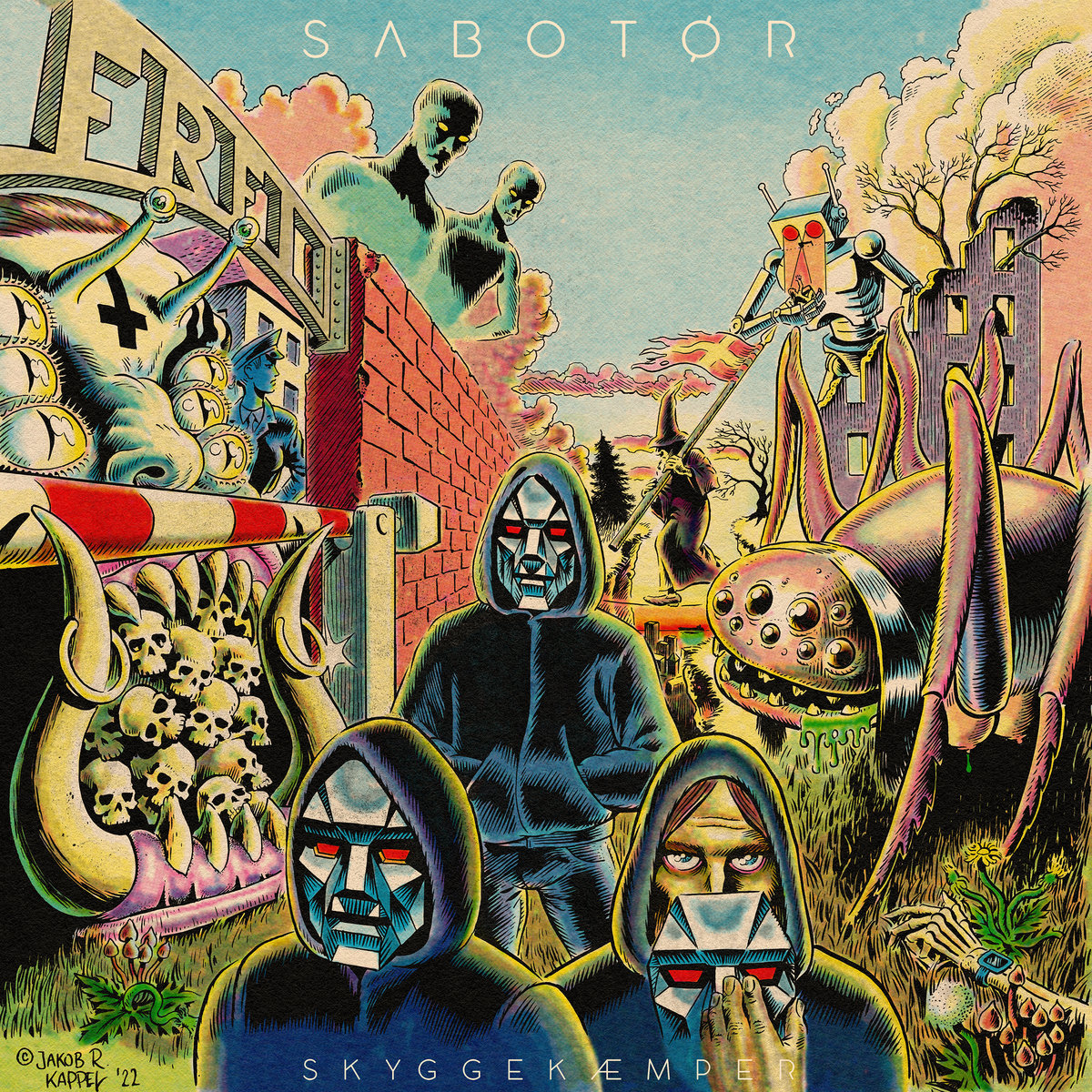
The Danish title Skyggekæmper translates to English as “shadow fighter,” and if punk-informed heavy rocking Aarhus three-piece SABOTØR mean it in a political context, then fair enough. I speak no Danish, but their past work and titles here like “2040-Planen” — seemingly a reference to Denmark’s clean energy initiative — the stomping, funky “Ro På, Danmark!” (‘calm down, Denmark’) and even the suitably over-the-top “King Diamond” seem to have speaking about Danishness (Danedom?) as an active element. Speaking of “active,” the energy throughout the nine-song/49-minute span of the record is palpable, and while they’re thoroughly in the post-Truckfighters fuzz rock dominion tonally, the slowdowns of “Edderkoppemor” and the closing title-track hit the brakes at least here and there in their longer runtimes and expand on the thrust of the earlier “Oprør!” and “Arbejde Gør Fri,” the start-stop riffing of which seems as much call to dance as a call to action — though, again, I say that as someone without any actual idea if it’s the latter — making the entire listening experience richer on the whole while remaining accessible despite linguistic or any other barriers to entry that might be perceived. To put it another way, you don’t have to be up on current issues facing Denmark to enjoy the songs, and if they make you want to be afterward, so much the better.
—
The Buzzards of Fuzz, The Buzzards of Fuzz
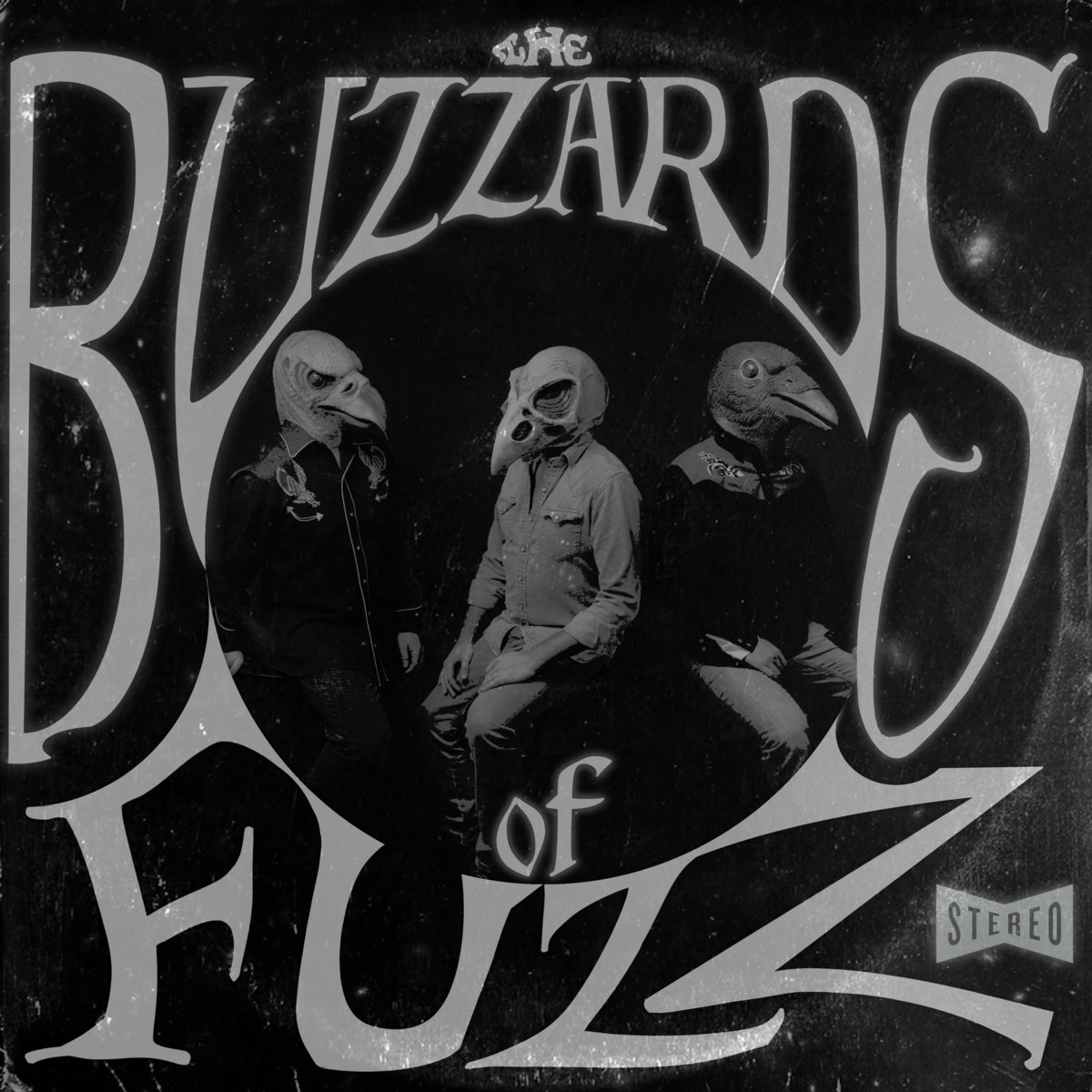
Vocalist/rhythm guitarist Van Bassman, lead guitarist/backing vocalist Benjamin J. Davidow and bassist/backing vocalist/percussionist Charles Wiles are The Buzzards of Fuzz. I’m not sure who that leaves as drummer on the Atlanta outfit’s self-titled Sept. 2021 debut LP — could be producer/engineer Kristofer Sampson, Paul Stephens and/or Nick Ogawa, who are all credited with “additional instrumentation” — and it could be nobody if they’re programmed, but one way or the other, The Buzzards of Fuzz sure sound like a complete band, from the trippin’-on-QOTSA vibe of “Tarantulove” and “Desert Drivin’ (No Radio)” (though actually it’s Kyuss alluded to in the lyrics of the latter) to the more languid psych pastoralia of “All in Your Head” and the spacious two minutes of “Burned My Tongue on the Sun,” the purposeful-feeling twist into Nirvana of “Mostly Harmless” and the nod to prior single “Lonely in Space” that is finale “Lonely in Space (Slight Return).” Sleek grooves, tight, hooky songwriting and at times a languid spirit that comes through no matter how fast they’re playing give The Buzzards of Fuzz, the album, a consistent mood across the 11 songs and 32 minutes that allows the delivery to play that much more of a role in making short pieces feel expansive.
The Buzzards of Fuzz on Facebook
The Buzzards of Fuzz on Bandcamp
—
Temple of Void, Summoning the Slayer
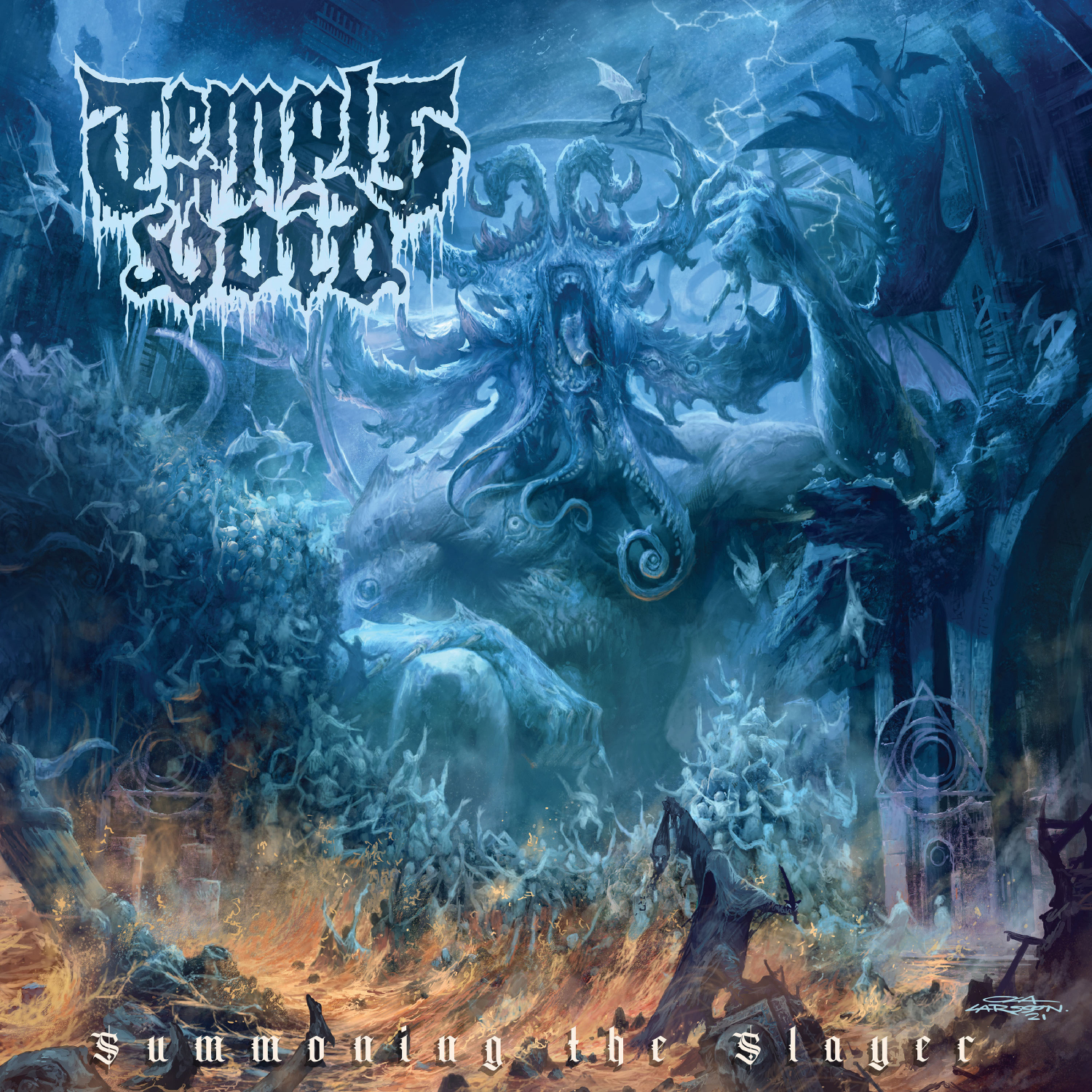
Crawl into Temple of Void‘s deathly depths and you may find yourself duly consumed. Their style is less outright doom than it used to be, but the Detroit extremist five-piece nonetheless temper their bludgeoning with a resilient amount of groove, and even at their fastest in songs like “Hex, Curse & Conjuration” and some of the more plundering moments in “A Sequence of Rot” just prior, the weight behind their aural violence remains a major factor. The keys in “Deathtouch,” which follows down-you-go opener “Behind the Eye” and leads into “Engulfed” branches out the band’s sound with keyboards (or guitar-as-keyboards, anyway) and a wider breadth of atmosphere than they’ve enjoyed previously — “Engulfed” seems to touch on Type O Negative-style tonality as it chugs into its midsection — and the concluding “Dissolution” introduces a quieter, entirely-clean approach for just under three key-string-laced minutes that Temple of Void have legitimately never shown before. Seems doubtful they’ll take that as far as Opeth in putting out Damnation — though that’s just crazy enough to work — but it shows that as Temple of Void move toward the 10-year mark, their progression has not abated whatsoever. And they still kill, so no worries there.
—
Anomalos Kosmos, Mornin Loopaz
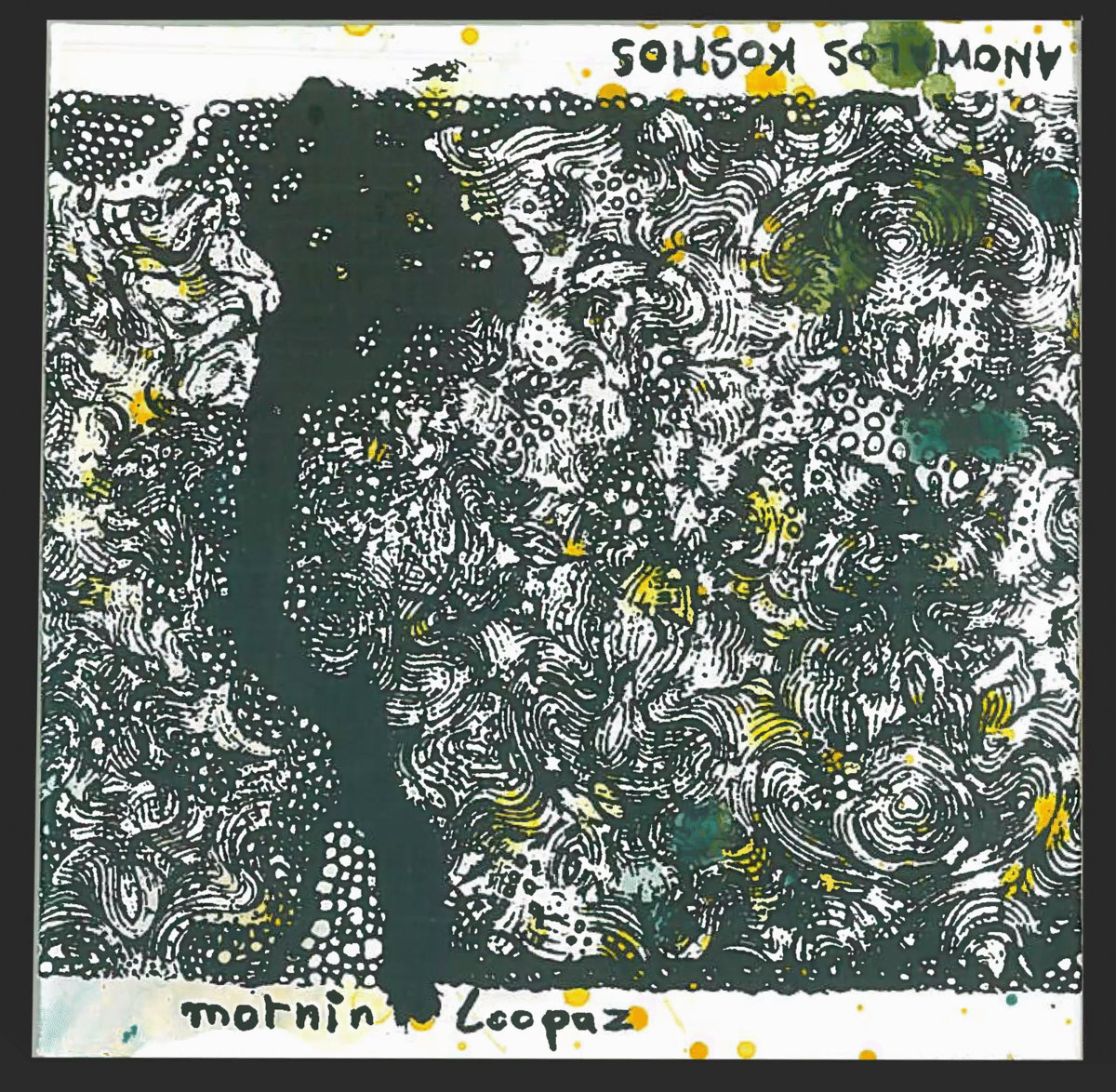
Psych jazz, instrumental save for some found voice samples which, if you were listening on headphones out in the wild, say, might have you wondering if you’re missing the announcement for your train at the station. Based in Thessaloniki, Greece, Anomalos Kosmos brim with experimentalist urgency on the half-hour of Mornin Loopaz, the seven tracks of which are titled playing off the days of the week — “Meinday,” “Chooseday,” “Whensday,” etc. — but which embark each on their own explorations of the outer reaches of far out. The longest of the bunch is “Thirstday” at just over five minutes, and at 30 minutes one could hardly accuse them of overstaying their welcome. Instead, the shimmering tone, fluid tempos and unpredictable nature of their style make for a thrilling listen, “Thirstday” remaining vital even as it spaces out and “Friedday” picking up directly from there with a ready sense of relief. They spend the weekend krautrocking in “Shatterday” and managing to squeeze a drum solo in before the rushing Mediterranean-proggy end of “Sinday,” the crowd noise that follows leaving one wondering if there aren’t more subversive messages being delivered beneath the heady exterior. In any case, this is a band from a place where the sun shines brightly, and the music stands as proof. Get weird and enjoy.
—
Cauchemar, Rosa Mystica
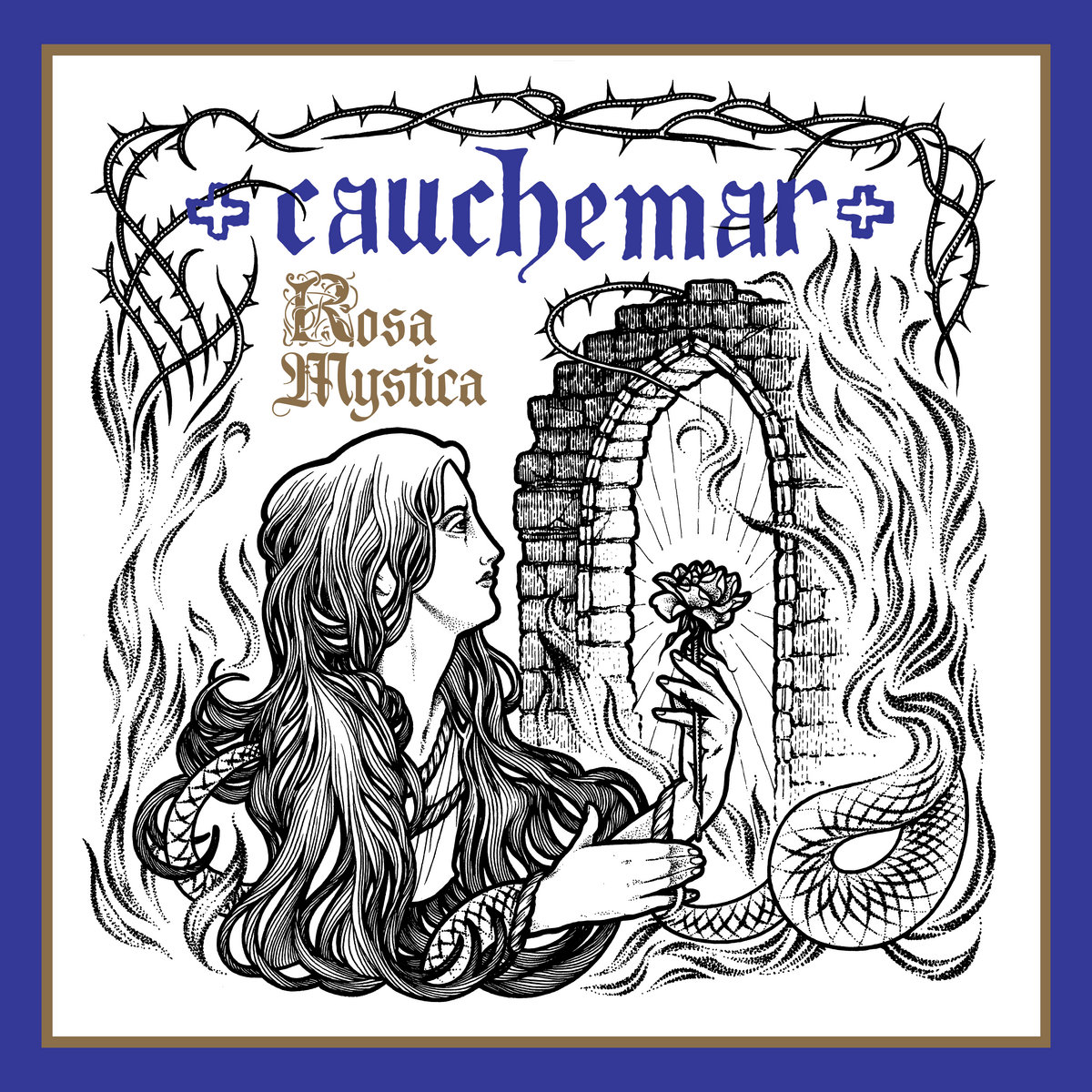
This third full-length from Quebec-based doom outfit Cauchemar brings the band past their 15th anniversary and makes a bed for itself in traditionalist metallurgy, running currents of NWOBHM running through opener “Jour de colère” and “Rouge sang” while “Danger de nuit” takes a more hard rock approach and the penultimate roller “Volcan” feels more thoroughly Sabbathian. With eight songs presumably arranged four per vinyl side, there’s a feeling of symmetry as “Le tombeau de l’aube” tempts Motörhead demons and answers back with wilful contradiction the late-’70s/early-’80s groove that comes late in “Notre-Dame-sous-Terre.” Closer “La sorcière” tolls its bells presumably for thee as the lead guitar looks toward Pentagram and vocalist Annick Giroux smoothly layers in harmony lines before the church organ carries the way out. Classic in its overarching intentions, the songs nonetheless belong to Cauchemar exclusively, and speak to the dead with a vibrancy that avoids the trappings of cultism while working to some of its strengths in atmosphere, sounding oldschool without being tired, retro or any more derivative than it wants to be. No argument here, it’s metal for rockers, doom for doomers, riffs for the converted or those willing to be. I haven’t looked to see if they have patches yet, but I’d buy one if they do.
Temple of Mystery Records website
—
Seum, Blueberry Cash
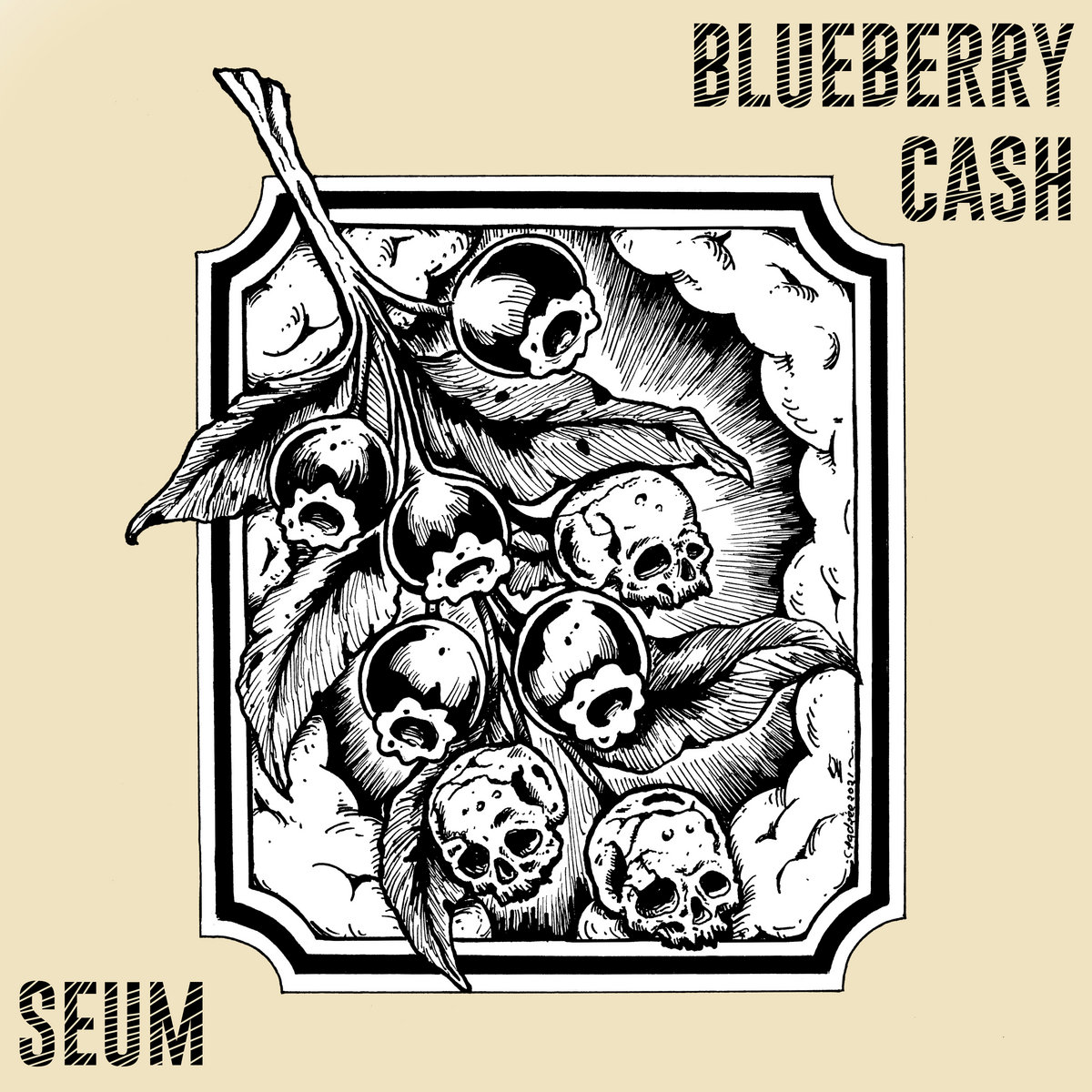
If you ever wanted to hear Weedeater or Dopethrone hand you your ass with Sons of Otis-worthy tones, Seum‘s Blueberry Cash has your back. The no-guitar-all-bass-and-drums-and-screams Montreal three-piece are just as crusty and weedian as you like, and in “Blueberry Cash,” “John Flag” and the seven-minute “Hairy Muff,” they reinforce sludge extremity with all that extra low end as if to remind the universe where the idea of music being heavy in the first place comes from. Grooves are vital and deathly, produced with just enough clarity to come through laced with what feels like extra nastiness, and “John Flag”‘s blues verse opens into a chasm of a chorus, waiting with sharpened teeth. Rounding out, “Hairy Muff” is a take on a song by vocalist Gaspar‘s prior band, Lord Humungus, and it’s drawn out into a plodding homage to liberation, pubes and the ability of sludge to feel like it’s got its hands on either side of your face and is pressing them together as hard as it can. These guys are a treasure, I mean that, and I don’t care what genre you want to tag it as being or how brutal and skinpeeling they want to make it, something with this much fuckall will always be punk rock in my mind.
—