Gothenburg’s Terra Black will release their second album, Mirage, on Sept. 18 through Bonebag Records. A video for the first single “In Stone” premieres below. It is their second full-length following All Descend (review here), which was self-released in ’23 and picked up by Bonebag for broader distribution the next year, and it presents itself with an expanded take on stoner idolatry as opening track “The Gathering” goes from Sleep-style here’s-the-tone-go-live-in-it strum and slowed-down early-Tool chug while building into a march that grows broader and more righteous as it goes; the album itself operating not dissimilarly across its eight songs and 43 minutes. The subsequent “Guayota” builds on the opener, harnessing a Monolordian nod offset and complemented by the calm and melodic vocals, not quite soothing like ‘oh you just got run over by a very heavy riff are you okay?’ but brooding with a subtle grunge seethe, adding to the atmosphere ahead of the quiet stretch later in the second half of the song. If there’s a template — no, there isn’t.
At least it doesn’t feel that way, and that very much becomes a strength in their sound. Instead, Terra Black seem to be offering a fresh and exploratory take on modern-style capital-‘h’ Heavy, and ambience is part of it, as the obscure-spoken-word-topped “Thorn” soon shows in rounding out the presumed finish of side A, but is also palpable in “Pareidolia” just before, which is a build over the course of its first minute and comes to crush with due bassy flow, takes a quick breather, then returns like in the meme, vocals reaching out from deeper in the mix but cutting through effectively and hinting toward the more complex melodic take that surfaces in Mirage‘s back half in pieces like the aforementioned “In Stone” and “Ruins” ahead of “In Stars,” which closes. I know I’m jumping around a bit, and I know the record’s not out for two more months, but as side B works shortest-to-longest with opener “Maze” following “Thorn” as the most uptempo moment on offer — a hooky, garage-tinged swing, psychmaxxing with a swirl of guitar following its lumbering bridge, feeling lush in the vocals in a way that very much works, low end punching through behind; a preface — the palette expands accordingly.
Intersecting vocal, sometimes-duet lines top “In Stone” as the bass that “Maze” heralded comes forward early over steady hi-hat timekeeping, and there’s another build, but Terra Black‘s patience isn’t to be discounted. It’s not until after three minutes into the total 4:49 that they hit into full volume/tonality, and the sense of dwelling remains even as they roll out the crescendo soon enough to thud to its finish of residual guitar, but while it doesn’t take long in Earth minutes, they’re occupying a deeper plane. Both “Ruins” and “In Stars” top six minutes (the latter is the longest inclusion on the album at 6:46), and “Ruins” brings morose post-Electric Wizard plod while expanding the dual-vocal ideology of “In Stone” and subtly moving at a decent clip. The basic level of impact — looking at you, kickdrum — isn’t to be taken for granted, as when the drums drop out to leave the vocals and guitar at the end, the difference is stark, the breathy voices giving over to the guitar and maybe keys at the outset of “In Stars,” which feels more open than crushing and gives due reach in melody to top off what Terra Black have already accomplished in that regard.
Don’t mistake, the finale is plenty, plenty heavy, and broadly speaking, Mirage brings enough riffs for the whole class to chew on, but the way they capture a sense of spaciousness in “In Stars” also feels like a departure that “In Stone” and “Ruins” were pushing toward — a realization as much as a culmination. It gorgeous, heavy, complex, immersive, and given its due payoff, making Mirage feel all the more complete while giving a forward-looking impression at the finish as if to say the best is yet to come. And so it may be, but right now — or at least in September — Terra Black find nuance and expression in weighted atmospheres and thoughtfully crafted, slow-rolling churn. They are not easy to tag in terms of style, and that only makes me appreciate the record more.
You’ll find the clip for “In Stone” on the player below, followed by more info from the PR wire.
Following their acclaimed debut and recent signing to Bonebag Records, Gothenburg occult rock collective Terra Black return with their haunting new single, ‘In Stone’, the first offering from their forthcoming album, Mirage, due for release on 18th September.
Steeped in ancient mystery and crushing atmosphere, ‘In Stone’ explores the unsettling pull of forgotten worlds and the unseen forces that continue to shape the present. The song evokes the feeling of being trapped within something timeless – a world that should have ended long ago yet still refuses to release its grip.
“‘In Stone’ is about the ominous threat of the hidden and otherworldly,” explains the band. “It’s being stuck in something ancient, like you’re part of a world that already ended a long time ago, but it’s still not finished with you. Old worlds, old beliefs, and everything beneath the surface that refuses to disappear. Forever merged in stone.”
Written and recorded over the course of three years, Mirage is Terra Black’s most ambitious and immersive work to date. Travelling from roots buried deep beneath the earth, through the ruins of forgotten civilizations and into the silence of space, the album explores shifting states of existence where reality, memory and illusion become increasingly difficult to separate.
Recorded live by the band in Gothenburg, Mirage captures the raw immediacy of Terra Black’s performances. Rather than polishing away imperfections, the band embraced natural room ambience and microphone bleed, allowing the recording to retain an honest, organic character that mirrors the weight and intensity of the music itself.
Mirage, the brand-new album by Terra Black will be released via Bonebag Records on 18th September.
Posted in Reviews on December 10th, 2024 by JJ Koczan
Day two. I mean, it’s work in the sense of it takes effort to put together these posts and structure thoughts into hopefully somewhat coherent sentences, etc., but at this point the Quarterly Review is a pretty important tool for me to hear records that, generally once I hear them, I feel like I want to be covering. Sometimes the intensity of that feeling varies; there are things that don’t “fit” with the stoner-and-doom adjacent foundations of what this site does, but the format allows for that flexibility as well, and I credit the QR for helping broaden the perspective of the site as a whole and making me push my own boundaries.
Admittedly, the trade for covering so much — 50 records in five days is a lot, if it needs to be said — is that I can’t always get as deep as I otherwise might, but as I’ve said before, the fact is that I’m one person, and if writing about a lot of this stuff didn’t happen in this way, it probably wouldn’t happen at all. It’s still never going to be everything I want to cover, but doing it this was is often more suited to the subject at hand than a longform writeup would be, it gives me a chance to explore, it’s a consistently challenging undertaking on multiple levels, and it’s satisfying like little else around here when you’re on the other end of one and immediately start building the next.
I’m not entirely sure why I felt the need right there to justify the existence of the entire Quarterly Review thing as a part of this site. If you care, thanks. If not, I can only call that understandable. Thanks for seeing this sentence and whatever you came here for anyway.
We march on, into day two.
Quarterly Review #11-20:
—
Fuzz Sagrado, Cold Remains
As Christian Peters has gradually embraced his inner rocker over the last couple years with Fuzz Sagrado, rediscovering the sacredness of tone, if you will, and using an expanded palette of synth and keyboards to build on the project’s beginnings while tying it together with his prior outfit, the heavy psych rockers Samsara Blues Experiment, it’s fascinating how much the respective personalities of the two acts still shine through. On Cold Remains, along with the new song “Snowchild” that leads off, Peters showcases three until-now lost pieces that have their origins in his former band but were never released: “Cold Remains,” a grim-lyric title-track given due heft of low end, the short “Morphine Prayer,” which intertwines acoustic strum and electric leads and drops the drums for an even more open feel, and “Neurotic Nirvana,” which clues you into the grunge of its central riff in the title but stretches outward from there across six minutes with particular bliss in the solo for a hopeful second half. It sounds like reconciliation, and in that, it fits well with the ongoing growth of Peters‘ Brazilian period.
From the punkish opening shove of “Rat Race” and “Manic Street Ballet,” 24/7 Diva Heaven‘s second full-length for Noisolution, Gift, unfolds a style that’s both raw and dense enough to carry a heavy groove, straightforward but nuanced in craft and threaded through with attitude born out of ’90s-era riot grrrl noise rock, but able to temper that somewhat with a mellower, more melodic rocker like “Crown of Creation” — some influence from The Donnas, maybe? — before the sharp-edged intensity of “Face Down” and the thrust of “These Days” precede the centerpiece title-track’s quiet-grunge trading off with careening, hard-hitting punk rock in a way that works. No worries, as “L.O.V.E. Forever” and the Godsleep-esque aggro-rocker “Suck it Up” follow at what might be the start of side B, with a highlight bassy groove in the QOTSA-meets-Nirvana catchy “Born to Get Bored,” staying in a heavy rock modus but nonetheless faster and kind of threatening to throw a punch in “Flawless Fool,” the piano-led “Nothing Lasts” capping with duly wistful minimalism. Killer. It’s 11 tracks in 32 minutes, wastes zero of its own or your time, and has something to say both in sound and its lyrics. This band should be on all the festivals.
Holy smokes that’s a vibe. Even at its most active — which would be “Grey Smoke,” if you want specifics — the heavygaze-adjacent psych blues rock of Germany’s Mount Hush holds an encompassing sense of atmosphere, and while cuts like “All I See” or the smokey “Blues for the Dead” can trace some of what they do to the likes of All Them Witches, Queens of the Stone Age, Colour Haze, and so on, the material is inventive, unrushed and explores outward from a solid foundation of craft, leaning perhaps deepest into psych on “Celestial Eyes,” featuring a classy bit of flute in the penultimate “54” and going big in melody and tone for the finishing move in “Blood Red Sky,” working in Eastern scales for a meditative feel while staying loyal to its own distortion and post-Uncle Acid swing; one more part of the not-slapdash pastiche Mount Hush build as they take a marked breadth of influence, melt it down and shape something of their own from it. Gorgeously. Flowing with grace at no expense to the impact, II is a striking and forward looking point of arrival waiting to be caught up to. This is a band I’m glad to have heard, even before you get to the RPG.
Wherever you’re headed, Luna Sol are ready to meet you there. David Angstrom — also of Hermano — leads the bluesy heavy rockers with a slew of choice, family-style cuts. Granted, with 15 tracks and more than 50 minutes of material, there’s room to move around a bit, but whether it’s the Leaf Hound cover “Freelance Fiend” or Mountain‘s “Never in My Life” or the delay-laced verses of not-a-cover “Surrounded by Thieves” later on, Vita Mors offers both scope and craft around the heavy blues framework. That can get a little meaner tonally in “Watch Our Skeletons Die” or fuzzily back a bouncing groove on “I’ll Be Your One,” and the songs will remain united through Angstrom‘s vocals and the trust the band as a whole earn through the strength of their songwriting. It’s not a minor undertaking in an age of short attention spans, but given their time, Vita Mors‘ songs can very easily start to live with you.
Taut in their two-guitar drive and going big on hooks and harmonies alike, Ian Blurton’s Future Now‘s second album, Crimes of the City, is a heart-on-sleeve heavy rocker brimming with life, purpose in its construction, and a sense of celebrating the riffs and metals of old. With Blurton himself on guitar/vocals, guitarist Aaron Goldstein, bassist Anna Ruddick and drummer Glenn Milchem — Gregory MacDonald is also listed as ‘The Goose’ in the credits — the four-piece don’t touch the four-minute mark once in Crimes of the City‘s succession of 10 bangers, despite coming close in “Cast Away the Stones,” and as one could only expect, the songs are air tight in structure and delivery. And just when it seems to run the risk of being too perfect, Blurton drops the layers for the verse of “Nocturnal Transmissions” or exudes sheer delight in the ’80s metal of “Seventh Sin of Devotion,” or the whole band rides a groove like “School’s In,” and it’s all so open, welcoming and vibrant that it can’t help but be human in the end. Killer at any volume, but more don’t hurt.
Prone to a psych-garage freakout, willfully jagged on the swaying “Two Birds,” indie drifting to the Riff-Filled Land™ and the neighboring Epicsolosburg on “Ten Lies” and righteously horny/not creepy on “Woman,” Mirage is the first full-length from South Africa’s Moskitos, and while it has some element of sneer as a facet inherited from in-genre influences, “Ryder” still feels sincere as it departs what Moe called a “carhole” one time in favor of a more open landscape. There’s intricacy in the rhythm of “Believer” if you want it, and the set-up-for-contrast relative patience of opener “Umbra,” which, yeah, still twists the cosmos a bit by the time it’s done, is a highlight as well, and “Trigger” shifts between quiet parts and putting a shuffle beneath its melodic ending, but some of the most effective moments here are more about the soul behind it all. The feel is loose, but they’re not without a plan, and while there’s no shortage of haze between here and there, it will be interesting to hear how Moskitos build on ideas like the expansive-but-not-unpoppy-till-the-payoff “Ten Lies” and what new ground they find as they move forward.
This Halloween-issued sequel to Deer Lord‘s early-2023 EP, Dark Matter (review here) unfolds across six tracks broken into two sides of three each. Each begins with its longest track (immediate points), and uses the spaciousness cast in “Dark Matter” (8:11) and “Intelligent Life” (7:24), respectively, to bolster the atmosphere of the rockers that follow, “Faster” and “Dogma” on side A, the swinging cosmic blowout “Blade” and closer “Pay” on side B. If that makes it sound somewhat orderly, this symmetry is contrasted by the loosen-your-head psychedelic drive of “Dogma” or “Faster” sounding like Clutch as beamed from Voyager 1 hitting a gravity wave on the way. The now-trio of guitarist/vocalist Sheafer McOmber, drummer Ryan Alderman and bassist Jared Marill hit on a sonic niche of earthy fuzz meeting with spaced plasmatic volatility. It’s big and it moves! It would be more of a surprise if they weren’t signed by somebody or other by the time they get around to their debut full-length.
Following up on their 2023 self-titled-if-you-go-by-apparent-pronunciation LP, Tiefenrausch, Book of Circles sees instrumentalist three-piece TFNRSH make a striking entry into the admittedly crowded German and greater European sans-vocal heavy psychedelic underground. Standing out through a proggy use of synth, the second album offers “Zorn” in the place the first put “Slift,” and while it’s true the band remain not without influence from the modern European heavy psychedelic ouevre — some of the twists in “Zemestån” feel Elderian, as an example — they’re distinguished not only by how heavy “Zorn” eventually gets or “WRZL” is at its outset, or by Julius Watzl‘s stellar hold-it-together drumming amid the currents of synth being run by both guitarist Sasan Bahreini and bassist Stefan Wettengl there, but also by the float and patience of “Ammoglÿd” — imagine a mid-period Anathema intro but it unfolds as the whole song and it works — which only underscores the progressive mindset underlying all of this material. The kind of record that won’t hit with everybody but will hit with some very, very hard.
While based largely in doom, Altareth‘s Passage: The Welfare Sessions absolutely soars in the solo of its centerpiece track “Singapore,” picking up from a mellower kind of lumbering brood and answering the lift of its middle with a push to the finish. Passage: The Welfare Sessions may be worth the asking price for that alone, but that hardly means that’s all the Gothenburg five-piece have on offer, when there’s acoustic to layer into the subsequent “Pilgrim” or the blend of murk and impact in the rolling leadoff “Passage,” the way “The Stars” holds to its crawling tempo but offers a sense of payoff anyhow, or the psychedelia that runs alongside the march of “Recluse,” which rounds out the reportedly live-recorded proceedings with emotive melancholy and a final stretch of quiet, sample-topped guitar. Produced by Kalle Lilja and Per Stålberg at Welfare Sounds, hence the title, Passage: The Welfare Sessions speaks even more boldly to the band’s potential than their 2021 debut, Blood (review here). Don’t be fooled by smooth transitions and a subtlety of scope. Altareth are onto something.
If you find yourself wanting to applaud in the couple seconds of silence between “Bat Trip” and the pointedly doomjazzy “Piosenka o przemijaniu,” at least know that you’re not alone. Antropocen is the debut full-length from Kraków, Poland’s Jarzma, and with it, the band invent a style of playing that is immediately their own, basing their arrangements around nyckelharpha and imaginative percussion and drumming either folkish or not, voices coming and going through songs that don’t just sound the way they do as a novelty, but break their own rules from the very outset in the poppish dance hook of opener “Big Heat.” It’s brazen, it’s masterful in terms of performance, and it’s made from a place of wanting to add to the scope of the genre that birthed it (doom/heavy) and represent something about its place to those outside. I guess you could call it experimental in terms of sound, but that’s not to say there’s anything haphazard about it. Given the range of what they’re doing — the band is comprised of Piotr Aleksander Nowak on the aforementioned nyckelharpa and drummer/vocalist Katarzyna Bobik, and there are guests throughout — it’s kind of astonishing for how clearly the plan comes across, actually. When you want something in heavy music you’ve never heard before, Jarzmo will be waiting.
It’s been a load road, getting from there to here, and here isn’t even there yet if you know what I mean. Alas, Thursday. Day four — 4, IV, I can’t remember how I’ve been writing it out — of the Spring 2022 Quarterly Review, and it’s a doozy. These things are always packed, in fact it’s pretty much the idea, but I still find that even this week as I’m putting out 10 reviews a day — we’ll get to 60 total next Monday — I’m playing catchup with more stuff coming down the pike. It seems more and more like each Quarterly Review I’ve done out of like the last five could’ve been extended a day beyond what it already was.
Alas, Thursday. Overwhelmed? Me too.
Quarterly Review #31-40:
Messa, Close
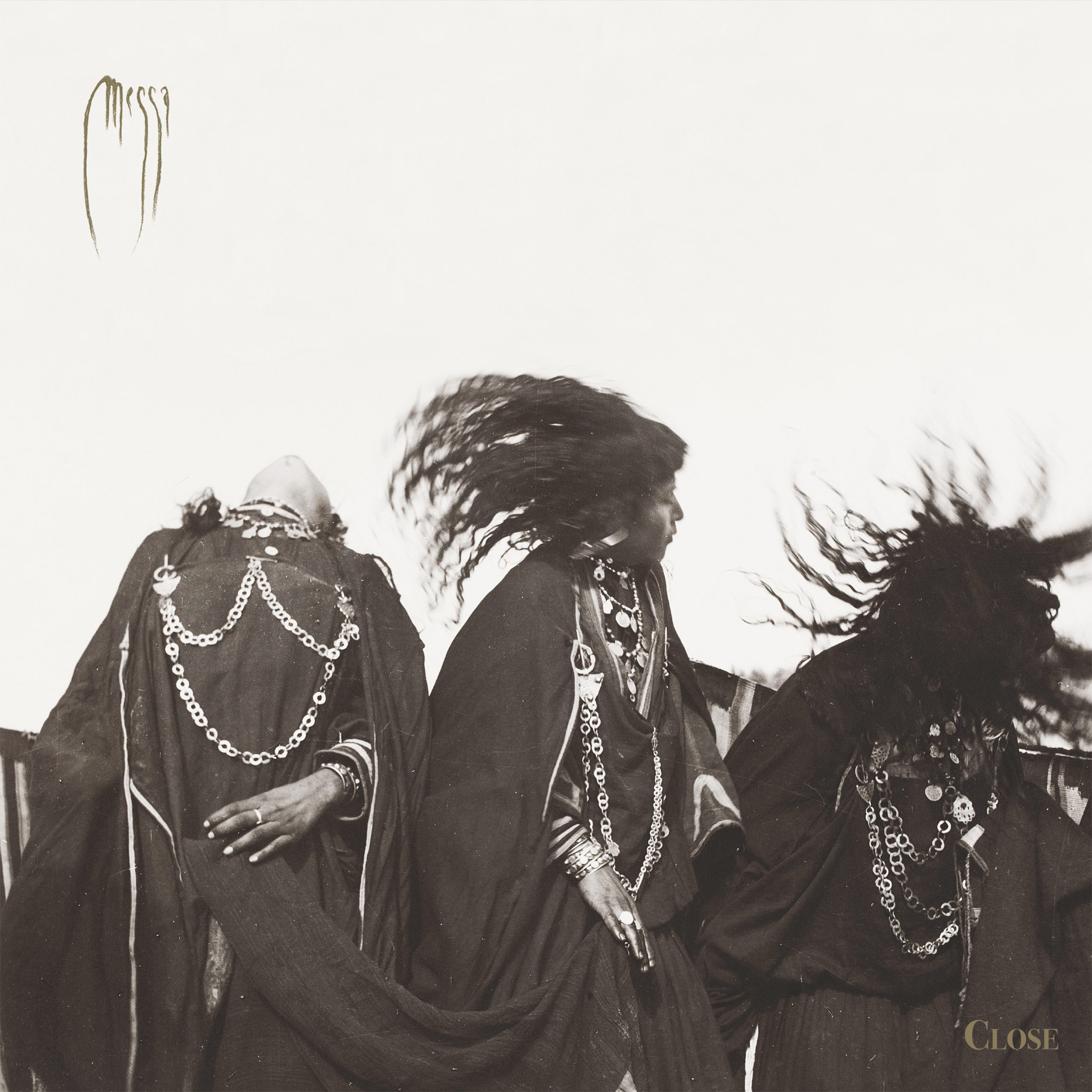
After two LPs through Aural Music, Italy’s Messa arrive via Svart with a crucial third album in Close. The hype surrounding the record has been significant, and Close earns every bit of it across its 10-song/64-minute run, intricately arranged as the Italian four-piece continue to bridge stylistic gaps with an ease born of expansive songcraft and stunning performance, first from vocalist Sara Bianchin (also percussion) and further from guitarist Alberto Piccolo (also oud, mandolin), bassist/synthesist/vocalist Marco Zanin (also various keys and percussion), and drummer Rocco Toaldo (also harsh vocals, percussion), who together create a complete and encompassing vision of doom that borrows periodically from black metal as anything artsy invariably must, but is more notable for its command of itself. That is, Messa — through the entirety of the hour-plus — are nothing but masterful. There’s an old photo of The Beatles watching Jimi Hendrix circa 1967, seeming resigned at being utterly outclassed by the ‘next thing.’ It’s easy to imagine much of doom looking at Messa the same way.
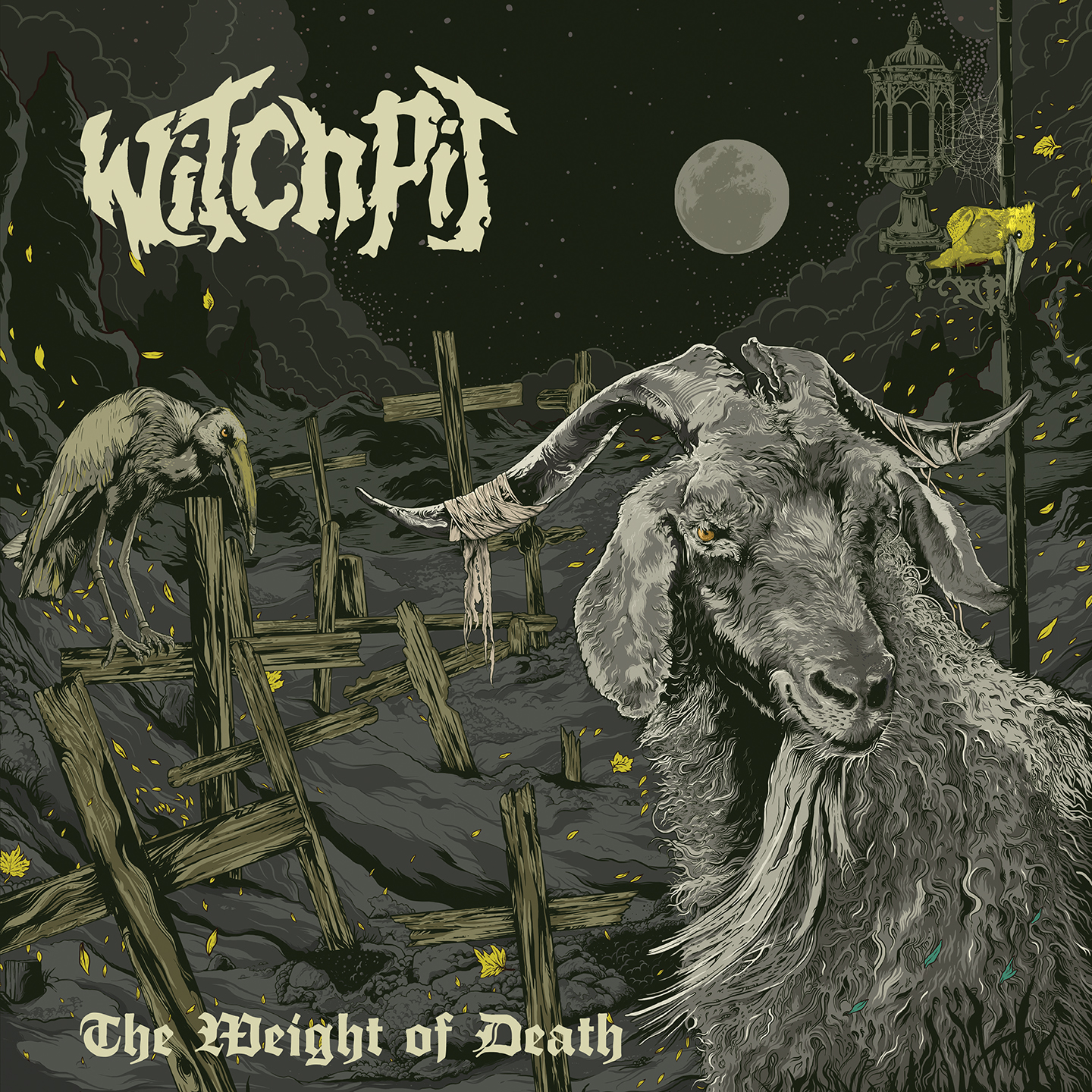
If what goes around comes around, then don’t be surprised when “Fire & Ice” goes circle-mosh near the end and you get punched in the head. Old. School. Southern. Sludge. Metal. Dudes play it big, and mean, and grooving. Think of turn of the century acts like Alabama Thunderpussy and Beaten Back to Pure, maybe earlier Sourvein, but with a big old lumbering update in sound thanks to a Phillip Cope recording job and a ferocity of its own. They’ve got a pedigree that includes Black Skies, Manticore and Black Hand Throne, and though The Weight of Death is their first long-player, they’ve been a band for seven years and their anti-dogmatic culmination in “Mr. Miserum” feels sincere as only it can coming from the land of the Southern Baptist Church. Aggression pervades throughout, but the band aren’t necessarily monochromatic. Sometimes they’re mad, sometimes they’re pissed off. Watch out when they’re pissed off. And am I wrong for feeling nostalgic listening? Can’t be too soon for them to be retro, right? Either way, they hit it hard and that’s just fine. Everybody needs to blow off steam sometime.
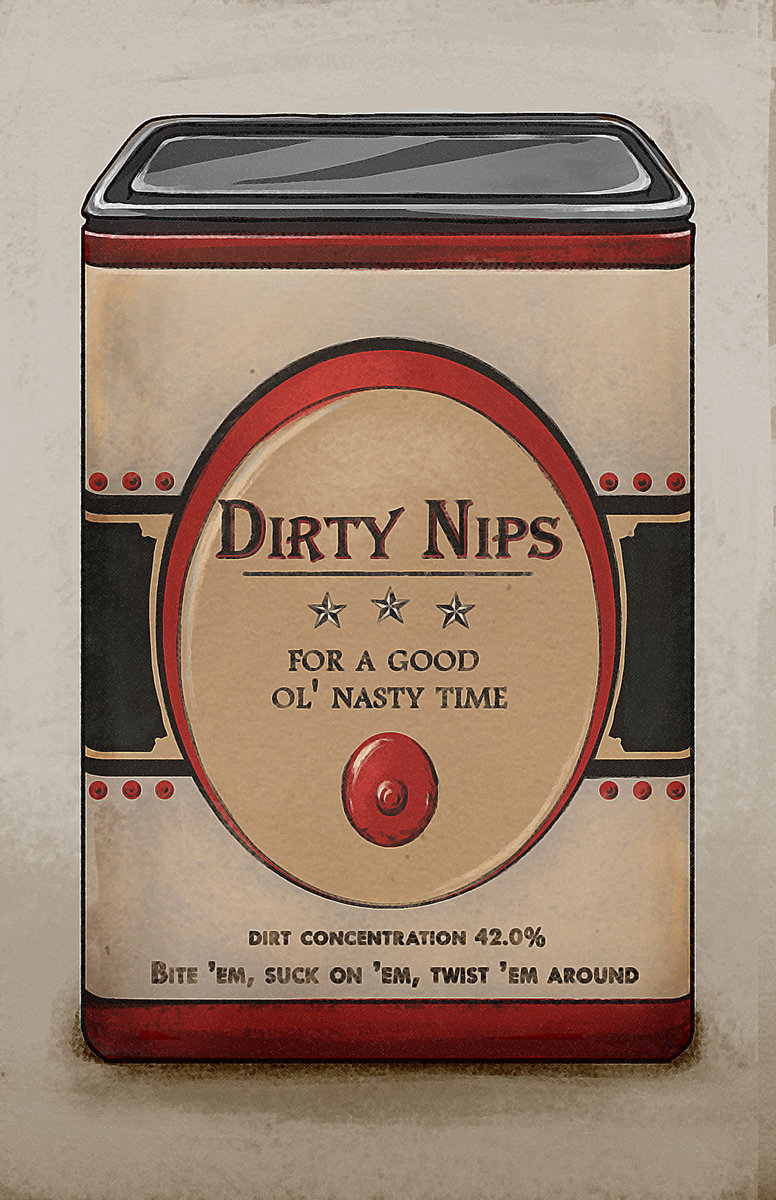
Do I even need to say it, that a band called Dirty Nips offering up a demo called Can O’ Dirty Demo Nipples get up to some pretty cheeky shenanigans therein? I hope not. Still, as the Bristol-via-Poland outfit crunch out the riffs of “The Third Nipple” and harmonica-laced Hank Williams-style country blues on “As I Stumbled” and touch on psychedelic jamming in opener “The Basement” and the later experimental-feeling “Dirty Nips Pt. II,” which just drops to silence in the middle enough to make you wonder if it’s coming back (it is), there’s clearly more going on here than goofball chicanery. “Jechetki” builds on the blues and adds a grunge chug, and closer “Mountain Calling” is — dare I say it? — classy with its blend of acoustic guitar and organ, echoing spoken vocal and engagingly patient realization. They may end up wishing they called themselves something else as time goes on, but as it stands, Dirty Nips‘ demo tape heralds a sonic complexity that makes it that much harder to predict where they might end up, and is all the more satisfying a listen for that.
Though they’re by no means the only band in Sweden to dig into some form of traditionalism in heavy rock, Västerås five-piece Ocean to Burn evoke a decidedly more straight-ahead, Southern-heavy feel throughout the nine songs and 33 minutes of Vultures, their self-released full-length. The throaty grit of vocalist Adam Liifw is a big part of that impression, but in the guitars of Mathilda Haanpää and Fredrik Blomqvist, the tone is more stripped-down than huge-sounding, and the grooves from bassist Pontus Jägervall and drummer Fredrik Hiltunen follow suit. That central purpose suits songs like “Wastelands” and the more strutting “Nay Sayer,” and though they largely stick to their guns style-wise, a bluesier nod on “No Afterlife” early and a breakout in closer “Vulture Road” assure there’s some toying with the balance, even as the tracks all stick to the three- to about four-and-a-half-minute range. They’ve been at it for a while, and seem to revel in the ‘nothin-too-fancy’ attitude of the material, but honestly, they don’t need tricks or novelty to get their point across.
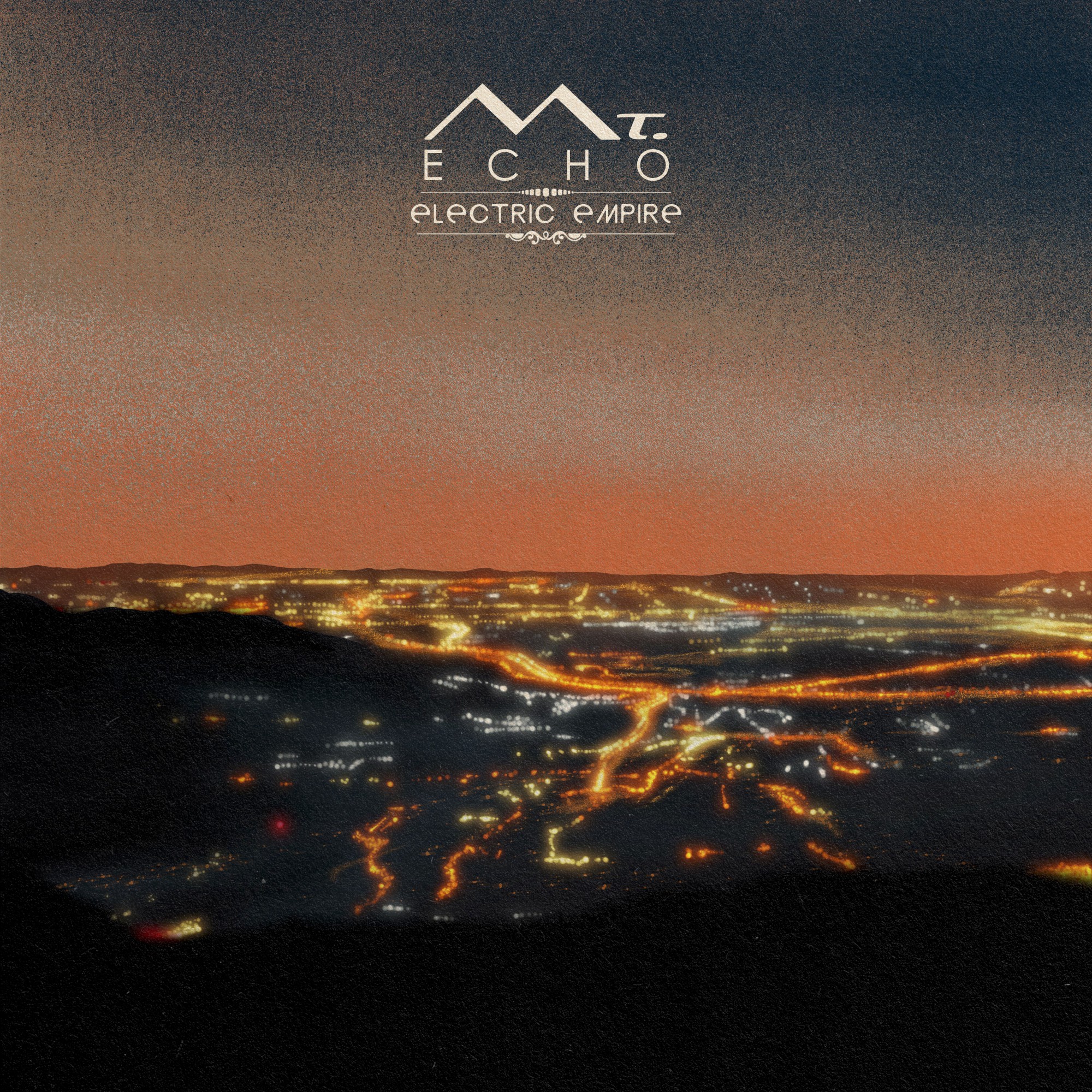
Following an encouraging start in 2019’s Cirrus (review here), Nijmegen instrumentalists Mt. Echo return with the conceptual-feeling Electric Empire, still holding some noise rock crunch in “Automaton” following the opener “Sound & Fury,” but saving its biggest impacts for the angular “50 Fanthoms,” the 10-minute “Flummox” and subsequent “As the Tide Serves,” and on the whole working to bring that side of their approach together with the atmospheric heavy post-rock float of “The End of All Dispute” and the early going of “These Concrete Lungs.” At 10 songs and just under an hour long, Electric Empire has room for world-building, and one of Mt. Echo‘s great strengths is being able to offset patience with urgency and vice versa. By the time they cap with “Torpid,” the trio of Gerben Elburg, Vincent Voogd and Rolf Vonk have worked to further distinguish themselves among their various sans-vocals proggy peers. One hopes they’ll continue on such a path.
Vocalist Eric Brock, guitarist/backing vocalist/principal songwriter Lewis Inglis, bassist Dean Gordon and drummer Ryan Wilson are Edinburgh’s Earl of Hell, and their debut EP, Get Smoked, builds on the brash grooves of prior singles “Arryhthmia” (sic) and “Blood Disco,” the latter of which appears as the penultimate of the six included tracks on the 23-minute outing. More stomp-and-swing than punch-you-in-the-face, “I Am the Chill” nonetheless makes its sense of threat clear — it is not about chilling out — as if opener “Hang ’em High” didn’t. Split into two three-song sides each with a shorter track between, it’s in “Parasite” and “Blood Disco” that the band are at their most punk rock, but as the slower “Bitter Fruits” mellows out in opening side B, there’s more to their approach than just full-sprint shove, though don’t tell that to closer “Kill the Witch,” which revels in its call and response with nary a hesitation as it shifts into Spanish-language lyrics. High-octane, punk-informed heavy rock and roll, no pretense of trying to push boundaries; just ripping it up and threaten to burn ladies alive, as one apparently does.
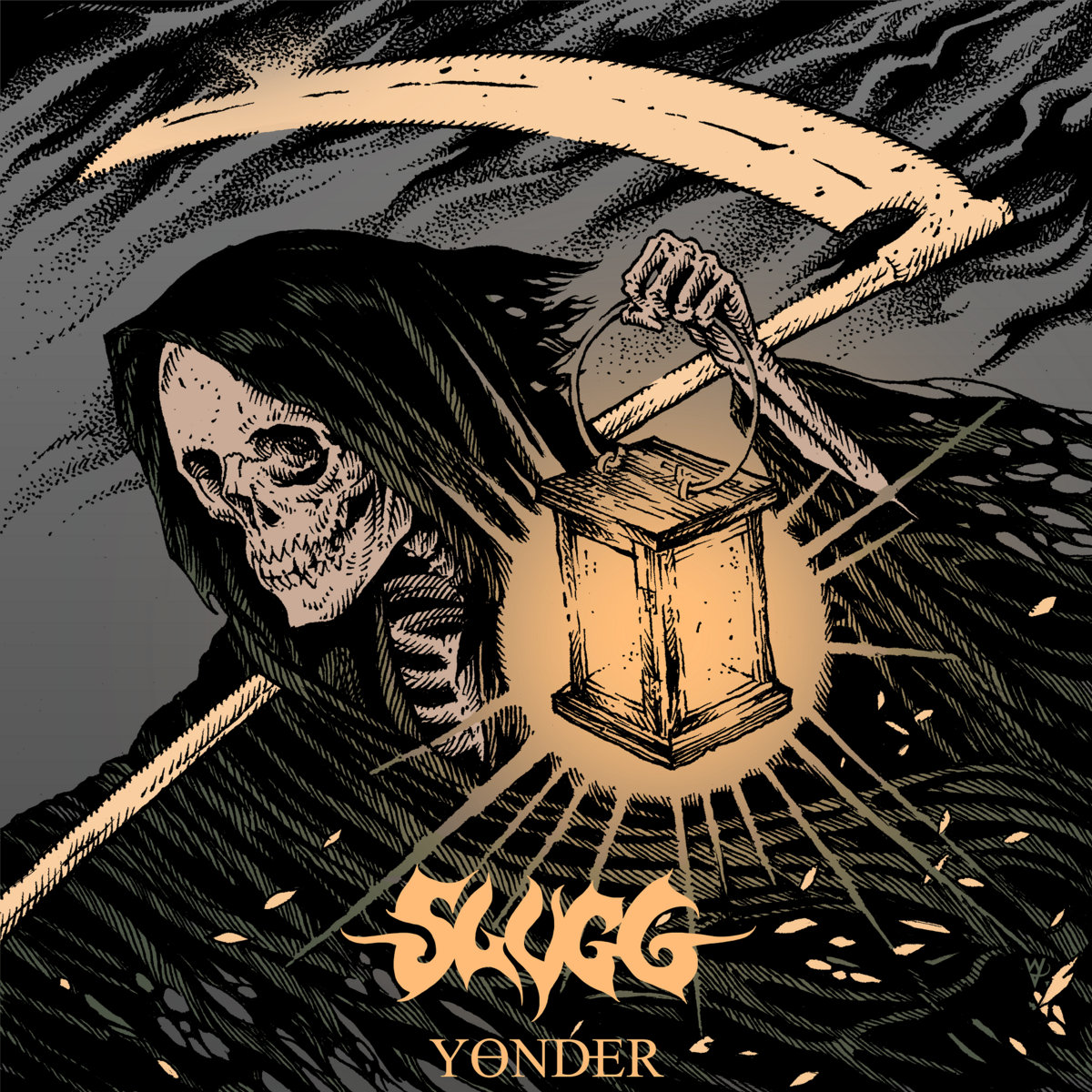
Released on New Year’s Day after being recorded in Dec. 2021 in the trio’s native Rome, “Yonder” serves as the initial public offering and first single from Slugg, and at 9:59, it is more than a vague teaser for the band they might be. The guitar of Jacopo Cautela and the bass of Stephen Drive bring a marked largesse that nonetheless is able to move when called upon to do so by Andrea Giamberardini‘s drumming, and Cautela‘s corresponding vocals are pushed deeper back in the mix to emphasize those tones. Much of the second half of “Yonder” is given to a single, rolling purpose, but the band cleverly turn that into a build as they move forward, leaving behind the gallops of the first few minutes of the song, but making the transition from one side to another smoothly via midsection crashes and ably setting up the ring-out finish that will draw the song to its close. Not without ambition, “Yonder” crushes with a sense of physical catharsis while affecting an atmosphere that is no less broad. They make it easy to hope for more to come along these lines.
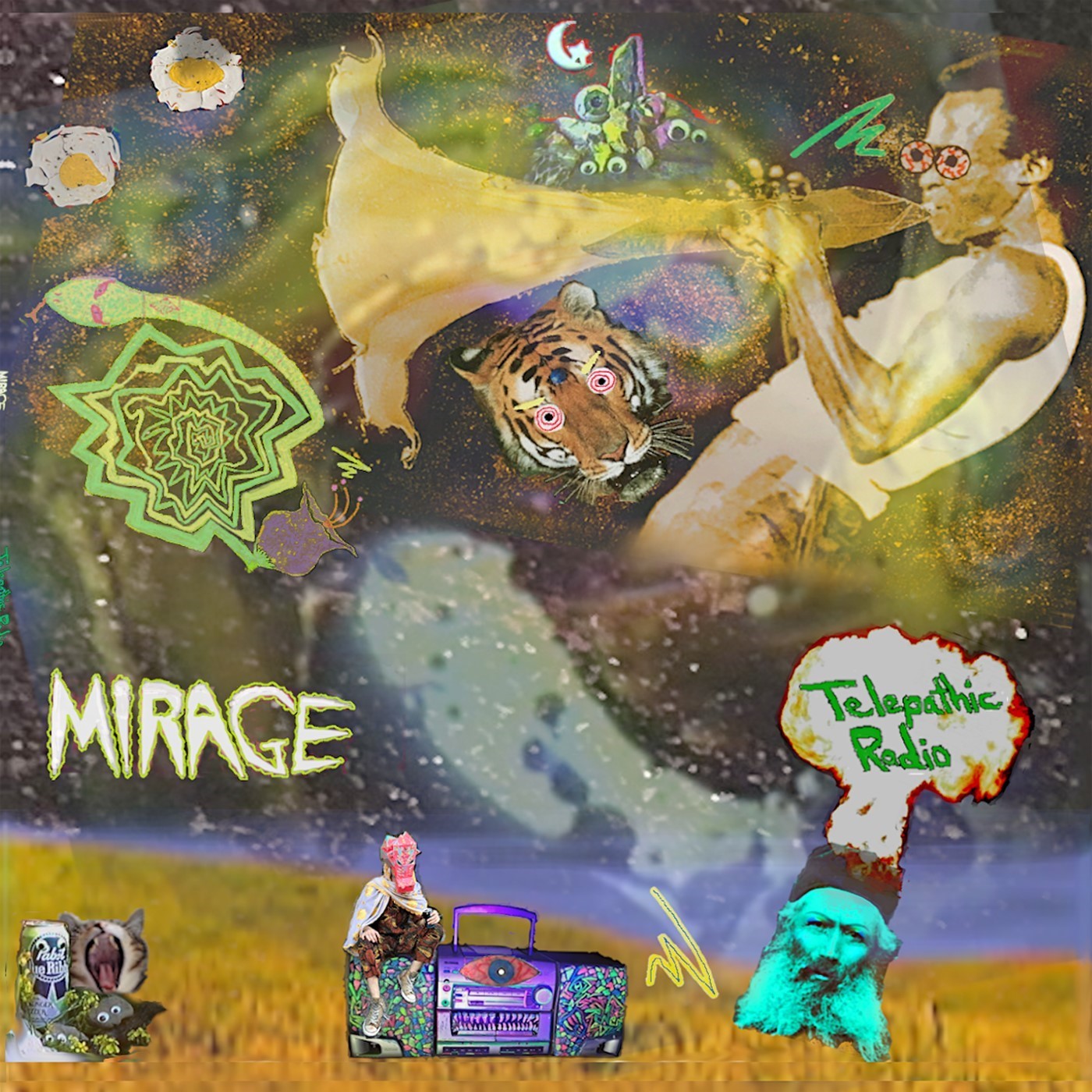
Joe Freedman, also of Banshee, first saw Telepathic Radio released as the debut full-length from Mirage in 2021 through Misophonia Records on tape. There are still a few of them left. That version runs 30 songs and 90 minutes. The Cardinal Fuzz/Centripetal Force edition is 50 minutes/20 tracks, but either way you go, get your head ready for dug-in freakness. Like freakness where you open the artwork file for the digital promo and all three versions are the cover of a Rhapsody album. Ostensibly psychedelic, songs play out like snippets from a wandering attention span, trying this weird thing and seeing it through en route to the next. In this way, Telepathic Radio is both broad-ranging and somewhat contained. The recordings are raw, fade in and out and follow their own paths as though recorded over a stretch of time rather than in one studio burst, which seems indeed to be how they were made. Horns, samples, keys, even some guitar, a bit of “TV Party” and “TV Eye” on “TV Screens,” Mirage howls and wails out there on its private wavelength, resolved to be what it is regardless of what one might expect of it. By the time even the 20-track version is done, the thing you can most expect is to have no clue what just happened in your brain. Rad.
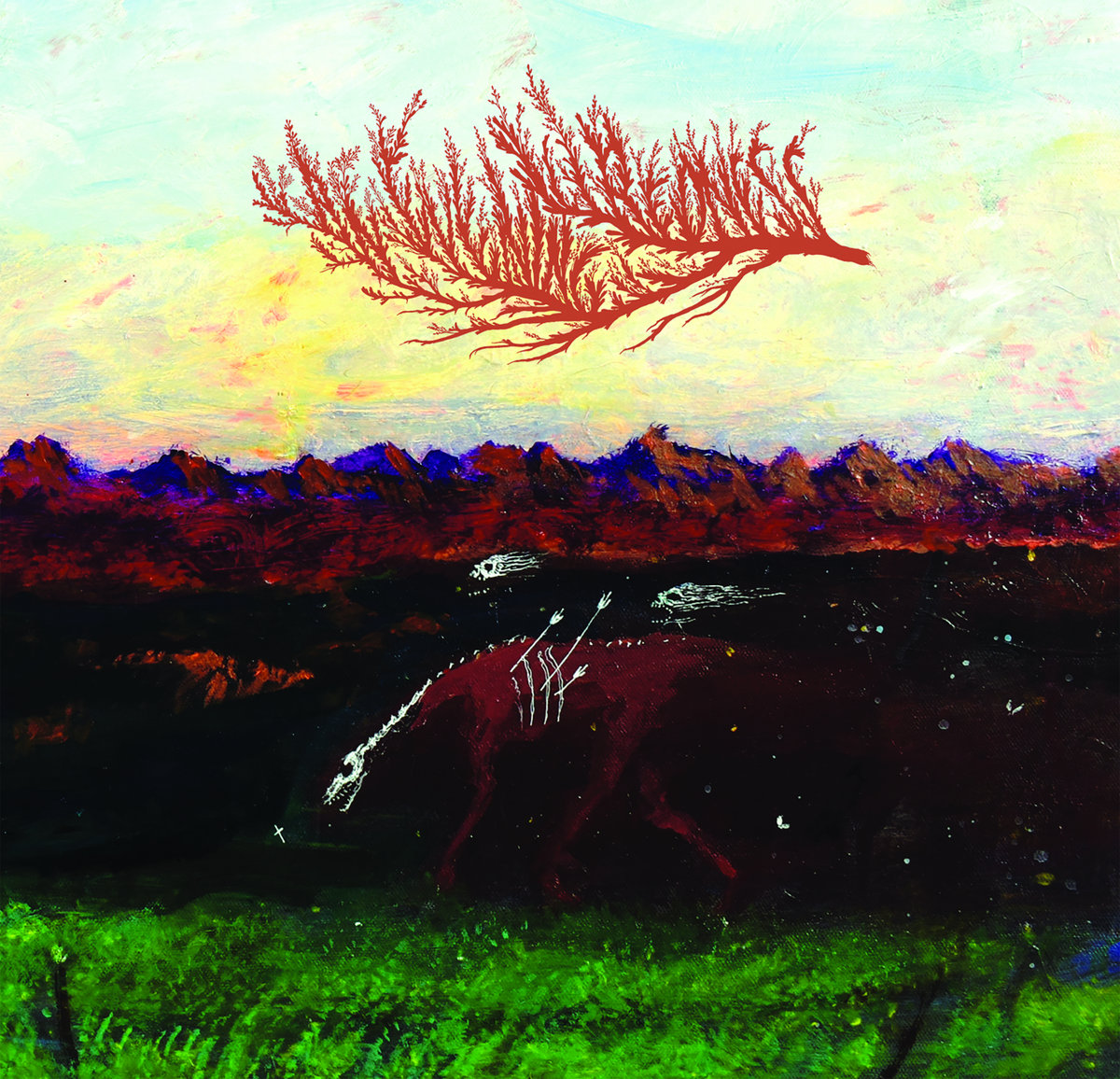
With its first, self-titled release, An Evening Redness basks in morose Americana atmospheres, slow, patient guitar drones, warm bass and steady rhythms giving way to periodically violent surges. Founded perhaps as a pandemic project for Brandon Elkins of Auditor and Iron Forest, the six-song full-length explores the underlying intensity and threat to person and personhood that a lot of American culture just takes for granted. The name and inspiration for the project are literary — ‘An Evening Redness in the West’ is the subtitle of Cormac McCarthy’s 1985 novel, Blood Meridian — and An Evening Redness, even in the long instrumental stretch of 12-minute opener/longest track (immediate points) “Alkali,” treats the subject matter with duly textured reverence. Elkins isn’t alone here, and the vocals of Bridget Bellavia on the brooding “Mesa Skyline” and the closing pair of “Pariah” and “Black Flame at the Edge of the Desert,” as well as the contributions of other guests in various locales around the world up to and including Elkins‘ native Chicago should not be downplayed in enriching these explorations of space and sound. Bands like Earth and Across Tundras warrant mention as precursors of the form, but An Evening Redness casts its own light in the droning “Winter, 1847” and the harmonica-wailing “The Judge” enough to be wholly distinct from either in portraying the sometimes horrifying bounty of the land and the cruelty of those living in it.
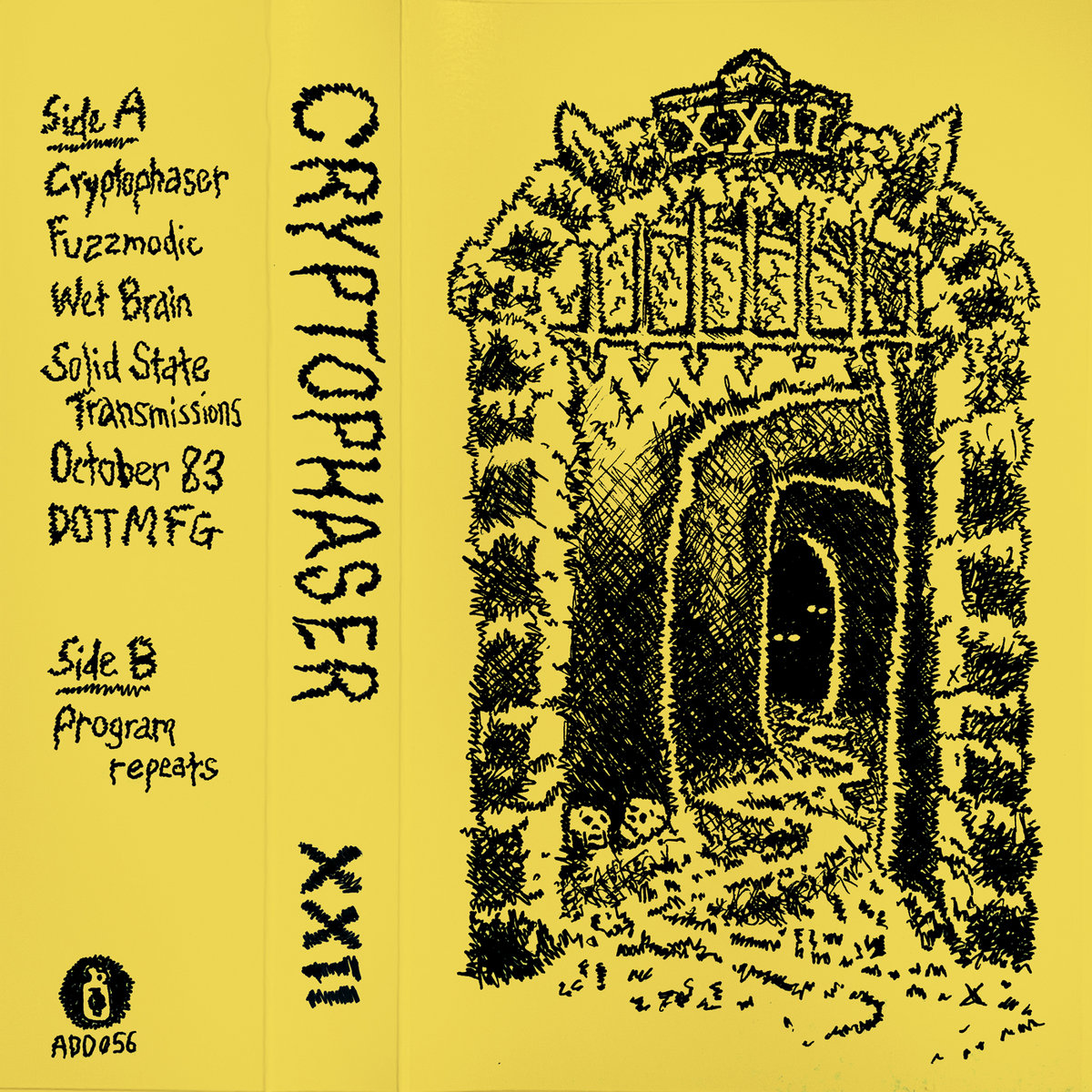
Brothers John and Marc Beaudette — who if they aren’t twins are close enough — comprise New Hampshire’s Cryptophaser, and XXII is their first demo, pressed in an edition of 50 purple tapes. Dudes might as well just open my wallet. Fair enough. In what’s a show of chemistry and musical conversation that’s obviously been going on longer than these songs — that is, I highly suspect the maybe-twin brothers who drum and play guitar have been playing together more than a year — they bring an adversarial bent to the conventions of heavy fuzz, and do so with the proverbial gusto, breaking away from monolithic tones in favor of sheer dynamic, and when they shift into the drone in “October 83,” they make themselves a completely different band like it isn’t even a thing. Casual kickass. At 13 minutes, it flows like a full-length and has a full-length’s breadth of ideas (some full-lengths, anyway), and the energy from one moment to the next is infectious, be that next part fast, slow, loud, quiet, or whatever else they want it to be.