Posted in Whathaveyou on October 7th, 2025 by JJ Koczan
Am I crazy (granted) or are we a little early arriving at the place where Desertfest throws down 20-someodd bands — in this case 28 — added all at once to the lineup? I mean, 28 bands, even for a four-day festival, would be a festival lineup. So Desertfest London 2026 is basically showcasing an entire fest’s worth of fest as just part of its broader lineup, the first announcement for which came out just a little over a month ago. I’m not worried about the promo plan or anything, you understand. They know what they’re doing. But I usually think of this kind of thing coming in winter as a hopeful portent of spring. Here in the backwater US, we haven’t even changed the clocks yet.
But can you blame them for being excited? If I had Hermano, Pigs Pigs Pigs Pigs Pigs Pigs Pigs, Solace, Causa Sui, High Desert Queen, Steak, Abrams, Alunah, Moundrag, Bismut and the rest of this cohort — Dandy Brown pulling double-duty between Hermano and Lorquin’s Admiral; nice — locked in, I might splurge too. And hopefully I’ll have more to say on this subject, but Solace‘s booked return to the UK has me convinced their new album will be out by the time they go. Do me a favor and don’t prove me wrong.
There’s a lot to like here, and also just a lot for what’s a relatively straightforward list of names. Read ’em and weep:
OUR SECOND ANNOUNCEMENT IS HERE! We’ve got 28 juicy additions to our 2026 edition and this announcement one is truly one for the DF OGs right here: desert legends HERMANO will headline the Electric Ballroom at Desertfest 2026.
Back to show us all how it’s done, John Garcia and the California cult icons will be playing their first UK show in almost two decades and we know that they’ll receive the homecoming they deserve at Desertfest London.
↠ Pigs Pigs Pigs Pigs Pigs Pigs Pigs – returning to Desertfest stage for the first time in 8 years.
↠ Danish heavy psych heroes turned instrumental wizards Causa Sui make their Desertfest London debut!
↠ New Jersey stoner-doom veterans Solace playing their first UK show in over a decade.
And that’s not all, folks! We’ve still to announce our final headliner for our second stint at the Roundhouse, but in the meantime we’ve prepared a mighty offering that we know you’ll love in our latest round of artists set for 2026:
HERMANO Pigs Pigs Pigs Pigs Pigs Pigs Pigs Causa Sui Zig Zags Steak Band Solace Deaf Club Witchsorrow High Desert Queen MOUNDRAG KOMODOR Alunah CULT OF OCCULT Forlorn LORQUIN’S ADMIRAL OMO ALPHAWHORES Abrams Bismut Okay You Win UK Ironrat Kannabinõid MOLTEN SLAG HASHTRONAUT ISAK SUPERNAUGHTT Teiger Nomadic Reign
Posted in Reviews on August 28th, 2025 by JJ Koczan
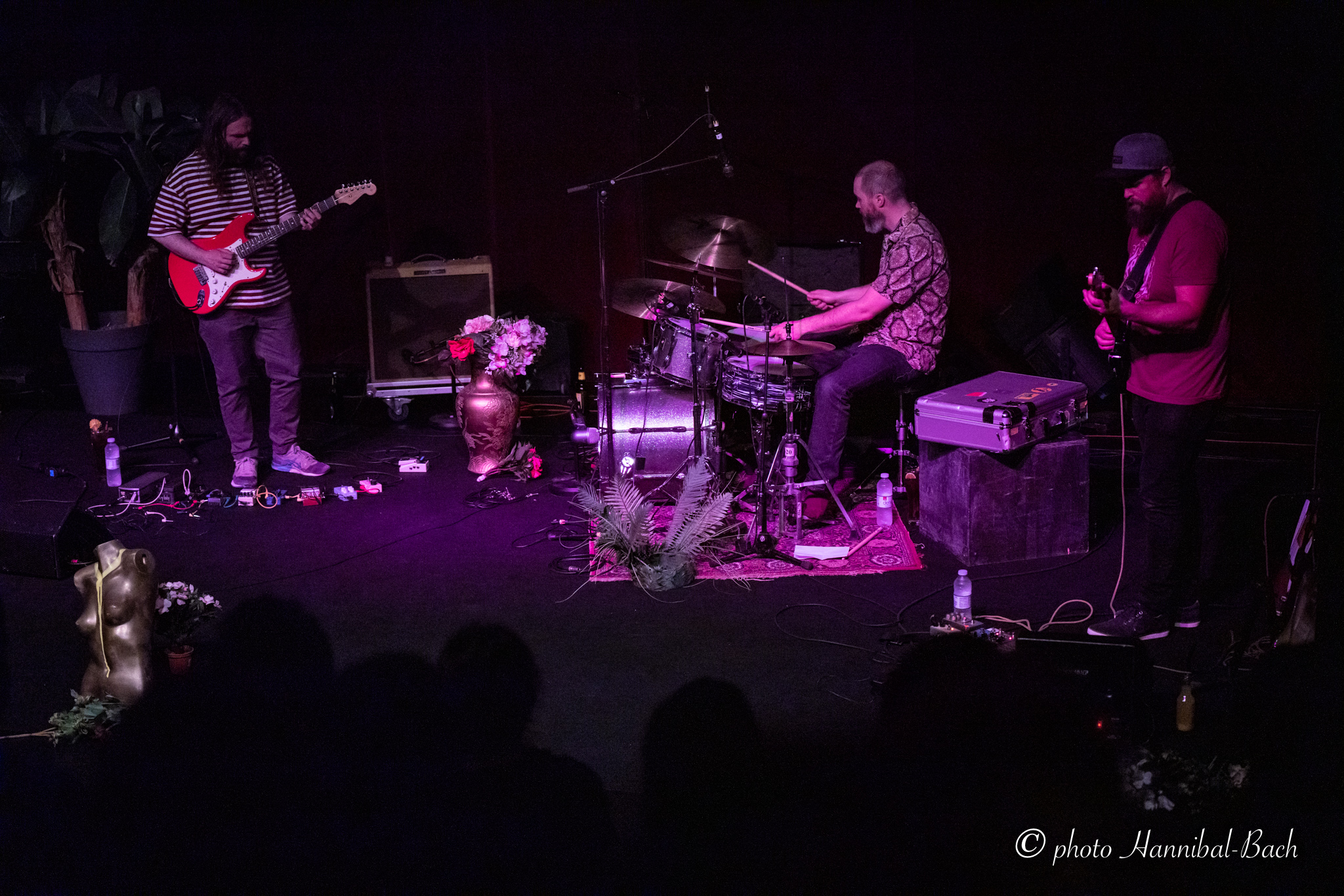
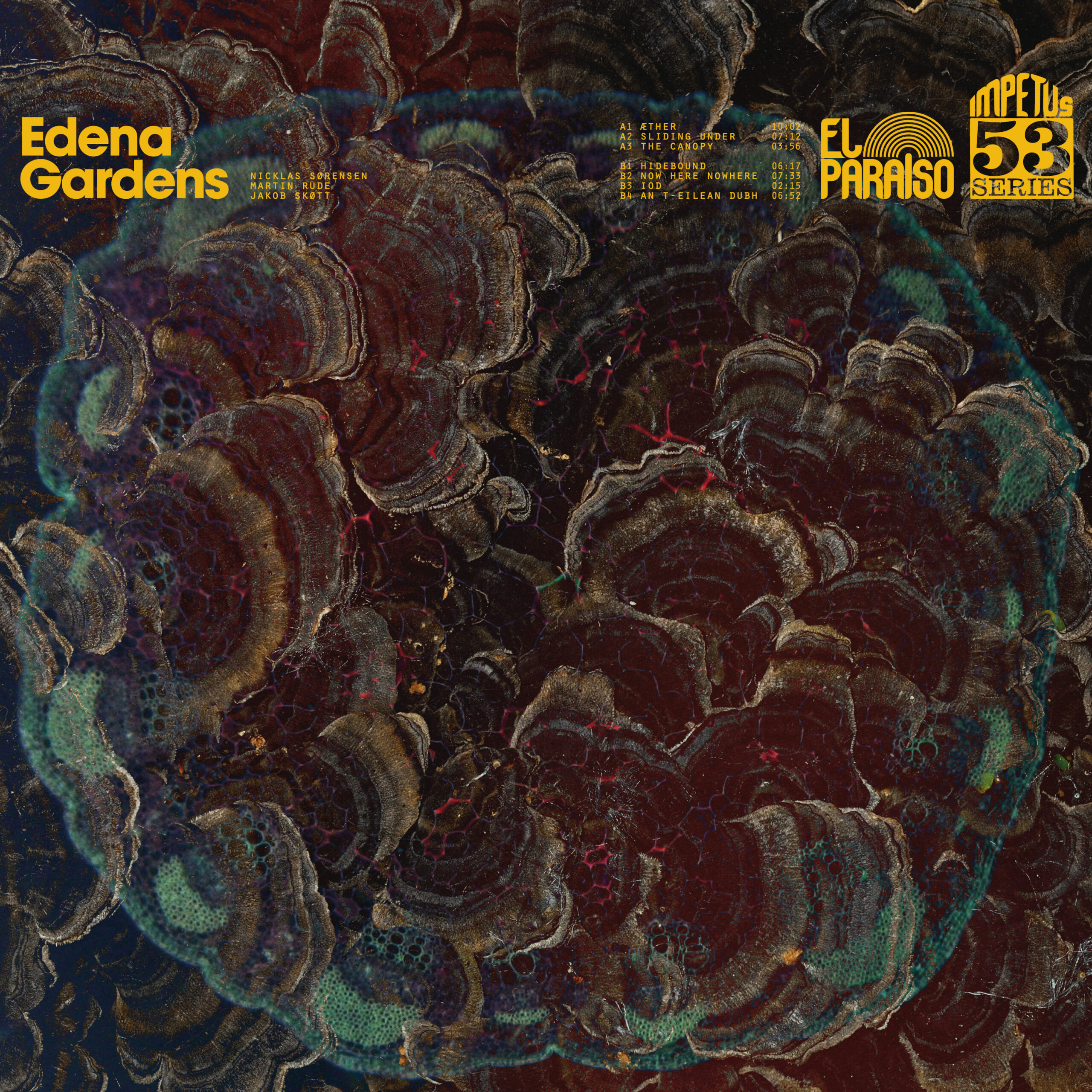
The fourth installment in a trilogy? When Edena Gardens came along, the instrumentalist jam-psych trio comprised of Causa Sui drummer Jakob Skøtt, Papir guitarist Nicklas Sørensen, and Martin Rude of the London Odense Ensemble — all acts within the sphere of Causa Sui‘s El Paraiso Records, which has of course released the albums — the word was that the project intended to release a trilogy of improv-based offerings, and that’s exactly what happened. Dispossessed, the fourth Edena Gardens full-length, was then not part of the original plan. This is the hazard of things working out when players get together to jam. All of a sudden, oops, it’s another record. That was reportedly the situation earlier this year when the band assembled at Jonas Munk‘s studio.
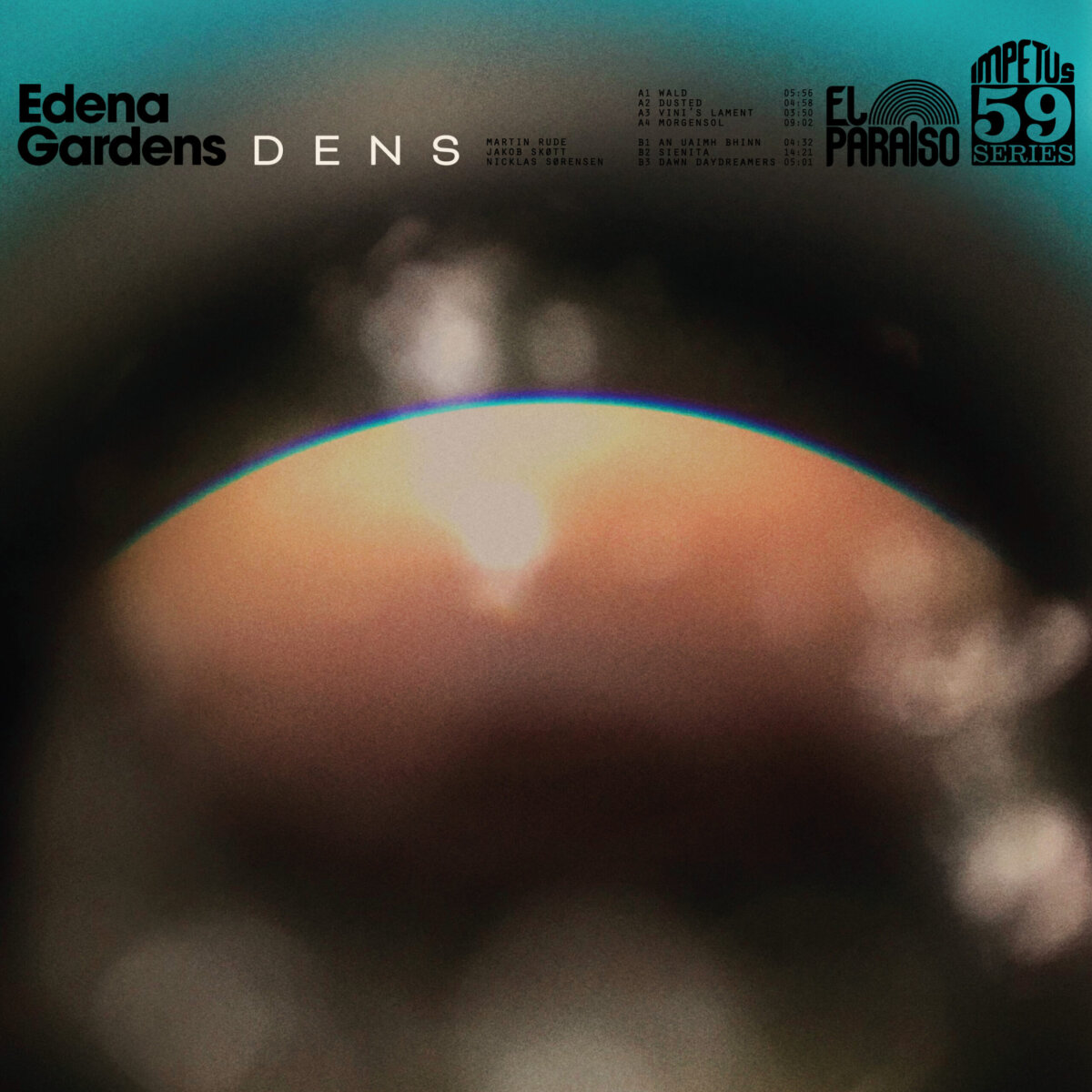
As with past studio outings — late 2023’s Dens (review here), earlier ’23’s Agar (review here) and 2022’s self-titled debut (review here), quietly half-renamed Eden retrospectively so that the three spell out the name of the band, as if to say, “these are who we are” — the methodology is still rooted in live performance. Edena Gardens did do a live record as well, Live Momentum (review here), during the 2023 that might turn out to be project’s busiest year, but it’s the live-in-studio aspect that typifies the work. Edena Gardens has never been about being loud, or being heavy, or riffs riffs riffs, or even an effects-laced wash of noise. None of that. The material across Dispossessed, with songs like “Cantor Dew,” “Heim” and the 10-minute dream-drifter-droner finale “Aftenstjerne,” is telling the story of its own creation as it happened.
Well, mostly. The eight songs and 47 minutes of Dispossessed — a more foreboding title perhaps for more foreboding times; note the gulls on the cover; are they migrating? fleeing? — were tracked live, including anything that wound up as overdubs, as Skøtt worked with what he had to tie the pieces together. I won’t call the process seamless, because it’s not that and it’s not intended to be, but as opener “Hiraeth” sees the three-piece align around crashes and then draw concentric instrumental circles between, the chemistry is what most comes through. It is comfort at its foundation — the awareness of the three players of each other in space and the seeming ease of the musical conversation between them — and nobody here was a stranger when the band started, let alone the development of the project over the three records prior, so that’s no surprise.
But they’re in their element in the meditative repetitions of “Hiraeth,” even if the initial crashes are somewhat jarring in their heft compared to what the band did on Eden-Agar-Dens, and improvisation remains the priority. Second cut “Fills the Well” bumbles charmingly through its five minutes with a pastoral post-grunge sway, lightly immersive, and sees Sørensen leading on guitar in a way that handily coincides with the growth narrative. They’re dug in, to be sure, but as they have up to this point, Edena Gardens leave room for the listener in the spaciousness of the material, and the guitar-driven evocations continue on “Cantor Dew,” sweet in tone and classic in its flow, and the A-side capper “Vanishing Point” provides due culmination in its sprawl of low frequencies and the cirrus wisps of guitar floating above them.
A steady building rumble across “Vanishing Point” gives it extra weight-in-sound, but the abiding feel is still peaceful if not serene or calm. Audio therapy. A salve. “Vanishing Point” reaches up and lets go right around six minutes in, and with Rude‘s bassline urging subtle movement, the song’s final section resonates internal more than external. The bass underscores side B opener “Light in August” as well, picking up from the fluidity of the drum progression early and carrying the second half of the track to its finish and into the also-four-minute “Heim,” which in combination with “Light in August” is about as straightforward as Edena Gardens have ever been. “Heim” follows a linear trajectory and is slow in the tempo but welcoming and unpretentious in its drawing the listener deeper, which makes it well placed ahead of “Dispossessed” and “Aftenstjerne,” which perhaps represent the ‘going’ and the ‘gone’ implied by the album’s title.
Dispossession of what, whether material, existential, emotional, I don’t know, but if you want to dare to look around the world right now you’ll see a lot of all of it, so it’s a relevant notion regardless of the specific purpose behind it. The song, “Dispossessed,” has more reach than “Heim” or “Light in August.” It’s consistent enough in mood not to be out of place, but the steady roll of drums and just an edge of urgency mark a shift to the ending section of the record. After the three-minute mark, the course they’re following becomes more lush, and brighter in the guitar, and as it moves through a sort of inadvertent payoff, they’re the heaviest they’ve been since “Hiraeth,” which makes for a fitting bookend to the first seven tracks, and lets “Aftenstjerne” stand more on its own, which it does anyway, starting from silence, waking up, and finding its own path across Dispossessed‘s longest runtime.
That’s not to say the shift into it is disjointed. Once you’re in it, there’s nothing throughout Dispossessed that’s likely to pull you from its ambience, and “Aftenstjerne” isn’t out of place in being the most ready example of that. Rather, it encapsulates the procession before it and reshapes the movement to its own course. That is, soft psychedelic guitar, backmasking, drones, drums far off in the distance and a gradual change to a more solid form as the instruments come forward across the span are all part of Edena Gardens‘ pastiche before the closer, but if you ever find yourself in need of a handy summary for the appeal of this project, “Aftenstjerne” awaits. By extension, I guess it all does. They’re not keeping it secret, in any case.
Unexpected but not unwelcome, Dispossessed brings further complexity and growth to the story of Edena Gardens. And if you want to know what might’ve motivated the three-piece to come together again and make another album, listen to the songs. Creation is the reason, beauty is the result. Art making your life better if you let it. Most of all, Dispossessed puts light to the fact that there’s no reason Rude, Sørensen and Skøtt had to cut short the communion they’d discovered, and there’s no reason Edena Gardens can’t continue into years-to-come perpetuity. It’s not like they’re going to run out of infinity to explore.
Posted in Whathaveyou on July 21st, 2025 by JJ Koczan
So, the good news here is that in late-2023 when Edena Gardens completed what was then purported to be a trilogy with their third LP, Dens (review here), that wasn’t actually their last studio record. Dispossessed is the name of the fourth album from the trio featuring members of Causa Sui, London Odense Ensemble and Papir, and the first single from it is the mellow-immersive “Fills the Well,” which you’ll find streaming below. I wasn’t expecting another Edena Gardens, necessarily, but I’m awfully glad such a thing exists.
Edited down from raw jams tracked this past February, Dispossessed begins a new phase for Edena Gardens as an ongoing project. I look forward to the adventure to come, and pretty soon since the release is only a month out.
A no-brainer to dig in, courtesy of the PR wire:
Edena Gardens – Dispossessed
“Fills the Well” – First single from LP Dispossessed, out Aug. 22nd 2025.
Stripping away excess layers, Dispossessed lives up to its title. The band went into Causa Sui’s Jonas Munk’s studio on the last day of February 2025. In an a priori session, the first note played together since 2023’s Dens – the conclusion of a trilogy and a live album all in less than a year. Has something shifted during the silence? Added aggression? Faster tempo? Darker ambiance? The feeling of losing time? Or is it simply the listener who’s world has tilted? In a fast paced world, Edena Gardens shows us how to resist and tune to our own inner chord.
Edena Gardens deals in subtle shifts that can only be summoned from something played for the first time. From the sludgy blasts of opener Hiraeth to the droning ambience of 10-minute ender Aftenstjerne. As always, the band travels far yet stays in the same internal realm. The band’s own Jakob Skøtt has made minor edits to cut a record from hours of free improvisation, and every dubbed ambience has been culled directly from the material recorded that day, bringing into play the band’s gestalt in a way that shows their both outer and inner workings: Dispossessed.
Edena Gardens is: Jakob Skøtt: Drums (Causa Sui) Nicklas Sørensen: Guitar (Papir) Martin Rude: Baritone guitar & Bass (London Odense Ensemble)
To no surprise, Causa Sui know what they’re about on In Flux. The Danish innovators of heavy psychedelic jazz crossover — the returning lineup of guitarist/synthesist Jonas Munk (who also engineered, mixed and mastered), drummer Jakob Skøtt, keyboardist Rasmus Rasmussen and bassist Jess Kahr — offer 50 minutes across seven songs on In Flux, and from the proggy rhythmic urging of “The Circus is Back,” the 1:49 intro ahead of the resonant guitar and organ raga of “Milkweed’s Pod” through to the blissful outer reaches of the 16-minute side-consuming “Astral Shores,” movement is central to the proceedings.
Within and between parts of songs, sure, but also in the overarching groove that carries through the album as a whole. “Milkweed’s Pod” builds tension as it goes and hints at a heavier-bottomed payoff without ever actually losing itself in the fuzz, while “Silver in the Gathering Light” takes the All Them Witches-y pastoralia of the initial guitar line and pushes deeper into airy wistfulness. There are a series of short builds, but instead of the standard crescendo, Rasmussen‘s keys run a melodic drone over much of the second half of the song, giving it a shimmer and moving to the forefront as the guitar, bass and drums step back.
On the most superficial level, this isn’t anything new for Causa Sui in terms of methodology — they’ve been an exploratory instrumental band for a long time now, and In Flux does not radically altar these principles — but the band has posited it as a looser companion to their 2024 studio album, From the Source (review here), and 20 years on from their debut, one’s inclination is to take them at their word.
That said, I’m not sure I agree with the suggestion for two reasons. First, it implies From the Source and In Flux are related somehow, and yeah, they are, because the same band made them, but I don’t think the latest is a sequel to the last and I don’t think they were recorded at the same time (not that they’d necessarily have to be), and second, while they’ve got some shake in “The Circus is Back,” “Milkweed’s Pod” and “Boogie Lord’s Revenge,” they’re not sloppy about it.
Even in the post-script “Spree” after the epic “Astral Shores,” as it builds to its finish with keys out front and drums kind of marching behind; it sounds like it’s about to come apart, and maybe it was in the studio, but there’s no real danger there as Causa Sui are either going to hold it together or end it altogether. One gets Dead Meadow-y mellowness from the 11-minute “Moledo,” but as it follows the energy of Munk‘s wah going into its second half, the energy pickup is palpable and feels impromptu in a way that makes it all the more special.
Perhaps an uptick in the improvisational aspect of their approach is the source of some of that ‘looseness’ discussed in the release info, or at least part of it, but relating In Flux to the album before it gives it a kind of baggage I’m not sure it needs. That is to say, however it may ultimately lie on the broader timeline of Causa Sui‘s stylistic progression — because surely it’s part of that story as well; I’m not saying it isn’t — its own merits give it plenty to stand on, be it the hypnotic, drifty psych rock in the first half of “Moledo” or the solidified push that takes hold for a while in the second. Munk on guitar leads the way into much of the material captured, and the mood is vibrant and spontaneous.
Unsurprisingly, Causa Sui thrive in this context, and if what they’re reveling in and/or celebrating is the raw chemistry between the four of them and the kinds of musical conversations that can happen when you’re these people, in that room, at that time, then fair enough. The basic fact of the matter is that their chemistry can carry them through a record if it needs to; it just doesn’t need to on In Flux.
There’s enough going on in the songs — even “Boogie Lord’s Revenge,” which winds itself a round a relatively straight-ahead progression, somewhere between garage psych and Morricone and a reminder that Summer Sessions was a whole thing with this band before it fades out in medias res ’60s-style — from the jammed-out to the plotted that even fickle attention spans can be fed, and when they dedicate a side of the double-10″ release to “Moledo” or “Astral Shores,” the presence in that material holds up to the vaunted position. “Astral Shores” isn’t without its intended direction — that is, it’s headed somewhere from the start — but the way in which In Flux‘s most extended track is given the space it needs to unfold is perhaps emblematic of precisely what Causa Sui mean in terms of this as a ‘looser’ record.
Maybe it’s about the balance between holding firm and letting go of what one thinks of as control over one’s own creative plots. This can be more of a challenge than hammering out every minute detail for some artists, while others are perfectly happy to claim themselves as mere vessels through which a song, a riff, whatever, is realized. I don’t know where Causa Sui stand in terms of their own creativity — why the hell not? why have I never interviewed this band? — but whether it’s the spacey push later in that longest inclusion or the more subdued manner in which “Spree” unfolds afterward, both songs being defined in no small part by the live feel in the recording, they don’t sound like passive participants in their craft, and honestly, they never have.
Rather, In Fluxpresents Causa Sui as they are: unwilling to rest on their significant laurels in the face of continuing stylistic growth and a constantly changing goal ahead of them. Whatever their specific goal for each or any of these tracks, I don’t know, but In Flux shows Causa Sui finding new places for their music to go, and in that, it is as accurate a portrayal of who they as a band as one could possibly hope. Such honesty is rare, but so are Causa Sui.
Posted in Reviews on April 11th, 2025 by JJ Koczan
A friendly reminder that the end of the week is not, in fact, the end of the Quarterly Review, which will continue through Monday and Tuesday. That brings the number of releases covered to 70 total, which feels like plenty, and should hopefully carry us through a busy Spring release season. I’m thinking June for the next QR now but don’t be surprised if that turns into July as we get closer. All I know is I wanna do it before it’s two full weeks again.
As always, I hope you’ve found something that speaks to you in all this 10-per-day nonsense. If not, first, wow, really? Second, it ain’t over yet. Maybe today’s your day. One way to know.
Quarterly Review #41-50:
Dead Meadow, Voyager to Voyager
You may be mellow-vibes, but unless you’re “Not the Season,” Dead Meadow have one up on you forever. While Voyager to Voyager, which is the L.A. band’s eighth or ninth LP depending on what you count, comes with the tragic real-world context of bassist Steve Kille‘s 2024 passing, he does feature on the long-running trio’s first offering through Heavy Psych Sounds, and whether it’s “The Space Between” or the shuffle-stepping “The Unhounded Now” or the pastoral “A Question of Will” and the jangly strum of “Small Acts of Kindness” later on, guitarist/vocalist Jason Simon, Kille and drummer Mark Laughlin celebrate the ultra-languid take on heavy, psychedelic and shoegazing rock that’s made Dead Meadow a household name for weirdos. Not that they’re not prone to a certain wistfulness, but Voyager to Voyager is vibrant rather than mournful, and the title-track is an album flow unto itself in just eight minutes. If you can slow your manic-ass brain long enough to sit and hear it front-to-back, you’re in for a treat.
There is a sense of stepping out as Irish troubadour Seán Mulrooney makes his full-length solo debut with This is My Prayer on Ómós Records. Mulrooney is best known for residing at the core of Tau and the Drones of Praise, and for sure, pieces of This is My Prayer are coming from a similar place, but where there was psychedelic meander for the band, under his own moniker, Mulrooney brings a clarity of tone and presence to lyrics ranging from spiritual seeking to what seems to have been an unceremonious breakup. With character and emotion in his voice and range in his craft, Mulrooney sees a better world on “Ag Múscliaghacht” and posits a new masculinity — totally needed; trainwreck gender — in “Walking With the Wind,” meets indie simplicity with lap steel in “Jaguar Dreams” and, in closer “The Pufferfish,” pens a fun McCartney-style bouncer about tripping sea life. These are slivers of the adventures undertaken in singer-songwriter style as Mulrooney hones this solo identity. Very curious to see where the adventure might take him.
Issued in 2024, Sun Dog is the third MaidaVale long-player, and with it, the Swedish heavy psychedelic rockers showcase six years’ worth of growth from their second album. Melancholic of mood in “Fools” and “Control” and the folkish “Alla Dagar” and “Vultures,” Sun Dog starts uptempo with the Afrobeat-influenced “Faces,” drifts, shreds, then drifts again in “Give Me Your Attention,” dares toward pop in “Daybreak” and fosters a sense of the ironic in “Wide Smile is Fine” and “Pretty Places,” the latter of which, with a keyboardier arrangement, could’ve been the kind of New Wave hit that would still be in your head 40 years later. The nine-songer (10 if you get “Perplexity,” which was previously only on the vinyl) doesn’t dwell in any single space for too long — only “Wide Smile is Fine” and “Vultures” are over four minutes, though others are close — and that lets them balance the downer aspects with forward momentum. MaidaVale are no strangers to that kind of movement, of course, but Sun Dog‘s mature realization of their sound feels so much more vast in range.
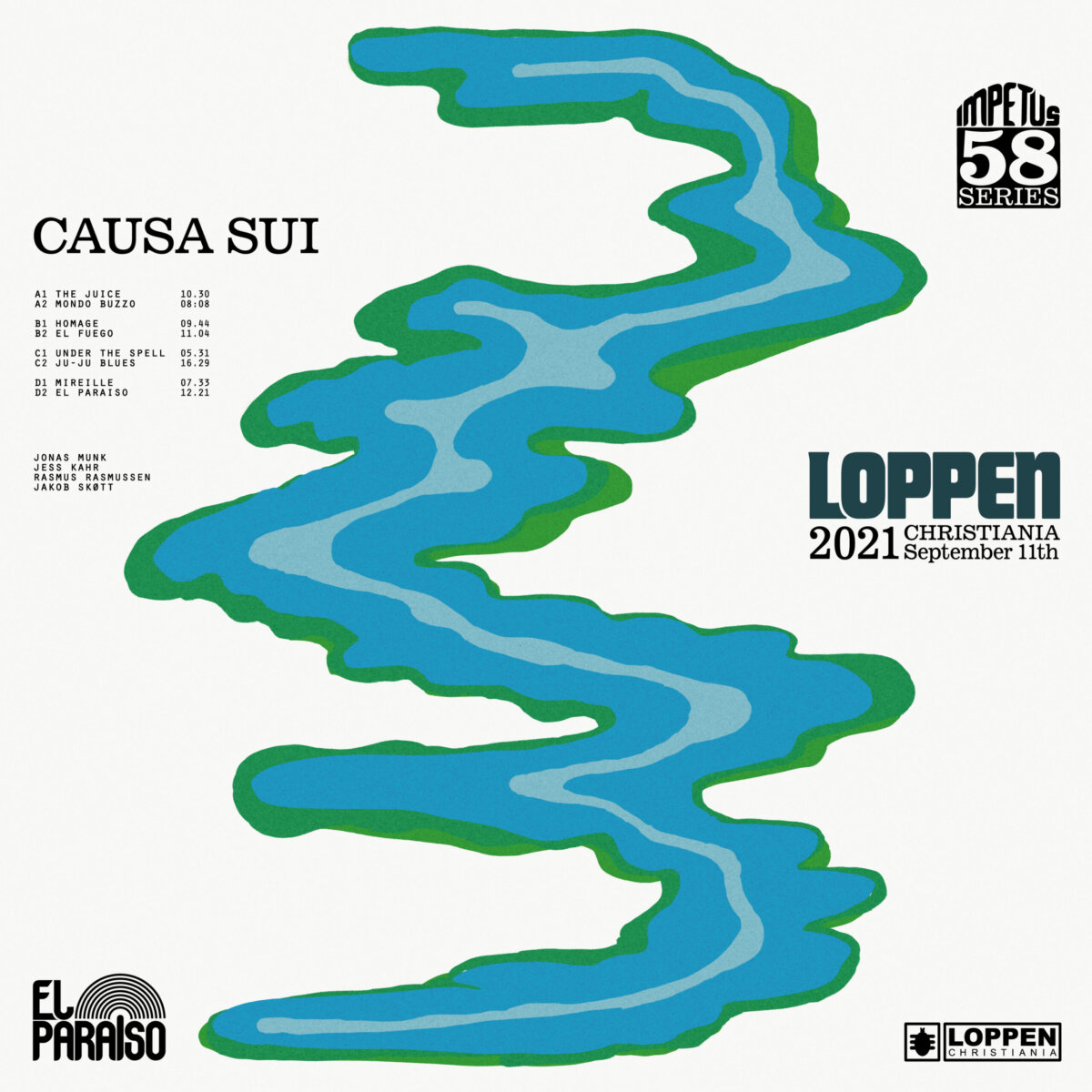
Here come Causa Sui with another live album. And I’m not saying the only reason the thankfully-prolific Danish psychedelic treasures, heavyjazz innovators and El Paraiso label honchos are only releasing a complement to 2023’s Loppen 2021 (review here) to rub in the fact that I’ve never been lucky enough to catch them on a stage — any stage — but I am starting to take it personally. Call me sensitive. In any case, despite feeling existentially mocked by their chemistry and the fluidity of “Sorcerer’s Disciple” or the 22-minute “Visions of a New Horizon,” the hour-long set is glorious as one would expect, and though Loppen 2024 is a blip on the way to Causa Sui‘s forthcoming studio album, In Flux, especially when set alongside their previous outing from the same Christiania-based venue, it highlights the variable persona of the band and the reach of their material. Someday I’ll see this goddamn band.
Underlying the grit and stoner drawl of “El Rey del Mundo de los Muertos” is the lurching progression of Black Sabbath‘s “Sweet Leaf,” and that reinterprative ethic comes to the strutting Pentagrammery of “La Verdad es Tu Ataud” as well, but in the tonal density and the way their groove snails its way into your ear canal, the vibe Fulanno bring to Nosotros Somos el Fin del Mundo is in line with stoner doom traditionalism, and the revelry is palbale in the slow nod of the title-track or the horror samples sprinkled throughout or the earlier Electric Wizard-style languidity of “El Nacimiento de la Muerte.” They save an acoustic stretch in reserve to wrap “Desde las Tinieblas,” but if you think that’s going to clean your soul by that point then you haven’t been paying attention. Unrepentantly dark, stoned and laced with devil-, death-and riff-worship, Nosotros Somos el Fin del Mundo further distinguishes Fulanno in an always crowded Argentinian underground, and dooms like a bastard besides.
Because the age we live in permits such a thing and it tells you something about the music, I’m going to cut and paste the credits for Israeli duo Ze Stoner‘s debut EP/demo, Desert Buddhist. Dor Sarussi is credited with “bass guitar, spaceships, vocals,” while Alexander Krivinski handles “didgeridoo, spaceships, drums, and percussion.” How tripped out does a band need to be to have two members credited with “spaceships,” you ask? Quite tripped out indeed. Across the 12:09 “Part I – The Awakness” (sic) and the 11:41 “Part II – The Trip,” and the much-shorter 1:41 finale “Part III – The Enlightenment,” Ze Stoner take the meditative doom of Om or an outfit like Zaum and extrapolate from it a drone-based approach that retains a meditative character. It is extreme in its capacity to induce a trance, and as Desert Buddhist unfolds, it plays as longer movements tied together as a single work. There is massive potential here. One hopes Sarussi, Krivinski, their spaceships and didgeridoo are just beginning their adventures in the cosmos.
Oslo-based newcomers Arv aren’t shy about what their sound is trying to do. Their debut album, Curse & Courage, arrives via the wheelhouse of Vinter Records and brings together noise-laced and at-times-caustic hardcore with the atmospherics, echoing tremolo and churning intensity of post-metal. They lean to one side or the other throughout, and “Wrath” seems to get a bit of everything, but it’s a harder line to draw than one might think because hardcore as a style is all urgency and post-metal very often brings a more patient take. Being able to find a place in songwriting between the two, well, Arv aren’t the first to do it, but they are impressively cohesive for Curse & Courage being their first record, and the likes of “Victim,” the overwhelming rush of “Forsaken” earlier on and the more-ambient-but-still-vocally-harsh closing title-track set up multiple avenues for future evolution of the ideas they present here. Too aggressive to be universal in its appeal, but makes undeniable use of its scathe.
I’m not sure what’s going on in “Erotik Fvel P.I.M.P.,” but there’s chicanery a-plenty throughout Fvzz Popvli‘s fourth full-length, Melting Pop, which is released in renewed cooperation with Heavy Psych Sounds. Hooks, fuzz, and the notion that anything else would be superfluous pervade the Indiana Jones-referencing “Temple of Doom” and “Telephone” at the outset, the latter with some choice backing vocals, and they kick the fuzz into overdrive on “Salty Biscvits” with room besides for a jangly verse. Running an ultra-manageable 30 minutes, the album breaks in half with four songs on each side. “Kommando” leads off the second half with dirtier low end tone ahead of the slower-rolling “Ovija,” which shouts and howls and is all kinds of righteously unruly, where “Cop Sacher” punks at the start and has both gang vocals and a saxophone, which I can say with confidence nothing else among the 70 records in this Quarterly Review even tried let alone pulled off, and they close with due swagger and surprising class in “The Knight.” Part of Fvzz Popvli‘s persona to this point has been based in rawness, so it’s interesting to hear them fleshing out more complex arrangments, but at heart they remain very much stoner rock for the glory of stoner rock.
The tone worship is there, the working-class-dude stoner swing is there, and the humor that might result in a song like “Hypertension” — for which no less than Bob Balch of Fu Manchu sits in — so when I compare Rust Bucket to Maryland’s lost sons Earthride, please know that I’m not talking out of my ass. The Minnesota-based double-guitar five-piece revel in low end buzz-tone, and with no-pretense groove, throaty vocals and big personality, that spirit is there. Doesn’t account for the boogie of “Keep Us Down,” but everybody’s gotta throw down now and then. They shift into a sludgier mood by the time they get around to “The Darkness” and “Watch Your Back,” but the idea behind this first Rust Bucket feels much more like a bunch of guys getting together to hammer out some cool songs, maybe play some shows, do a record and see how it goes. On paper, that makes Rust Bucket an unassuming start, but its anti-bullshit stance, steady roll and addled swing make it a gem of the oldschool variety. Much to their credit, they call the style, “fuzzy caveman dad rock.” They forgot ‘bearded,’ but otherwise that about sums it up. Maybe the beard is implied?
It is appropriate that Mountain Dust named their third LP after themselves, since it finds them transcending their influences and honing a cross-genre approach that’s never sounded more their own than it does in these nine songs. From the densely-weighted misdirect of “Reap” with its Earth-sounding drone riff through the boogieing en route to the mellower and more open soul-showcase “Waiting for Days to End” — backing vocals included, see also “It’s Already Done” on side B — and the organ in “Vengeance,” the dynamic between the Graveyard-style ballad “This is It” and the keyboard/synth-fueled instrumental outro “All Eyes But Two,” Mountain Dust gracefullly subverts retroist expectations with individualized songwriting, performance and production, and this material solidifies the Montreal four-piece among the more flexible acts doing anything in the sphere of 1970s-style heavy rock. That’s still there, understand, but like the genre itself, Mountain Dust have very clearly grown outward from their foundations.
Posted in Whathaveyou on January 17th, 2025 by JJ Koczan
Taking part in a bill that also includes Wyatt E., Daily Thompson, Karkara, Daevar, Dunes, Skyjoggers, Green Milk From the Planet Orange, Aptera, Djinn, and the house band Vestjysk Ørken, it’s hard to think of Causa Sui coming to the lineup for Esbjerg Fuzztival 2025 this June as anything other than heavy psychedelic figureheads. Not only to they represent the national underground of Denmark, where the fest also takes place (in Esbjerg, oddly enough), as one of the country’s greatest exports, but they bring a veteran presence among a slew of up and coming bands. I don’t know that they’re headlining and I don’t know that they’re not, but you would definitely expect to see them later in the day, whichever day they end up playing.
This announcement — and I think Causa Sui are a band to stand well alone — is the first of three that Esbjerg Fuzztival will do for its 2025 edition over the next couple Fridays. I’m going to try to keep up with it — you might recall Desertfest Oslo did something similar in Dec. — and so keep an eye next Friday to find out who else is still to come. I think these are the last lineup adds? I only know what I’m told, but either way, the more Causa Sui play the more live albums they might put out and that’s a thing that makes the world a better place.
From the PR wire:
ESBJERG FUZZTIVAL 2025 – Causa Sui to Play!!
Proud to once again host the legendary Kings of instrumental heavy psych Causa Sui.
Just a few months ago they released their newest album “From The Source” and hailed as a landmark achievement from a band that consistently change up the definition of what a “heavy” sound can be. The epic 23 minute long “Visions of a New Horizon” takes everything you know about heavy psych, strips the sound to its core and add layers upon layers of abstract beauty. No words are needed when they play, yet so much emotion is translated through their vibrations. This band is pure art, and we are looking forward to once again just stand in silence and awe and be moved.
Posted in Whathaveyou on January 9th, 2025 by JJ Koczan
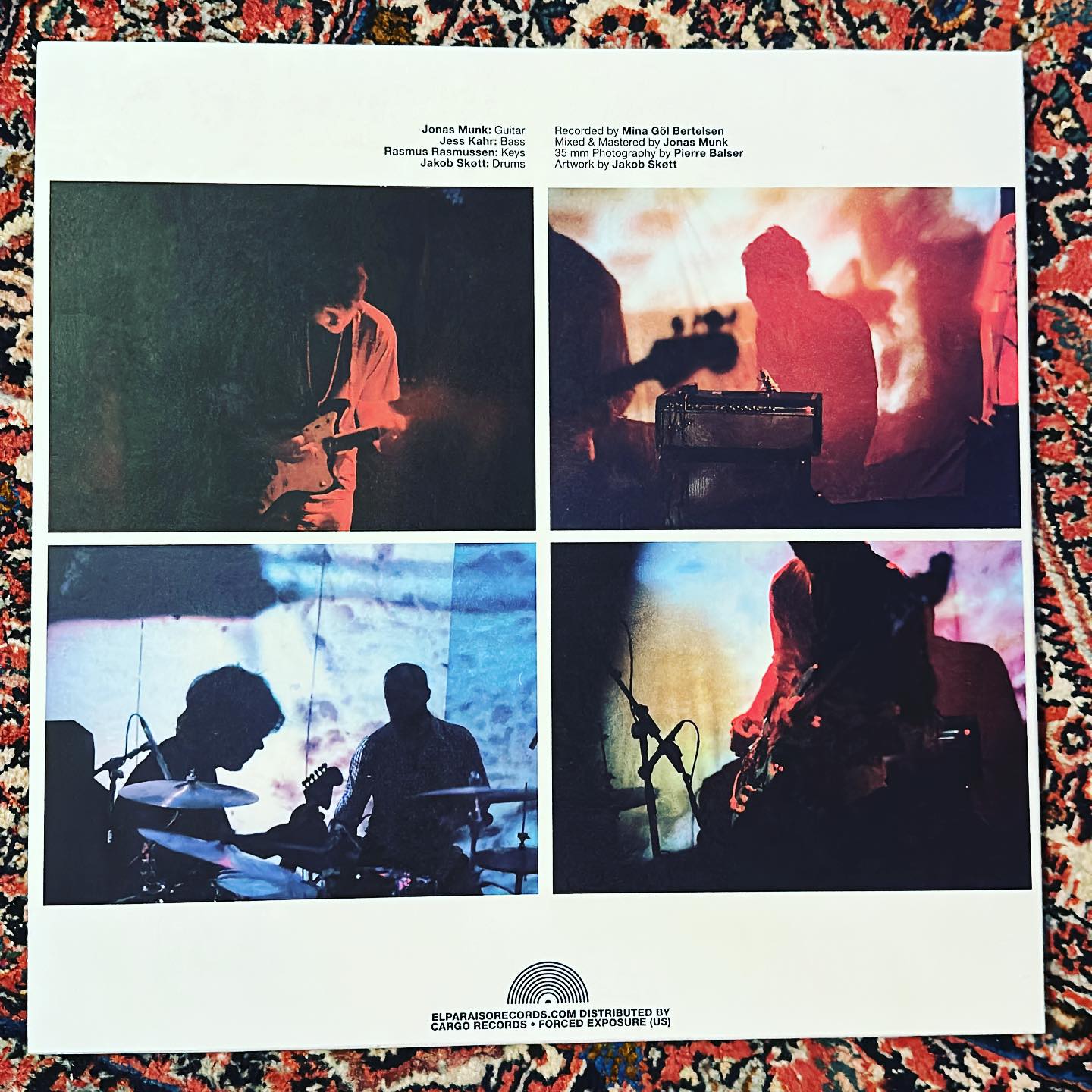
Recorded this past August at the titular venue located in the reportedly-actually-free area of Christiania in Copenhagen, Loppen 2024, is the forthcoming live album from Causa Sui set to release on Feb. 7. It’ll be here quick, and while I won’t disparage El Paraiso vinyl or those who consume it, I’ll note there are CDs for those like me who remain loyal to the smaller of the plastic-disk formats. However you get it, it’s live Causa Sui. Not like you’re gonna go wrong.
One might inevitably think of Loppen 2024 as a companion-piece to Loppen 2021 (review here), which the band put out through their label in 2023, but I don’t actually know if that’s the intent. They could do six of them, playing different sets each — or, you know, maybe repeating a night across two different sets recorded in two different years to emphasize the change and growth taking place in the band over that time — put them all out for the next 10 years and make it a series, while still doing studio LPs. Honestly, the more these guys record what they do, so much better off is the world.
I’ve still never seen Causa Sui. Could 2025 be the year?
Here’s info from the preorder page and a clip the band posted on socials:
Causa Sui returns to Loppen with 4 of 6 tunes never recorded live before, incl. their 22 minute opus Visions of a new Horizon. On 12″ + 10″ double LP on randomly coloured eco-mix vinyl, strictly limited to 1000 copies. Also available on CD. Ships Feb. 7th.
Causa Sui returns with a new live album, recorded at their home turf – the legendary Copenhagen venue Loppen, located at the famous, and notorious, freetown Christiania – a venue the band has played more often than any other throughout their 20 year career.
This set is the perfect companion to last year’s career highlight “From The Source”, which saw the band condense the multiple stylistic aspects of their sound into an awe-inspiring 47 minutes. Represented here are key cuts from that album – including the sidelong 7-part epic “Visions of a New Horizon” – as well as a few fan favorites such as “Red Sun in June” from the band’s Summer Sessions series, which has never previously been released in a live version. In this rendition the band let themselves get carried away, riding on the energy of the room, soaring into jammy Grateful Dead territory. Elsewhere the band explores jazzy, improvisatory group interplay (The Spot) and get as heavy as they can get (Soledad, Boozehound). Getting carried away is what Causa Sui are all about when playing live, and that mentality is captured in entirety on this set. Mixed and mastered by Jonas Munk from a multitrack soundboard recording.
12″ + 10″ double LP on randomly coloured eco-mix vinyl, strictly limited to 1000 copies.
What exactly is the ‘source’ referenced in the title of Causa Sui‘s From the Source? Is it meant to evoke some notion of an aspect of the band beyond themselves? I don’t think it’s a coincidence that it brings to mind an advertisement for spring water; something refreshing and natural that can be traced back to a specific locale, or in this case, to guitarist Jonas Munk, drummer Jakob Skøtt, keyboardist Rasmus Rasmussen and bassist Jess Kahr, to their label, El Paraiso Records, and to the singular chemistry they bring to instrumentalist heavy psychedelia, born of jazz-like explorationalist tendencies and unflinching in aural progression. Is that the ‘source?’ In a practical way, the answer is inevitably yes. It’s their record. They made it. But are they naming the intangibility — what recovering alcoholics call the ‘higher power’ — of communion and musical conversation? Less about place than spirit?
In this way, From the Source says much while saying little, and that’s nothing new for the self-recording/self-releasing Danish outfit, who offer four tracks across a 45-minute span, harnessing atmospheres and vibes from classic psych and pushing through their own interpretations around where that can take them, from the three songs tucked snugly into side A — “Sorcerer’s Disciple” (8:02), “Dusk Dwellers” (5:18) and “The Spot” (9:33) — to the massive, multi-movement mashup of “Visions of a New Horizon” (24:09) that comprises the entirety of side B and is the longest single work the band has ever done, finding new levels of expanse without sacrificing the flow so readily demonstrated from the mellow and immersive outset.
It’s been four years since Causa Sui released 2020’s Szabodelico (review here), and in that time Skøtt (along with Martin Rude and Papir‘s Nicklas Sørensen) has issued three full-lengths with Edena Gardens, and Munk and Skøtt have both participated in the London Odense Ensemble, but late last year Causa Sui put out the live album Loppen 2021 (review here) that captured an especially rocking post-pandemic blowout, and so From the Source doesn’t arrive following an absence, necessarily, even if it does offer some sense of redirect.
What I mean by that is that Szabodelico, which was named in honor of Hungarian jazz guitar legend Gábor Szabó, was a heady affair. And Causa Sui probably could have done another album in a similar vein and moved forward in sound — that’s the kind of band they are; no matter where they would go on a release, you would be able to get a sense of progression from it — but From the Source speaks to something deeper rooted in who they are. Something looser in ideology, if still purposeful in arrangement and structure.
The material feels jam-based as “Sorcerer’s Disciple” begins with stick-clicks and unfolds a quick welcoming resonance of organ behind the first of many winding lead guitar figures to come. Punctuated by snare, warmed by the hypnotic cycles of bass, the members of the band are in immediate complement to each other, and it’s a sound that would of course work on the stage but highlights an understated lushness in their studio sound that has been missed lo these last four years. Fuzz emerges, wah swirl, more crash than ride; they crescendo, regroup and push forward again smoothly and with deftly mixed, identifiably-theirs texture.
They don’t shy away from getting noisy as “Sorcerer’s Disciple” hits its last peaks, but the comparatively brief “Dusk Dwellers” goes in its own direction, with ’60s-psych electric organ, a rolling bassline and melancholic guitar that gradually comes to the forefront over the first two and a half minutes, settling into an almost Western progression that’s more than a solo. It’s not quite a drift, but not far off as wisps of descending lead lines are cast out, the bass holding the sway, almost post-rock, but nowhere near the modern shoegazing subset of that. The keyboard line speaks later to bring it down. An exercise in subdued, organic fluidity, and no less entrancing than the opener, but with its own impression and stylistic take.
This pattern holds as “The Spot” leans into a lightly chugging rhythm and twists fuzzy guitar around that, a beginning that’s more immediate but still in no hurry to get where its nine-plus minutes will take it — not that it should be. A heavier strum gets twisted into a riff that feels and is central, very heavy-psych in its push and alignment at the end of its measures. It opens to a stretch of bassy jazzy vibing with keys (maybe Rhodes?) on top. Dreamy and heavy. Once more, they’re all-in. Keyboard gives a jazzier feel than the guitar, the bass and drums are comfortable working around both, and the guitar at the midpoint seems to be improv but leads thoughtfully into pulses and light forward shove with Skøtt hitting harder in the second half, growing through repetitions. The ‘source’ is dynamic, though that might be one of the least surprising aspects of what Causa Sui do here.
A side flip is required on vinyl, but the linear-format transition to “Visions of a New Horizon” happens naturally just the same, and by this time there’s little question that it would. The band has noted seven component sections in “Visions of a New Horizon,” and most of those are signaled out by stops of varying lengths and hardness. The piece-of-pieces, then, begins with classic prog mute-and-turn in the guitar, hinting toward build more than building, and at 2:40, the next section starts with more of a shuffle, less prog, more urgent, maybe a chase. Munk‘s guitar howls light (at first) as the sound moves forward and back in three dimensions, willfully headspinning, then the guitar drops at about 4:30 as Kahr‘s bass holds the chase, turning jammier, shimmering. Trippier places to be just then. They make the journey a pleasure to undertake.
Just before six minutes in, a new, solidified guitar line arrives with hand-percussion alongside the drums, purposeful and brimming, a look at a place and time, but not giving any sense of dwelling there. The next movement starts at 7:08, ethereal and unfolding with Mellotron (I think) and melodic warmth in the guitar and bass, drums conveying subdued but not sad motion. Do I need to say it’s patient? Once more, the guitar moves to the forward spot with soft echoes, bright not blinding and abiding by an ‘easy does it’ ethic. It touches on wash of synth/effects but isn’t ready to give over completely yet, and instead makes its way into a more gradual letting go to a stop at 11:50 or thereabouts.
Synth swells in as a backdrop for the guitar reintroduction. They’re past halfway into 24 minutes now, sound billowing and wisping around itself, rhythm taking shape beneath the guitar and keys of various sorts that seem to come and go. There’s space for all of it. The listener has a sense of the build happening, but as with “Sorcerer’s Disciple,” it’s less about volume than the form of what they’re playing. A bed of Rasmussen‘s organ gives a psych-drone tinge to the procession as Skøtt seems somewhat impatient in his snare hits; the guitar swirl repeating. Admirably restrained, they stop at 18:48, and Munk‘s guitar leads to the next section with more of a roll in the drums. They’re still not going to go over-the-top — too classy for that — but if you have a minute to slice open your forehead and let your third eye out, it might be the time as they hit 20 minutes and enlighten a new comedown.
The end is nigh. Big strum at 21:36 announces arrival at the duly meditative ending section, establishing a pattern of single crashes and distortion, feeling like the totality moment of that eclipse earlier this Spring. They’re not concerned with payoff, or epilogue. It just is, and it ends bookending with quiet guitar echoing back to the start, however many lightyears ago that was. Behold the ‘source,’ tapped.
No doubt there are an infinity of ways in which one might experience From the Source, including the one mapped out above. What I’d say to that idea is that the most justice the listener can give the album is by putting it on and going where it leads, whether that’s a place of emotion or conscious thought, a narrative structure, or a nod-along and mental fadeout. None of it is invalid, and as an experience, From the Source comes across as malleable to whatever a given person hearing it brings of themselves to that process. Gorgeous and unmistakably Causa Sui‘s own, it finds the heart within their ever-expanding methods and highlights the relationship between these players that is such a huge part of what makes them so special. As ‘sources’ go, it is precious and among the most vivid.