Posted in Whathaveyou on June 1st, 2026 by JJ Koczan
I mean, if we’re checking credentials — and mind you, we’re definitely not doing that — I’m not sure you get more ‘desert’ musically speaking than having the likes of Brant Bjork, Mario Lalli and Gary Arce as the first two lineup reveals for Mojave Experience 2027 next March in Joshua Tree, California. That’s desert rock’s foremost ambassador (Bjork), and two parties essential to the formation of the genre in the first place in Arce and Lalli (the latter being in Bjork‘s trio, but also a bandmate of Arce‘s in Yawning Man, and he’s played in Big Scenic Nowhere as well, let alone Fatso Jetson or any of the rest of his staggering career), so yeah, if it’s boxes you’re ticking, tick away.
To me, it reads like a hell of a beginning from a festival that probably learned some crucial lessons with its successful first edition earlier in 2026. I don’t know who else is getting added here, or when, but as they’ve started rollouts, I wanted to at least get this post up so if you’re not following along, you can. I’ll do my best to do the same between now and whenever the full lineup is out. Obviously there’s time.
But, with tickets on sale as of today, well, you get the idea. Here’s what the social media had to say about it:
Desert music & culture festival revives the free spirited vibe of Desolation Center, High Desert generator parties and early days of Coachella.
The Mojave isn’t just a backdrop — it’s the raw, unfiltered stage where music, art, and chaos collide. Out here, under endless stars and brutal sun, the desert strips away the fake and leaves only what’s real. The Mojave Experience was born from that spirit. It’s not another sanitized festival in a city park, it’s a gathering for the wild ones, the wanderers, the true believers who know the desert doesn’t hand out comfort, only freedom.
The Mojave Desert is the reason this exists. Out here, under open sky and unforgiving sun, there’s nowhere to hide. The desert cuts through the noise and leaves you with what’s real.
The Mojave Experience came out of that. It wasn’t built and it wasn’t manufactured. It was pulled straight from the dirt.
Year one proved something — people will come from anywhere for this. Not for comfort or for convenience. They come for something they can’t get anywhere else. Its for the ones who feel more at home under the desert sky than anywhere else.
Desert legends. Road-worn bands. New blood. All colliding in the same place, for a couple nights, under the same sky.
Well, this was a markedly joyous Quarterly Review. I know it’s been a good year already for music and there’s more coming, but it’s always something of a relief when I get to Wednesday or Thursday of one of these things and don’t want to bash my head into a wall until I lose consciousness. The horrors persist but so do the riffs. I am fortunate for that.
If we’re being honest, I do these for myself. I do it as a way to keep up with things that are coming out or are already out (sometimes for a while; I think there were two 2025 outings in here this week), but it’s also a different kind of challenge to get through so much, and I enjoy that probably more than I generally say. This week I added a bunch of stuff to my best-of-2026 lists, and that includes today as well.
But while it may be me being self-serving in terms of musical exposure, I always hope you’ve been able to find something in this mix that you hadn’t heard before that speaks to you. Or maybe you agree with something I said, or disagree, or whatever. Maybe some piece of cover art made you feel something. Maybe your day got a little better just for that. Whatever it is. Please know that if you’re taking part in this at all, on any level, it’s appreciated.
Back in Sept., maybe? I’ll see if I can make it through the summer. Depends in part on how much comes in, which is almost always a flood these days. Not mad about that, by the way.
Alright, here we go. Thanks again for reading.
Quarterly Review #41-50:
Restless Spirit, Restless Spirit
Fullness of push, vitality in delivery, a distinctive take on craft drawing from a range of intangible influences — if Restless Spirit‘s self-titled fourth album is the band declaring themselves, then they picked the right record to share their name. The Long Island-based Magnetic Eye Records trio have fostered a next-generational take on riff metal able to sound massive and to move, not necessarily drawing from Sleep, but rather tipping that foundational balance more toward metal’s traditionalism. But they’re not an overly aggressive band, and even in the faster stretches of “Desire Lines” or the subsequent galloper “Desolation’s Wake,” or the penultimate “Time and Distance” with its more angular groove, they avoid a dudely trap into which many others have fallen. Ultimately, that balance is the place where Restless Spirit dwell in terms of sound, and it’s become more their own over time. This album would seem to be not only them acknowledging that, but embracing it and owning it outright. It’s a strong statement for any band to make at any point in their career, and the material here makes it feel all the more earned.
If you saw Brant Bjork in any incarnation between 2015-2024, whether it was solo, with Stöner, the beginnings of Brant Bjork Trio or with Mario Lalli and the Rubber Snake Charmers, chances are it was Ryan Güt holding down the crucial groove on drums. His first solo album, The Shastafarian, finds him stepping forward as a multi-instrumentalist and producer, and across 37 minutes from the Funkadelic-style talk-over-it startoff in “Beggars and Choosers” to the Blue Öyster Cult cover “Veterans of the Psychic Wars” that closes, Güt offers a spread of classic influence manifest in individualized songs. “Basically Dead (This Town)” feels like Thin Lizzy revelry, “Song for G” keeps its singer-songwritery acoustic foundation despite a full arrangement, and the self-jam in “On the Up and Up” digs in with surprising aplomb for only being one person. There’s a synthier wash in “Sand to Snow,” and that’s telling for a more experimental second half with the dirty fuzz of “Crig Lord Archduke Earl of Montague (The Monkey)” and the dub instrumental “DHS (12th St. Remixes)” entrances ahead of the grounded finish with the already-noted cover. It will be a tragedy if Güt and Zack Oakley (ex-Joy, etc.) never work together, as they seem to share so much in basic intent and both are fully capable of building an album solo, but on his own Güt sets up a broad progression here and one hopes the exploration continues.
As opening cut “Alienation” drifts into its second half, the drums just barely holding onto ground to hint at the swing-around that’s coming, Dutch trio Bismut reaffirm their progressive purposes. Since their inception, the Nijmegen instrumentalist trio have been more about flow than structure, and Matsutake as their fourth full-length, continues the journey. Each piece has its own intention, be it the headspinning “Assemblage” or the tense-until-it-blows-out “Neugier” just before, or the two-and-a-half-minute kissoff “Salvage,” but no question they hit an apex of heft in the pairing of “Contamination” and “(Potentially) Immortal,” which are the two longest and most dug-in tracks, Bismut carrying a spirit of urgency as much as aftermath, with the latter hinting at techno before hitting into a payoff righteous enough to count for the whole record’s procession. The vibe is restless, which is to say Bismut aren’t sitting still, aren’t resting too long in a single part, but it’s the fluidity born out of their sheer chemistry that makes it all work.
Sceaduhelm might be the outright heaviest I’ve heard Crippled Black Phoenix sound in their 20-plus years — at least in parts; they’re never quite only doing one thing at a time — but that’s still only half the story when it comes to the atmosphere and the palpably gothy mood spread across the 66-minute 2LP. I know, it’s another brilliant CBP album? Ho-hum, business as usual. Maybe it’s true that the band will be more appreciated 40 years on than they are now, but as samples draw together the various sections/sides, vocalists swap out between “No Epitaph – The Precipice” and “Hollows End,” etc., the band remain unthethered to genre and unto themselves in the world they create. “Vampire Grave” is so ’90s goth kitsch you can smell its clove cigarettes, but neither “Colder and Colder” nor “Under the Eye,” which follow, want for resonance, and the penultimate “Tired to the Bone” provides a gorgeous comedown before they cap with the yes-it-was-all-real-you-weren’t-dreaming “Beautiful Destroyer,” rolling with marked largesse into a suitably beautiful finish. I guess it’s hard for a band who don’t tour super-often or hock records on social media like mini-infomercials to get hype in this age of horrors, but damn. Even if you’ve never heard Crippled Black Phoenix before — maybe especially? — Sceaduhelm is a clarion to be heeded.
It’s been a productive half-decade for Néstor Ayala Cortés, whose solo-project Some Pills for Ayala began following the dissolution of his prior outfit, At Devil Dirt. Handling multiple instruments and samples, vocals and production, Some Pills for Ayala have been consistent in regards to exploring various facets of rolling heavy tonality, and the fuzz runs unsurprisingly strong in Incarnate as well, though the rawness of noise amid the stonerly swing of “I Can’t Lie” and the upped level of crush in “Until You Die” demonstrate some of the nuance Cortés has grown into as the band has moved forward. Grunge and aughts-era heavy melodymaking are still part of it, but Incarnate is a product of nothing so much as the artist who made it, and listening brings to light just how much Some Pills for Ayala stands willfully apart from the microgenred norm.
Admirably adventurous and consistently antifascist UK psychedelic rockers Gnod begin a stated trilogy with Chronicles of Gnowt Vol. 1, and obviously I haven’t heard the other two parts yet, but this six-track/42-minute outing taken on its own could hardly be said to feel incomplete. Side A is bookended by “Three Trees (Part 1)” and “Three Trees (Part 2),” comprised of drifting acoustics manipulated in the second installment by effects, and between them, “Shadow Mirror” heavy-ambles through a lysergic slog and “Neptune” indeed offers planetary distance in its far off rumble. That turns out to be prescient as “All Tunnel No Light” (9:56) and “Ekstasis” (10:32) comprise the entirety of side B, the former growing into a massive, slow lurch and the latter less structured-feeling in its makeup despite the drums holding on to the central groove as it makes its way toward the relatively quick comedown with residual effects churning thereafter. This entire triptych might just be a blip in the larger breadth of Gnod‘s catalog, but that doesn’t mean it isn’t significant either there or in the larger scope of heavy psych rock.
Mothertruck is the conceptualist debut album from Athenian trio Fuzzing Nation, who rally listeners to their tale with heaped-on hairy riffery and a fervent heavy rock execution. They’re not over-the-top fast, or making-a-point-of-it slow, but they find and inhabit a comfortable range in the middle, and in the dancey “The Elder’s Code” and the Kyussian shover “The Core Machine,” they present themselves as kin to desert-heavy, but have an underlying core of trad/classic metal, which can be heard in “Turn the Key” more than careening opener “Burning Roads,” which is a rocker through and through. Maybe it’s a fine line Fuzzing Nation gleefully tread. Fine. The narrative — pretty sure it involves a big truck; just a guess — settles into its own aftermath with “I Don’t Care at All,” capping with a last push a record that never compromises in its love of heavy rock and roll or the band’s narrative vision conveyed through it. I don’t know if they’ll keep telling the story, that happens sometimes, but if you can call your record Mothertruck and actually pull it off, you’re already on your way.
Once upon a time there was a band way out west with the unfortunate moniker Master Musicians of Bukkake. Ak’Chamel, an apparent duo, costumed and anonymous, maybe/maybe not from Austin, Texas, feel similarly fascinated with transgressing the barriers between folk musics and psychedelic arrangements, such that Spiritually Unemployed, their second album, is as intimate as it is expansive. It speaks to places that probably don’t exist — at least not in the way they’re offered as realities in the songs — and keeps a thread of irreverence in songs like “The Cosmic Vulva vs. The Post-Enlightened Tongue” and the closing “My Little Pony Apocalypse Diorama Playset.” You’ll be hard pressed to find a collection of weirder sounds, and for sure experimentation is part of the point, but Spiritually Unemployed doesn’t come across as haphazard or disconnected so much as drawn together over its 10 relatively brief inclusions and soundtracky in ethereal occasionally ways. Get weirder. No, weirder than that. Keep going. You’re almost there…
To be honest, I kind of think Sonic Secrets, as the name for the instrumental solo-project of North Carolina’s Kevin Clark (ex-Black Skies), is emblematic of the intention for the music. Diversions Vol. 1, a 10-song/20-minute offering one might otherwise consider a debut album, doesn’t come across like it was made for press, or a response, or something like that. Starting with drum parts and building around them, Clark over the course of three days went from zero to has-a-record, and listening through, the sense I get is that the process was as much the reason behind it as the need for a creative splurge. Only “The Descent,” with Western-sprawl guitar over an keyboard beat, tops four minutes long, and it and everything that surrounds portrays itself as both proof-of-concept — i.e. demonstrating that Clark can function as a band on his own, which yes, it would seem so — and the result of a craft that’s insular despite drawing from an array of stylistic influences. And it does a little bit come across like something just made to be itself, a sonic secret. One wonders how long Clark will be able to keep it that way.
The key word is “rehearsal” with Rehearsal 11.19.21, limited to 100 LP copies and released independently by West Coast supergroup Big Scenic Nowhere. Offered as two full sides, the vinyl captures the band — Tony Reed (Mos Generator, etc.) on vocals/keys/bass, guitarists Gary Arce (Yawning Man, etc.) and Bob Balch (Fu Manchu, etc.) and drummer Bill Stinson (Yawning Man) — preparing for their first-ever live show. The difference is they’re playing songs they’d already written — “LeDu,” “Lavender Blues,” “Towards the Sun,” and so on — rather than jamming out the bones of what would become their next record. They still haven’t played live a ton, so hearing this material, with chatter among the members and a casual dipping into and out of the songs, brings a new dimension to their studio work up to this point, and presents listeners with another side than even a regular live album could provide. Maybe most of all, it argues in favor of them doing more with the band. Nobody involved is short on other things happening musically, but Big Scenic Nowhere‘s proggy desert heavy found a trajectory all its own. A platter such as this in raw celebration of that is most certainly welcome.
Posted in Reviews on February 16th, 2024 by JJ Koczan
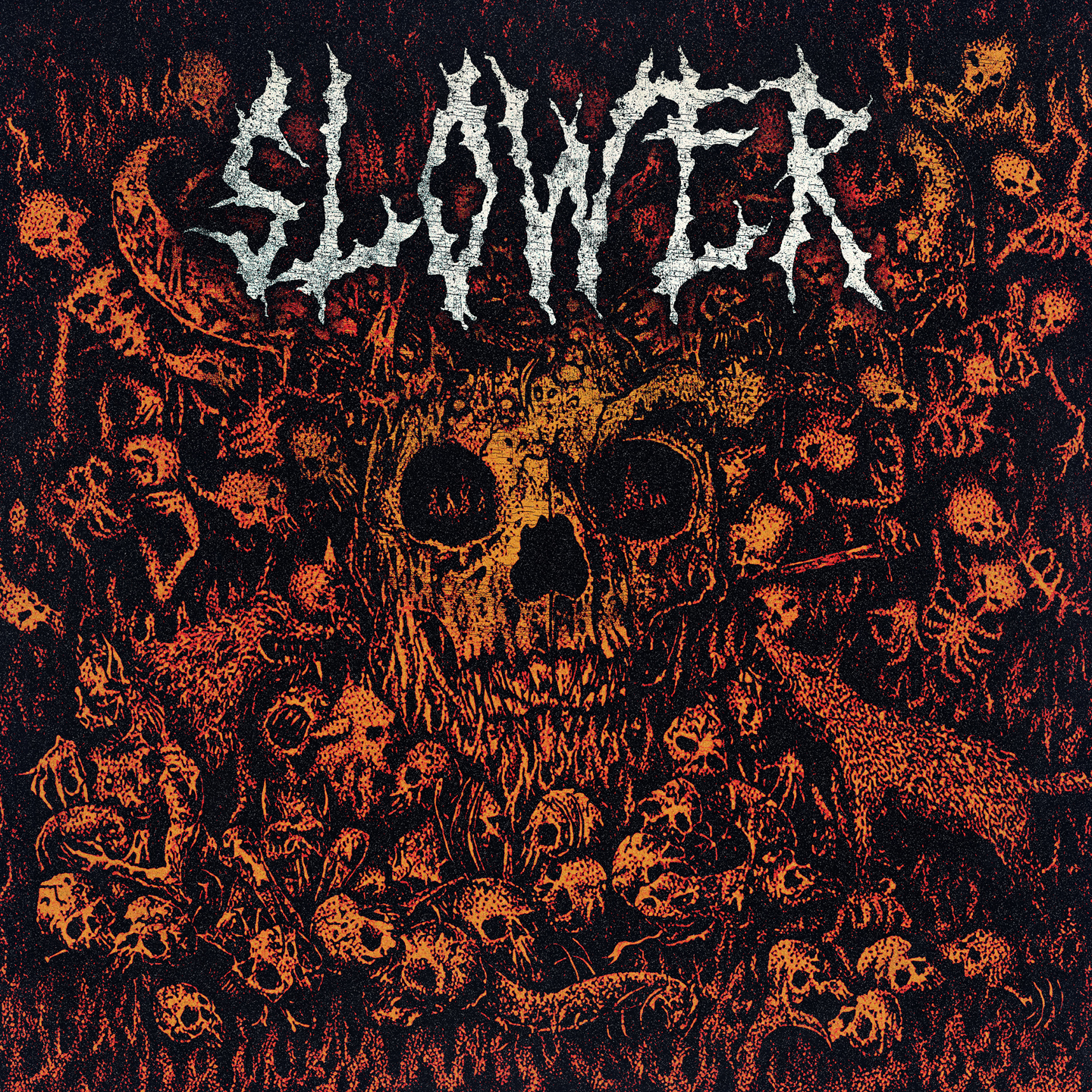
Guitarist Bob Balch would seem to be on something of a creative binge, between an impending Fu Manchu 2LP and recent releases from Yawning Balch and Big Scenic Nowhere, and with Slower he presents a manifestation of the ultimate beer-drunk band idea. “What if, like, you took Slayer, and slowed it down?”
That’s what Slower is on paper. The songs of seminal Californian thrashers Slayer, played slower. The reality of Slower, which is the Balch-led project’s Heavy Psych Sounds-delivered debut album, is a selection of five covers that offers a richer experience than the math of the band’s purpose might lead one to believe. The Slayer originals they’ve chosen to rework — “War Ensemble,” “Blood Red,” and “Dead Skin Mask” from 1990’s Seasons in the Abyss, “The Antichrist” from 1983’s Show No Mercy and, to close, the title-track of 1988’s South of Heaven — are classics within the sphere of metal, and are treated with due respect even as they’re rearranged and turned into something pointedly not what they originally were.
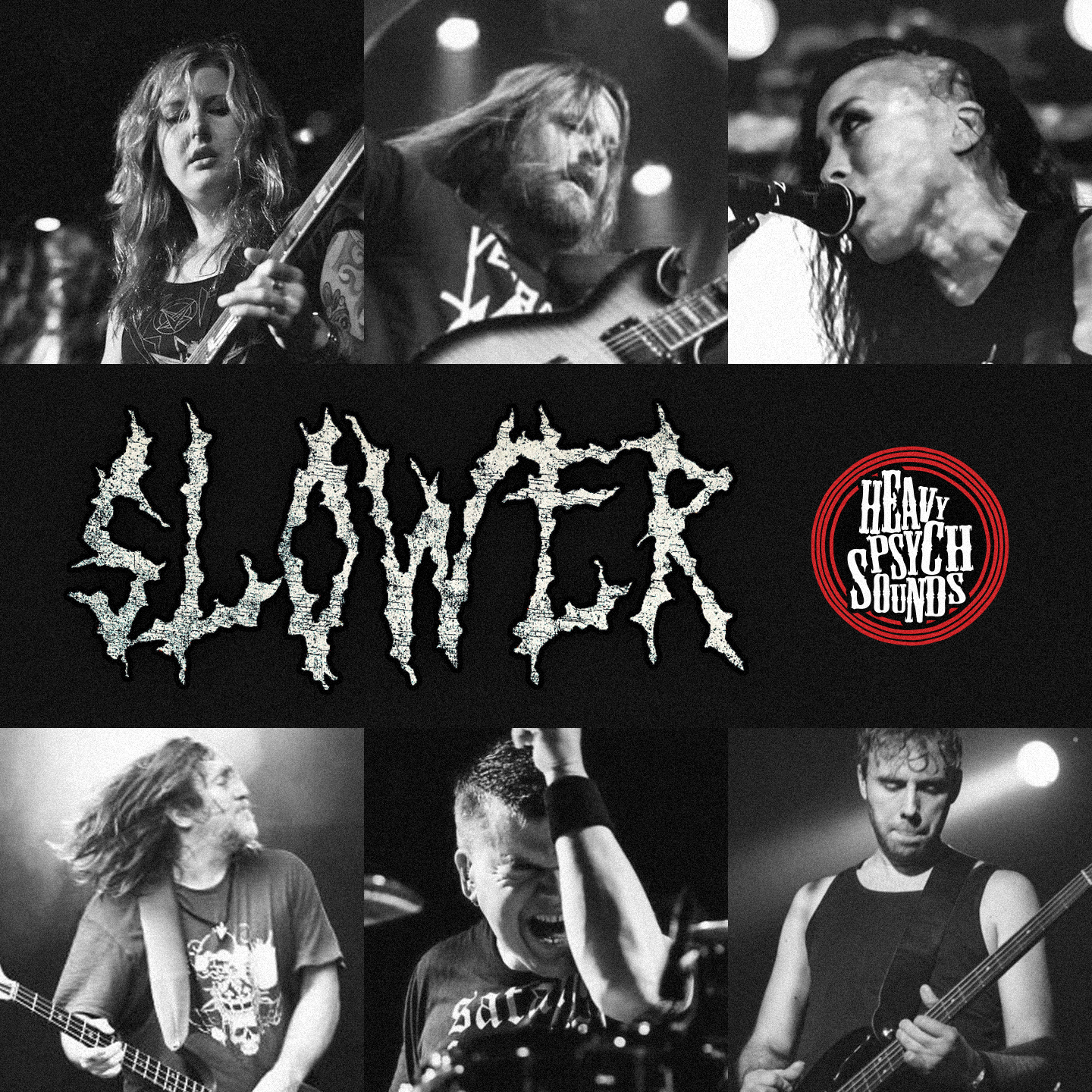
This is done with care and love of the source material, and a sense of curation that is all the more resonant with the lineup Balch assembled for the project. Drummer Esben Willems (of Monolord; he has a solo album coming in addition to appearing here) in Gothenburg, Sweden, vocalist Amy Tung Barrysmith (Year of the Cobra) in Seattle, and bassist Peder Bergstrand (Lowrider) in Stockholm comprise the ‘main band’ on the record, developing a persona of their own even on covers through means of the rearrangement process. That is, they took the songs and reworked them. No one here is inexperienced or incapable. If you believe in supergroups, Slower‘s pretty damn super even before you get to Laura Pleasants (The Discussion, ex-Kylesa) and Scott Reeder (currently Sovereign Eagle, ex-Kyuss, The Obsessed, Goatsnake, needs to do another solo record, etc.) swapping in on vocals and bass, respectively, for “South of Heaven” at the finish. A goofy, fun idea for a band/album as Slower might be, the end result is pointedly not bullshit where it very easily (perhaps with different personnel) could have been.
Underlining the point: Slower is not a tossoff. It’s not a joke band. While indeed the songs are largely reduced in tempo, there is an aspect of the project that feels a bit like the impetus behind it was Balch wanting to take on playing both the Kerry King and Jeff Hannneman (from whose 2013 death the band never really recovered) solos, which he does with all suitable respect for the personalities of Slayer‘s two guitarists, whammy squeals and speed enough to speak to thrash. If that was the case, fair enough for the homage. It’s just a thing not everyone could do at the level it’s done here. Some of those shredfest ripper solos are no less iconic than the lyrical declarations of the choruses to “War Ensemble” or “Dead Skin Mask,” and they are put on a pedestal along with a treasure trove of groove that was lurking beneath the furious intensity of the originals. “War Ensemble,” opening here as it does on Seasons in the Abyss with some transposed urgency, unveils its central riff as a righteous nodder with Bergstrand bringing new tonal presence to the verse, Willems‘ casual double-kick giving an easy ride into the stop, and Barrysmith in immediate command.
The five-minute original becomes the 10-minute cover (it is both opener and longest track; immediate points), and as a lead-in for “The Antichrist,” “Blood Red” and “Dead Skin Mask,” “War Ensemble” blends the familiar — it was one of Slayer‘s many landmarks and a live-set feature for decades before the band ‘ended’ (never say never) in 2019 with 12 records and enough influence to make a project like this happen across microgenres — the surprises it holds and affirmations it makes are crucial to what follows. One doesn’t necessarily think of Slayer as an atmospherically-minded band, though they were at times (and perhaps a second Slower LP could honor Slayer and Sabbath both in opening with the storm at the start of “Raining Blood”; uniting worlds or at least disparate ends of the same one), but Slower dig into “The Antichrist” and find a gritty slog that becomes insistent in a chorus that takes the already-doubled vocals and adds backing tracks to emphasize a depth that is Slower‘s own in a song that, being a deeper cut — as opposed to a Slayer ‘hit,’ I guess? they did used to play their music videos on the tee-vee sometimes — allows Balch (who trips out the midsection admirably taring toward psychedelia), Barrysmith, Bergstrand and Willems to flesh it out and find a new path to the rotted-soul ascension of its title figure.
The melody emergent in “The Antichrist” is expanded upon in “Blood Red,” the centerpiece of the CD and presumed side B opener on the LP, as the verse riff becomes a strut and the chorus opens to a breadth Slower have been holding in reserve. It’s an un-pop singalong, complete with backing ‘oohs’ for “You cannot hide the face of death/Oppression ruled by bloodshed/No disguise can deface evil/The massacre of innocent people,” which are lines that sadly retain their relevance these 34 years after the fact, and are more sinister for the sweetness of Barrysmith‘s delivery. With “Dead Skin Mask” and “Seasons in the Abyss” still to come, “Blood Red” has a harder road making an impression, and that was true with Slayer‘s version as well in 1990, but amid the forward roll and chug of the verse and the arrival-point feel of the hook, it is the vocals even more that distinguish it as an unexpected highlight.
And I know Slayer have a ton of iconic tracks, from the prior-mentioned “Raining Blood” through “Disciple,” “Angel of Death” — maybe better to leave that one alone? — and “Piece by Piece,” but especially the first and maybe only time out, pairing “Dead Skin Mask” and “South of Heaven” at the end of Slower‘s Slower feels natural. The latter came before the former, and is arguably the most ‘doom’ Slayer ever got, where “Dead Skin Mask” showed up on the next album and refined those very purposes. Both are the kinds of songs dudes get tattoos of, but as they have all along, Slower tread carefully in terms of balancing respect for where the songs came from and taking them where they want to go. Not to be understated is the subversive element of a woman delivering the lyrics to “Dead Skin Mask,” which was never explicit but strongly implied misogynist violence, and Barrysmith resounds in the chorus, where “Dance with the dead in my dreams…” becomes a chant and all the more consuming for that. While I wish they repeated that finish four or five more times, I’m happy to take what I can get.
As noted, “South of Heaven” brings a lineup switch, Reeder stepping in for Bergstrand — the inclusion of those two speaks as well to Balch wanting to bring a new sense of presence to the low end; he could easily have handled bass himself as an afterthought; as is, bass becomes an essential part of the character of the band in a way Slayer‘s Tom Araya probably wouldn’t have expected — and Pleasants taking over for Barrysmith. Dark toned, Balch begins on guitar and Reeder and Pleasants soon join for the opening build, ending of course with the line “Before you see the light” stretched to fill the new spaces in the riff before the guitar, bass and drums stop cold to let Pleasants croon the second part of the lyric: “You must die.”
Shit, I’m ready. Let’s go. If you could get audio tattooed on your person, that moment might be worth carrying around for the rest of your life but it’s already ingrained in the heads of Slayer fans, so take that as you will. Pleasants toys with the verse arrangement somewhat, perhaps covering some awkwardness in the patterning born of the change in pace with effects and layering, but it’s nothing that feels out of line with the mood or atmosphere Slower bring to “South of Heaven,” the stinkface-inducing stomp of Willems‘ drums glorious in manifesting a sense of methodical aggression over the chaos referenced in the chorus — “Chaos rampant/An age of distrust/Confrontations, impulsive habitat (or ‘sabbath’)” before they got right down to it, “On and on, south of heaven” — as Balch likewise digs deeper to find a nastiness of tone that is undeniable. It ends, as it invariably would, with shred given over to noise and a tease of the thuds at the end of “Postmortem” that, on 1986’s Reign in Blood, mark the transition into “Raining Blood” itself. The message seems to be: maybe next time.
Generally speaking and across a wide range of contexts, I suck at fun. Accordingly, I was a little apprehensive in taking on Slower because I felt like maybe it would be a party and I wouldn’t really be able to get my head into the right space for it. That’s not how it went, either in terms of the atmosphere of the record or my listening experience with it. I don’t know that Slower will or won’t do more — certainly no one involved lacks other projects to focus on — but I hope they do, and as a love letter to Slayer, the execution of these songs and the obvious heart and thought put into them, Slower resonates, however familiar you may or may not be with the originals.
Posted in Reviews on February 6th, 2024 by JJ Koczan
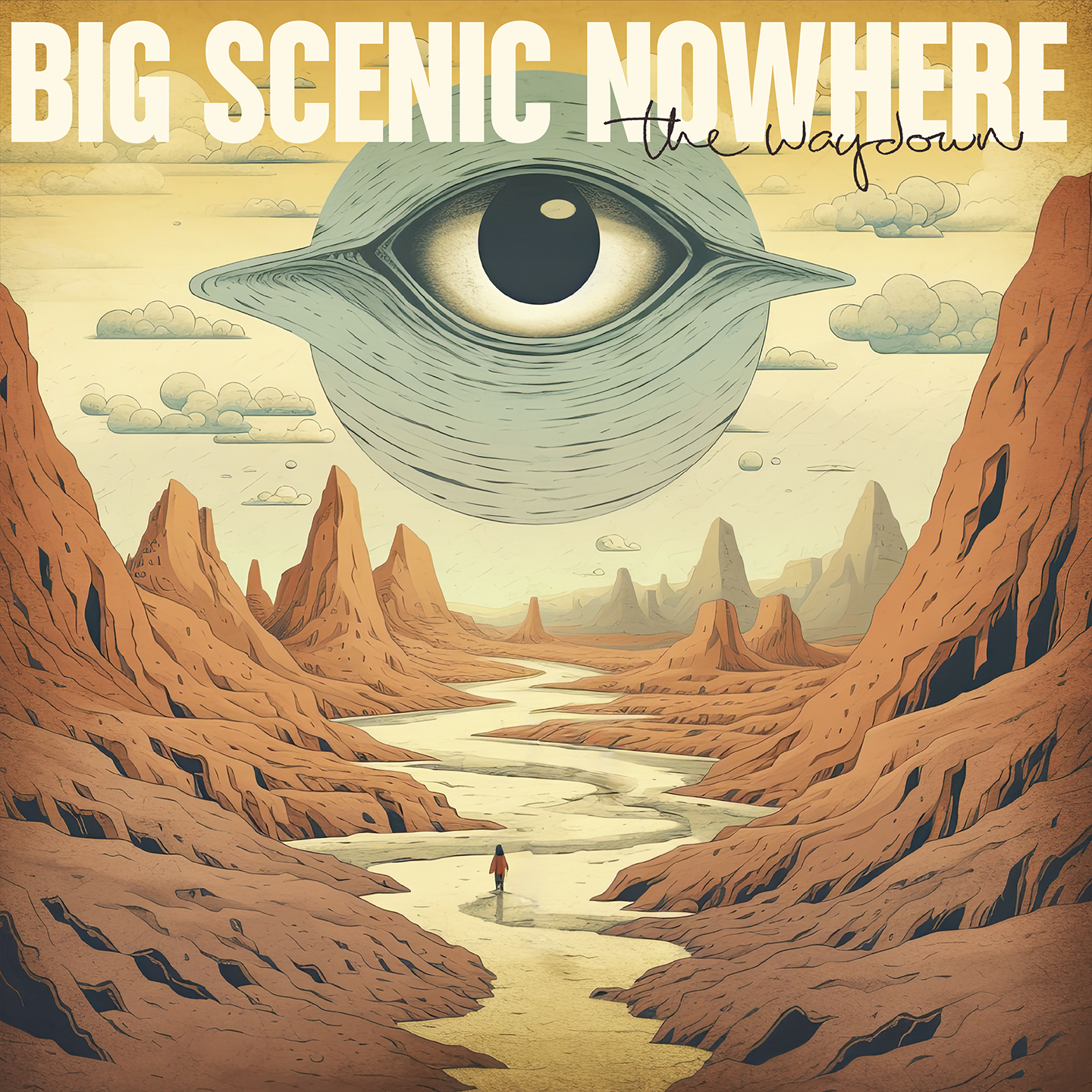
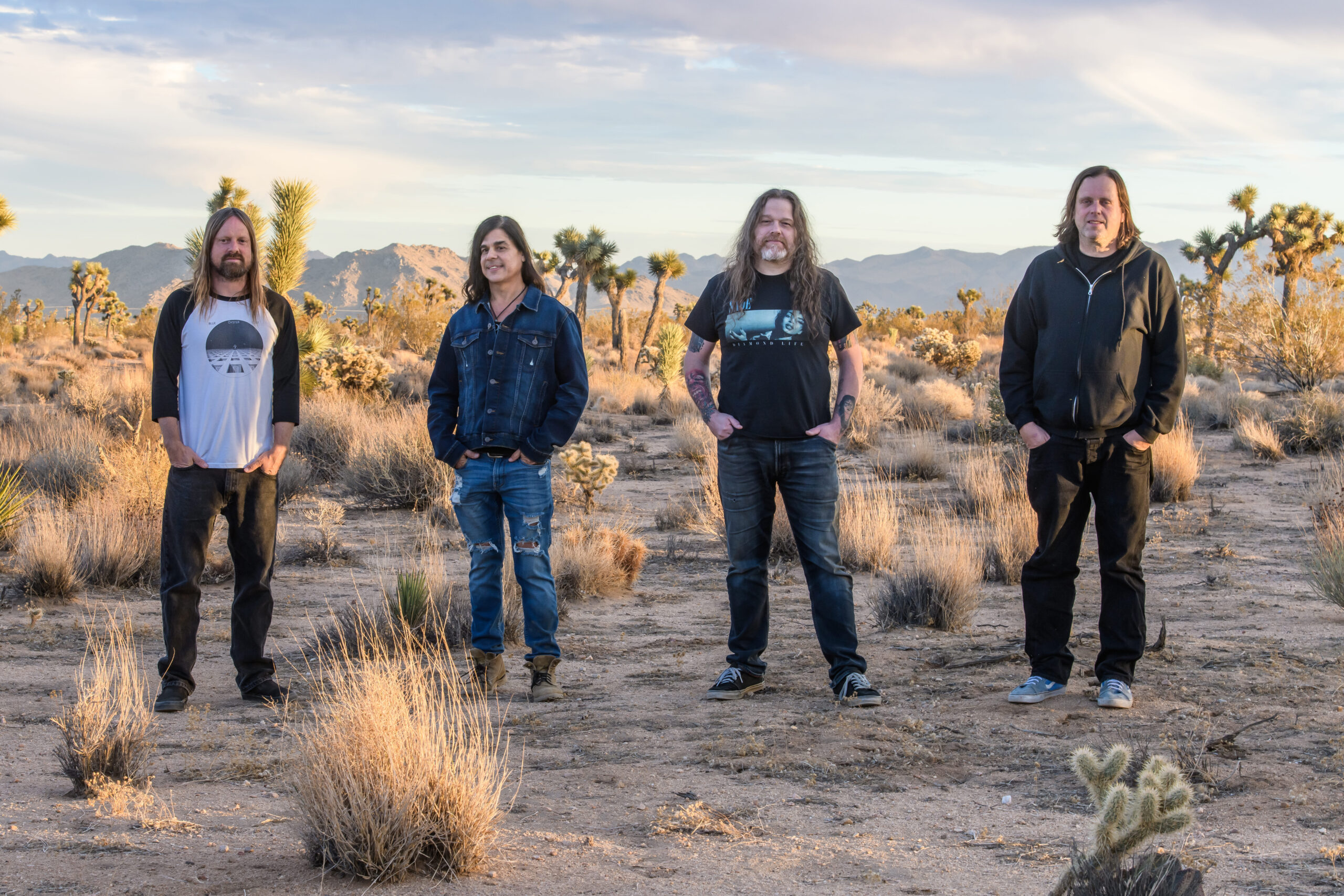
Five years on from their debut EP, Dying on the Mountain (discussed here), it still feels a little weird that Big Scenic Nowhere are an actual band, never mind sounding more established with their core lineup, more progressive and more distinct as an outfit from their other collaborations than they ever have. They might rightly be called a supergroup with drummer Bill Stinson (Yawning Man, Yawning Balch, etc.), guitarists Gary Arce (Yawning Man, Yawning Balch, Yawning Sons, Ten East, Dark Tooth Encounter, Zun, WaterWays, some new band he’s got going with Pia from Superlynx, on and on) and Bob Balch (Fu Manchu, Slower, Yawning Balch, Sun and Sail Club, ex-Minotaur, etc.) and vocalist/keyboardist Tony Reed (Mos Generator, Twelve Thirty Dreamtime, Constance Tomb, Stone Axe, etc.), though the term has fallen out of favor as these things inevitably will, but Big Scenic Nowhere‘s third full-length, The Waydown, is an accomplishment and realization of the band as themselves and shouldn’t be thought of otherwise.
While the project started as a lost Arce demo (discussed here) with completely different goals, and have always been open to guest appearances, Big Scenic Nowhere have featured plenty between 2020’s Vision Beyond Horizon (review here) and 2021’s The Long Morrow (review here) — at the start it wasn’t clear who was actually in the band, so that’s solidified as well — and The Waydown brings sit-ins from returning keyboardist/organist Per Wiberg (Spiritual Beggars, ex-Opeth, solo, etc.), guitarist Reeves Gabrels (David Bowie, The Cure), as well as former Hall & Oates keyboardist Eliot Lewis on the included Hall & Oates cover, “Sara Smile.”
Those other contributions from Wiberg and Gabrels and are spread throughout the seven-track/39-minute long-player, delivered as ever through Heavy Psych Sounds and meld with those of the band itself, but it’s Big Scenic Nowhere‘s own performances that are the highlights. I’m not even sure if it’s Reed or Balch on bass on a given track, but as much as it’s the two guitars at the forefront when considering the band, “Summer Teeth,” the slower but hypnotically hooky centerpiece “Bleed On,” and the mellow-rolling, seven-minute closer “100” — which bookends with the also-seven-minute “The Waydown” at the outset — are much bolstered by the low end, with Stinson‘s drums (or maybe Reed‘s, depending?) as the solid foundation beneath the explorations taking place.
Because while The Waydown is perhaps the most song-oriented Big Scenic Nowhere have yet been and it brings the core group into focus in no small part because of the unifying factor of Reed‘s vocals, it is still based on and carved out from jams, the band’s core process rooted in getting together for a time, banging out as much improvised or thought-of-a-part whathaveyou as they can, and sending the files home with Balch to be edited and carved into songs after the fact. It’s a heady way to do it, but it has allowed for a sense of progression in the band even as most of their material to-date has come from a single multi-day session. And on The Waydown, whether it’s the righteous creeper riff of the penultimate “BT-OH” or the declarative arrival of the first lines in “The Waydown” after the brief and comparatively minimal ambient intro, the carving, cutting, pasting and shaping results in a decisively and purposeful-seeming progressive feel.
“Sara Smile” is a departure, obviously, with Reed shifting into a gentler, soulful vocal on the cover taken from 1975’s Daryl Hall & John Oates and the band tackling an arrangement that’s something kin to a heavy/desert interpretation of AOR, but in the post-chorus-takeoff melancholy of “Summer Teeth,” the harder-landing fuzz in “Surf Western” in the midsection riffing and how it changes back to shimmer for the verse, and even the dreamy vibe brought to “100,” there’s an attention to detail in The Waydown that tells you the songs have been worked on and, considering the depth, loved, before arriving in their final forms as presented, and that thoughtfulness in composition — even if it comes after the moment the actual music was made — and consideration of atmosphere while building same isn’t to be discounted. That Reed and Balch are also studio engineers kind of makes the band possible as they are now, as Reed‘s home in Washington State and the rest of the band’s in Southern California is a distance crossed by craft, Balch getting parts set in a branched collaboration with Reed adding vocals and maybe keys or drums, and so on, which makes Big Scenic Nowhere multi-tiered as regards creativity when one considers Balch‘s other direct partnership in the band, with Arce on guitar.
And what about Gary Arce? Is the man whose guitar made the desert sing an afterthought on The Waydown? Hardly. As Reed steps forward in lead-singer fashion, Arce‘s signature tone is what lends the proceedings their lightness, making the atmospheres of “Bleed On” and “100” possible and speaking to the improvisatory roots of the songs themselves. I’m not sure “Surf Western” would exist as an aural concept let alone the actual track on the record if it weren’t for Gary Arce, and the subdued standalone strums after three minutes in — in the drawdown right before the big riff circles back with a wallop — Big Scenic Nowhere remind that a goodly portion of their emotional resonance comes from the string section, even if that too is changing with the highlight stretches of bass as noted.
Is The Waydown the best Big Scenic Nowhere record? Yes. It feels like it’s the most vivid manifestation of their project yet as distinct from other outfits — which is saying something considering Yawning Balch is literally Yawning Man… wait for it.. plus Balch — and the intention with which it sets itself to the work of craft has become a key aesthetic component in a way that is likewise the band’s own. More importantly, it’s also the mostBig Scenic Nowhere record in its contemplations, its dynamic turns and changes in volume or mood, and the resulting definition of the personality for the entire outfit. Yeah, it might still feel a little weird that they’re a band at all — to wit, I’m not sure they’ve ever played live — but they most definitely are, and never quite so engrossing a band as right now.
With their core membership drawing from acts like Fu Manchu, Yawning Man and Mos Generator, atmospheric progressive desert rockers Big Scenic Nowhere will release their new album, the title of which was previously given as The WayDown and seems to have chilled out on that capital ‘d’ in the interim — it’s now The Waydown — on Feb. 2, 2024, through Heavy Psych Sounds. It is the third full-length to come from the jam-rooted mostly-Californian outfit, and still very much based around the collaboration between guitarists Gary Arce and Bob Balch as they have been since 2019’s Dying on the Mountain EP (discussed here), as heard in the seven-plus-minute title-track premiering below to coincide with the launch of preorders today.
Big Scenic Nowhere‘s sound, expansive since the outset, came into deeper focus on 2022’s The Long Morrow (review here), as their studio methodology of editing songs out of jams and tasking Tony Reed with patterning and layering vocals — a role at which he has excelled — as Bill Stinson‘s steady and not flashy movement assures the fluid melodies have suitable rhythmic complement. Distinct from its members’ main outfits, distinct even from Balch and Arce‘s work together in Yawning Balch — who also have a new album just out; it streamed here last week — Big Scenic Nowhere have set their own context in sound and approach.
For example one need look only at the change in “The Waydown,” when the riff turns more severe about halfway through, taking on a progression that would be metal in a lot of other situations. Big Scenic Nowhere have grown more adventurous in their process of construction — saying something, considering how they started — while at the same time relying less on guest appearances and more on their core lineup as they refine their sound. It’s not a hot take or anything, but I don’t mind telling you I’m looking forward to this album.
The PR wire has crucial data — the preorder links — as well as confirmation of the Feb. 2 release, a few words from Balch and background on the band.
Please enjoy:
Big Scenic Nowhere, “The Waydown” track premiere
THE WAYDOWN is the first single taken from BIG SCENIC NOWHERE upcoming new album called THE WAYDOWN too.
The release will see the light February 2nd via Heavy Psych Sounds.
BIG SCENIC NOWHERE played a show out in Joshua Tree and while we were all in the same place (Tony the singer lives like 20 hours away) we thought we should spend two days jamming in the studio. Our usual way of recording is jam out freely and then edit those jams down into songs afterwards. The song “The Way Down” was the last jam of that session. We were about to pack up and Tony Reed started playing the main riff. Sometimes that’s all it takes to get immersed into a 25 min jam. We are choosing this song as the first single because it goes to a lot of different places musically. Also, I feel that the album itself does that too so this song is a good representation of what’s in store for you. Enjoy !!!
TRACKLISTING:
1. The Waydown – 7:41 2. Summer Teeth – 4:58 3. Surf Western – 5:49 4. Bleed On – 4:24 5. Sara Smile – 4:26 6. BT-OH – 4:51 7. 100 – 7:38
BIOGRAPHY
Anyone familiar with the terms “Stoner Rock” or “Desert Rock” have surely heard the names FU MANCHU or YAWNING MAN. If you’re a die hard fan of the genre, or a causal observer, you know that both bands have been dishing out quality material since the beginning. While stylistically different, both bands occupy legendary status. FU MANCHU’s sun-drenched, stratospheric, fuzz worship sound and YAWNING MAN’s ethereal, ambient delay have never been crossbred until now. It’s certainty a good time to be alive if you’re a fan of either band. We bring you BIG SCENIC NOWHERE…
Like many of the best things in life, the root collaboration behind Big Scenic Nowhere between guitarists Gary Arce of Yawning Man and Bob Balch of Fu Manchu started with tacos. Specifically, Del Taco. Founded in 1964 in the Mojave Desert in California, the fast food chain has stores throughout the Golden State and the Southern US, but it remains a SoCal institution. Arce, just back from tour with Yawning Man and celebrating the comforts of home, posted on social media of his triumphant return to his local Del Taco. Balch responded with his usual order – a regular red burrito with extra cheese and sour cream – and a band was begun.
Of course, it’s never really so simple.
Bob and Gary have been acquainted since the ’90s, when Fu Manchu would practice in the garage of the house Gary lived in with other members of the desert scene. Gary remembers coming home from his construction job at the time, working outside in the desert summer, ready to kick back and crack a beer, only to be unable to watch television because Fu Manchu were so loud.
They’d bump into each other over the years periodically and Bob eventually brought Gary in to film a piece for his instructional guitar series, PlayThisRiff.com. After the above-mentioned Del Taco post, it was Gary – whose collaborative efforts have been myriad in outfits like WaterWays, Zun, Ten East, etc. – who finally called Bob to jam.
While the project would grow soon enough to encompass players like Tony Reed (Mos Generator), Mario Lalli (Fatso Jetson, Yawning Man), Per Wiberg (Spiritual Beggars, ex-Opeth), Bill Stinson (Yawning Man), Nick Oliveri (Mondo Generator, ex-Kyuss, etc.), Lisa Alley and Ian Graham (both of The Well), Alain Johannes (Them Crooked Vultures, Chris Cornell, Eleven) and Thomas V. Jäger (Monolord), Big Scenic Nowhere is founded on Balch and Arce tossing guitar riffs and leads back and forth, piecing together song parts one movement at a time. Jamming. Sharing music. Developing a chemistry to build something new based on their individual experiences. In this way, Big Scenic Nowhere is the heart of what collaboration should manifest. Something that grows stronger for the cohesion between those who make it happen.
Gary traveled to Bob’s place, Bob recorded the tracks and assembled what became more fluid progressions, and songs resulted, highlighting the differences of style between the two of them – Balch a fuzz-laden guitarist’s guitarist tuned to D standard, Arce a delay-drenched sonic explorer with a signature tone tuned to DAD’GAD – and the resulting cohesion from their efforts.
After Balch arranged the tunes they headed into the studio to get basic tracks. Over the course of a few months musicians started to send in their contributions to the record. Vocals from Tony Reed came first, then Lisa Alley and Ian Graham from The Well and lastly Alain Johannes. Tony Reed also provided some vintage synth sounds, along with Per Wiberg, and Alain added some extra guitar parts. The end result is an album that is so dense with talent that it’s frightening. It’s a result of seasoned artists that have grown to this point. While all of their styles are different, the collaboration created a beautiful and unique album. “Vision Beyond Horizon” will echo through the ages as a document of our time, a bible to all things stoner and desert and then some. It’s a very heady album and deserves full attention. So sit back, relax, and take a trip behind the sonic curtain. Let “Vision Beyond Horizon” be your guide for years to come.
After the debut album the band released the EP Lavender Blues in 2020 and the sophomore album The Long Morrow in 2022.
A new album will see the light in early 2024 !!
BIG SCENIC NOWHERE is: Bob Balch (Guitar, Bass) Gary Arce (Guitar) Tony Reed (Vocals, Keys, Drums) Bill Stinson (Drums)
Posted in Whathaveyou on October 31st, 2023 by JJ Koczan
There’s comment from project participants Bob Balch (who spearheaded the idea), Esben Willems (who drums on the entire record) and Peder Bergstrand (who plays bass on all but one track, sharing space with Scott Reeder) below, and when you can hear from members of Fu Manchu, Monolord and Lowrider, I sincerely doubt any comment I might make matters. Those three speak below on how Slower — the conceptual covers project that, yes, dooms up select Slayer tracks both originally speedy like “War Ensemble” streaming below or, duh, slower, like inevitable closer “South of Heaven” — came together, and with Year of the Cobra‘s Amy Barrysmith on vocals for the majority and The Discussion‘s Laura Pleasants (also ex-Kylesa) taking over for the aforementioned finisher, it’d be a release of note no matter who they were taking on.
Maybe next time out they’ll do Duran Duran. Or maybe they’ll finally unveil the insistent creep at the heart of “Raining Blood.” I won’t claim to know, but given both personnel and source material, I expect this will be a beacon as the underground emerges from the generally-dead doldrums of January and takes on 2024 in earnest. Looking forward to it, in other words.
But album preorders are up now, so don’t let me keep you. Heavy Psych Sounds announced last week it had snagged the oops-kind-of-a-supergroup outfit for this release, and Jan. 26 is the listed arrival date. By all means, dive in. From the PR wire:
Heavy Psych Sounds to announce SLOWER upcoming debut album – presale starts TODAY !!!
– new super band feat. members of Kyuss, Fu Manchu, Kylesa, Lowrider, Monolord and Year Of The Cobra – SLAYER tracks in a SLOWER mood
Today we are stoked to start the presale of the upcoming SLOWER self-titled debut album !!!
RELEASED IN 10 ULTRA LTD TEST PRESS VINYL 100 ULTRA LTD SIDE A – SIDE B BLACK/ORANGE/WHITE VINYL 150 ULTRA LTD COLOR IN COLOR TRANSP. BACK. RED/SPLATTER BLACK VINYL 500 LTD NEON GREEN VINYL BLACK VINYL DIGIPAK DIGITAL
TRACKLIST SIDE A War Ensemble – 10:39 The Antichrist – 8:13
SIDE B Blood Red – 6:30 Dead Skin Mask – 6:08 South Of Heaven – 7:11
Bob Balch from FU MANCHU here. The idea for the SLOWER project started around four years ago. I was teaching a student how to play “South Of Heaven” by SLAYER but she was a beginner so we slowed it down. I thought that sounded cool so I tuned down to B standard and tried it. I added some drums and thought “someone in the doom community should do this and name it SLOWER.”
A few years later I befriended Steven “Thee Slayer Hippy” Hanford, best known for his work as the drummer in the influential Oregon punk band Poison Idea. He was backstage at a FU MANCHU show. Oddly enough I was wearing a POISON IDEA shirt and he told me that my shirt sucks. I asked who he was and why he was in our backstage. He told me and I felt stupid. We started drinking whiskey and talking about music. We stayed in touch over the next year or so and during Covid I told him about my SLOWER idea. He asked me to send him tracks. I waited too long because the day I sent the tracks he passed away. Totally tragic. I’m glad I got to know him even for a few years. He was a monster musician with a giant heart.
He will be greatly missed.
I shelved the project for a while after that. One day Esben from MONOLORD posted about musical collaborations. I love MONOLORD so I thought what the hell. I sent him some tracks and he killed it on drums. So I sent more. Then more. Shortly after that we started reaching out other musicians to get them involved. That’s how we ended up with this lineup. Everyone that contributed completely knocked it out of the park and I can’t thank them enough.
This project has been a long time coming and I’m beyond stoked on how it turned out. Without all of the players involved, Steven Hanford and my baritone Reverend guitar it wouldn’t have happened. Thanks to everyone involved and I hope you dig it! I’m a giant SLAYER fan so it’s been a treat to dig into these classic songs. Hopefully we can do another record in the near future. Look out for shows because they will happen!
Esben Willems – When Bob first approached me with the idea and I heard his scratch guitars, my first thought was “This is genius”. Those iconic tracks we all know by heart suddenly unveiled an unexpected dimension. I’m really proud of how this turned out.
Peder Bergstrand – “This might be blasphemous considering the circumstances, but when Bob reached out and asked if I’d want to play bass on sludged-out Slayer covers, I had to admit some of these tracks were brand new to me.
That made the experience even more special though, hearing and playing on the Slower version first, and then comparing to the original. Bob has really transformed these songs into something totally their own, and on a personal level I feel the rest of the band’s insane performances pushed me to my most inspired playing to date.
So incredibly stoked for people to hear this album.”
CREDITS
“War Ensemble” “Dead Skin Mask” “Blood Red” “The Antichrist” Esben Willems (drums) MONOLORD Peder Bergstrand (bass) LOWRIDER Amy Barrysmith (vocals) YEAR OF THE COBRA Bob Balch (guitars) FU MANCHU
“South Of Heaven” Esben Willems (drums) MONOLORD Scott Reeder (bass) KYUSS Laura Pleasants (vocals) KYLESA Bob Balch (guitars) FU MANCHU
SLOWER is: Esben Willems (drums) MONOLORD Peder Bergstrand (bass) LOWRIDER Amy Barrysmith (vocals) YEAR OF THE COBRA Laura Pleasents (vocals) KYLESA Bob Balch (guitars) FU MANCHU Scott Reeder (bass) KYUSS
Posted in Whathaveyou on October 19th, 2023 by JJ Koczan
Well yeah, I mean, you look at the cast of characters here and you know those riffs are monstrous. Slower‘s kind of a no-brainer, and I’m not trying to be clever and knock the concept, because actually I know the concept works. Someone, at some point, has sent you some YouTube clip of Slayer slowed down. It sounds killer. That Bob Balch — already signed to Heavy Psych Sounds as part of Big Scenic Nowhere and Yawning Balch, also of Fu Manchu, PlayThisRiff.com, ex-Minotaur, and so on — decided to do it for real with Esben Willems (Monolord, Studio Berserk) on drums, and Laura Pleasants (The Discussion, ex-Kylesa) and Amy Barrysmith (Year of the Cobra) sharing vocal duties, well, I mean, well yeah. Yeah. Of course. Yeah.
I wouldn’t have minded if Peder from Lowrider — who shares bass duties with Scott Reeder (Kyuss, Goatsnake, The Obsessed, etc.), as he should — got a song to sing, as his voice is perfect for something airy and open, which some of Slayer‘s material could be (re-)interpreted to be, but Heavy Psych Sounds just signed the band and both the label and Balch say they hope more is coming, so maybe that’s a future possibility. Balch also mentions live shows. That’d be a fun one to see at a festival in some field somewhere, hopefully properly hydrated.
If you can dig it, and oh, I think probably you can, here’s the info from the PR wire:
Heavy Psych Sounds to announce SLOWER (feat. members of Kyuss, Fu Manchu, Kylesa etc.) signing for their debut album !!!
*** SLOWER *** – brand new project feat. members of Kyuss, Fu Manchu, Kylesa, Monolord, Lowrider and Year Of The Cobra –
We’re incredibly stoked to announce that the brand new super band SLOWER signed to Heavy Psych Sounds Records for their debut album !!!
ALBUM PRESALE + FIRST TRACK PREMIERE: October 31st
BIOGRAPHY
Bob Balch from FU MANCHU here.
The idea for the SLOWER project started around four years ago. I was teaching a student how to play “South Of Heaven” by SLAYER but she was a beginner so we slowed it down. I thought that sounded cool so I tuned down to B standard and tried it. I added some drums and thought “someone in the doom community should do this and name it SLOWER.”
A few years later I befriended Steven “Thee Slayer Hippy” Hanford, best known for his work as the drummer in the influential Oregon punk band Poison Idea. He was backstage at a FU MANCHU show. Oddly enough I was wearing a POISON IDEA shirt and he told me that my shirt sucks. I asked who he was and why he was in our backstage. He told me and I felt stupid. We started drinking whiskey and talking about music. We stayed in touch over the next year or so and during Covid I told him about my SLOWER idea. He asked me to send him tracks. I waited too long because the day I sent the tracks he passed away. Totally tragic. I’m glad I got to know him even for a few years. He was a monster musician with a giant heart.
He will be greatly missed.
I shelved the project for a while after that. One day Esben from MONOLORD posted about musical collaborations. I love MONOLORD so I thought what the hell. I sent him some tracks and he killed it on drums. So I sent more. Then more. Shortly after that we started reaching out other musicians to get them involved. That’s how we ended up with this lineup. Everyone that contributed completely knocked it out of the park and I can’t thank them enough.
This project has been a long time coming and I’m beyond stoked on how it turned out. Without all of the players involved, Steven Hanford and my baritone Reverend guitar it wouldn’t have happened. Thanks to everyone involved and I hope you dig it! I’m a giant SLAYER fan so it’s been a treat to dig into these classic songs. Hopefully we can do another record in the near future.
Look out for shows because they will happen!
SLOWER is: Esben Willems (drums) MONOLORD Peder Bergstrand (bass) LOWRIDER Amy Barrysmith (vocals) YEAR OF THE COBRA Laura Pleasents (vocals) KYLESA Bob Balch (guitars) FU MANCHU Scott Reeder (bass) KYUSS
Posted in Whathaveyou on June 27th, 2023 by JJ Koczan
Comprised of Yawning Man‘s Gary Arce (also Ten East, Zun, Yawning Sons, etc.) and Bill Stinson (also Zun, Dark Tooth Encounter, Ten East, etc.), Fu Manchu‘s Bob Balch (also Sun and Sail Club, ex-Minotaur, etc.), and Mos Generator‘s Tony Reed (also Hot Spring Water, Constance Tomb, solo work, etc.), the real miracle here is that Big Scenic Nowhere manages to exist on its members’ respective calendars at all. I seem to recall when I interviewed Balch for their last record, earliest-2022’s The Long Morrow (review here), he said that all the recording they’d done to-date was pulled and edited from a single session — Fall 2018, maybe? — and that there was still more, so it may be that the forthcoming The WayDown will be pulled and constructed from those same jams, but I’ve got zero to go on for that beyond my own half-remembered suppositions. If only there was some place where all that kind of stuff was written down. A blog, maybe. Alas.
In any case, word of the next Big Scenic Nowhere was dropped, along with a clip of a yet-unheard song, so that’s a bonus. I’d have to imagine work on editing down and adding structured verses and choruses, which Balch was doing in his own studio, was somewhat stifled by the significant amount of touring Fu Manchu have done in the last year-plus, but at the same time, it’s worth noting that Arce, Balch and Stinson — along with Yawning Man bassist Billy Cordell — also have the collaboration Yawning Balch releasing its first album, Volume One, on July 7 through Heavy Psych Sounds, so there’s now a whole other, markedly jammier, manifestation of the pairing of the two guitarists, who complement each other in style as well as tone.
The post was quick and if you’re curious, yes it’s The WayDown instead of The Way Down. I asked because, hey, typos happen. In any case, here’s what went out:
The new BIG SCENIC NOWHERE record is finished! It’s named “The WayDown.” More details soon. Here is a small clip. @bigscenicnowhere @yawningmanofficial @mos_generator @fumanchuband