Album Review: Big Scenic Nowhere, The Waydown
Posted in Reviews on February 6th, 2024 by JJ Koczan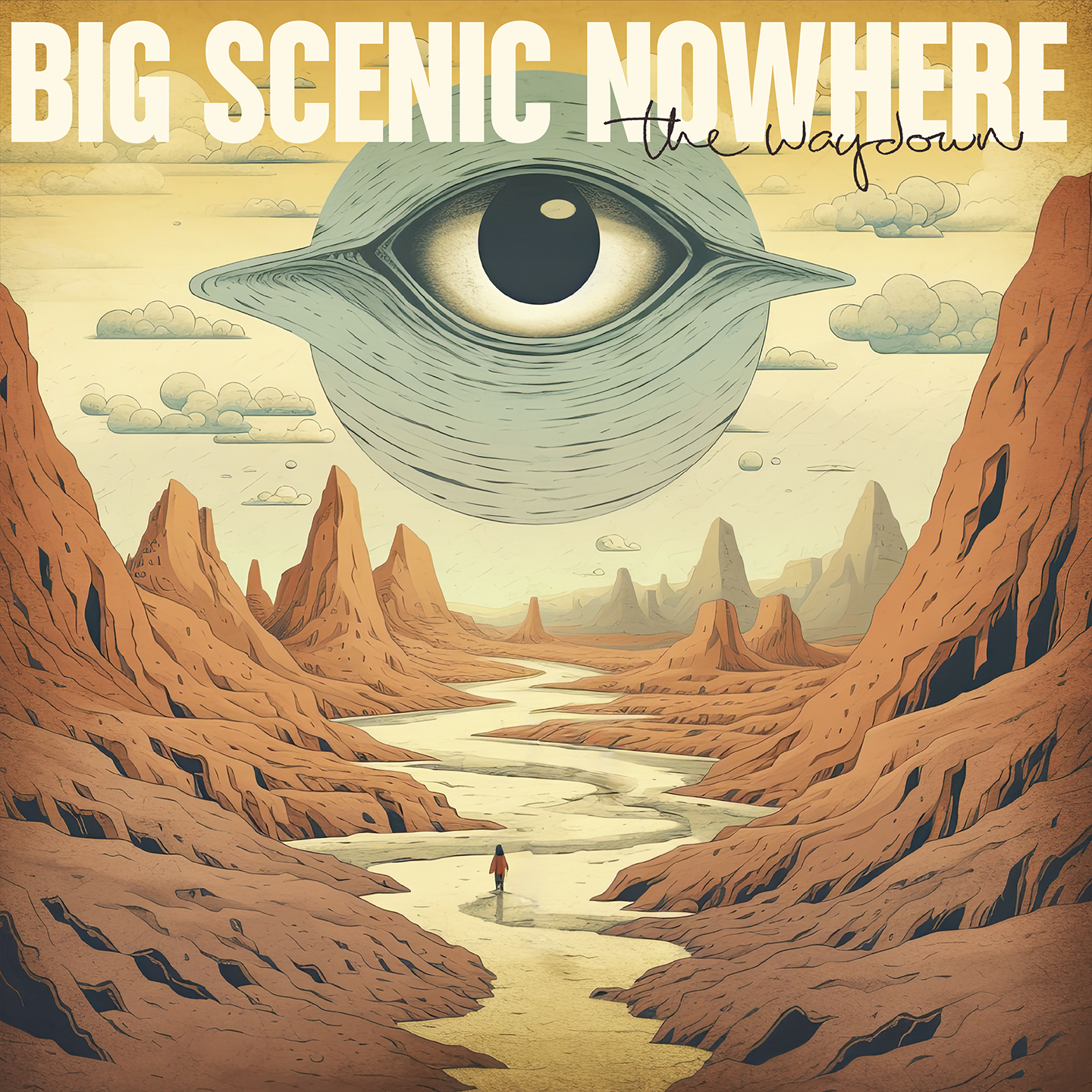
Five years on from their debut EP, Dying on the Mountain (discussed here), it still feels a little weird that Big Scenic Nowhere are an actual band, never mind sounding more established with their core lineup, more progressive and more distinct as an outfit from their other collaborations than they ever have. They might rightly be called a supergroup with drummer Bill Stinson (Yawning Man, Yawning Balch, etc.), guitarists Gary Arce (Yawning Man, Yawning Balch, Yawning Sons, Ten East, Dark Tooth Encounter, Zun, WaterWays, some new band he’s got going with Pia from Superlynx, on and on) and Bob Balch (Fu Manchu, Slower, Yawning Balch, Sun and Sail Club, ex-Minotaur, etc.) and vocalist/keyboardist Tony Reed (Mos Generator, Twelve Thirty Dreamtime, Constance Tomb, Stone Axe, etc.), though the term has fallen out of favor as these things inevitably will, but Big Scenic Nowhere‘s third full-length, The Waydown, is an accomplishment and realization of the band as themselves and shouldn’t be thought of otherwise.
While the project started as a lost Arce demo (discussed here) with completely different goals, and have always been open to guest appearances, Big Scenic Nowhere have featured plenty between 2020’s Vision Beyond Horizon (review here) and 2021’s The Long Morrow (review here) — at the start it wasn’t clear who was actually in the band, so that’s solidified as well — and The Waydown brings sit-ins from returning keyboardist/organist Per Wiberg (Spiritual Beggars, ex-Opeth, solo, etc.), guitarist Reeves Gabrels (David Bowie, The Cure), as well as former Hall & Oates keyboardist Eliot Lewis on the included Hall & Oates cover, “Sara Smile.”
Those other contributions from Wiberg and Gabrels and are spread throughout the seven-track/39-minute long-player, delivered as ever through Heavy Psych Sounds and meld with those of the band itself, but it’s Big Scenic Nowhere‘s own performances that are the highlights. I’m not even sure if it’s Reed or Balch on bass on a given track, but as much as it’s the two guitars at the forefront when considering the band, “Summer Teeth,” the slower but hypnotically hooky centerpiece “Bleed On,” and the mellow-rolling, seven-minute closer “100” — which bookends with the also-seven-minute “The Waydown” at the outset — are much bolstered by the low end, with Stinson‘s drums (or maybe Reed‘s, depending?) as the solid foundation beneath the explorations taking place.
Because while The Waydown is perhaps the most song-oriented Big Scenic Nowhere have yet been and it brings the core group into focus in no small part because of the unifying factor of Reed‘s vocals, it is still based on and carved out from jams, the band’s core process rooted in getting together for a time, banging out as much improvised or thought-of-a-part whathaveyou as they can, and sending the files home with Balch to be edited and carved into songs after the fact. It’s a heady way to do it, but it has allowed for a sense of progression in the band even as most of their material to-date has come from a single multi-day session. And on The Waydown, whether it’s the righteous creeper riff of the penultimate “BT-OH” or the declarative arrival of the first lines in “The Waydown” after the brief and comparatively minimal ambient intro, the carving, cutting, pasting and shaping results in a decisively and purposeful-seeming progressive feel.
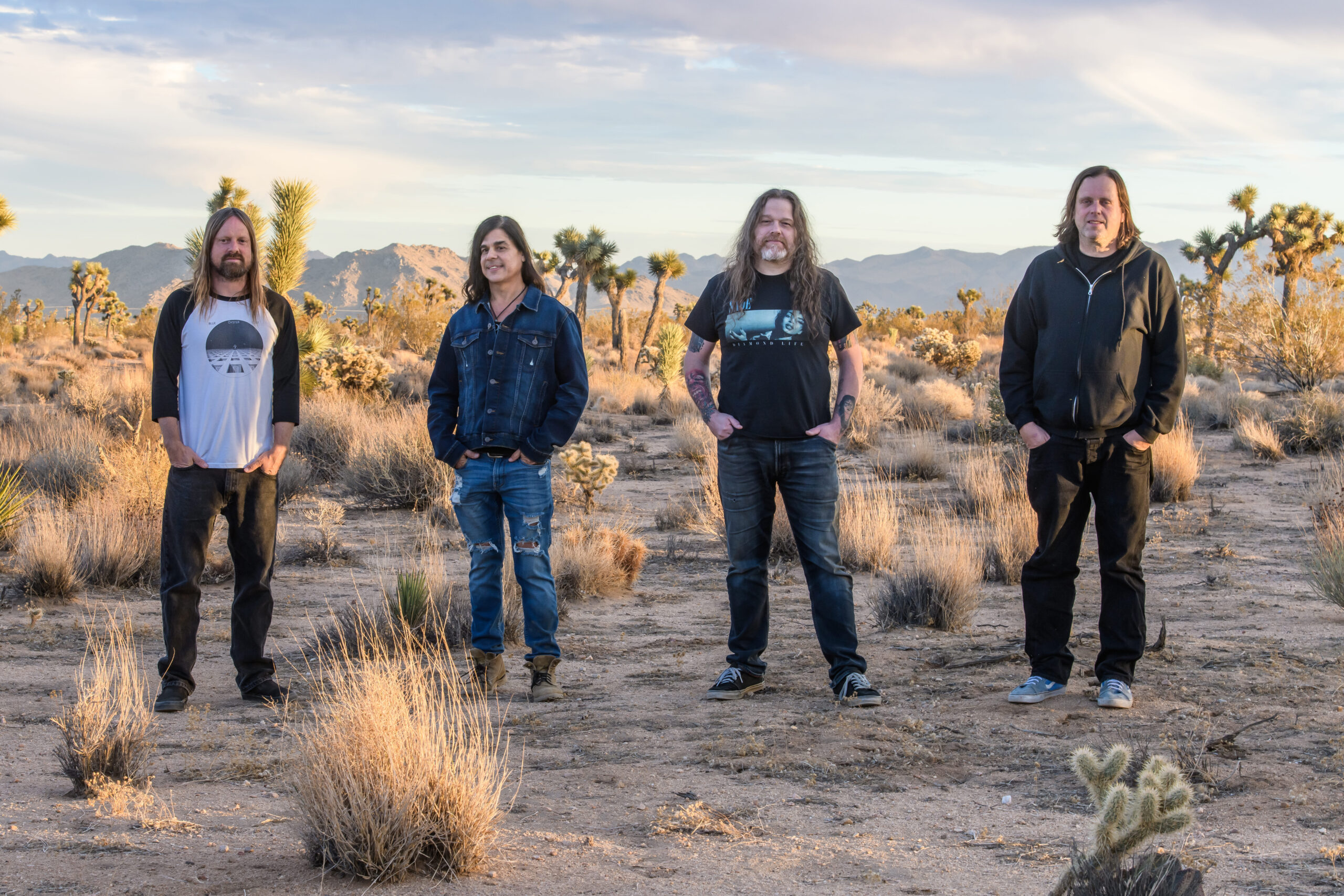
“Sara Smile” is a departure, obviously, with Reed shifting into a gentler, soulful vocal on the cover taken from 1975’s Daryl Hall & John Oates and the band tackling an arrangement that’s something kin to a heavy/desert interpretation of AOR, but in the post-chorus-takeoff melancholy of “Summer Teeth,” the harder-landing fuzz in “Surf Western” in the midsection riffing and how it changes back to shimmer for the verse, and even the dreamy vibe brought to “100,” there’s an attention to detail in The Waydown that tells you the songs have been worked on and, considering the depth, loved, before arriving in their final forms as presented, and that thoughtfulness in composition — even if it comes after the moment the actual music was made — and consideration of atmosphere while building same isn’t to be discounted. That Reed and Balch are also studio engineers kind of makes the band possible as they are now, as Reed‘s home in Washington State and the rest of the band’s in Southern California is a distance crossed by craft, Balch getting parts set in a branched collaboration with Reed adding vocals and maybe keys or drums, and so on, which makes Big Scenic Nowhere multi-tiered as regards creativity when one considers Balch‘s other direct partnership in the band, with Arce on guitar.
And what about Gary Arce? Is the man whose guitar made the desert sing an afterthought on The Waydown? Hardly. As Reed steps forward in lead-singer fashion, Arce‘s signature tone is what lends the proceedings their lightness, making the atmospheres of “Bleed On” and “100” possible and speaking to the improvisatory roots of the songs themselves. I’m not sure “Surf Western” would exist as an aural concept let alone the actual track on the record if it weren’t for Gary Arce, and the subdued standalone strums after three minutes in — in the drawdown right before the big riff circles back with a wallop — Big Scenic Nowhere remind that a goodly portion of their emotional resonance comes from the string section, even if that too is changing with the highlight stretches of bass as noted.
Is The Waydown the best Big Scenic Nowhere record? Yes. It feels like it’s the most vivid manifestation of their project yet as distinct from other outfits — which is saying something considering Yawning Balch is literally Yawning Man… wait for it.. plus Balch — and the intention with which it sets itself to the work of craft has become a key aesthetic component in a way that is likewise the band’s own. More importantly, it’s also the most Big Scenic Nowhere record in its contemplations, its dynamic turns and changes in volume or mood, and the resulting definition of the personality for the entire outfit. Yeah, it might still feel a little weird that they’re a band at all — to wit, I’m not sure they’ve ever played live — but they most definitely are, and never quite so engrossing a band as right now.
Big Scenic Nowhere, The Waydown (2024)
Big Scenic Nowhere on Facebook
Big Scenic Nowhere on Instagram
Big Scenic Nowhere on Bandcamp
Heavy Psych Sounds on Facebook
Heavy Psych Sounds on Instagram