Posted in Whathaveyou on April 4th, 2024 by JJ Koczan
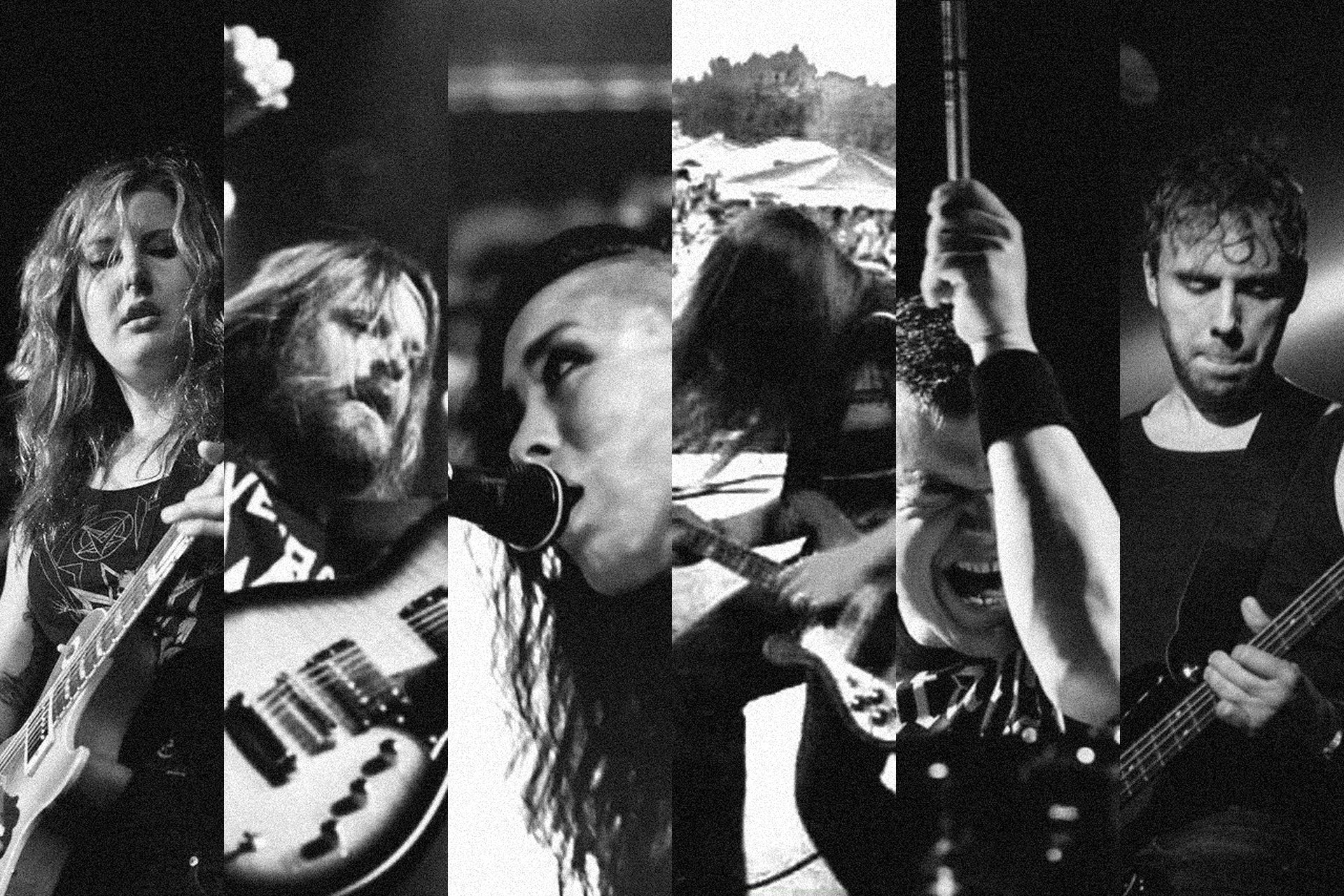
It’s something of a surprise to see Slower touring. The Slayer covers project helmed by guitarist Bob Balch released its self-titled debut (review here) through Heavy Psych Sounds earlier this year, and even then, the lineup was broadly cast enough to make live performances seem less likely. In addition to Balch, Amy Tung Barrysmith and Esben Willems — who will be the on-stage incarnation of the band — the album also featured Peder Bergstrand (Lowrider), Laura Pleasants (ex-Kylesa) and Scott Reeder (Kyuss, The Obsessed, etc.), so you might be forgiven if the possibility of Slower as a touring entity didn’t occur to you either.
And certainly not even among the three players heading out, no one’s lacking for goings on. Balch is about to release a new Fu Manchu album this Spring, Barrysmith recently finished recording the next Year of the Cobra (awaited), and Willems put out his first-ever solo LP like a week ago. Oh, you’re gonna go tour with a completely different band playing rearranged thrash songs in Europe? Yeah, cool. I mean, if you’re not busy or anything.
The prospect is no less badass for being unexpected, however, and if this is a testing of waters for more to come and Slower will be ongoing, so much the better. Between the three of them, they could get up there and do “Wheels on the Bus” and it’d be heavy. I’ll look forward to the video that hopefully someone at a show gets.
Doomstar Bookings posted the following:
Slower announce their European Tour 2024! Check out all dates below!
Slower states: “Everything in this project just fell into place naturally, even though none of us really knew what to expect going in, other than being inspired by the idea. Now that the album has become reality, it feels like a given to get these songs on the road. Cannot wait to play them live, this one is gonna be a blast.”
Posted in Reviews on February 16th, 2024 by JJ Koczan
Guitarist Bob Balch would seem to be on something of a creative binge, between an impending Fu Manchu 2LP and recent releases from Yawning Balch and Big Scenic Nowhere, and with Slower he presents a manifestation of the ultimate beer-drunk band idea. “What if, like, you took Slayer, and slowed it down?”
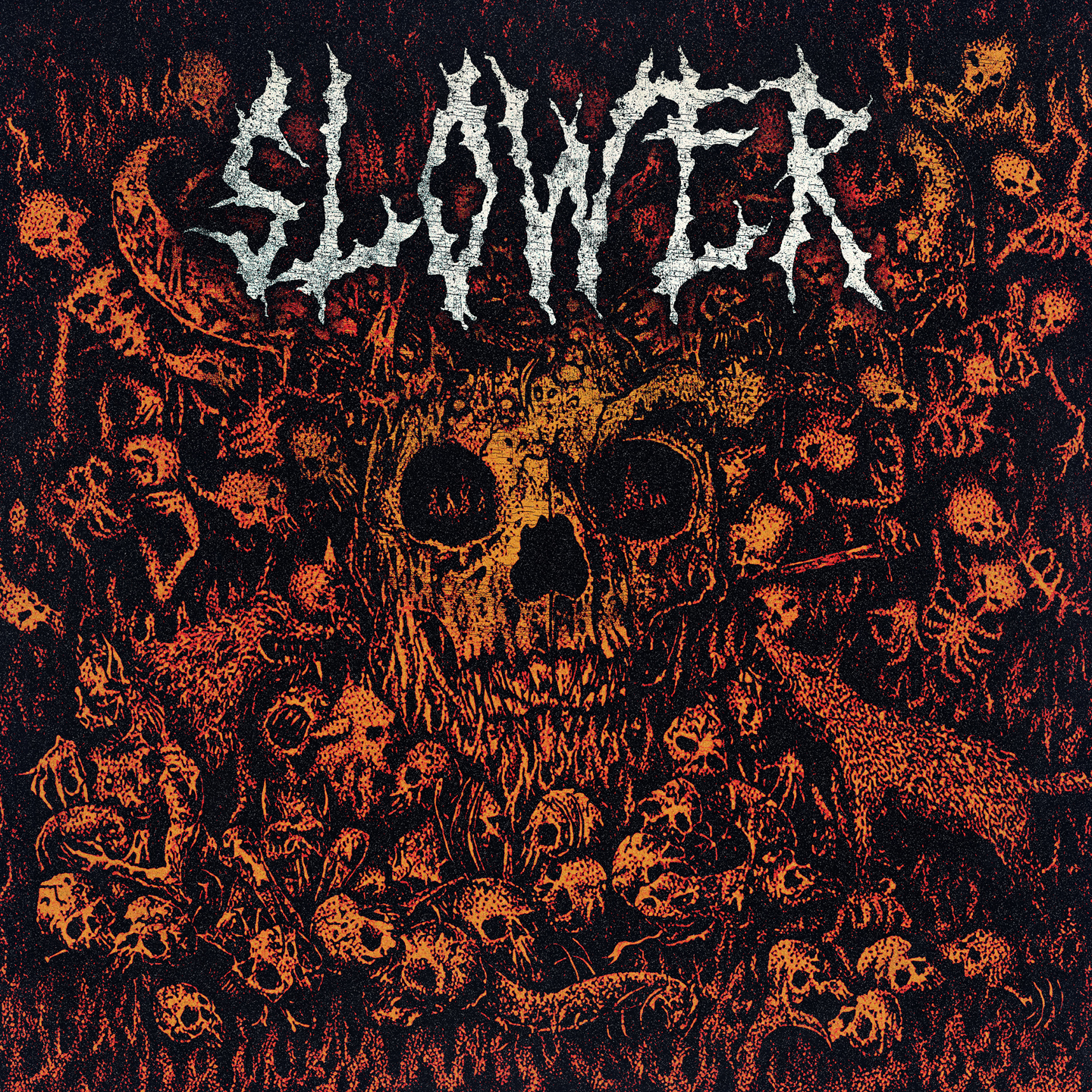
That’s what Slower is on paper. The songs of seminal Californian thrashers Slayer, played slower. The reality of Slower, which is the Balch-led project’s Heavy Psych Sounds-delivered debut album, is a selection of five covers that offers a richer experience than the math of the band’s purpose might lead one to believe. The Slayer originals they’ve chosen to rework — “War Ensemble,” “Blood Red,” and “Dead Skin Mask” from 1990’s Seasons in the Abyss, “The Antichrist” from 1983’s Show No Mercy and, to close, the title-track of 1988’s South of Heaven — are classics within the sphere of metal, and are treated with due respect even as they’re rearranged and turned into something pointedly not what they originally were.
This is done with care and love of the source material, and a sense of curation that is all the more resonant with the lineup Balch assembled for the project. Drummer Esben Willems (of Monolord; he has a solo album coming in addition to appearing here) in Gothenburg, Sweden, vocalist Amy Tung Barrysmith (Year of the Cobra) in Seattle, and bassist Peder Bergstrand (Lowrider) in Stockholm comprise the ‘main band’ on the record, developing a persona of their own even on covers through means of the rearrangement process. That is, they took the songs and reworked them. No one here is inexperienced or incapable. If you believe in supergroups, Slower‘s pretty damn super even before you get to Laura Pleasants (The Discussion, ex-Kylesa) and Scott Reeder (currently Sovereign Eagle, ex-Kyuss, The Obsessed, Goatsnake, needs to do another solo record, etc.) swapping in on vocals and bass, respectively, for “South of Heaven” at the finish. A goofy, fun idea for a band/album as Slower might be, the end result is pointedly not bullshit where it very easily (perhaps with different personnel) could have been.
Underlining the point: Slower is not a tossoff. It’s not a joke band. While indeed the songs are largely reduced in tempo, there is an aspect of the project that feels a bit like the impetus behind it was Balch wanting to take on playing both the Kerry King and Jeff Hannneman (from whose 2013 death the band never really recovered) solos, which he does with all suitable respect for the personalities of Slayer‘s two guitarists, whammy squeals and speed enough to speak to thrash. If that was the case, fair enough for the homage. It’s just a thing not everyone could do at the level it’s done here. Some of those shredfest ripper solos are no less iconic than the lyrical declarations of the choruses to “War Ensemble” or “Dead Skin Mask,” and they are put on a pedestal along with a treasure trove of groove that was lurking beneath the furious intensity of the originals. “War Ensemble,” opening here as it does on Seasons in the Abyss with some transposed urgency, unveils its central riff as a righteous nodder with Bergstrand bringing new tonal presence to the verse, Willems‘ casual double-kick giving an easy ride into the stop, and Barrysmith in immediate command.
The five-minute original becomes the 10-minute cover (it is both opener and longest track; immediate points), and as a lead-in for “The Antichrist,” “Blood Red” and “Dead Skin Mask,” “War Ensemble” blends the familiar — it was one of Slayer‘s many landmarks and a live-set feature for decades before the band ‘ended’ (never say never) in 2019 with 12 records and enough influence to make a project like this happen across microgenres — the surprises it holds and affirmations it makes are crucial to what follows. One doesn’t necessarily think of Slayer as an atmospherically-minded band, though they were at times (and perhaps a second Slower LP could honor Slayer and Sabbath both in opening with the storm at the start of “Raining Blood”; uniting worlds or at least disparate ends of the same one), but Slower dig into “The Antichrist” and find a gritty slog that becomes insistent in a chorus that takes the already-doubled vocals and adds backing tracks to emphasize a depth that is Slower‘s own in a song that, being a deeper cut — as opposed to a Slayer ‘hit,’ I guess? they did used to play their music videos on the tee-vee sometimes — allows Balch (who trips out the midsection admirably taring toward psychedelia), Barrysmith, Bergstrand and Willems to flesh it out and find a new path to the rotted-soul ascension of its title figure.
The melody emergent in “The Antichrist” is expanded upon in “Blood Red,” the centerpiece of the CD and presumed side B opener on the LP, as the verse riff becomes a strut and the chorus opens to a breadth Slower have been holding in reserve. It’s an un-pop singalong, complete with backing ‘oohs’ for “You cannot hide the face of death/Oppression ruled by bloodshed/No disguise can deface evil/The massacre of innocent people,” which are lines that sadly retain their relevance these 34 years after the fact, and are more sinister for the sweetness of Barrysmith‘s delivery. With “Dead Skin Mask” and “Seasons in the Abyss” still to come, “Blood Red” has a harder road making an impression, and that was true with Slayer‘s version as well in 1990, but amid the forward roll and chug of the verse and the arrival-point feel of the hook, it is the vocals even more that distinguish it as an unexpected highlight.
And I know Slayer have a ton of iconic tracks, from the prior-mentioned “Raining Blood” through “Disciple,” “Angel of Death” — maybe better to leave that one alone? — and “Piece by Piece,” but especially the first and maybe only time out, pairing “Dead Skin Mask” and “South of Heaven” at the end of Slower‘s Slower feels natural. The latter came before the former, and is arguably the most ‘doom’ Slayer ever got, where “Dead Skin Mask” showed up on the next album and refined those very purposes. Both are the kinds of songs dudes get tattoos of, but as they have all along, Slower tread carefully in terms of balancing respect for where the songs came from and taking them where they want to go. Not to be understated is the subversive element of a woman delivering the lyrics to “Dead Skin Mask,” which was never explicit but strongly implied misogynist violence, and Barrysmith resounds in the chorus, where “Dance with the dead in my dreams…” becomes a chant and all the more consuming for that. While I wish they repeated that finish four or five more times, I’m happy to take what I can get.
As noted, “South of Heaven” brings a lineup switch, Reeder stepping in for Bergstrand — the inclusion of those two speaks as well to Balch wanting to bring a new sense of presence to the low end; he could easily have handled bass himself as an afterthought; as is, bass becomes an essential part of the character of the band in a way Slayer‘s Tom Araya probably wouldn’t have expected — and Pleasants taking over for Barrysmith. Dark toned, Balch begins on guitar and Reeder and Pleasants soon join for the opening build, ending of course with the line “Before you see the light” stretched to fill the new spaces in the riff before the guitar, bass and drums stop cold to let Pleasants croon the second part of the lyric: “You must die.”
Shit, I’m ready. Let’s go. If you could get audio tattooed on your person, that moment might be worth carrying around for the rest of your life but it’s already ingrained in the heads of Slayer fans, so take that as you will. Pleasants toys with the verse arrangement somewhat, perhaps covering some awkwardness in the patterning born of the change in pace with effects and layering, but it’s nothing that feels out of line with the mood or atmosphere Slower bring to “South of Heaven,” the stinkface-inducing stomp of Willems‘ drums glorious in manifesting a sense of methodical aggression over the chaos referenced in the chorus — “Chaos rampant/An age of distrust/Confrontations, impulsive habitat (or ‘sabbath’)” before they got right down to it, “On and on, south of heaven” — as Balch likewise digs deeper to find a nastiness of tone that is undeniable. It ends, as it invariably would, with shred given over to noise and a tease of the thuds at the end of “Postmortem” that, on 1986’s Reign in Blood, mark the transition into “Raining Blood” itself. The message seems to be: maybe next time.
Generally speaking and across a wide range of contexts, I suck at fun. Accordingly, I was a little apprehensive in taking on Slower because I felt like maybe it would be a party and I wouldn’t really be able to get my head into the right space for it. That’s not how it went, either in terms of the atmosphere of the record or my listening experience with it. I don’t know that Slower will or won’t do more — certainly no one involved lacks other projects to focus on — but I hope they do, and as a love letter to Slayer, the execution of these songs and the obvious heart and thought put into them, Slower resonates, however familiar you may or may not be with the originals.
Posted in Whathaveyou on October 31st, 2023 by JJ Koczan
There’s comment from project participants Bob Balch (who spearheaded the idea), Esben Willems (who drums on the entire record) and Peder Bergstrand (who plays bass on all but one track, sharing space with Scott Reeder) below, and when you can hear from members of Fu Manchu, Monolord and Lowrider, I sincerely doubt any comment I might make matters. Those three speak below on how Slower — the conceptual covers project that, yes, dooms up select Slayer tracks both originally speedy like “War Ensemble” streaming below or, duh, slower, like inevitable closer “South of Heaven” — came together, and with Year of the Cobra‘s Amy Barrysmith on vocals for the majority and The Discussion‘s Laura Pleasants (also ex-Kylesa) taking over for the aforementioned finisher, it’d be a release of note no matter who they were taking on.
Maybe next time out they’ll do Duran Duran. Or maybe they’ll finally unveil the insistent creep at the heart of “Raining Blood.” I won’t claim to know, but given both personnel and source material, I expect this will be a beacon as the underground emerges from the generally-dead doldrums of January and takes on 2024 in earnest. Looking forward to it, in other words.
But album preorders are up now, so don’t let me keep you. Heavy Psych Sounds announced last week it had snagged the oops-kind-of-a-supergroup outfit for this release, and Jan. 26 is the listed arrival date. By all means, dive in. From the PR wire:
Heavy Psych Sounds to announce SLOWER upcoming debut album – presale starts TODAY !!!
– new super band feat. members of Kyuss, Fu Manchu, Kylesa, Lowrider, Monolord and Year Of The Cobra – SLAYER tracks in a SLOWER mood
Today we are stoked to start the presale of the upcoming SLOWER self-titled debut album !!!
RELEASED IN 10 ULTRA LTD TEST PRESS VINYL 100 ULTRA LTD SIDE A – SIDE B BLACK/ORANGE/WHITE VINYL 150 ULTRA LTD COLOR IN COLOR TRANSP. BACK. RED/SPLATTER BLACK VINYL 500 LTD NEON GREEN VINYL BLACK VINYL DIGIPAK DIGITAL
TRACKLIST SIDE A War Ensemble – 10:39 The Antichrist – 8:13
SIDE B Blood Red – 6:30 Dead Skin Mask – 6:08 South Of Heaven – 7:11
Bob Balch from FU MANCHU here. The idea for the SLOWER project started around four years ago. I was teaching a student how to play “South Of Heaven” by SLAYER but she was a beginner so we slowed it down. I thought that sounded cool so I tuned down to B standard and tried it. I added some drums and thought “someone in the doom community should do this and name it SLOWER.”
A few years later I befriended Steven “Thee Slayer Hippy” Hanford, best known for his work as the drummer in the influential Oregon punk band Poison Idea. He was backstage at a FU MANCHU show. Oddly enough I was wearing a POISON IDEA shirt and he told me that my shirt sucks. I asked who he was and why he was in our backstage. He told me and I felt stupid. We started drinking whiskey and talking about music. We stayed in touch over the next year or so and during Covid I told him about my SLOWER idea. He asked me to send him tracks. I waited too long because the day I sent the tracks he passed away. Totally tragic. I’m glad I got to know him even for a few years. He was a monster musician with a giant heart.
He will be greatly missed.
I shelved the project for a while after that. One day Esben from MONOLORD posted about musical collaborations. I love MONOLORD so I thought what the hell. I sent him some tracks and he killed it on drums. So I sent more. Then more. Shortly after that we started reaching out other musicians to get them involved. That’s how we ended up with this lineup. Everyone that contributed completely knocked it out of the park and I can’t thank them enough.
This project has been a long time coming and I’m beyond stoked on how it turned out. Without all of the players involved, Steven Hanford and my baritone Reverend guitar it wouldn’t have happened. Thanks to everyone involved and I hope you dig it! I’m a giant SLAYER fan so it’s been a treat to dig into these classic songs. Hopefully we can do another record in the near future. Look out for shows because they will happen!
Esben Willems – When Bob first approached me with the idea and I heard his scratch guitars, my first thought was “This is genius”. Those iconic tracks we all know by heart suddenly unveiled an unexpected dimension. I’m really proud of how this turned out.
Peder Bergstrand – “This might be blasphemous considering the circumstances, but when Bob reached out and asked if I’d want to play bass on sludged-out Slayer covers, I had to admit some of these tracks were brand new to me.
That made the experience even more special though, hearing and playing on the Slower version first, and then comparing to the original. Bob has really transformed these songs into something totally their own, and on a personal level I feel the rest of the band’s insane performances pushed me to my most inspired playing to date.
So incredibly stoked for people to hear this album.”
CREDITS
“War Ensemble” “Dead Skin Mask” “Blood Red” “The Antichrist” Esben Willems (drums) MONOLORD Peder Bergstrand (bass) LOWRIDER Amy Barrysmith (vocals) YEAR OF THE COBRA Bob Balch (guitars) FU MANCHU
“South Of Heaven” Esben Willems (drums) MONOLORD Scott Reeder (bass) KYUSS Laura Pleasants (vocals) KYLESA Bob Balch (guitars) FU MANCHU
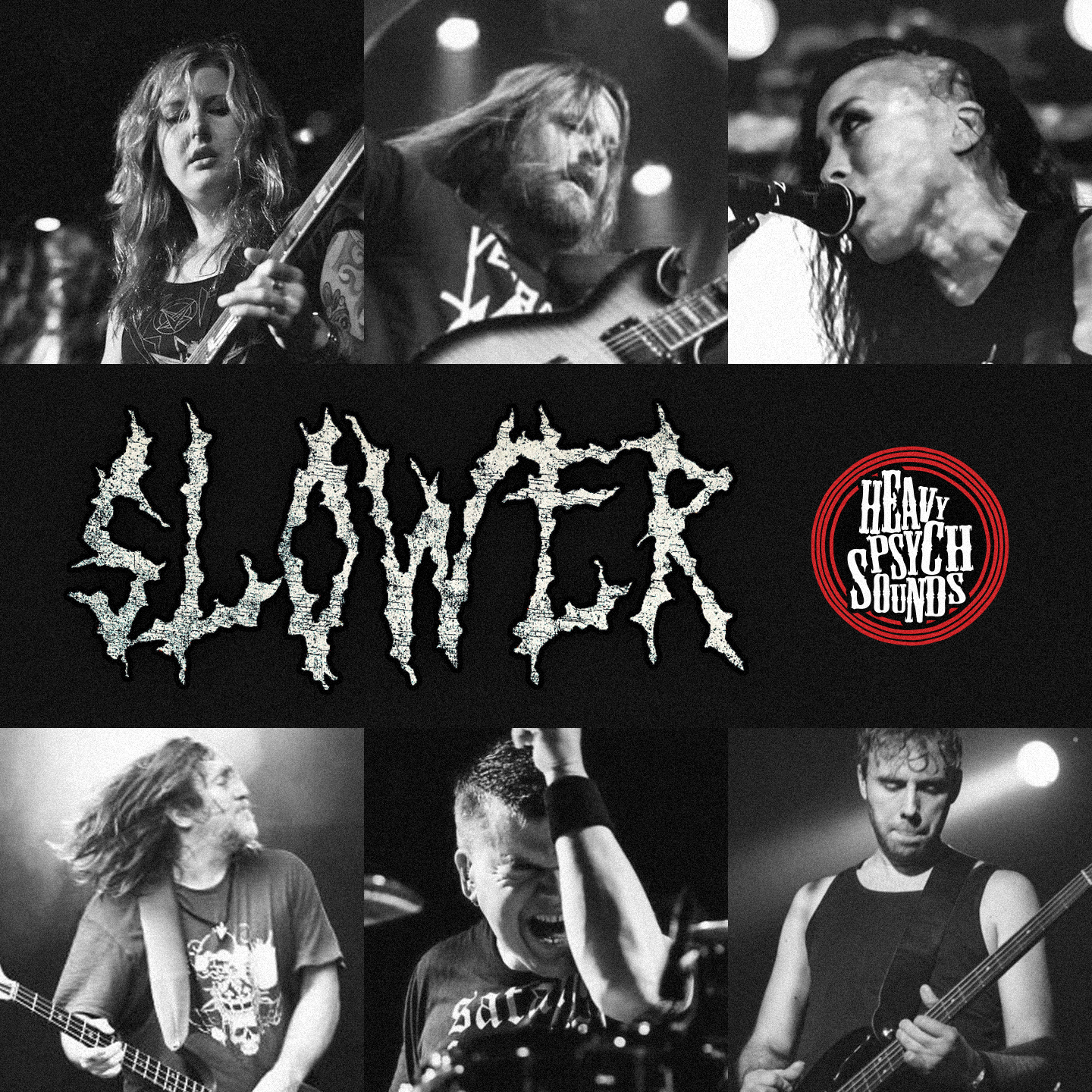
SLOWER is: Esben Willems (drums) MONOLORD Peder Bergstrand (bass) LOWRIDER Amy Barrysmith (vocals) YEAR OF THE COBRA Laura Pleasents (vocals) KYLESA Bob Balch (guitars) FU MANCHU Scott Reeder (bass) KYUSS
Posted in Whathaveyou on October 19th, 2023 by JJ Koczan
Well yeah, I mean, you look at the cast of characters here and you know those riffs are monstrous. Slower‘s kind of a no-brainer, and I’m not trying to be clever and knock the concept, because actually I know the concept works. Someone, at some point, has sent you some YouTube clip of Slayer slowed down. It sounds killer. That Bob Balch — already signed to Heavy Psych Sounds as part of Big Scenic Nowhere and Yawning Balch, also of Fu Manchu, PlayThisRiff.com, ex-Minotaur, and so on — decided to do it for real with Esben Willems (Monolord, Studio Berserk) on drums, and Laura Pleasants (The Discussion, ex-Kylesa) and Amy Barrysmith (Year of the Cobra) sharing vocal duties, well, I mean, well yeah. Yeah. Of course. Yeah.
I wouldn’t have minded if Peder from Lowrider — who shares bass duties with Scott Reeder (Kyuss, Goatsnake, The Obsessed, etc.), as he should — got a song to sing, as his voice is perfect for something airy and open, which some of Slayer‘s material could be (re-)interpreted to be, but Heavy Psych Sounds just signed the band and both the label and Balch say they hope more is coming, so maybe that’s a future possibility. Balch also mentions live shows. That’d be a fun one to see at a festival in some field somewhere, hopefully properly hydrated.
If you can dig it, and oh, I think probably you can, here’s the info from the PR wire:
Heavy Psych Sounds to announce SLOWER (feat. members of Kyuss, Fu Manchu, Kylesa etc.) signing for their debut album !!!
*** SLOWER *** – brand new project feat. members of Kyuss, Fu Manchu, Kylesa, Monolord, Lowrider and Year Of The Cobra –
We’re incredibly stoked to announce that the brand new super band SLOWER signed to Heavy Psych Sounds Records for their debut album !!!
ALBUM PRESALE + FIRST TRACK PREMIERE: October 31st
BIOGRAPHY
Bob Balch from FU MANCHU here.
The idea for the SLOWER project started around four years ago. I was teaching a student how to play “South Of Heaven” by SLAYER but she was a beginner so we slowed it down. I thought that sounded cool so I tuned down to B standard and tried it. I added some drums and thought “someone in the doom community should do this and name it SLOWER.”
A few years later I befriended Steven “Thee Slayer Hippy” Hanford, best known for his work as the drummer in the influential Oregon punk band Poison Idea. He was backstage at a FU MANCHU show. Oddly enough I was wearing a POISON IDEA shirt and he told me that my shirt sucks. I asked who he was and why he was in our backstage. He told me and I felt stupid. We started drinking whiskey and talking about music. We stayed in touch over the next year or so and during Covid I told him about my SLOWER idea. He asked me to send him tracks. I waited too long because the day I sent the tracks he passed away. Totally tragic. I’m glad I got to know him even for a few years. He was a monster musician with a giant heart.
He will be greatly missed.
I shelved the project for a while after that. One day Esben from MONOLORD posted about musical collaborations. I love MONOLORD so I thought what the hell. I sent him some tracks and he killed it on drums. So I sent more. Then more. Shortly after that we started reaching out other musicians to get them involved. That’s how we ended up with this lineup. Everyone that contributed completely knocked it out of the park and I can’t thank them enough.
This project has been a long time coming and I’m beyond stoked on how it turned out. Without all of the players involved, Steven Hanford and my baritone Reverend guitar it wouldn’t have happened. Thanks to everyone involved and I hope you dig it! I’m a giant SLAYER fan so it’s been a treat to dig into these classic songs. Hopefully we can do another record in the near future.
Look out for shows because they will happen!
SLOWER is: Esben Willems (drums) MONOLORD Peder Bergstrand (bass) LOWRIDER Amy Barrysmith (vocals) YEAR OF THE COBRA Laura Pleasents (vocals) KYLESA Bob Balch (guitars) FU MANCHU Scott Reeder (bass) KYUSS