Friday Full-Length: Kyuss, Muchas Gracias: The Best of Kyuss

Posted in Bootleg Theater on December 19th, 2025 by JJ Koczan

The great shame of Kyuss‘ tenure — apart from the fact that 30 years later they stand among the most influential rock acts of their generation and still have never really gotten their due for spearheading desert rock, stoner rock and a vision of riff-led heavy that continues to inspire artists worldwide — is they never put out a live record. There are videos out there — some killer full sets, to be sure — and a few corresponding bootlegs, but apart from the four tracks bundled at the end of their posthumous 2000 sorta-greatest-hits collection Muchas Gracias: The Best of Kyuss, which had seen prior release on CD singles and as a promo EP that I don’t even know if it was ever publicly sold, there’s no real, official documentation of who they were on stage. A live album — hell, take that Bizarre Fest ’95 set press it to a disc — would be nice to have in hindsight, especially for those fans who’ve come along in the years since Kyuss‘ breakup, which at this point is most of their fanbase.

Muchas Gracias features “Gardenia,” “Thumb,” “Conan Troutman” and “Freedom Run” as recorded at Marquee-Club in Hamburg on May 24, 1994, and if you would read that and say, “Gee, that’s not the kind of thing one usually finds on something calling itself The Best Of…,” then yeah, you’re right. Hence “sorta,” above. Certainly, if Kyuss ever had done a real, greatest-hits-only release, songs like “Green Machine,” “Thumb,” “Supa Scoopa and Mighty Scoop,” “Demon Cleaner,” “Gardenia” (the studio version) or “One Inch Man” from their now-holy trinity of albums, 1992’s Blues for the Red Sun (discussed here), 1994’s Welcome to Sky Valley (discussed here) and 1995’s …And the Circus Leaves Town (discussed here) — the latter two on Elektra, like Muchas Gracias, the former on Dali Records — would feature. They don’t. You do get “50 Million Year Trip (Downside Up),” “Demon Cleaner,” “Hurricane” and “El Rodeo” from those records, and the instrumental “A Day Early and a Dollar Extra” from 1991’s debut LP, Wretch (discussed here), but the rest is given over to B-sides and the aforementioned live tracks.

This makes it a gift, mind you.

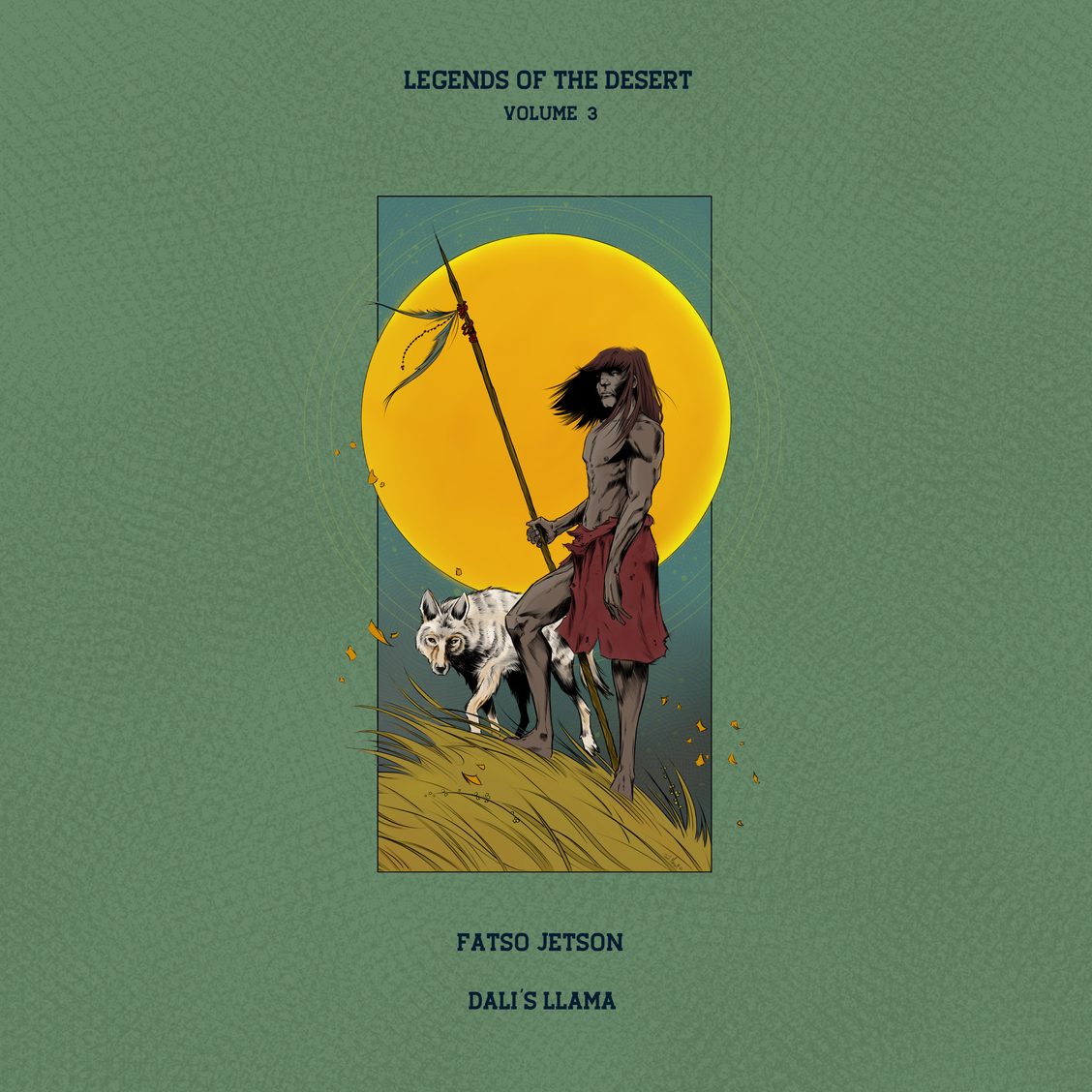
Consider the question of access to a song like “Un Sandpiper,” with its distinctive spoken intro that at one point I’d heard was Jello Biafra but can’t verify that so I’m probably wrong, and brash, circa-’94 groove. The only other place that song has appeared to my knowledge is on the CD single for “Gardenia,” and the subsequent “Shine” comes from Kyuss‘ 1996 split with Wool (with Pete and Franz Stahl) that was released by Bong Load Records. These, as well as “Mudfly,” “A Day Early and a Dollar Extra” and “Flip the Phase” (yes, which is a reworking of the earlier “Fatso Forgotso II (Flip the Phase),” and even “Fatso Forgotso” from the Man’s Ruin split with Queens of the Stone Age (discussed here), which is out of print by I don’t know how many years at this point. Plus the live tracks. These would be the sovereign territory of digital completists and well-to-do CD shoppers were it not for this release so conveniently bringing them together. Worth it for the stank in the lead of “Shine” alone, and, instead of a half-hearted summary of the singles that were sent to radio, Kyuss find a way to make the 75-minute collection about the story of the band as a whole, the way they conjured and rolled out grooves, the loose feel of some of their structures despite a plan at work, and the scope of their songwriting as regards tone and impact.

Because while it’s also most certainly handy, Muchas Gracias is more representative of who Kyuss were as a group than a regular greatest hits album could hope to be. Not only does it include nearly everyone who was ever in the band throughout its 15 cuts — vocalist John Garcia, guitarist Joshua Homme, bassists Nick Oliveri and Scott Reeder and drummers Brant Bjork and Alfredo Hernández; only original bassist Chris Cockrell, who was out of the band before Wretch, doesn’t appear — but it gives a sense of their scope as well. A sub-three-minute instrumental, “Mudfly” twists in a way that portends some of what Homme had already gone on to harness for Queens of the Stone Age by the time this was released, where the one-two punch of “Gardenia” and “Thumb” at the start of the finishing stretch of live tracks is, for someone who never saw the band, the stuff of daydreams. They finish with “Freedom Run” after “Conan Troutman,” and one could hardly ask for a more Kyussian closer than the ensuing eight minutes of jam and shove topped off with Garcia going, “Alright alright alright, ohhh,” like he too is somewhat knocked back by how much ass his own band kicks. Reasonable.

I’ve said a fair amount over the last few weeks about Kyuss‘ influence and legacy, and the continued relevance of the music is an important part of the story, so I stand by that. And no, I’m not going to sit here and tell you that Muchas Gracias is as essential as any of the three long-players that preceded it, because it isn’t. But the fact of the matter is that whether or not you were there like Johnny Groundfloor in 1990 when these guys were putting out demos, or you came aboard at any point between then and now, Muchas Gracias captures aspects of this band’s personality in ways the regular albums can’t. I do wish we’d gotten a proper Kyuss live record, but I also wish we’d gotten about six more studio full-lengths, so take that for what it’s worth.

And while what could’ve been is fodder for alternate timelines and stoner rock headcanons, the work the members of Kyuss would do on their respective paths, sometimes collaborating, more often not, raises a fervent debate about whether it would be worth the tradeoff. That’s a fun question and completely unanswerable at the same time, but what matters is the 30-years-standing resonance of the work Kyuss did during their time. To this day, their sound speaks to notions of freedom and place in ways that are rare even among the hordes of acts working under their influence. It is a thing to be treasured.

As always, I hope you enjoy. Thanks for reading.

Next week is Xmas. Fine. On Sunday, barring disaster — it was supposed to happen last week but it snowed — I’ll be doing an in-studio with Solace as they work on their next album, due in Spring. That’s about the only post that’ll be up early next week, though, as I’ll be doing holiday stuff with family as well as working on my year-end post, which I think is going to be a big one this year. There is a lot to talk about.

My hope is to have that done by Xmas, but if not, I don’t honestly think anybody other than me will be bothered. It’ll get done when it gets done. I’ll be chipping away on it starting tomorrow, though how on earth I’m going to write an intro for having lived through 2025 and not have it be depressing as shit will be an issue I’ll need to tackle. That one might keep me up tonight.

That’s the big news — “big things coming!” as bands say on socials, except by “big things” I probably just mean 8,000 or so words — so let’s do a Zelda update.

Zelda update: I hate Majora’s Mask. I played Ocarina of Time 3D with a graphics mod and loved it. I played the original in high school (still have cartridge; it’s over there on the shelf), but this was my first time through the 3DS version on an emulator. But after having such a good time revisiting a game that, when I finished it years ago, I put down the controller and said I never needed to play another Zelda again (and didn’t until Breath of the Wild five years after its release), I decided it was finally time I embrace Majora’s Mask. I got the same kind of mod and have been using a walkthrough as I will, but Majora’s Mask 3D just isn’t fun.

I’m like three-quarters through and need to go back and redo a bunch of the dungeons because of some glitch, and I’m honestly not even sure I want to finish it. The best time I’ve had with it has been reading the guide while The Patient Mrs. handles the controller, but she’s not always available and I honestly just want to be done so I can go back to ground and dig into A Link to the Past. I could go on with my complaints about Majora’s Mask, but I highly doubt anyone’s interested. I’ll just say I hate mini-games and leave it at that. I understand they only had a year to make it, and I guess I can see how a cult following would have built up around the game from those who are gluttons for that specific kind of self-punishment, but yeah. I’m not a fan. The completist in me is kicking the side of my temple, but I don’t have a ton of not-doing-other-shit time, and I feel like I’d rather not spend it beating my head into a wall of polygons and revamped texture pngs.

So that’s it. If you’re celebrating Xmas next week, my best to you and yours. And if not, my best to you and yours. Stay hydrated, fuck fascism, keep warm, contribute to the year-end poll, all that good stuff.

FRM.

The Obelisk Collective on Facebook

The Obelisk Radio

The Obelisk merch

Tags: , , , , ,

Friday Full-Length: Kyuss & Queens of the Stone Age, Split

Posted in Bootleg Theater on December 12th, 2025 by JJ Koczan

By the time this six-song split between Kyuss and Queens of the Stone Age split EP (previously discussed here) was released by Man’s Ruin Records in Dec. 1997, Kyuss weren’t a band anymore, and guitarist Josh Homme‘s subsequent project, Queens of the Stone Age, was beginning to take shape after starting out as Gamma Ray, releasing an initial single (also on Man’s Ruin) and being threatened with a lawsuit if they didn’t change the name by the German power metal band. Kyuss had released their fourth and final album, …And the Circus Leaves Town (discussed here), in 1995, and though nearly all of the material on the 33-minute posthumous foreshadow was previously released, the CD nonetheless serves as a convenient landmark to note the transition from one band to another. No narrative is actually so clean, of course, and to be honest, I don’t know the dates, when Kyuss was ‘done’ vs. when Queens first got together. I’m sure those stories are out there someplace.

Interestingly, Chris Goss is listed as producer, but only for the Queens of the Stone Age portion of the split, which is side B. Though Kyuss worked with the Masters of Reality mainman on three landmark LPs, two of which came out through a major label, Fred Drake — a co-owner of Rancho de la Luna and founding member of earthlings? who passed away in 2002 — is credited as producing the Kyuss tracks. That first of the two three-song sides is comprised of a Black Sabbath cover taking on “Into the Void,” which is both on-the-nose and brilliant, and two originals “Fatso Forgotso” and “Fatso Forgotso Phase II (Flip the Phase).” The first two had come out on a 7″ through Man’s Ruin already and the latter was a CD-single B-side for “One Inch Man” from the last album, and would show up on Kyuss‘ other posthumous outing, Muchas Gracias: The Best of Kyuss, which came out in 2000.

The Queens of the Stone Age tracks, again, with Goss at the helm, were also mostly previously released. “If Only Everything,” which when the band put out their 1998 self-titled debut (discussed here) would see its title shortened to “If Only,” takes its chunky-style riff born at the Homme-hosted ‘Desert Sessions’ and uses it to preface an entire career of hooky songcraft. It and “Born to Hula” were released as the Gamma Ray single and both would show up re-recorded, while “Spiders and Vingaroons” would have to wait until the 2011 reissue of the first Queens record to see inclusion as a bonus track.

But wherever else one might find its source material scattered about in the short-releases or broader discography of its respective band, the Kyuss and Queens of the Stone Age split gives the audience a rare opportunity to experience a moment of transition that generally happens behind the scenes. Think about it. When a band breaks up and a member goes on to form a new project, how many times in your life have you then run into those two bands doing a split with each other? Kyuss vocalist John Garcia, who’d kyuss queens of the stone age splitalready in 1997 fronted the Slo Burn EP, Amusing the Amazing, sits in on backing vocals for Queens of the Stone Age‘s “Born to Hula.” Homme had a hand in mixing both bands’ tracks. It’s about as close to a passing of the torch from one to the other as you could get without an actual ceremony.

What all of that information doesn’t tell you is that the Kyuss and Queens of the Stone Age split is worth it for “Into the Void” alone. One should not blink at the opportunity to hear circa-Circus era Kyuss bring their tonal warmth to the Black Sabbath classic while Garcia adds his own twist vocally. The chugging riff remains unto itself, a holy thing, and for being the only chance I know of to hear Scott Reeder play a Geezer Butler bassline, it’s a palpable draw. And if it seems presumptuous, first, good, rock and roll should be arrogant and sacred cows are useless — music was meant to be played — and second, Kyuss at the time did not have the 30 years of legendmaking plaudits thrown their way that they’ve had since. Note that Monster Magnet did the same song on 2000’s Nativity in Black II tribute to Black Sabbath.

While engaging with …A Circus Leaves Town — which had the same lineup, with Garcia, Homme, Reeder and drummer Alfredo Hernández — it was difficult not to wonder what might’ve been had Kyuss kept going. The rawness of the sound on “Fatso Forgotso” and “Into the Void” gives something of a glimpse. The smooth production of the band’s final album is replaced by something ganglier, with flailing sounds and a volatility that comes through despite the rampant grooves they’re working with. “Fatso Forgotso Phase II (Flip the Phase),” otherwise known just as “Flip the Phase,” is a charged, two-minute heavy punker careen with the band clearly hitting for maximum impact. After the jammier stretch in “Fatso Forgotso” with its twisting lead guitar, the all-in drive of “Fatso Forgotso Phase II (Flip the Phase)” makes for a stirring contrast. It’s about as suitable a note for Kyuss to ‘go out’ on as one might ask.

And it’s easy to hear the attack in the strum of “If Only Everything” and think to yourself that a moment has arrived. The piece inherits grunge slackerdom and laissez-faire, but is too catchy and harmonized to actually be that half-assed. Homme is tentative on vocals compared even to where he’d be as a singer in 1998, and that only adds to the nascent feel. But the song is already there, and I rate “Born to Hula” among the finest hooks Homme has composed for any band. More than “If Only Everything,” “Born to Hula” benefits from the more barebones sound, while “Spiders and Vinegaroons” heralds a weirdo streak that would go on to make the first couple Queens records all the more essential. Again, rarely are endings and beginnings so conveniently paired.

That’s the story here, but for fans of either or both acts, the Kyuss and Queens of the Stone Age split is more than just a landmarker. It brings into light and focus the appeal of each band, and in offsetting them one into the next, conveys something about what made each of them special. It’s not the last Kyuss release, but it was the one that let you know it was over and it was time for something else to happen.

As always, I hope you enjoy. Thanks for reading.

I guess you saw the link in the first sentence, but I’ve written about this split before. The Friday Full-Length has been a thing around here since 2013, and before that I would just close out with a cool video or whatever, so yeah, I’ve had time to cover some of this stuff. If you look back, it’s a different discussion, and if you ever hear me say I’ve said everything about a record — ever — I’ve lost my mind, so yeah, I feel like this split can accommodate two posts. Maybe 10 years from now I’ll do another. I don’t know.

I’ve never written about Muchas Gracias though, so I’ll probably do that next week.

Next week, also look for a review of the All Them Witches / King Buffalo show on Saturday in Brooklyn, which is closing out my year of live activity (I have to note it was busier than 2024, if still pretty low key), and I have two album reviews I want to write before I drop everything else and dig into the year-end stuff for real.

One is a two-part review for the two LPs Kadavar released this year. I didn’t get either as a promo, so I need to chase them down.

The other is The Whims of the Great Magnet, who now have a two-part collection called Gronsveld Jams that I want to dig into.

If I can do both of those next week, then I’m ready to take on the task of the big year-end post. That’ll be a few days writing where nothing else happens. I’ll put a ‘under construction’ thing up or something cute, maybe, when the time comes, but that should be next weekend.

In the meantime, I continue to get better from last week’s covid excursion. My stamina is better and I’m still coughing a bit but not so much my throat is burning, so I’ll take that. I’ve continued most of this week to sleep like shit, but I think Monday into Tuesday was really good, so that was nice.

Zelda update: I haven’t had time to play, and I don’t think Majora’s Mask is fun anymore, so I’m not exactly dying to finish it. Last night I guided The Patient Mrs. through the Gerudo section. She got the hookshot, which I’m hoping makes the game more enjoyable generally, but it’s like they took Ocarina of Time and decided to bring everything that was a pain in the ass about it into focus as the center of the game. You can’t even collect items because every time you reset the clock so the moon doesn’t smash into Termina, it all disappears. Oh good, I get to go cut bushes to get 50 arrows again. Better put my rupees in the bank! I guess maybe if I was a more ‘serious gamer’ or had more investment in the lore, I’d be into it, but yeah.

The Pecan started a game of Wind Waker on the Switch 2 through Switch Online. I liked that game a lot, maybe best of the bunch pre-Breath of the Wild, though there’s (suitably enough) a piece of my heart that belongs always to Ocarina of Time. She had The Minish Cap on the other night until she got pissed at it, which definitely is a thing that happens. I started a game on my laptop of A Link to the Past using a mod called ‘redux’ that changes some of the dialogue — it also has the unfortunate effect of getting rid of Link’s pink hair in the game, but so it goes — and was thinking I’d play that again before I took on A Link Between Worlds, which uses the same map and is a sequel of sorts. But I’ve never played through Majora’s Mask before and I’m like halfway through with two dungeons done, so part of me feels compelled to finish, even though I’m enjoying it less. I probably wouldn’t want to start again, so it might be now or never. Screw mini-games, though. Really. All of them.

That’s gonna do it for me. I hope you have a great, safe weekend. Hydrate, have fun. If you’re going to KB/ATW, I’ll see you at Brooklyn Steel, and otherwise, I hope you and yours are happy and healthy as the year winds down. Also fuck fascism and its perpetrators. Forever.

FRM.

The Obelisk Collective on Facebook

The Obelisk Radio

The Obelisk merch


Tags: , , , , ,

Friday Full-Length: Kyuss, …And the Circus Leaves Town

Posted in Bootleg Theater on December 5th, 2025 by JJ Koczan

It’s easy to see where, if Kyuss had continued, …And the Circus Leaves Town could have become the model they would follow. Released on July 11, 1995, this 30-year-old fourth and final Kyuss full-length — also their third working with Chris Goss as producer, their second through Elektra Records, and their first with Alfredo Hernández (Across the River, Yawning Man) on drums, if you want to play it by the ordinals — once again moves the band forward from where they were the year prior on Welcome to Sky Valley (review here) in terms of sound.

This can be heard in the smoother tonality that typifies the 11-song/71-minute outbound desert loveletter. The band at this point — Hernández on drums, John Garcia on vocals, Josh Homme on guitar and Scott Reeder on bass — had started out pretty rough on 1991’s Wretch (review here), and really, the trajectory of their career from their demo (discussed here) onward is a linear narrative of increasing accessibility that, in the ’90s, probably would have had people calling them sellouts, if they weren’t already for signing to a major label. This holdover ethic from the waning-post-Cobain grunge era a few years prior feels like a harsh judgement against …And the Circus Leaves Town, but there’s no question that ambition is part of the Kyuss story, and the hooks of songs like “One Inch Man,” “Hurricane,” “El Rodeo,” the chug-stomping “Gloria Lewis” and even the sprawl of 11-minute pre-secret-tracks finale “Spaceship Landing” — when you put the CD in, you’ll see it says the track is 34 minutes long; secret tracks were a thing at the time; Nirvana famously did it on Nevermind — seem to be trying to answer the question of what comes next for the heavier end of rock and roll. They were not the only ones who would’ve been glad to step into that spot.

Commercial rock radio and print media at the time, funded and propped up by a decades-old industry infrastructure soon to collapse with the explosion of the internet (don’t worry, it’s back and worse because now it’s tech companies and AI), were all driven toward the word “alternative,” which was less a definition of style than a catchall for staid, major-label pop-rock given a veneer of meaning through navelgazing black and white payola videos on MTV and moody balladeering. In terms of commercial potential, Garcia‘s throaty vocal style, as heard when he’s pushing out “Tangy Zizzle” late in the record or igniting the surges of “El Rodeo,” was no doubt a limiting factor, but like Homme‘s guitar tone, his voice became clearer in delivery over time, and …And the Circus Leaves Town is accordingly the most business-viable release Kyuss had during their run.

The narrative holds that part of that is owed to Bjork‘s departure from the band. Any kyuss and the circus leaves townlineup change brings a shift in dynamic to any group — this is obvious and demonstrable in nearly all situations; it’s sky-is-blue-level insight — but in light of the fact that Homme was soon to go on to form Queens of the Stone Age and find the next-level commercial audience that Kyuss never garnered during their time, and the context of his flourishing songwriting in that band, …And the Circus Leaves Town has less personality divergence in its material than did Welcome to Sky ValleyBjork was a punk rocker, like OliveriRamones and early C.O.C., among others, were an influence he worked under as a part of Kyuss that Homme didn’t. Without him, even with Reeder contributing “Thee Ol’ Boozeroony” and the penultimate “Catamaran” being a cover of Hernández‘s prior outfit Yawning Man (whom he’d later rejoin), the distinctive punch that birthed “Gardenia” and “Green Machine” earlier in the band’s career was absent.

That’s a bigger change in Kyuss than most will acknowledge, but the fortunate part is that while it’s different and arguably watered-down in terms of impact (that’s not an argument I’m making, but one could), the record also happens to reside at the foundation of the genre of desert rock. Arguably, even more than Welcome to Sky Valley or 1992’s Blues for the Red Sun (review here), …And the Circus Leaves Town fostered definitive characteristics of style. The warmth of Reeder‘s bass. The realization of Garcia‘s voice as malleable between a croon and pushing it out. The focus on riffs and the building of grooves around them. Songs about who the hell even knows what that can hit has hard as “Phototropic” or capture a sweet melody like the start of “One Inch Man” from which one might diverge to invent the entire branch of desert-heavy that leans into landscaping psychedelia. These elements and more besides stand testament to the fact that while Homme is a stronger writer with a partner to work off of — something he’d show again (and again) in Queens of the Stone Age — he’s perfectly able to set a pattern in motion from which others can learn.

And of course others did, or we probably wouldn’t be here. Kyuss‘ work spread after the fact through somehow-organic internet word of mouth. It was not a corporate ad program or backroom music industry handshakes. Yes, the success of Queens of the Stone Age would’ve caused some to look back with curiosity to Homme‘s origins, but more than that, Kyuss‘ own merits and character were able to become better appreciated and as massively influential as they’ve been over the last three decades because of the added listener satisfaction of having found them. It couldn’t have happened any other way; Gen-X and elder Millennials bask in nostalgia for the notion of a traditional underground, desert parties, and so on, while younger converts are won through an appreciation for something classic and the surrounding genresphere that’s been birthed since.

In this way, what Kyuss created carries forward. It is worldwide. Heavy rock and roll is in every major city and pockets besides, but it remains largely unacknowledged by the broader population. Less generously, it’s like a cult. Obviously, this isn’t solely the doing of any one band, even if that band is Kyuss. The likes of Monster Magnet, the MelvinsSleepNeurosis and Godflesh, among many others, had roles to play as well. But among single contributors to the shape of what desert rock would become, Kyuss stand alone. They solidified the methodologies of earlier bands like Across the River and Yawning Man — even going so far as to incorporate members of these bands on later releases — and set a template that remains a point of inspiration spread daily across the planet. And perhaps its greatest accomplishment, it retains its identity and presence after 30 years of other bands trying to sound just like it. One can sit and thought-experiment what might’ve been had the circus not left town, but the legacy of Kyuss‘ last long-player is unshakable.

As always, I hope you enjoy. Thanks for reading.

Last Saturday we went to a WPHL game in Newark, to see the New York Sirens play Vancouver, who are a new team this year. We’ve gone a few times now, after hitting the Pride game last year and having it be so incredible. I wouldn’t want The Pecan to play hockey, though she does skate — she’s had one serious concussion in her life already and doesn’t need another; I’m a firm believer in avoiding TBI — but she likes going too and it’s a fun, easy thing because it’s not that expensive, it’s not overcrowded, and the vibe is killer. Can recommend Womens Professional Hockey League.

But anyway, we’re at the game. I offer to go check the merch to see if they have a throw blanket for our chilly-in-the-arena daughter and while I’m walking around the wrong way to the merch stand, I pass a mother and her child walking the other way. A little boy, wouldn’t have been older than six. As I went past with a little smile thinking of when my own kid was that age a couple years ago, the kid turned his head and — with no awareness or consideration for anyone actually being there as is developmentally appropriate for someone his age — let out a pusher of a cough, a cough-huff, directly at me.

Having lived through the covid-19 pandemic, this registered in my brain as it does pretty much anytime someone coughs in my proximity when I’m out. I don’t expect this will ever change. It is a generational trauma that, to-date, no one really talks about because apparently that’s somehow easier. “Well, that’s it, I’m sick now,” I said to myself.

Turned out I was right. By Monday I was dragging and by Tuesday I was what both my dear mother and Ian Anderson of Jethro Tull would refer to as a “dead duck.” The Patient Mrs. made me take a covid test and it was positive. I tried to go to the urgent care for paxlovid but the shitheel doctor was like “sorry the CDC says don’t give out medicine that works anymore” and I wanted to kick him in the dick so bad but of course just called him useless and left instead. Not to fully sidetrack, but I was pretty stoked on the review I left in the urgent care app. Here it is for my own later enjoyment:

Provider refused to give me medicine to treat my illness. Pretty much the only reason doctors exist in the first place. I would not go to him again, would not tell friends or family to see him, or ever set foot in City MD again if I can help it. From the wait time being wrong so I sat in the waiting room with my Covid for half an hour to the entire endeavor being a waste of time, I would have difficulty being less satisfied than I was with the experience. That guy can fuck himself off the side of a cliff.

Lest you think I only give positive assessments.

Yesterday was the first day I felt incrementally better. Today I feel about where I felt yesterday. I have little stamina for doing. Cough, fever, brainfog (though that’s nothing new), fatigue, sore throat, headache, general misery — all the hits. Last time I had covid was in 2022 and I feel like the horror went on longer, but Tuesday and Wednesday were pretty intense. I have to wonder how bad Wednesday might’ve been had that motherfucker actually let me have medicine.

The really bonny news is that The Patient Mrs., who has been testing a couple times a day for the last two days, is negative despite having developed a cough and though we kept The Pecan home today out of an abundance of caution — she’s watching Zeltik videos on her own laptop; her mornings usually start with YouTubing these days — she doesn’t actually seem to be sick.

When I finish this, I’m going to go buy myself some weed gummies and buy her a Lego for Mikulas, which is like the Hungarian Xmas, which is today. Just something small to start a new tradition. How the rest of my weekend plays out I think depends in part on how much running errands kicks my ass, so we’ll see how it goes.

In the meantime, this was the busiest news week in the last four months — because of course it was as I could barely lift my head let alone post, though I did — and I still have stuff to catch up on. The Heads announced an album — hell, Suplecs announced an album! — and Solace announced they were going back to Europe, for crying out loud. Acid King and Monolord tours. Multiple fest announcements. And today is friggin’ Bandcamp Friday so I woke up to an extra 300 emails. It’s been busy is what I’m saying and next week will be too, but it’s time for me to figure out when I’m going to do my year-end post and knuckle-down and start putting that together. That’s a multi-day, no-posts-otherwise process, so I like to do it Xmas week when it’s otherwise quiet. I’ll try and sort that timing this weekend.

And if you want a Bandcamp Friday recommendation, Arbouretum have their entire CD catalog on sale for $20 and I bought it because they’re rad. Maybe I’ll do another catalog series haha: https://arbouretum.bandcamp.com/merch/the-arbouretum-cd-complete-collection

That’s not an ad and I’m in no way compensated for including that link. I just think the music is good.

Okay, this has gone long enough. Whatever you’re up to this weekend, if your virus is on the up or down swing or you’re clear all the way, hydrate, have fun and be safe. These are still dark times. Fuck fascism forever.

FRM.

The Obelisk Collective on Facebook

The Obelisk Radio

The Obelisk merch

Tags: , , , , ,

Album Review: Palm Desert, Rays of the Gold and Grays

Posted in Reviews on December 2nd, 2025 by JJ Koczan

palm desert rays of the gold and grays

Last year, Palm Desert took part in Electric Witch Mountain Recordings‘ compilation of Polish acts, Deep Seven Vol. 1 (review here), with the nine-minute “Elegy of the Past,” which had room in its expanse to harness a hard-driving desert-derived heavy rock and roll up front and still trip out a bit in the second half with a procession more laid back and psychedelic. Rays of the Gold and Grays, the follow-up LP from the long-running outfit, is either their sixth or third full-length, depending on how you want to count offerings like 2013’s Rotten Village Sessions or the jam-based 2016 LP, Songs From the Dead Seas, but what matters more than the numbers involved — which is something one might feel compelled to say when the numbers are murky — is the presence in the music.

Recorded by drummer Kamil Ziółkowski (also Spaceslug and Mountain of Misery) with a mix/master by Haldor Grunberg at Satanic Audio, the four-piece of Ziółkowski, bassist Jan Rutka (Spaceslug), vocalist Wojciech Gałuszka (who also recorded some vocals in Kettering, UK), and guitarist Piotr Łacny — plus Wojciech Kuczwalski on additional guitar — harness rich desert fuzz with a sense of largesse that should by this point be recognizable in Ziółkowski‘s recordings. The eight-song/43-minute outing has its foundation in rolling, warm distortion, as “In the Breeze” opens by drawing an immediate line to classic European underground heavy rock, whether that’s manifest in the inexplicable airy hugeness of Dozer or the riffy sway of modern practitioners like Kal-El.

In terms of ‘desert,’ you could extrapolate the charge of “Black Hurricane” from the likes of Kyuss, and of course the band are named after the town Kyuss came from, but it’s an effort to hear them with everything else Palm Desert have going on in their sound, and the dynamic that unfurls throughout Rays of the Gold and Grays draws more from the pointed focus on massive tonality than it does from the warm distortion that typifies desert rock. That is to say, Palm Desert bring more to the proceedings than one might anticipate at some 11 years’ remove from their last album-proper, and Rays of the Gold and Grays benefits greatly from that in aesthetic and realization.

As noted, “In the Breeze” launches the album, and it’s quickly dug into the roll that defines it. Gałuszka as a singer is prone to burl, but his voice is well in balance with the guitars, pushed down a bit in the mix so as not to compete with the riffs, and treated with a bit of reverb for good measure. This lets Gałuszka reside a bit more in the nascent swirl that caps “In the Breeze” and which the eight-and-a-half-minute “Lightriders” and the subsequent wah-burner “At the Edge of Time” build upon, and demonstrates a malleability of the mix to highlight various moments throughout. In “Black Hurricane,” which is the shortest track on Rays of the Gold and Grays at 3:33, it’s not all about the fuzzblast, but it’s pretty close, and as the guitar solo pushes over into the crescendo of song, the vocals are very much a part of that cacophony, but the voice doesn’t distract from what’s happening atmospherically there in terms of noise, and that’s a strength Palm Desert show throughout; not something that’s making or breaking your LP, necessarily, but an attention to detail satisfyingly reaffirmed by a mature band.

palm desert

Paired perhaps for ‘black and blue’ purposes, “Black Hurricane” gives over fluidly to “Blue of the Sky,” with a layered vocal in the verse and a raw, forward trajectory that reminds a bit of Sasquatch in its smoothing out of stark turns before the solo finishes it out. Unsurprisingly, “Lightriders” as the not-quite-centerpiece intentionally has a broader scope — that is, “Blue of the Sky, “Black Hurricane,” etc. aren’t lacking, but different pieces here are written to different expressive ends — and starts quieter with a bit of swagger in the far off lead echoing behind the verse as it builds up before the explosion of tone that shoves it all on the listener, crushing and immersive, then stops, takes a breath, and does it again like 15 seconds later. Fans of London’s Steak will find themselves at home in the midst of all the ensuing big-tone nod, and Palm Desert give due ride to that very, very heavy riff that they’ve stuck in the middle-ish of their record, but diverge in the second half of the song to revisit the intro’s more subdued flow before thickening up the fuzz once more to roll to the end with residual lead echoing before the dreamier start of “At the Edge of Time” tells us the flip has been made to side B. An engine starts.

Hear a purring motor, and sure enough, Palm Desert are ‘burnin’ fuel,’ as the fellow says, in the groovy, wah-drenched crunch of “At the Edge of Time,” a steady, momentum-keeping lead-in for the title-track, which has another softer intro but hits plenty hard from there on, the riff like it’s trying to climb over itself to pull you in. Lower-register vocals in the chorus bring variety at a good moment for it, but there’s plenty of outreach in “Rays of the Gold and Grays,” backed by the immediacy with which “Son of a Wind and Dust” starts and deceptively establishes the riff before the verse actually begins, the band taking their time and staying in-pocket on the groove while it still sounds more straightforward than the title-track because it’s faster. I’d say it’s the little things, but for the fact that it comes across so enormous. The closer, “In My Eyes,” continues that thread while harkening back to some of the softer-landing moments with jammier tradeoff stretches, extra punch seeming to come through the bass even as the layers of guitar drive the album’s apex, finishing with leftover guitar keeping the energy with which it paid off the finale.

And ‘energy’ is a key component here, to be sure, but Rays of the Gold and Grays doesn’t rely simply on fervor to make its point in sound. Though it can feel monolithic at points, and I think it’s supposed to, the movement within and between songs is always there, and Palm Desert steer that momentum with craft and confidence in what they’re doing. In some ways, that’s emblematic of the band’s years, but no question it’s also what lets them bring a feeling of freshness to this material. I won’t predict when Palm Desert might be heard from again, but Rays of the Gold and Grays feels primed to greet new listeners.

Palm Desert on Bandcamp

Palm Desert on Instagram

Palm Desert on Facebook

Electric Witch Mountain Recordings on Bandcamp

Electric Witch Mountain Recordings on Facebook

Tags: , , , , ,

Friday Full-Length: Kyuss, Welcome to Sky Valley

Posted in Bootleg Theater on November 28th, 2025 by JJ Koczan

The phrase ‘the mother of them all’ was invented for records like this. Okay, no, it wasn’t, but hopefully you get the idea. Kyuss‘ third album, 1994’s Welcome to Sky Valley (previously discussed here, and also here), is more than a generational landmark. It’s a once-in-a-lifetime record, whether we’re talking about for listeners, for the genre of heavy rock and roll, or for the people who took part in making it. ‘Desert rock’ might exist as a microgenre without it — it might — but it wouldn’t be the same and I can’t imagine it’d be half as warm.

Humans the world over have heard this record for the last 31 years and started bands in its image. Reasonably so. It’s desert rock’s most anticipated album and it came out in 1994. No list of the greatest heavy rock albums of all time is complete without it, and when you’re listening, it feels like a list of the best desert rock albums could be complete with nothing else. And more than any grunge album of its era, it sounds utterly free.

Welcome to Sky Valley — officially self-titled, but more likely to have its title shortened just to Sky Valley than to be called KyussKyuss — was the Palm Desert four-piece’s first offering through Elektra Records, and their second LP in a row behind 1992’s Blues for the Red Sun (discussed here) to be produced by Chris Goss of Masters of Reality.

I don’t know who first had the idea to pair the band and producer, but whoever was able to connect the dots of ‘weird and riffy like Sabbath‘ and be the first to draw a line from Goss to Kyuss — in 1994, the lineup of vocalist John Garcia, guitarist Joshua Homme, drummer Brant Bjork and bassist Scott Reeder, who’d taken on the low end role to tour the album prior — deserves free chocolate chip cookies forever. The depth of tone on Sky Valley — which I feel like is something I listen for on heavy records in part because of Sky Valley — is unto itself. It lets “Gardenia” begin the record with a sweep as the drums come in to kick out your legs, and it’s still there when “Whitewater” is dug, layered guitar and all, into the jam that launched a thousand ships; an arguable apex of Kyuss‘ time together.

But surely there’s more going on here than superlatives. Yes, though that can be hard to admit when “Asteroid” pushes air with its kick-in, or “Demon Cleaner” locks in a groove so slick Josh Homme had to go form Queens of the Stone Age about it. You know what I mean. For over three decades, the influence not only of this band, but specifically this record, kyuss welcome to sky valleyhas touched artists and groups the world over. From Dozer and Colour Haze to Howling Giant and Year of the Cobra, its reach is largely inescapable. That kind of thing can have an effect on how you listen, hearing the influence a band has had on others you’ve listened to.

And honestly, that’s part of the joy of genre — that larger creative conversation happening, almost with a collective voice, on a greater timeline than any individual involved can appreciate. That is to say, a genre evolves because people from different places with different ideas contribute to it, and that’s true of heavy and desert rock as well. I don’t necessarily think they knew when they tore into “100 Degrees” and then went immediate-chill across the seven minutes of “Space Cadet” that more than three decades later dudes would be sitting at keyboards waxing hyperbolic about the impact of their work on multiple continents, but they do sound like a band who realized what they had in terms of songwriting. Sky Valley‘s songs, from the rolling showcase instrumental second cut “Asteroid” through the clarion riff of “Supa Scoopa and Mighty Scoop” and on through the blast of “Conan Troutman” and the turn-around swing of the penultimate “N.O.,” shine with a character that even now feels like it’s just beginning to get its due.

Performance-wise, the band never sounded better. The rough exclamations Garcia belted out on 1991’s Wretch (discussed here) and 1990’s Sons of Kyuss demo (discussed here) have been refined. He croons, on “Space Cadet” and “Demon Cleaner,” most especially, in a way that makes his voice come through entirely more dynamic. No doubt he’s all-in when “Gardenia” hits the chorus and it’s all “Push it over, baby” and whatnot, and he’s right there careening on top of the riff to “Odyssey” like he’s surfing on sand, but as much as his style is typified by the harder delivery, the various sides enhance each other. Reeder, who played in desert cryptids Across the River — “N.O.” here is a cover taken from Across the River‘s 1985 Demo Tape (discussed here); Mario Lalli and Alfredo Hernandez were also in that band — slots into Kyuss gorgeously, giving space to Homme‘s riffs and Bjork‘s transcendent grooves and still-punk-rock fills.

Sky Valley is where Kyuss proved they didn’t need to hit full-force all the time, and while it’s not the only album on which their legacy is based, it is essential, both to understanding the band they became during their short tenure, and to understanding desert rock in general. Released with the quirk on CD of having the 10 cuts that aren’t the throwaway secret track “Lick Doo” (also somehow iconic) organized into three movements, Sky Valley both was and wasn’t of its era in terms of sound, but to say it holds up feels superfluous. Does the Great Wall of China hold up?

One could very easily sit here all day and talk about the influence Kyuss have had — it would probably be fun — but the thing about Sky Valley when you listen to it is that stuff still doesn’t matter. Inspiring generations and all that. It clearly didn’t matter then (because it hadn’t happened yet), and when you hear it now, it’s still so much more about these songs and where this band was at the time. Lightyears ahead, also behind the times, and completely in a place of their own making. Welcome to Sky Valley is a masterpiece, and if you believe in a canon of heavy, in key works that inform what a style of music becomes, or if you believe an album can make your house a home, or art can enrich your life, you probably don’t need me to tell you this one’s for you.

As always, I hope you enjoy. Thanks for reading.

Yesterday was Thanksgiving. We hosted for 18 people, which was a decent crowd. Only my cousin Rob was missing, and he was missed, but it was a nice day if also a fair amount of work. My wife’s mother did most of the cooking, in our kitchen, and The Patient Mrs. as well had a lot of baking and mac and cheese and such going on. Cauliflower gratin for me. And so on.

My mother was in a car accident last week. She broke two ribs and cracked her sternum. She remains sore as hell, but she came yesterday and it was both good to see her moving a bit and good for her to be moving a bit. The Patient Mrs.’ sister came down from CT with her two kids, my sister brought her two kids (everybody gets along; they’ve known each other forever), The Pecan played on the Switch 2 for like nine hours — and I had gummies and turkey and cheezycauli, so it was a total win.

There remains more cleaning up to do, which is what’s on tap for today, along, I think, with a lot of not-talking and hopefully mellow hangs. The Pecan will need to move her body. I need to shower. They’re up in the other room, but it’s a slow start to a no-school Friday, so fair enough. We’ll figure it out.

Next week? I just got asked if I would review the new Palm Desert album and said I’d try, so I guess that? Also premieres for Mother Crone and Skogskult, so look out for those.

Zelda update? I haven’t really had time to play. I got offered a chance to write for ZeldaDungeon though (it’s a volunteer thing) if I can do four articles a month. I’m not sure I have time to hit that mark, but I might try for a bit, just to change things up. Where I left my game, I finished Ocarina of Time 3D and started Majora’s Mask 3D with the same kind of graphics mod. I never played it. I was so exhausted after Ocarina of Time on N64 in 1998 I felt like I never needed to play another Zelda game. Funny now.

But so this is my first time through Majora’s Mask. I’m at a part where there are a bunch of mini-games and I’m not huge on that, but it’s pretty par for the course. I remember when Majora’s Mask came out though. I sold it at the toy store I used to work at; KB Toys #1051 at Rt. 10 & 202 in Morris Plains, NJ, when I was in high school and college. I still see people around to whom I sold toys for their kids. But I guess not much of a Zelda update other than I did Woodfall Temple in Majora’s Mask and with the holiday haven’t had a lot of time to dig into the game otherwise. I don’t know if I like having to put my rupees in the bank and losing all my items, but I hear Termina Field has good farming. Shruggy shrug shrug.

Alright. I’m gonna leave it there and go empty the dishwasher for what won’t at all be the last time today. Thanks again for reading. Have a great and safe weekend. Don’t forget to hydrate, stretch, maybe do some breathing. Punch nazis.

FRM.

The Obelisk Collective on Facebook

The Obelisk Radio

The Obelisk merch

Tags: , , , , ,

Friday Full-Length: Kyuss, Blues for the Red Sun

Posted in Bootleg Theater on November 21st, 2025 by JJ Koczan

Kyuss didn’t invent desert rock, but they did codify it. They gave it shape. I don’t think that, coming off of 1991’s first album, Wretch (discussed here), the four-piece sat down and said, “Okay, now this is our sound and we’re going to have this much fuzz and this much of John yelling about random stuff,” but the then-four-piece of drummer Brant Bjork, bassist Nick Oliveri, guitarist Josh Homme and vocalist John Garcia, in collaboration with producer Chris Goss, who by then had already made a name for himself with Masters of Reality, organically, in punk rock-style, made a blueprint that bands from today’s heavy rock giants to demos waiting in my inbox have followed, the world over.

So while Kyuss weren’t the first desert rock band, they’re inarguably the most pivotal. About 20 years earlier it happened with a band called Black Sabbath absorbing the heft and darker sounds around them and winding up largely credited with inventing heavy metal. In neither case is the narrative actually so simple, like Brant Bjork scribbled the words ‘stoner rock’ on his high school notebook and the biopic takes off from there. But people need stories like that to make things make sense. The Ramones, Black Sabbath, Rush, The Beatles, Kyuss, Nirvana, Metallica — these names have become iconic over time, and Blues for the Red Sun, the second Kyuss album, released in 1992 through Dali Records, is where Kyuss‘ legacy really begins.

It is the first of a triptych kept holy by genre heads — Blues for the Red Sun in 1992, 1994’s self-titled/Welcome to Sky Valley (previously discussed here) and 1995’s …And the Circus Leaves Town — all three with Goss producing, and at this point, it is ingrained in the culture of underground heavy. Most of the ‘mother of them all’-type plaudits it has received over the years are right. The drift in the guitar at the outset of “Thumb.” “Freedom Run” fading in from that weirdo jam. “Allen’s Wrench” taking off at a sprint after the acoustic divergence of “Capsized.” The way instrumental “Molten Universe” seems to discover the largesse of its own roll in pulling away from the this-isn’t-grunge-and-it-isn’t-metal-it’s-something-else hookiness of “Thumb” and the urging-to-breakout chug of “Green Machine,” which, if this record didn’t already have a song called “Freedom Run,” would surely have earned the title regardless.

I’ll admit it had been a while, and a revisit feels a bit like kissing the ring for a record that many among the converted probably don’t even have to put on to hear in their heads, but the details are lost in mental jukebox manifestations, and Blues for the Red Sun has enough actual character in the band’s craft, delivery and production, that it’s worth appreciating kyuss blues for the red sunthe songs on their own level. Kyuss brought something different to post-Sabbath riffing than, say, Monster Magnet or C.O.C., with a languid flow to songs that didn’t necessarily have to be languid to harness it and a depth of tone in the guitar and specifically in Oliveri‘s bass — the wubbing swell in “Thong Song,” the way “Apothecaries’ Weight” seems to rest on a bed of low end, etc. — that became a defining element of the genre largely in Kyuss‘ wake.

And perhaps its a symptom of the era in which it was made — the early-1990s ascent of the compact disc as the format of choice over vinyl LPs — that it runs 50 minutes long, but part of what makes Blues for the Red Sun such a dynamic listen is the simple fact that its songs are going different places. It’s not the kind of record where you look at the tracklisting and every song is four and a half or five minutes long, there are seven or eight of them and that’s your record. “Thumb,” “Green Machine,” the structured parts of “Freedom Run,” “Allen’s Wrench,” even the where’s-the-guitar quirk of “Thong Song” and the bleary-eyed blowout that caps the record in the Oliveri-penned-and-vocalized “Mondo Generator” — the quick epilogue “Yeah” notwithstanding — give landmarks along the way, whether that’s a hook like in “Freedom Run” or a riff like in “Green Machine” or a standout thrust and careen like “Allen’s Wrench,” the four-piece work their way into and out of various aural adventures around the core groove in their approach.

Blues for the Red Sun isn’t perfect and it wouldn’t work if it was. As the first of three instrumentals — “Caterpillar March” digs in between “Apothecaries’ Weight” and “Freedom Run” to create arguably the most stoned part of the album, while the aforementioned “Capsized” is a 55-second guitar meditation rerouting from the fuzz and mellower vocals of “Writhe” to the full-sprint of “Allen’s Wrench,” which 33 years later retains its vibrancy and ferocity in kind. Reflecting varied stylistic intent on the part of the band, with Homme and Bjork as principal songwriters, Kyuss were able to create a fluid and immersive sense of place with their sophomore full-length in a way that neither their demo nor Wretch could.

Part of that, invariably, is owed to Goss‘ production, which gives clarity to the noise that Wretch wrought and seems to have had a hand in shaping some of the material as well. The instrumentals, interludes, and ‘parts-between’ as one song transitions to the next become crucial to the listening experience when one is taking it as a whole, but Blues for the Red Sun is just as likely to ensnare an audience with a catchier stretch than the hypnotic riff ride of “Caterpillar March.” That Kyuss could embody both things at this stage in their tenure is emblematic of the special band they were becoming and already were. They weren’t done growing, but there are arguments to be made for Blues for the Red Sun as Kyuss‘ peak, before the ascent to a major label brought new pressures, ambitions and the shrugging shoulders of a corporate music industry in decline.

This is the first time Kyuss really showed who they were on an album. Things would change quickly from here as Scott Reeder (Across the River, The Obsessed, Unida, Goatsnake, etc.) took over on bass and self-awareness crept into their their craft, and Blues for the Red Sun stands as a moment that would not come again and an unmistakable, still-expanding influence across generations of fans and artists. That jam in “Freedom Run?” That’s the freedom, man. Tastes like kicked up dust.

As always, I hope you enjoy. Thanks for reading.

This might’ve been my favorite Quarterly Review ever, and by that I mean it was absurdly easy to get through. I had three Hungarian classes this week and my 78-year-old mother wound up in the hospital after passing out behind the wheel and crashing into somebody (two broken ribs and a cracked sternum later, everybody’s very glad we got the Volvo because the car’s totaled and she isn’t; the other person in the accident was also okay), had the normal rounds of to-and-from-school driving and whatever else, and I still managed to finish further ahead than I think I ever have before. Momentum was good, the music was good, and I felt good writing. Pretty much the ideal.

I don’t know if that’s it for the year on QRs or not. I need to look at next month for real, when I’m going to put the poll and my own year-end list up, and still manage to review a few things before that happens. I’ll get there. Next week is Thanksgiving, so I might have a couple minutes with that going on. Or, more likely, not and I’ll wing it. Whatever.

Zelda update: I beat Ocarina of Time last night. No cheat codes. I hadn’t played it since high school and beat Ganondorf without taking damage, though his last phase as Ganon had me down to a quarter-heart (with two fairies in bottles to revive as necessary) before I delivered the final blow. It was a decent run. I died only once, to Bongo Bongo in the Shadow Temple. That was Tuesday night, maybe? I was so bummed I wrote an essay about it and sent it to ZeldaDungeon, whose walkthroughs I’ve been using, to see if they would publish it as an editorial. Haven’t heard back yet. If they don’t, I might put it here. But after doing Wind Waker and Twilight Princess, doing Ocarina of Time seemed very much to be getting to the root of it all. The gameplay was refined across those mainline games — in that regard, Twilight Princess might’ve been the most fluid — but Ocarina was where Zelda started to make a canon, a timeline, and a lot of the ‘Zelda stuff’ that typifies the franchise now, even in Breath of the Wild and Tears of the Kingdom comes from Ocarina of Time.

I was struck by how much of it felt like levels. Like each dungeon was a callback to the original Legend of Zelda for being a series of dungeons tied together through journeying across an overworld. I guess that’s the format of all the games, to a point, but it felt especially prevalent this time. I played the remake for the 3DS both as a quality of life thing and to use a graphics mod to make it pretty, which it did. And brighter as well. I was thinking of going right into Majora’s Mask 3D — which I never played; I finished Ocarina of Time in 1999, decided I never needed to play another Zelda game again, and didn’t until we played Breath of the Wild as a family — though The Pecan was vehement in arguing she wanted me to do A Link Between Worlds — a partial remake of the SNES game A Link to the Past — next, so I installed that in my emulator as well, also with a graphics mod. I tested both and they work. We’ll see which I end up wanting to play more next, I guess. I really enjoyed going back to Ocarina of Time — it was also nice that it didn’t take me like a month to beat, which is because it’s an older game — and making my way through that, so Majora’s Mask is a natural next step as a sequel to that incorporating many of the same assets and elements. A Link Between Worlds is a little less severe and take-itself-s0-serious, and that would be refreshing as well, both after Ocarina and to lighten the mood generally.

That’s the update.

Monday I’ve got a Sorewound premiere and a bunch of news to catch up on. I hope to review Papir next week, and if I could do Dead Hits on top of that, so much the better, but I never know how it’s going to go these days until I get there and see, so basically I need to wait for that, whatever my ambitions might be.

Gonna go run some errands with The Patient Mrs. in a few ahead of a weekend that promises no real relief from the stress of the days before it and will surely leave me punchdrunk heading into the holiday next week. Speaking of, I probably won’t post much Wednesday, Thursday or Friday as we’ll have family in town and my time will be limited, but I’ll do my best as always.

If you celebrate or don’t, I appreciate you reading. Thank you for your time, your patience with my run-on sentences, for having an open mind for music. All of it. Thank you.

Enjoy the weekend, hydrate, and I’m back Monday. Fuck fascism. Free Palestine.

FRM.

The Obelisk Collective on Facebook

The Obelisk Radio

The Obelisk merch

Tags: , , , , ,

Friday Full-Length: Kyuss, Wretch

Posted in Bootleg Theater on November 14th, 2025 by JJ Koczan

They’re almost there. It’s close. The 1991 debut album, Wretch, from desert rock pioneers Kyuss, isn’t nearly so realized as the three long-players they’d answer it with during their tenure from about 1989-1997, but as with the prior demo, 1990’s Sons of Kyuss (discussed here) — released as a self-titled since that’s what the band called themselves before shortening the moniker to Kyuss — there are hints of who this band was about to become. That would seem to be all the more the case as bassist Nick Oliveri came aboard sometime between Sons of Kyuss and the recording for Wretch, taking the place of Chris Cockrell, who still plays on “Black Widow” and “Deadly Kiss” here as they were held over from the demo’s session.

At least I’m pretty sure they were. It was 35 years ago in the lost annals of desert rock narrative and frankly I’ve never been that good at research, so if I’m wrong, it won’t be the last time. The band themselves — vocalist John Garcia, guitarist Josh HommeBrant Bjork on drums and the aforementioned Oliveri on bass — are credited as producers for Wretch, alongside the returning Catherine Enny and Ron Krown, and recording engineer J.B. LawrenceChris Fuhrman, who mixed, and Carol Hibbs, who mastered, and with a fuller sound resulting from a kitchen that could apparently accommodate many cooks, Kyuss are that much closer to the blossoming their second album would represent for the forward steps that Wretch takes coming off the demo. That is to say, their sound isn’t all the way locked in yet, but it’s close.

In the brawny rush of “(Beginning of What’s About to Happen) Hwy 74” and the hooky “Love Has Passed Me By” and “Son of a Bitch” that follow, Kyuss lay out a template for who they were about to be. It’s not as raw or as aggressive as they were on Sons of Kyuss, but what they get in trade for teenaged-sounding punker thrust is a meatier groove. The turn into the chorus of “Love Has Passed Me By” and they way they align around the chug emerging therefrom is characteristic of what would desert rock would become largely in Kyuss‘ wake, a blink-and-it’s-gone heavy twist that would be flourish if it didn’t do so much to smooth out otherwise stark transitions. Wretch isn’t always so fluid, as even at 2:44, the repurposed “Black Widow” seems to be unsure where it’s heading — a contrast to the subsequent “Katzenjammer,” which is sure of itself to a point of genre-creation.

But if “Black Widow” is a more awkward fit, the same doesn’t necessarily apply to “Deadly Kiss” or “Isolation,” which comes out of “Isolation Desolation” from thekyuss wretch demo. “Deadly Kiss” is rawer, but well placed ahead of “The Law,” which is the longest inclusion at nearly eight minutes and the most complex songwriting at work across Wretch. There’s a lot to hear in “The Law” in terms of atmosphere, despite the fact that it’s still pretty barebones production-wise, and in the character of the guitar and bass tones finding a kind of largesse distinct from the heavy metal and underground rock of the day, Kyuss are coming into their own in this material and defining the course they’d follow over the next half-decade plus.

That in itself makes Wretch a pivotal moment for a pivotal band. It’s a landmark because it exists, in other words. But it’s not the source of their influence, and by and large, when people talk about Kyuss having had an impact on the shape of heavy rock and roll — the songwriting of Bjork and Homme continues to resonate in acts from, let’s say, six out of the seven continents — they’re probably not talking about the 11 songs/48 minutes of Wretch.

But part of what this record tells listeners these decades after the fact is about how Kyuss got to where they got. They were not immediate, out of the gate, innovating heavy for a new generation. Separate in sound and geography from the soon-to-explode grunge, they were similarly deeply rooted in the place they came from and the experiential aspects of growing up in a landscape, the Ronald Reagan neocon hell of the 1980s and all suitable disaffection resulting. As it gets past “The Law” and what feels like a clean-sweep of the palette in “Isolation,” Wretch shifts into a movement of its three final songs, “I’m Not,” “Big Bikes” and “Stage III,” which grow progressively looser one into the next.

I suppose you could include “Isolation” in that movement too, regrounding as it does after “The Law,” but the succession of Wretch‘s last three tracks feels like a narrative unto itself of getting stoned and wandering musically. “Stage III” is as jammy as Kyuss get here, and including it gives key insight into how the rest of the songs were made. “Big Bikes,” grooves sleazier than “I’m Not” and feels like a send-up of biker-type masculinity that’s very early ’90s in its subversion — there was a time when men were allowed to do more than own bigboy trucks and be angry at phantoms; maybe you’re too young to remember — but is somewhat lumbering in its energy as compared to “Katzenjammer” or “Son of a Bitch” earlier on.

Those songs, more hammered-out and refined-feeling, do much to represent where Kyuss were at at this still-early stage in their tenure, but the real gift of the record is to be able to hear them figuring it out in real-time, as they go. They’d clearly learned from Sons of Kyuss and sound intent on pursuing the something they has discovered in that writing/recording process in this material. What they would end up discovering would of course be their own sound, and their next full-length, 1992’s Blues for the Red Sun, in uniting them with producer Chris Goss, helped set them on the path to becoming one of the most essential heavy rock acts of their generation, arguably desert rock’s most important band, and the root of a family tree that continues to grow as new are born out of old ones. Wretch isn’t where that happened, but it remains a crucial step on the way there.

As always, I hope you enjoy. Thanks for reading.

Yeah, don’t tell anybody but I guess I’m doing a series of Kyuss closeouts. I’ve been doing Friday Full-Lengths since like 2013, so it’s probably about time if I’m ever going to do it.

These weeks are a lot. This week was a lot. The days just kind of run together with things into things into things. This week The Pecan had five full school days, so that was something, but I was pretty busy regardless, between Hungarian class, running her back and forth, and whatever other errands etc. for the house. Even today we’re running around. The Patient Mrs. and I are at Wegmans right now. We went to Costco after dropoff. In a little bit, we need to get cash from an ATM for the woman at our house doing a pre-Thanksgiving pro-shop clean, and then I need to take lunch to school, then home, rest a bit, pickup, Girl Scouts, and into the evening whatever that may bring. Weekends these days don’t offer much respite or rest. Nem tud pihenni, you might say in magyarul.

Zelda update? Zelda update: I beat Twilight Princess. Did I tell you that? I really liked it. The graphics mod I used got rid of a lot of the bloom effect on the visuals — the vanilla game looks like it’s been smudged; the one I played is clearer-looking, which I liked — and the gameplay felt similar to Wind Waker without being too repetitive. It was very Ocarina of Time, if you want to keep it to in-franchise comparisons, so after beating it, I started a game of Ocarina of Time 3D on an emulator, also with a graphics mod. I’ve been having a blast with it. I played the original in high school in 1998. I remember being stoned in my mom’s basement on the N64 — if I say “those were the days,” understand I’m half-joking — and it being the first game I ever played (timed) for 100 hours. Final Fantasy VII hadn’t taken me that long, and I think I’m not sure if Final Fantasy VIII had come out yet, so yeah. I loved it then and I’m loving it now on the 3DS version (I have a use-a-traditional-controller mod and can do some of the extra buttons with my trackpad; it’s not perfect but it works). The game is just a masterpiece. And after Tears of the KingdomBreath of the WildTwilight PrincessThe Wind Waker and even a bit of Skyward Sword (speaking of awful controls), that Ocarina of Time is a little smaller in scale is kind of refreshing. I’ve been playing for a week, had to start over once because I softlocked the game accidentally in Dodongo’s Cavern, and just last night pulled the Master Sword and got to be Adult Link for the first time. I made this picture my laptop background.

Next week is a Quarterly Review. Don’t expect much else beyond those five posts with 10 releases each. There’s always one or two news stories I don’t want to let slip, but as of right now I don’t have anything else slated. Just gonna dig in and keep my head down until it’s done.

I hope you have a great and safe weekend. Don’t let the world drag you down, which is easier said than done, I know. I hope you’ve got some comfort and warmth and you can focus on that instead of the persistent horrors. Hydrate and rest up as best you can. Monday we’re back for more kicking against the pricks.

Thanks again for reading. FRM.

FRM.

The Obelisk Collective on Facebook

The Obelisk Radio

The Obelisk merch


Tags: , , , , ,

Friday Full-Length: Kyuss, Sons of Kyuss

Posted in Bootleg Theater on November 7th, 2025 by JJ Koczan

My digipak version is almost certainly a bootleg. I don’t even know if Sons of Kyuss, the self-released 29-minute April 1990 self-titled offering from the band who would become Kyuss, has ever had an official CD release. And fair enough. It’s not Sons of Kyuss‘ 1989 demo in terms of roughness, but it’s not far off. It was recorded by kids in the Californian desert 35 years ago. Yes, it’s pretty raw.

There were only 500 copies manufactured of the private press LP and the band, which at the time was comprised of vocalist John Garcia, guitarist Josh Homme, bassist Chris Cockrell and drummer Brant Bjork, were still a couple years off from being paired with Masters of Reality‘s Chris Goss as producer, which would prove instrumental in shaping their sound. Sons of Kyuss, produced by Catherine Enny and Ron Krown, mixed by Michael Mikulka and mastered… at some point, probably… finds them at a nascent point in that process, and even a song like “Deadly Kiss” — which would show up a year later on what’s technically Kyuss‘ debut album, Wretch — is strikingly metal in how it hits.

Part of that is the era, of course. Sons of Kyuss wasn’t just before ‘desert rock’ was a genre; it was before grunge broke. Yet, to listen to “Deadly Kiss” and hear the Metallica influence and the swing and Garcia croon in “Window of Souls” that reminds of earliest Danzig, it both is and isn’t metal. There’s crunch to it for sure. Inevitably. It’s there amid the scuzzy swing of “King” and in the rush of “Isolation Desolation,” in the C.O.C. chug of “Love Has Passed Me By” and the motoring finish “Katzenjammer,” and so on. A big part of what Sons of Kyuss has for listeners three and a half decades after its release is crunch. It’s like Cheez Doodles, tonally speaking.

But it’s not metal. And if you had your ear to the ground circa 1990 and were aware because you read cool-kid magazines or had cool-kid friends of what was taking shape in Seattle, this wasn’t that either. Metal is part of it, but there’s too much punk in “Isolation Desolation” and too much groove elsewhere to be metal. And grunge shares a punk influence, but this isn’t either of those. So what the hell is it if “Black Widow” is layering solos Iommi-style and the shove of “Love Has Passed Me By” is so tense while “Happy Birthday” is so damn casual about the whole thing, even when the tempo picks up? Well, in math, if you divide zero by zero, you get something that can’t exist. You get “undefined.”

And whatever else it is — riff-heavy in a way that could appeal to Trouble fans, but younger and with more attitude — I think most of all, the ‘Sons of Kyuss sound’ or really just the ‘Kyuss sound,’ since most of their impact would of course come after the name change, is exactly that: undefined. Maybe the members of the band knew what they were into, but they didn’t yet know who they were as players in a way they were soon enough to discover. For those who would dig into Sons of Kyuss in an attempt to discover the roots of the band who most singularly shaped and continue to shape desert rock, it’s not one of those cases where the band showed up on day one and had a fully-formed idea of what they wanted to do. This was kids making noise.

Turned out, though, to be really special noise. With songwriting from Bjork and Homme, the kyuss sons of kyussroots of what Kyuss would become can be heard on Sons of Kyuss, and not just in the tracks that made it to Wretch. The way the tempo changes in “Window of Souls” from its languid roll to the shove of the midsection feels prescient, and though its intro and solo come across like glam metal, “Happy Birthday” ultimately incorporates these ideas with an organic-feeling fuckall that would prove to be an essential facet of their persona as a band. In the ’90s soon to unfold, it was called “slacker.” Nowadays it would almost certainly be a diagnosis of one sort or another.

Taken on its own merits, Sons of Kyuss isn’t where the Kyuss legacy comes from. When people talk about the band’s influence, they may have been playing the parties and small shows at this point that helped set the scene around Palm Springs/Palm Desert in motion at this point, but Sons of Kyuss isn’t what they’re talking about when they talk about what Kyuss did or who they were, and though I’m sure somewhere on the internet there exists the guy who prefers this era of the band to ‘all others’ — which of course assumes multiple nuanced eras for an act whose career lasted, generously, seven years; eras like The Beatles and Taylor Swift have only not like them because they’re too popular — that guy is in a contrarian minority with which he should be well familiar by now, and if you were a new listener taking on Kyuss for the first time, of their albums, Sons of Kyuss is precisely the last place I’d tell you to start. Yes, I’d send you to the greatest hits compilation before this. Just to give you some sense of scale.

That’s not to say it’s bad, it’s just undefined. Most of the context for appreciating what Kyuss accomplished during their run came after they were done, whether it was as an origin point for Queens of the Stone Age and the solo careers of Garcia, Bjork, or subsequent bassists Nick Oliveri and Scott Reeder, or the sundry projects they’ve done together along the way, outfits like Vista Chino and Stöner and whatever might be next because surely something is. Sons of Kyuss was already its own thing musically, and the sense of craft the band would bring to that over the next five years helped create a genre and is an influence that’s still being felt today. Even if its primary appeal is academic, Sons of Kyuss is essential as the outset for one of underground rock and roll’s greatest legacies.

As always, I hope you enjoy. Thanks for reading.

Uh, Halloween sucked. I knew it would and it did. But it sucked and then it was over, so at least I can say it ended and I’m not in some at-some-kid’s-house-with-a-bunch-of-parents, stand-around-and-can-we-leave-yet thing for eternity, which if I believed in hell would surely be my vision of it, The Patient Mrs. off in the basement chasing down The Pecan for eternity while people around me talk about perfectly reasonable things like their jobs and the addition they just put on the house and so on. Having neither personality nor gab enough to cover for it, I slink. I try to make myself small which never works. I just want to hide all the time.

I have Hungarian in half an hour. I didn’t write as much as I would’ve liked to this week. The Pecan was off from school on Tuesday, Thursday and today, so that’s where my time went, but I don’t have as much time as I want these days generally, so it’s a deeper complaint. I wish I had more time to write. I also wish I had more energy and more stuff I was super-into and like $100,000 a month and an EU passport and and and and.

Alas.

Four-day weekend is a lot, but we do alright. I wrote when I could, like now, after wakeup, before Hungarian. I’ve started slating stuff for another Quarterly Review, but at the same time, I’ve gotten to write a couple longer-form reviews not attached to premieres and I’m glad about that too. Someday when I’m ‘retired’ that’s what I’ll do. Because I don’t know that I’ll ever actually be able to keep my opinions to myself at this point.

Okay, so my lesson is in nine minutes. No idea what we’re doing today thereafter. The Patient Mrs.’ mother’s six-month-old corgi puppy has been with us since Wednesday and if you don’t know how long a Wednesday-to-Friday can be, I’d be perfectly happy to introduce you to the dog in question. If you don’t know corgis, they’re very conversational. They chatter, in addition to the piercing bark, and you can go back and forth and talk to them and get an answer. You grumble at the corgi, the corgi grumbles at you. It is reciprocal in a way a lot of dogs can’t be, and there’s a real appeal to that, but hell it’s a lot of barking too.

The other thing I’ll say is that I like Carwen, the dog in question, but she’s way more of a puppy-puppy than Tilly was, and that makes me appreciate how easy we had it with Tilly. Carwen reminds me of Dio in her chaotic-puppy-energy-don’t-know-where-to-put-it-so-put-it-everywhere-hey-a-shoe-it-fits-in-my-mouth-that’s-amazing stage, which I’ll be perfectly honest and tell you I’d largely forgotten. Tilly slept. Carwen pauses. It’s a different kind of energy and when it’s over, to be fair, you get a different kind of dog. Carwen has been as good a houseguest as a puppy could be while also being a puppy. She hasn’t pooped in the house, which is a big one for me.

And she only has to make it through tomorrow in that regard, so barring disaster — and by disaster I mean the dog shitting on the floor — we’ll be okay. I need to jump off and do class, so I’ll just say I hope you have a great and safe weekend. The world is crazy and so fucked in so many ways. If you can find a way to catch your breath, do it. You never know when the next chance will or won’t come.

I don’t have much planned for next week. Got a couple reviews I want to catch up on, one I want to write for Papir, but we’ll see how it goes. Either way, thanks again for reading. Back on Monday.

FRM.

The Obelisk Collective on Facebook

The Obelisk Radio

The Obelisk merch


Tags: , , , ,