Posted in Questionnaire on October 24th, 2023 by JJ Koczan
The Obelisk Questionnaire is a series of open questions intended to give the answerer an opportunity to explore these ideas and stories from their life as deeply as they choose. Answers can be short or long, and that reveals something in itself, but the most important factor is honesty.
Based on the Proust Questionnaire, the goal over time is to show a diverse range of perspectives as those who take part bring their own points of view to answering the same questions. To see all The Obelisk Questionnaire posts, click here.
Thank you for reading and thanks to all who participate.
The Obelisk Questionnaire: Berto Cáceres of Spinda Records
—
How do you define what you do and how did you come to do it?
I basically make people aware of the music that other people do – as simple as that! Sometimes by releasing an EP or an album and trying to get them in as many shops as possible; sometimes by booking gigs; sometimes by knocking on media’s doors and being a pain in the ass asking them to review such and such, to interview this or that band; but always being very persistent – that’s the key!
Spinda Records started ‘cause of two reasons: I used to have a 9-5 day job in a marketing department in a completely different industry, but then I became a father of two and my priorities drastically changed, so I wanted something that I could do at home and see my little ones more than usual. Music had always been something very important in my life, so I felt the need of give it back something in return. And running a DIY label from my basement seemed like a good idea as I could be helping local bands to put out their music whilst being at home and see how my two girls were growing.
Describe your first musical memory.
Well, music was always there, since I was very little. I perfectly remember my mum singing Tom Jones and Nino Bravo (a Spanish singer from the 70s) or me joining her while singing the soundtrack of the film ‘Seven Brides for Seven Brothers’. Then there was my older brother who used to lock himself in the loo with the acoustic guitar to play 80s Spanish pop music. I never understood at the time why he had to do that, but it is obvious that he was trying to get some natural reverb.
Describe your best musical memory to date.
This is pretty much impossible as there are so many. I will mention just a few…
The Summer of 96 when my life changed forever thanks to the older brothers of my friends, who shared with us dozens of mix tapes with many bands from the Seattle scene, britpop, German power metal, California punk rock and melodic hardcore, Spanish ’90s rock and hip-hop. My friends and I spent the whole Summer in my dad’s garage listening to those cassettes on the boombox, learning the lyrics and taking the decision of growing our hair as our new idols.
Then it was a mind-blowing experience when in 2007 I had the chance to see Héroes del Silencio live in a venue for an audience of 75k people. They were my favourite band by that time, they split up in ’96 and they were back 11 years later for just a bunch of gigs in different countries. I cried a lot that night.
Another good one took place in January 2018, when I got in my hands the second reference of Spinda Records, although the first one to arrive. It was ‘Slowgod II’ by Spanish stoner-doom band Grajo. The feeling was like ten times better than when I was going to my local retail shop to buy records.
When was a time when a firmly held belief was tested?
About a decade ago, when I realised that friends won’t be there forever. They come and go, as I do too. The key thing is to try to get the most out of those moments that friendship brings to your life. It’s simply about enjoying the moment. If it last, it’s amazing, but don’t get disappointed if it doesn’t.
How do you define success?
It depends on the context, but regarding running the label, I would say that success happens when you take a band, there is a great relationship with their members, establish some goals and work hard together to reach them. Then if you manage to finish the month with good numbers it’s even better, ‘cause that means that you can continue another month doing what you love.
What is something you have seen that you wish you hadn’t?
When I was attending to a very famous festival in Spain and an aerial dancer fell to his death. I was there, about 10 meters away from him, and the situation was difficult; one of those moments you never forget.
Describe something you haven’t created yet that you’d like to create.
This is about dreaming, right? I’d love to start a Music Center in my hometown, including a record shop, some rehearsal rooms, an analog recording studio, a small live music venue, and some space for me to keep running Spinda Records and having my own vinyl pressing plant. I live in a corner of Spain where nothing of this exists so it would be awesome. Anyone interested?
What do you believe is the most essential function of art?
Art is about expressing yourself with your own language, and feeling.
Something non-musical that you’re looking forward to?
To keep road-trippin’ the world with my family. That would mean that we’ll get to know many different cultures and their people, living experiences together and having lot of time to speak to each-other on the road – and life is all about having quality time with your loved ones, no matter if it’s on the road, in a gig, when playing table games or while walking down the street on your way to the supermarket.
Posted in Questionnaire on October 19th, 2023 by JJ Koczan
The Obelisk Questionnaire is a series of open questions intended to give the answerer an opportunity to explore these ideas and stories from their life as deeply as they choose. Answers can be short or long, and that reveals something in itself, but the most important factor is honesty.
Based on the Proust Questionnaire, the goal over time is to show a diverse range of perspectives as those who take part bring their own points of view to answering the same questions. To see all The Obelisk Questionnaire posts, click here.
Thank you for reading and thanks to all who participate.
The Obelisk Questionnaire: Ricardo Jimenez Gómez of Pylar and Orthodox
—
How do you define what you do and how did you come to do it?
What I do is try to give back to metal music a part of what it has contributed to my life. Since the first meeting, the obsession has only increased. That obsession is what makes me continue exploring and traveling paths not yet traveled.
Describe your first musical memory.
Seeing my father watching Pink Floyd concerts sitting in the dark in the living room. Watching my father shave in the bathroom while he hummed Beatles songs. My mom singing to me while she was cooking. Playing Christmas carols with my Casio SA-20.
Describe your best musical memory to date.
When nothing was expected and everything seemed static, the hands of Hasjarl and Horror Illogium suddenly appeared to show that there were still unexplored regions in metal. That hierophany, which lasted for months, made me regain the desire to continue searching, to cause my own cracks in the limits of metal.
When was a time when a firmly held belief was tested?
On a musical level I have not experienced that. In the rest of the areas, I do it daily.
Where do you feel artistic progression leads?
To mix everything over and over again until civilizational decay returns us to the regional.
How do you define success?
Being able to capture an artistic work with the same ease as Mozart or Cartarescu. Destroy existing paradigms through works that transcend the limits of the imagination.
What is something you have seen that you wish you hadn’t?
The whiteness of the leviathan, the non-Euclidean geometries of R’lyeh, the conjunction of the mirror and the encyclopedia that led to the discovery of Uqbar, the depths of the desert of Sonora while searching for Cesárea Tinajero, the heart of the heart of Grothendieck, the paintings in Roderick Usher’s house, the island of Tsalal, those tears…
Describe something you haven’t created yet that you’d like to create.
A hyperstitional entity.
What do you believe is the most essential function of art?
Make us contemplate that blinding place that Mircea Cartarescu describes.
Something non-musical that you’re looking forward to?
Posted in Whathaveyou on October 10th, 2023 by JJ Koczan
If they’re really done — that is, if the hiatus that Atavismo have newly announced will stick permanently — then I’m singularly sorry not to have seen the band. The Algeciras-based heavy psych and progressive outfit made their debut with the 2014 album Desintegración (discussed here; review here), and their most recent offering was the single, “Psicopatías del 2021” (premiered here), a reinterpretation of a track by the associated project Mind! that appeared on the Spinda Records 7″ compilation Grados. Minutos. Segundos., sprawling and limited as that was. Their most recent standalone release was 2018’s Valdeinfierno EP (review here), which followed their second LP, 2017’s Inerte (review here).
So you can see maybe it’s been a while, but I have no hesitation in telling you Atavismo was a special band, even never having seen them play. The Algeciras-based four-piece contributed significantly to the progressive course of Spanish psychedelia in the last decade, and the telltale blend of folk and heavy psych influences can in turn be heard in a slew of regional acts who’ve taken cues at least in part from what Atavismo did on their first two albums. I somehow doubt these people are actually done making music. Guitarist/vocalist Jose “Poti” Moreno has a pedigree that dips back to the seminal rock outfit Viaje a 800, while drummer Sandri Pow and bassist Mat both played with Moreno in Mind!, yes, the same band Atavismo covered on what’s now their swansong single.
I don’t know the circumstances behind the disbanding, but given the creative track of the members of Atavismo, the fact that Viaje a 800 were flirting with doing shows again, on and on, there will be more music. I’m bummed I didn’t see them play, but I’m awfully glad they played, and I’ll maybe always feel a bit like they called it quits too soon ahead of what would surely have been a joy of a third album. So it goes.
Their announcement, translated from the original Spanish, follows here. It appeared on social media:
It’s often said that a withdrawal time is a win.. And that’s how we all feel about making this decision.
No one knows what the future will hold for us, but since the only thing we live is the present, we went down here… We’ve decided to park Atavismo indefinitely…
We are still family but we need to be accountable to ourselves and our personal well being.
Thank you so much for being a part of our world, and for your support, as we always say, this would not be possible without you.
Posted in audiObelisk on October 9th, 2023 by JJ Koczan
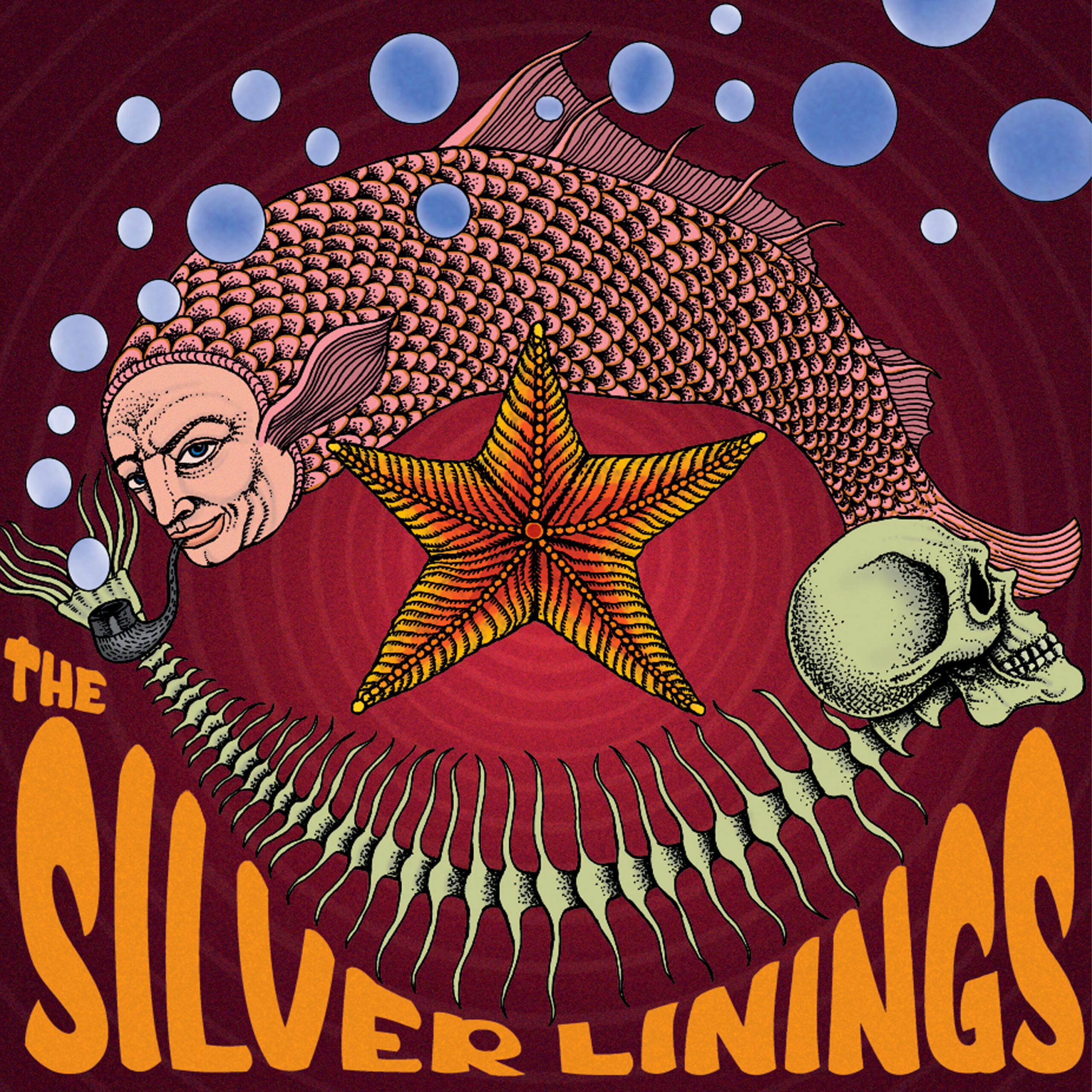
This Wednesday, Oct. 11, The Silver Linings will release their debut album, Pink Fish (review here), through Spinda Records. Classic space rock abounds on the Andalusian five-piece’s seven-songer, and the simple answer is that’s why I’m streaming it. Yeah, I did the earlier premiere linked above, but some records should be heard in their entirety, and with the particular shimmering pastoralia that seems to be a regional specialty for a number of acts — the PR wire lists some of them below; Híbrido, Plastic Woods, Santo Rostro, etc. — the band conjures a malleable balance of styles that spans generations of lysergic and progressive influences. And then you get to the fuzz. Why am I streaming this record? Friggin’ listen to it and find out.
I had never been to the Iberian Peninsula at all until this past August — which given my age feels like neglect — and I hope to go back at some point, but while I was in Portugal for this year’s SonicBlast Fest, I met Berto Cáceres, who heads Spinda Records based in Andalucía, and in a longer, sit-down, face-and-voice-to-name conversation, he told me about how in the early ’70s in Spain, that area, which is the gateway from Europe to Africa and vice versa, was how Spain got both its records and its weed while living under dictatorship (it’s kind of incredible how much of 20th century Spanish politics was defined by Franco), and so became a place of openness and art and creativity even when living under state oppression. Not quite a rebellion, maybe, but a little one. A good historical narrative, if nothing else.
And surely, the legacy of that progressive creativity is what we’re hearing in “Cosmic Excursions” or the tambourine-shaking and wailing guitar solo plus keys of “Heart Full of Gold,” but if The Silver Linings are showing themselves as part of the lineage described above, then inherent to that is a sense of looking beyond the confines of one’s own time and place. Past and future intertwine in a liquefied aural presence, the sound sending notes and melodies into an open expanse in “In the Fleeting Hand of Time” as it builds on the otherworldly propositions of “A Pleasant Trip into the Unknown,” begun with a sample of then-US President Ronald Reagan talking about aliens uniting the planet — one of a very select few things about which he was correct — before the band take off on a jaunt of trippy boogie that will land them in the quirk of “Pink Fish” before “Patient M” pulls back to more solidified ground, the guitar practically begging early on for the saxophone that joins soon enough.
One could go on — perpetually, it seems; dude, shut up — about the nuances in The Silver Linings‘ approach, the twists that Pink Fish presents over the course of its 37 minutes, but, well, I already did that, and how many huge block paragraphs do you really need at the start of what I’m sure will be a busy week? Let’s wrap it up, hmm?
The Silver Linings aren’t a revolution in psych on their first record, and they aren’t trying to be. What they do is to encompass a broad range of influences from ’60s garage and ’70s and ’80s prog with Andalusian folk, heavy, and modern neo-psych elements. A heady brew, and a potent one if you’re willing to be swept along by the album, which for a debut is awfully easy to follow on its path. Again, you can hear for yourself. I say, give it a shot. Worst case scenario, you quit your job and decide to wander the earth as a mushroom-snarfing wizard muttering existentialisms to yourself for the rest of your days. Also that’s the best case scenario.
Formed in Malaga in 2021, The Silver Linings self-released their debut EP ‘TSL’ in May 2023. Just a few days later they signed with the indie label Spinda Records (Moura, Fin del Mundo, Moundrag, Maragda) and returned to the studio to record some additional songs. The result is ‘Pink Fish’, a first full-length that is now available on main streaming services and physical formats.
After telling us the story of the “Patient M” and taking us to the deep space with “Cosmic excursions” in September, Málaga-based quintet The Silver Linings have just released ‘Pink Fish’. This debut album will delight fans of genres such as psychedelia, acid rock, space rock or kraut; and immediately places them within the new wave of Andalusian psychedelia, along with bands like Híbrido, Lunavieja, Medicina, Plastic Woods, Santo Rostro, Mia Turbia, Se permiten submarinos, DMBK or Gu Vo.
In this debut album, The Silver Linings are highly influenced by 20th century sci-fi, Moorcock’s literature, Moebius’ illustrations, Tarkovsky’s cinema, Jodorovsky’s work and the poetry of the beat generation; in addition to natural landscapes of Andalusia such as El Torcal in Antequera, the Gorafe desert, the dunes of Bolonia and the Strait of Gibraltar.
Recorded, mixed and mastered at Hollers Analog Studio, and with an artwork by Antonio Ramírez (Viaje a 800, Atavismo, Medicina, Bourbon), ‘Pink Fish’ is now available as part of Spinda Records ‘The Trippy Series’ on the following formats:
▪ Digital ▪ 150x Compact Disc (digisleeve) ▪ 150x Black Vinyl (hand-numbered; includes digital download) ▪ 150x Clear Orange Vinyl (hand-numbered; includes digital download)
Upcoming live dates: Nov 09 | Málaga (SP) @ Festival Moments 10 | + Rosy Finch Nov 11 | Málaga (SP) @ La Caverna Nov 25 | Sevilla (SP) @ Monkey Week | + Fin del Mundo, Travo and Maragda
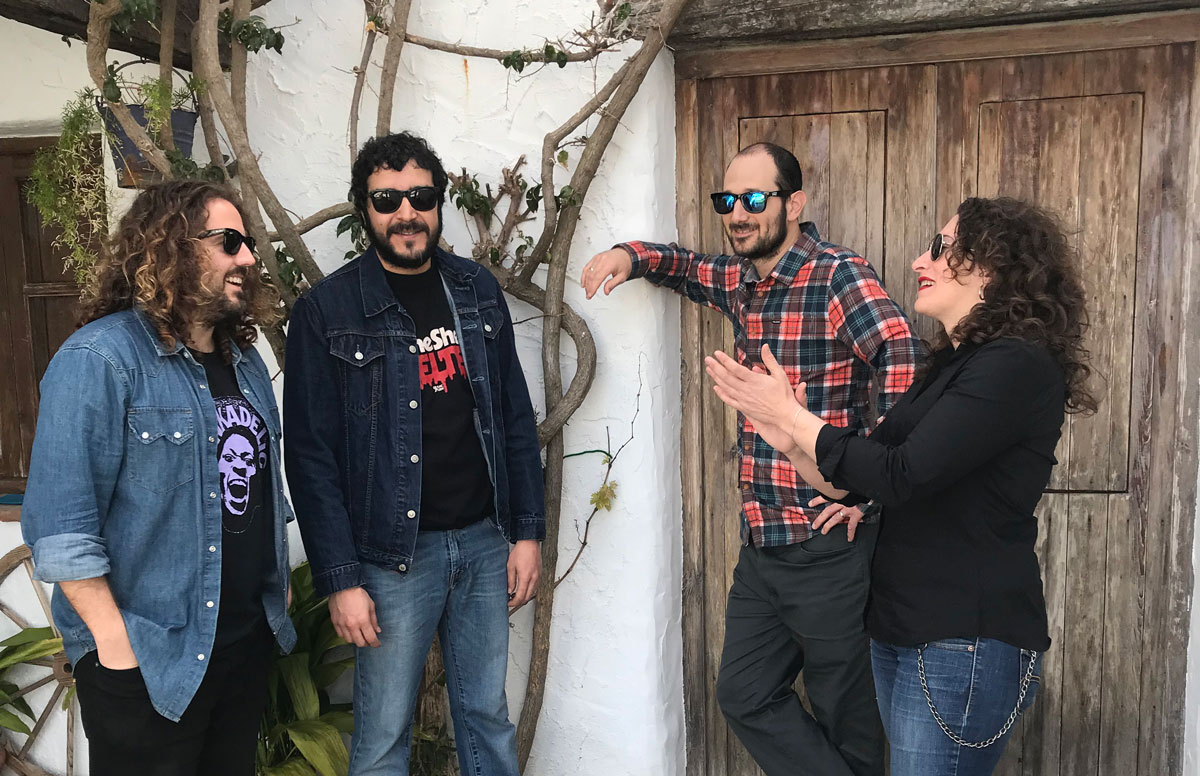
The Silver Linings: Javi – guitar/vocals Cati – guitar Jose – bass Lolo – drums Marta – sax
Posted in Reviews on October 5th, 2023 by JJ Koczan
Welcome to Thursday of the Fall 202 Quarterly Review. It’s been a good run so far. three days and 30 records, about to be four and 40. I’ve got enough on my desktop and there’s enough stuff coming out this month that I could probably do a second Fall QR in November, and maybe stave off needing to do a double-one in December as I had been planning in the back of my head. Whatever, I’ll figure it out.
I hope you’ve been able to find something you dig. I definitely have, but that’s how it generally goes. These things are always a lot of work, and somehow I seem to plan them on the busiest weeks — today we’re volunteering at the grade school book fair; I think I’ll dig out my old Slayer God Hates Us All shirt from 20 years ago and see if it still fits. Sadly, I think we all know how that experiment will work out.
Anyway, busy times, good music, blah blah, let’s roll.
Quarterly Review #31-40:
—
Darsombra, Dumesday Book
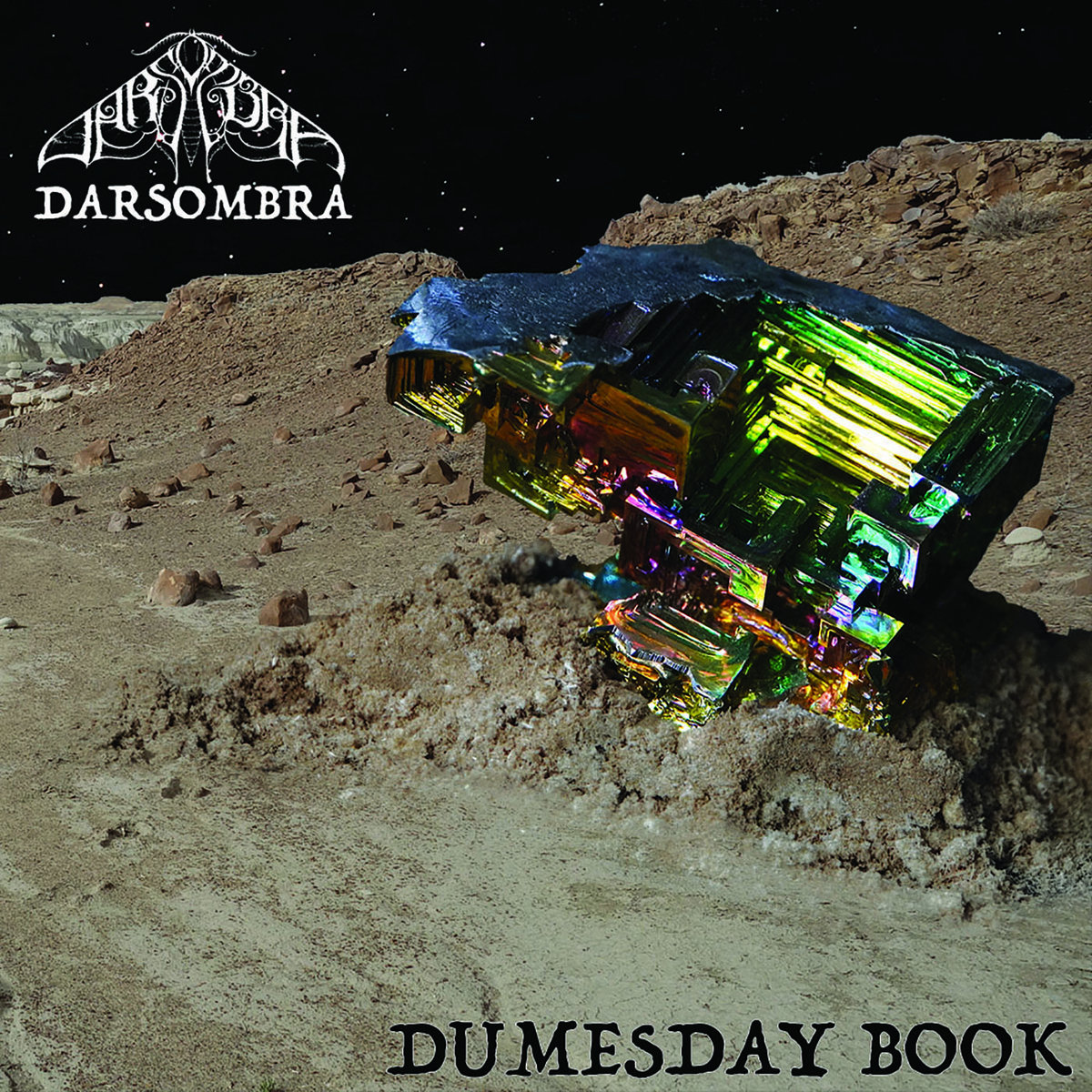
Forever touring and avant garde to their very marrow, ostensibly-Baltimorean duo Darsombra — Ann Everton on keys, vocals, live visuals, and who the hell knows what else, Brian Daniloski on guitar, a living-room pedal board, and engineering at the band’s home studio — unveil Dumesday Book as a 75-minute collection not only of works like “Call the Doctor” (posted here) or “Call the Doctor” (posted here), which appear as remixes, but their first proper album of this troubled decade after 2019’s Transmission (review here) saw them reach so far out into the cosmic thread to harness their bizarre stretches of bleeps and boops, manipulated vocals, drones, noise and suitably distraught collage in “Everything is Canceled” — which they answer later with “Still Canceled,” because charm — but the reassurance here is in the continuation of Daniloski and Everton‘s audio adventures, and their commitment to what should probably at this point in space-time be classified as free jazz remains unflinching. Squares need not apply, and if you’re into stuff like structure, there’s some of that, but all Darsombra ever need to get gone is a direction in which to head — literally or figuratively — so why not pick them all?
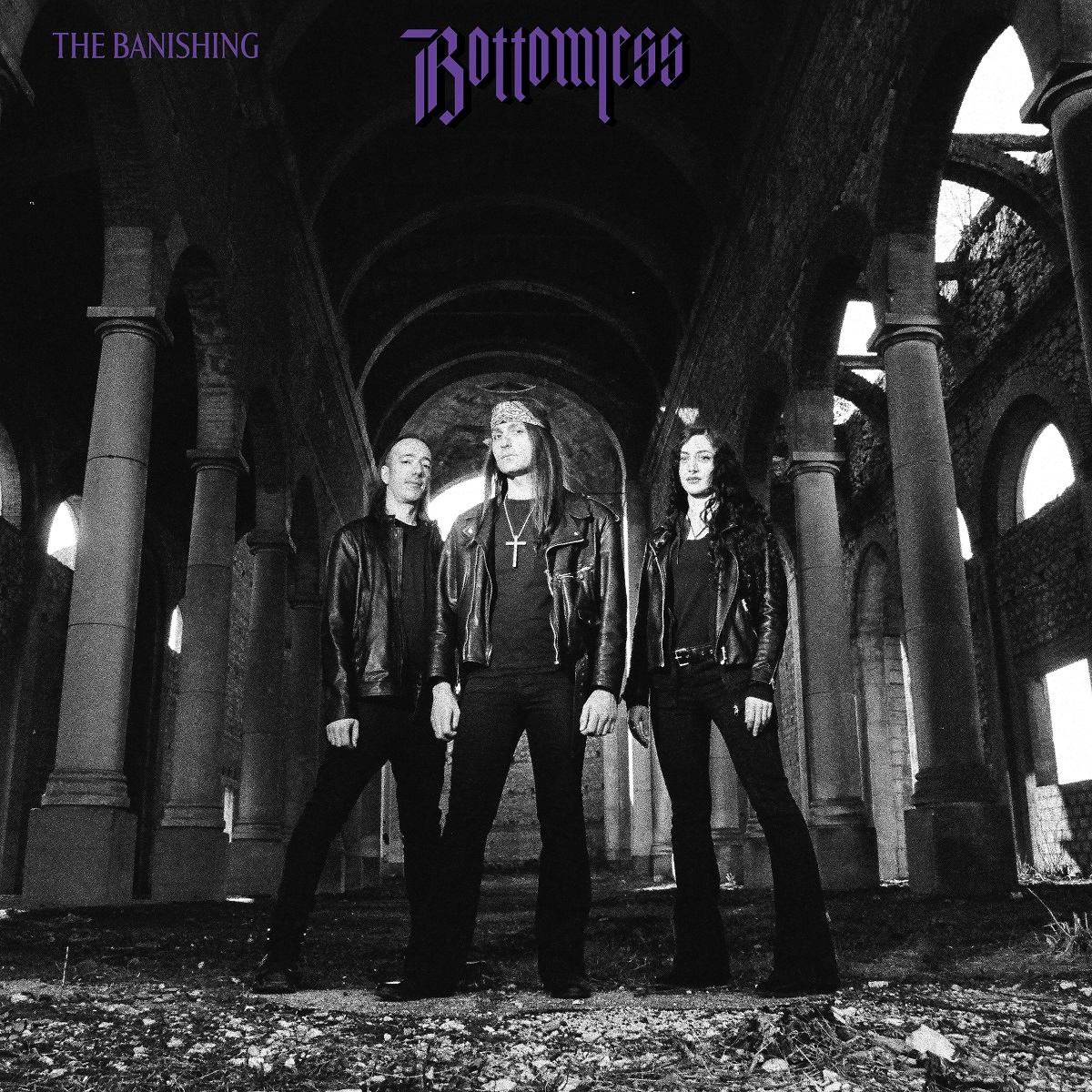
Cavernous in its echo and with a grit of tone that is the aural equivalent of the feeling of pull in your hand when you make a doom claw, The Banishing is the second full-length from Italian doom rockers Bottomless. Working as the trio of vocalist/guitarist Giorgio Trombino (ex-Elevators to the Grateful Sky, etc.), drummer David Lucido (Assumption, among a slew of others) and bassist Sara Bianchin — the latter also of Messa and recently replaced in Bottomless by Laura Nardelli (Ponte del Diavolo, etc.) — the band follow their 2021 self-titled debut (review here) with an eight-track collection that comes across as its own vision of garage doom. It’s not about progressive flourish or elaborate production, but about digging into the raw creeper groove of “Guardians of Silence” or the righteous post-Pentagram chug-and-nod of “Let Them Burn.” It is not solely intended as worship for what’s come before. Doom-of-eld, the NWOBHM, ’70s proto splurges all abound, but in the vocal and guitar melody of “By the Sword of the Archangel” and the dramatic rolling finish of “Dark Waters” after the acoustic-led interlude “Drawn Into Yesterday,” in the gruel of “Illusion Sun,” they channel these elements through themselves and come out with an album that, for as dark and grim as it would likely sound to more than 99 percent of the general human population, is pure heart.
The Death Wheelers, Chaos and the Art of Motorcycle Madness
Look. I don’t know The Death Wheelers personally at all. We don’t hang out on weekends. But the sample-laced (“We wanna be free to ride our machines without being hassled by the Man — and we wanna get loaded!” etc.), motorcycle-themed Québecois instrumental outfit sound on their second LP, the 12-track/40-minute riff-pusher Chaos and the Art of Motorcycle Madness, like they’re onto something. And again, I don’t know these cats at all. I don’t know what they do for work, what their lives are like, any of it. But if The Death Wheelers want to get out and give this record the support it deserves, the place they need to be is Europe. Yeah, I know there was The Picturebooks, but they were clean-chrome and The Death Wheelers just cracked a smile and showed you the fly that got splattered on their front tooth while they were riding — sonically speaking. The dust boogie of “Lucifer’s Bend,” the duly stoned “Interquaalude” ahead of the capper duo of “Sissy Bar Strut (Nymphony 69)” and “Cycling for Satan Part II” and the blowout roll in “Ride into the Röt (Everything Lewder Than Everything Else)” — this is a band who should bypass America completely for touring and focus entirely on Europe. Because the US will come around, to be sure, but not for another three or four month-long Euro stints get the point across. I don’t know that that’ll happen or it won’t, but they sound ready.
The career arc of guitarist Phil Caivano — and of course he does other stuff as well, including vocals on his self-titled solo-project’s debut, Caivano, but some people seem to have been born to hold a guitar in their hands and he’s one of those; see also Bob Balch — is both longer and broader than his quarter-century as guitarist and songwriting contributor to Monster Magnet, but the NJ heavy rock stalwarts will nonetheless be the closest comparison point to these 10 tracks and 33 minutes, a kind of signature sleazy roll in “Talk to the Dead,” the time-to-get-off-your-ass push of “Come and Get Me” at the start or the punkier “Verge of Yesterday” — touch of Motörhead there seeming well earned — a cosmic ripper on a space backbeat in “Fun & Games,” but all of this is within a tonal and production context that’s consistent across the span, malleable in style, unshakable in structure. Closer “Face the Music” is the longest cut at 5:04 and is a drumless spacey experiment with vocals and a guitar figure wrapped around a central drone, and that adds yet more character to the proceedings. I’d wonder how long some of these songs or parts have been around or if Caivano is going to put a group together — could be interesting — and make a go of it apart from his ‘main band,’ but he’s long since established himself as an exceptional player, and listening to some of this material highlights contributions of style and substance to shaping Monster Magnet as well. Phil Caivano: songwriter.
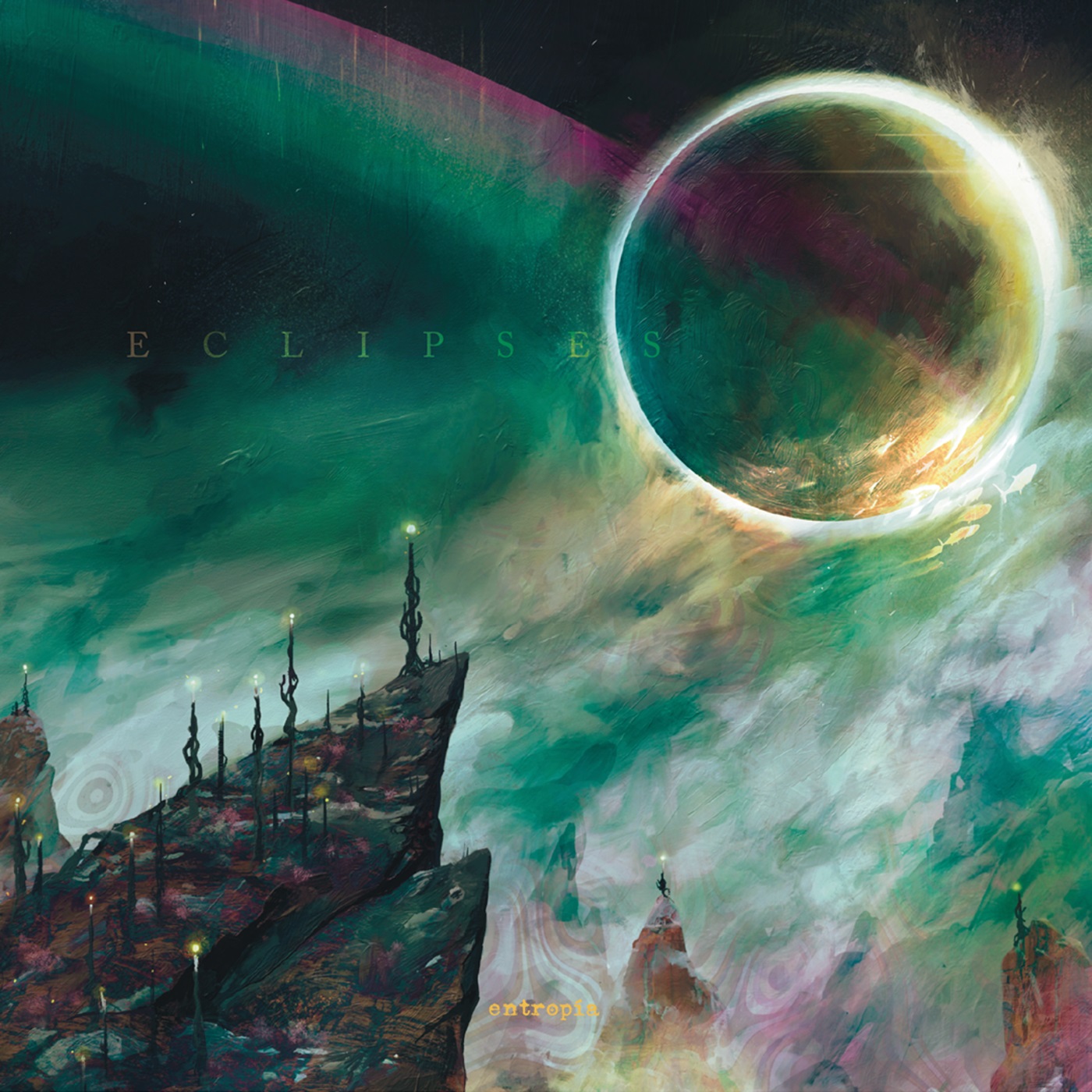
Together for nearly a decade, richly informed by the progressive and space rock(s) of the 1970s, prone to headspinning feats of lead guitar like that in the back end of second cut “Dysania,” Entropía offer their second full-length in Eclipses, a five-track/40-minute excursion of organ-inclusive cosmic prog that reminds of Hypnos 69 in the warm serenity at the start of “Tarbes,” threatens the epic on seven-minute opener “Thesan” and delivers readily throughout; a work of scope that runs deep in the pairing of “Tarbes” and “Caleidoscopia” — both of which top nine minutes long — but it’s there that Entropía reveal the full spectrum of light they’re working with, whether it’s that tonal largesse that rears up in the latter or the jazzy kosmiche shove in the payoff of the former. And the drums come forward to start closer “Polaris,” which follows, as Entropía nestle into one more groovy submersion, finding heavy shuffle in the drums — hell yeah — and holding that tension until it’s time for the multi-tiered finish and only-necessary peaceful comedown. It’s inevitable that some records in a Quarterly Review get written about and I never listen to them again. I’ll be back to this one.
God damn, Ghorot, leave some nasty for the rest of the class. The Boise, Idaho, three-piece — vocalist/bassist Carson Russell (also Ealdor Bealu), guitarist/vocalist Chad Remains (ex-Uzala) and drummer/vocalist Brandon Walker — launch their second LP, Wound, with the gloriously screamed, righteously-coated-in-filth, choking-on-mud extreme sludge they appropriately titled “Dredge.” And fuck if it doesn’t get meaner from there as Ghorot — working with esteemed producer Andy Patterson (The Otolith, etc.) and releasing through Lay Bare Recordings and King of the Monsters Records — take the measure of your days and issue summary judgment in the negative through the mellow-harshing bite of “In Asentia,” the least brutal part of which kind of sounds like High on Fire and the death/black metal in centerpiece “Corsican Leather.” All of which is only on side A. On side B, “Canyon Lands” imagines a heavy Western meditation — shades of Ealdor Bealu in the guitar — that retains its old-wizard vocal gurgle, and capper “Neanderskull” finally pushes the entire affair off of whatever high desert cliffside from which it’s been proclaiming all this uberdeath and into a waiting abyss of willfully knuckledragging blower deconstruction. The really scary shit is these guys’ll probably do another record after this one. Yikes.
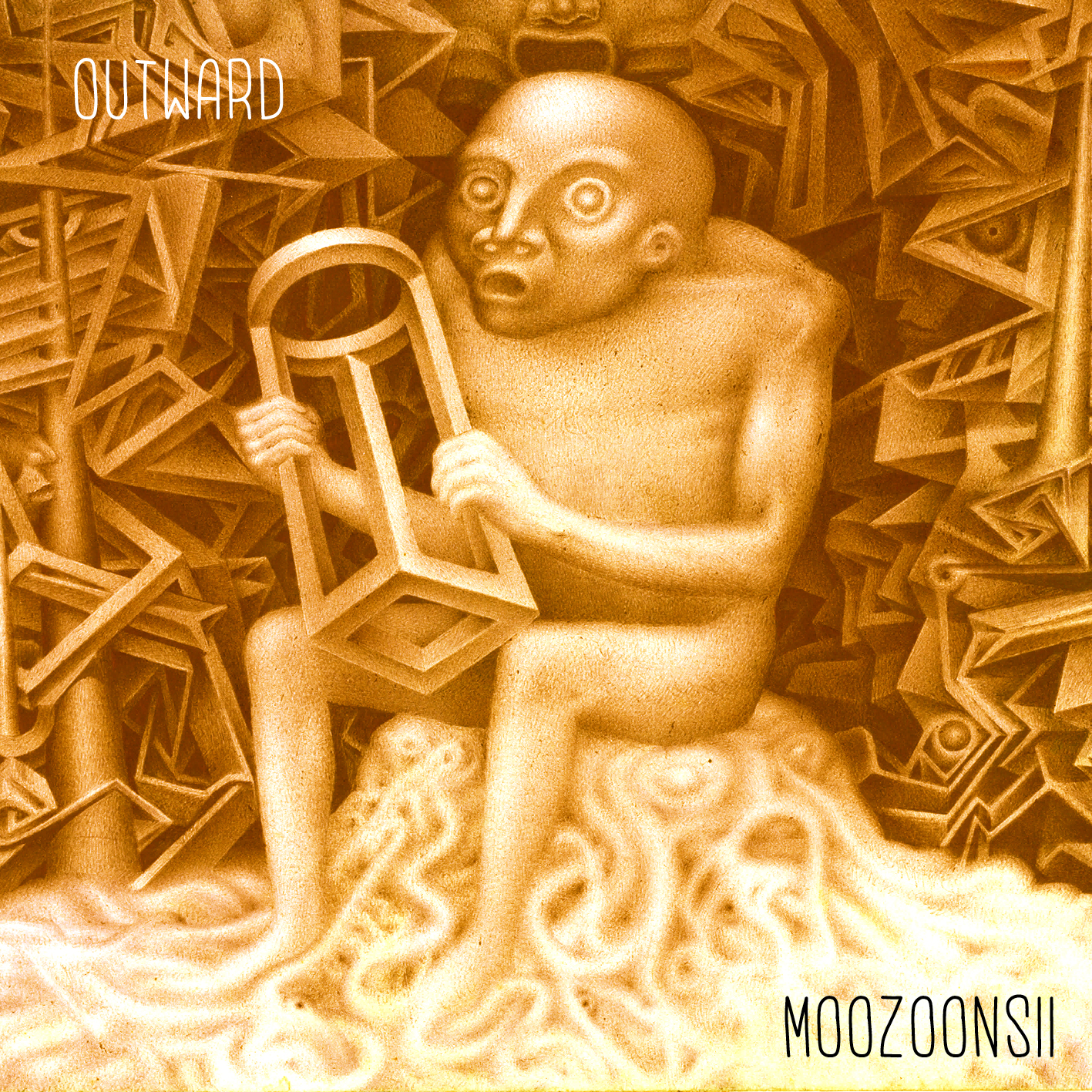
With the self-release of Outward, heavy progressive psych instrumentalists Moozoonsii complete a duology of pandemic-constructed outings that began with last year’s (of course) Inward, and to do so, the trio based in Nantes, France, continue to foster a methodology somewhere between metal and rock, finding ground in precision riffing in the 10-minute “Nova” or in the bumps and crashes after eight minutes into the 13-minute “Far Waste,” but they’re just as prone to jazzy skronk-outs like in the midsection solo of “Lugubris,” and the entire release is informed by the unfolding psychedelic meditationscape of “Stryge” at the start, so by no, no, no means at all are they doing one thing for the duration. “Toxic Lunar Vibration,” which splits the two noted extended tracks, brings the sides together as if to emphasize this point, not so much fitting those pointed angles together as delighting in the ways in which they do and don’t fit at certain times as part of their creative expression. Pairing that impulse with the kind of heavy-as-your-face-if-your-face-had-a-big-boulder-on-it fuzz in “Tauredunum” is a hell of a place to wind up. The unpredictable character of the material that surrounds only makes that ending sweeter and more satisfying.
An initial two tracks from UK trio Death Wvrm, both instrumental, surfaced earlier this year, one in Spring around the time of their appearance at Desertfest London — quiet a coup for a seemingly nascent band; but listening to them I get it — and after. “Enter” was first, “The Endless” second, and the two of them tell a story unto themselves; narrative seeming to be part of the group’s mission from this point of outset, as each single comes with a few sentences of accompanying scene-setting. Certainly not going to complain about the story, and the band have some other surprises in store in these initial cuts, be it the bright, mid-period Beatles-y tone in the guitar for “The Endless” (it’s actually only about four and a half minutes) or the driving fuzz that takes hold after the snap of snare at 2:59, or the complementary layer of guitar in “Enter” that speaks to broader ambitions sound-wise almost immediately on the part of the band. “Enter” and “The Endless” both start quiet and get louder — the scorch in “Enter” isn’t to be discounted — but they do so in differing ways, and so while one listens to the first two cuts a band is putting out and expects growth in complexity and method, that’s actually just fine, because it’s exactly also what one is left wanting after the two songs are done: more. I’m not saying show up at their house or anything, but maybe give a follow on Bandcamp and keep an eye.
Safe to assume some level of self-awareness on the part of Brazilian trio Mudness who, after unveiling their first single “R.I.P.” in 2020 make their self-titled full-length debut with seven songs of hard-burned wizard riffing, the plod of “Gone” (also an advance single, if not by three years) and guitarist Renan Casarin‘s Obornian moans underscoring the disaffected stoner idolatry. Joined by Fernando Dal Bó, whose bass work is crucial to the success of the entire release — can’t roll it if it ain’t heavy — and drummer Pedro Silvano, who adds malevolent swing to the slow march forward of “This End Body,” the centerpiece of the seven-song/35-minute long player. There’s an interlude, “Lamuria,” that could probably have shown up earlier, but one should keep in mind that the sense of onslaught between the likes of “Evil Roots” and “Yellow Imp” is part of the point, and likewise that they’re saving an extra layer of aural grime for “Final Breeze,” where they answer the more individual take of “This End Body” with a reach into melodicism and mark their appeal both in what they might bring to their sound moving forward and the planet-sucked-anyhow despondent crush of this collection. Putting it on the list for the best debuts of 2023. It’s not innovative, or trying to be, but that doesn’t stop it from accomplishing its aims in slow, mostly miserable stride.
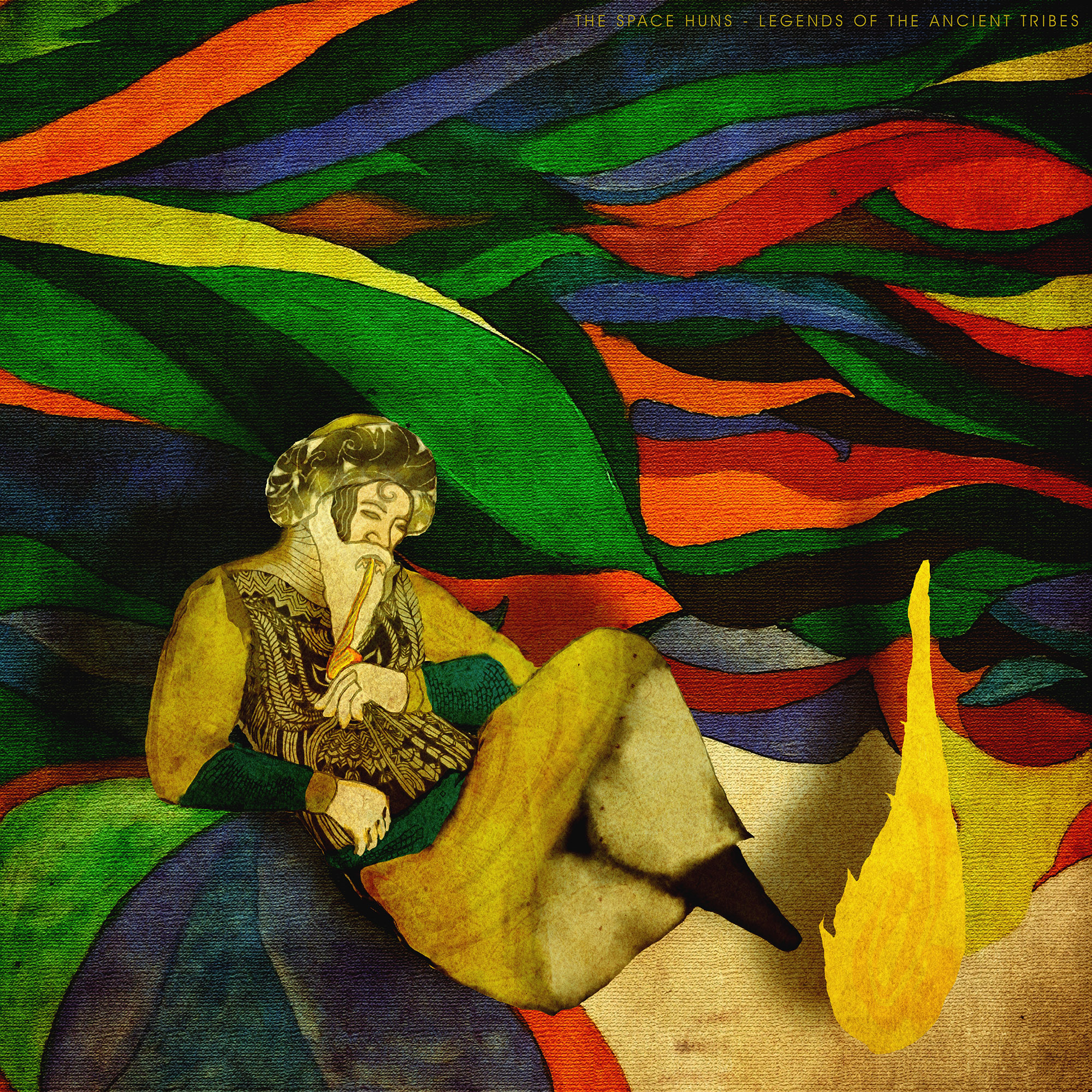
I’m not generally one to tell you how to spend your money, but if you take a look over at The Space Huns‘ Bandcamp page (linked below), you’ll see that the Hungarian psych jammers’ entire digital discography is €3.50. Again, not trying to tell you how to live your life, but Legends of the Ancient Tribes, the Szeged-based trio’s new hour-long album, has a song on it called “Goats on a Discount Private Space Shuttle Voyage,” and from where I sit that entitles the three-piece of guitarist Csaba Szőke, bassist Tamás Tikvicki and drummer Mátyás Mozsár to that cash and perhaps more. I could just as easily note “Sgt. Taurus on Coke” at the start of the outing or “The Melancholic Stag Beetle Who Got Inspired by Corporate Motivational Coaches” — or the essential fact that in addition to the best song titles I’ve seen all year (again, and perhaps more), the jams are ace. Chemistry to spare, patience when it’s called for but malleable enough to boogie or nod and sound no less natural doing either, while keeping an exploratory if not improvisational — and it might be that too — character to the material. It’s not a minor undertaking at 59 minutes, but between the added charm of the track names and the grin-inducing nod of “Cosmic Cities of the Giant Snail Kingdom,” they make it easy.
Posted in Whathaveyou on September 29th, 2023 by JJ Koczan
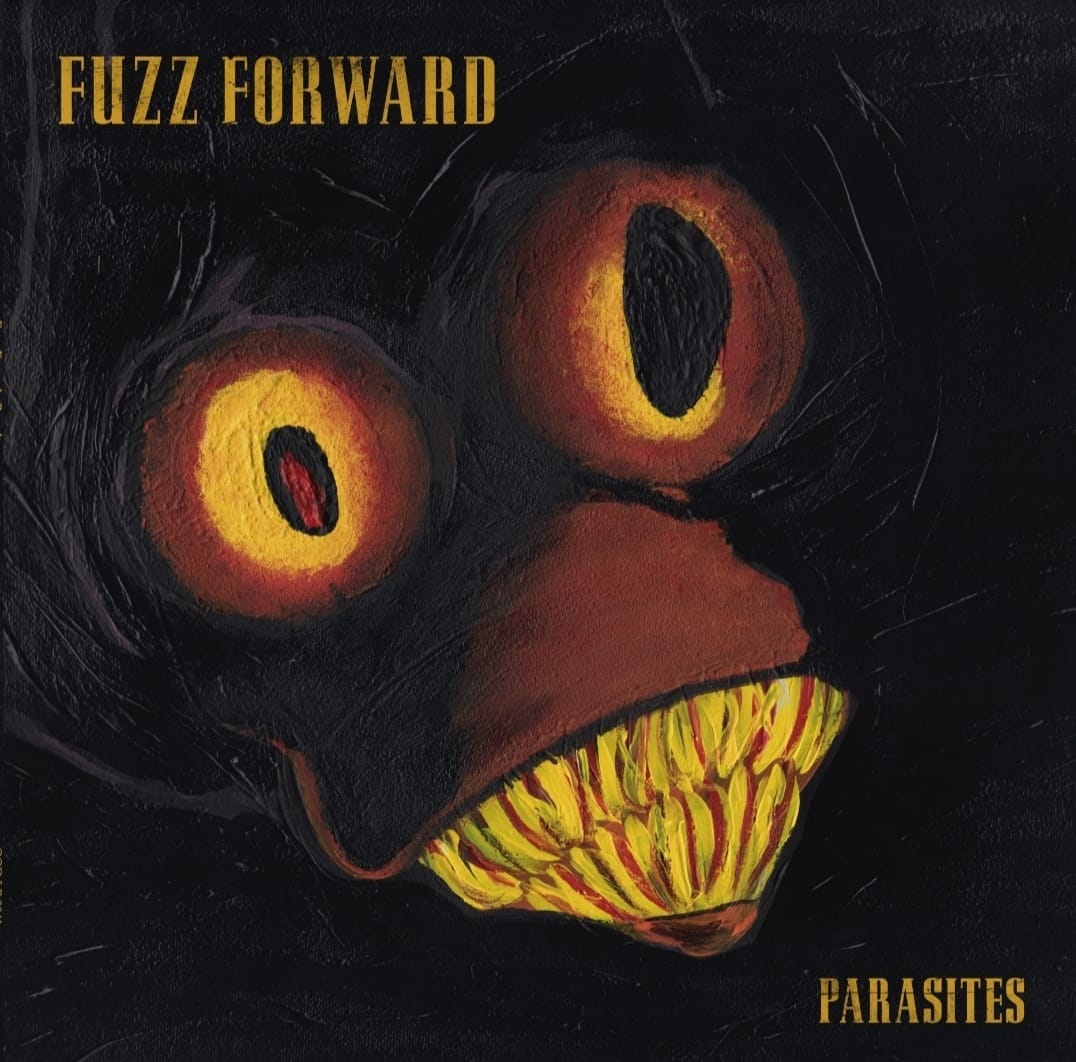
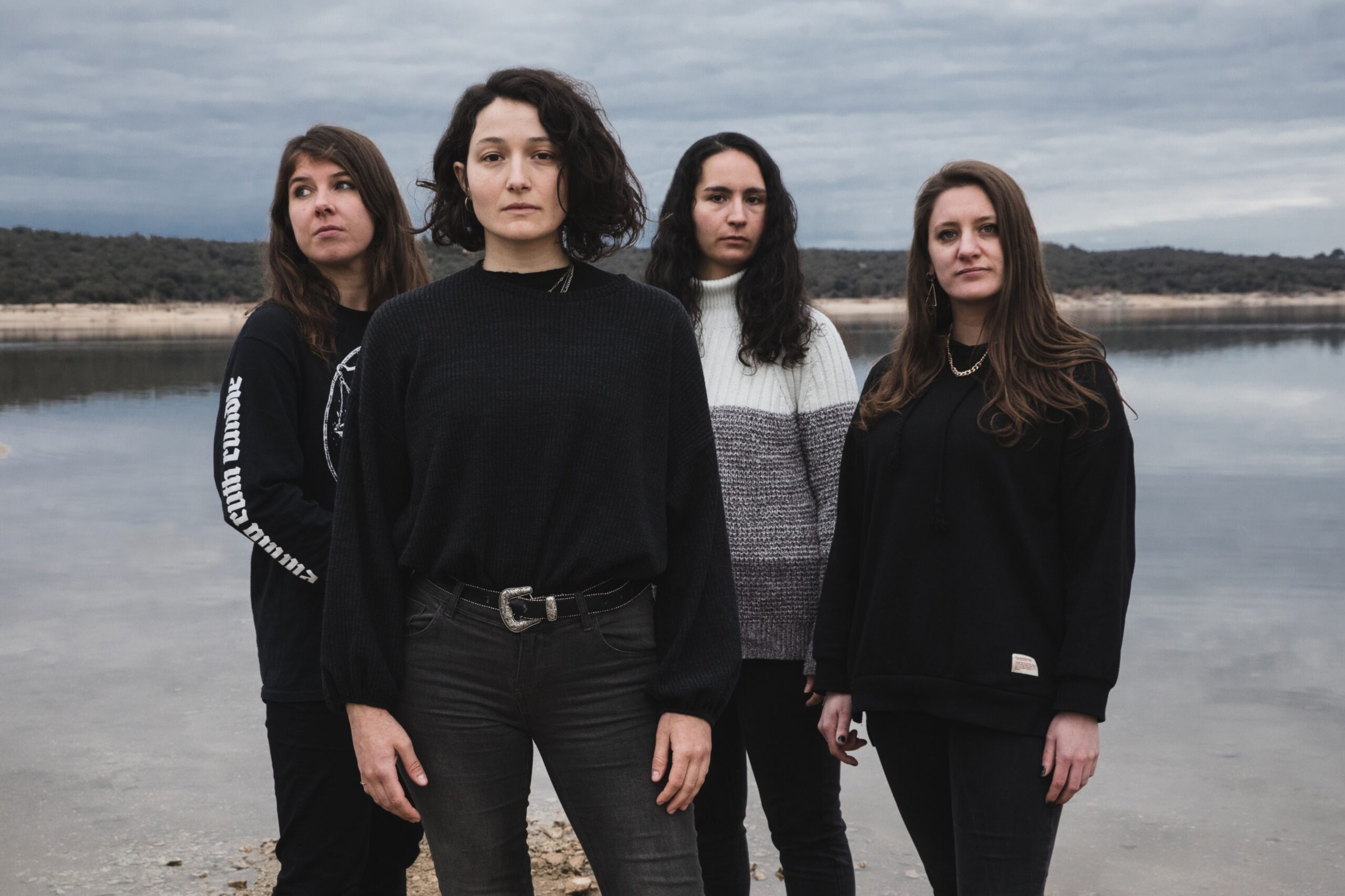
For a band who call themselves Fuzz Forward, one might expect the Spanish troupe to be an absolute hair-covered overdose of effects pedals sprawling out across whatever stage they’re playing, but to listen to the new single “Intoxicate” that’s coming out in about two weeks ahead of their next album, Parasites, next year, they’re awfully clearheaded in their approach. Such was the case as well with their 2018 debut, Out of Nowhere (review here), so it would seem their purposes are perhaps a little more straightahead than their moniker.
Fair enough, and that’s hardly true only of them, but the songwriting isn’t really arguable either way, and I know I’ve said this about releases of this sort before, but it’s the kind of thing you might see five record labels or so getting behind. Hail teamwork. I don’t have audio of “Intoxicate” yet to share, but I’ve got art, info, a lifetime’s supply of links and 2022 single “Shout to Forget,” which isn’t on the record but, you know, exists in a public sphere and is thus applicable to our purposes here.
Barcelona based Fuzz Forward are releasing the single Intoxicate next October 13th on Spotify.
The band continues to pursuit their own path with their personal blend of grunge, hard rock and stoner rock. FF is heavily influenced by Helmet, Alice In Chains, Black Sabbath…
Intoxicate is the first single off their sophomore album “Parasites” due for release on January 2024 via Glory or Death Records, Discos Macarras Records, Violence In The Veins, Hombre Montaña and Demons Punk Records.
Fuzz Forward “Parasites”
1. Shout To Forget 2. Intoxicate 3. Fade Away 4. You Never Learn 5. She Comes 6. S.O.S. 7. Set Me Free 8. Hand It Over 9. Dead Friends 10. These Flowers
Posted in Whathaveyou on September 27th, 2023 by JJ Koczan
I hadn’t listened (at least consciously; there’s a lot that comes and goes through my ears in a given day) to Bones of Minerva‘s 2022 Embers album, but if there was one band who didn’t actually play the thing about whom I heard a lot at SonicBlast Fest in Portugal last month, it was this Madrid-based four-piece, whose stylistic gamut runs between ambient drone, crushing sludge and teeth-gnashing ‘core of this or that variety. Melodic when they’re not furious, quiet when they’re not loud, the four-piece would seem to have earned that word-of-mouth, and it’s sounding more and more like I’m about to earn paying eight euro for the download. So it goes.
Lesson learned on my part, I guess. Iberian heavy doesn’t screw around. They’ll play France and Germany for the first time next month, and while I know there’s a good deal of tribalism in the Euro heavy underground — nobody talks about it, but each region has its regionalism — the fact that they’ll be out with Svalbard from the UK should help bring soon-to-be-crunched skulls to the room. For the rest of us, if you can get down with volatility, the Embers stream is down there at the bottom of the post, and now you too get to tell someone you heard about this band from word of mouth. Isn’t it amazing how that works.
From the PR wire:
Bones of Minerva Join Svalbard for German and French Tour Dates
Following their UK tour, including a performance at Bristol’s esteemed ArcTanGent festival, Madrid-based post-rock/metal band Bones of Minerva will be joining the British post-metal outfit Svalbard on their upcoming October tour. The Spanish quartet will be supporting Svalbard during their shows in Germany and France, making their debut appearances in both countries.
States Bones of Minerva: “We just can’t wait to play these shows with Svalbard. They are an incredible band, and we are so grateful and excited to be joining them on the road.”
Bones of Minerva in Germany & France in October: 10/15: Cologne, DE @Helios 37 10/16: Berlin, DE @Urban Spree 10/17: Dresden, DE @Chemiefabrik 10/18: Neunkirchen, DE @Strummsche Reithalle 10/19: Paris, FR @Backstage By The Mill
Since the release of their sophomore album, EMBERS, last year, Bones of Minerva has been on a busy ride. In June 2023, they performed at Azkena Rock in the Basque Country, sharing the stage with legendary acts like Melvins and Iggy Pop. And recently, after completing their August UK tour successfully, they played an intense gig with fellow Spanish grungy noise rockers Rosy Finch. Additionally, they are lined up for a series of other shows across Europe.
Long-time friends Chloé (bass), Eustaquia (vocals), and Ruth (guitar) started Bones of Minerva in 2013, with Nerea joining on drums in early 2018. Like a chimera, their music is a menagerie of sound: the vocalist Eustaquia shifts from hypnotic melodies to savage growls, pairing introspective lyrics with dreamy landscapes whilst Nerea is a powerhouse of crashing progressive rhythms that pairs with the band’s heavy riffs and swirling basslines to brutal effect.
Their debut, Blue Mountains (2017), was initially self-released, with a reissue through Nooirax and La Rubia Producciones the following year. Two years of nonstop activities saw them play festivals like Download Madrid and Resurrection Fest and dates all over Spain, Sweden, and the UK.
In early 2022, the band announced their signing with Spanish label Aloud Music (Toundra, Viva Belgrado) alongside La Rubia Producciones once more to release their second full-length. A new single, “Swamp,” was released soon after as a 7″ to mark the beginning of this new chapter, and on 16 September of the year, their second album, EMBERS, was released in full.
The band opted for a live recording at Metropol Studios (Madrid) with producer Alex Cappa, a process that has seen the band hone their sound and expand into progressive and post-rock territory on tracks like “Merula or Silence.” EMBERS is a journey that takes the listeners through smoke, across forests and swamps, to the very roots of mother earth herself. It is the remnants of fire ready to surge at any moment as a roaring force.
Posted in Whathaveyou on September 14th, 2023 by JJ Koczan
At the end of last month when the lineups were announced for Ripplefest Germany in Berlin and Köln, we found out that North Carolina’s Crystal Spiders would be making the trip abroad, and since they were going forth on their first performances in Europe, it didn’t seem unreasonable to think they’d at least make a short stint of it.
Indeed they’ll do precisely that, co-headlining on a run alongside Spanish heavy cult rockers Kabbalah, who’ll do 10 shows while Crystal Spiders accompany for seven of them, including the two nights at Ripplefest. Kabbalah reissued their 2017 debut, Spectral Ascent, through Ripple earlier this year, and in 2022 took part in Spinda Records‘ mega-compilation Grados. Minutos. Segundos. (review here), following on from their 2021 second album, The Omen (review here), which came out through Ripple imprint Rebel Waves.
As of last month, Crystal Spiders had six songs written for the follow-up to 2021’s Morieris (review here), and when that’s done, it will be their third record overall, and one assumes it’ll show up sometime in 2024. But new material on the road could certainly happen, and that’s always fun.
The PR wire sent the dates as part of an ongoing glut of Ripple-based news this week:
Occult doom rock trio KABBALAH announces co-headlining European tour with US heavy rockers CRYSTAL SPIDERS this fall!
Spanish occult doom rockers KABBALAH and US heavy rockers CRYSTAL SPIDERS are set to embark on their co-headlining European tour this fall, including appearances at Ripplefest in Berlin and Cologne.
After a remarked performance at Motocultor Festival this summer and opening slots for The Obsessed and Lucifer in Spain, all-female trio Kabbalah are back on the European roads to grace heavy and occult rock fans with their dark and magnetic spells. On this special occasion, they will be joined by their Ripple Music labelmates and fast-rising heavy rockers Crystal Spiders and will both appear at Ripplefest in Berlin and Cologne.
KABBALAH & CRYSTAL SPIDERS European tour 2023 23.11.23 FR – Paris – L’International* 24.11.23 DE – Mannheim – 7er Club* 25.11.23 DE – Berlin – Ripplefest 27.11.23 AT – Linz – Kapu 29.11.23 DE – Jena – Rosenkeller 30.11.23 DE – Gottingen – Vinyl-Reservat 01.12.23 BE – Diest – Hell 02.12.23 DE – Cologne – Ripplefest 04.12.23 FR – Chambery – Brin de Zinc* 05.12.23 FR – Toulouse – Mécanique des Fluides* *Kabbalah only