Posted in Whathaveyou on August 29th, 2023 by JJ Koczan
If you’re reading this post — first, thanks — and second, it’s probably because at some point last year, you caught onto Chat Pile‘s God’s Country (review here) and its everything-is-fucked-no-one-knows-what-to-do-except-people-who-don’t-care-oh-look-more-cancer-and-mass-shootings-what-could-be-more-American-than-that sensibility, post-apathy chest-tunneling and hardcore-born willingness to ask “what the fuck?” in however many words. Fair enough. That record — which already has a follow-up in the band’s 2023 split with Nerver (review here) — played out like the shape of you-wish artpunk to come, and its disaffection was widely hailed along with aural ideologies both innovative and primitive. Shit was raw, in other words, and well received.
Chat Pile went to Europe earlier this year to treat Roadburn to an exclusive show, and I have to think they’ll be back on the continent in 2024, though I’ll readily admit I’ve got no insight into their plans. With the momentum of hype around God’s Country, I would imagine they’ve been fielding offers from various sides. You’ll note a couple of these dates on the West Coast are slated to happen supporting heavy prog forerunners Baroness, and as counterintuitive a pairing as that is, it could definitely work, Baroness so refined in their thinky-thinky metal and Chat Pile sounding like they’re trying to beat their own songs with a wrench. Shit, book that tour now.
From social media or wherever:
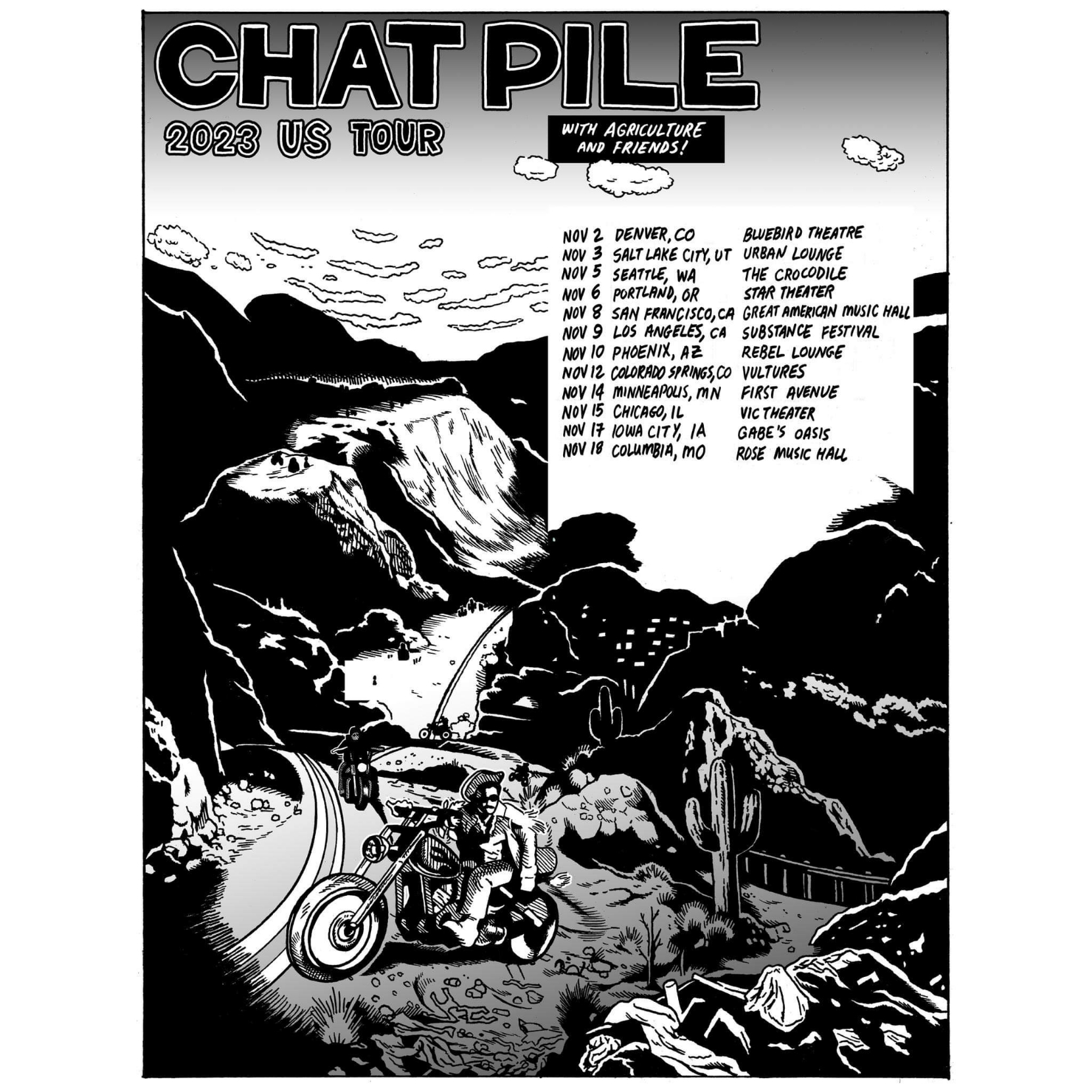
CHAT PILE – WEST COAST TOUR ANNOUNCEMENT!
Been a long time in the making, but it’s finally here!
Agriculture and Nightosphere will join us for select dates and we also have the honor of opening for Baroness on a couple shows in the midwest.
Tickets go on sale this Friday.
11/2 – Denver, CO – Bluebird Theatre ! 11/3 – Salt Lake City, UT – Urban Lounge ! 11/5 – Seattle, WA – The Crocodile ! 11/6 – Portland, OR – Star Theater ! 11/8 – San Francisco, CA – Great American Music Hall ! 11/9 – Los Angeles, CA – Substance Festival 11/10 – Phoenix, AZ – Rebel Lounge ! 11/12 – Colorado Springs, CO – Vultures 11/14 – Minneapolis, MN – First Avenue ? 11/15 – Chicago, IL – Vic Theater ? 11/17 – Iowa City, IA – Gabe’s Oasis & 11/18 – Columbia, MO – Rose Music Hall &
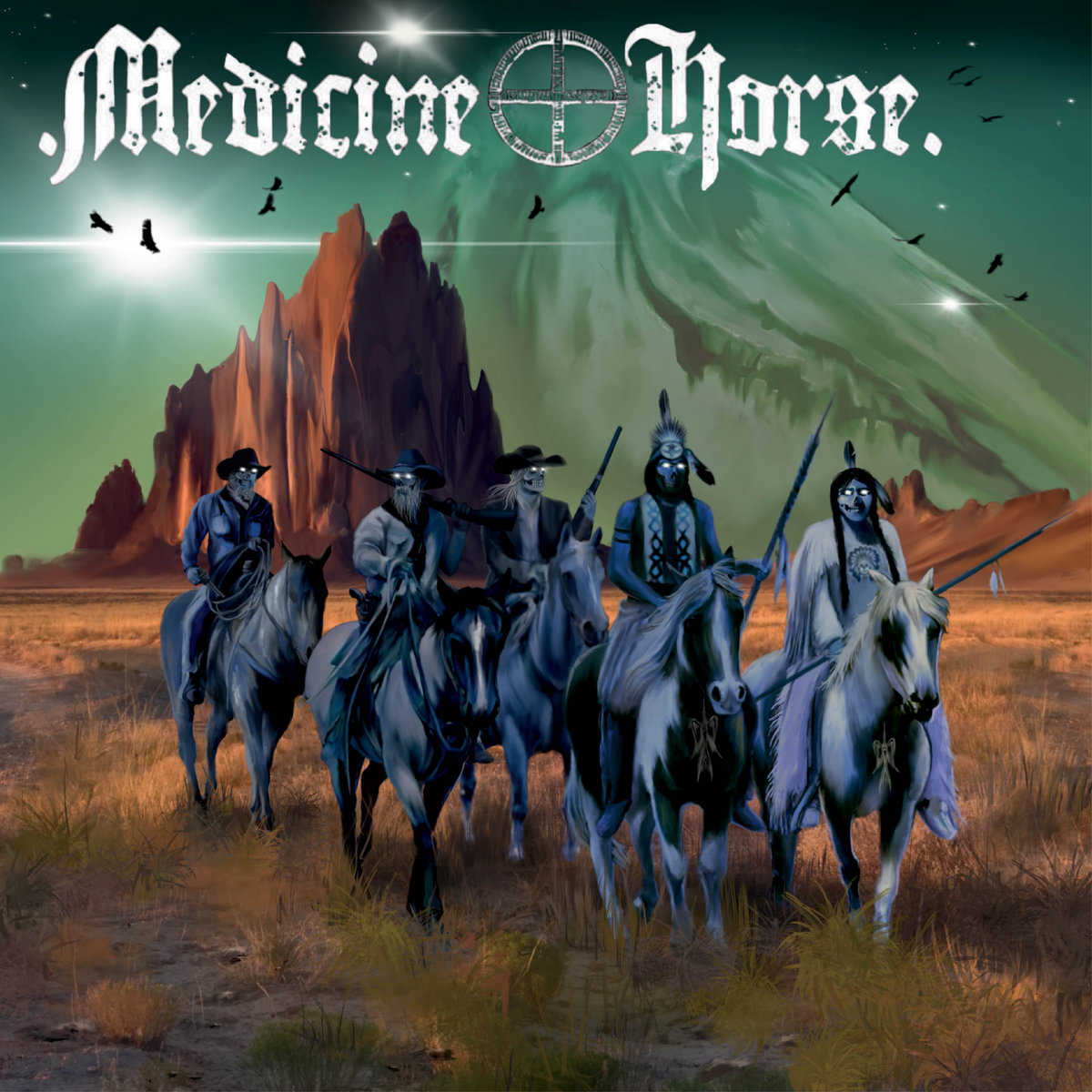
Notably vicious Tulsa, Oklahoma, sludge metallers Medicine Horse will release their self-titled debut Sept. 8 through Horton Records. The album runs seven tracks/34 minutes and is led off by “Dead Medicine” (video premiering below), a powerfully caustic sub-four-minute riffer that’s biting as it explores thematically the different cultures around Western — read: ‘white’ — and Indigenous healing, vocalist Nico Williams harsh-throat screaming lyrics decrying the chemicalization and commercialization of doctoring, which, on the long list of things to be correctly filed under ‘Shit White People Made Awful’ along with rural culture, the blues and rice, is a fair enough place to start. I certainly know every time I go to a doctor’s office that looks like a mall complete with a corporate logo, or receive treatment at an urgi-care center that treats you like you’re at 7-Eleven, or take the friggin’ pile of pills that greets me every morning in front of the coffee pot, it feels disconnected from any sense of humanity or caring in a healing process.
But Medicine Horse‘s Medicine Horse isn’t just about the wreck that capitalism has quite purposefully made of the US health system — though it very easily could be; “Nothing green left in these hills/All they’ve got for us is these pills” — and the five-piece of Nico, guitarists Kyle Williams and Travis Rowe, bassist Chris West and drummer Garrett Heck unfurl a barrage of sludged riffing throughout the varied half-hour plus, with Nico swapping to a melodic vocal approach for most of the slower-rolling “Turning Tide,” which nods doomly through its early verses before subtly upping the tempo just before 2:20 into its 3:51, turning harsher, then re-slowing with double-tracked screams held over as it reaches its culmination in delivering the title-line, “We are the turning tide.”
Pay attention through the subsequent “Swamp Interlude” and you’ll hear the story of “Letiche” to come, that centerpiece track a high point in terms of composition and atmosphere, slowing down further across its early going with a melodic verse over strains of guitar that cycle through farther back in the mix than they might otherwise be, drums and vocals up front, bass deep and coming forward with the riff as they shift to oldschool sludge insistence with vocal scathe laced over and a dual-vocal (someone backing Nico, that is) clean-sung seeming crescendo before the toms grow intense, the low end digs in and the build hits its lumbering and ferocious payoff.
Seven minutes brutally spent, and they won’t be the last. Even in the context of Medicine Horse as a whole, “Letiche” is punishing, taking the ripper nature of “Dead Medicine” and the ambience and melody of “Turning Tide” and the introductory “Swamp Interlude” to a point of full realization. “Badlands,” which opens side B, goes back to ground. In the vein of “Dead Medicine,” but faster, it is led by the riff and screams, given heft and movement by the bass and drums, and turns thrashy in its midsection before stomping out a cavernous and doomed ending, giving over to the penultimate “She,” which like closer “Kuwa Detlukv (The Orchard)” works more in line with “Letiche” in terms of methodology if not execution.
By that I mean that like the album from whence it comes, it brings the moody/melodic aspects of the band’s persona in accord with the furious, and in the case of “She” particularly, via a lumbering and slow-shoving middle leading to a second cycle through the verse, it is tense and ready for the next onslaught. Nico is joined by backing vocals again, and the bass caps “She” before “Kuwa Detlukv (The Orchard)” stretches further into unfolding nod. I won’t embarrass myself by trying to guess the language the lyrics are in (though I’d be interested to find out), but the phrasing works fluidly with the post-midsection melody, the softly drawling guitar, and the tension in the cymbals that lets you know the full-volume roll, bass punch and all, will return.
How does it all end? Vocal harmonies hint toward progression to come in the record’s final moments, but that itself is an aftermath of one last sludge-metal assault, and I think the duality between the two represents well the course that Medicine Horse have marked out for themselves, at least in getting to the point of releasing their first album. How they’ll actually grow is beyond me, and in a universe of infinite possibility trying to predict such things is, well, dumb, but aside from the engagement with Indigenous voices being something the American heavy underground very, very much needs, the manner in which Medicine Horse offer their take, whether its the gnash of “Dead Medicine,” the storytelling in “Swamp Interlude” and “Letiche” or the drawl-and-pound of “She” and “Kuwa Detlukv (The Orchard), speaks to further growth to come. May they continue to manifest the notions set forth here in sound and theme.
You’ll find the video for “Dead Medicine” below, followed by some comment from Nico Williams about the track, the preorder link, more info on the album and band, and all that regular ol’ PR wire stuff.
Please enjoy:
Medicine Horse, “Dead Medicine” official video
Nico Williams on “Dead Medicine”:
“‘Dead Medicine’ explores the contrast between traditional Indigenous medicinal knowledge and Western medicine. In our ancestral wellness practices, medicine is about connection to the natural world, a reciprocal relationship that is alive and flows from generation to generation. In exchange for our stewardship, our environment nourishes us in a way that keeps us balanced and healthy. Modern medicine is so far removed from that kind of connectivity. Pharmaceuticals might start with elements from the natural world, but they are are manufactured into unrecognizable chemicals with side effects that are often worse than what we’re using them to treat. We call it medicine but it’s motivated by commercial interests, without soul, it’s dead medicine. We’ve only been using these types of chemicals for a few generations, but it’s become a part of us, a poison we inherit. In this song I fantasize about purging all the modern chemicals from my body, all the processed and artificial contamination, bleeding it all out to start fresh, to replace it with living, green medicine.”
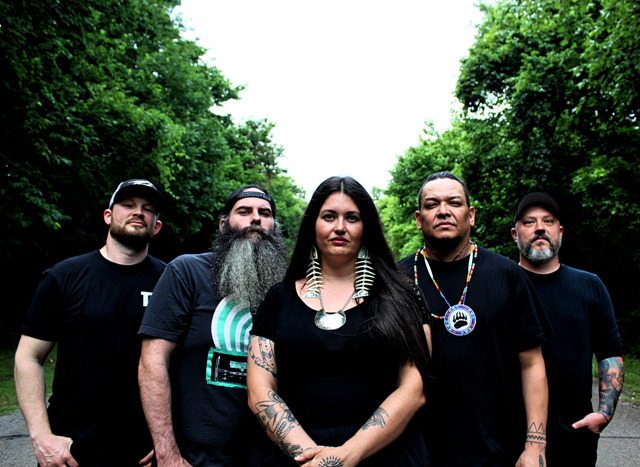
Formed in the autumn of the year the world fell apart, 2020, Medicine Horse began as a way to navigate uncertainty and mitigate existential panic within front woman Nico Williams’ household. With the help of drummer Garrett Heck, a sound took shape, and players were assembled to bring it all to life. Williams, a citizen of Cherokee Nation, moves between jazz-tinged vocal melodies and emotionally charged howls, weaving her lyrical storytelling of historical account, folklore, and Indigenous futurism around layers of sludgy-yet-energetic harmony formed in the clash of techniques between rhythm guitarist Kyle Williams (Ponca,Otoe-Missouria, and Ioway Nations) and lead guitarist Travis Rowe. Rowe draws deeply from his country roots, transforming those immovable hooks into devastatingly heavy riffs before they ignite into towering solos.
A rhythm section steeped in the slow waters of their respective homes of Monroe and New Orleans Louisiana, drummer Garrett Heck and bassist Chris West anchor Medicine Horse’s rumble with elements of doom at one moment, and the frenetic energy of thrash the next. Immediate influences of Southern doom and sludge like Crowbar, Acid Bath and Down are easy to discern, while hints of grunge, post-punk, and classic Southern blues rock simmer beneath the surface. Burn weed, cedar, and sage…plug in, turn up, and amplify your frontal lobe.
Medicine Horse is named in honor of the great-great-great-grandfather of guitarist Kyle Kent Williams Sr (Ponka/Otoe-Missouria/Ioway) Shoⁿge moⁿkoⁿ (in Otoe, Ma’Kaⁿ Shuⁿje). The energy of the band’s music channels the power of these ancestral connections, and also drives the lyrical content.
Medicine Horse are: Vocals: Nico Williams Guitar: Kyle Williams Guitar: Travis Rowe Drums: Garrett Heck Bass: Chris West
Here we go day four of the Quarterly Review. I would love to tell you it’s been easy-breezy this week. That is not the case. My kid is sick, my wife is tired of my bullshit, and neither of them is as fed up with me as I am. Nonetheless, we persist. Some day, maybe, we’ll sit down and talk about why. Today let’s keep it light, hmm?
And of course by “light” I mean very, very heavy. There’s some of that in the batch of 10 releases for today, and a lot of rock to go along, so yes, another day in the QR. I hope you find something you dig. I snuck in a surprise or two.
Quarterly Review #31-40:
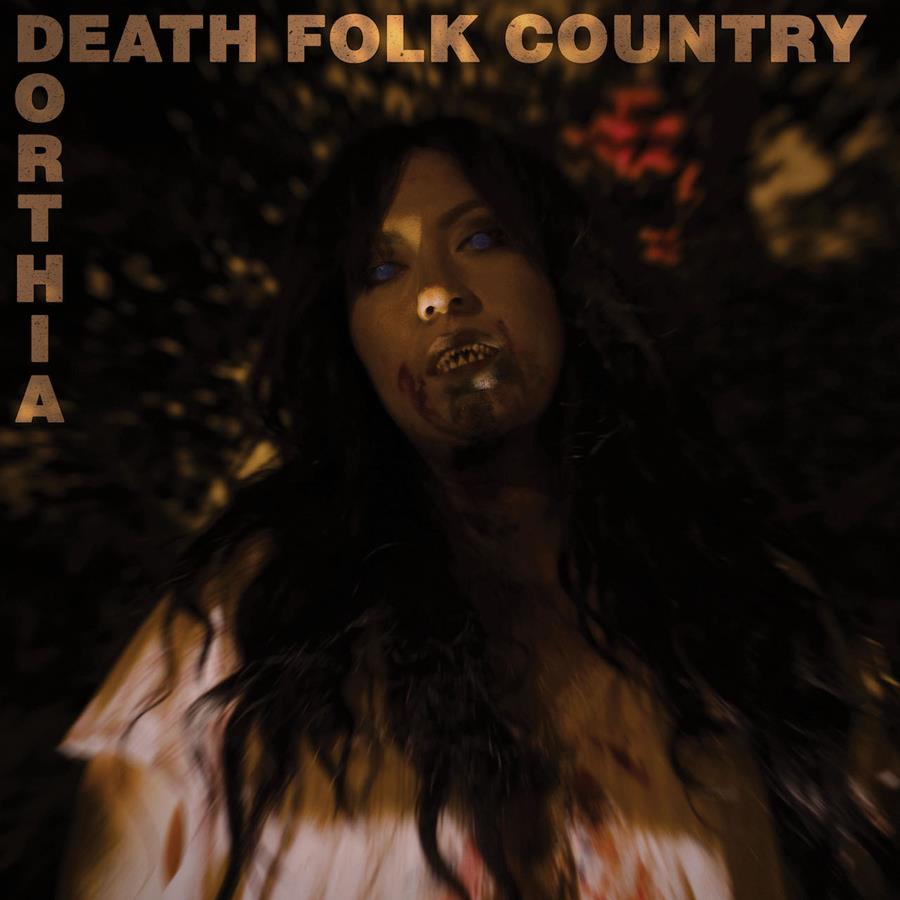
Dorthia Cottrell, Death Folk Country
Crafted for texture, Death Folk Country finds Windhand vocalist Dorthia Cottrell exploring sounds that would be minimal if not for the lushness of the melodies placed over them. Her first solo offering since 2015 runs 11 tracks and feels substantial at a manageable 42 minutes as delivered through Relapse Records. The death comes slow and soft, the folk is brooding and almost resistant in its Americana traditionalism, and the country is vast and atmospheric, and all three are present in a release that’s probably going to be called ethereal because of layering or vocal reverb but in fact is terrestrial like dry dirt. The seven-minute “Family Annihilator” is nigh on choral, and e-bow or some such droner element fills out the reaches of “Hell in My Water,” expanding on the expectation of arrangement depth set up by the chimes and swells that back “Harvester” after the album’s intro. That impulse makes Death Folk Country kin to some of earlier Wovenhand — thinking Blush Music or Consider the Birds; yes, I acknowledge the moniker similarity between Windhand and Wovenhand and stand by the point as regards ambience — and a more immersive listen than it would otherwise be, imagining future breadth to be captured as part of the claims made in the now. Do I need to say that I hope it’s not 2031 before she does a third record?
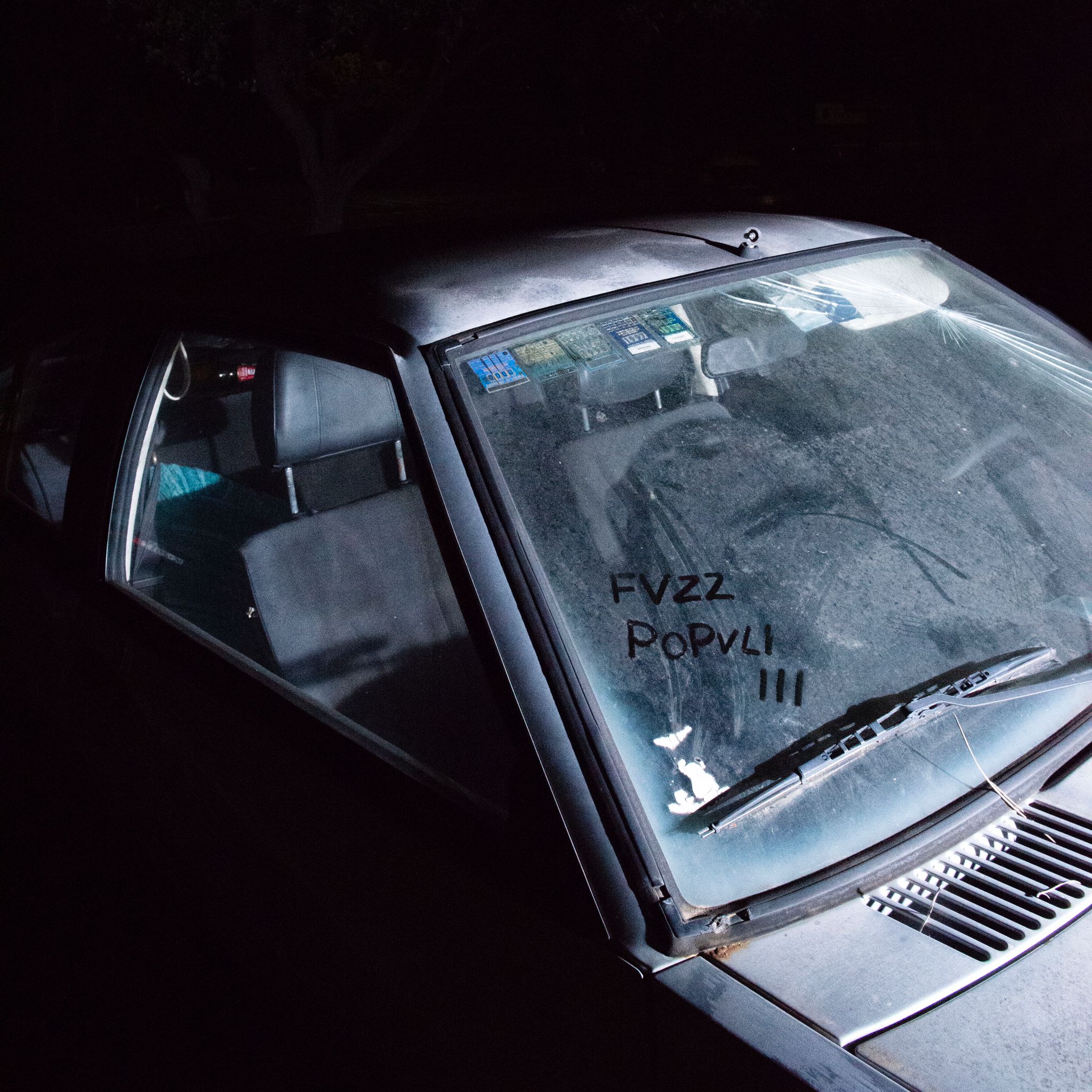
It’s been a quick — read: not quick — five years since Italian heavy rockers Fvzz Popvli released their second album, Magna Fvzz (review here), through Heavy Psych Sounds. Aptly titled, III is the third installment, and it’s got all the burner soloing, garage looseness and, yes, the fvzz one would hope, digging into a bit of pop-grunge on “The Last Piece of Shame,” setting a jammy expectation in the “Intro” mirrored in “Outro” with percussion, and cool-kid grooving on “Monnoratzo,” laced with hand-percussion and a bassline so thick it got made fun of in school and never lived down the trauma (a tragedy, but it rules just the same). “Post Shit” throws elbows of noise all through your favorite glassware, “20 Cent Blues” slogs out its march true to the name and “Tied” is brash even compared to what’s around it. Only hiccup so far as I can tell is “Kvng Fvzz,” which starts with a Charlie Chan-kind of guitar line and sees the vocals adopt a faux Chinese accent that’s well beyond the bounds of what one might consider ‘ill-advised.’ Cool record otherwise, but that is a significant misstep to make on a third LP.
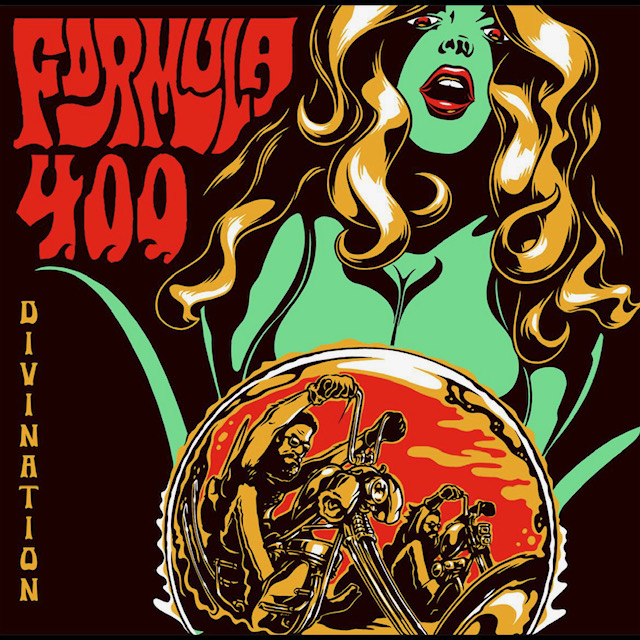
San Diegan riffslingers Formula 400 come roaring back with their sophomore long-player, Divination, following three (long) years behind 2020’s Heathens (review here), bringing in new drummer Lou Voutiritsas for a first appearance alongside guitarist/vocalists Dan Frick and Ian Holloway and bassist Kip Page. With a clearer, fuller recording, the solos shine through, the gruff vocals are well-positioned in the mix (not buried, not overbearing), and even as they make plays for the anthemic in “Kickstands Up,” “Rise From the Fallen” and closer “In Memoriam,” the lack of pretense is one of the elements most fortunately carried over from the debut. “Rise From the Fallen” is the only cut among the nine to top five minutes, and it fills its time with largesse-minded riffing and a hook born out of ’90s burl that’s a good distance from the shenanigans of opener “Whiskey Bent” or the righteous shove of the title-track. They’re among the best of the Ripple Music bands not yet actually signed to the label, with an underscored C.O.C. influence in “Divination” and the calmer “Bottomfeeder,” while “In Memoriam” filters ’80s metal epics through ’70s heavy and ’20s tonal weight and makes the math add up. Pretty dudely, but so it goes with dudes, and dudes are gonna be pretty excited about it, dude.
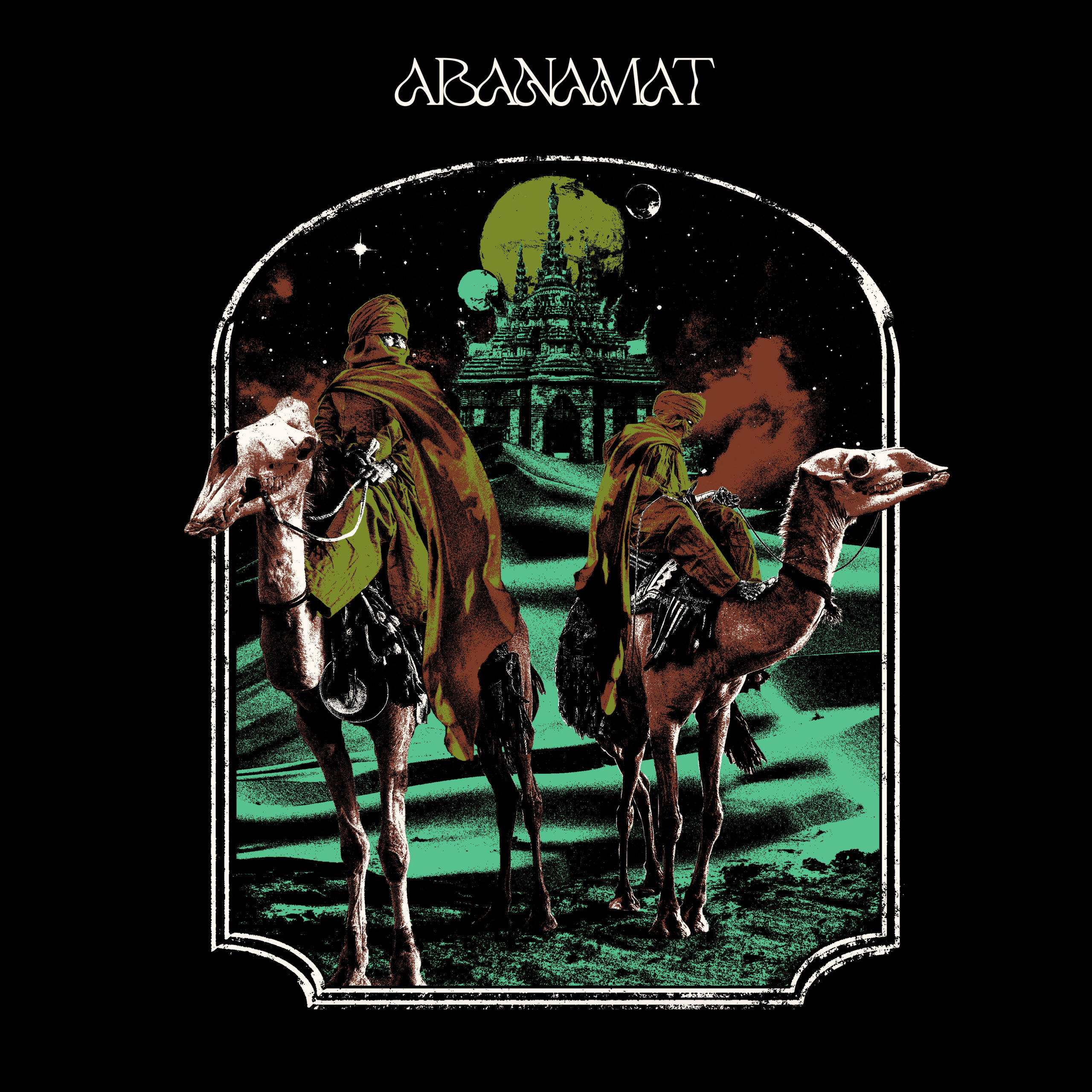
Each of the two intended sides of Abanamat‘s self-titled debut saves its longest song for its respective ending, with “Voidgazer” (8:25) capping side A and “Night Walk” (9:07) working a linear build from silence all the way up to round out side B and the album as a whole. Mostly instrumental save for those two longer pieces, the German four-piece recorded live with Richard Behrens at Big Snuff and in addition to diving back into the beginnings of the band in opener “Djinn,” they offer coherent but exploratory, almost-Uncle–Acidic-in-its-languidity fuzz on “Thunderbolt of Flaming Wisdom,” growing near-prog in their urgency with it on the penultimate “Amdest” but never losing the abiding mellow spirit that manifests out of the ether as “Night Walk” rounds out the album with synth and keys and guitar in a jazzy for-a-walk meander as the band make their way into a fuller realization of classic prog elements, enhanced by a return of the vocals after five minutes in. They’re there just about through the end, and fit well, but it demonstrates that Abanamat even on their debut have multiple avenues in which they might work and makes their potential that much greater, since it’s a conscious choice to include singing on a song or not rather than just a matter of no one being able to sing. The way they set it up here would get stale after a couple more records, but one hopes they continue to develop both aspects of their sonic persona, as any need to choose between them is imaginary.
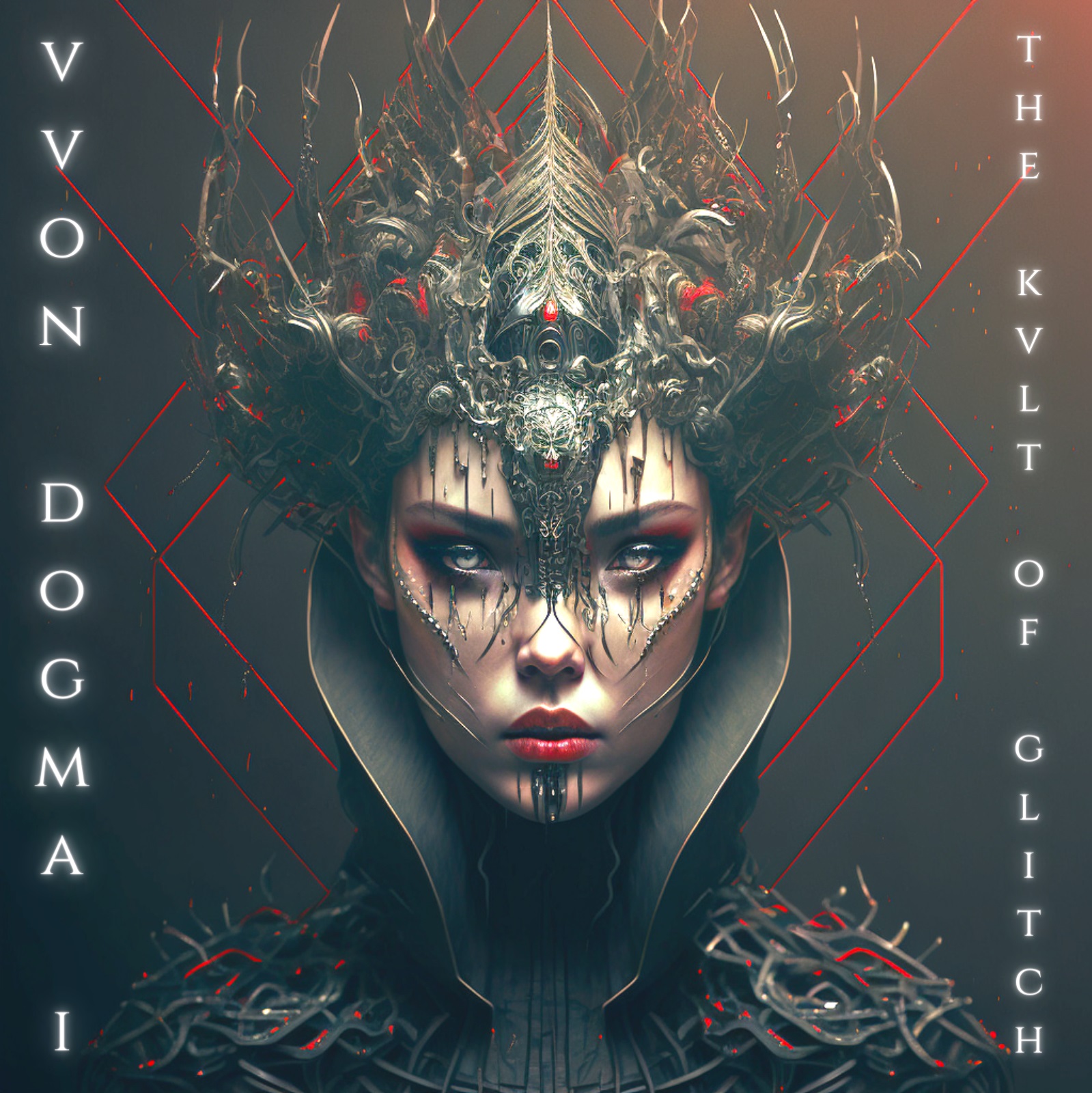
Led by nine-string bassist Frédérick “ChaotH” Filiatrault (ex-Unexpect), Montreal four-piece Vvon Dogma I are a progressive metal whirlwind, melodic in the spirit of post-return Cynic but no less informed by death metal, djent, rock, electronic music and beyond, the 10-song/45-minute self-released debut, The Kvlt of Glitch confidently establishes its methodology in “The Void” at the outset and proceeds through a succession marked by hairpin turns, stretches of heavy groove like the chorus of “Triangles and Crosses” contrasted by furious runs, dance techno on “One Eye,” melody not at all forgotten in the face of all the changes in rhythm, meter, the intermittently massive tones, and so on. Yes, the bass features as it inevitably would, but with the precision drumming of Kevin Alexander, Yoan MP‘s backflipping guitar and the synth and strings (at the end) of Blaise Borboën (also credited with production), a sound takes shape that feels like it could have been years in the making. Mind you I don’t know that it was or wasn’t, but Vvon Dogma I lead the listener through the lumbering mathematics of “Lithium Blue,” a cover of Radiohead‘s “2+2=5” and the grand finale “The Great Maze” with a sense of mastery that’s almost unheard of on what’s a first record even from experienced players. I don’t know where it fits and I like that about it, and in those moments where I’m so overwhelmed that I feel like my brain is on fire, this seems to answer that.
Two sprawling slow-burners populate the self-titled debut from UK three-piece Orme. Delivered through Trepanation Recordings as a two-song 2LP, Orme deep-dives into ambient psych, doom, drone and more besides in “Nazarene” (41:58) and “Onward to Sarnath” (53:47), and obviously each one is an album unto itself. Guitarist/vocalist Tom Clements, bassist Jimmy Long (also didgeridoo) and drummer Luke Thelin — who’s also listed as contributing ‘silence,’ which is probably a joke, but open space actually plays a pretty large role in the impression Orme make — make their way into a distortion-drone-backed roller jam on “Nazarene,” some spoken vocals from Clements along the way that come earlier and more proclamatory in “Onward to Sarnath” to preface the instrumental already-gone out-there-ness as well as throat singing and other vocalizations that mark the rest of the first half-hour-plus, a heavy psych jam taking hold to close out around 46 minutes with a return of distortion and narrative after, like an old-style hidden track. It’s fairly raw, but the gravitational singularity of Orme‘s two forays into the dark are ritualistic without being cartoonishly cult, and feel as much about their experience playing as the listener’s hearing. In that way, it is a thing to be shared.
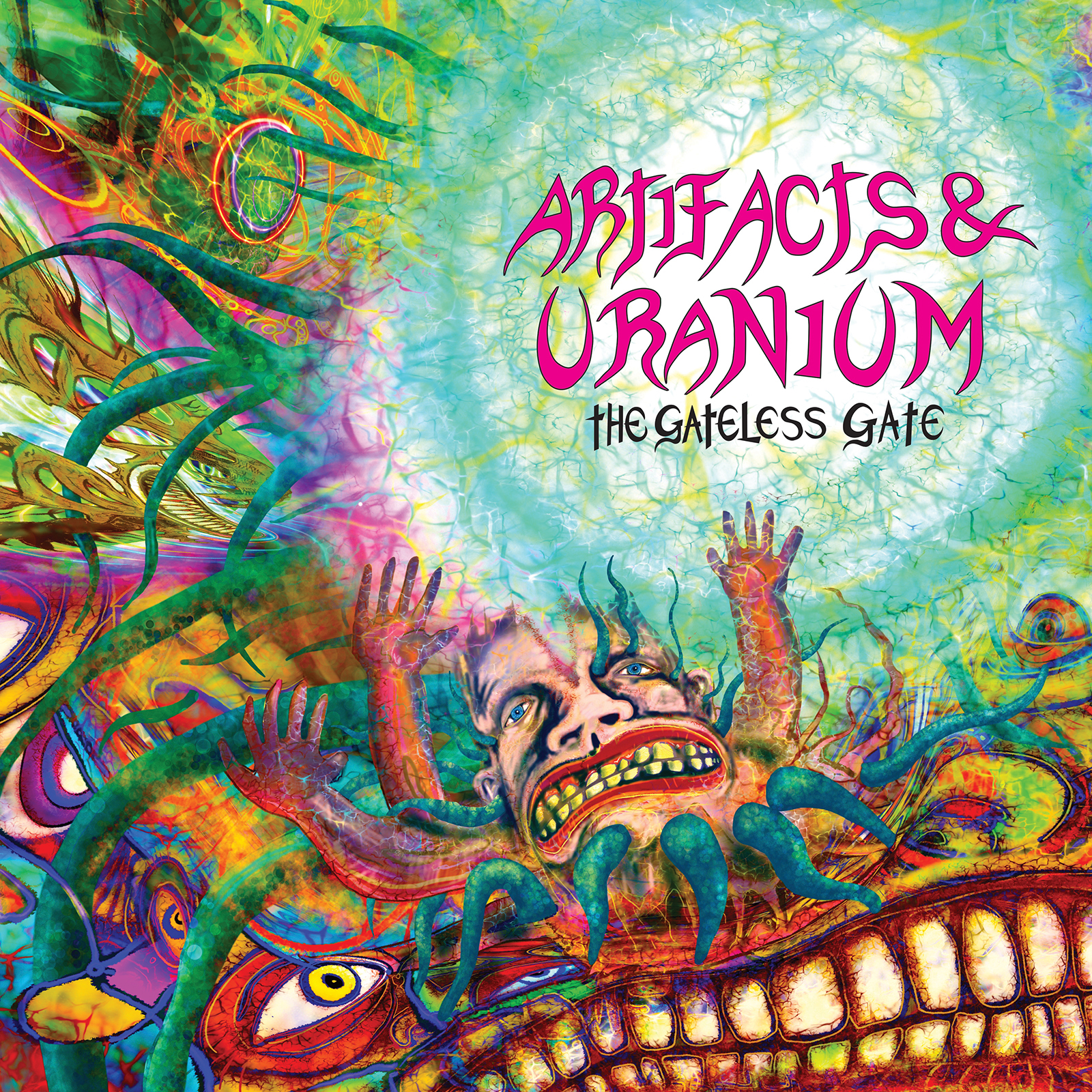
The UK-based experimentalist psych collaboration between Fred Laird (Earthling Society) and Mike Vest (Bong, et al) yields a third long-player as The Gateless Gate finds the duo branching out in the spirit of their 2021 self-titled and last year’s Pancosmology (review here) with instrumentalist flow and a three-dimensional sound bolstered by the various delays, organ, synth, and so on. Atop an emergent backbeat from Laird, “Twilight Chorus” (16:13) runs a linear trajectory bound toward the interstellar in an organic jam that comes apart before 12 minutes in and gives over to church organ and sampled chants soon to be countermanded by howls of guitar and distortion. Takest thou that. The B-side, “Sound of Desolation” (19:55), sets forth with a synthy wash that gives over to viol drone courtesy of Martin Ash, a gong hit marking the shift into a longform psych jam with a highlight bassline and an extended journey into hypnotics with choral keys (maybe?) arriving in the second half as the guitar begins to space out, fuzz soloing floating over a drone layer, the harder-hit drums having departed save for some residual backward/forward cymbal hits in the slow comedown. The world’s never going to be on their level, but Laird and Vest are warriors of the cosmos, and as their work to-date has shown, they have bigger fish to fry than are found on planet earth.
What a show to preserve. Heavy Petal Music, while frustrating in that it’s new Rainbows Are Free and not a follow-up to 2019’s Head Pains, but as the Norman, Oklahoma, six-piece’s first outing through Ripple Music, the eight-song/43-minute live LP captures their first public performance in the post-pandemic era, and the catharsis is palpable in “Come” and “Electricity on Wax” early on and holds even as they delve into the proggier “Shapeshifter” later on, the force of their delivery consistent as they draw on material from across their three studio LPs unremitting even as their dynamic ranges between a piano-peppered bluesy swing and push-boogie like “Cadillac” and the weighted nod of “Sonic Demon” later on. The performance was at the 2021 Summer Breeze Music Festival in their hometown (not to be confused with the metal fest in Germany) and by the time they get down to the kickdrum surge backing the fuzzy twists of “Crystal Ball” — which doesn’t appear on any of their regular albums — the allegiance to Monster Magnet is unavoidable despite the fact that Rainbows Are Free have their own modus in terms of arrangements and the balance between space, psych, garage and heavy rock in their sound. Given Ripple‘s distribution, Heavy Petal Music will probably be some listeners’ first excursion with Rainbows Are Free. Somehow I have to imagine the band would be cool with that.
It’s the marriage of complexity and heft, of melody and nod, that make Slowenya‘s “Angel Raised Wolves” so effective. Moving at a comfortable tempo on the drums of Timo Niskala, the song marks out a presence with tonal depth as well as a sense of space in the vocals of guitarist/synthesist Jan Trygg. They break near the midpoint of the 6:39 piece and reemerge with a harder run through the chorus, bassist Tapani Levanto stepping in with backing vocals before a roar at 4:55 precedes the turn back to the original hook, reinforcing the notion that there’s been a plan at work the whole time. An early glimpse at the Finnish psych-doom trio’s next long-player, “Angel Raised Wolves” comes paired with the shorter “Horizontal Loops,” which drops its chugging riff at the start as though well aware of the resultant thud. A tense verse opens to a chorus pretty and reverbed enough to remind of Fear Factory‘s earlier work before diving into shouts and somehow-heavier density. Growls, or some other kind of noise — I’m honestly not sure — surfaces and departs as the nod builds to an an aggressive head, but again, they turn back to where they came from, ending with the initial riff the crater from which you can still see right over there. The message is plain: keep an ear out for that record. So yes, do that.
Let’s start with what’s obvious and say that Elkhorn‘s four-song On the Whole Universe in All Directions, which is executed entirely on vibraphone, acoustic 12-string guitar, and drums and other percussion, is not going to be for everybody. The New York duo of Drew Gardner (said vibraphone and drums) and Jesse Sheppard (said 12-string) bring a particularly jazzy flavor to “North,” “South,” “East” and “West,” but there are shades of exploratory Americana in “South” that follow the bouncing notes of the opener, and “East” dares to hint at sitar with cymbal wash behind and rhythmic contrast in the vibraphone, a meditative feel resulting that “West” continues over its 12 minutes, somewhat ironically more of a raga than “East” despite being where the sun sets. Cymbal taps and rhythmic strums and that strike of the vibraphone — Elkhorn seem to give each note a chance to stand before following it with the next, but the 39-minute offering is never actually still or unipolar, instead proving evocative as it trades between shorter and longer songs to a duly gentle finish. Gardner formerly handled guitar, and I don’t know if this is a one-off, but as an experiment, it succeeds in bridging stylistic divides in a way that almost feels like showing off. Admirably so.
Didn’t we just do this? Yeah, kind of. It’s been a weird season, but I knew last month when I launched the Spring 2023 Quarterly Review that it needed to be more than two full weeks and given the timing of everything else slated around then and now, this is what worked to make it happen. For what it’s worth, I have QRs scheduled for July and early October, subject to change, of course.
The bottom line either way is it’s another batch of 50 reviews this week and then that’s a wrap for Spring. It’s a constant barrage of music these days anyhow, and I’m forever behind on everything, but I hope at least you can find something here you dig, whether previously familiar or not. We go.
Quarterly Review #1-10:
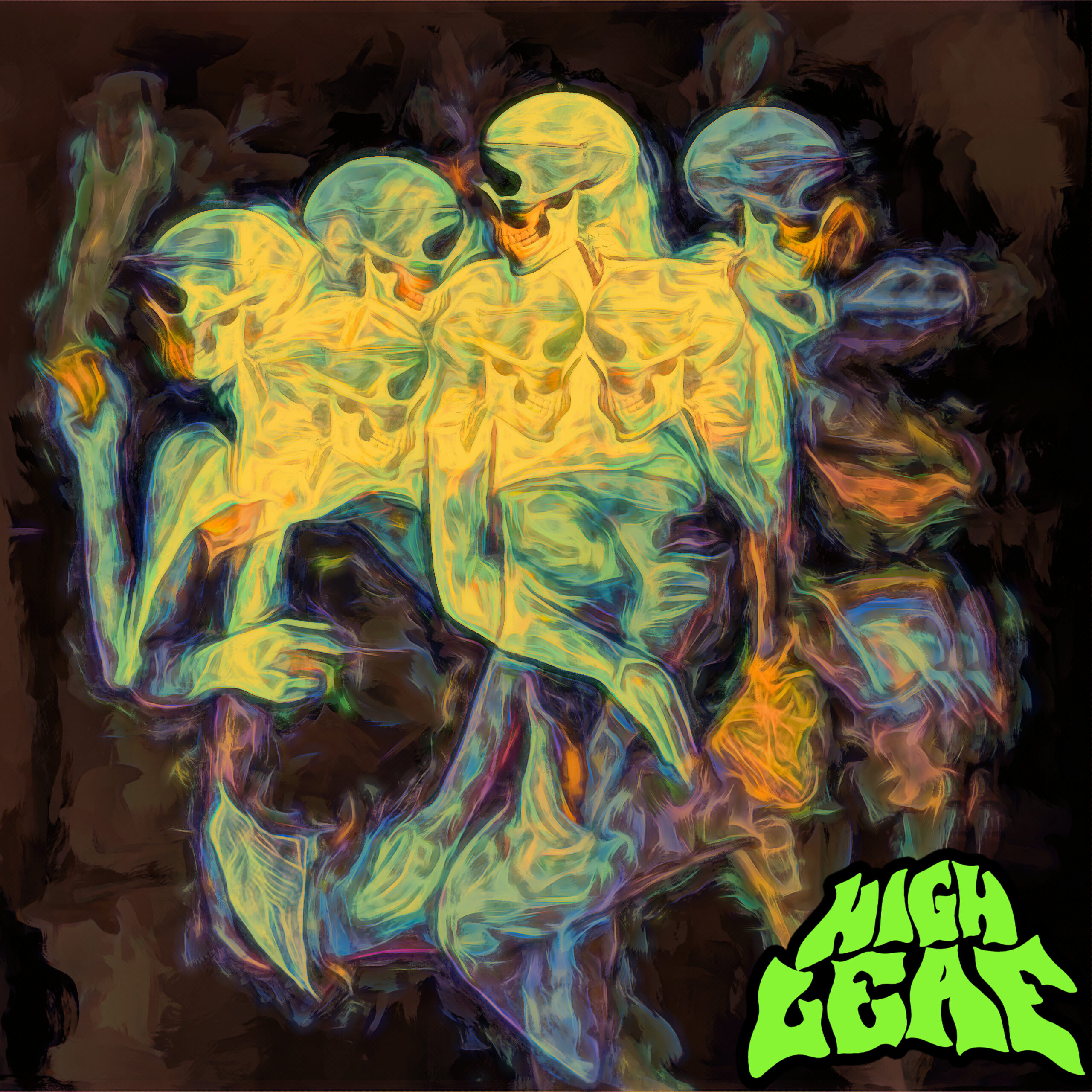
HIGH LEAF, Vision Quest
An awaited debut from this Philadelphia heavy rock scene outfit, HIGH LEAF‘s Vision Quest makes its home among heavy tropes (also some minute cultural appropriation in the title) with unabashed glee and deceptively sharp songwriting. Certainly opener “Green Rider” is perfectly willing to beat you over the head with its chorus — and rightly so, you have it coming — but the spacious title-track that follows stretches over eight minutes and seamlessly works through drift and heavy psych impulses to get to the post-grunge roll that makes its increasingly aggro presence known past six minutes in, and that’s by no means the final bit of sludge to be had as the later “Hard to Find” leans toward nastiness only to be offset by the funky outset of “Painted Desert,” having pushed deeper from the Kyussery of “Dead Eye” and a swagger in “Subversive” worthy of comparison to Earthride. This lineup of the band has already split (there’s a new one, no worries), and how that reboot will affect HIGH LEAF going forward obviously remains to be seen, but this is a ‘serving notice’-type debut, doubling down on that in closing duo “March to the Grave” and “The Rot,” and the eight songs and 38 minutes commune with groove and riffs like they’ve been speaking the language the whole time. There’s definitely a vision at work. Let’s see where the quest takes them.
Fucking hell I wish this was what the future sounded like. It rocks. It’s interesting. It’s driven to be its own thing despite traceable roots. It’s got edge but it’s not hackneyed. It’s the tomorrow we were promised when industrial rock and metal became a thing in the 1990s and that corporate alt-everything and pop-punk usurped. I knew I wanted to write about it now, because it’s coming out now, but I’ll tell you honestly, I’ve barely scratched the surface of JAAW‘s Svart-issued debut, Supercluster — recorded at Bear Bites Horse in London by Wayne Adams, who’s also in the band alongside Andy Cairns of Therapy?, Mugstar‘s Jason Stoll and Adam Betts (of Squarepusher and others) — and this is the kind of album that’s going to be years in revealing itself. How about this? Sometime in 2028, if this site is still here, I’ll follow-up and let you know what I’ve found digging into the sinister groove of “Rot” or the shout-kraut rumble and noise of “Bring Home the Motherlode, Barry,” “The Dead Drop” going from minimalism to full heavy New Wave wash in five minutes’ time, and so on, but for right now, let it serve as the cannonball to be lobbed at anyone who says there aren’t any acts out there doing new things or pushing different styles forward, because hell’s bells, that’s the only place this goes even as it also seems to go everywhere at the same time, unto closing out with a Björk cover “Army of Me” as imagined by Ministry doing ’90s drum ‘n’ bass. Some things are just bigger than the year of their release, and I look forward to living with this record.
The Bridesmaid, Come on People Now, Smile on Your Brother
From the opening drone-and-toy-chime-forward over industrial black metal of “Leytonstone: Eat Your Landlord” through the sample-fed machine sludge-turned-psych experimentalism that gives way to a shimmering haze of jazz metal in “Cleveland: And the Rain Came Down” and the can’t-fool-me-by-now acoustic strum at the start of “Summerland: A Long, Maintenance-Free Life” that runs a current of cello under its aural collage and low-end lumber early only to bask in news-and-drone departure with percussion later on the way to what post-hardcore could still someday be, the name of the EP is Come on People Now, Smile on Your Brother and The Bridesmaid deliver the proceedings in a manner more suited to Kurt Cobain‘s fuckall rasp of that line rather than the Youngbloods original. So it’s probably the latter. In any case, the UK solo-plus-friends outfit helmed and steered by JJ Saddington are an aural barrage, and while the temptation is to think of the three-song/21-minute offering as a blender on liquefy, the truth is the material is more thought out, more considerately mixed, and more engaging, than that kind of spastic randomness implies. If you can keep up with the changes, the adventure of listening is well worth the ankles sprained in its twists, but you should go into it knowing that the challenge is part of the appeal.
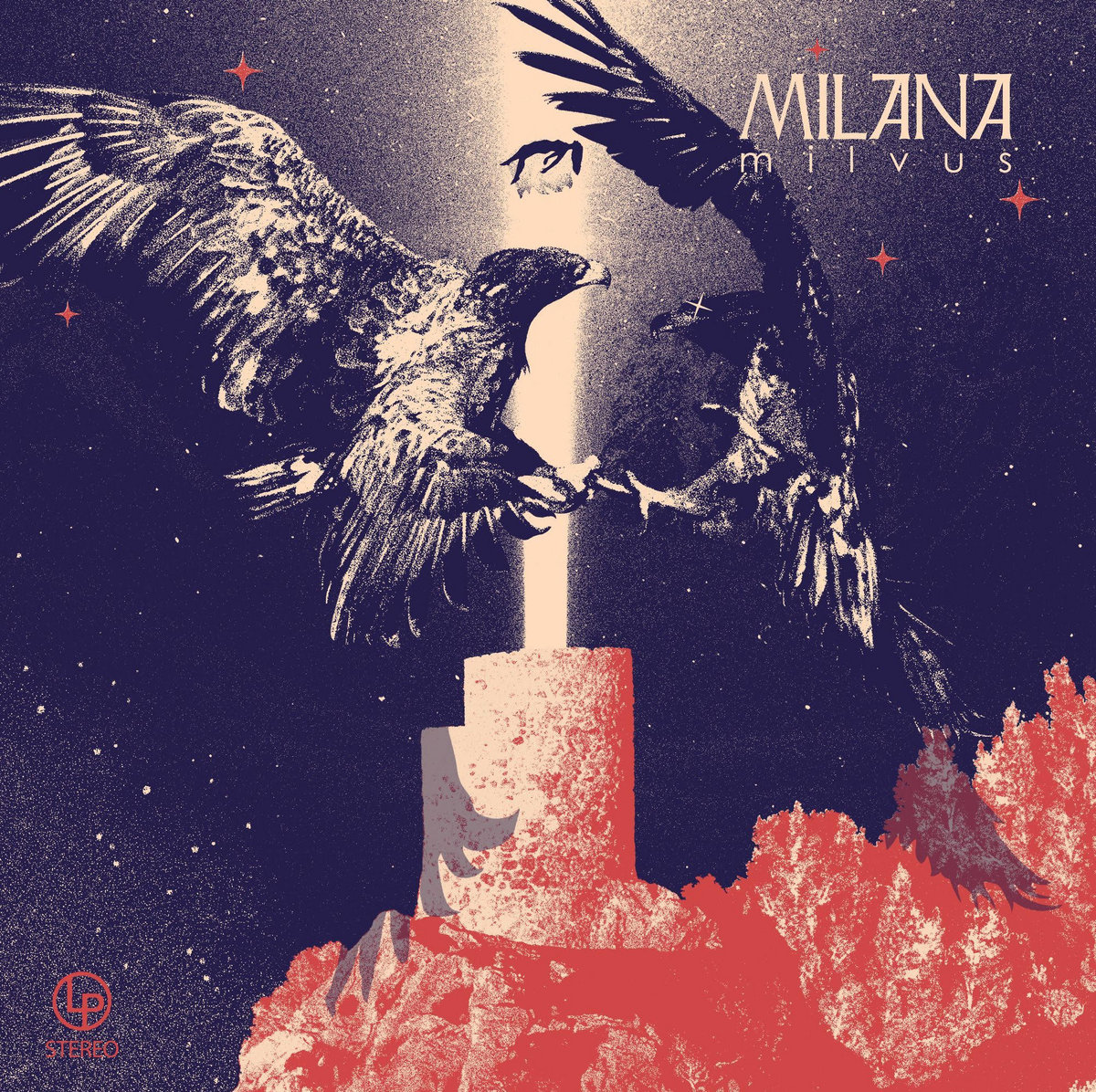
If the hard push and tonal burl of comparatively straight-ahead opener “The Last Witch” aren’t convincing, stick around through “Celestial Bird Spirit” and “Impermanence” on the rest of side A before you resolve one way or the other as regards Milana‘s debut album, Milvus. The Mallorca-based four-piece are for sure in conversation with fest-ready modern European heavy rock, and that’s the thread that weaves throughout the album, but in the 11-minute “Impermanance,” they build on the more temperate rollout of “Celestial Bird Spirit” and find an intriguing blend of atmosphere and dense fuzz, more moody than psychedelic, but smart to hold back its weightiest tonality for the rolling end. Appropriately enough, “Lucid Reality” brings them back to ground at the start of side B, but still has an atmospheric effect in its verse, with vocal layering over open-spaced guitar and an alt-rock pickup as they move toward the chorus, and Howling Wolf gives a class-conscious definition of the blues, in the long intro of “Gray City Lights,” setting a difficult standard for the rest of the song to match, but the organ helps. And all seems well and fine for “Whispering Wind” to wrap up mirroring the rocker “The Last Witch” at the start until the song breaks, the harmony starts, and then the growls and massive fuzz start in the last minute and it turns out they were metal all along. Go figure. There’s growing to do, but there’s more happening on Milvus than one listen will tell you, and that in itself is a good sign.
Swedish upstart four-piece New Mexican Doom Cult offer a distinctly Monolordian weep of lead guitar on “Seven Spirits,” but even that is filtered through the band’s own take, and that’s true of their first full-length, Necropolis more generally, as the Gävle outfit now comprised of guitarist/vocalist/principal songwriter Nils Ahnland, guitarist Johan Klyven Kvastegård, bassist Emil Alstermark and drummer Jonathan Ekvall present seven songs and 48 minutes of dug-in rockers, distortion keyed to its fuzziest degree as Ahnland hints vocally on “Underground” toward a root in darker and more metallic fare ahead of the chugging build that rounds out the eight-minute centerpiece title-track and the make-doom-swing ethic being followed in closer “Worship the Sun.” “Vortex” is a highlight for the melody as much as the double-dose of nodfuzz guitar work, and opener “Architect” sets an atmospheric course but assures that the sense of movement is never really gone, something that’s a benefit even to the righteous Sabbath blowout verse in the penultimate “Archangel.” Much of what they’re doing will be familiar to experienced heads, but not unwelcome for that.
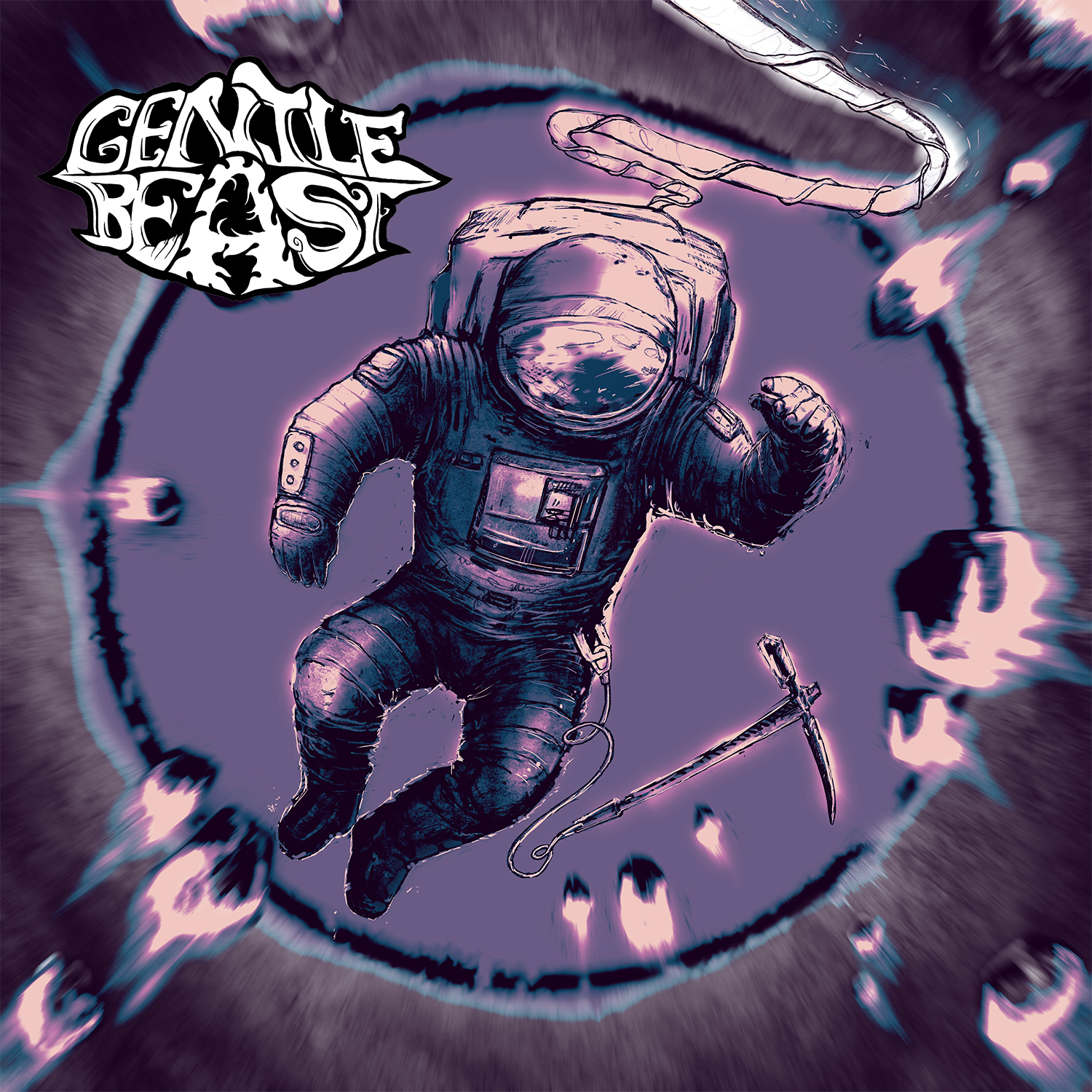
Capable double-guitar heavy rock pervades the 43-minute Gentle Beast by the Swiss five-piece of the same name. Mixed by Jeff Henson of Duel and issued through Sixteentimes Music, the eight-song run is defined by knowing itself as stoner rock, and that remains true as “Super Sapiens” departs into its post-midsection jam, eventually returning to the chorus, which is almost unfortunately hooky. “Greedy Man” is almost purely Kyuss in its constructed pairing of protest and riff, but the “Caterpillar” shows a different side of the band’s character in its smooth volume shifts, winding leads and understated finish, leading into the sharper-edged outset of closer “Toxic Times.” In the forward thrust of “Joint Venture,” the opener “Asteroid Miner” with its gruff presentation, and the speedier swing of “Headcage” reinforcing the vocal reference to Samsara Blues Experiment in the leadoff, Gentle Beast tick all the boxes they need to tick for this debut long-player some four years after the band’s initial 7″ single, setting up multiple avenues of possible and hopeful progression while proving dexterous songwriters in the now. Won’t change your life, but isn’t trying to convince you it will, either.
Denver four-piece Bloodsports — also stylized all-lowercase: bloodsports — give a heavygaze impression with “Sky Mall” at the launch of their self-titled debut EP that the subsequent “Crimp” gleefully pulls the rug right from under with a solo section like All Them Witches grew up listening to The Cure after its Weezery verse, and the proceedings only gets grungier from there with the low-key Nirvana brooding of “Sustain” (also issued in 2022 as a standalone single) and its larger-scale, scorch-topped distorted finish and the shaker-inclusive indie ritual that is “Carnival” until it explodes into a blowout ending like the release of tension everyone always wanted but never actually got from Violent Femmes. Some noisy skronk guitar finishes over the hungover fuzz, which is emblematic of the way the entire release — only 11 minutes long, mind you — derives its character from the negative space, from its smaller moments of nuance, as well as from its fuller-sounding stretches. They’re young and they sound it, but there’s a sonic ideal being chased through the material and Bloodsports may yet carve their aural persona from that chase. As it is, the emotive aspects on display in “Sustain” and the volatility shown in the roll of “Sky Mall” make in plain that this project has places it wants to go and areas to explore, and one hopes Bloodsports continue to bring their ideas together with such fluidity.
Recorded seemingly almost entirely live on audio and video, vibrancy would seem to be the underpinning that draws Night Fishing‘s Live Bait together, if fishing isn’t. The Denver four-piece are a relatively new formation, with guitarists Graham Zander (also Green Druid) and Zach Amster (Abrams), bassist Justin Sanderson (Muscle Beach) and drummer Gordon Koch (Call of the Void) all coming together from their sundry other projects to explore a space between the kosmiche, heavy rock and semi-improv jamming. The turns and fills and crashes that round out the second of three cuts, “No Services,” for example, feel off-the-cuff, but throughout most of “Alone With My Thoughts” and at least in the initial Slift-like shuffle at the start of “Slapback Twister,” there’s a plan at work. At 25 minutes, they’re only about a song shy of making Live Bait a full-length — though another track might mess up the shortest-to-longest and alphabetical ordering Live Bait has now, which are fun — but the instrumentalist exploration is suited to the nascent feel of the outfit, and while I don’t think Night Fishing is anybody’s only band here, if they can build on the sense of purpose they give to the jangly rhythm and airy solo of “Slapback Twister” and the right-on push of “Alone With My Thoughts,” they can make their records as long or as short as they want and they’re still bound to catch ears.
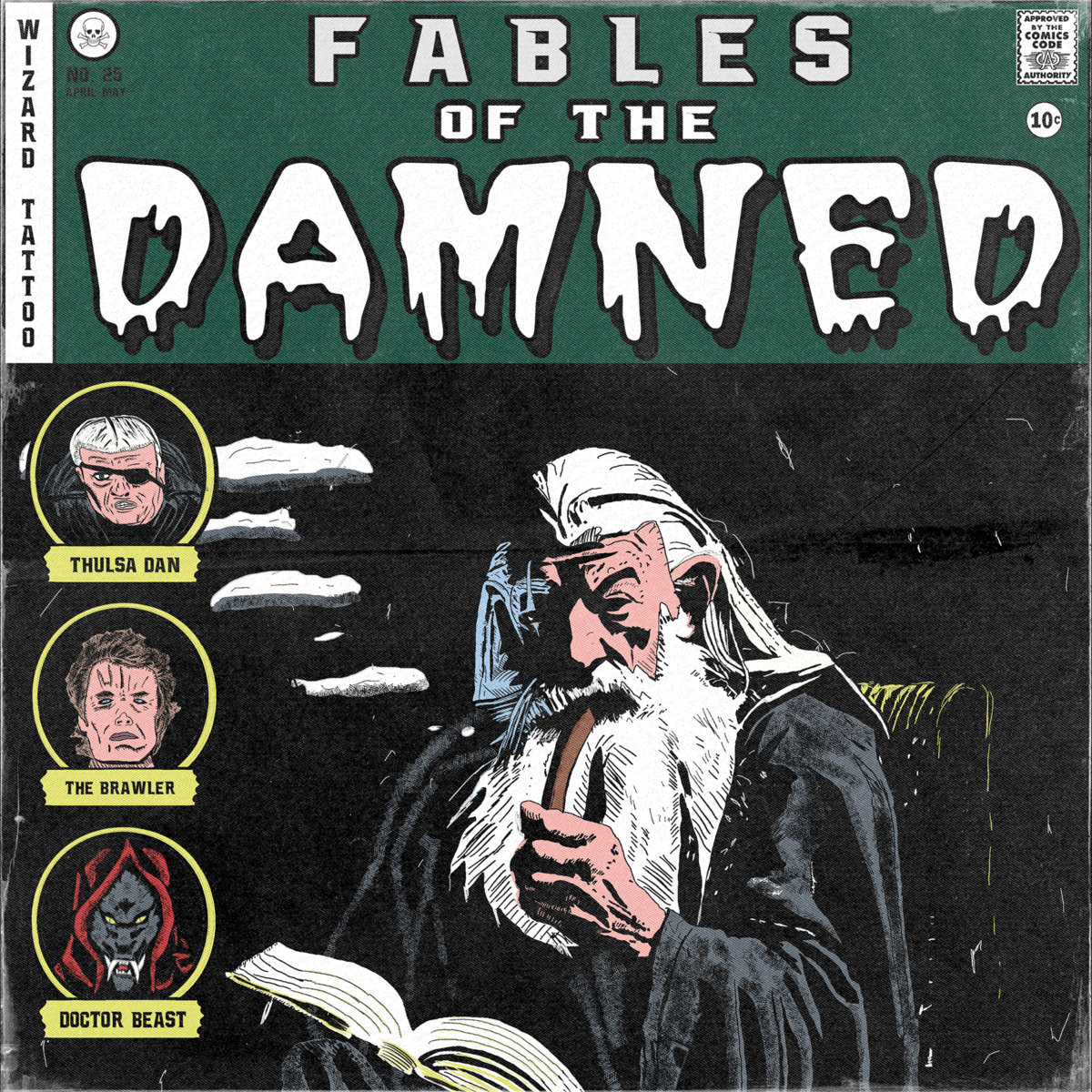
Following last year’s self-titled debut EP, Indianapolis solo-project Wizard Tattoo cuts itself open and bleeds DIY on the seven songs and 40 minutes of the self-recorded, self-released Fables of the Damned, beginning with distinct moments of departure in opener “Wizard Van” and “The Black Mountain Pass,” the latter of which returns to its gutted-out chorus with maestro Bram the Bard (who also did the cover) cutting through the tonescape of his own creation to underscore the structure at work. There are stories to be told in “The Vengeful Thulsa Dan” and the folkish “Any Which Way but Tuned,” which brings together acoustics and chanting like a gamer version of Wovenhand, deep-mixed tom thud peppered throughout while the chimes are more forward, while the seven-minute “The Ghost of Doctor Beast” picks up with the slowest and most doomed of the included rollouts, “God Damn This Wizard Tattoo” ups the tempo with a catchy chorus, a little bit of mania in the hi-hat under the guitar solo, and hints dropped in the bassline of the grunge aspects soon to be highlighted in instrumental closer “Abendrote.” The sense of character is bigger than the production, and that balance is something that will need to be ironed out over time, but the dug-in curio aspects of Fables of the Damned make it engaging, whatever it may or may not lead toward.
I’ll never claim to be anything more than a dilettante when it comes to noise rock, and I’ll tell you outright that Kansas City’s Nerver are new to me as of this Brothers in Christ split with Oklahoma City’s Chat Pile, but both acts are coming from a strong Midwestern tradition of post-industrial (talking economy not genre) disaffection and building on momentum from strong 2022 releases, those being Nerver‘s even-the-CD-sold-out (aha! but not from the label! got it!) sophomore full-length CASH and Chat Pile‘s much-lauded debut, God’s Country (review here), and the scream-topped bombast of the one and volatile emotive antipoetry of the other make fitting companions across the included four songs, as Nerver‘s “Kicks in the Sky” underscores its jabs with deep low rumble as a bed for the harshly delivered verse and “The Nerve” shoves itself faceward in faster and less angular fashion, consuming like Chicago post-metal but pissed off like Midwestern hardcore while Chat Pile build through “King” en route to the panicked slaughter of “Cut,” which is sure enough to trigger fight-or-flight in your brain before its sub-five-minute run is up. Neither arrives at this point without hype behind them, both would seem to have earned it. Now, if you’ll excuse me, I’m gonna go put on that Nerver album and play a bit of catchup.
Posted in Reviews on September 23rd, 2022 by JJ Koczan
See you back here Monday, huh? Yeah. If onslaughts of new music are your thing and you’ve been following along throughout this week — first, thank you — and second, we’ll pick up after the weekend with another 50 albums in this double-wide Fall 2022 Quarterly Review. This was a good week though. Yesterday had some genuine killers, and I’ve added a few to my best-of lists for the end-of-year stuff to come. There’ll be another Quarterly Review then too. Never any trouble filling slots with new releases. I’ve already started, in fact.
Madness. Didn’t I say something yesterday about one thing at a time? Ha.
Quarterly Review #41-50:
Crippled Black Phoenix, Banefyre
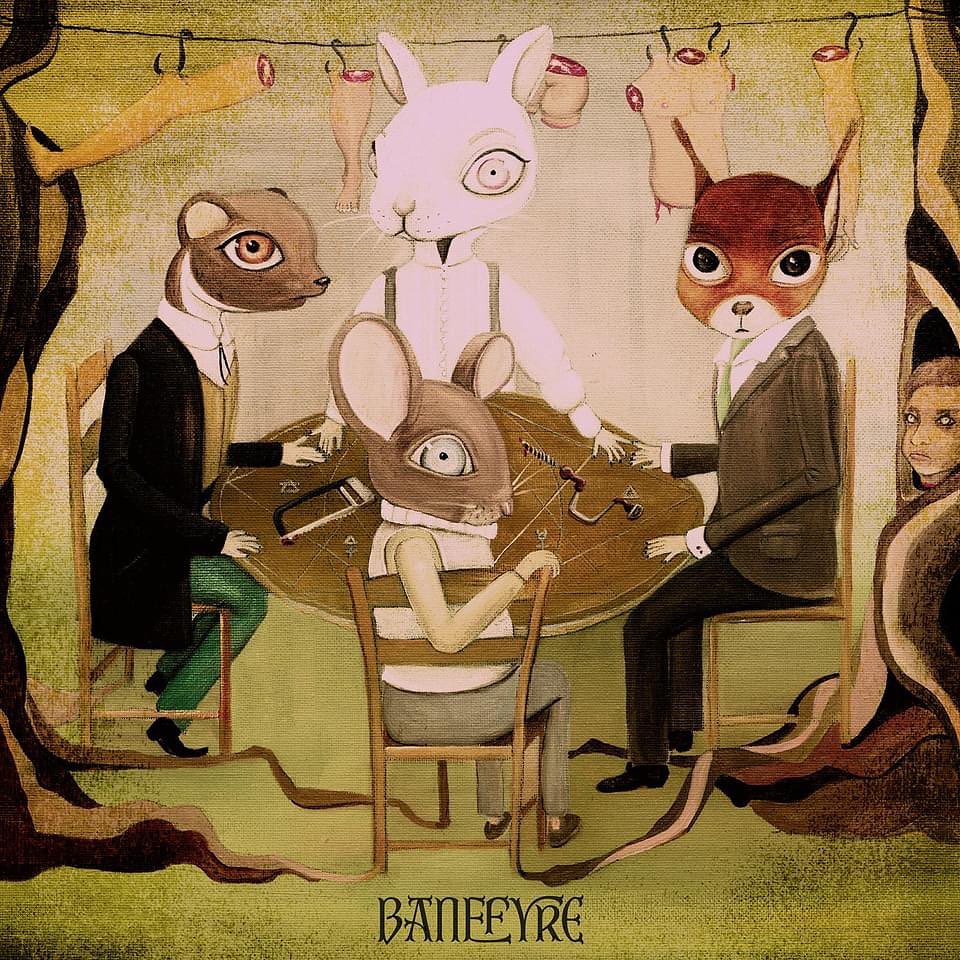
There are times where I wonder if Crippled Black Phoenix aren’t just making fun of other bands, their audience, themselves, and everything, and then there are times when I’m pretty sure they are. To wit, their latest outing for Season of Mist, Banefyre, is nearly an hour into its 90-plus-minute runtime before they offer up the 10-minute “Down the Rabbit Hole,” and, well, if we’re not down it by then, where the hell are we? See also “Wyches and Basterdz” near the outset. Whatever else they may be, the long-running, dynamic, progressive, dark heavy rock troupe surrounding founding songwriter and guitarist Justin Greaves are like nothing else. They offer shades of influences, discernable elements from this or that style, this or that band — “The Reckoning” has a bit of The Cure, “Blackout77” filters that through Katatonia, etc. — but are never working to be anyone but themselves. Accordingly, the thoroughly British depressive triumphs throughout Banefyre — looking at you, “I’m OK, Just Not Alright” — are part of an ongoing narrative of creative development that will hit its 20th year in 2024 and has offered listeners an arc of emotive and stylistic depth that, in whatever genre you want to try to confine it, is only ever going to escape. The only real tragedy of Banefyre is that they’ll probably have another record out before this one can be properly digested. That’ll take a few years at least.
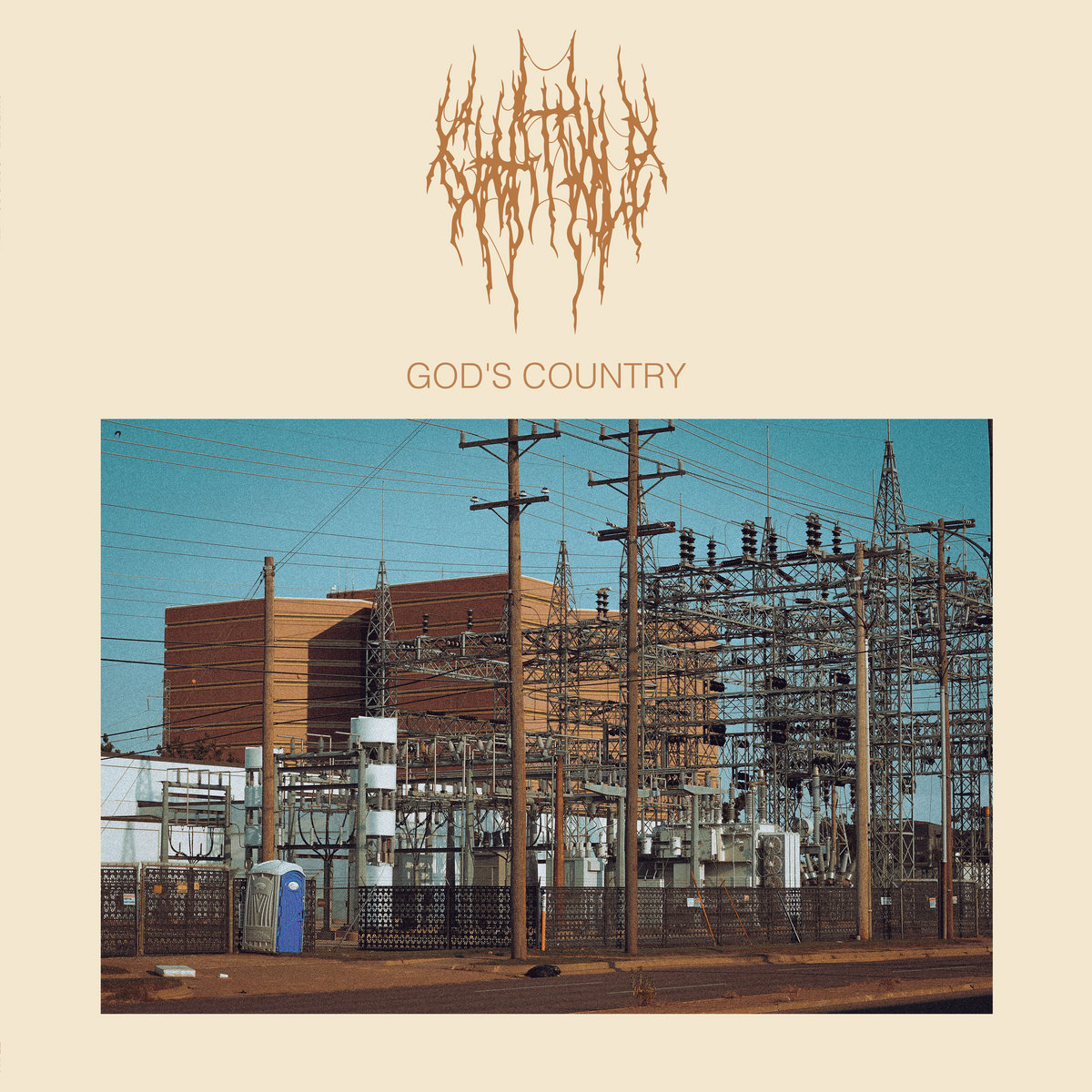
An Oklahoma hardcore-born circus of sludge-toned tragedies personal, cultural and socioeconomic played out across nine songs/42 minutes held together at times seemingly most of all by their disenchantment, Chat Pile‘s debut album, God’s Country is arthouse angularity, raw aggression and omnidirectional intensity. As the UK’s post-industrial waste once birth’d Godflesh, so now come vocalist Raygun Busch, guitarist Luther Manhole, bassist Stin and electronic-drummer Cap’n Ron with brilliantly constructed tales of drugs, murder, suicide, loss, violence, misery, and general wretchedness of spirit, presented instrumentally with quick turns that draw from hardcore as noted, but also death metal, sludge, industrial doom, and so on. The lyrics are masterful drug poetry and delivered as such, semi-spoken, shouted, some singing, some acting out, such that you never know from what direction the next punch is coming. “Why” tackles homelessness, “Pamela” demonstrates the impossibility of coping with loss, “Slaughterhouse” is what it says, and closer “Grimace_Smoking_Weed.jpeg” resolves its nine minutes in long-held feedback and crashes as Busch frantically screams with decreasing intelligibility until it’s even words anymore. A perfect finish to a stunning, terrifying, moving first album. Don’t go into it expecting listenability. Even as “I Don’t Care if I Burn” offers some respite, it does so while describing a murder fantasy. It’s not the only one.
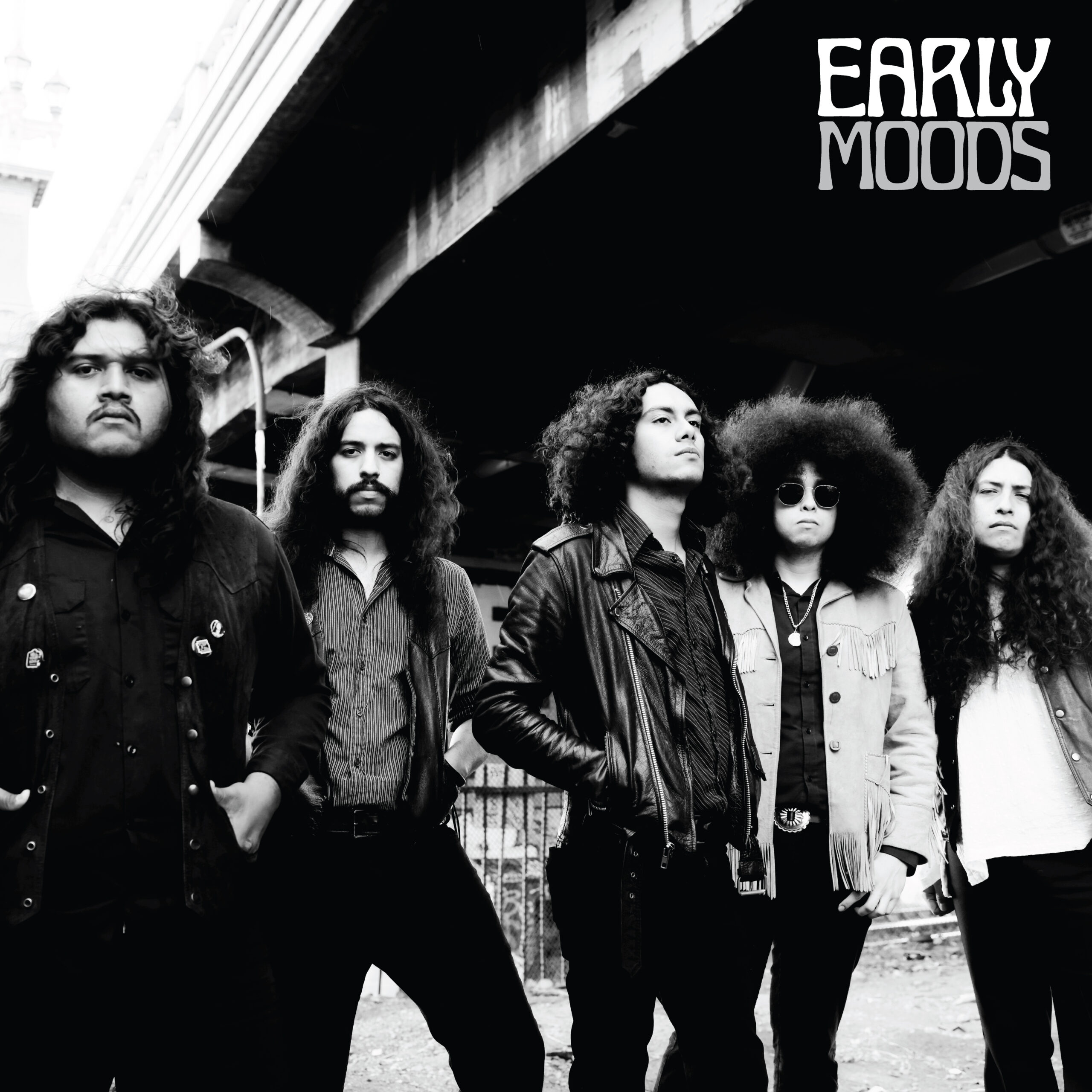
Fuck yes Gen-Z doom. Yes. Yes. Yes. Show the old men how it’s done. Please. Not a gray hair in the bunch, or a bullshit riff, or a lazy groove. Early Moods got their influences in line with their 2020 debut EP, Spellbound (review here), and you can still hear some Candlemass in “Broken,” but their self-titled debut LP stamps its foot to mark their arrival as something new and a fresh take on classic ideas. Vocalist Alberto Alcaraz is a distinct presence atop the hard-distorted guitars of Eddie Andrade and Oscar Hernandez, while Elix Feliciano‘s bass fuzz-rumbles through the interlude “Memento Mori” and Chris Flores‘ big-room-ready kick counts in the Trouble‘d early highlight “Live to Suffer.” Later on, “Curse of the Light” leans into the metal end of classic doom metal ahead of the chugging roll of “Damnation” and the finisher “Funeral Macabre,” but Early Moods have already put these things in play by then, as demonstrated with the eponymous title-track. Songs are tight, crisply produced, and executed to style with a promise of more growth to come. It’s an easy record to get excited about, and one of 2022’s best albums. I might just buy the tape and the CD.
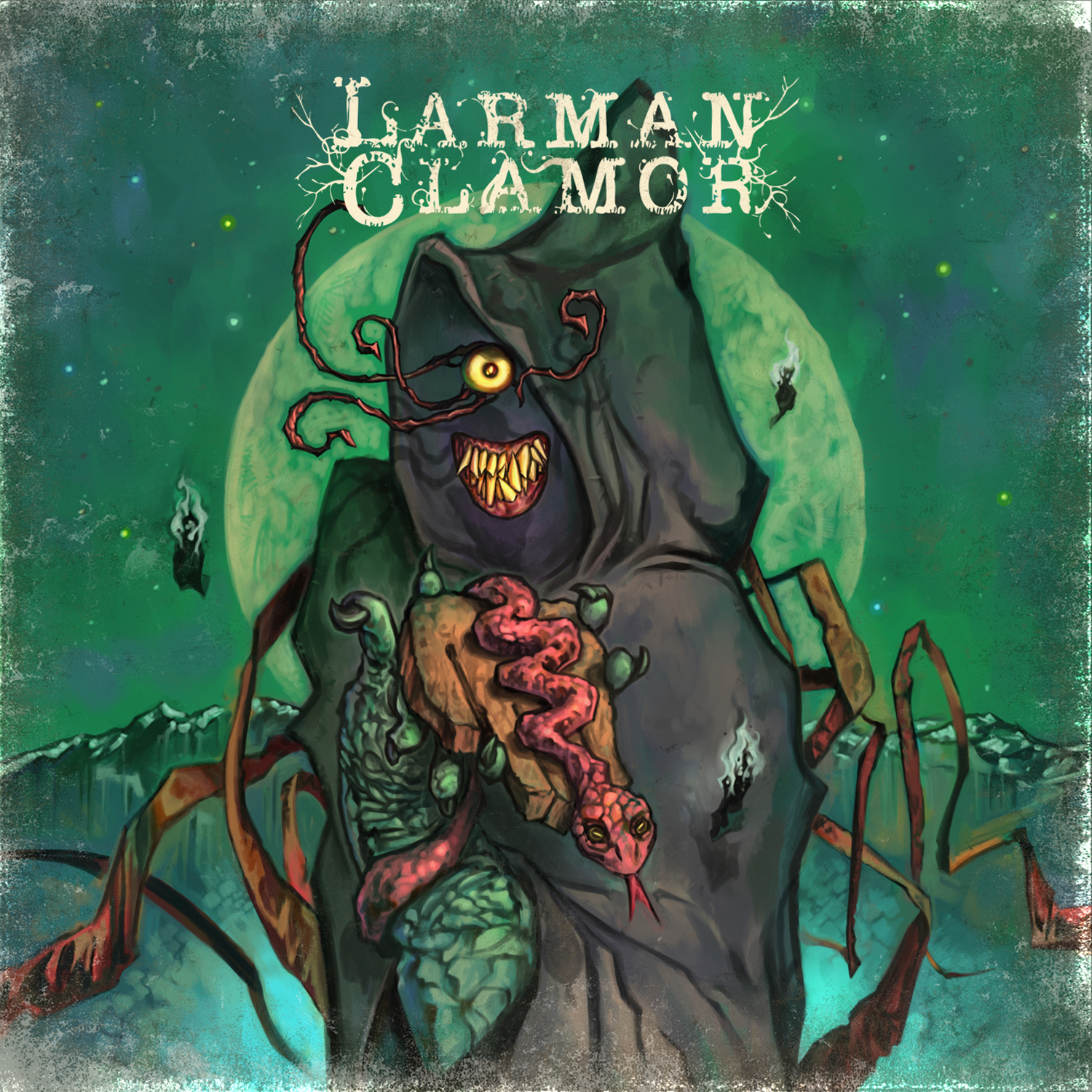
Less than a year after a return born of celebrating the project’s 10th anniversary with the Ink fo’ Blood (review here) full-length, prolific visual artist, songwriter, multi-instrumentalist and singer Alexander von Wieding returns with Larman Clamor‘s latest, With a Deadly Hiss. As ever, formalities are dispensed with in favor of deceptively intricate arrangements of slide acoustic and electric guitar, whatever’s-around-style percussion and von Wieding‘s telltale throaty vocals, which on “Swamp Jive” and even a bit of the six-minute finale “Eleventh Spell to Cast” draw back the throaty grit in favor of a more melodic, somewhat less performative delivery that suits the material well. Songs are mostly short — there are 11 of them and the aforementioned closer is the longest by about three minutes — but each is a blinking glimpse into the humid, climbing-vine world of von Wieding‘s creation, and in instrumentals like the manic percussion of “Monkey and the Trash Goblins” and the distortion-backed algae-delica of “Iguana at the Fountain,” the brashness of “Tortuga” and the playful falsetto of the leadoff title-track are expanded in such a way as to hint of future paths to be explored. One way or the other, Larman Clamor remains an entity unto itself in concept, craft and delivery, and if With a Deadly Hiss is just another forward step en route to the next stop on down the road, even better.
Recorded in 2021, The Necromancers‘ third album would seem to have a mind toward picking up where the Poitiers, France-based four-piece left off pre-pandemic with 2018’s Of Blood and Wine (review here). Can hardly blame them, frankly. Now self-releasing (their first two albums were on Ripple), the semi-cult heavy rockers bring an air of classic metal to the proceedings but are remarkably cohesive in their craft, with guitarist/vocalist Basile Chevalier-Coudrain fronting the band even in the studio as demonstrated on the ’80s metal roller “The Needle,” which follows the eight-minute doom-adjacent unfolding of “Crimson Hour” — and that “adjacent” is a compliment, by the way; The Necromancers are less concerned with playing to genre than with it — wherein guitarist Robin Genais adds a short but classy solo to underscore the willful grandiosity. Bassist Simon Evariste and drummer Benjamin Rousseau underscore the grooves, prominent in the verse of the title-track, and while it’s guitars up front in traditionalist fashion, the truth is all four players are critical here, and it’s the overarching affect of the whole that makes When the Void Rose such an engaging listen, rather than the individual parts. That is to say, listen front to back for best results.
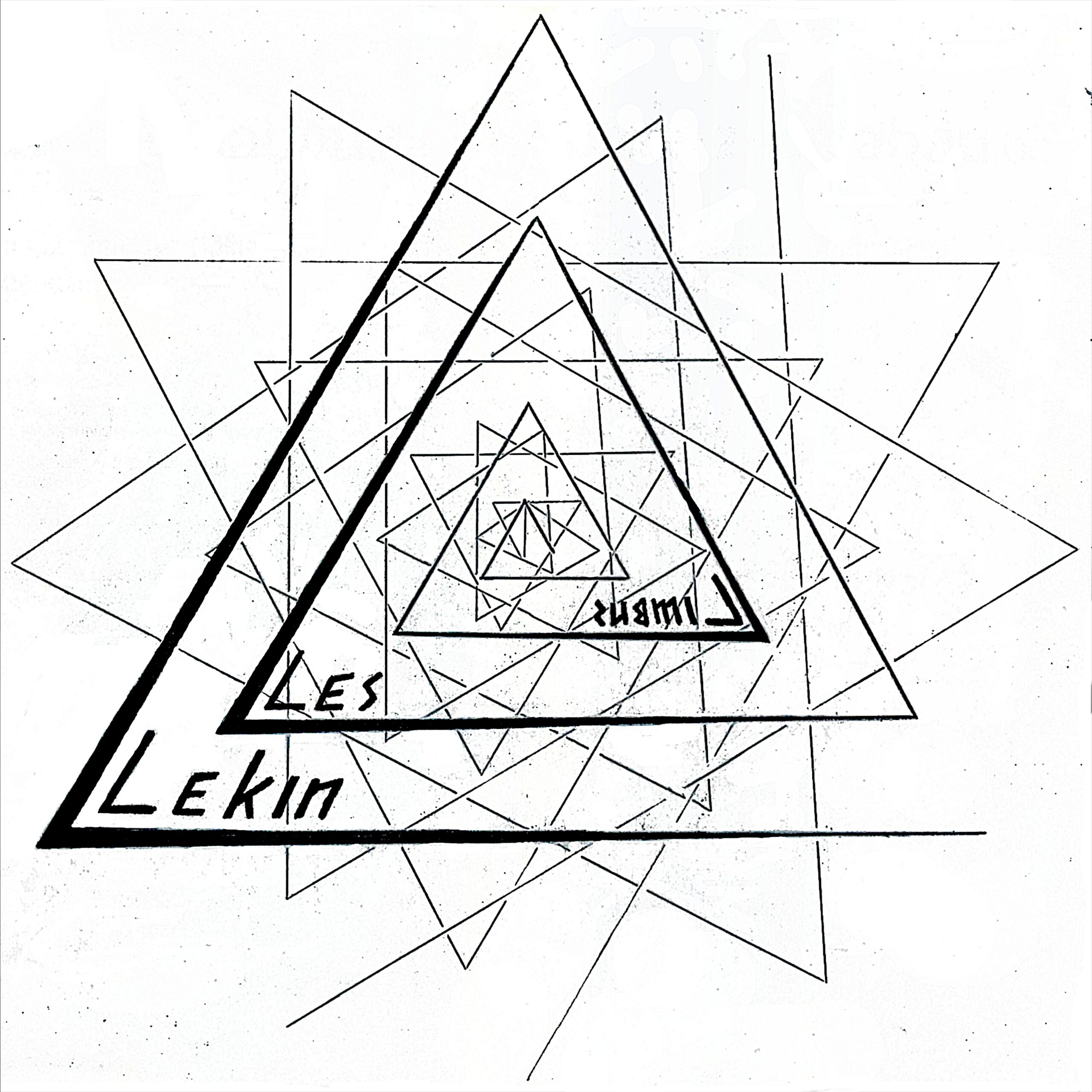
Though instrumental across its vast stretches, Les Lekin‘s Limbus — their first full-length since 2017’s Died with Fear, also on Tonzonen, and third overall — begins with a verbal message of hope, lyrics in German, in the beginning intro “Licht.” That gives a specifically covid-era context to the proceedings, but as the subsequent three massive sans-vocal pieces “Ascent” (14:14), “Unknown” (8:18) and closer “Return” (22:00), unfold, they do so with a decidedly otherworldly, deeply-weighted psychedelic verve. The narrative writes itself in the titles, so I’ll spare you the pretense of insight (on my part there), but note that if it was escapism through music being sought on the part of the meditative Salzburg three-piece, the richness of what’s on offer throughout Limbus is generous enough to share that experience with the audience as well. “Ascent” swells and builds as it moves duly upward, and in “Unknown,” the trio explores post-metallic atmospherics in a crunching midsection without ever losing sight of the ambience so central to what they’re doing, while it would be hard for “Return” not to be the highlight, drums and initial bass rumble giving way to a huge sounding, engrossing procession of atmospheric density. Les Lekin have been a critical favorite for a while now, and it’s easy to hear why, but their work here holds far more than academic appeal or to-genre conformity. They embody the release they would seem to have sought and still carry an exploratory spirit despite the clearly charted course of their songs.
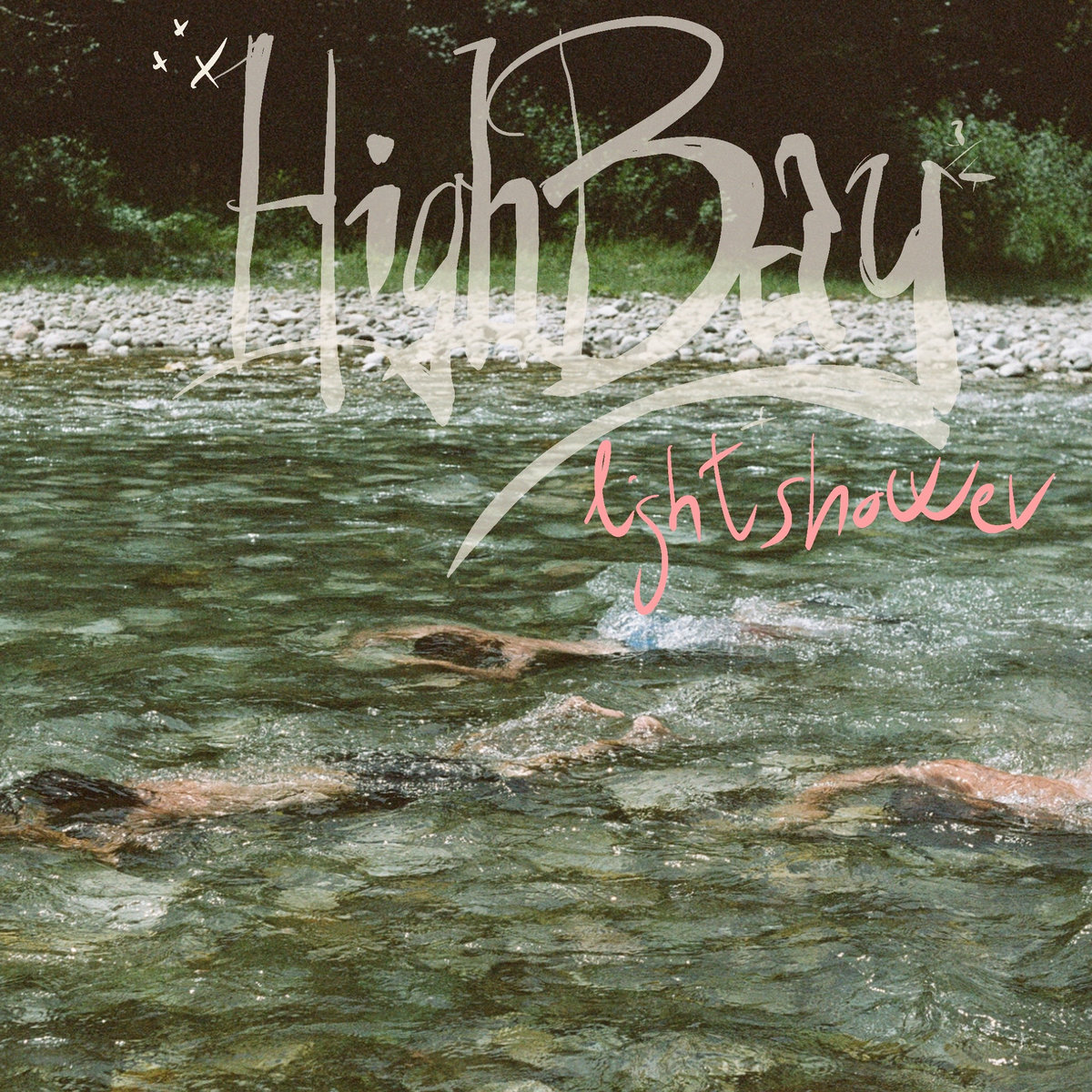
LightShower is the fourth session from Hungarian jammers Highbay to see release in the last year-plus, and it arrives with the immediately noteworthy backing of Psychedelic Source Records. In the vein of many of that collective’s offerings, it is live recorded, probably improvised, and wholly instrumental, the trio vibing their way into a groove early on “Walking on Bubbles” and holding gently to that locked-in, entranced feel across the following five jams. The shimmering guitar tone, particuly as “Miracle Under Water” moves into the more extended “Spaceship” and the pleasantly funky “FunKing Dragons Above Fissure Mountains,” is a highlight, but the intention here is a full set, and I won’t take away from the fuzzier, riffier emergence later on in “FunKing Dragons” either, or, for that matter, the ready-to-wander post-rock float of closer “3D(ays) Trippin’.” It’s a big universe, and Highbay have their work cut out for them if they want to feel their way through all of it, but “Spaceship” mellows its way off into a greater beyond, and even “Hungover Sadness (’90s Romance)” manages to not be a drag as filtered through the trio’s chemistry. Maybe it will, maybe it won’t be the last time Highbay are heard from this year, but they’re yet another name to add to the list of Psychedelic Source-associated acts whose jammy sensibilities are helping manifest a new generation of Eastern European lysergic rock and roll.
Think of this as less of a review and more of a general reminder to throw a follow in the direction of Berkeley, California’s dug-in-as-hell Sound Animal, or at very least let your ears pay a visit every now and again to soak up some of the weirdo drone, dance, psych electronics and whatever else might be had on any given afternoon from the prolific solo-project. “Yes, Yes, You” is the latest single, but likely not for long, and it plays out across 3:33 of keyboardian ambience and recitations of the titular reassurance that would be soul-pop were they not so definitively experimental and part of such an ongoing creative splurge. Tucked away in a corner of the Bandcamp dimension, Sound Animal comes across as an outlet for ideas as much as sonics, and with the persistent thud of a beat beneath, one, two, three, four, the melodic serenity of the wash feels like direct conversation, with the listener, the self, or, more likely, both. It is beautiful and brief, as I’m told life also is, and it may just be the thing that came after one thing and before the next, but if you stop for a minute or three and let it sink in, you just might find a more substantial place to reside. Not gonna be for everyone, but the fact that “Yes, Yes, You” is so vague and yet so clearly encouraging rather than accusatory speaks to the artistic purpose writ large throughout Sound Animal‘s e’er expanding catalog. Wouldn’t be surprised or sad to find a subsequent single going somewhere else entirely, but again, just a reminder that it’s worth finding that out.
Somewhere between classic metal and doom, heavy rock’s riff-led impulses and cultish atmospheres there resides the Pesaro, Italy, trio Warcoe and their debut album, The Giant’s Dream. Led by guitarist/vocalist Stefano — who also plays bass on some of the later tracks — with bassist Carlo and drummer Francesco proffering thickened roll and punctuating rhythm all the while save for the early acoustic interlude “Omega Sunrise,” the band nestle smoothly into a modern-via-not-at-all-modern sphere, yet neither are they retro or aping ’70s methodologies. Maybe that moment has passed and it’s the ascent of the ’80s metal and doom we’re seeing here — or maybe I just slated Warcoe and Early Moods the same day and both bands dig Trouble and Death Row/Pentagram, I won’t pretend to know — but the bass in “Fire and Snow” is more of a presence than bass was pretty much ever 40 years ago, so to call The Giant’s Dream anything but ‘now’ is inaccurate. They lean into rock on “Thieves, Heretics and Whores” and manifest grim but stately lurch before the fade of the penultimate “Scars Will Remain,” but wherever each piece might end up, the impression is abidingly dark and offers a reminder that Italy’s history of cult doom goes farther back than most. Paul Chain, Steve Sylvester, your legacy is in good hands.
Hard to find info on the Boston or Boston-adjacent extreme-metal-inflected, sludge-toned dark hardcore outfit DONE — and that may just as well be anti-social-media mystique creation as the fact that their name is ungooglable — but the tape slays. Aged and Untreated hammers 15 scathing tracks into its 28 minutes, and dies on a hill of wintry black metal and barking hardcore mostly but not completely summarized in the turns of “Soulsplitter.” The fun part is when they bounce back and forth, throw in some grind on “To Curt on Waverly,” scratch your eyes out with “Dance for Them” — the second cut behind says-it-all-in-a-minute opener “Nah” — and willfully crash into a wall on the comparatively sprawling 2:35 “I Fucking Hate Thinking About You.” Haven’t seen a lyric sheet and probably won’t if my success rate in tracking down relevant factoids is anything to go by, but shit, I lived on the South Shore for seven years, including the record-breaking winter of 2014, and it sure felt a lot like this. Maybe they’re from Arizona, and if they are, I’m sure some hack would say the same thing, but hell’s bells Aged and Untreated is an intense listen, and its wreck-your-shit violence is meted out such that even the slightly-slower punch in the first half of “Hope Trickle” makes the song feel sarcastic. I wouldn’t put it on every day, but yeah. Righteously pissed.
Posted in Whathaveyou on August 2nd, 2019 by JJ Koczan
It was really just a question of who — I said as much in May — and Argonauta Records makes sense not just because of their seemingly-perpetual signing spree but because of what they’re able to do in picking and promoting quality acts. Rainbows are Free will release Head Pains, their third album, through Argonauta on Nov. 29. Lock it down. The record is killer. That’s all there is to it. Good band gets signed. Everybody gets that warm feeling in their belly that only comes when things go right in the world.
I’m going to hope to have more to come ahead of the release, but the signing announcement seems like an occasion worth marking, so here it is as it came down the PR wire:
RAINBOWS ARE FREE sign to Argonauta Records + reveal album details!
Brand new record due out in November 2019!
Oklahoma heavy psych doom prog-rockers Rainbows Are Free have inked a worldwide deal with Italian powerhouse label Argonauta Records, who will release the band’s third and hotly anticipated album, Head Pains, on November 29th 2019.
Recorded at the legendary Bell Labs studios, engineered and mixed by Trent Bell of Chainsaw Kittens fame, in Norman, OK, the band just recently not only revealed the cover art but also a first track taken from their upcoming Head Pains!
“Rainbows Are Free are excited to join forces with Argonauta Records for the release of our upcoming third record, Head Pains.“ The band comments. “Gero has curated an impressive roster of some of the heaviest underground stoner, doom,and sludge bands in the world, and we are happy to count ourselves among them. While we were deep in the throes of the dubious task of finding a new label to put out this record, we were constantly being referred to Argonauta every step of the way. It is no accident that we landed at Argonauta’s doorstep, and thankfully, they let us inside.“
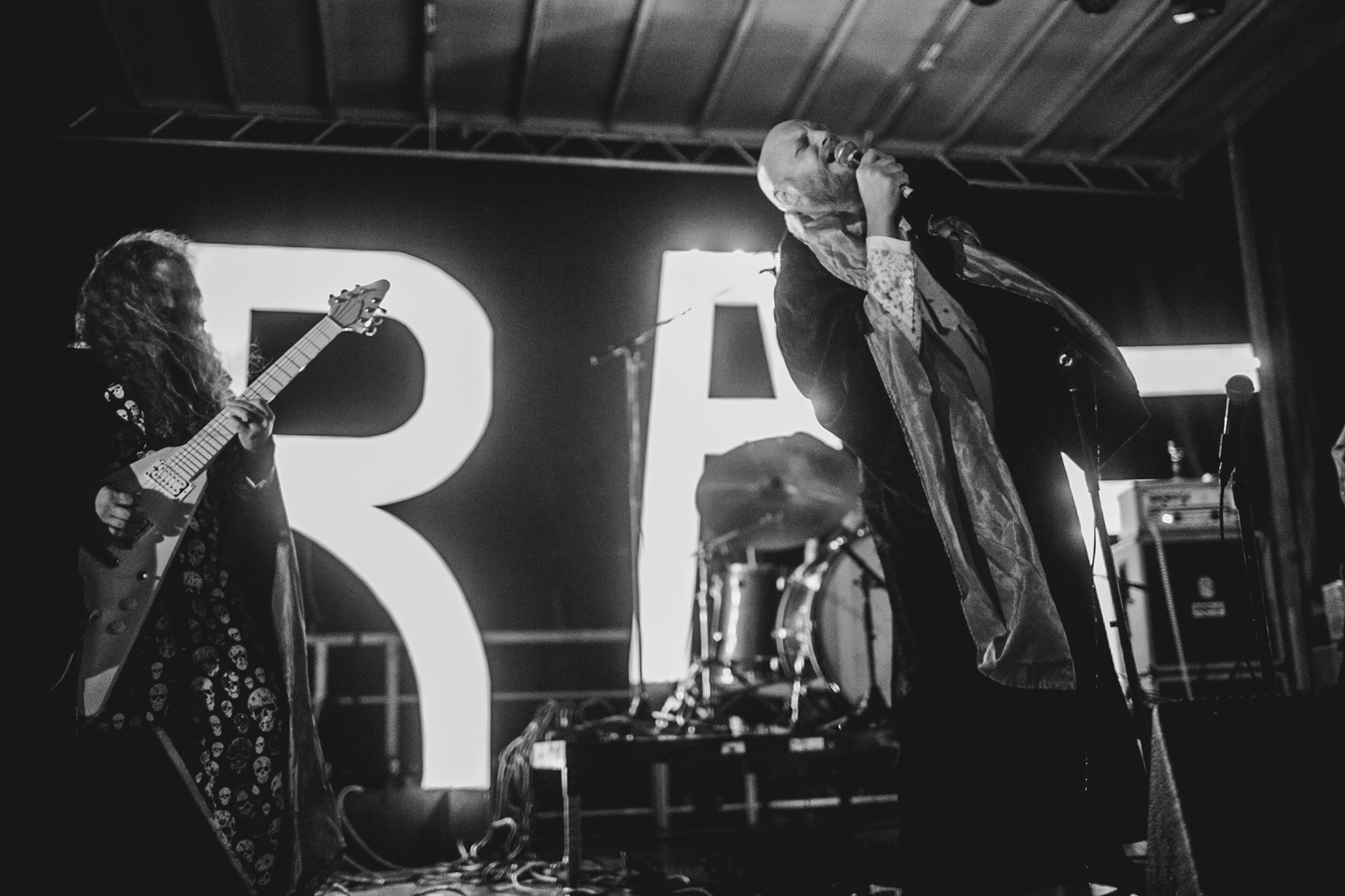
Rainbows Are Free’s sonic locus appears on the rock n’ roll family tree at the point where proto-metal and heavy psychedelia shared a common apocryphal ancestor before branching off into their own distinct lineages. RAF formed in late 2007 as the conglomerate of several long-time heavy rock bands from Norman, OK. In February 2008, RAF self-released their eponymous demo EP, followed by the critically acclaimed full length album Believers In Medicine two years later with Guestroom Records Records. The band’s sophomore album, Waves Ahead of the Ocean, saw RAF taking on a new level with shows all over the States with acts such as High on Fire, Dead Meadow, St. Vitus, The Sword, Big Business, Pallbearer, Kylesa and many more. Often appearing in costumed stage dress, the band fronted by the soaring and snarling nigh 7-foot cyclone of weirdness that is Brandon Kistler, continues to shock and amaze fans by introducing an element of good-humored theatrics to accompany their live sonic assault. This is achieved in no small part due to the guitar prowess and songwriting of Richie Tarver, joined by the ambient soundscapes of Joey Powell on rhythm guitar, the thunderous low end of Jason Smith on bass, and Bobby Onspaugh on drums. Rainbows Are Free continue to bring their unique brand of psychedelic heaviness on tour as they support the release of Head Pains due out Fall 2019.
Head Pains is set to be released in CD and Digital formats on November 29th via Argonauta Records, with vinyl support from Tulsa-based Horton Records. Watch out for many more album updates and tunes to be revealed in the days ahead!
RAF is: Brandon Kistler -Vocals Richie Tarver – Lead Guitar Jason Smith – Bass Joey Powell – Rhythm Guitar Bobby Onspaugh – Drums
Posted in Whathaveyou on May 13th, 2019 by JJ Koczan
Yes, it’s been half a decade since Oklahoma’s Rainbows are Free released their second album, Waves Ahead of the Ocean (review here), but you know, when the PR wire lit up with the news of their impending follow-up, Head Pains, my immediate response was, “Oh shit, badass.” Five years later. That’s pretty good. The five-piece are currently streaming the track “Shapeshifter” from the new record, and they’re looking for a label to step up and help them release the thing. I have a hard time imagining someone won’t get on board and get the thing out on vinyl if not across multiple formats. I mean, unless it’s three hours long or something, it seems like a no-brainer to me. These guys are awesome, the sampling they’re giving would seem to show that hasn’t changed since 2014, and as I recall, the last outing had good underground buzz around it. Would be a good pickup for somebody, so yeah, I’ll expect that news at some point.
Until then, here’s the album info and the track, hoisted off the aforementioned PR wire:
Head Pains is Rainbows Are Free’s third full length album, and follow-up to 2014’s Waves Ahead of the Ocean. The completion of Head Pains heralds a return to RAF’s heavy psychedelic roots as witnessed on their breakout album, Believers In Medicine in 2010. Although considered a return to form, Head Pains further exhibits the band’s unique voice — setting them apart from contemporaries of heavy psychedelic, doom, and stonerrock with whom they’ve shared the stage, (High on Fire, Dead Meadow, St. Vitus, The Sword, Big Business, Kylesa, etc.).
Often appearing in costumed stage dress, the band, fronted by the soaring and snarling nigh 7-foot cyclone of weirdness that is Brandon Kistler, continues to shock and amaze fans by introducing an element of good humored theatrics to accompany their live sonic assault. This is achieved in no small part due to the guitar prowess and songwriting of Richie Tarver, joined by the ambient soundscapes of Joey Powell on rhythm guitar, and the thunderous low end of Jason Smith on bass, and Bobby Onspaugh on drums.
Rainbows Are Free continue to bring their unique brand of psychedelic heaviness on tour in 2019 as they seek label support for the release of Head Pains.
Recorded in 2018-2019 by Trent Bell (Flaming Lips, Chainsaw Kittens) at Bell Labs, Norman, OK. Mastered by Hans DeKline of Hans DeKline Mastering, Los Angeles, CA. Album art by Tony Roberts (Electric Wizard, Conan, Slomatics).
HEAD PAINS 1. Covered In Dawn 2. Electricity on Wax 3. Shapeshifter 4. The Sound Inside 5. Lady of the Woods / Psychonaut 6. A Penny’s Worth 7. Nile Song 8. Eunice
Day two of the Quarterly Review and all is chugging along. I was on the road for part of the day yesterday and will be again today, so there’s some chaos underlying what I’m sure on the surface seems like an outwardly smooth process — ha. — but yeah, things are moving forward. Today is a good mix of stuff, which makes getting through it somewhat easier on my end, as opposed to trying to find 50 different ways to say “riffy,” so I hope you take the time to sample some audio as you make your way through, to get a feel for where these bands are coming from. A couple highlights of the week in here, as always. We go.
Quarterly Review #11-20:
Loss, Horizonless
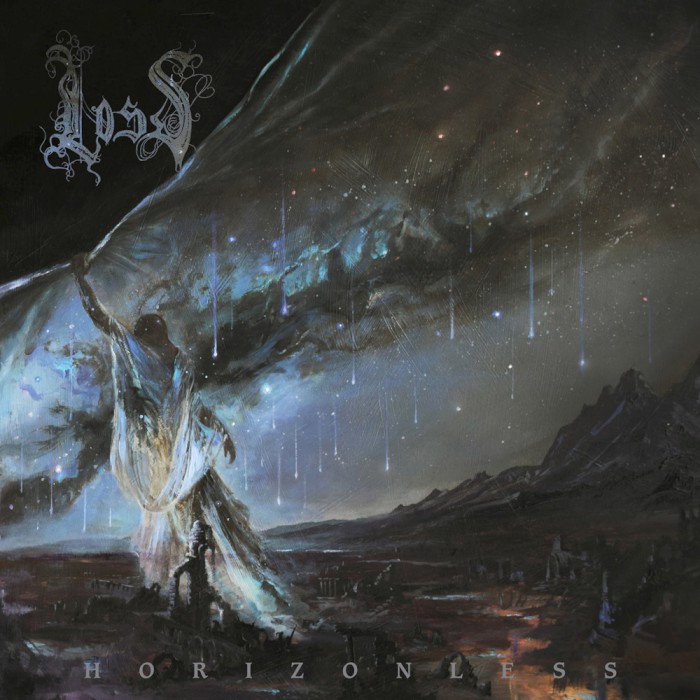
Horizonless (on Profound Lore) marks a welcome if excruciating return from Nashville death-doomers Loss, who debuted six years ago with 2011’s Despond (review here) and who, much to their credit, waste no time in making up for their absence with 64 soul-crushing minutes across nine slabs of hyperbole-ready atmospheric misery. The longer, rumble-caked, slow-motion lumbering of “The Joy of all Who Sorrow,” “All Grows on Tears,” “Naught,” the title-track and closer “When Death is All” (which boasts guests spots from Leviathan’s Wrest, Dark Castle’s Stevie Floyd and producer Billy Anderson) are companioned by shorter ambient works like the creepy horror soundtrack “I.O.” and the hum of “Moved Beyond Murder,” but the deeper it goes, the more Horizonless lives up to its name in creating a sense of unremitting, skyline-engulfing darkness. That doesn’t mean it’s without an emotional center. As Loss demonstrate throughout, there’s nothing that escapes their consumptive scope, and as they shift through the organ-laced “The End Steps Forth,” “Horizonless,” “Banishment” and the long-fading wash of the finale, the album seems as much about eating its own heart as yours. A process both gorgeous and brutal.
It’s only fair to call Hydrogen an experimentalist work, but don’t necessarily take that to mean that Enslaved guitarist Ivar Bjørnson doesn’t have an overarching vision for what his BardSpec project is. With contributions along the way from Today is the Day’s Steve Austin and former Trinacria compatriot Iver Sandøy (also Manngard), Bjørnson crafts extended pieces of ambient guitar and electronica-infused beats on works like “Fire Tongue” and the thumping “Salt,” resulting in two kinds of interwoven progressive otherworldlinesses not so much battling it out as exploring the spaces around each other. Hydrogen veers toward the hypnotic even through the more manic-churning bonus track “Teeth,” but from the psych-dance transience of “Bone” (video posted here) to the unfolding wash of “Gamma,” BardSpec is engaged in creating its own aesthetic that’s not only apart from what Bjørnson is most known for in Enslaved, but apart even from its influences in modern atmospherics and classic, electronics-infused prog.
There’s a current of rawer punk running beneath Sinner Sinners’ songwriting – or on the surface of it if you happen to be listening to “California” or “Outsider” or “Hate Yourself” or “Preachers,” etc. – but especially when the L.A. outfit draw back on the push a bit, their Last Hurrah Records and Cadavra Records full-length Optimism Disorder bears the hallmarks of Rancho de la Luna, the studio where it was recorded. To wit, the core duo of Steve and Sam Thill lead the way through the Queens of the Stone Age-style drive of opener “Last Drop” (video posted here), “Desperation Saved Me (Out of Desperation)” and though finale “Celexa Blues” is more aggressive, its tones and overall hue, particularly in the context of the bounce of “Together We Stand” and “Too Much to Dream” earlier, still have that desert-heavy aspect working for them. It’s a line that Sinner Sinners don’t so much straddle as crash through and stomp all over, but I’m not sure Optimism Disorder would work any other way.
The five-song/52-minute self-titled debut from Argentina trio Cavra was first offered digitally name-your-price-style late in 2016 and picked up subsequently by South American Sludge. There’s little reason to wonder why. Comprised of guitarist/vocalist Cristian Kocak, bassist/vocalist Fernando Caminal and drummer Matias Gallipoli, the Buenos Aires three-piece place themselves squarely in the sphere of their home country’s rich heritage in heavy rock and psychedelic fluidity, with earthy tones, a resounding spaciousness in longer cuts like the all-15-minutes-plus “2010,” “Montaña” and “Torquemada.” My mind went immediately to early and mid-period Los Natas as a reference point for how the vocals cut through the density of “Montaña,” but even as Cavra show punkier and more straightforward thrust on the shorter “Dos Soles” (4:10) and “Librianna” (2:45) – the latter also carrying a marked grunge feel – they seem to keep one foot in lysergism. Perhaps less settled than it wants to be in its quiet parts, Cavra’s Cavra nonetheless reaches out with a tonal warmth and organic approach that mark a welcome arrival.
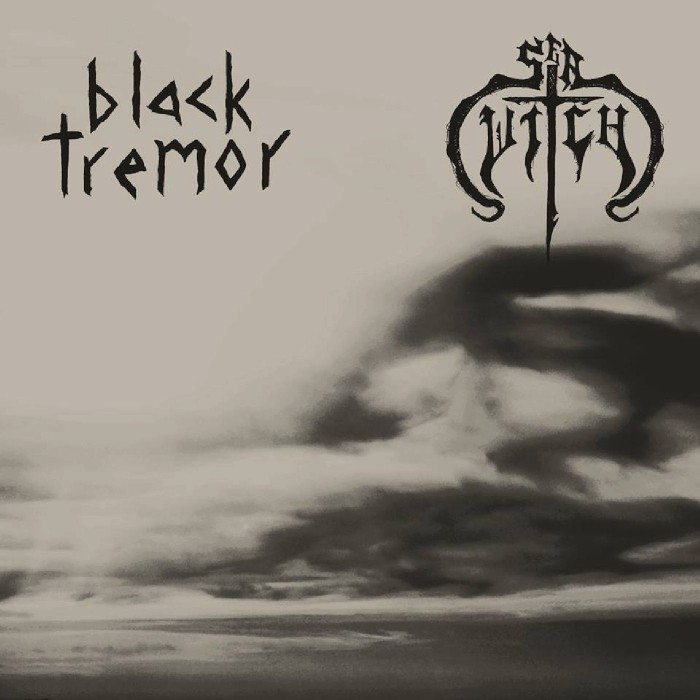
One has to wonder if whichever of the involved parties – be it the two acts or either of the labels, Sunmask Records or Hypnotic Dirge – had in mind a land-and-sea kind of pairing in putting together Saskatoon’s Black Tremor or Nova Scotia’s Sea Witch for this split release, because that’s basically where they wound up. Black Tremor, who issued their debut EP in 2016’s Impending (review here), answer the post-Earth vibes with more bass/drums/cello instrumental exploration on the two-part “Hexus,” while the massive tonality of duo Sea Witch answers back – though not literally; they’re also instrumental – with three cuts, “Green Tide,” “As the Crow Flies Part One” and “As the Crow Flies Part Two.” The two outfits have plenty in common atmospherically, but where Black Tremor seem to seek open spaces in their sound, Sea Witch prefer lung-crushing heft, and, well, there isn’t really a wrong answer to that question. Two distinct intentions complementing each other in fluidity and a mood that goes from grim and contemplative to deathly and bleak.
Supersonic Blues, Supersonic Blues Theme b/w Curses on My Soul
It takes Den Haag trio Supersonic Blues no more than eight minutes to bust out one of 2017’s best short releases in their Who Can You Trust? Records debut single, Supersonic Blues Theme b/w Curses on My Soul. Yes, I mean it. The young three-piece of guitarist Timothy, bassist Gianni and drummer Lennart absolutely nail a classic boogie-rock vibe on the two-tracker, and from the gotta-hear low end that starts “Curses on My Soul,” the unabashed hook of “Supersonic Blues Theme” and the blown-out garage vocals that top both, the two-tracker demonstrates clearly not only that there’s still life to be had in heavy ‘70s loyalism when brought to bear with the right kind of energy, but that Supersonic Blues are on it like fuzz on tone. Killer feel all the way and shows an exceeding amount of potential for a full-length that one can only hope won’t follow too far behind. Bonus points for recording with Guy Tavares at Motorwolf. Hopefully they do the same when it comes time for the LP.
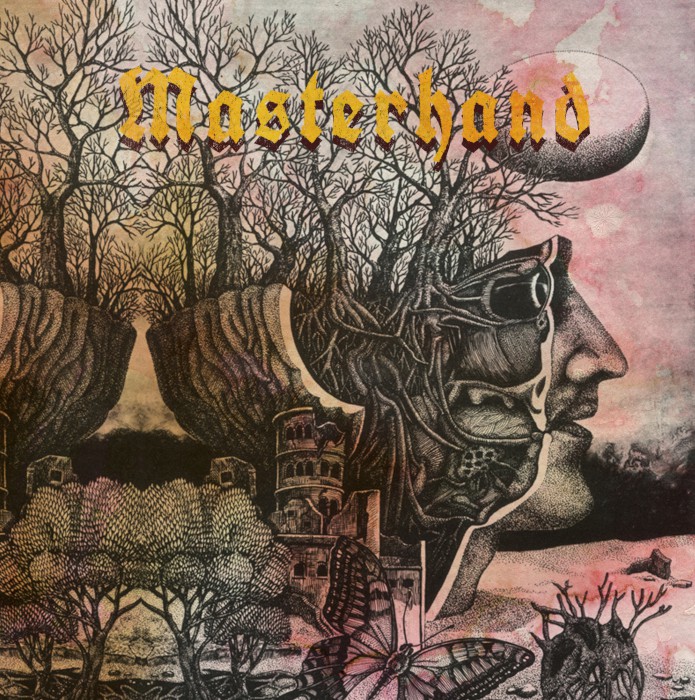
A neo-psych trio from Oklahoma City, Masterhand seem like the kind of group who might at a moment’s notice pack their gear and go join the legions of freaks tripping out on the West Coast. Can’t imagine they wouldn’t find welcome among that I-see-colors-everywhere underground set – at least if their debut long-player, Mind Drifter, is anything to go by. Fuzz like Fuzz, acid like Uncle, and a quick, raw energy that underlies and propels the proceedings through quick tracks like “Fear Monger” and “Lucifer’s Dream” – tense bass and drums behind more languid wah and surf guitar before a return to full-on fuzz – yeah, they make a solid grab for upstart imprint King Volume Records, which has gotten behind Mind Drifter for a cassette issue. There’s some growing to do, but the psych-garage feel of “Chocolate Cake” is right on, “Heavy Feels” is a party, and when they want, they make even quick cuts like “Paranoia Destroyer” feel expansive. That, along with the rest of the release, bodes remarkably well.
Groove-rolling four-piece Green Lung boast former members of Oak and Tomb King, among others, and Green Man Rising, their first digital single, is the means by which they make their entry into London’s crowded underground sphere. Aside from the apparent nod to Type O Negative in the title – and the plenty of more-than-apparent nod in guitarist Scott Masson’s riffing – “Green Man Rising” and “Freak on a Peak” bask in post-Church of Misery blown-out cymbals from drummer Matt Wiseman, corresponding tones, while also engaging a sense of space via rich low end from bassist Andrew Cave and the echoing vocals of Tom Killingbeck. There’s an aesthetic identity taking shape in part around nature worship, and a burgeoning melodicism that one imagines will do likewise more over time, but they’ve got stonerly hooks in the spirit of Acrimony working in their favor and in a million years that’s never going to be a bad place to start. Cool vibe; makes it easy to look forward to more from them.
In 2016, Massachusetts-based doom metallers Second Grave issued one of the best debut albums of the year in their long-awaited Blacken the Sky (review here)… and then, quite literally days later, unexpectedly called it quits. It was like a cruel joke, teasing their potential and then cutting it short of full realization. The self-titled debut EP from Benthic Realm, which features Second Grave guitarist/vocalist Krista van Guilder (also ex-Warhorse) and bassist Maureen Murphy alongside drummer Brian Banfield (The Scimitar), would seem to continue the mission of that prior outfit if perhaps in an even more metallic direction, drawing back on some of Second Grave’s lumber in favor of a mid-paced thrust while holding firm to the melodic sensibility that worked so well across Blacken the Sky’s span. For those familiar with Second Grave, Benthic Realm is faster, not as dark, and perhaps somewhat less given to outward sonic extremity, but it’s worth remembering that “Awakening,” “Don’t Fall in Line” and “Where Serpents Dwell” are just an introduction and that van Guilder and Murphy might go on a completely different direction over the longer term after going back to square one as they do here.
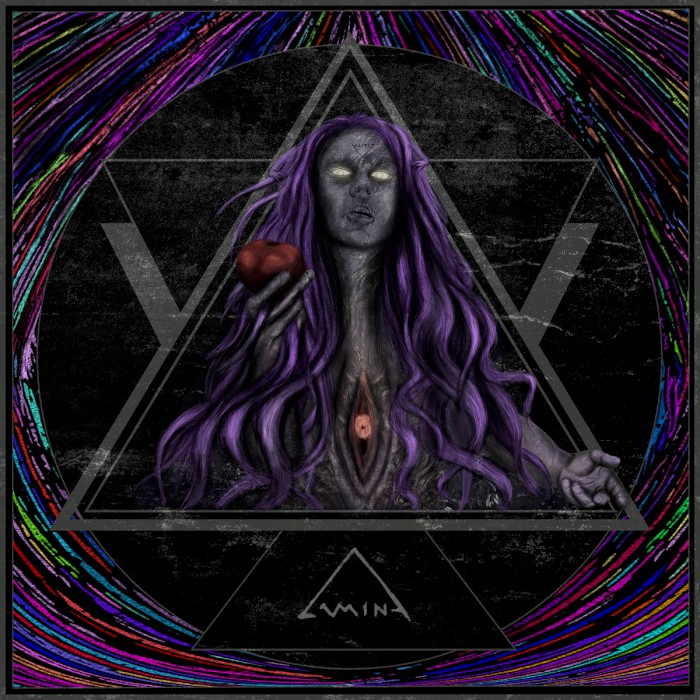
Smack dab in the middle ofLilith, the debut album from Lisbon-based doom/heavy rockers Lâmina, sits the 20-minute aberration “Maze.” It’s a curious track in a curious place on the record, surrounded by the chugging “Evil Rising” and bass-led rocker bounce of “Psychodevil,” but though it’s almost a full-length unto itself (at least an EP), Lâmina make the most of its extended and largely linear course, building on the tonal weight already shown in the earlier “Cold Blood” and “Big Black Angel” and setting up the tension of “Education for Death” and the nine-minute semi-title-track finale “In the Warmth of Lilith,” which feels a world away from the modern stonerism of “Psychodevil” in its slower and thoroughly doomed rollout. There’s a subtle play of scope happening across Lilith, drawn together by post-grunge tonal clarity and vocal melodies, and Lâmina establish themselves as potentially able to pursue any number of paths going forward from here. If they can correspondingly develop the penchant for songwriting they already show in these cuts as well, all the better.