Posted in Whathaveyou on May 5th, 2022 by JJ Koczan
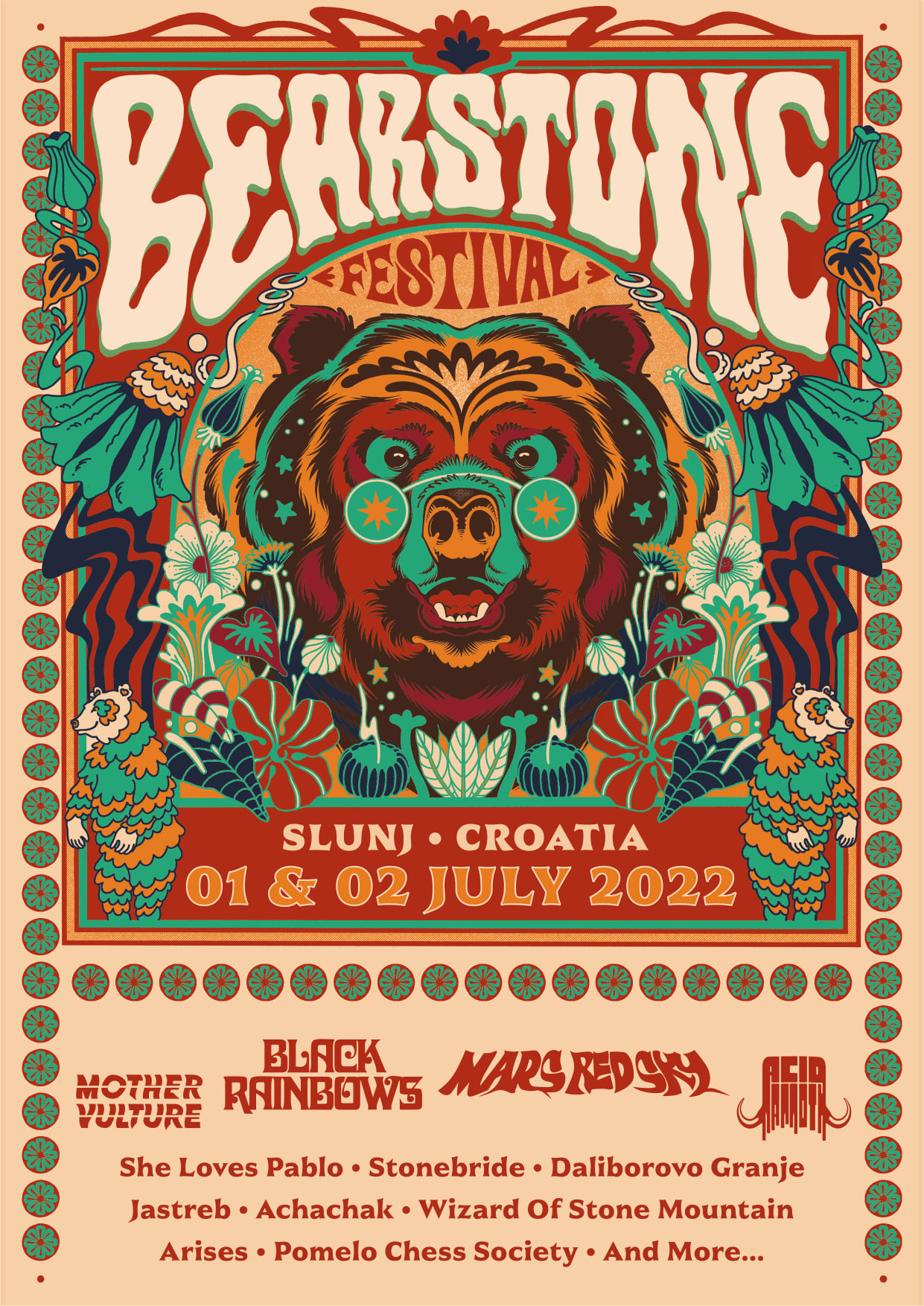
With what they’re calling the ‘Year Zero’ edition, the new Croatian two-dayer Bear Stone Festival unveils a lineup with immediately international ambitions, with Mars Red Sky, Black Rainbows, Mother Vulture and Acid Mammoth up on top of the poster. It sounds like a pretty genuine outdoor experience, with free-but-limited-to-1,000 entry and free camping on-site, and they say there’s more to come in the lineup, which I’m inclined to believe since although the 12 acts announced would be just fine to fill a two-day bill with six per, there’s also a jam-stage to work out, DJs and other artists reportedly taking part, so yeah, one way or the other, it seems like there will be space for announcements after this.
But it looks like a cool happening if you’re in the area or up for a bit of travel. I can think of worse ways to spend a weekend than by a riverside in Croatia listening to rock and roll and experiencing art of various stripes. I can feel the vibe from here, and it’s not even long enough for everybody to get super-smelly, which is also a win.
Best of luck to Bear Stone Festival on Year Zero, and many happy returns:
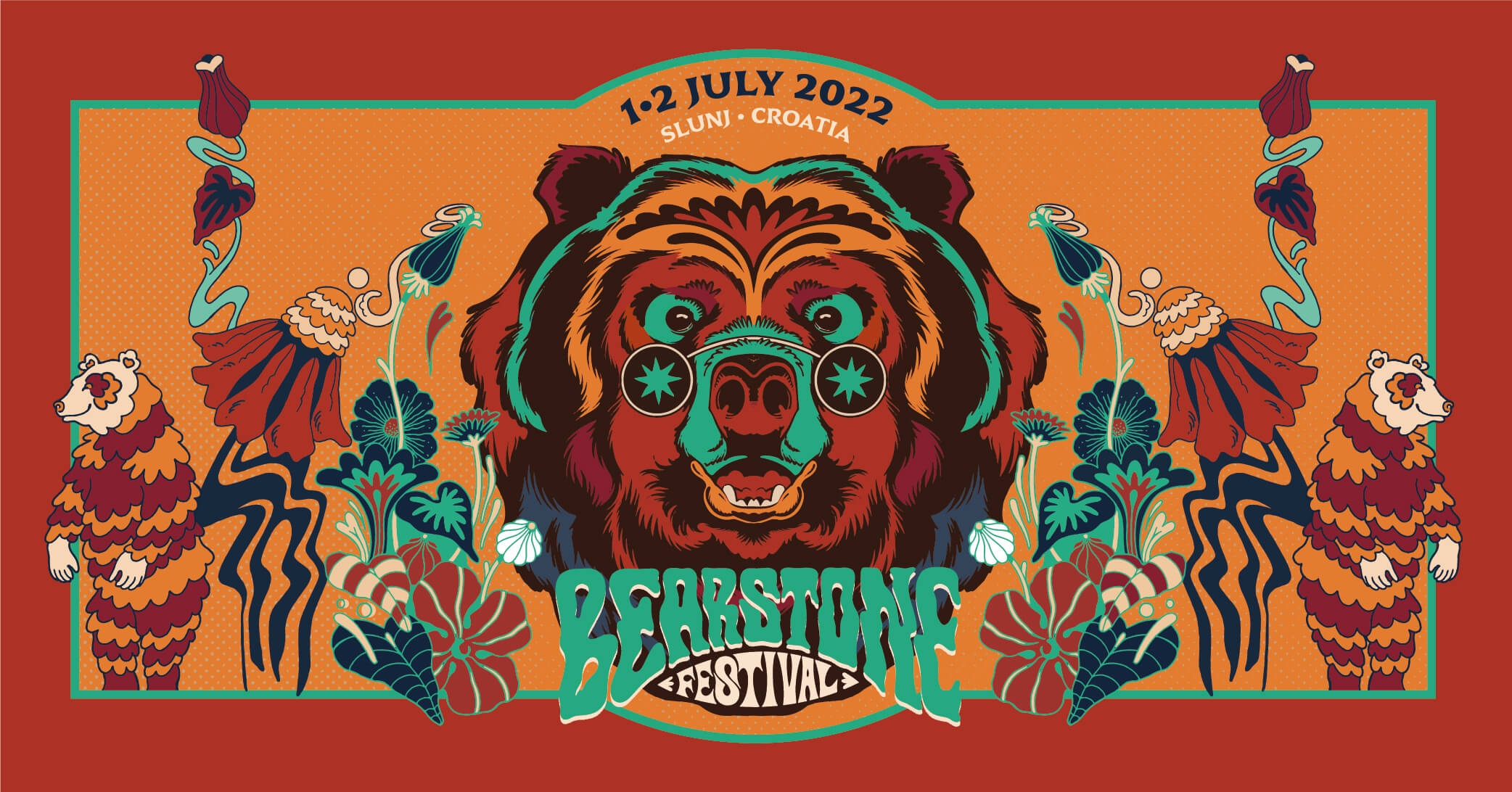
Welcome to Bear Stone Festival – Year Zero, the first of its kind
Welcome to Bear Stone Festival, the first of its kind!
This year’s edition of the festival titled #YearZeroEdition will start off Bear Stone Festival as a special preview. Year Zero Edition will be a free admission festival with free camping and an attendance limited to 1.000 visitors. Tickets can be purchased online in digital form via this link –> https://www.entrio.hr/event/bear-stone-festival-year-zero-11209
An audio-visual experience, international gathering of travelers and tribes in the Croatian outback. Two days of psychedelic, stoner, desert, fuzz, heavy rock, electronic and experimental music accompanied by live bands, DJ sets and Jam stage. Stunning landscapes, fantastic psychedelic art installations and projections will shape a unique festival experience and make you reexamine reality.
BLACK RAINBOWS // MARS RED SKY // MOTHER VULTURE // ACID MAMMOTH // SHE LOVES PABLO // STONEBRIDE // DALIBOROVO GRANJE // JASTREB // ACHACHAK // WIZARD OF STONE MOUNTAIN // ARISES // POMELO CHESS SOCIETY //
MAIN STAGE // JAM STAGE // DJs // CAMPING // FOOD VENDORS // BARS // RAFTING // SWIMMIMG // NATURE and more!
The festival is held in Donje Primišlje (Croatia) on a breathtaking location, on the banks of the river Mrežnica, which with its distinctive emerald color is known as one of the most pristine rivers in Croatia. The location of Bear Stone Festival is also the centre stage for the world famous trance electronic music festival Mo:Dem (Momento Demento).
The Bear Stone Festival is located in the canyon of Mrežnica and is completely surrounded by forest. Both the forest and the river are what make the festival site a part of nature in its most basic and pristine form. The festival site is a 15-minute drive from the towns of Slunj and Ogulin on each side, a 45-minute drive from the world-famous Plitvice Lakes National Park, an hour’s drive from the capital Zagreb and an hour and a half from the Adriatic Sea.
Posted in Reviews on January 1st, 2015 by JJ Koczan
I thought last night about changing the name of this feature to “First Licks 2015,” but on further reflection, that’s just too much licking. It’s bad enough as it is. All the same, Happy New Year to you and yours, wherever you and they may be. I hope in 2015, your reviews pile never gets so backed up that you think about doing something so absolutely insane as tackling them all at once to wipe the slate clean. Then again, being completely inundated with music has its upsides. The music, for one.
We press on today with the fourth installment in the “Last Licks 2014” series. These are reviews 31-40. I passed the halfway point yesterday with barely so much as an inward breath to appreciate the moment, and I can only hope the pile of discs before me goes so smoothly. I’ll let you know when I get there. Until then, no need to dally, let’s get underway with the first reviews of 2015.
Thanks for reading:
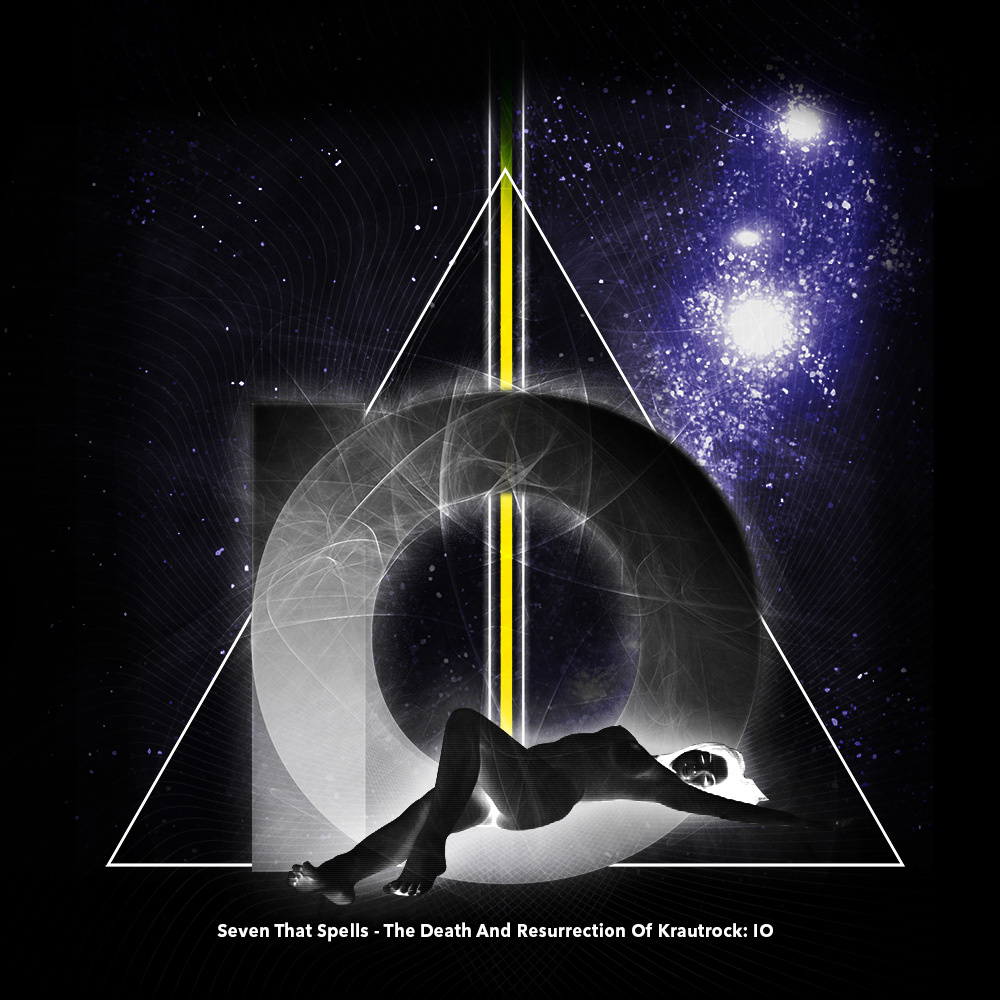
Seven that Spells, The Death and Resurrection of Krautrock: Io
Reportedly second in a series of three albums from Croatian heavy psych rockers Seven that Spells, The Death and Resurrection of Krautrock: Io follows a first installment subtitled Aum released in 2011 and brings forth heady, mostly instrumental progressions of extended runtimes and a satisfying blend of weighted tones and stylistic clarity. The three-piece who released their first album in 2003 alternate between three shorter pieces and two longer ones across the 47-minute Sulatron Records outing’s five tracks, and while I’m not entirely sure what is the narrative that’s taking place across them, there’s definitely a plotted course and concept at work behind the material – it does not come across as haphazard in any way. When they arrive, vocals do so as chants coinciding with sweeping passages, as on “Burning Blood,” the culmination of which is worthy of being the apex of a trilogy in progress. Io takes the off-the-cuff authenticity in heavy psych and gives it direction and purpose beyond simply being. No small feat, no small results.
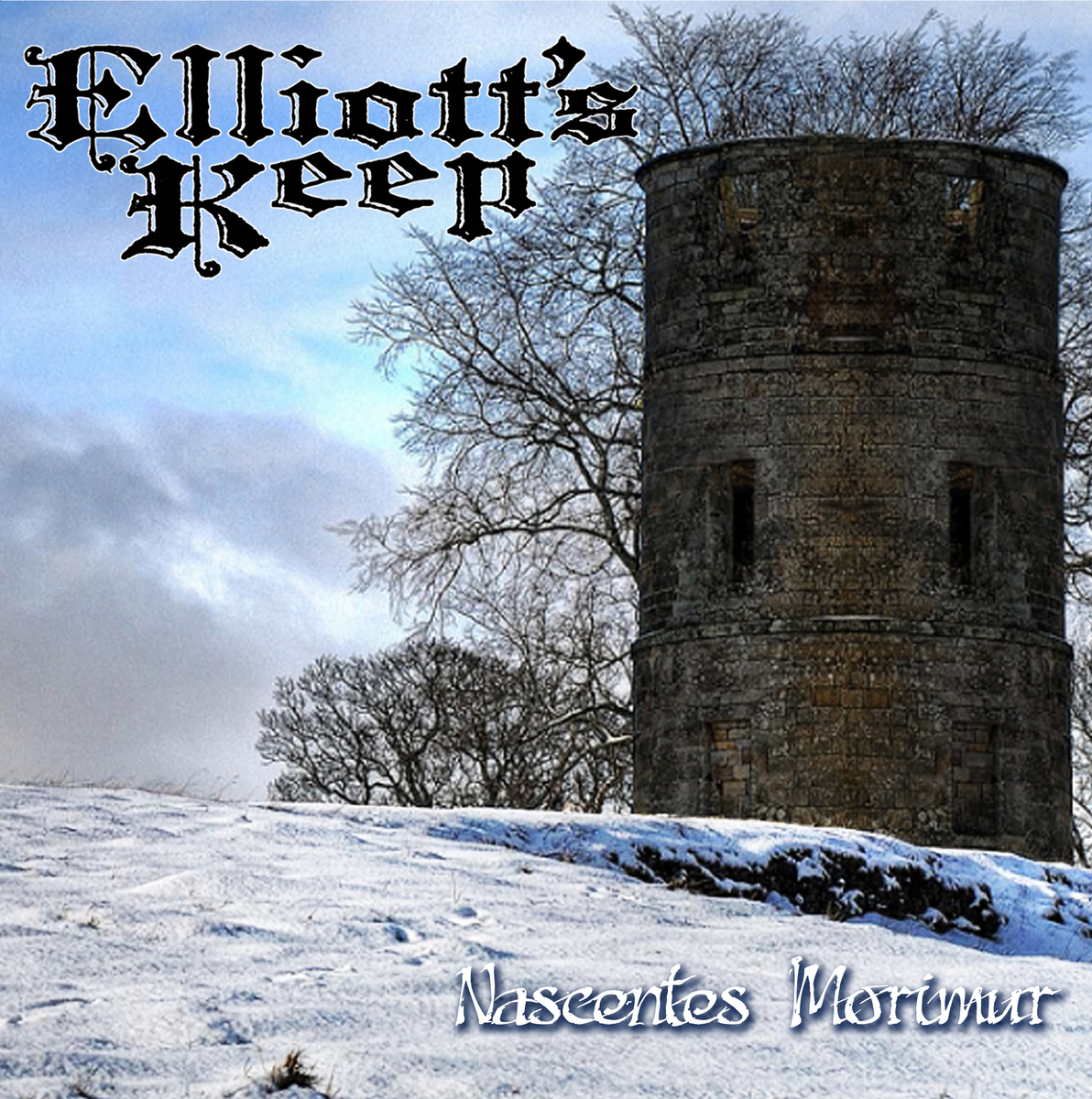
Some metal isn’t doom, some doom isn’t metal, but Texas trio Elliott’s Keep play doom metal, and make no mistake. Their third long-player, Nascentes Morimur, comes after 2008’s In Medias Res (review here) and 2010’s Sine Qua Non (review here), and like them, it was produced and mixed by J.T. Longoria, so that their darkened, metallic chugging is presented with a crisp bite. The three-piece of Kenneth Greene (bass/vocals), Jonathan Bates (guitar) and Joel Bates (drums) toy with the balance between death and doom effectively across Nascentes Morimur’s nine tracks, making highlights of early moments like the double-kick-laden “Now Taken” and the chorus of the proceeding “Days of Hell.” Later cuts like “Tale of Grief” and “Omen” follow suit, with Jonathan riffing out classic metal vibes while Greene switches between clean singing and a rasping, almost black metal in places, scream. Their command never wavers, though, and while there have never been many frills about their approach, Elliott’s Keep have come to offer a fist-pumpingly heavy, sharp-edged push.
Bluesy Minneapolis double-guitar four-piece The Lone Crows show an affinity for classic rock stylization on their World in Sound second full-length, Dark Clouds. Produced modern, with lead guitar front and center, there’s more rock to Dark Clouds than heavy rock, but the vocal style of guitarist Tim Barbeau – joined in the band by guitarist Julian Manzara, bassist Andy Battcher and drummer Joe Goff – has some ‘90s inflection to it, and every now and then they get into a bit of bounce, as on the title-track and “The Dragon.” The penultimate “Midnight Show” would seem like the peak of the album, and sure enough it has one of its best hooks, but the recording doesn’t allow for the same push one imagines the material would carry live, and the quiet ending of “On that Day” feels flat compared to some of The Lone Crows’ bluesy peers. I chalk it up to the difference between blues rock and heavy rock and my own expectations, rather than some fault in the band.
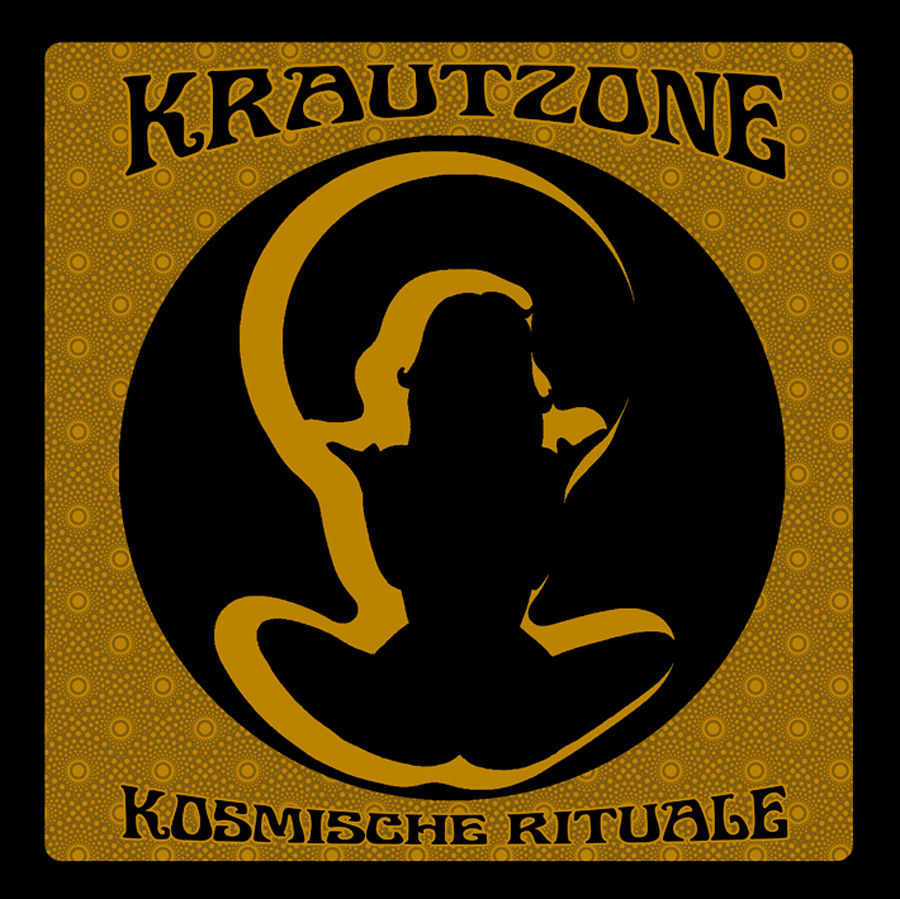
I’m not sure if it would be appropriate to call Krautzone an offshoot of Zone Six, of which all four members – guitarist Rainer Neeff, synth-providers Modulfix and Sula Bassana, and percussionist Komet Lulu (the latter two also of Electric Moon) – take part, plus bassist Onkel Kaktus, but either way, the sound is nebulous, brilliantly textured for a meditative, slow-motion churn, and utterly engrossing. Their Sulatron debut, Kosmiche Rituale, is comprised of three lengthy explorations, tones washing in and out of each, smoothly offset by Neeff’s flight-taken guitar, minimal but earthy percussion and an improvised sensibility. “Liebe” (12:46) and “Kosmiche Rituale” (9:09) comprise side A and “Only Fools Rush In” (20:41) consumes side B entirely, a wash of synth and cymbals announcing its arrival as it sets about unfolding its long course, every bit living up to the album’s title in the process. Krautzone also released a split with Lamp of the Universe in 2014 (review here), but on their own, they shine with the chance to really stretch out.
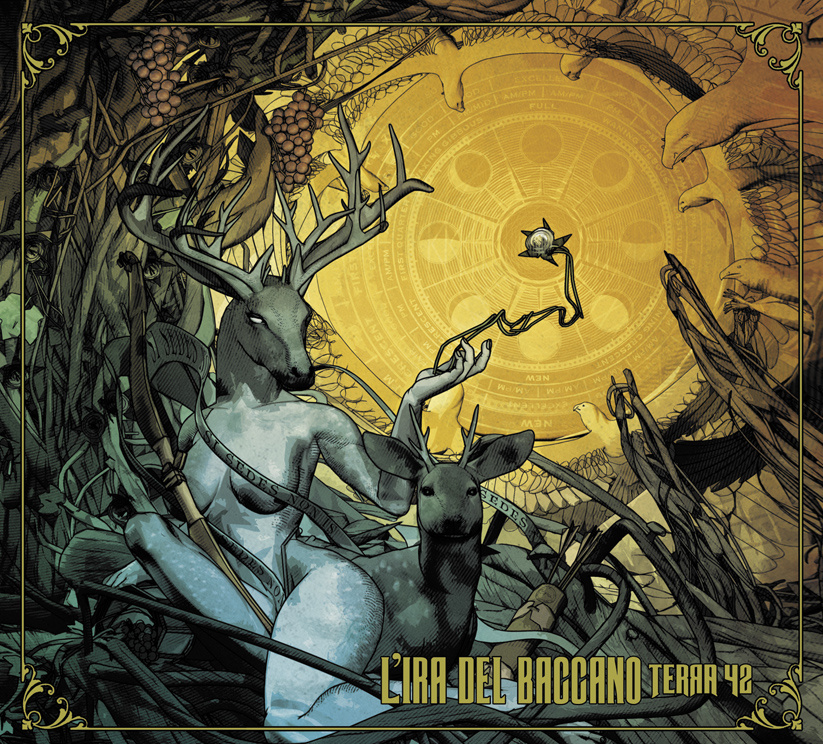
Italian instrumentalists L’Ira del Baccano offer their second full-length with the lushly conceived Terra 42, a six-track, 57-minute outing that works in three overarching “phases.” The first of them includes tracks one through three and is dubbed “The Infinite Improbability Drive,” and it makes up more than half the album’s runtime, the first, 13-minute part standing alone while the two subsequent nine-minute stretches feed one directly into the next in a psychedelic wash of open guitar building to a raucous heavy rock finish. Phase II, “Sussurri… Nel Bosco di Diana” is the next two cuts, and moves smoothly from a Yawning Man-style jam to more riff-based thickness. The longest individual part, Phase III, is the 14-minute “Volcano X13,” track six, on which the band move fluidly through their heavy psych and rock impulses, synth and guitar intertwining well as L’Ira del Baccano affirm their more-than-burgeoning stylistic breadth. It’s an interesting, somewhat familiar blend, but they put it to good use on Terra 42 and engage with the spaciousness created.
Reactivated Montreal noisemakers Lae enlisted the help of their producer, Today is the Day’s Steve Austin, in handling lead vocals for their debut, Break the Clasp, which is a move fitting for their anti-genre approach to noise, drone, doom, post-everything, and so on. A Battleground Records/The Compound release, Break the Clasp reworks unheard material from Lae’s original run in the mid-‘90s – an album that never came out, essentially – but the vitality in the 13 tracks (yes, even the crushingly slow ones) is fresh to the point of its newness, and even the parts meant to be abrasive, opener “Sexy Sadie” or pieces of “17 Queen,” for example, hold onto a wonderful depth the mix and a feeling of texture that feeds Break the Clasp’s otherworldly spirit and brings you along its path of consuming strangeness. Austin is a presence, but by no means the star, and the whole band Lae shines across Break the Clasp’s fascinating span. A debut no one knew they were awaiting, but they were.
Psychedelia implying such a colorful sound, and black metal implying essentially the absence of that color, the two have rarely been paired well, but Finnish four-piece Atomikylä display a resounding space on their five-song debut full-length, Erkale (released by Future Lunch), and they’re not through the 13-minute opener, “Aluaineet,” before I think they might have mastered the balance between effects wash, unmitigated thrust and far-back screaming that most others have left too far to one side or the other. The four-piece with a lineup half from Oranssi Pazuzu and half from Dark Buddha Rising don’t stay in one place stylistically – the title-track has an almost krautrock feel, while the subsequent “Ihmiskallo” is more resolved to doom – but they keep a consistency of blinding bleakness to Erkale that results in a decidedly individualized feel throughout the 48 minutes. Droning and jazzy guitar experimentalism prevails in “Who Goes There,” and 10-minute closer “Musta Kulta” both broadens the atmosphere and underscores Atomikylä’s vicious stylistic triumph, capping Erkale with a mash of squibblies and screams, effects and distortion that’s so filthy it can’t help but be beautiful.
Freiburg, Germany, trio Deaf Proof – guitarist/vocalist J. Fredo, bassist JP and drummer Pedro – released their first demo in 2013, but the three-song/34-minute EP (it’s more like an album, but I won’t argue) Death Sounds Angry is a decidedly more assured, professional affair. The vibe is loose and, in the reaches of 18-minute middle cut “Origin of Pain,” jammy, but the three-piece still seem to have some idea of where they want their material to go, even as they feel their way toward those ends. A Colour Haze influence? Maybe, but less than one might think given the current climate of European heavy psych. JP’s bass has a tendency toward darker undertones, and when they hit the payoffs for “Death Sounds Angry and Hungry for More,” “Origin of Pain” and “The Sense,” they reveal themselves to be in search of something heavier and less peaceful. J. Fredo’s vocals are a little forward in the mix, but Death Sounds Angry still offers plenty to chew on for the converted.
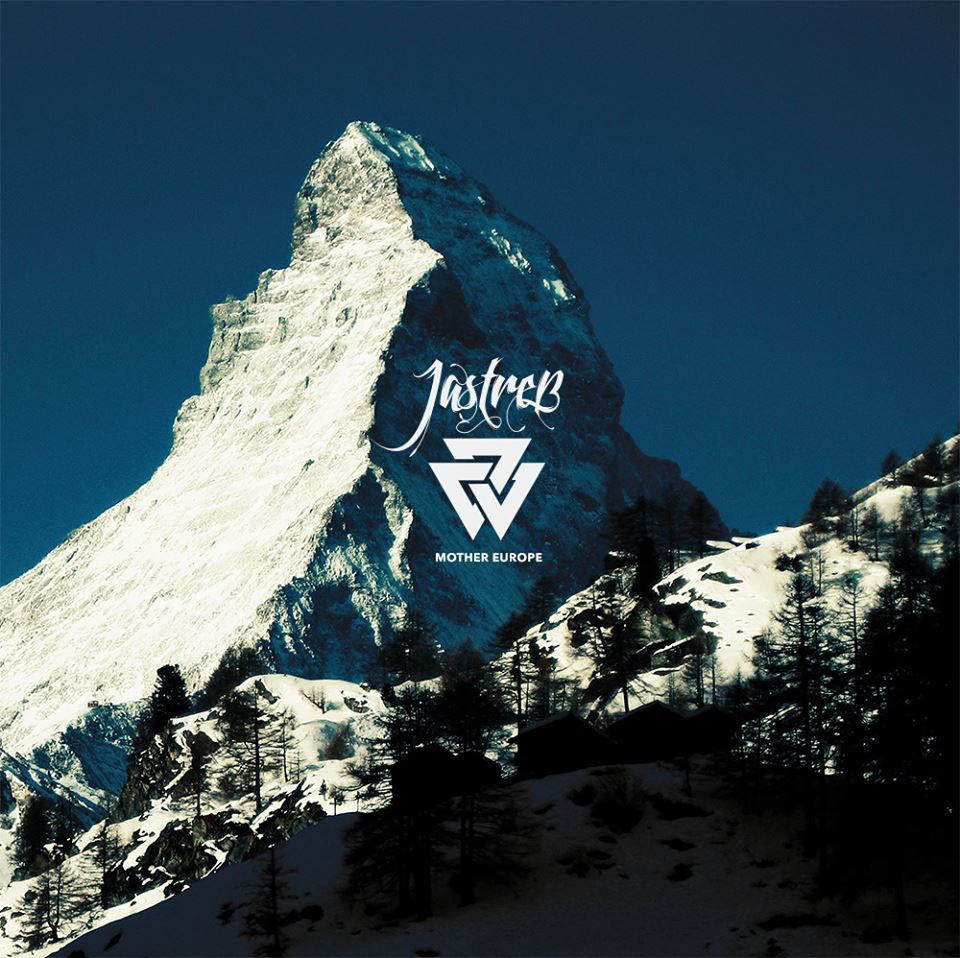
Progressive, mostly instrumental and hypnotic, Zagreb, Croatia, trio Jastreb released their self-titled debut as a single 36-minute song in 2012, and the follow-up, Mother Europe (on HauRucK), is no less ambitious. Vocals appear here and there, both from the core three-piece and a guest spot, but the heart of what Jastreb do is rooted in their ability to craft movements that pull listeners in without falling into lulls of unconsciousness – to wit, the repetitions of “The Black Mountain” seem still but are constantly building and moving forward – as well as in arrangement flourishes like synth, Hammond, sitar and violin among the shades of post-metal in “Haemmer” or the bleary, drone-backed opener “North,” which comes companioned by the subtle churn of “South” to end the album. Not necessarily psychedelic in a loose or jammy sense, but immersive, and purposeful in its variety; the sitar and guest vocals on “The Silver Spire” arrive just at the moment when one thinks they might have heard it all. Could say the same of the record itself, I suppose.
Passage of Gaia is the sixth album from progressive melo-doomers Arctic Sleep. A four-piece from Milwaukee including bassist/drummer/cellist/vocalist Keith D, guitarist Mike Gussis and vocalist Emily Jancetic (John Gleisner plays drums live), one is reminded both of the Floydian consciousness of mid-period Anathema (my go-to comparison point for this kind of stuff, admittedly) and the drama in Katatonia and some of Novembers Doom’s clean sections, but ultimately, Arctic Sleep emerge from the eight-track/54-minute DIY long-player with their own personality, measured out in the careful vocal collaboration between Keith D and Jancetic, songs like “Terra Vindicta,” “Green Dragon” and “Passage of Gaia,” and the varied structures between the more rocking “Terra Vindicta” and the build of “Solar Lament.” Through it all, nothing’s out of balance, and Arctic Sleep execute Passage of Gaia with the poise demanded by the style and the fact that it’s their sixth album, accomplishment suiting them as well as the melancholy of closer “Destroy the Urn,” which almost loses its restraint at the end. Almost.