The Obelisk Questionnaire: Kent Stump of Wo Fat
Posted in Questionnaire on March 6th, 2015 by JJ Koczan
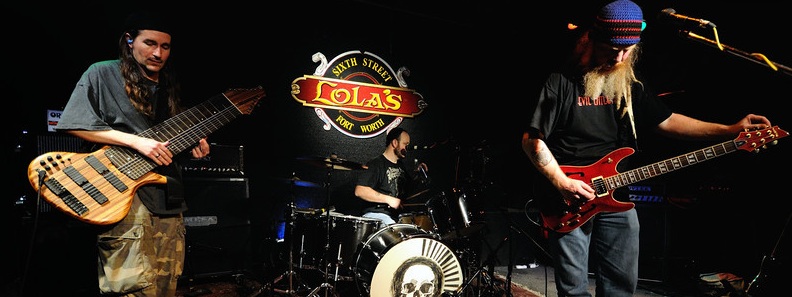
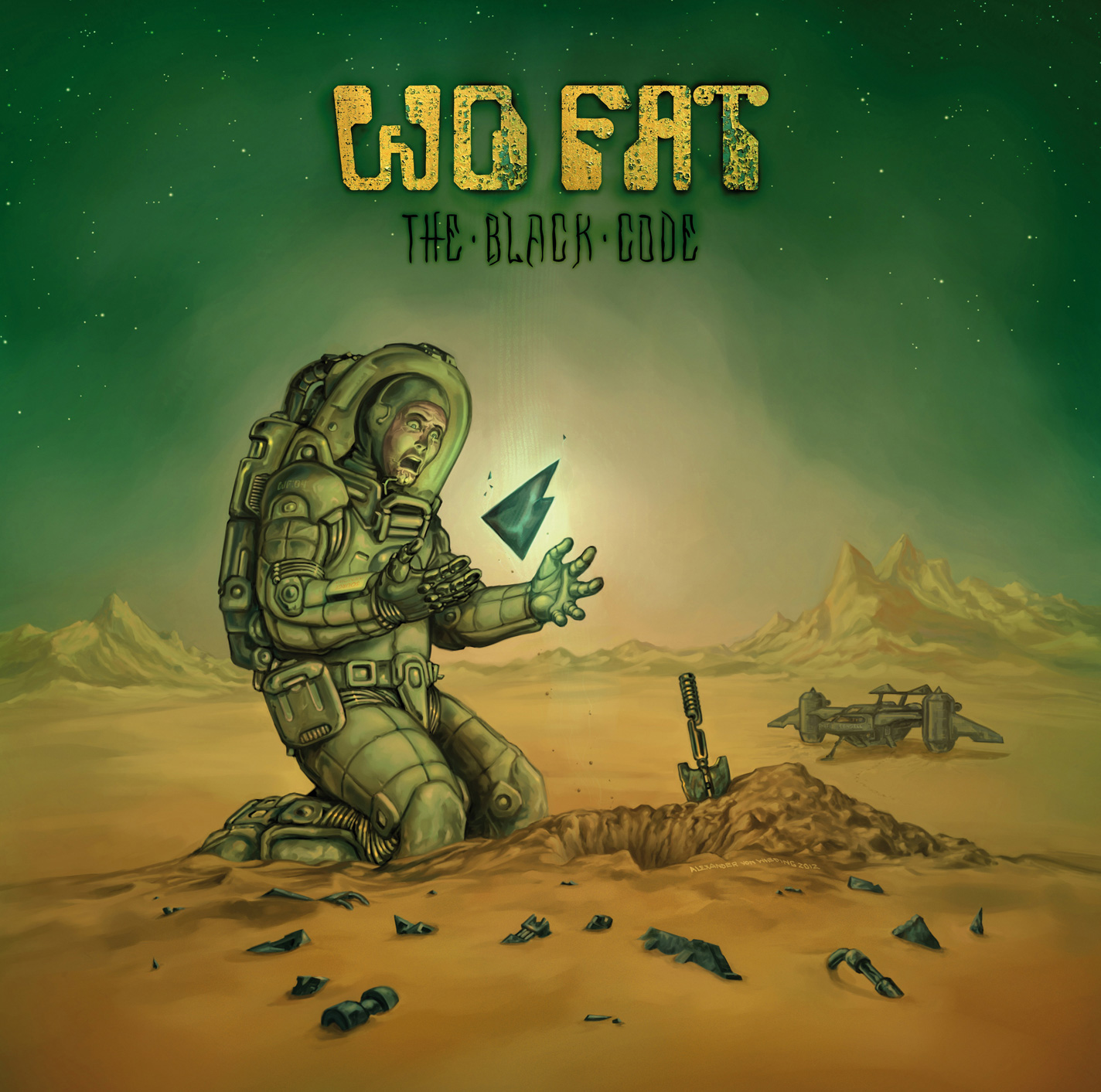
Across five records and nine fuzz-laden years, Dallas trio Wo Fat have become an institution in Texas heavy rock. Their latest album and second for Small Stone, The Conjuring (review here), is in many ways their strongest release to date, benefiting from the naturally-developed chemistry between guitarist/vocalist Kent Stump, bassist Tim Wilson and drummer Michael Walter, as well as from the self-sufficiency of the band recording at their own studio, Crystal Clear Sound, in Dallas. While their reputation has built steadily since the release of their 2006 debut, The Gathering Dark, and its ’08 follow-up, Psychedelonaut (review here), 2011’s Noche del Chupacabra (review here), on Nasoni, proved a particular breakthrough point, leading to the band’s signing to Small Stone for the next year’s The Black Code (review here), for which they toured in Europe for the first time, making their continental debut at the 2013 Roadburn Festival in Tilburg, the Netherlands (review here) and setting the stage for the triumph to come with The Conjuring and a return trip across the Atlantic, this one marked out by an appearance at last year’s Freak Valley in Germany.
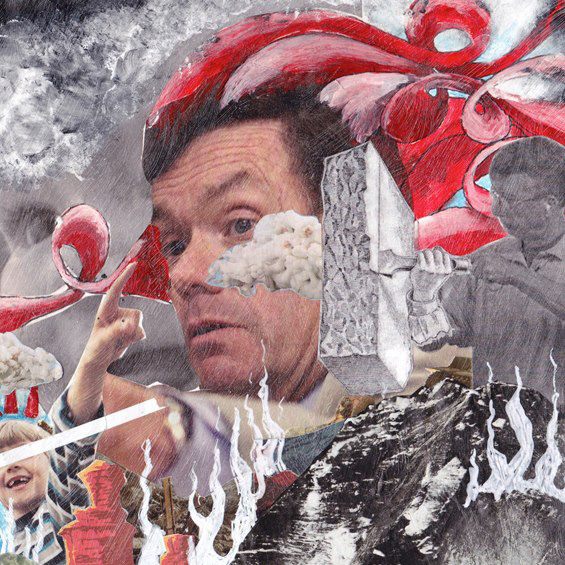
Wo Fat‘s latest release is a document of their set there: Live Juju: Wo Fat at Freak Valley will hit the public on March 17. Later this year, the band will also take part in Magnetic Eye Records‘ tribute to Jimi Hendrix, Electric Ladyland [Redux], covering “Gypsy Eyes.”
The Obelisk Questionnaire: Kent Stump
How did you come to do what you do?
Well, what I do is play music and I record music, which is how I make my living – recording music, that is. Music has always been a huge part of my life. Both of my parents are musicians, so it was something that was just ubiquitous and inescapable in our house when I was growing up. Never once in my life did I consider doing anything with my life other than becoming a musician and doing something relating to music, although the place I’m at now is not where I would have thought I would be when I was a teenager, or even when I was in college. My journey to the heavy and the riff is a bit of a circuitous one.
I went to college to study jazz and fully planned on getting out of college and going on to be a jazz musician. While at college, I got turned on to a much wider world of music by so many great people with widely varying tastes. I discovered punk rock and ‘70s funk and African music and all the great ‘70s rock and the ‘80s NY noise scene, and on and on. And most importantly, I really discovered the blues. I had always known a bit about the blues since I was heavily into jazz, but I became much more hip to a lot of blues musicians that I hadn’t previously checked out, and that eventually led me to realize that my whole life I’ve been drawn to music that comes from the blues – rock, funk, etc. That, along with a friend I had that was into all things heavy who got me listening to Sabbath as well as a lot of ‘80s hardcore and metal, led to my desire to make heavy blues music.
When I was in college in Denton, Texas, the music scene at that time was absolutely electric, and the vibe was very open and experimental. Punk rock and funk and metal with a jazz edge were all kind of mixing together and it was a really artistically open-minded vibe at the time, which I think shaped my thinking about music a lot. So eventually in the late ‘90s I discovered bands like Sleep, Fu Manchu, Nebula, Kyuss and all the Man’s Ruin bands and I came to the realization that this is the music, along with the blues, that speaks to me on the most primal level and this is what I want to play.
Describe your first musical memory.
My first musical memory is laying on our living room floor when I was very young, maybe four or five years old, and my dad putting on a record of Stravinsky’s Rite of Spring. It’s an amazing piece of music and it definitely left an impression on me. I think, if I’m not mistaken, when that piece was premiered in Paris it caused a riot. Stravinsky is pretty hardcore.
Describe your best musical memory to date.
I don’t know if I have just one best musical memory. I’ve got a lot of things that were landmark musical moments in my life though. Getting to play at Roadburn is without a doubt one of the best musical memories for me. Roadburn is such an iconic thing and it was the first show that we played on our first European tour, which was also the first time I had ever been to Europe and it was just kind of a surreal, epiphenal and mindblowing experience. It was amazing to walk into the scene there and see a whole bunch of people that are hardcore fans of the same music I dig. I had never seen that, at least not on that level, before.
You don’t see that kind of thing when it comes to this kind of music in the US. And to be performing at this amazing festival was just awesome, and also a bit nerve-racking at the same time. I remember going to see High on Fire’s set after we played and it was packed and the crowd was just electric and High on Fire sounded better than I’ve ever heard them before. I think they were just vibing on the amazing vibe of the fans. Same with Elder’s set, who I got to see a little later that night. The vibe from the crowd was so intense and Elder kicked ass riding that wave, I think. Amazing day.
I have memories of a lot of transcendental shows that I would put in the great musical memory category. Getting to see Sleep a couple years ago was bad ass. Sometime around 1997 or 1998 I went to SXSW in Austin, before SXSW totally turned into utter crap, and I got to see Fatso Jetson just destroy as well as an amazing showcase that had Fu Manchu and Queens of the Stone Age right before they hit big. There was a whole Man’s Ruin showcase that was killer.
When I was in college I got to see free jazz great Cecil Taylor. That was an absolutely kick ass show. He was just pounding the piano and pieces of the pads inside the piano were flying out as he was playing. And there were maybe 10 people there to see this free jazz icon. So many great shows that have shaped my thinking.
I also have a lot of memories of late nights fueled with alcohol, and other things, and hanging with friends who turned me onto heavy, heavy tunes that I wasn’t previously hip to. Some of these rank up there with the great musical moments to me – sitting on the couch and tripping out to amazing, life-changing jams… These things all are part of my story as a musician and music lover that has brought me to where I am now.
When was a time when a firmly held belief was tested?
That’s a tough question. I kinda feel like most my life, my beliefs and likes/interests have been juxtaposed between two opposing worlds. For example, my heavily schooled musical upbringing versus a more primal, less technical, organic approach to playing. Or, being a recording engineer like I am, most of my peers are gearheads focused on the technical aspects of engineering, which I am to a certain extent, but I am far more focused on the musicality of recording and finding ways to make a recording reach you on an emotional level, so I’m not über-obsessed with technical- and gear-related things about recording.
Also in this particular time, my political versus spiritual beliefs, that to me, are completely simpatico, are to most, seemingly at odds with one another.
Where do you feel artistic progression leads?
Ideally artistic progression leads to more artistic progression. Art and music is a neverending journey. I don’t think I’ll ever have arrived at a stopping place artistically because every move forward reveals more things to reach for and directions to consider. That’s the beauty of it. You’re never finished. You can just abandon the quest if you want, but there is always further to go.
How do you define success?
I think it’s being happy and doing what you makes you happy. Despite the fact that financially, life is a struggle for me, I feel like I’ve achieved a good amount of success in the sense that I’m playing music I love and people are digging it, we own a killer studio and my day job involves doing things that are artistic and deal with music and, on top of it all, I’ve got the most amazing wife who I’ve been married to for 18 years.
What is something you have seen that you wish you hadn’t?
On the one hand there’s probably a lot I wish I hadn’t seen, but at the same time, all those experiences contribute to making me who I am, although there are some things that I could probably do without ever seeing that wouldn’t change me too much. One thing that I wish I hadn’t seen is this: The studio that we run is in an industrial area of Dallas and there are a lot of stray dogs that run around in packs in that area. Seeing a stray dog is something I don’t like seeing to begin with because I love dogs and I want to help them all, but we’re full up at my house with dogs. My wife and I already have five dogs so there’s no more room at the inn.
Anyway, one day I saw a little Chihuahua-mix stray being harassed by a couple of big dogs. At first I thought they were playing, but then I realized that that was not the case and I wasn’t able to get to them to break it up before the larger dogs had inflicted a mortal wound on the little guy. It just breaks my heart that I couldn’t help him and it still pains me to this day to think about it. I hate to see the helpless get brutalized by the powerful, which, sadly, happens all around us every day.
Describe something you haven’t created yet that you’d like to create.
I really wish that I could draw and paint. I would love to be able to create art like Frank Frazetta or Boris Vallejo. I don’t think that will ever happen for me, though, because I don’t have any of those skills. There is, of course, much more music I’d like to create. I’m always wanting to incorporate disparate musical styles and influences together in our music, like Afro-Cuban music, blues, jazz and metal.
Something non-musical that you’re looking forward to?
Having dinner and watching hockey with my wife.
Wo Fat, Live at Freak Valley 2014