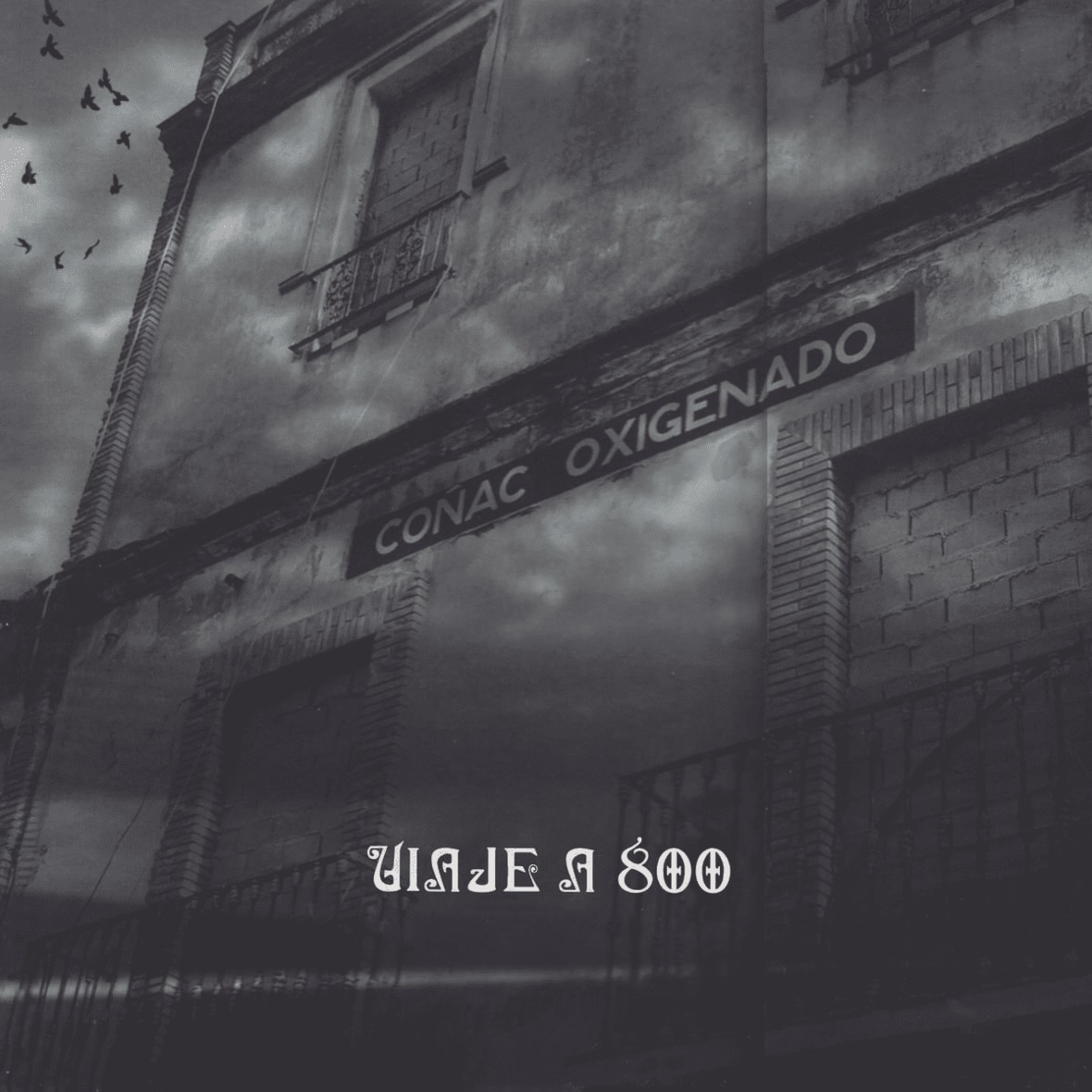
Serpent Throne, Brother Lucifer: (Apocalypse) Now or Never (Say Die)

Posted in Reviews on April 11th, 2013 by H.P. Taskmaster

Underrated Philly instrumentalists Serpent Throne have a talent for making songs memorable without the use of lyrics. Brother Lucifer is their fourth album, released through Prophase Records, and it follows behind 2010’s White Summer – Black Winter (review here) in furthering the four-piece’s wailing chemistry. As with the last record, guitarists and principle songwriters Don Argott and Demian Fenton lead the charge here while the rhythm section of drummer Sean-Paul Fenton (brother to Demian) and bassist Colin Smith provide a solid foundation of groove that I’d almost call an anchor were it not so able to shift at a moment’s notice. The eight-track/39-minute full-length basks in stoner guitar glories, taking classic metal harmonics and using them to elicit instrumental hooks that stay with the listener long after closer “Napalm Mourning” has faded. As with any sans-vocals release, Brother Lucifer relies heavily on its artwork to reinforce the atmosphere of its songs, and so from the jungle spectre and helicopter above the treeline evoking Apocalypse Now to the photo on the CD’s inside liner of helmeted troops crossing a rice paddy, it’s pretty clear Argott and Fenton had the Vietnam War on their minds when putting together the material. If there’s a direct narrative at work in the flow of tracks, I don’t know, but certainly titles like “Foxtrot Tango Whiskey” (a clever allusion to the acronym FTW, which in internet speak is “For the Win,” but I’d suspect is actually a reference to its original and more timely to the Vietnam-era meaning, “Fuck the World” – Serpent Throne’s prior and current ‘70s worship can stand as further argument in favor of the interpretation, and their history of bikerisms as seen on their 2007 debut, Ride Satan Ride), “Widowmaker” (the nickname given to the AR-18 rifle), “Fubar” (itself derived from a military acronym, “Fucked Up Beyond all Repair”), and “Napalm Mourning” (also a reference to Apocalypse Now, given to a play on words) feed into this theme, while side A’s “Devil’s Breath” and “Brother Lucifer” – even the CD tracklisting is broken into sides – comport with Serpent Throne’s long-established penchant for heavy rock Devil-worshiping traditionalism. Second cut “Enough Rope to Hang Yourself” and side B’s corresponding “As the Crow Flies” seem not necessarily to belong to either sphere, but neither are they out of place, the former answering the opener’s bombastic crash with some of Brother Lucifer’s most landmark leadwork and “As the Crow Flies” offering an acoustic build into driving riffs that set up the psychedelia to come on “Fubar,” each functioning to serve the album’s overarching flow.

Which is paramount. Foremost, Brother Lucifer sets up the listener for a direct, album-long ride. Leaner and a full six minutes shorter than White Summer – Black Winter, it’s also more focused, so that as mellotron emerges to add drama to side B, the effect can be genuinely startling after side A’s rush, Fenton and Argott playing leads off riffs  on “Enough Rope to Hang Yourself” in a way that sets up Serpent Throne’s chief dynamic. They are guitar rock, through and through, but as up front as the six-stringers are, it’s pivotal to understand the role of Smith’s bass and Sean-Paul’s drums in establishing the sway and swagger underlying the screaming leads that typify so much of the band’s approach. In harmony, the two guitars are given to triumphant runs, but Brother Lucifer has less raucous moments as well, not so much in “Foxtrot Tango Whiskey,” which makes no attempt to interrupt its movement from one killer riff to the next, but in the second half of “Enough Rope to Hang Yourself,” and in the midsection of the subsequent ultra-groover “Devil’s Breath,” they hint at the flourish to come with what sounds an awful lot like Hammond scratch backing airier leads en route to bookending with a stop and return to the nod-worthy groove that began, Demian and Don adding a little soul to the slower final run. And though its title might not immediately feed the Vietnam/military theme, the snare march and dirge leads that introduce “Brother Lucifer” definitely do, prior to gong-ing into the song proper, which at 6:19 is the longest on the first half of the album. This is mirrored on the second half with “Napalm Mourning,” which is the longest on Brother Lucifer as a whole at 6:25, and one more show of Serpent Throne’s sense of structure – of course that’s audible throughout as well. The title-track riffs out for a while in a progression less bouncing but consistent with “Devil’s Breath” and drops into a contemplative, quiet break soon to be built up with (what else?) soloing accompanied by mellotron strings, casting a drama that crashes and fades to end side A, leading to the Iommian solo that starts “Widowmaker” before the Iron Maiden-style pop and chug takes hold.

Read more »

Tags: , , , , ,

Endless Void, Apparitions: Strange Things Abound

Posted in Reviews on April 9th, 2013 by H.P. Taskmaster

The first thing to know about Endless Void? There’s not much to know. The one-man project of multi-instrumentalist/vocalist James Owen has opted out of the internet sphere, so that even the most vigorous of Googling only results in a few hits from others writing about the band and nothing at all from Owen himself. Plenty of bands claim to eschew the social media sphere, far fewer actually do, and it means that when it comes to the background on Endless Void, it’s just about nil. There wasn’t a band, then there was. The late-2012 Apparitions demo was preceded by an earlier outing, 2010′s Final Doom, released through a mysterious AIF Records, the only website for which I found seemed to promise an all-in-one solution to becoming a rock star. Not sure if it’s the same label or not. Hope not.

I suppose there’s something to be said for trying to keep a band obscure. I’m not sure what, but something. Certainly kvlt-ish posturing has done favors in street cred for any number of acts over the last couple years, but I don’t know if that’s Endless Void‘s trip or not. More relevant, Apparitions is comprised of four grim, lo-fi cuts — “R.I.P./March of the Dead,” “Spiritualistic Medium,” “Bereaved” and “Apparitions and the Undertaker” — that bask in darker NWOBHM riffing and vague doomed allusions. Owen seems to be working from a base of Witchfinder General crunch, but the production on the tracks is rougher, giving the 20-minute outing a grim, cassette-ready vibe. The sort of pretentious vibing in “Spiritualistic Medium” — the title’s extra “-istic” where “spiritual” would’ve sufficed, for example — I’d trace back to a latent black metal affinity, but there’s next to none of that in the actual sound of Apparitions, which gives little indication of Endless Void being a one-man outfit as “R.I.P./March of the Dead” gets underway with fittingly metallic circumstance, the drums ’80s echoing behind the lyric tale of zombies coming back to life and, well, marching.

“Spiritualistic Medium” keeps picks up the pace and reminds of some of Iron Man‘s classic moments, more metal than doom, but the swagger of “Bereaved” is probably the highlight of the demo, stomping and grooving with more NWOBHM guitar compression and stops in the drums that only add to the swing. Vocally, Owen mostly follows the guitars (his), but the thicker distortion of “Apparitions and the Undertaker” to close out Apparitions is worth following. Structurally, the demo as a whole is straightforward, but a faithful representation of metal’s 80′s roots for all that, and Owen quickly ends the title-track to fade up a line of organ (presumably that’s “The Undertaker,” though I’ve not yet confirmed whether or not it’s the wrestler’s entrance theme) and give a last-minute injection of weirdness to the proceedings. Weirdness wasn’t exactly lacking, however, but even in context with the rest of Endless Void‘s oddities, the organ is a bit unexpected and its entrance awkward.

Still, if it’s rough, well, it’s a demo and that’s what it’s there for. Word on the street has it that Owen is looking to put a full lineup together, so although he’s made it difficult to get in touch with the band or track down more info, total misanthropy isn’t the aim. I guess we’ll have to see how it finally pans out, but for now, if you can manage it, Apparitions is a curio at least worth a few minutes of listening time, particularly if you’ve ever found yourself mourning the tape-trade treasures of yesteryear.

Endless Void, “Spiritualistic Medium”

Tags: , , , ,

Kadavar, Abra Kadavar: Foundation and Progress

Posted in Reviews on April 9th, 2013 by H.P. Taskmaster

Berlin trio Kadavar have worked quickly to become one of the most prominent acts in the European heavy underground. Their 2012 self-titled debut sounded so organic that even the mp3s had an analog hiss, and while they carried their songs across with an ultra-natural feel, it was the confidence in the material and the spontaneous feel of the performances that made Kadavar’s Kadavar such a watershed release. It was my pick for the year’s best debut; a lean but frighteningly cohesive 34-minute full-length that showed potential as much as it made an impact on its own. Touring and a split with Aqua Nebula Oscillator followed later in 2012, and Kadavar – vocalist/guitarist Wolf Lindemann, Rivoli bassist Mammut and drummer Tiger — were picked up by Nuclear Blast to join the ranks of Graveyard, Orchid and Witchcraft in the label’s growing stable of tube-amped heavy rockers. Thus it is that their second album, Abra Kadavar, arrives with no small measure of anticipation. Some immediate differences: the sophomore outing is three tracks and about eight minutes longer than the first one, clocking in at a still-vinyl-ready 41:16. The distinctive drum sound of Tiger’s kit – the sort of fuzz that came off his snare with each tap – has abated, though the snare hits hardly sound punched in and an overall natural, live feel has been maintained between both the drums and Mammut’s bass, which was a standout element of the first record and remains so on Abra Kadavar. As regards Lindemann’s vocals, they are forward in classic rock tradition, but more assured and mature for the band’s road time, and he skillfully follows his own lead lines in the second half of opener “Come Back Life,” the trio having already enacted a formidable shuffle en route to the closing solo. Throughout, there is clear, resonant stylistic growth and as much as Abra Kadavar proves the first album wasn’t a fluke, it also shows the three-piece aren’t necessarily limited to the driving ‘70s heavy rock that they nonetheless so effectively convey on the single, “Doomsday Machine.” The self-titled ended psychedelic and extended with the eight-minute “Purple Sage,” but though they’re shorter, the closing trio of “Liquid Dream,” “Rhythm for Endless Minds” and “Abra Kadabra” show a nascent sonic diversity in Kadavar’s approach that incorporates rocking organ, psych swirl, and a heavy jamming sensibility that underlies much of the band’s work to-date, but has yet to be so blatantly expressed.

Evolution is clear too from the start of “Come Back Life,” which gives Abra Kadavar a no less effective initial groove than “An Industry of Murder” brought to Graveyard’s 2012 third album, Lights Out, despite having little in common in terms of sound. Immediately, Mammut’s bass offers rich, warm low end playing off Lindemann’s guitar, though it winds up being the energy in Tiger’s Bonzo-type fills that propels the track. They arrive quickly at a hook with a build and the lines, “Hello darkness my old friend/I won’t talk to you again,” (or somewhere thereabouts) and repeat the progression twice, but then suddenly it disappears in favor of a return to the verse, Lindemann’s lead lines acting as a riff while Mammut and Tiger hold the rhythm together, and subsequent build into a stop-start stomp progression in which the title line is delivered. It’s a rich, near-irresistible groove, fit to open the album, but I keep wondering when that Simon & Garfunkel referential part will return – perhaps as transition out of the last verse into the final solo – and it never does, leaving the structure more open than it might’ve been on the last album as “Come Back Life” crashes to its finish and fades to give way to the start of “Doomsday Machine.” Certainly the single has all the chorus potency one could possibly ask from Kadavar, but even its placement as the second track instead of the first – the debut having opened with its strongest chorus in “All Our Thoughts” – shows the band are trying something new with their second outing. Mood varies throughout on an almost per-track basis, though songs are consistent in general sound and production, but “Doomsday Machine” is a straightforward highlight, its task and structure simple in execution of a tension-building verse and a payoff chorus of driving riffs and classic heavy grooves. “Doomsday Machine” is almost immediately familiar, true to its intent, and offers few frills to a decades-tested formula, an extra layer of Lindemann’s guitar toward the last verse seeming like a grand addition. Following a final chorus, Kadavar end the single instrumentally, the guitar and bass intertwining leads leaving room for a transitional drum fill that’s a standout, two-second solo hinting of something much more lasting perhaps when delivered on stage.

Read more »

Tags: , , , , ,

Uncle Acid and the Deadbeats, Mind Control: Doing the Devil’s Work

Posted in Reviews on April 8th, 2013 by H.P. Taskmaster

After debuting in 2010 with the so-rare-it-barely-exists Volume 1 and following it in 2011 with the landmark arrival that was Blood Lust – an album for which one can still hear the hyperbole echoing on the wind if one listens just right – British horror rockers Uncle Acid and the Deadbeats emerge with another round of malevolent fuzz on Mind Control. Though Blood Lust was reissued by Rise Above last year, Mind Control marks the Cambridge four-piece’s debut proper on the label (Metal Blade in the US), and if the response to the advance single “Poison Apple” and the sold-out live debut at London’s The Garage venue are any indication, the monstrous hype that swelled for Blood Lust is primed to take hold again for the new collection, which is longer at nine tracks/50 minutes than the second album. More importantly than the visceral nature of the blind praise it’s almost predestined to receive, Mind Control showcases some distinct changes in Uncle Acid’s approach, taking their late-‘60s garage fuzz to far-out psychedelic ranges while also balancing those influences with the strong pop sensibilities that came to fruition the last time out, so that a song like the later “Valley of the Dolls” is languid, fuzzed mellotron’ed and meandering – also doomed – but still proffering one of Mind Control’s strongest hooks. While one of the most distinct aspects of the band’s sound two years ago was their ability to capture a classic horror aesthetic in their songwriting, Mind Control is less tied to that single idea specifically, and though it doesn’t want for foreboding atmosphere or an underlying sense of ill intentions, the impression is delivered through what’s at times a strikingly sweet package. To wit, “Follow the Leader,” which owes more to The BeatlesRevolver than to the Hammer House of Horror, or the progressive soloing that arises in the second half of the earlier “Desert Ceremony.” They’re on a different – though no less individualized – trip, still putting the overarching affect of the material at the fore rather an any one member’s performance, but taking the means of their methods to new and more evolved ends.

One of the great strengths of Blood Lust was its use of classic pop structures, and that’s something Uncle Acid and the Deadbeats have carried over into Mind Control as well, though as much as that album transferred verses and choruses into felonies of surgical precision, some of these songs’ best moments are their most drawn out. The opener and one of the longer cuts, “Mt. Abraxas” (7:09), hints at some of the psychedelia that comes up later in the closing trio, but really does most of its work in heralding the tonal consistency with the band’s prior outings while also showcasing the uptick in production value accomplished through working with Jim Spencer at Chapel Studios in Lincolnshire, showing also in its midsection just how much of Uncle Acid’s tonality – fast becoming their signature – is owed to circa-1974 Black Sabbath, the guitars taking on classic Iommi layered interplay between lead and rhythm lines. I was left wondering though why the song had been chosen to lead off Mind Control until the crashes and slowdown after the 4:30 mark that leads the way instrumentally through the remainder of the track, which hone directly in on Uncle Acid’s psychotic cabaret stomp and give the record one of its most lasting grooves, duly ridden. Perhaps also “Mt. Abraxas” is meant to signal a departure from the form of Blood Lust, since it functions not so much as a direct chorus hook as did that album’s launch, “I’ll Cut You Down,” but instead as more of a lead-in to the rest of this album as a whole, the pace picking up with the ensuing “Mind Crawler.” With a synth line buried beneath the guitars, bass and drums to offer a sense of urgency fitting the more upbeat tempo, “Mind Crawler” is both a strong hook and an immediate contrast to the opener, finding companionship shortly with the more metallic “Evil Love” in a quicker rush that builds to a stop in the second half before repetitions of the title at the end give it a second chorus as much as an outro. The swaggering jaunt of “Poison Apple” follows, its initial verse following a simple pattern of proclamations rounding out with the lines, “Don’t you worry baby, you’re safe with me/I’m the poison apple in your tree.” From there, it’s riffy groove, spiders in the brains, infections and a host of other threatening images to go with one of Mind Control’s best basslines and a toe-tapping rhythm. The vocals, almost always delivered by more than one member of the band at once, are rarely at the fore, but present enough in the mix to carry across the hook of “Poison Apple” well, setting up the more spacious “Desert Ceremony,” which takes some of the Sabbathisms that showed up in “Mt. Abraxas” and makes them the core of the progression.

One can look at Mind Control as functioning on a couple different levels. Cuts like “Mt. Abraxas,” “Follow the Leader,” “Valley of the Dolls” and “Devil’s Work” are longer, and particularly in the case of the last three, working in more psychedelic realms, where “Mind Crawler,” “Poison Apple,” “Evil Love” and “Death Valley Blues” keep a more straightforward – structurally – feel, the latter nonetheless providing transition atmospherically into the rest of side B’s freakout. At very least I’d argue that’s the case, and if so, “Desert Ceremony” is where the two sides of Uncle Acid’s sound meet and get down on some drawn-out lysergics while smoothly shifting into some of the album’s most satisfying riffing, the guitars harmonizing here and there and setting a table for the end of the first half that arrives with “Evil Love.” Classic proto-NWOBHM chugging – more biker movie than otherworldly horror creep, but well done – shows up in the chorus, but the sound is stripped of the lushness that “Desert Ceremony” hinted at in its midsection, and that’s the biggest change. The momentum already established by the time “Poison Apple” ends carries through “Desert Ceremony” to “Evil Love,” so that the shift back to a faster tempo isn’t jarring, and the simple chorus of “You need our love/Our evil love/You are dear/To our purpose” (that third line might be something else) showing off the band’s ability to make the most out of near-minimalist lyricism. The song ends cold, marking a distinct break between the first halves of Mind Control even on a linear medium (CD or digital), and “Death Valley Blues” starts with a quiet introduction to its chorus guitar line, establishing a theme with “Desert Ceremony” even as the sweet first verse turns sinister with the heavier guitar that enters for the chorus at full breadth. Its threat made clear, “Death Valley Blues” plays off the I’m-harmless-watch-me-kill-you contrast of the airier pop verse and the vicious chorus, moving after a couple turns through to a near-vaudevillian riff that seems to echo the ending “Mt. Abraxas” even as vocals are introduced over top, the chaos coming to a head as the murderous vibe loses consciousness in its own repetitions, crashing and ringing out to start “Follow the Leader” from a base of total silence.

Read more »

Tags: , , , , ,

Blaak Heat Shujaa, The Edge of an Era: Don’t Forget to Breathe

Posted in Reviews on April 5th, 2013 by H.P. Taskmaster

Since the release of their 2010 self-titled debut, Blaak Heat Shujaa have moved from Paris to Los Angeles — with a stop in New York City as well for a time — have honed their desert rocking chops on tours with Fatso Jetson and Yawning Man, have signed with Tee Pee Records, completed a documentary series about their recording sessions with the venerable Scott Reeder and have taken those sessions and split them into two releases: the late-2012 The Storm Generation EP and their sophomore full-length, The Edge of an Era — shooting videos and playing gigs all the while as well. With that much going on, it’s not much of a surprise that The Edge of an Era is a different beast than was the self-titled, but what is striking about the album is how cohesive it is. On first listen, it makes sense as to why the trio — guitarist/vocalist Thomas Bellier, bassist Antoine Morel-Vulliez and drummer Mike Amster – divided the output from the Reeder sessions. The Edge of an Era focuses is on a singular atmosphere that’s served well by its six component tracks; the material on The Storm Generation (review here) wasn’t lacking for quality, it just didn’t fit. And where the band probably could’ve forced the issue and included most of those songs here — a move that might’ve put the album’s runtime more in line with the 63-minute self-titled (review here) instead of the vinyl-friendly 41:27 the finished product clocks — The Edge of an Era is unquestionably a stronger whole for the structure of its parts, running social/political lyrical themes through organic tones with a marked flow from piece to piece that nonetheless shows development in the experimental side that showed itself on the prior outing. Fatso Jetson‘s Mario Lalli donates vocals and lyrics to the penultimate “Pelham Blue,” making that track an automatic standout and highlighting just how much influence Blaak Heat Shujaa has culled from the desert in which it now rests its collective head, and poet/tourmate Ron Whitehead, who contributed to The Storm Generation as well, launches the album with “Closing Time, Last Exit,” a rising-toward-clarity free-association spoken word in which gonzo, Jesus, Buddha, Hunter S. Thompson and other mythological figureheads are namechecked before we arrive at the starting point just under a minute later: “America is an illusion.”

A fun bit of knowledge to drop, rife with Baby Boomer shock value and wake-you-up-to-challenge-what-exactly exclamation (it seems a fruitless endeavor to rag on the gonzo types; that cat’s been out of the bag since well before I came along to call it self-indulgent), but more importantly, it sets up a good amount of the perspective from which The Edge of an Era is executed. The point of view, like the band, is young, but coherent, and met with fuzz not driven so much by a heavy psych wash of effects in Bellier‘s guitar, but by a dry-sand clarity that finds root in Morel-Vulliez‘s basslines while Amster‘s drumming holds the songs together allowing the other two players to wander over the course of longer jams like that emerging from “The Obscurantist Fiend (The Beast Pt. I),” the initial rush of which takes hold immediately following Whitehead‘s last pronouncement. Time and again throughout the record, Blaak Heat Shujaa prove adept at balancing stillness with movement instrumentally — Bellier‘s post-Cisneros vocal approach is suited to either, frankly, though in the faster parts he seems more inclined to let the guitar do the talking — and that begins with “The Obscurantist Fiend (The Beast Pt. I)” as a slowdown brings hypnotic repeating of a start-stop progression soon to serve as the foundation not just for Bellier’s verse, but the long instrumental stretch that follows. Amster and Morel-Vulliez make it work, the former with a kind of descending progression that winds up on the crash with each cycle as the latter works to gradually expand the base from which the guitars take flight. It is one of the record’s most melodically satisfying instrumental stretches that ensues, rising and cascading in tempo with a solo taking hold before arriving at starts and stops almost frenetic in their tension thanks to Amster‘s fills, double-kick and so on. At seven minutes, they launch into the next stage, bringing the groove to a head as Bellier and Morel-Vulliez align to ignite the melodic apex before sleepily jamming the way out of the song and directly into “Shadows (The Beast Pt. II)” via a sweet bassline worthy of the quieter moments of any Brant Bjork record you might want to name, the actual progression keeping the same starts and stops from the prior cut, but changing the context to something altogether more comforting.

Read more »

Tags: , , , , , ,

Moss, Horrible Night: The Bleeding Years and Other Tales of Terror

Posted in Reviews on April 4th, 2013 by H.P. Taskmaster

It’s been five long years since Southampton, UK, doomers Moss debuted on Rise Above Records with their sophomore album, Sub Templum, and though the band issued a couple EPs and the Never Say Live live album since that release, they’ve been silent since 2010 and emerge now with a new outlook on the full-length Horrible Night. Still aligned to Rise Above, the trio of Olly Pearson (vocals), Dominic Finbow (guitar) and Chris Chantler (drums) have shifted away from the deathly influences that typified their many earlier works in favor of cleaner singing and a darkly psychedelic, cultish sprawl. Where Sub Templum was comprised of four tracks totaling nearly 74 minutes, Horrible Night is more efficient on the whole, clocking in at just over 54 with six tracks, none of which go much past 11. That’s quite a change from songs like “Gate III: Devils from the Outer Dark,” which closed the prior outing at an insurmountable 35:31, but the bigger shift is in Moss‘ actual aesthetic, which is more atmospheric than in the past and echoing its abysmal feel rather than bludgeoning with volume. In some ways, Horrible Night has more in common with latter-day Electric Wizard than did Sub Templum, which was produced by that band’s vocalist, Jus Oborn, but Moss show comparatively little of the same psychotic pop fascination. Songs here like “Dark Lady” and opener “Horrible Nights” have choruses that are memorable and engaging as much as this kind of feedback-drenched morass can be or wants to be, but they’re never rushing to get to them. Or to anywhere else, for that matter.

That’s one factor that Moss have kept consistent with their prior output — they are slowMoss take ultra-thick plod and let it ride for however long they feel it needs to, and while one could easily consider Horrible Night an overall more manageable or accessible record than its predecessor, it’s hardly a comfortable listen. Weary, sluggish groove pervades the verse of “Horrible Nights” (note the ‘S’ at the end, where the title of the album is singular) as Pearson tops Finbow‘s guitar with Sabbathian lines, buried deep but still cutting through the mix, caked in reverb. I suppose compared to some of what Moss has done, this is fast, but put to the scale of most anything else, its lurching still qualifies as extreme — and it’s also probably the most accessible moment of the record — even as it moves into wailing guitar leads and malevolent screams in the second half, feedback setting a bed for chaos reminiscent of early The Wounded Kings at their bleakest or the first Cough full-length. If I’m comparing Moss, who’ve been around for over a decade, to bands getting their start, it’s because they essentially are. Horrible Night covers new ground for them, and even if on paper, their latest work shares elements they’ve used in the past, the reality of the situation makes for a much, much different listen, “Horrible Nights” even going so far as to return to its verse at the end, giving the second half’s chaos a sense of purpose and symmetry as the fadeout leads to the beginning of “The Bleeding Years,” even slower and more ill-meaning.

Read more »

Tags: , , , , , ,

Live Review: Borracho, Been Obscene, SuperVoid and Clamfight in Philly, 03.30.13

Posted in Reviews on April 2nd, 2013 by H.P. Taskmaster

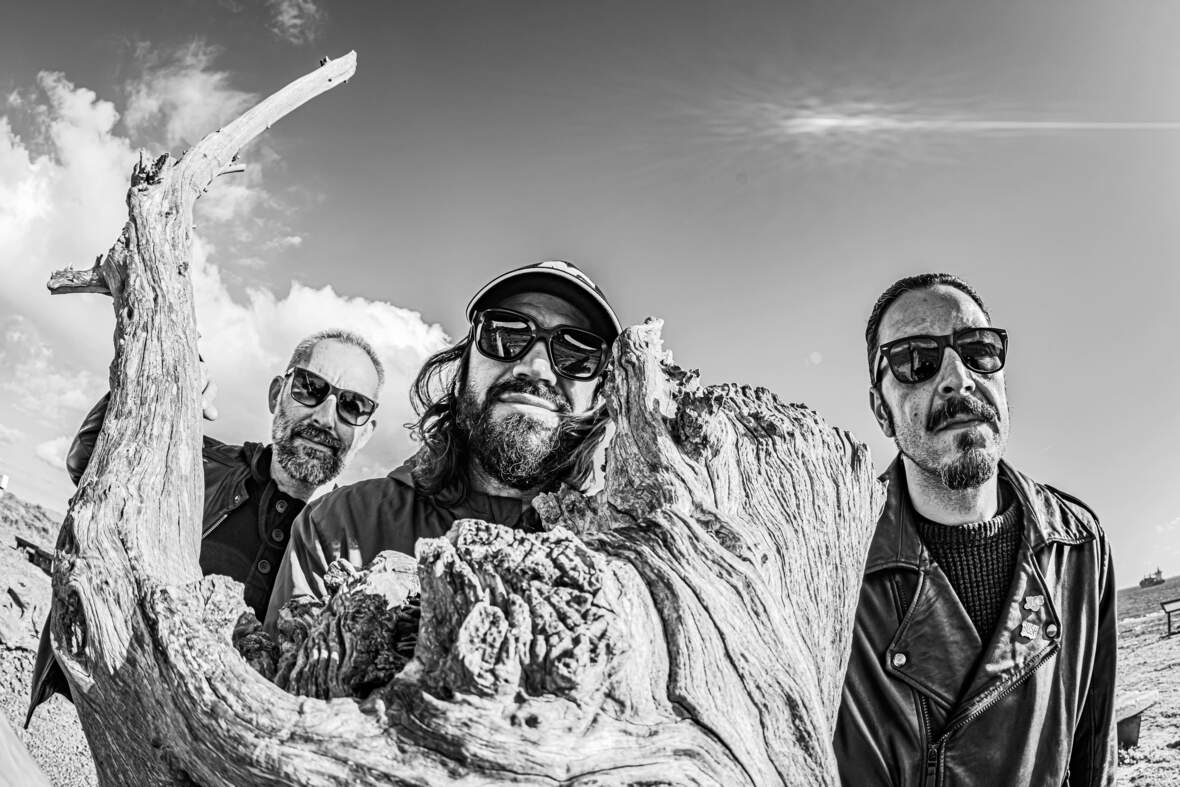
I was asked to take the above pic shortly before Borracho went on at Kung Fu Necktie Saturday night. It was the last of three shows the three bands in question — Borracho, Pittsburgh’s SuperVoid and Austria’s Been Obscene – were playing together, so it was an end-of-tour kind of deal. Been Obscene had done a fuller tour out on the West Coast alongside Ape Machine, and with just the trio of dates on the Eastern Seaboard before they headed back to Europe, I felt lucky to catch them as I did. They had just finished playing, second after SuperVoid with Borracho still to come and current Maple Forum interlocutors Clamfight closing out the night as the local act on the bill.

Actually, they weren’t closing out the night, exactly. Word had come down earlier in the week that the venue had a late-night gig starting at 11, so the four bands would all need to be finished by 10:30PM. On my end, it was nothing but convenient; from a morale standpoint, it’s much easier to start the two-hour drive back north from Philadelphia at 11PM than it would be at 1AM or sometime thereafter. If it was the final gig of three before I left the country, say, or even if I’d come from Pittsburgh or Washington D.C. to play, I might have felt differently about it, but a club’s gotta stay in business to put on good shows in the first place, and if that’s what it takes, then so be it. Like I said, it worked to my benefit as someone with a long ride ahead.

Speaking of convenience, the trip south to Philly also provided a decent excuse to stop at Vintage Vinyl in Fords, NJ, and pick up a few odds and ends that I’ll have more on hopefully later this week. Even with that detour, I got to Kung Fu Necktie early. One thing about these last several months of not drinking: It’s way harder to kill time at a bar — even after paying a cover to get in — if you don’t order a beverage. I met and chatted with the cats from Been Obscene for a while, who’d been staying in New York and told me they had a new song included in their set called “Pilot to Paris” that turned out to be one more reason I was glad I made the trip.

Soon enough, SuperVoid got going with some new material of their own along with the screamier “Wake the Smoke Jumper” from their 2012 debut EP, Endless Planets (review here). These three shows represented the first the band were playing outside their native ‘burgh, so it was expected that the five-piece would seem to be getting their bearings on stage, but they still ran through their songs well and showed personality from within their double-guitar framework. Vocalist Brian showed more melodic range live than on the EP, which bodes extremely well, and the interplay of lead and rhythm guitars balanced metal and rock influences while the rhythm section of John (bass) and Greg (drums) locked in heavy foundational grooves. At one point, they seemed to find their niche between Kyuss and Mastodon, and if that’s going to be their starting point for whatever might come next from them, they could do a hell of a lot worse.

I’d have been happy enough to watch a show with Borracho, Clamfight and SuperVoid on the bill, and might’ve even hiked to Philly to see it, but the chance to catch Been Obscene, and catch them so close to home, was something special even before they started to play. Their two albums to date — 2010′s The Magic Table Dance (review here) and 2011′s Night o’ Mine (review here) — have gotten multiple return visits, and though their set was short, they represented themselves well for the growing populace who made it out to Kung Fu Necktie. There was an eight-band fest happening upstairs, so people were coming and going between the one and the other, but I didn’t move.

I know I already said it was something special to see them make the trip over, and more so to be able to see the last show, but really, it’s worth saying again. Been Obscene played four songs — opening with “Alone” (it also could’ve been “Snake Charmer,” and I’m hoping someone tells me which, as both have been stuck in my head) before hitting their stride in “Demons,” unveiling the jagged desert hues of “Pilot to Paris” and closing out with Night o’ Mine opener “Endless Scheme,” the clarion lead lines of which were presented perfectly fuzzed in spite of the fact that the four-piece — guitarist/vocalist Thomas Nachtigal, guitarist Peter Kreyci, bassist/backing vocalist Philipp Zezula and drummer Robert Schoosleitner – were running through Borracho’s gear. But even as an abridged sampling of their warm heavy psych grooving, it was immediately clear they were running on a different wavelength. I dug the hell out of it, and was reminded of some of the other acts from modern European fuzz set that I’ve been fortunate enough to see: Sungrazer, The Machine, Mars Red SkySamsara Blues Experiment and of course the godfathers of the sound, Colour Haze.

As someone who enjoyed how Been Obscene grew into their sound on Night o’ Mine, to be able to see them bring that sensibility and confidence to the naturalist jams of “Demons” from the first album, Nachtigal‘s “Watch the weather changing/Is it my fault” proving standout lines that carried me home after the show nearly as much as I-95. “Pilot to Paris” was less outwardly jammy, featuring some solid backing arrangements from Zezula on vocals, but still had room for a bit of meandering amid a straightforward Queens of the Stone Age start-stop given vitality and fitting attitude from Kreyci rocking out with Schoosleitner. I’m sure it wasn’t the best gig they played in the States — doubtless that happened out west in a clime more fitting to the open space in their aesthetic — but who the hell knows when or if they’ll come back, and even if they do, aren’t the circumstances bound to be different? On a certain level, every show is a once-in-a-lifetime experience. This one more so than many.

When they were done, it was picture time as noted above. Borracho were in the process of setting up their gear, but they ran out to take part and then back inside in time to start their set. Similar to the last couple times I’ve seen them — in October in Manhattan and at SHoD in Connecticut — they played as a trio, but in the last few months, guitarist Steve Fisher has further stepped up as a vocalist in place of the fourth in their four-piece, Noah, who last I heard was out of the country and may or may not still be involved in the band on some level. Either way, Fisher — whom I’ll admit I didn’t at first recognize without his long beard — more than held his own in the frontman role, taking on Noah‘s parts without doing an impression of the missing party and sounding comfortable as well in what I discerned to be newer material, presumably from a forthcoming release.

I’d dug them as a mostly-instrumental outfit, but as Fisher tossed off a joke about memorizing lyrics and bassist Tim Martin and drummer Mario Trubiano ran through “Concentric Circles” from their 2011 debut full-length, Splitting Sky, they made a more than solid power trio, and I’d be interested to see how they continue to develop if indeed they stay a three-piece. By the time they were done, Kung Fu Necktie was pretty full. It hadn’t been dark outside for all that long. The SuperVoid and Been Obscene guys were hanging out — I bought their two albums on vinyl and paid in Euros I had leftover from Roadburn last year — and people were up and down the stairs, in and out of the door, back and forth. Some knew what was coming, some were entirely unassuming.

And then it happened. Like the primordial riff-thrashing bastards that they are, Clamfight took the stage. Having helped release their second album, I Versus the Glacier (buy one here), on The Obelisk’s in-house semi-label, I won’t even feign impartiality where they’re concerned, but as I see it, a Clamfight set is always a good way to cap an evening. They got off to a rough start — bassist Louis Koble playing usual opener “The Eagle” where guitarists Sean McKee and Joel Harris and drummer/vocalist Andy Martin had decided to go with “Mountain” instead — but once they locked it in, they were lethal as ever. They dipped back to their first album, 2010′s Volume 1 for “Viking Funeral” and the set closer “Rabbit,” but the highlight for me was new song “Block Ship,” which in the span of about five minutes affirmed my suspicions that I Versus the Glacier was the realization of just a fraction of their overall potential. No bullshit, I got chills up my spine twice.

But as I said, I’m hardly an unbiased observer, so take that for what it’s worth. When their whiplash melee was done, I said a few quick goodbyes and headed back to my car. I know it wasn’t the optimal situation for the bands involved, but for me, it was my favorite kind of show — not because it was early, because it was something I may or may not ever get the chance to see again. Compared to Floor the evening prior, it wasn’t nearly so crowded in Philly, but doesn’t that just make it more exceptional for the people who are there? Maybe it’s the wrong attitude, but I think it does. Been Obscene were obviously a standout, but the whole night delivered, front to back. It was everything I could’ve asked it to be and then some.

Extra pics after the jump. Thanks for reading.

Read more »

Tags: , , , , , ,

Live Review: Floor and Thrones in Brooklyn, 03.29.13

Posted in Reviews on April 1st, 2013 by H.P. Taskmaster

Coinciding with the announcement that they’d signed to Season of Mist and would release a new studio album, reunited Florida riff bombers Floor launched a two-week tour that brought them to Brooklyn’s St. Vitus bar Friday night, March 29. Guitarist/vocalist Steve Brooks‘ other outfit, Torche, had played the same venue a couple weeks prior, but I’d missed that show, and with the chance to hear new Floor songs along with cuts from their en-route-to-classic 2002 self-titled and what was once their swansong, 2004′s Dove, it wasn’t a mistake I was going to make twice.

The show opened with Brooklyn-native double-guitar all-caps noise rockers VAZ, who locked in more than several driving grooves along the way with their NYC-characteristic crunch. They’d recently toured their way to SXSW in Austin, so that they were tight on stage made sense, but it was a welcome start to what would prove to be a good night of heavy tones, and when they were done, yeah, I bought a $5 tape. I’ve never been one to resist a bargain, and having never seen VAZ before, they made a decent first impression with frantic drums and a style worthy of their pedigree in early ’90s AmRep noisebringers Hammerhead.

After lugging his own cabinets onto the stage — there were several, and they were large — Joe Preston took the stage solo with his bass and his drum machine for a Thrones set. The audience was duly reverential for Preston, a former bassist for the Melvins who’s worked with SunnO))) and many others along the way, and accordingly, he had no trouble charismatically holding down the set on his own. Starting instrumental, he gradually introduced vocals, electronic beats, drones and probably the most blissful feedback I’ve heard in a year (or any other applicable amount of time that would qualify as “long”). At one point, it seemed to run its wavy current directly through the audience.

Aside from t-shirts with the giant floating head from Zardoz on them — that’s knowing your market — Thrones offered a surprisingly rich experience for being a one-man deal. Obviously, Preston‘s been at it a while even since reviving the project in the studio in 2010 following its initial run from 1994 to 2000 or thereabouts, but a lot of people would’ve been talked over, and he wasn’t. The room was full by the time he was a third of the way through, and at least where I was standing, when he introduced a drone, or went quiet, there was little noise other than applause or the occasional, “Hey Joe!” which he answered with, “Hey what?”

Though the aesthetics were different, it was a great lead-in for Floor. As Brooks, guitarist Anthony Vialon (interview here) and drummer Henry Wilson (who formed the underrated Dove following Floor‘s initial split and now also plays in House of Lightning) got set up, I couldn’t help but wonder if they — a two-guitar trio lacking a bassist — and Preston – a bassist touring by himself — might wind up collaborating at some point. The math works out, and though I doubt a partnership that brought Preston on board would be convenient as he lives in the Pacific Northwest and Floor are based in Miami, a song or two with all four on stage didn’t seem like it would be out of the question, given the apparent amiability between the two acts, who swapped jokes as the one loaded off stage and the other on.

Wilson announced before the first song that it was Brooks‘ birthday, so an already celebratory mood — the mere fact that Floor were touring was something special — became even more so as the three-piece delivered a sing-along-ready one-two punch with “Scimitar” and “Downed Star,” tracks one and three from the self-titled. Three years ago, when Floor played Europa, I remembered crowd surfing and other general pit whathaveyou, so that wasn’t such a shock, but it after having my kneecaps adjusted a few times via the edge of the stage and having two of the remaining five hairs on my head removed via some guy who just seemed to think he was caught in a Shelob web and had no choice but to tug his way to freedom, the “I’m too old for this shit” impulse took over and I split to the back.

The new stuff? There were four songs listed with initials and numbers on the setlist — the opener “B1,” “DB,” “52,” and “TMITB” — that I can’t find any other account of in their catalog (Below and Beyond is a good metric, as it encompasses everything), and the first led off with vocals drawn out over psych riffing and Wilson‘s steady crash, Vialon subdued as he fit a quick lead into the end, soon making way for the start of “Scimitar” and “Downed Star.” Hard to judge sonics from a live show in terms of making judgments how something might sound in its studio incarnation. No complaints, in any case. I wasn’t in the mood for analysis anyway, happy to go where the riffs were going. Most of what they played throughout their time — “Nights of Lolita,” “Sneech,” “Twink,” “Assassin,” “Iron Girl,” “Ein (Below and Beyond)” and “Night Full of Kicks” — came from the self-titled, which was to be expected, but there was room for “Bombs to Abbadon,” “Dove,” “Loanin’” and “Diamond Dave’s are Forever,” as well as the new material, so even if the crowd wasn’t already standing on its toes to pump fists along with “Figured Out,” Floor had plenty to keep it there anyway.

“Return to Zero” — the middle piece of the opening trio of the self-titled — made its appearance in the encore and got possibly the biggest response of the night, the crowd moving in a wash the way science has dictated it must. The room sang “Happy Birthday” to Brooks and more riffs and feedback ensued, another song or two, and the set didn’t so much end in the sense of thank-you-goodnight-big-light-show, but seemed to kind of finally implode under the weight of Floor‘s tones. By the time Metallica came on through the P.A. afterwards, I felt like I’d just had my brain kicked.

Extra pics after the jump. Thanks for reading.

Read more »

Tags: , , , ,

Beastwars, Blood Becomes Fire: This is a Temple

Posted in Reviews on March 29th, 2013 by H.P. Taskmaster

Beastwars are not a band who do anything small. From their massive-sounding production, to the epic themes in their songs, to the scale of their artwork, the Wellington, New Zealand, foursome operate in one mode, and that mode is huge. Even in the quiet, brooding moments of their second self-released LP, Blood Becomes Fire, on the title-track for example, or the earlier “Rivermen,” they retain an imposing sensibility, pushing sludge riffs, noise crunch and modern doom atmospherics in songs that — contrary to what one would almost certainly expect unless they encountered Beastwars‘ 2011 self-titled debut (review here) — only once pass the five-minute mark and never wander far from a discernible structure. Pace varies more than mood on the vinyl-ready 39-minute/10-track offering, and Blood Becomes Fire is almost universally aggressive, but as big as they go sonically, Beastwars — vocalist Matt Hyde, guitarist Clayton Anderson, bassist James Woods and drummer Nathan Hickey — don’t give in to metallic chestbeating. As they did on the self-titled, Hyde ‘s vocals convey a persistent drama through a deceptively varied array of clean lines and harsher growls, and that in combination with Anderson‘s riffing, Woods‘ at-the-forefront low end and Hickey‘s plodding stomp is more than enough to get the point across of their dominance. As a unit, they work with vicious efficiency and even more than their first offering, Blood Becomes Fire is an individualized show of their potency and memorable songwriting. It is stylistically consistent with its predecessor, but an all-around more developed collection, and one that’s been met with considerable critical hyperbole and “album of the year”-type praise. That was true of the first record as well, and an accordingly sizable response seems fitting for an outfit so bent on sonic grandiosity, but whatever laurels have been placed on Beastwars’ collective head, they deliver on Blood Becomes Fire a full-length that seems less concerned with exciting critics and more about bashing skulls in the live sphere. Certainly the instrumental and vocal hooks alike speak to that, and if it’s a signal of the band’s affinity for staging their material, it’s only served to make them a tighter, crisper unit.

The album impresses even unto its symmetry. Ten tracks are split easily into two vinyl sides with the three-minute “Dune” leading off at a faster clip, taking a winding verse riff and opening it to a bigger chorus topped with Hyde’s harsh, sometimes Kirk Windsteinian snarling. Woods’ bass does a lot of the work in filling out the opener, but the guitars are still at the fore sonically with the drums and vocals cutting through. Beastwars change the feel between the tracks enough so that “Dune” doesn’t quite hint at everything they have to offer throughout, but it’s an effective start for Blood Becomes Fire all the same and builds momentum that they carry through to the subsequent “Imperium,” the second longest cut at 4:36 and built around a nasty, crushing groove, Anderson and Woods not so much fighting for prominence as uniting at the front to pummel together. Stops in the bridge lead to some double-kick from Hickey, and Hyde maintains an almost indecipherable guttural gnash vocally, rasping out lines in rhythmic time before slipping back into the tonal assault from whence he came. Just before three minutes in, he moves into a jarring, higher-pitched scream that signals the height of the track’s push – Anderson follows soon on guitar and Hyde moves up on bass as well, mounting a swirl that they skillfully take back to the initial groove, Hickey cutting to half-time on the drums to march the way out. A noise rock – that’s not to say AmRep, not knowing if it’s actually an influence or coincidence of sound – bite shows up in “Tower of Skulls,” mostly in Woods’ tone, but also in the cyclical lurch of the riff, though Hyde’s vocals and the midpoint surge of melody give that noise a different context that emphasizes Beastwars’ ability to take something familiar and make it their own. Following an uptempo bridge, they hit the brakes and Anderson layers a lead into the verse riff to serve as a bookending outro, leading to the darker “Realms,” which offers some middle ground between the more impact-minded crushers and the moody side A closer, “Rivermen” to come. More subdued initially in its vocals, feedback and drum thud meter out an underlying threat that comes to bear in an impressive – if short at 3:04 – linear build, Hyde shouting out memorable repetitions based around the line “This is a temple.” So it may be. He brings the instruments with him to a manic wash, the song cutting short to let “Rivermen” start slow.

Read more »

Tags: , , , , ,

Shroud Eater, Dead Ends EP: Tempestry

Posted in Reviews on March 28th, 2013 by H.P. Taskmaster

One never likes to predict the future when it comes to bands and what the given response to a release will be, but I have little doubt that when the story of Shroud Eater — however that story might turn out to read — is over, their Dead Ends EP will serve as the moment of their arrival. Over the course of these five tracks, four plus an intro, the Miami-based trio showcase not only the professionalism in their songwriting, but a maturity of approach and presentation that their prior full-length debut, 2011′s ThunderNoise (review here), began to hint at. During the time since that album’s release, Shroud Eater Jean Saiz on guitar/vocals/artwork, Janette Valentine on bass/backing vocals and Felipe Torres on drums — have played shows and toured around and beyond the Southeast, and while that’s bound to have an effect on their approach even if only subconsciously, what really separates Dead Ends from ThunderNoise and their self-titled 2009 demo (review here) is the production. That is to say, Shroud Eater‘s songs were already there, and in the emergent gallop here of “Tempest,” the roots found in “We are Beasts” from ThunderNoise seem to have broken through to the surface, but a huge part of what makes that so apparent in listening to Dead Ends (CD on The Path Less Traveled, tape on Primitive Violence) is the still-natural-sounding crispness with which the EP is presented. Whether it’s the doomly tectonics of “Lord of the Sword” or the out-of-nowhere onslaught of “Sudden Plague,” there’s nothing on Dead Ends that isn’t the most professional, mature and satisfying material yet to come from Shroud Eater. And so, like I say: Arrival.

It’s worthwhile to note that the four main tracks of Dead Ends are longer than anything Shroud Eater have done to this point. But for the intro, “Cannibals,” at 2:07, nothing on the EP is under five minutes long, which is a line the band had only previously crossed on ThunderNoise opener “High John the Conqueror.” More importantly, the songs are expansive in their reach and bring together the varied sides of Shroud Eater‘s sound that showed up before on separate tracks, so that once the initial threat of “Cannibals” is laid out — Torres‘ drums driving the point home amid not inconsiderable amp rumble and far-back whispers, blown-out shouts — “Sudden Plague” has room for both a beginning that’s utterly miserable in its doomed lumber and a contrasting second half made propulsive by Saiz‘s riffing. Of immediate distinction is the tone Valentine brings out of her bass; an asset to Shroud Eater‘s sound I’d previously overlooked. Joined by guitar feedback and creeping drums, the bass leads the way into “Sudden Plague”‘s first movement, patiently building a groove for more than a minute before crashing to full breadth. After the lead-in that “Cannibals” provided and the first two minutes of “Sudden Plague,” Dead Ends is nothing if not properly introduced to its audience, but when the second cut takes off, it nonetheless earns the first word of title. As faster riff comes to a head shortly before the two-minute mark, and Saiz‘s vocals emerge, semi-melodic in the mid-period Kylesa tradition, but functioning to serve a consuming swirl that only gets more fervent as the song moves forward.

Read more »

Tags: , , , , , ,

Shallow Grave, Shallow Grave: Get Digging

Posted in Reviews on March 26th, 2013 by H.P. Taskmaster

The level to which New Zealander four-piece Shallow Grave carry listeners with them along their undulating downer path isn’t necessarily commensurate to the volume at which their self-titled debut is played, but more never hurt. On the six-track/55-minute outing, released by Astral Projection (Lamp of the Universe, Arc of Ascent), the Auckland outfit oppress almost universally, beginning with a cold atmospheric introduction to “Devil’s Harvest” and never quite losing that sensibility at any time throughout their assault. They are, impressively so for a first record, markedly individual within their sphere, with a sound that takes elements of sludge, post-metal (some “tribal” drumming here, some Neurosis guitar wail there), but despite coming across with considerable tonal largesse on the album itself still manage to maintain a raw sensibility as well – crust almost, but slower and more complex, with a subtle swirl that offsets the barking vocals. Comprised of Tim Leth, James Barker, Brent Bidlake and Mike Rothwell, they’re an outfit who keep their origins obscure but who’ve been playing out since at least 2010, and have obviously used that time well in developing this material, which is drawn together by ambient drones and samples that pull the listener along from one track into the next, as “Devil’s Harvest” moves into “Chemical Fog” once it has run its fervently abrasive course with low hum and high-pitched whistle, amp noise maybe run through an echo chamber. Shallow Grave are hardly the first band to use this method to unite their pieces into a single whole, but it works for them throughout here, and on the one occasion when they don’t – the later “From Boundless Heights,” which feedbacks its way into “To Unfathomable Depths” – the effect is even more complementary. At their heart, though, they pummel. “Chemical Fog,” which moves at a faster clip than the opener, gives no ground in terms of its tonal heft, and it’s a ferocious headphone listen, all the more consuming without distraction for the intricacies that show themselves in the two guitars at work and the layers of screams that show up as the song moves past its halfway point. The ensuing samples are well mixed and well met by the band’s crashes, but it’s the final mostly-instrumental (some ambient screams) push that most satisfies, the track arriving at a massive peak before being consumed to a rising wall of painful low-end static noise.

From there, they cut right into “Nameless Chants,” which rounds out the first half of the album. Shallow Grave is broken into de facto sides – three tracks on one, three tracks on another, broken up in the listing on the back cover of the CD – though at 55 minutes, it’s longer than an actual single LP would hold and “Nameless Chants” feeds as much into “From Boundless Heights” as anything else does to what follows. Still, the sense of structure remains resonant throughout, and it’s a handy tool for understanding part of Shallow Grave’s approach and the influences they’re working from, putting them in line with the tropes of more traditional doom without necessarily forging a stylistic alliance that might not comport with the droning, hypnotic repetitions of “Nameless Chants,” which works its way through several movements instrumentally, one led by the guitar, one led by the drums, gnashing and gnarling for a full five minutes before introducing a verse on vocals. This switch in compositional method comes at just the right time to throw off listeners, who might have a sense of knowing what to expect after “Devil’s Harvest” and “Chemical Fog,” which had their differences in tempo but essentially covered the same ground structurally. “Nameless Chants” is a harder read where it’s most needed, and the final slowdown serves as a crashing, crushing apex for the self-titled’s initial three cuts. With the linear listening experience of the CD, there’s no dip in momentum between that apex and the beginning of “From Boundless Heights,” the shortest track on Shallow Grave at just over five minutes – everything else tops eight, the opener 10 and the closer 15 – that continues the rush preceding and develops over its course into a furious churn topped by chaotic leads and screams that still manage to return to the song’s own march. Together, “From Boundless Heights” and “To Unfathomable Depths” account for the most distinctly post-metal section of the record, with the plod of the former leading straight into the gradually-arriving, lurching howl of the latter. Even here though – and for this I’ll give at least partial credit to the screamed vocals – Shallow Grave retain an identity of their own, keeping the atmosphere consistent with the rest of the album and the crushing sonics moving forward through loud/quiet tradeoffs.

Read more »

Tags: , , , , ,

Live Review: Helen Money in Brooklyn, 03.24.13

Posted in Reviews on March 25th, 2013 by H.P. Taskmaster

It had been my original and stated intent to catch Los Angeles-based cellist Alison Chesley — who has performed under the moniker Helen Money since releasing a self-titled album under it in 2007 — at the St. Vitus bar on Friday night. So firm was I in this intent that I stayed at my office until 9PM so I could leave right from it to get into Brooklyn for the show in time to catch her with minimal traffic hindrance. I’d picked up my car from the mechanic earlier in the day and was all good to go.

All good to go, that is, until I started said vehicle and found it had no headlights — a fact I’d failed to notice since it was still light out when I drove it from the mechanic’s to my office. Some wire accidentally bumped, and there you go. This was enough for me to miss the show. I called The Patient Mrs., who in fact offered to come drop off another car — because she’s wonderful — but the timing wouldn’t have worked anyway.

I had a solid 15 to 20 minutes of feeling bad for myself while I waited for her to pick me up at my office before I remembered that Helen Money had a second show booked for Sunday night at The Acheron, a venue I’ve generally avoided since I and someone on their behalf engaged in a bit of needless mutual dickery early in 2011 (though I was there later that year), and suddenly it seemed far less dramatic. I’d still be able to see Helen Money while she was in town, still be able to pick up a copy of her latest album, Arriving Angels (review here), and though it was a Sunday night and I had to work Monday morning, stubbornness won out.

So off I went. My car was still at the mechanic’s, but The Patient Mrs. was kind enough to lend me hers for the evening and I trucked across Manhattan and into Brooklyn for the show; a bill which Chesley was sharing with San Diego doom-dub machinist Author & Punisher and Philly metallers A Life Once Lost. Nothing against either, both are well established in what they do — and I can’t even think of the name A Life Once Lost without having the hook of their “The Hunter” run through my head — but it was Helen Money I was going to see, so I made sure to get there early.

Familiarly, I was a little too early, but after standing around for about an hour, Chesley took her cello out of a case with a sticker for her old outfit Verbow on it and took the stage in front of the other bands’ backlined equipment, standing with pedal boards in front and to the side of her. She was alone — Arriving Angels features outside contributors, something of a departure — but more than held her ground as a solo artist. She’s hardly the first to construct a larger-than-one-person sound using loops and effects, and the drama a cello can create without accompaniment has been proven time and again, but Helen Money is nonetheless a singular, individual project, as much sonically as practically. She may or may not be moving in the direction of working on fuller arrangements for studio material going forward, but for what it is now, for Helen Money to work, it almost had to just be her.

She mostly kept to Arriving Angels material for the setlist, with each of the eight tracks accounted for save the closer, “Runout,” and a good portion of them presented in the same order as on the album. Helen Money‘s propensity to play heavier and louder parts off softer ambience showed itself throughout as she bowed or plucked the cello strings, a kind of frantic energy taking hold at points that was suitably electric for her distorted tone. Some of the most effective moments of Arriving Angels arrive when she makes that sudden jab, and using sampled drums — it’s Neurosis/Sleep drummer Jason Roeder contributing the loops to the studio versions, and presumably his samples live as well — “Radio Recorders” and “Beautiful Friends” were all the more visceral in the live setting of The Acheron, which was mostly held in attentive check throughout, save for some conversation in back and spillover noise from The Anchored Inn next door.

Two or three times, Chesley spoke off-mic from the stage about a song before she played it. I was standing in back by then, so couldn’t really make out what she was saying, but her point got across anyway once the next piece began. Dipping back to the self-titled, she touched on the shorter “Hendrix” before rounding out with the march of “Schrapnel” and the stark, sometimes furious Arriving Angels title cut. It wasn’t quite 10PM when she finished and said a humble goodnight, and I was soon enough on the road back to Jersey, the looming week and temptation to make it back before midnight overwhelming all other impulses. Plus, you know, I had to give my wife’s car back.

Extra pics after the jump.

Read more »

Tags: , , , , ,

Romero, Take the Potion: Stomp and Run

Posted in Reviews on March 22nd, 2013 by H.P. Taskmaster

There are few lines drawn in heavy underground rock that Madison, Wisconsin, three-piece Romero don’t cross on their debut full-length, Take the Potion. Fluidly touching on heavy rock, crashing into doom and caustic sludge while keeping an eye toward the pop melodies of Torche, the post-hardcore threat of later Akimbo and leaving room for a Sleep-derived riff-out at the end, the seven-track collection is perhaps most surprising in how well it’s all held together. Worth noting in that regard that for a band putting out their first album, Romero aren’t lacking for experience. Guitarist/vocalist Jeffrey Mundt drummed for Naked Aggression in the ‘90s, among others, and Take the Potion (released by Grindcore Karaoke) follows two preliminary singles, Couch Lock and Solitaire +1 (more on them here), so it’s not unexpected that Romero would come into their full-length debut with a decent sense of how they wanted to sound. Indeed, both sides of Couch Lock – those being “Couch Lock” and “In the Heather” – show up on Take the Potion as well, the latter as the closer. What surprises is the level of cohesiveness the three-piece harness throughout the songs, working in a variety of structures and with a swath of influences beyond those noted above, so that the oncoming rush of opener “Compliments and Cocktails” gives way to a catchy stoner verse and chorus before opening to a midsection of tom-heavy beefy hardcore shouts, like all of a sudden Pro-Pain showed up at the studio as Romero were 2:57 seconds into the 6:22 track and decided to take over. Maybe that’s a stretch, but it’s to the band’s credit – the rhythm section of bassist Steve Stanczyk and drummer/vocalist Benjamin Brooks alongside Mundt – that they’re able to transition so smoothly back into the more melodic verse and chorus. “Compliments and Cocktails” is a solid beginning in that it sets up the listener to never quite know what turn Romero might make within a song – after conveying monotony in the opener’s chorus without actually becoming monotonous, they even throw in a little organ near the end – and the rest of Take the Potion doesn’t fail to catch off guard, whether it’s the creeping initial build of second track “Couch Lock” or the stomp that shows up later in the yelling stretch of “Wheeling Deervish” on side B. Throughout, Romero, who recorded and mixed over the course of last year in cooperation with Mark Whitcomb (Phillip Cope of Kylesa mastered), distinguish their methods and showcase a powerful approach that sounds natural even as it melds genre elements often thought of as being at odds.

Primarily, this shit is heavy, and heaviness seems to be its main concern. That is, I don’t imagine Romero sat around in smoking jackets and plotted out second by second how they were going to tie different pieces of heavy rock together to create their own sound from them. More likely they just focused on writing good songs, which however impressive the other achievement might be is at the root of what makes it so. “Couch Lock,” re-recorded and cleaner-sounding than it was on the single, starts slow and arrives at a massive lumber signaled by Brooks’ drums, the plod soon topped with layers of shouting from the drummer and Mundt. Just when it seems they’ve exhausted the part, about two minutes later, they pick up the pace and shift into a faster, driving groove no less heavy but rife with energy and inviting swagger, riding the part out until the final hits recall the stomp from whence they emerged. Two tracks in, and already Romero’s Take the Potion has convinced me to do just that – I’m on board to follow them wherever they might go – and the psychedelic opening of “One Means Four,” some chime added for percussive ethereality, proves easy enough to follow. Stanczyk’s bassline holds the intro together, so that when the track kicks into the shouting verse and cleaner chorus, it makes an eerie kind of sense, gang shouts coming on near the midpoint to foreshadow a surprising rush in what turns out to be a deceptively linear build, breaking here, swarming there, never quite fully playing its hand until the last minute, when it brings back those shouts for another go. By the time you’ve caught up to it, Romero have moved onto the shorter (4:00, the shortest on the album) title-track, a centerpiece that casts off the long-intro ethic of “Couch Lock” and “One Means Four” in favor of immediate pummel with its verse riff. Brooks works a groove out on his ride while the trio crafts momentum out of what’s otherwise a familiar stoner progression, mounting effective stops in the chorus, Mundt’s guitar leading one riff cycle into the next. A solo after the chorus leads to a quieter break, still in motion and bouncing in Stanczyk’s bass, but topped with quick spoken word that leads to crashes that to my ears are enough to justify the Akimbo comparison above. That burst of energy transitions smoothly into the early shuffle of “Distraction Tree,” marking the movement into a second half of Take the Potion no less seamless than the first.

Read more »

Tags: , , , , , ,

Deville, Hydra: The Birthing of Battles

Posted in Reviews on March 21st, 2013 by H.P. Taskmaster

Even before Hydra is a heavy rock album, it’s a rock album. The third full-length from Malmö, Sweden’s Deville and first for their new label, Small Stone Records, has its roots in Foo Fighters as much as, if not more than Kyuss, and it’s a difference of presentation and method that runs deeper than one might initially think. A lot of the trad stoner tonality that showed up on Deville‘s first two studio offerings, 2007′s Come Heavy Sleep and 2009′s Hail the Black Sky, has dissipated, but if you listen to those two albums in line with the 11 tracks of Hydra, the latest still seems a logical extension of their methods, if one driven in a more straightforward, less fuzz-reliant direction. The band recorded themselves, with drummer Markus Nilsson handling the engineering, so one imagines they knew what they were doing and that the clean, crisp, professional sound they wound up with on these songs wasn’t an accident. Even in terms of the songs themselves, one can see a difference. Not troubling itself with intros, outros or interludes, Hydra also finds Deville tightening the structures of their material, so that in its varied array of moods, there’s only one song reaching over five minutes long — the penultimate “Imperial,” at 6:31 — where each of the prior two offerings has had four. That’s probably not a conscious decision on the band’s part, that is, they likely didn’t sit down and say, “Okay guys, time to write shorter parts,” but it’s another example of Deville departing their stonerly beginnings in favor of a more straightforward take, skirting the lines between hard and heavy rock an an almost track-by-track basis.

Clocking in at a vinyl-ready 44:35, Hydra makes a strong opening statement in its first three tracks, “Lava,” “Iron Fed” and “In Vein.” Each is opened by Nilsson‘s drums and finds vocalist/guitarist Andreas Bengtsson leading the band with guitarist Martin Hambitzer and bassist Markus Åkesson contributing to the momentum. Right away, the band carries across their sonic shift — again, not so drastic that if you heard Deville before you wouldn’t guess you were listening to them again, but still a marked change from the first two records — but if Hydra‘s first volley proves anything, it’s that the tradeoff comes in the band being tighter performance-wise and clearer in their intent. “Iron Fed” chugs through its verse en route to one of the album’s finest hooks, something mid-period Dozer would’ve been proud to hang their hats on, and keeps motion central even in its lead break, which hits right where it should at the end of the second third of the track, right before the chorus comes back in, once and then again with more feeling. Hardly a slowdown, “In Vain”  sees Åkesson come forward in the mix, joined by a guitar swell in the chorus, as Bengtsson pulls back on the vocal thrust to ride the groove kept active by Nilsson‘s upbeat snare. It’s in line structurally with most of the rest of Hydra, but “In Vain” also serves as the first signal that Deville have more to offer in terms of mood than the driving rock they’ve so far presented.

Read more »

Tags: , , , , ,

Devil to Pay, Fate is Your Muse: Train Running through the Ether

Posted in Reviews on March 19th, 2013 by H.P. Taskmaster

The fourth album from Indianapolis-based rockers Devil to Pay and their first for Ripple Music, Fate is Your Muse is a solid collection of heavy rock songs that, if you want to take it on that level and move on, you probably can. That is, given a superficial listen, its 12 tracks and 49 minutes will probably strike one or two lasting chords with the memorable hooks of “Ten Lizardmen and One Pocketknife” or “Black Black Heart,” but where Fate is Your Muse – the four-piece’s first album since 2009’s Heavily Ever After – really makes its impression felt is in the repeat listens. Production is consistent throughout, and some fluctuations in mood are immediately detectible – the slower, darker “Yes Master” running headfirst into “Already Dead” on the CD version, for example – but the depth of Devil to Pay’s songwriting reveals itself more each time through. I’d call Fate is Your Muse a grower but for the fact that the first impression it makes is also a good one – so it’s not as though one goes from not liking it to enjoyment, just that even for one converted to the band’s brand of straightforward, heavy, riff-based rock, multiple visits pay dividends. Broken into two sides even on the CD, which adds the tracks “This Train Won’t Stop” (curious that wouldn’t also be on the vinyl since they used it on a precursor 7” release and made a video for it, but I guess there’s only so much room) and “Tie One On” (also on that 7”) the album begins with a rush in “Prepare to Die,” the first lyrics from guitarist/vocalist Steve Janiak, “Born to work and bred to lose/The legions of the melancholy fools,” summing up a good portion of the album’s perspective. There’s a workmanlike aspect to their riffing throughout, perhaps best exemplified on mid-paced material like “Wearin’ You Down,” “The Naked Truth” and “Already Dead,” but really palpable everywhere, and the recording itself  offers little by way of flash or circumstance, and yet Janiak, fellow guitarist Rob Hough, bassist Matt Stokes and drummer Chad Profigle have a well of traditional doom they draw on for slower, longer cuts like the aforementioned “Yes Master” or side B’s sparse finale, “Beyond the Ether,” even veering into progressive heavy riffing à la Tool on “Black Black Heart” – also arguably the record’s most soulful vocal performance, seeming to nod in the direction of Devil to Pay’s Midwestern compatriots in Lo-Pan.

Stylistically, most of what comprises Fate is Your Muse could be found on Heavily Ever After or to some extent its two predecessors in Devil to Pay’s catalog – 2006’s Cash is King or 2004’s Thirty Pieces of Silver debut – but the four years since the last album hit have found Devil to Pay a more mature act. Janiak’s vocals are at their most confident yet. He carries the choruses on Fate is Your Muse’s strong opening trio of tracks in “Prepare to Die,” “Wearin’ You Down” and the D&D opus “Ten Lizardmen and One Pocketknife” with seeming ease and smooth layering, veering into self-harmony on the second cut while leaving space for the more lighthearted sci-fi narrative on the third, a full-sounding album highlight with a thick shuffle riff and driving drum fills from Profigle. The rest of the band has stepped up performance-wise as well, and though the record is very much a collection of songs rather than one whole piece broken into parts, the persistent quality of their craft within the structures they utilize gives a more than solid flow from one track to the next, as “Ten Lizardmen and One Pocketknife” leads to the guitars introducing “Yes Master”’s near-seven-minute sprawl, underscored by Stokes’ bass as the plod gets underway punctuated by Profigle’s tom work. There are a few standout lyrics, but the last is perhaps the most resonant reminder: “The world descends depending on the frequency you send.” Maybe a bit of a takeoff on “And in the end the love you make is equal to the love you take” – it wouldn’t be the only Beatles lyrical reference; see also “This bird has flown” on “Wearin’ You Down” – but it works in the context of the song, and Janiak’s vocals recall Jerry Cantrell’s early ‘90s heyday without swiping Layne Staley’s “heyyy” mouth positioning. The subsequent “Already Dead” acts somewhat ironically as a return to the straightforward, heavy rocking side of the band’s sound, not coming near to the faster pacing of “This Train Won’t Stop,” but finding perfect positioning for its start-stop central riff between the morose “Yes Master” and side A’s closer and also delivering the title line atop cowbell and throwing a fitting bit of goth drama into the foreboding “Dead…” that ends the chorus.

Read more »

Tags: , , , , ,